Gibson ES-150 Arch Top Hollow Body Electric Guitar (1940)

LOADING IMAGES
This item has been sold.
Item # 11075
Prices subject to change without notice.
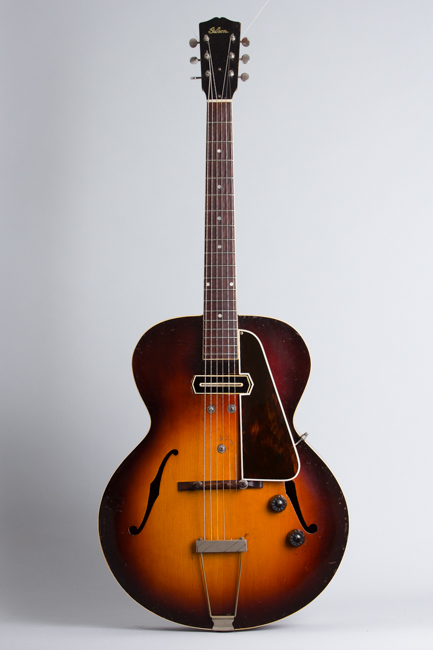
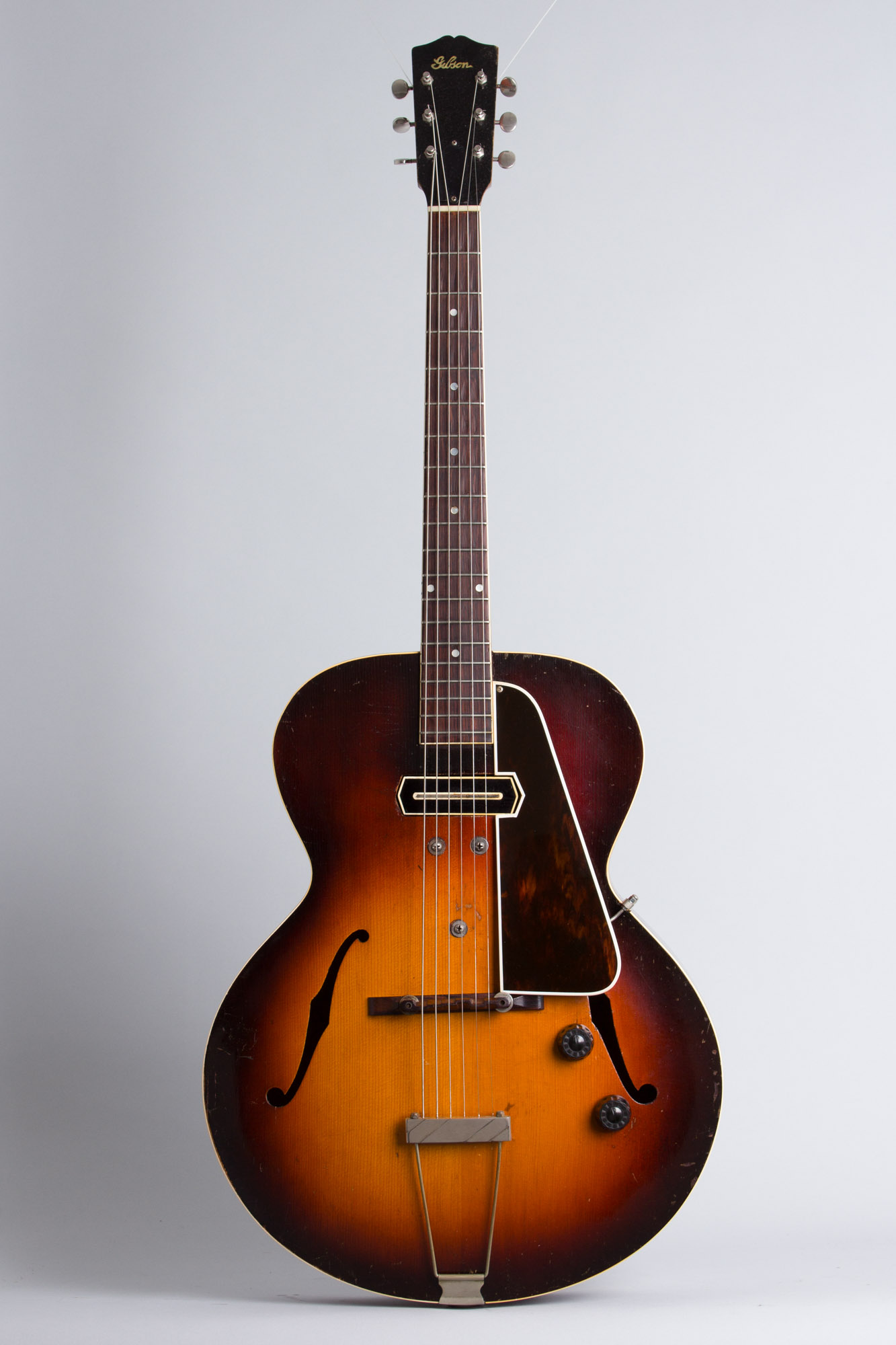
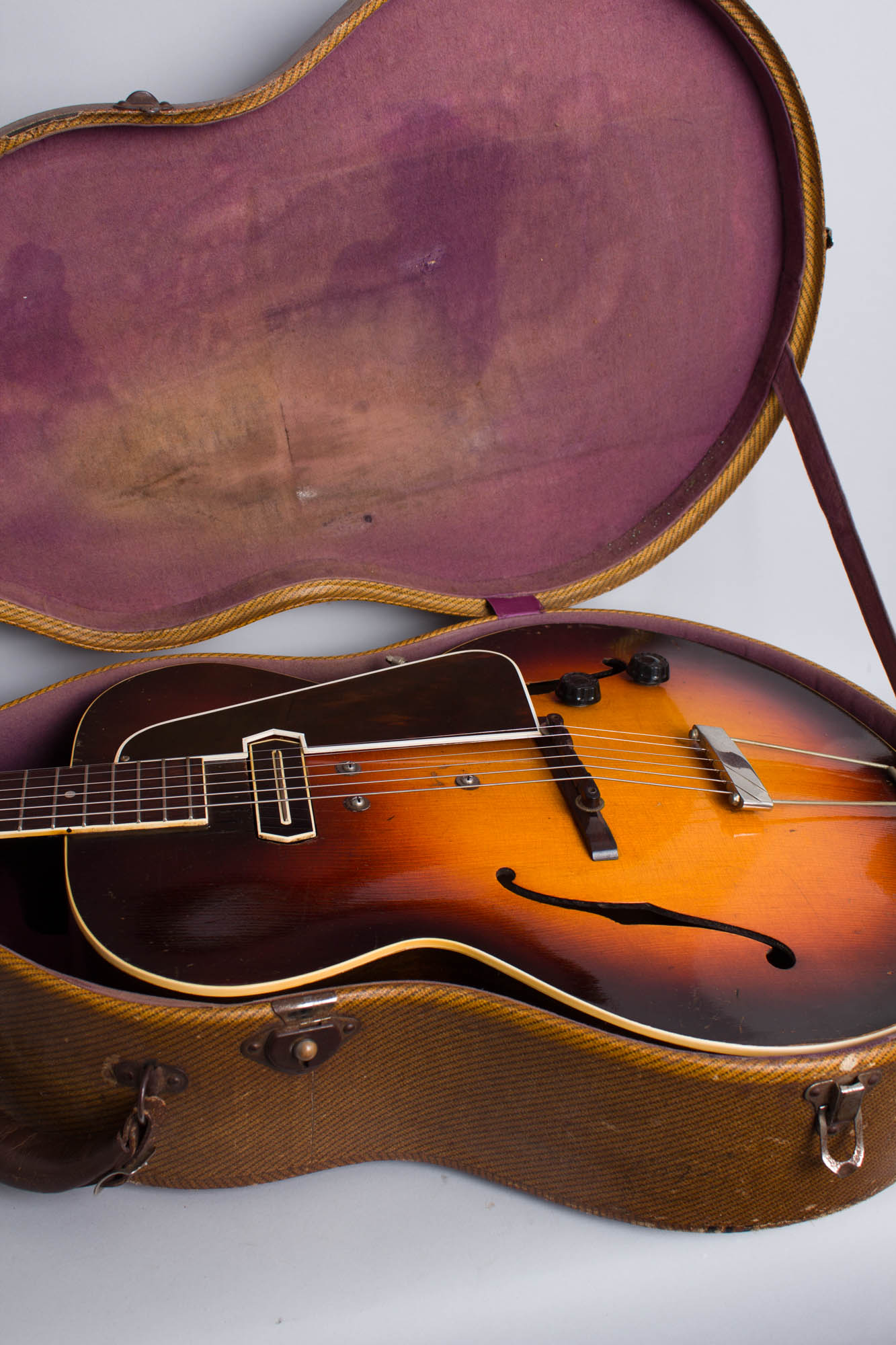
Gibson ES-150 Model Arch Top Hollow Body Electric Guitar (1940), made in Kalamazoo, Michigan, serial # 552 F, sunburst top, dark back and sides finish, maple back and sides, spruce top; mahogany neck with rosewood fingerboard, original tweed hard shell case.
The early Gibson ES-150 is simply one of the most important electric guitars of all time, and beyond that remains a fine player's instrument 80+ years on. Most associated with Charlie Christian, this model was the first truly commercially successful electric Spanish guitar and the progenitor of the entire Gibson Spanish electric line. While many early electric guitars from the 1930s have a rather mongrel look about them, the ES-150 has a beautifully understated elegance that undoubtedly helped it gain acceptance on the formal bandstands of the time.
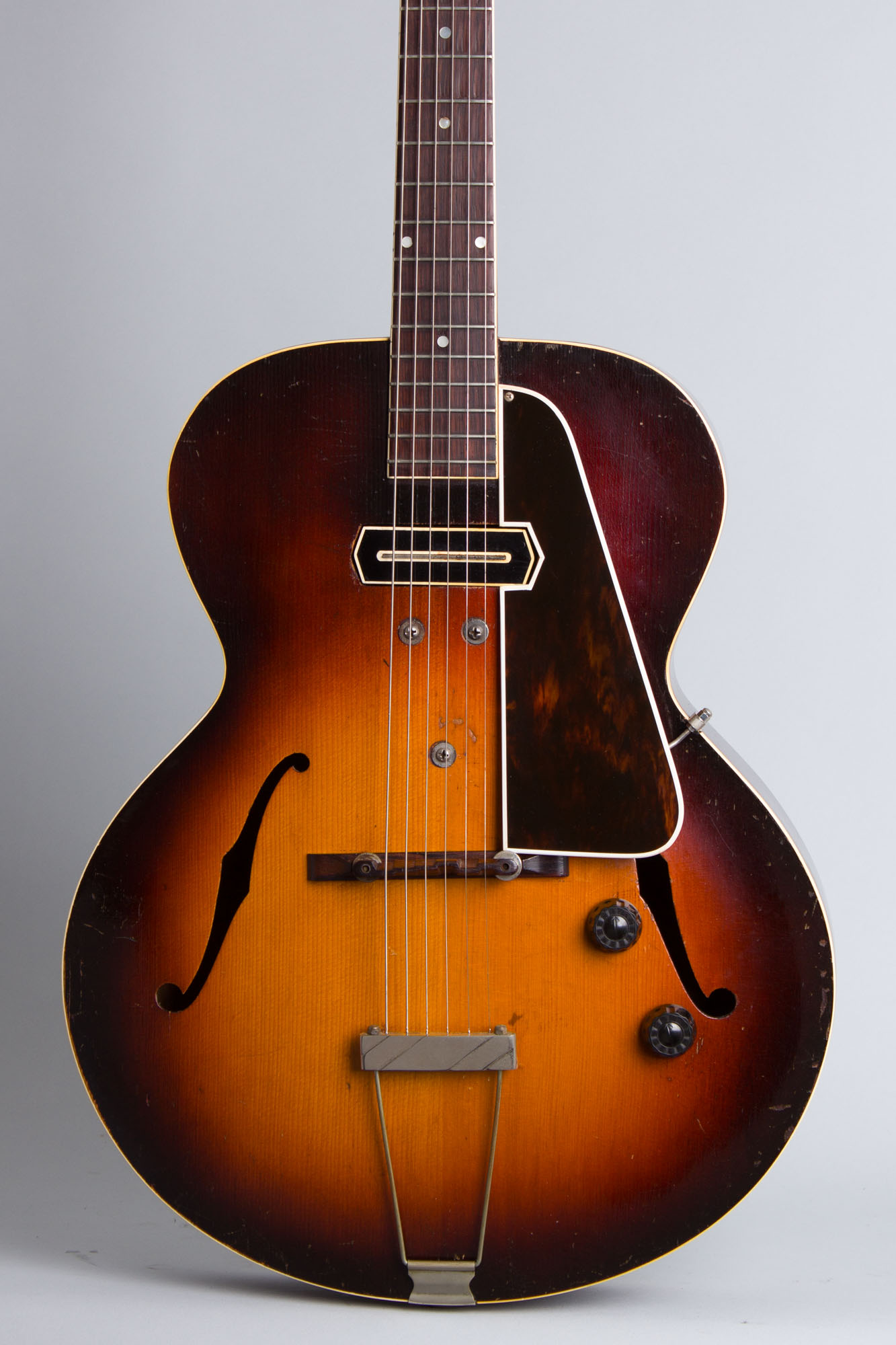
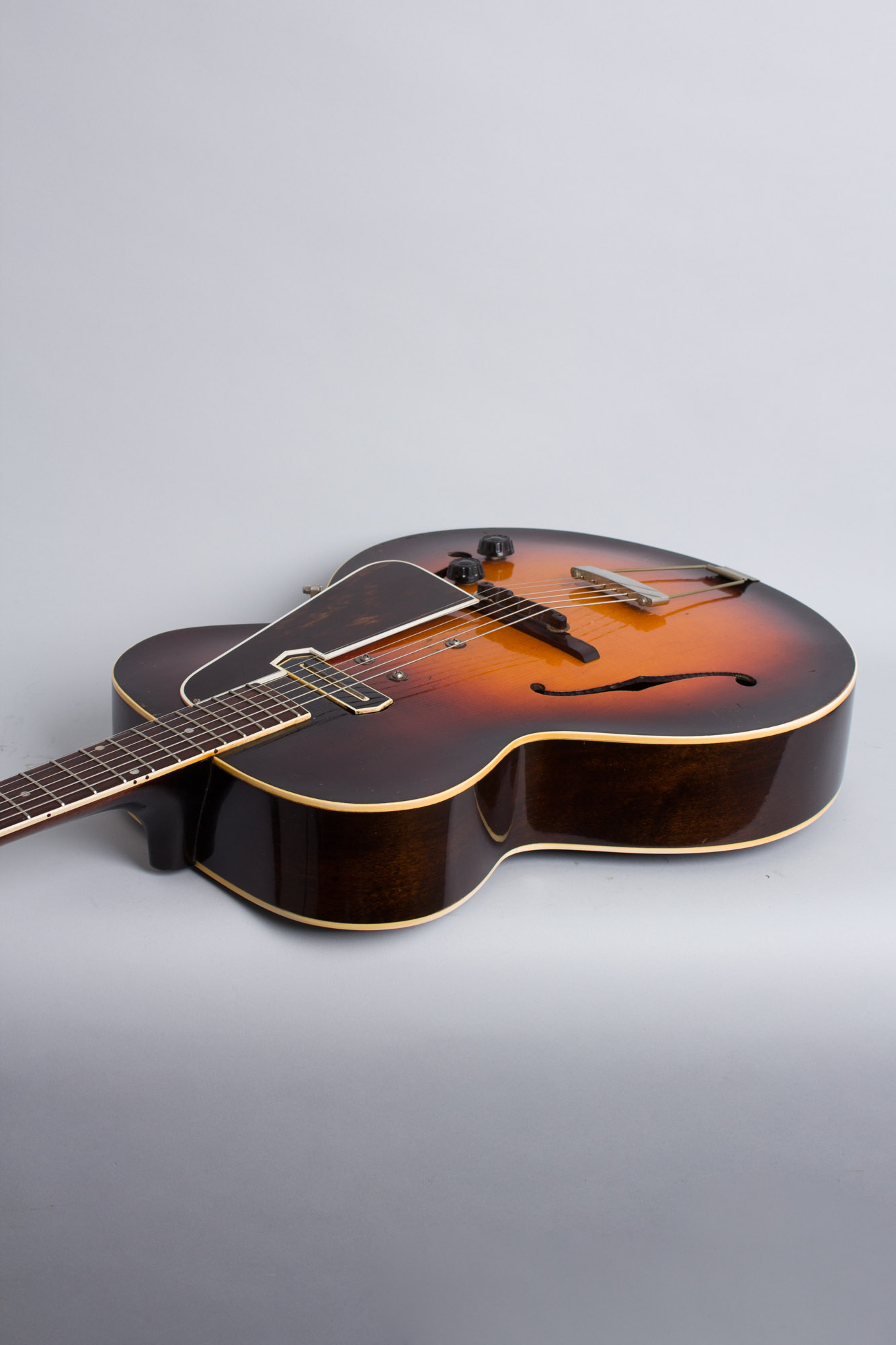
This particular guitar is a rare variation, one of the last of the original styled models introduced in 1937. It was made in early-mid 1940 and shows some transitional features. The first "Spanish" version of the famous bar magnet pickup is retained, featuring a single-bound top edge and a straight un-notched blade under the strings. By the middle of the year this model was radically redesigned with a new metal-covered pickup close to the bridge which altered the instrument's original character forever.
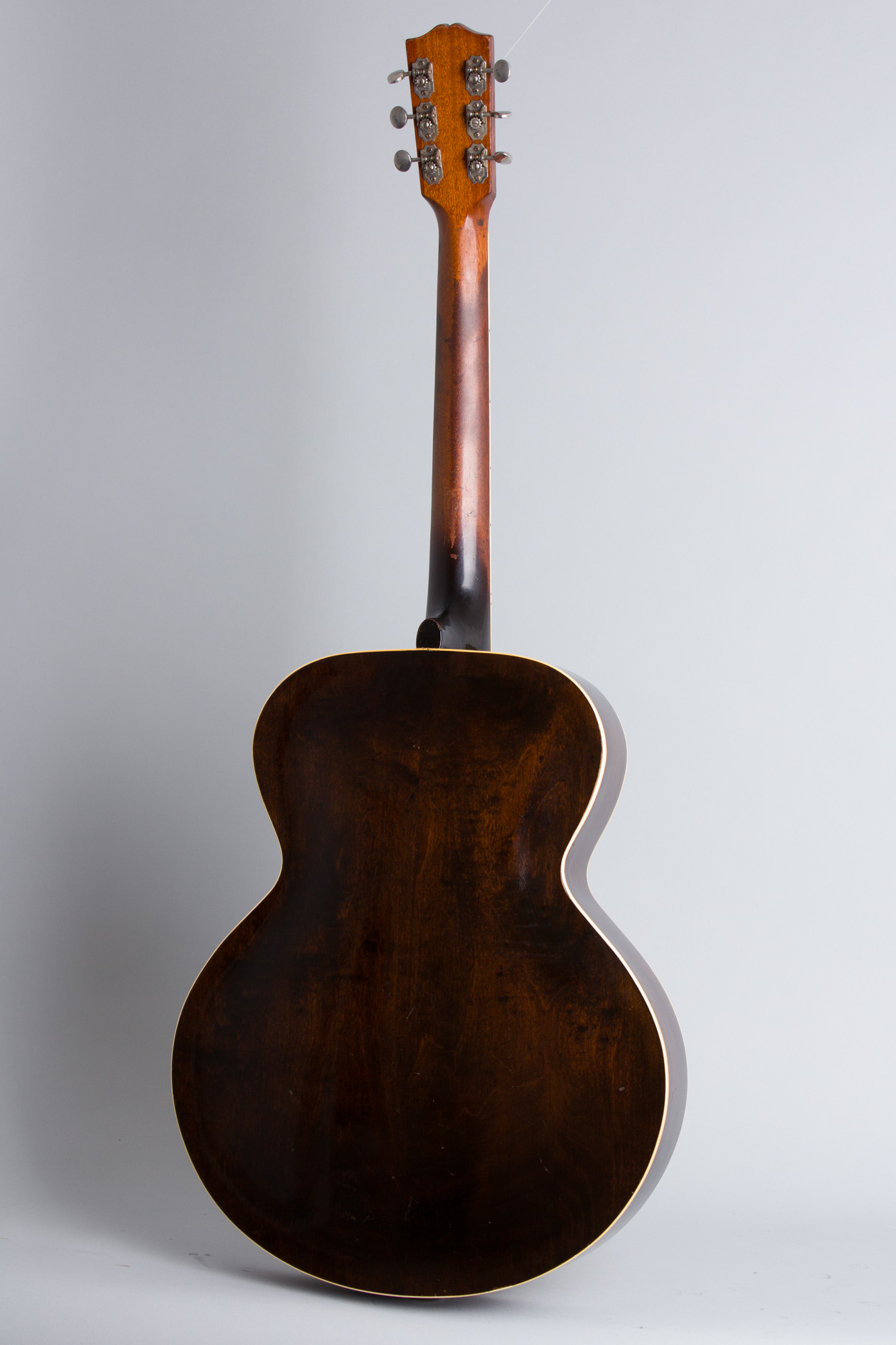
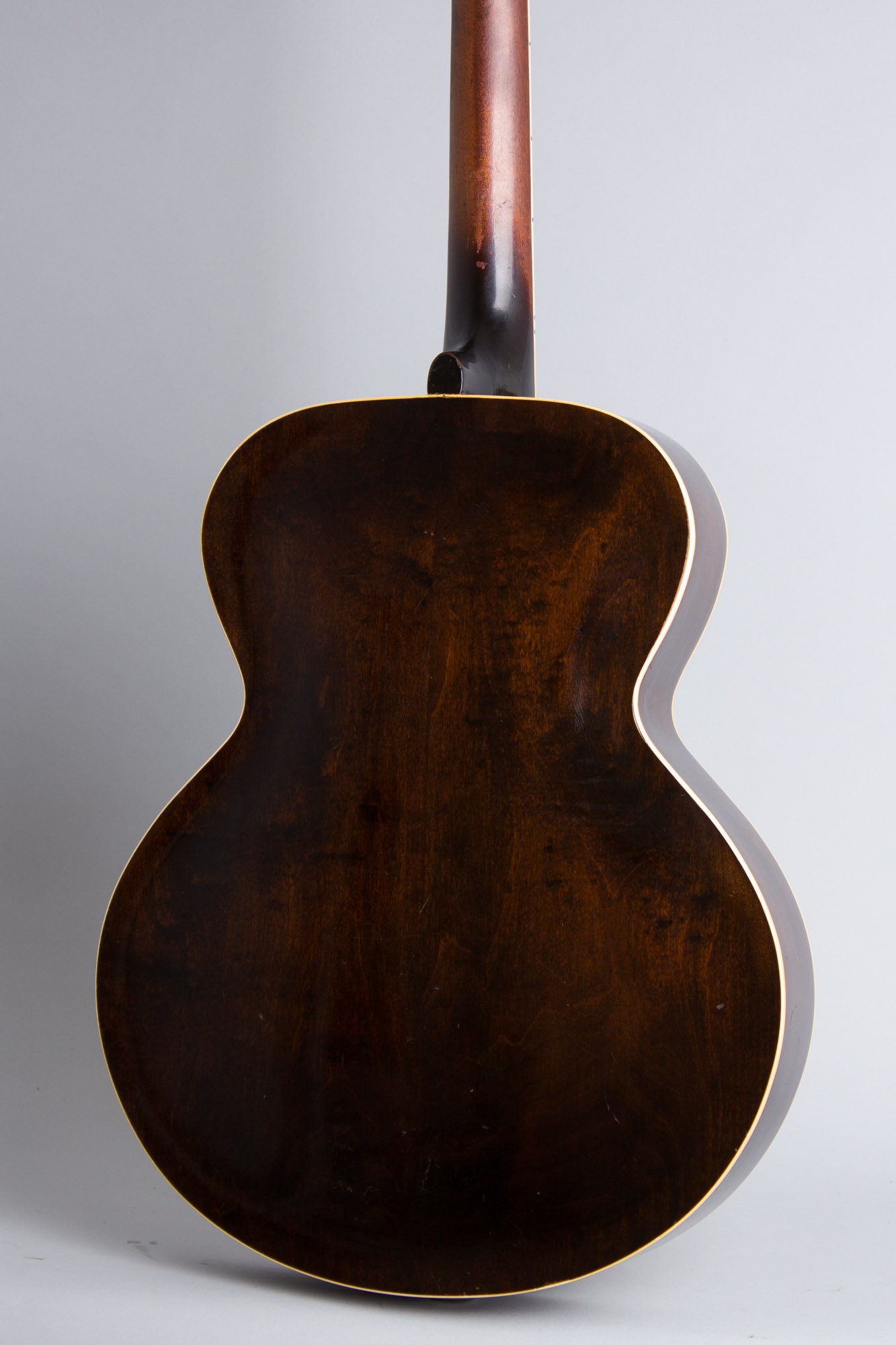
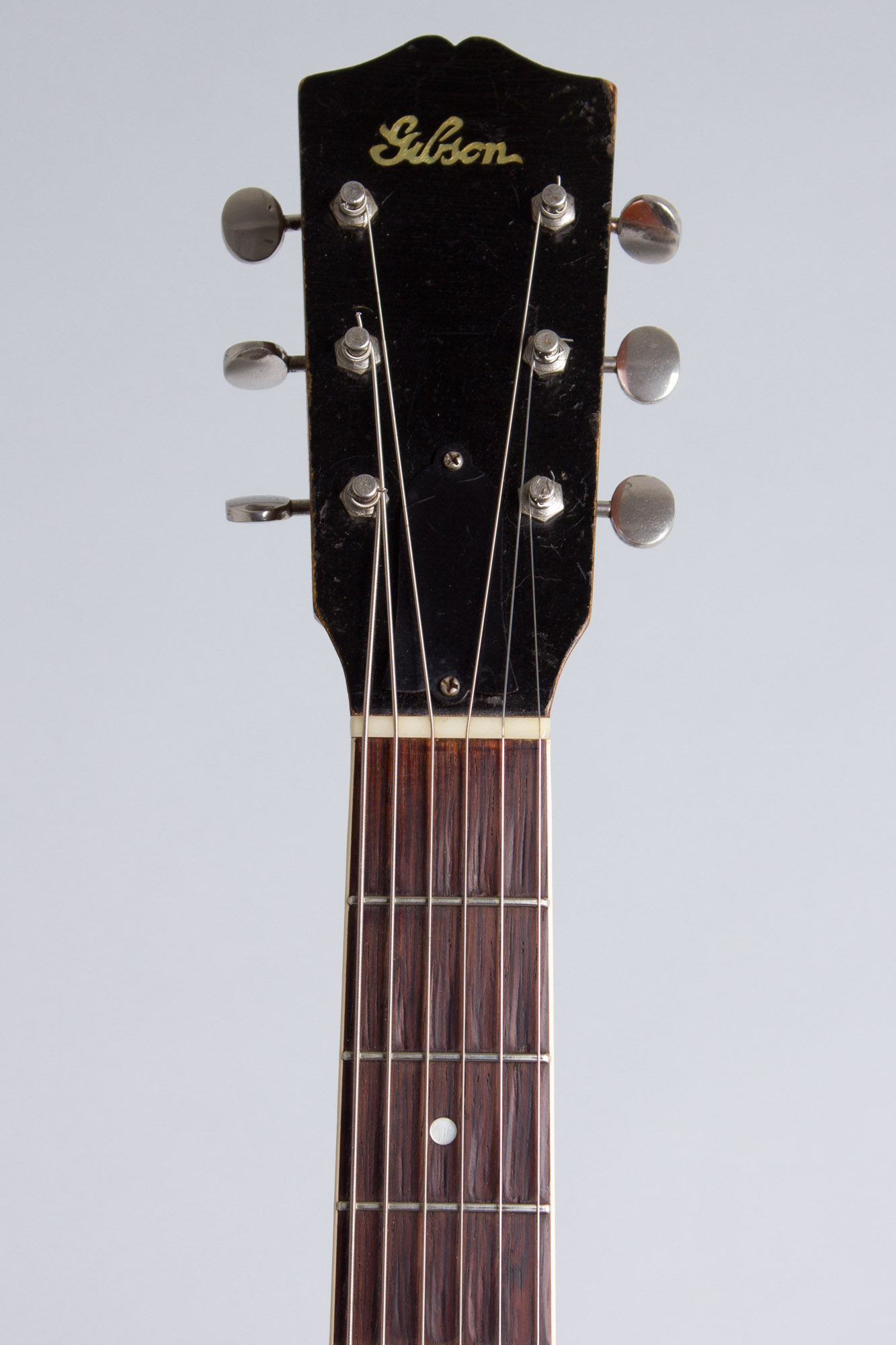
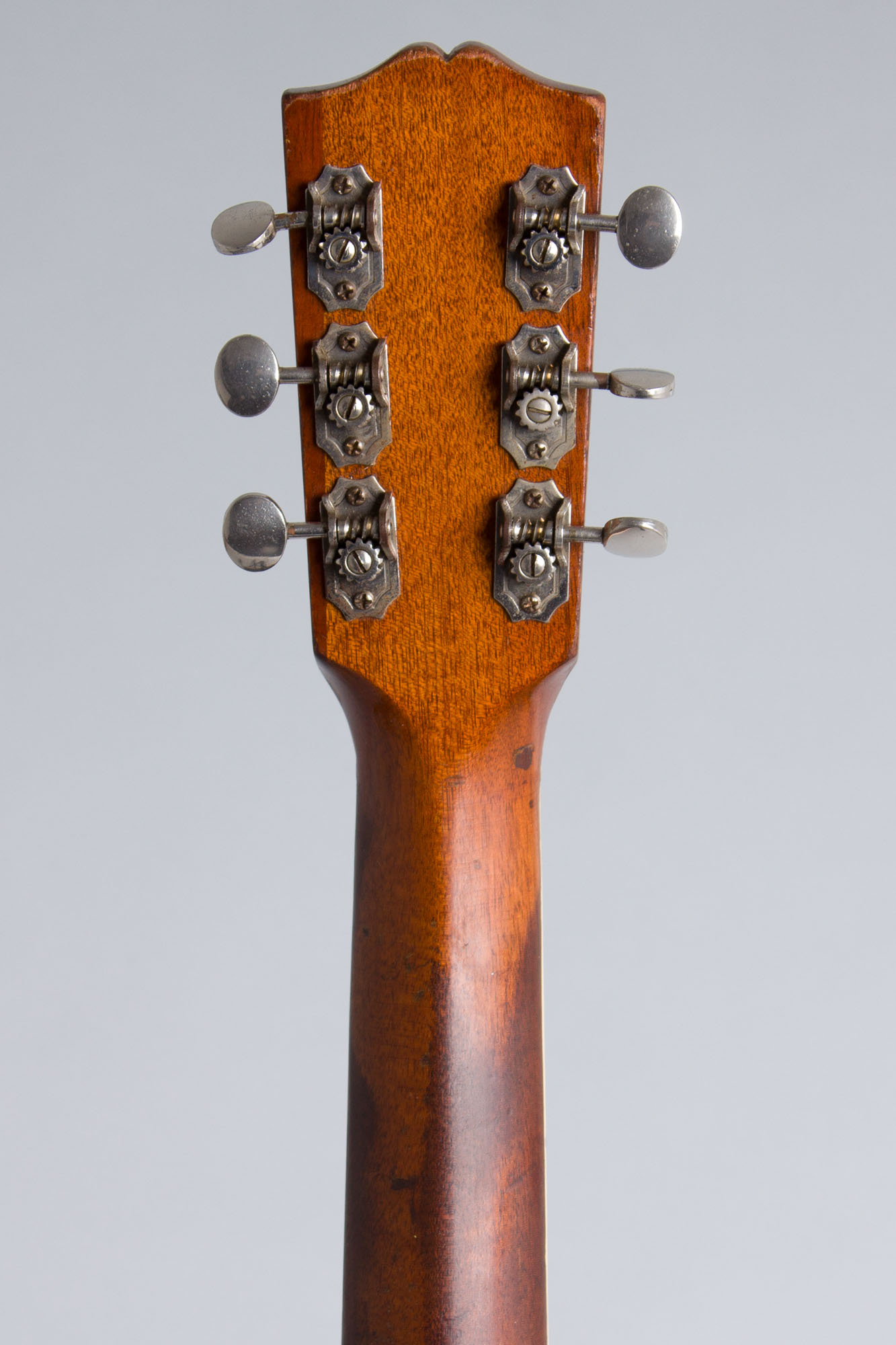
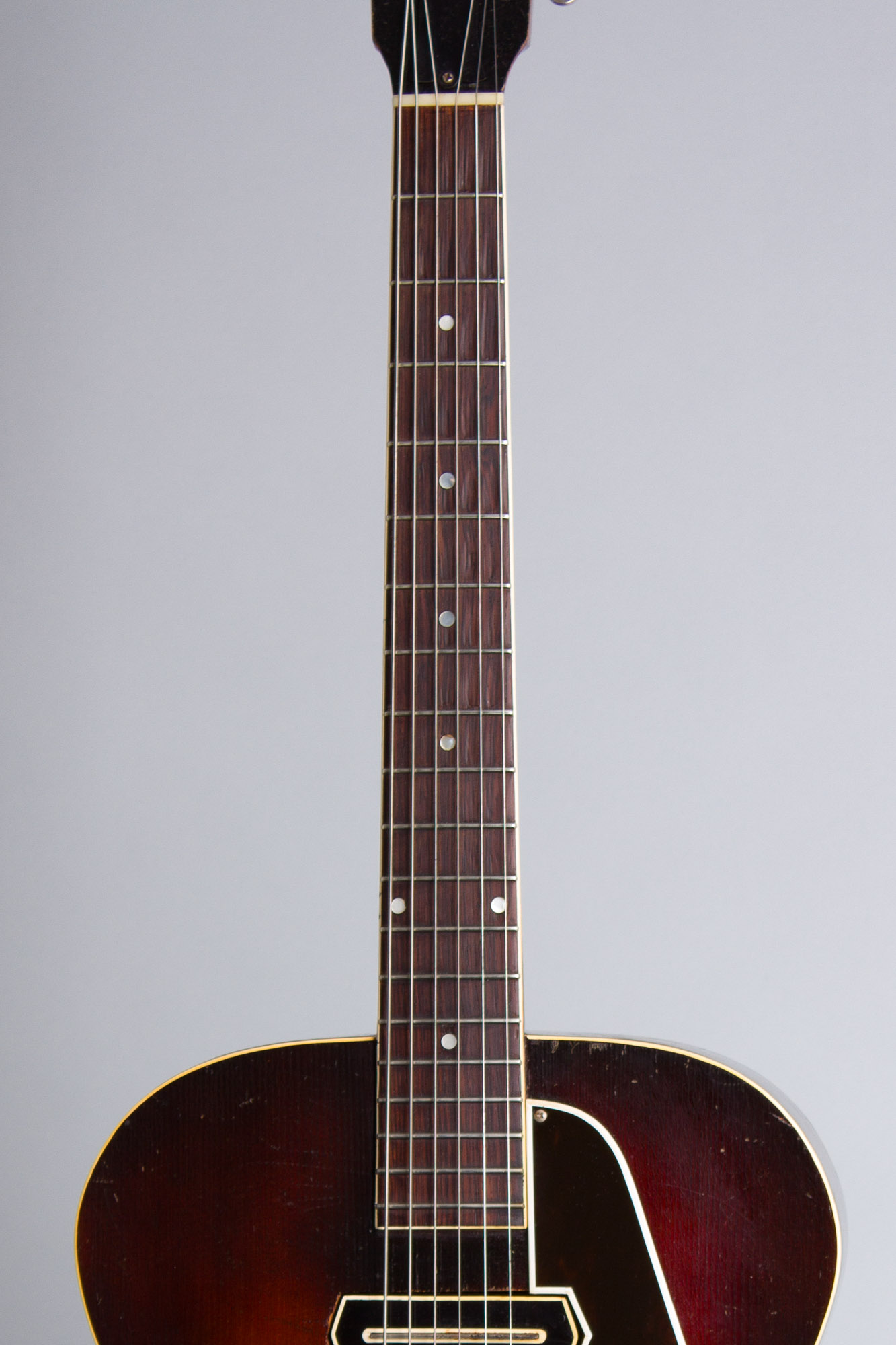
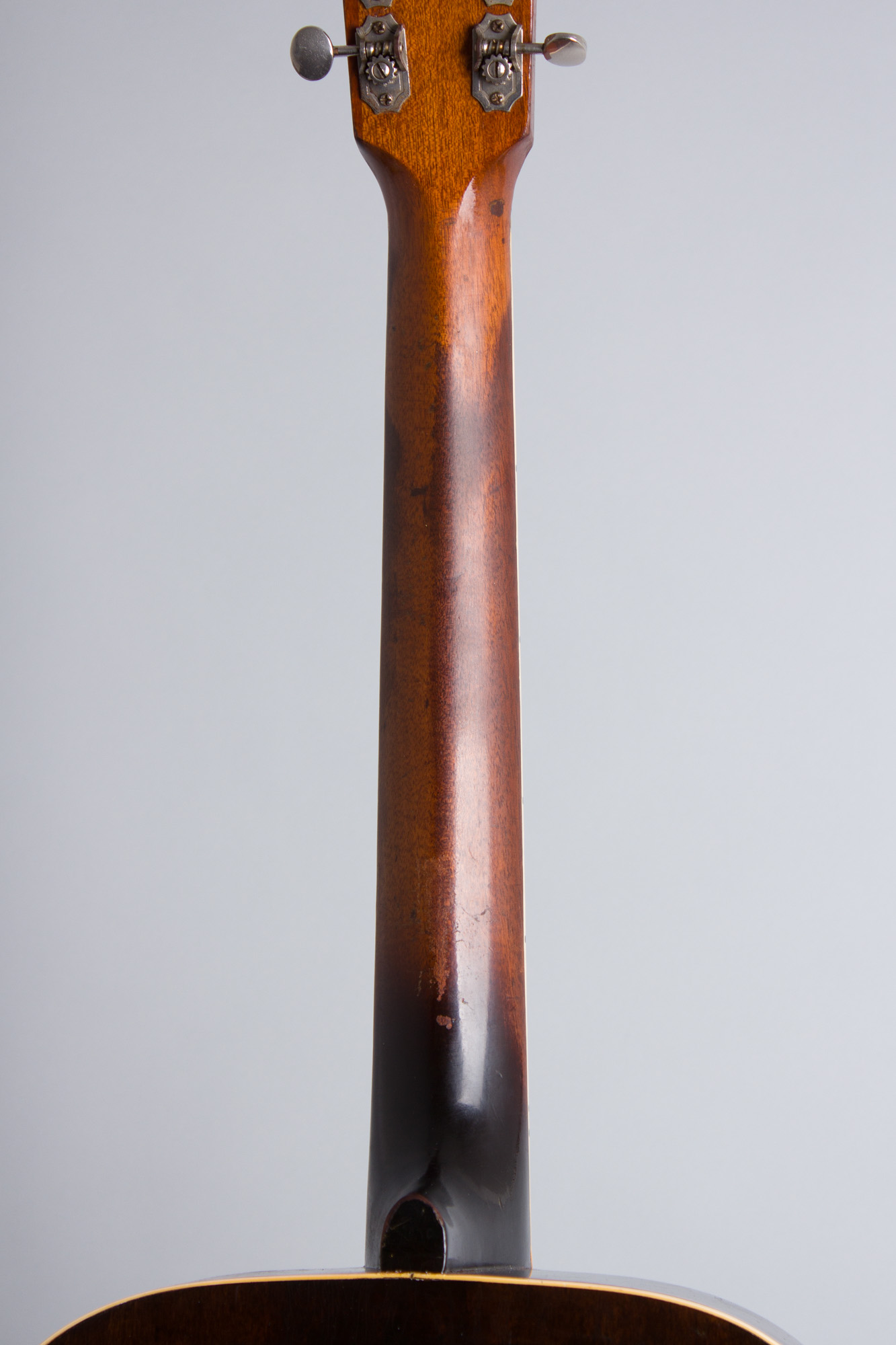
The top is carved spruce finished in a dark shaded sunburst, single-bound with slim unbound F-holes. The back is arched, a design improvement from the earlier flat back which proved prone to cracking. The finish on the back, sides and neck is an overall dark mahogany. The neck retains a "V" contour but with a slimmer, softer and somewhat more playable feel than the typical earlier 150's. A pearl Gibson logo adorns the unbound headstock, oddly sitting somewhat lower than on earlier models. The tuners are early Kluson #105N openback machines with oval metal buttons specific to the 1939-40 period.
The bridge is the period rosewood piece Gibson generally used for guitars a couple of steps up the price ladder from this model, but appears original. The tailpiece is a slight variation on earlier models as well, with diagonal bars cast into the cross piece. The jack is still situated on the back rim in the center of the tailpiece, a feature that would shortly be changed to the now-ubiquitous rim-mounted jack. This is a really cool and interesting variation on the classic ES-150, differing from the more common 1937-39 models only in subtle ways perhaps but to modern guitarists arguable a noticeably more player-friendly instrument.
Overall length is 40 1/4 in. (102.2 cm.), 16 1/16 in. (40.8 cm.) wide at lower bout, and 3 5/8 in. (9.2 cm.) in depth, measured at side of rim. Scale length is 24 3/4 in. (629 mm.). Width of nut is 1 3/4 in. (44 mm.).
This guitar shows some wear and tear for its 83 years on earth but remains a very attractive and great-sounding, fine-playing example of this rare and much sought-after instrument. There is less finish wear than many examples of this model; the typical pick wear above the fingerboard is confined to light scratches into but not through lacquer. The top overall has dings, dents and scratches overall with a few deeper marks near the lower pickup screw and dings and chips scattered along the edge. The back and sides have small dings and scratches while the back of the neck has a decent amount of finish worn down to the wood.
There is one tiny spruce grain split (less than 1/2") running back from the lower ball of the bass side F-hole; other than this the guitar is crack free. The arched back is a distinct advantage here, making the entire instrument sturdier and less prone to damage than the earlier flat-back examples. The fingerboard has been neatly refretted with wire marginally larger than the original but not out of character; the board has some shallow divoting from previous play wear still.
The all-important "Charlie Christian" style pickup and attendant wiring remain original to 1940. The original bridge saddle appears cut down from the bottom; the hardware remains original except for the knobs, which appear to be very accurate repros of the original radio-style pieces and a nicely done correct repro pickguard. Most of the originals celluloid guards have long since crumbled on these.
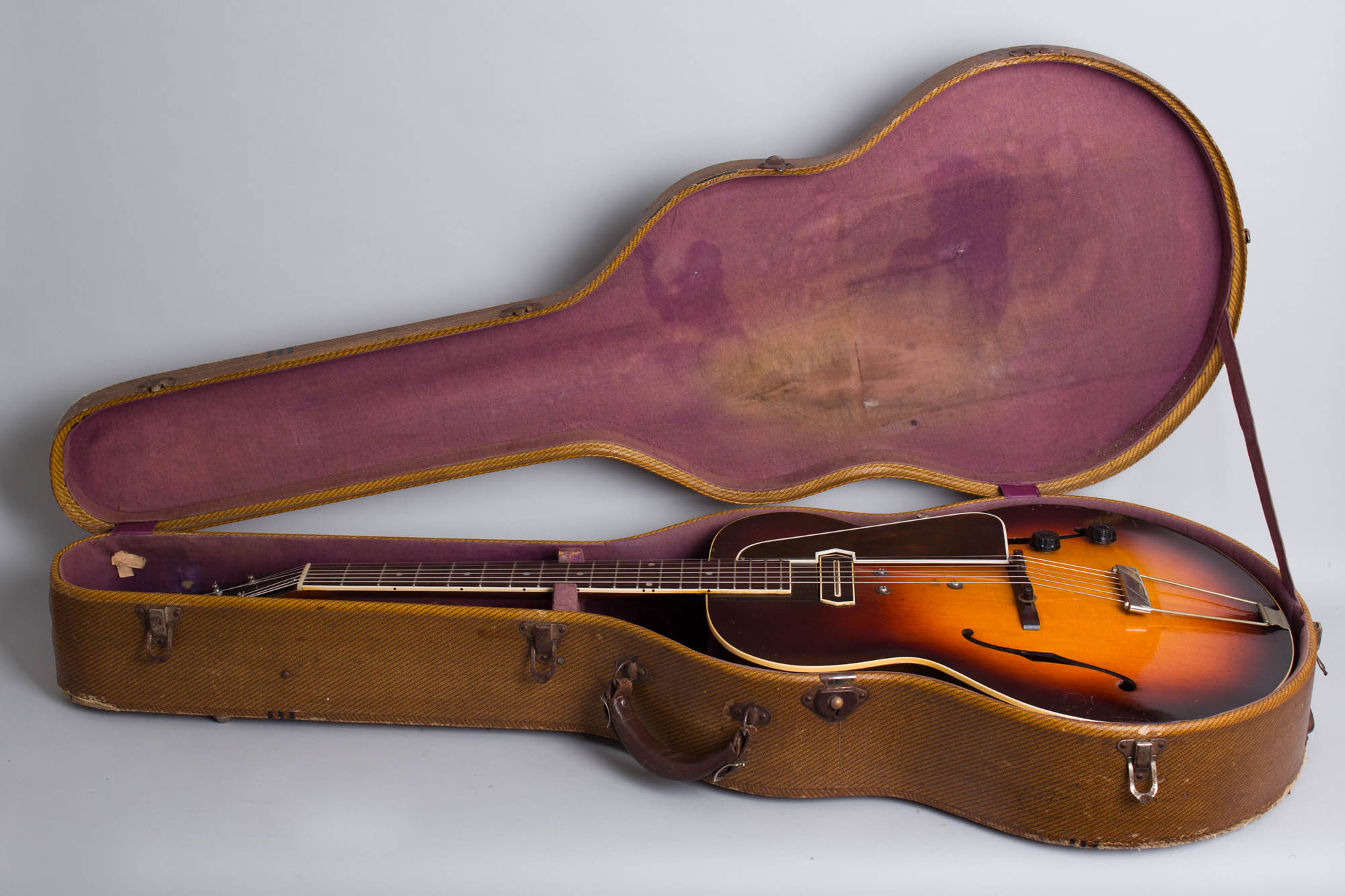
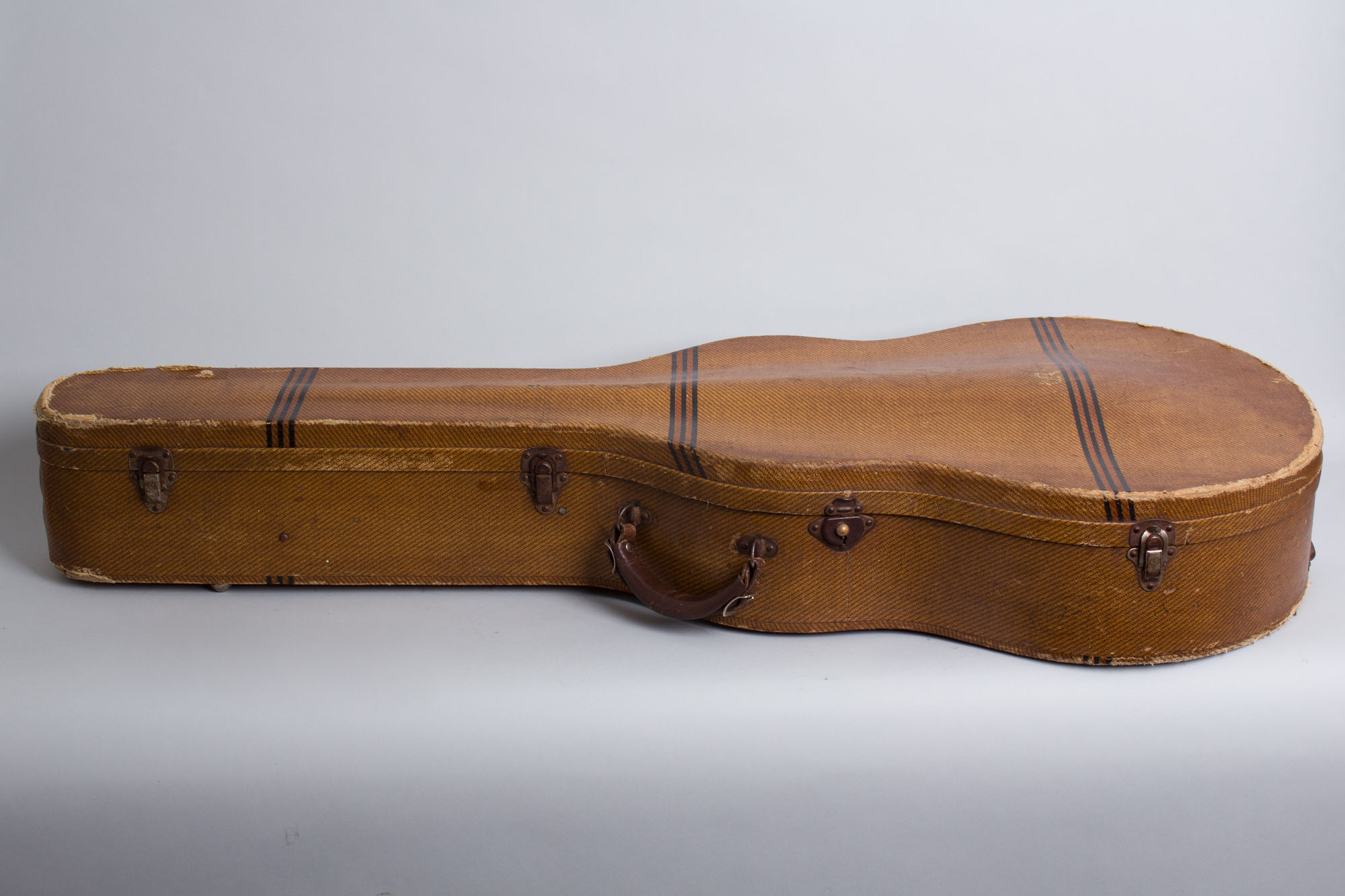
Long ago someone named Bob Hurst painted their name in the inside back rather artistically under the bass side F-hole. Overall this guitar appears played but well cared for, and remains an excellent player with the classic sound only the "Charlie Christian" ES-150 can truly offer. This is a very rare variation of this much-desired model, complete in the original purple lined tweed HSC. Overall Excellent - Condition.
The early Gibson ES-150 is simply one of the most important electric guitars of all time, and beyond that remains a fine player's instrument 80+ years on. Most associated with Charlie Christian, this model was the first truly commercially successful electric Spanish guitar and the progenitor of the entire Gibson Spanish electric line. While many early electric guitars from the 1930s have a rather mongrel look about them, the ES-150 has a beautifully understated elegance that undoubtedly helped it gain acceptance on the formal bandstands of the time.
This particular guitar is a rare variation, one of the last of the original styled models introduced in 1937. It was made in early-mid 1940 and shows some transitional features. The first "Spanish" version of the famous bar magnet pickup is retained, featuring a single-bound top edge and a straight un-notched blade under the strings. By the middle of the year this model was radically redesigned with a new metal-covered pickup close to the bridge which altered the instrument's original character forever.
The top is carved spruce finished in a dark shaded sunburst, single-bound with slim unbound F-holes. The back is arched, a design improvement from the earlier flat back which proved prone to cracking. The finish on the back, sides and neck is an overall dark mahogany. The neck retains a "V" contour but with a slimmer, softer and somewhat more playable feel than the typical earlier 150's. A pearl Gibson logo adorns the unbound headstock, oddly sitting somewhat lower than on earlier models. The tuners are early Kluson #105N openback machines with oval metal buttons specific to the 1939-40 period.
The bridge is the period rosewood piece Gibson generally used for guitars a couple of steps up the price ladder from this model, but appears original. The tailpiece is a slight variation on earlier models as well, with diagonal bars cast into the cross piece. The jack is still situated on the back rim in the center of the tailpiece, a feature that would shortly be changed to the now-ubiquitous rim-mounted jack. This is a really cool and interesting variation on the classic ES-150, differing from the more common 1937-39 models only in subtle ways perhaps but to modern guitarists arguable a noticeably more player-friendly instrument.
Overall length is 40 1/4 in. (102.2 cm.), 16 1/16 in. (40.8 cm.) wide at lower bout, and 3 5/8 in. (9.2 cm.) in depth, measured at side of rim. Scale length is 24 3/4 in. (629 mm.). Width of nut is 1 3/4 in. (44 mm.).
This guitar shows some wear and tear for its 83 years on earth but remains a very attractive and great-sounding, fine-playing example of this rare and much sought-after instrument. There is less finish wear than many examples of this model; the typical pick wear above the fingerboard is confined to light scratches into but not through lacquer. The top overall has dings, dents and scratches overall with a few deeper marks near the lower pickup screw and dings and chips scattered along the edge. The back and sides have small dings and scratches while the back of the neck has a decent amount of finish worn down to the wood.
There is one tiny spruce grain split (less than 1/2") running back from the lower ball of the bass side F-hole; other than this the guitar is crack free. The arched back is a distinct advantage here, making the entire instrument sturdier and less prone to damage than the earlier flat-back examples. The fingerboard has been neatly refretted with wire marginally larger than the original but not out of character; the board has some shallow divoting from previous play wear still.
The all-important "Charlie Christian" style pickup and attendant wiring remain original to 1940. The original bridge saddle appears cut down from the bottom; the hardware remains original except for the knobs, which appear to be very accurate repros of the original radio-style pieces and a nicely done correct repro pickguard. Most of the originals celluloid guards have long since crumbled on these.
Long ago someone named Bob Hurst painted their name in the inside back rather artistically under the bass side F-hole. Overall this guitar appears played but well cared for, and remains an excellent player with the classic sound only the "Charlie Christian" ES-150 can truly offer. This is a very rare variation of this much-desired model, complete in the original purple lined tweed HSC. Overall Excellent - Condition.