Gibson F-7 Owned and Used by Ry Cooder Carved Top Mandolin (1937)

LOADING IMAGES

This item has been sold.
Item # 11242
Prices subject to change without notice.
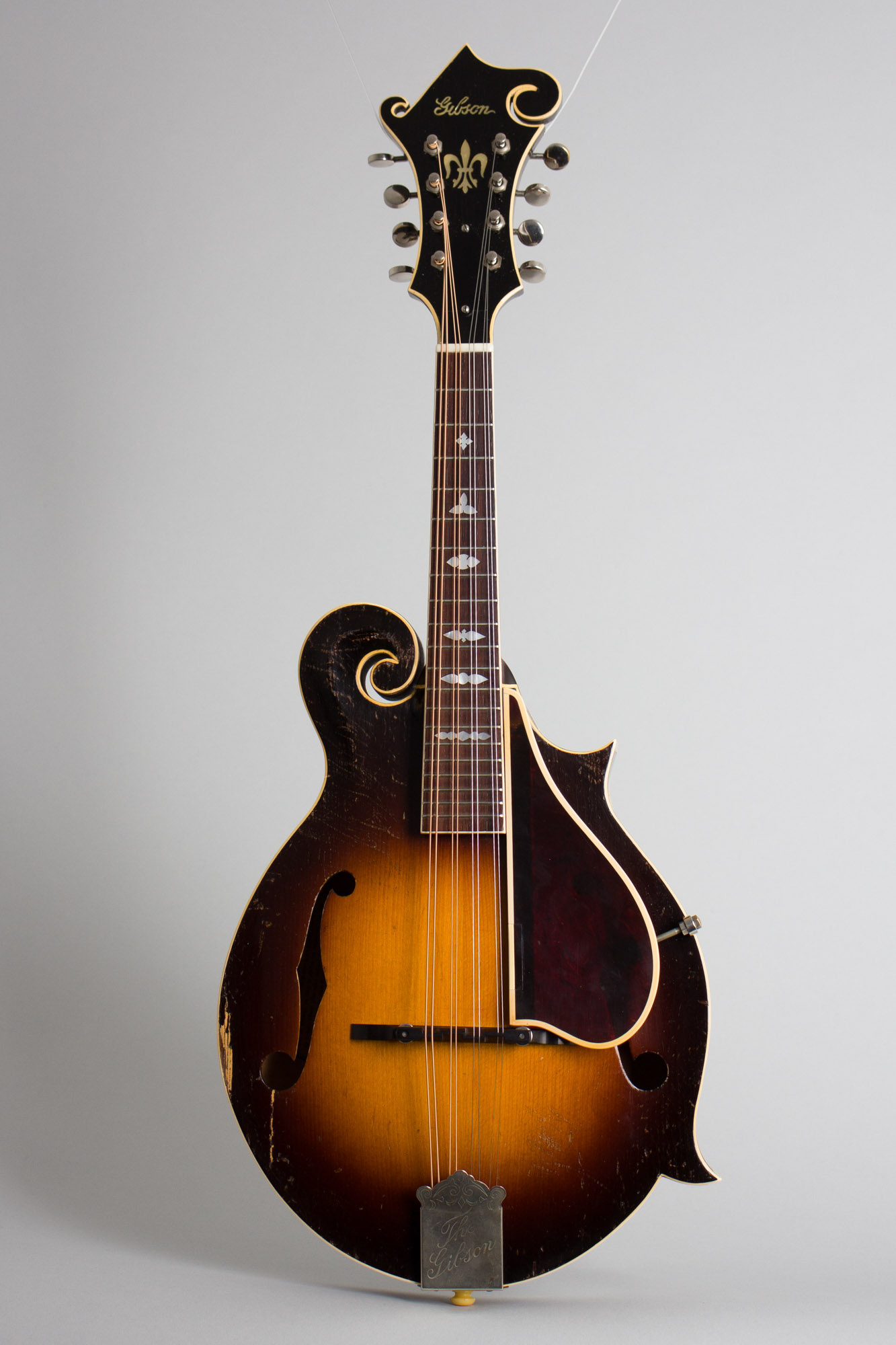
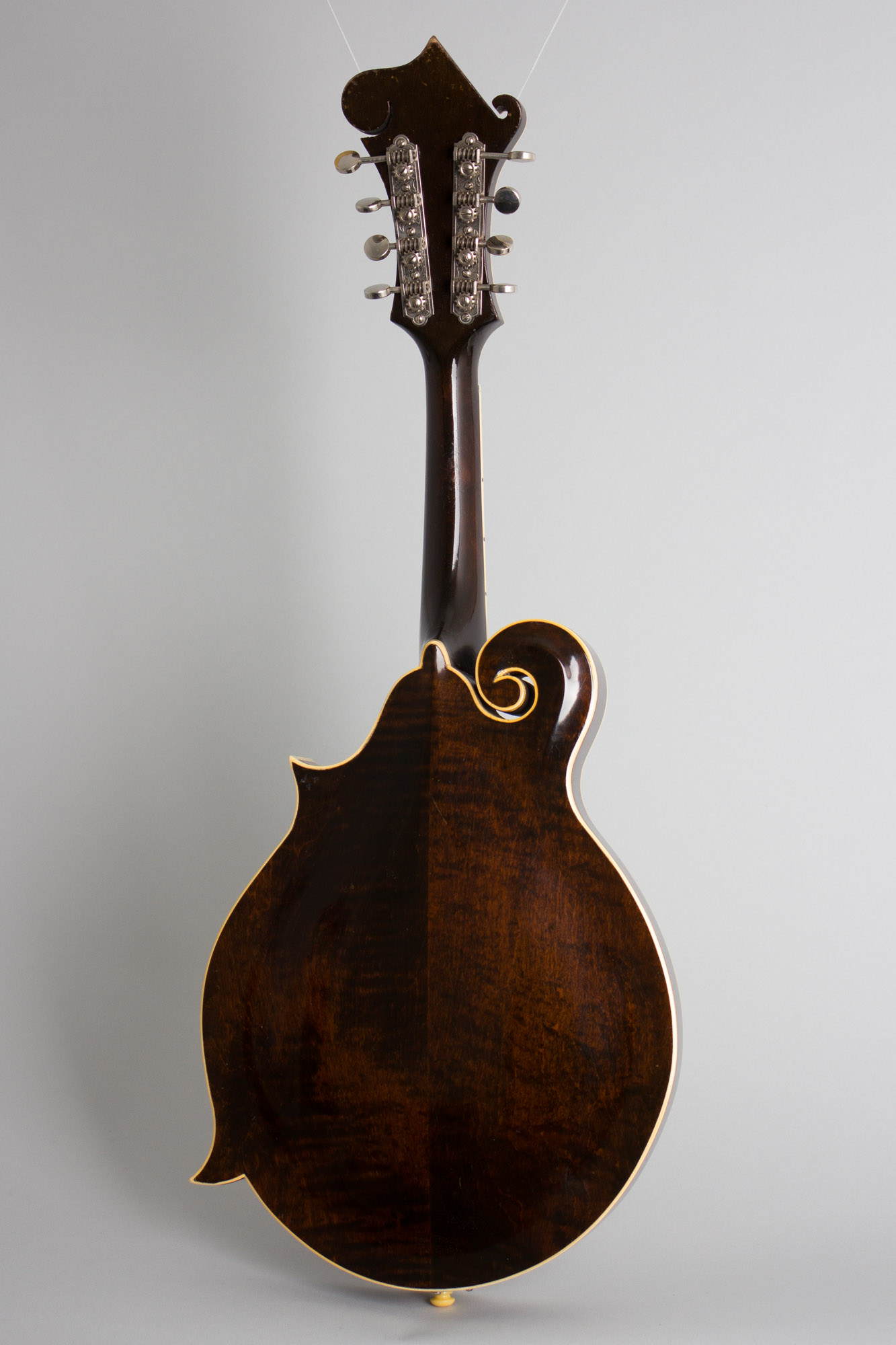
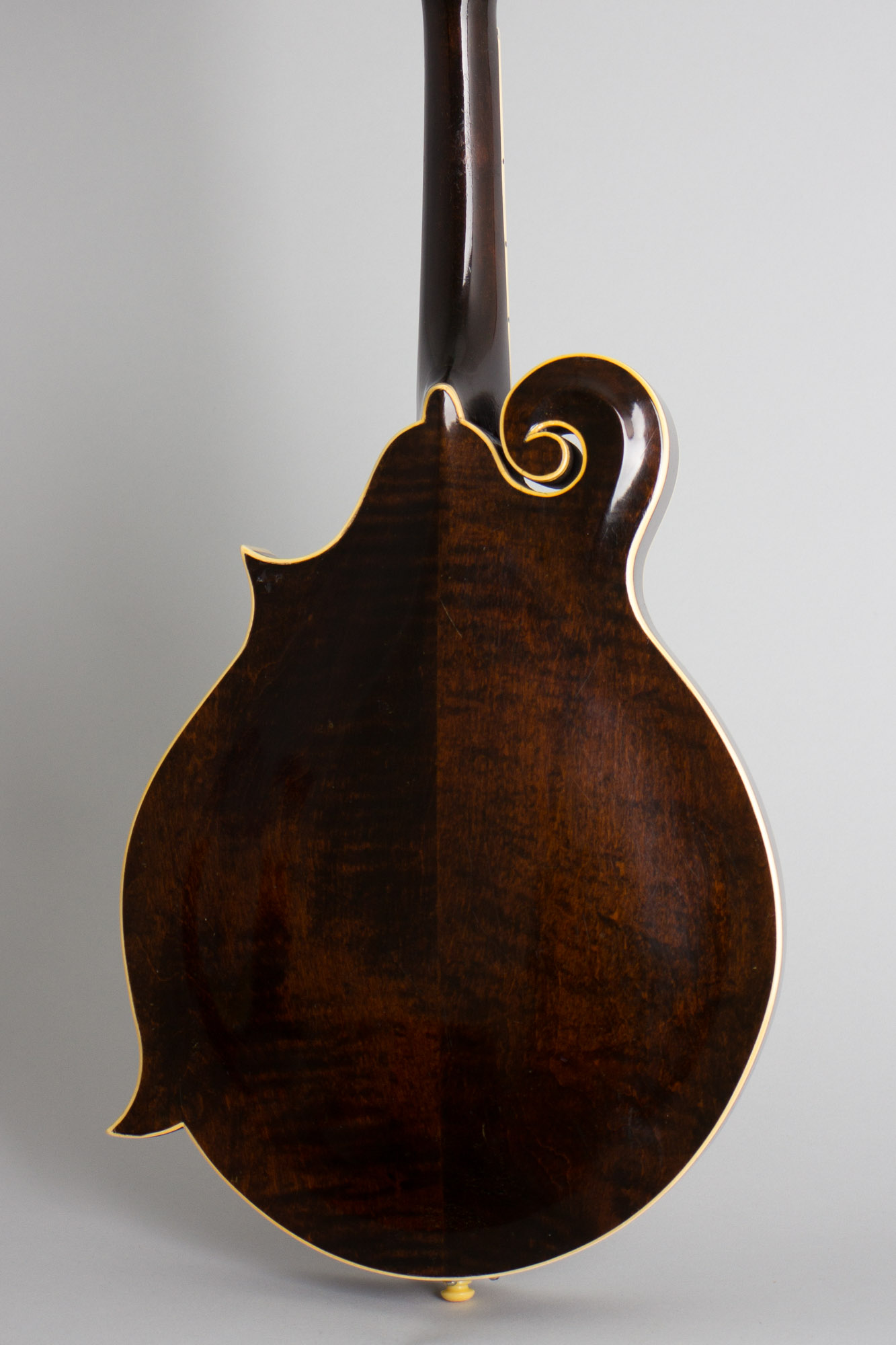
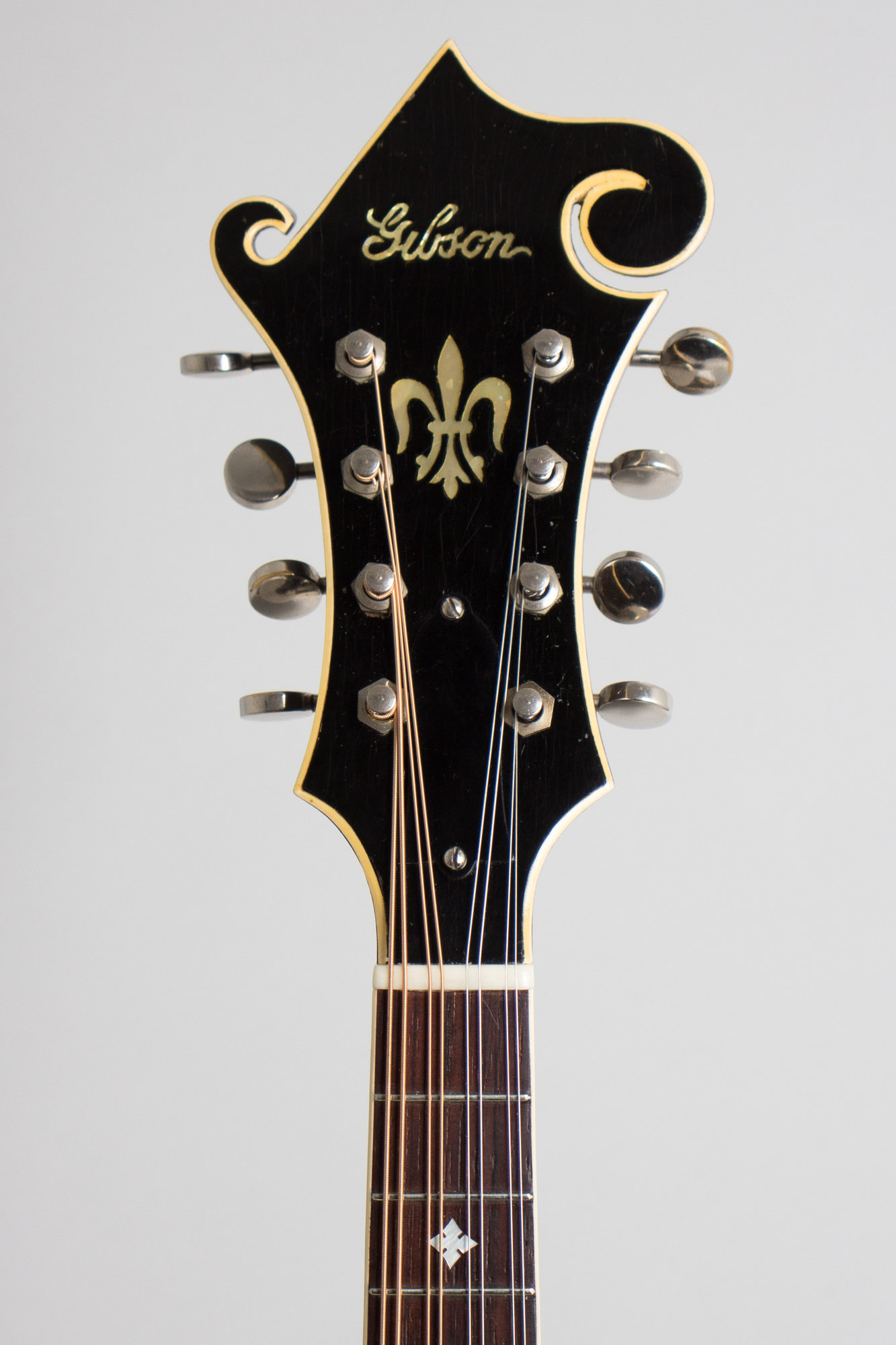
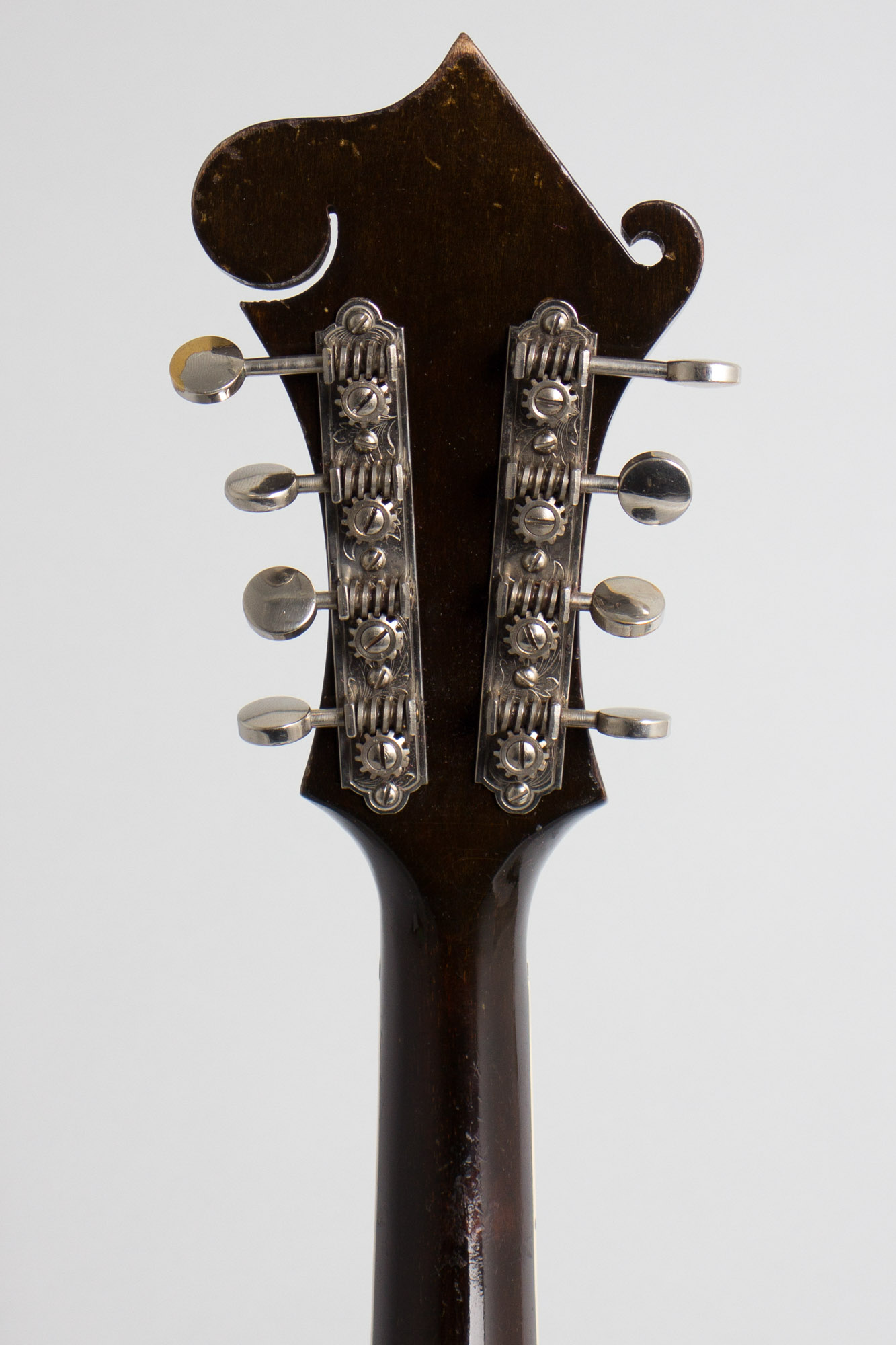
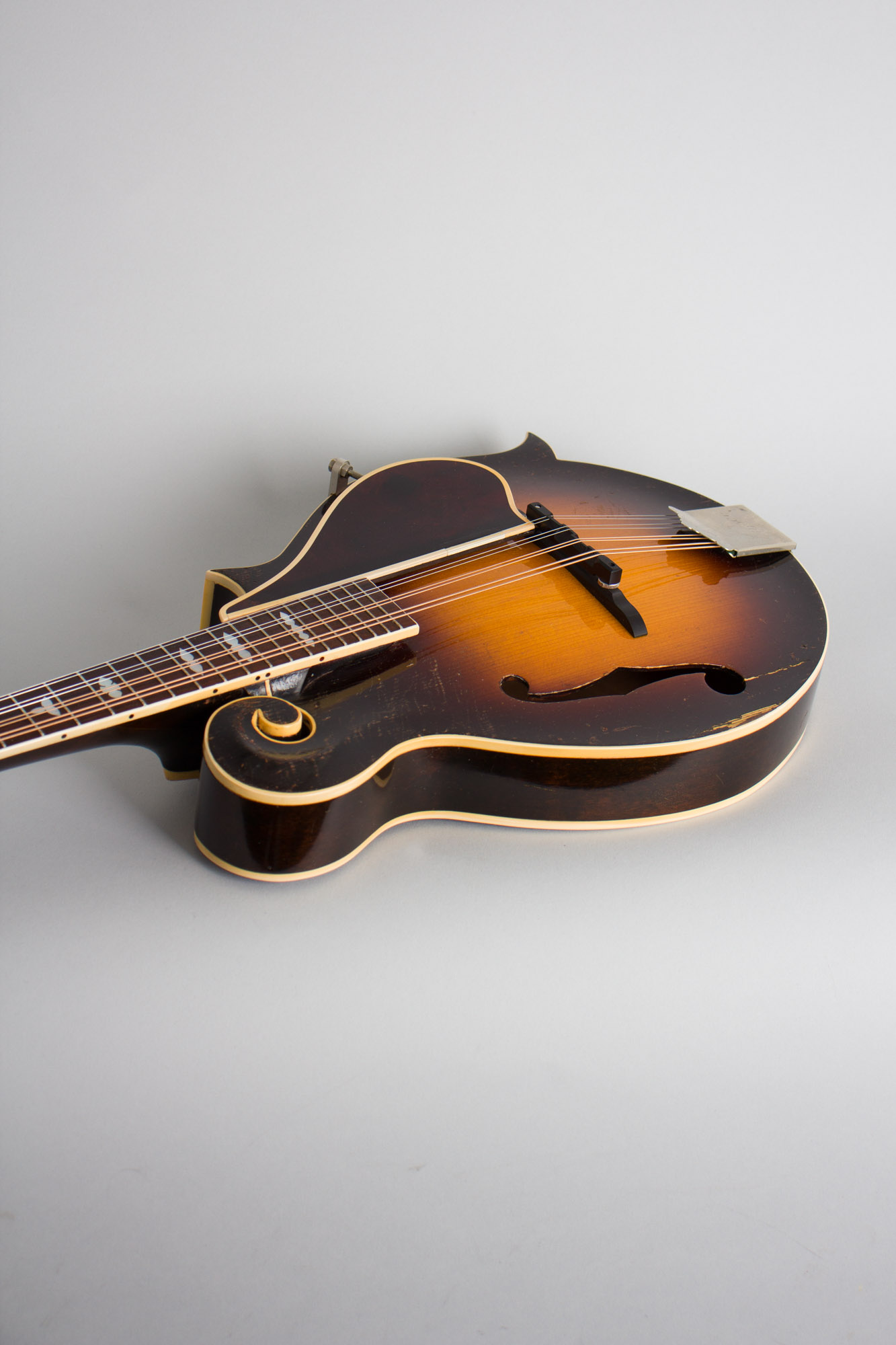
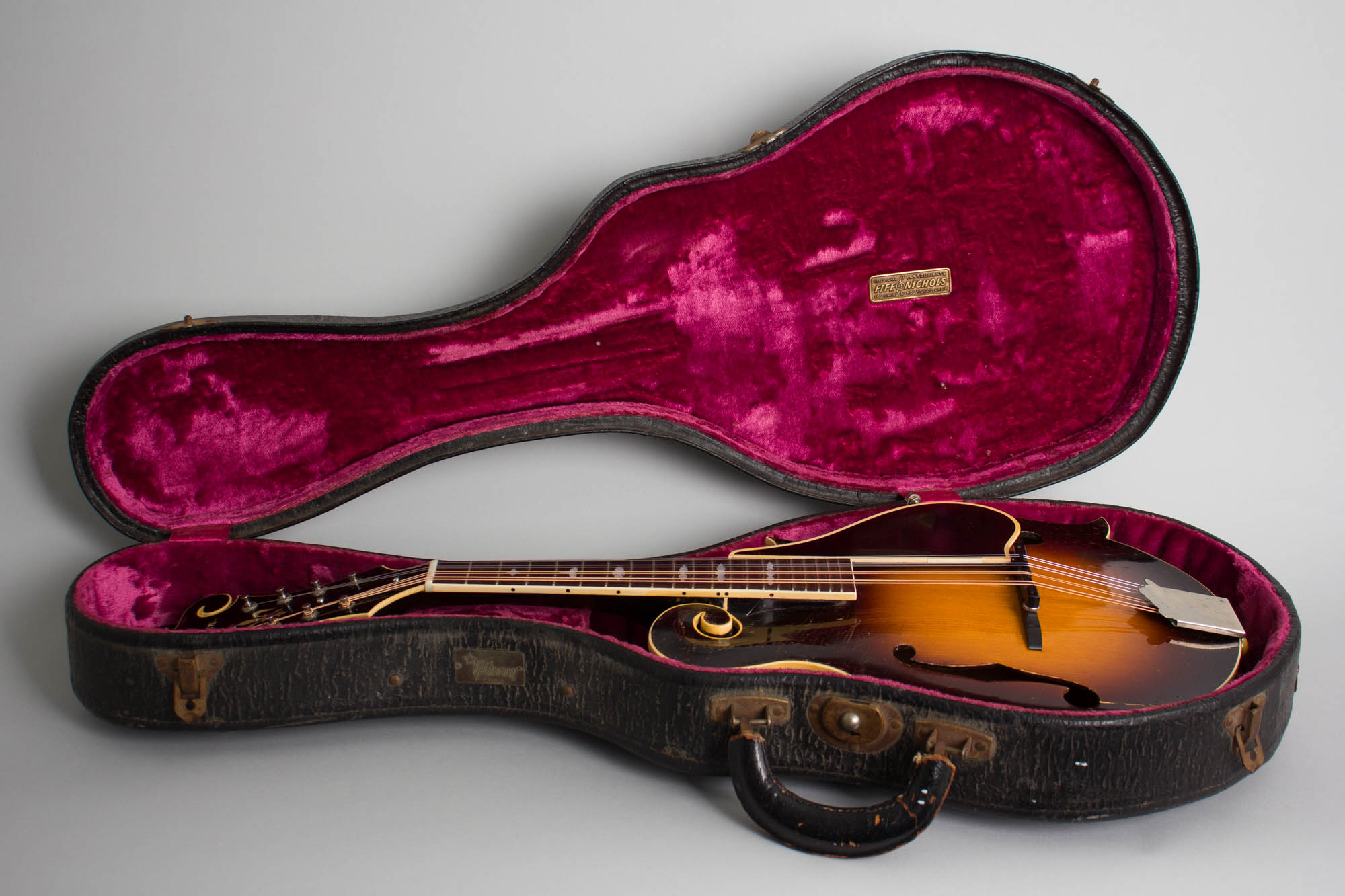
Gibson F-7 Owned and Used by Ry Cooder Model Carved Top Mandolin (1937), made in Kalamazoo, Michigan, serial # 94366, sunburst top, dark back and sides finish, maple back and sides, spruce top, mahogany neck with rosewood fingerboard, period black hard shell case.
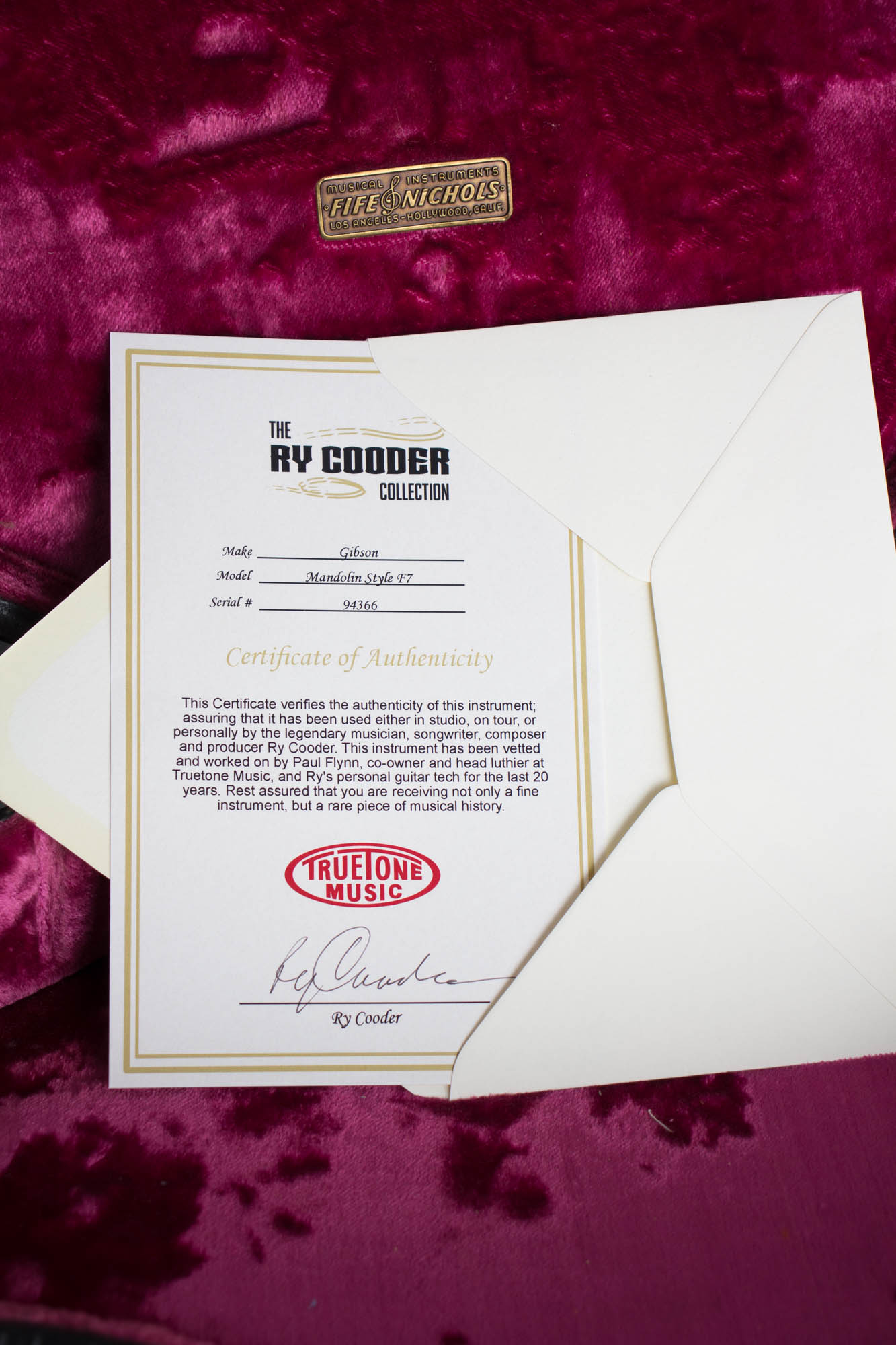
This 1930's F-7 is one of the rarer Gibson mandolins, a historically interesting and very distinctive looking and sounding instrument only built for a few years. This example has a colorful recent history as well; we had sold it to Ry Cooder some years ago and he recently decided to put it back on the market. It picked up some fairly heavy use and some repair in it's time in Cooderville, but it still an extremely fine playing and sounding instrument.
This F-7 dates to 1937, several years after the model was introduced in 1934. This midline mandolin never sold well and was discontinued in 1939. The F-7, along with the very similar F-10 and F-12 were intended as a line of F-hole master-grade instruments to complement the superlative but extremely expensive F-5 mandolin, which at $250.00 was out of reach of all but the most well-heeled players in the depression era. Unfortunately interest in the mandolin was quite low at that time, and there was little demand for any expensive mandolins at all. While the similarly-positioned L-7, L-10 and L-12 guitars were relatively successful the mandolins vanished nearly without a trace, with only the least expensive F-7 lasting more than a year or so in the catalog.
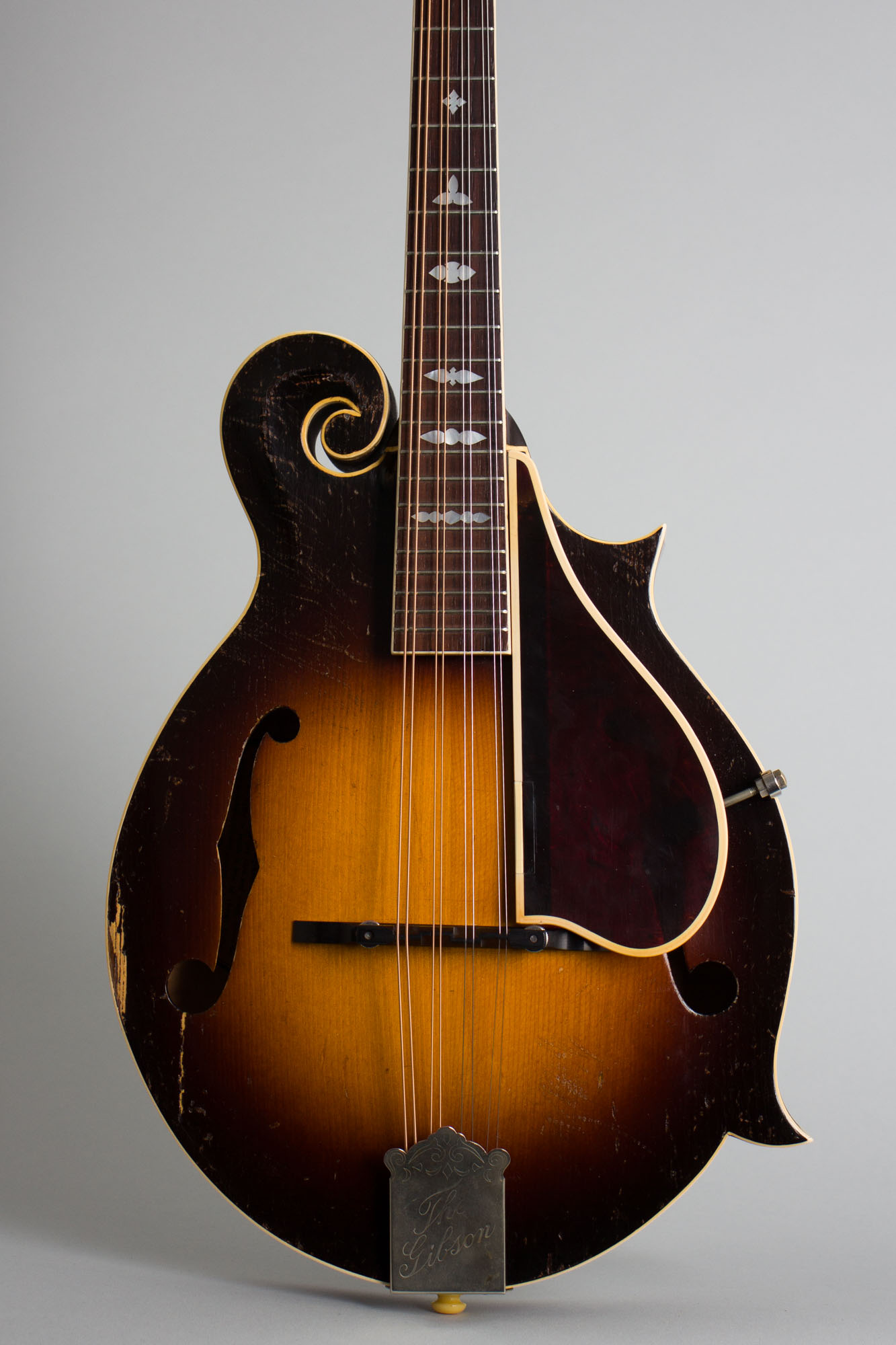
The F-7 features a typical Gibson sunburst finish on the top with a dark shaded back and sides, similar to the better known L-7 guitar. There is elegant shaped pearl inlay on the fingerboard (in a variation on the "Nick Lucas" pattern) and a pearl fleur-de-Lys on the headstock. Originally retailing at $125.00 (plus case) the mandolin was half the cost of an F-5, but still priced above nearly all other extant mandolins during the depression.
The structural design of this trio of instruments is a bit odd to modern eyes as they combine the f-hole, scroll body construction of the F-5 with the shorter neck of the older oval-hole F-4. The scale length is the same, but the neck is sunk further into the body, pushing the bridge further back towards the tailpiece. Despite this apparent oddity, the F-7 sounds great with a distinctive guttural bark, if not quite the full bright projection and note clarity of its longer-necked cousin. This is a fabulous mandolin for the player, and an uncommon find in a pre-war Gibson artist model. All of Bill Monroe's early recordings in the 1930's with his brother Charlie were cut with a 1935 F-7, and this instrument is fully worthy of that sonic heritage.
Overall length is 26 1/4 in. (66.7 cm.), 10 1/8 in. (25.7 cm.) wide, and 1 3/4 in. (4.4 cm.) in depth, measured at side of rim. Scale length is 13 3/4 in. (349 mm.). Width of nut is 1 3/16 in. (30 mm.).
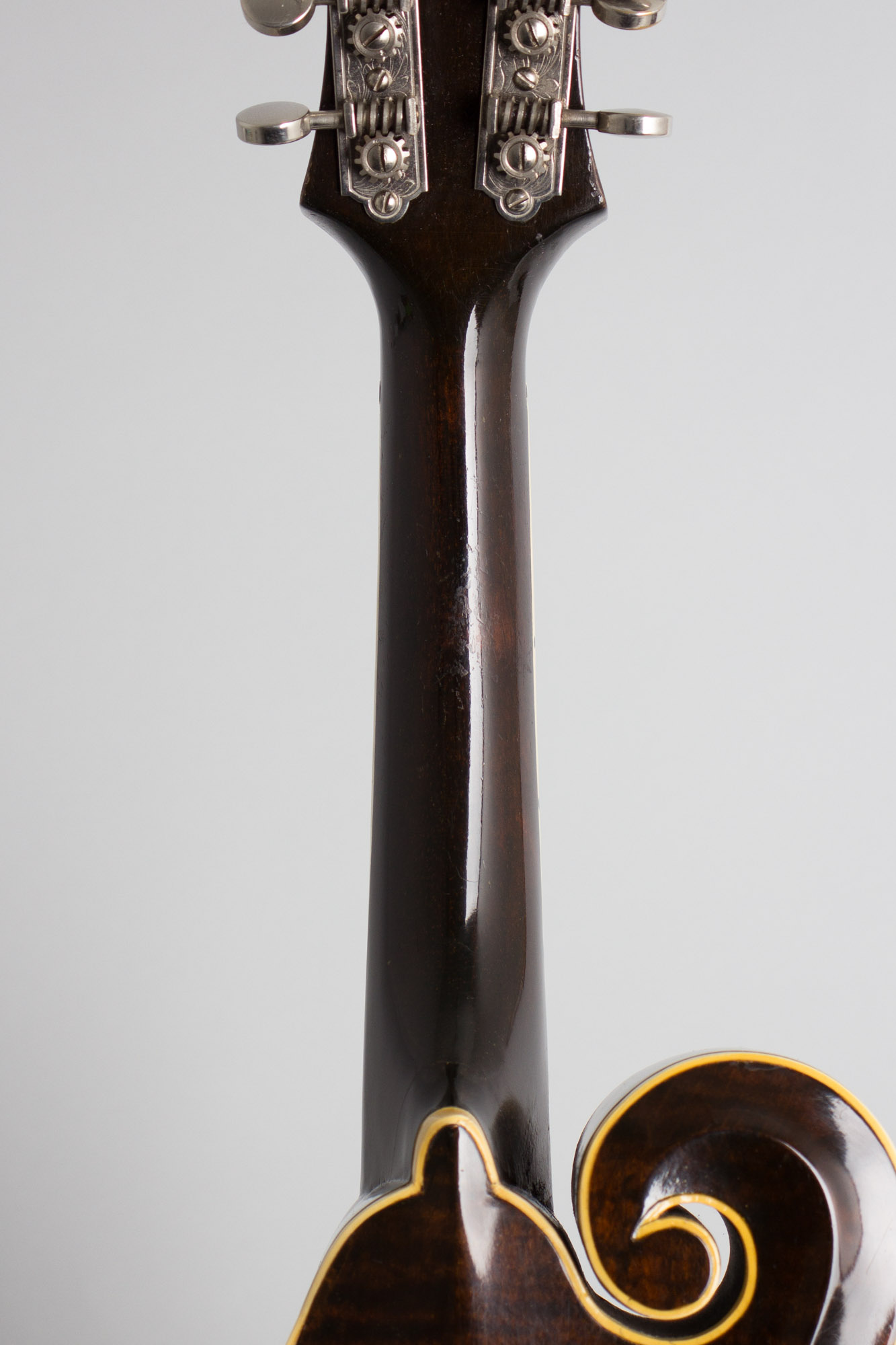
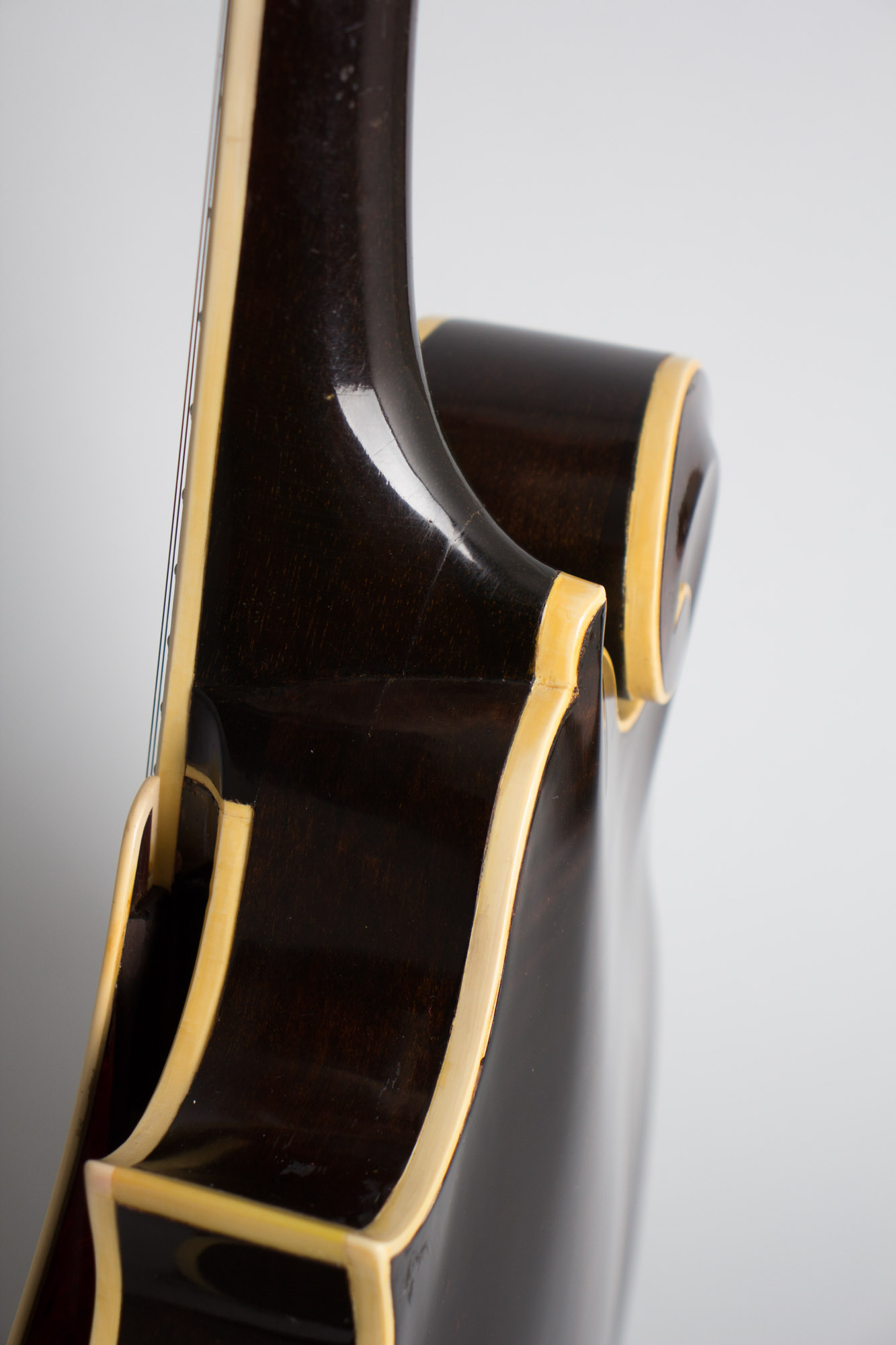
This is a nicely original mandolin showing some moderate play wear and a couple of repairs. There is a very solidly repaired crack through the center of the heel, slightly into the lower side below the heel. This is very cleanly sealed and only visible on fairly close inspection. The top has a crack running back from the bass side F hole, sealed solidly but not touched up. There is a prominent scrape off the top edge above this. These could be touched up to be less noticeable if desired, but for now we have left the instrument as it came from Ry's collection.
The rest of the finish shows pick marks and scrapes to the top, most notably on the scroll and area just below. There are some small dings showing a bit of fill-in in the below the bridge on the lower treble quarter, probably the marks of a DeArmond pickup control box. The rest of the instrument does not show as much wear as the top, with the back, sides and neck being comparatively clean.
The mandolin is all original except the bridge top, which is a modern reproduction. There is a patch on the top edge od the pickguard where it was likely notched for a pickup. Playability remains excellent, with the original frets still intact just taken down slightly. This mandolin has a fabulous sound; it really does capture the character of the Monroe Brothers records! Especially considering the Ry connection this is one of the coolest Gibson mandolins we have had, which definitely has a unique character. It rests in a very nice pink-lined shaped Gibson hard case that dates to the just post-war era, sized for the longer neck F-5 and F-12. there is a small metal "Fife & Nichols" badge under the lid, showing it was originally sourced from this well-known Hollywood music store. Overall Very Good + Condition.
This 1930's F-7 is one of the rarer Gibson mandolins, a historically interesting and very distinctive looking and sounding instrument only built for a few years. This example has a colorful recent history as well; we had sold it to Ry Cooder some years ago and he recently decided to put it back on the market. It picked up some fairly heavy use and some repair in it's time in Cooderville, but it still an extremely fine playing and sounding instrument.
This F-7 dates to 1937, several years after the model was introduced in 1934. This midline mandolin never sold well and was discontinued in 1939. The F-7, along with the very similar F-10 and F-12 were intended as a line of F-hole master-grade instruments to complement the superlative but extremely expensive F-5 mandolin, which at $250.00 was out of reach of all but the most well-heeled players in the depression era. Unfortunately interest in the mandolin was quite low at that time, and there was little demand for any expensive mandolins at all. While the similarly-positioned L-7, L-10 and L-12 guitars were relatively successful the mandolins vanished nearly without a trace, with only the least expensive F-7 lasting more than a year or so in the catalog.
The F-7 features a typical Gibson sunburst finish on the top with a dark shaded back and sides, similar to the better known L-7 guitar. There is elegant shaped pearl inlay on the fingerboard (in a variation on the "Nick Lucas" pattern) and a pearl fleur-de-Lys on the headstock. Originally retailing at $125.00 (plus case) the mandolin was half the cost of an F-5, but still priced above nearly all other extant mandolins during the depression.
The structural design of this trio of instruments is a bit odd to modern eyes as they combine the f-hole, scroll body construction of the F-5 with the shorter neck of the older oval-hole F-4. The scale length is the same, but the neck is sunk further into the body, pushing the bridge further back towards the tailpiece. Despite this apparent oddity, the F-7 sounds great with a distinctive guttural bark, if not quite the full bright projection and note clarity of its longer-necked cousin. This is a fabulous mandolin for the player, and an uncommon find in a pre-war Gibson artist model. All of Bill Monroe's early recordings in the 1930's with his brother Charlie were cut with a 1935 F-7, and this instrument is fully worthy of that sonic heritage.
Overall length is 26 1/4 in. (66.7 cm.), 10 1/8 in. (25.7 cm.) wide, and 1 3/4 in. (4.4 cm.) in depth, measured at side of rim. Scale length is 13 3/4 in. (349 mm.). Width of nut is 1 3/16 in. (30 mm.).
This is a nicely original mandolin showing some moderate play wear and a couple of repairs. There is a very solidly repaired crack through the center of the heel, slightly into the lower side below the heel. This is very cleanly sealed and only visible on fairly close inspection. The top has a crack running back from the bass side F hole, sealed solidly but not touched up. There is a prominent scrape off the top edge above this. These could be touched up to be less noticeable if desired, but for now we have left the instrument as it came from Ry's collection.
The rest of the finish shows pick marks and scrapes to the top, most notably on the scroll and area just below. There are some small dings showing a bit of fill-in in the below the bridge on the lower treble quarter, probably the marks of a DeArmond pickup control box. The rest of the instrument does not show as much wear as the top, with the back, sides and neck being comparatively clean.
The mandolin is all original except the bridge top, which is a modern reproduction. There is a patch on the top edge od the pickguard where it was likely notched for a pickup. Playability remains excellent, with the original frets still intact just taken down slightly. This mandolin has a fabulous sound; it really does capture the character of the Monroe Brothers records! Especially considering the Ry connection this is one of the coolest Gibson mandolins we have had, which definitely has a unique character. It rests in a very nice pink-lined shaped Gibson hard case that dates to the just post-war era, sized for the longer neck F-5 and F-12. there is a small metal "Fife & Nichols" badge under the lid, showing it was originally sourced from this well-known Hollywood music store. Overall Very Good + Condition.