Weymann 12 String Flat Top Acoustic Guitar (1908)

LOADING IMAGES

This item has been sold.
Item # 11355
Prices subject to change without notice.
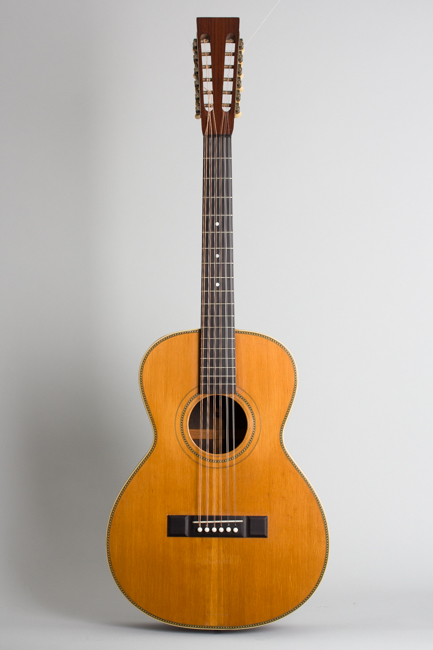
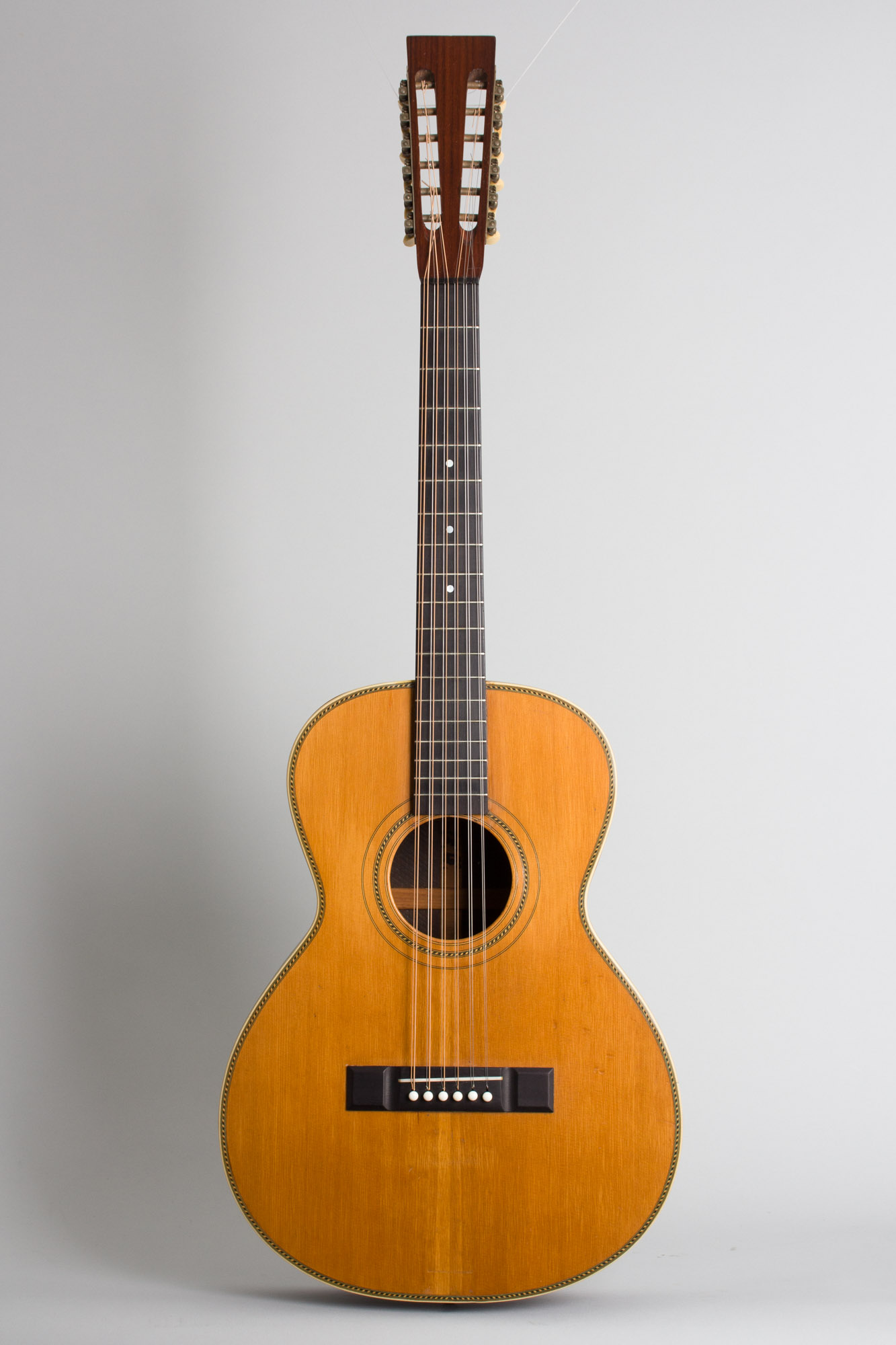
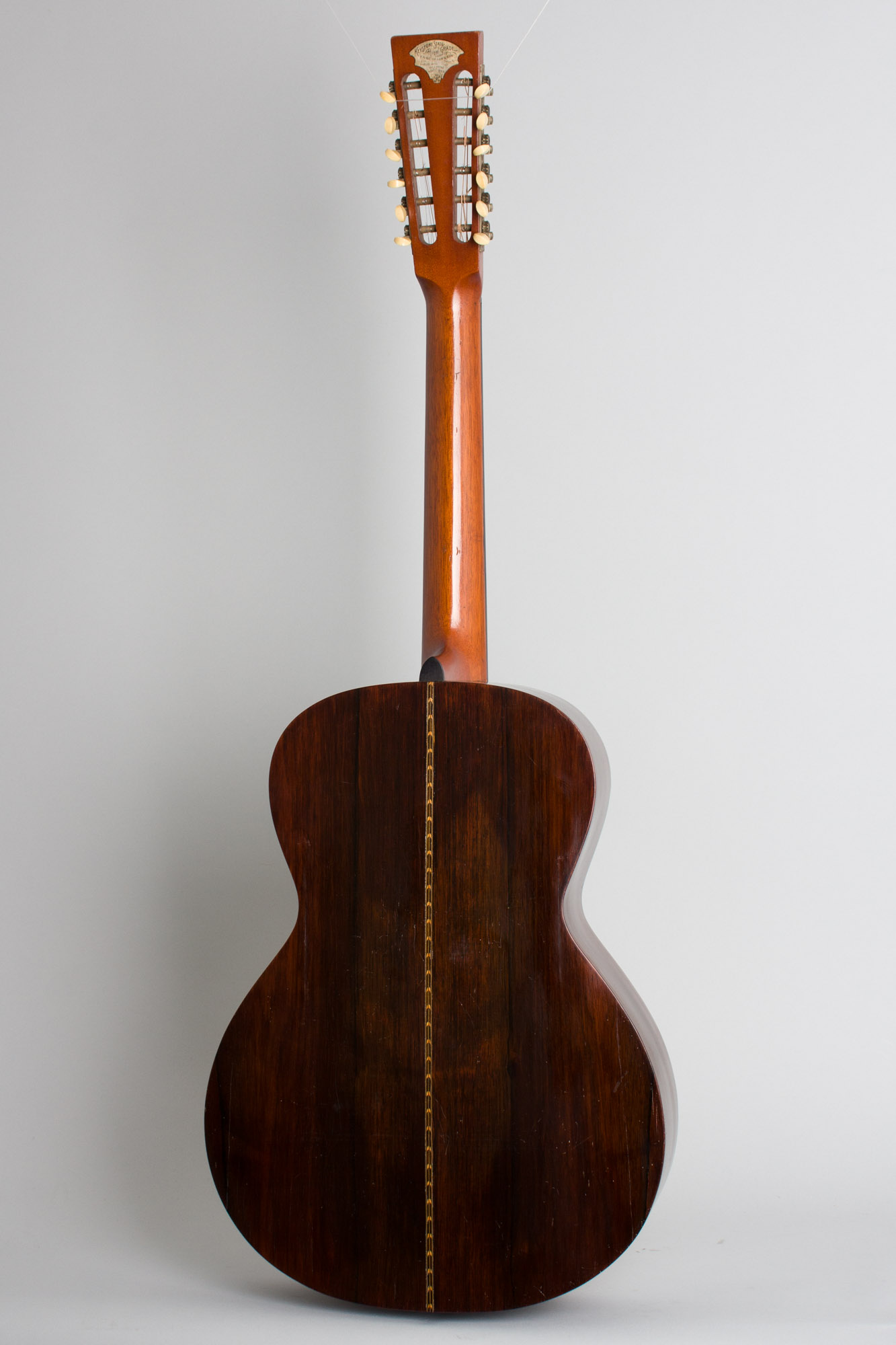
Weymann 12 String Flat Top Acoustic Guitar (1908), made in Philadelphia, PA, serial # 8494, natural varnish finish, Brazilian rosewood back and sides, spruce top; mahogany neck with ebony fingerboard, black tolex hard shell case.
This exceptionally rare 100+ year old Weymann 12-string is a really historically interesting instrument as well as a wonderful player's piece. The firm of H. A. Weymann & Son was founded by German immigrant Henry Arnold Weymann in Philadelphia in 1852. It was originally a retail firm trading in goods such as jewelry and watches, much of it imported from Germany. When Henry died in 1892, his son Harry William Weymann took over and steered the business more into musical goods, which they then began to build as well as import.
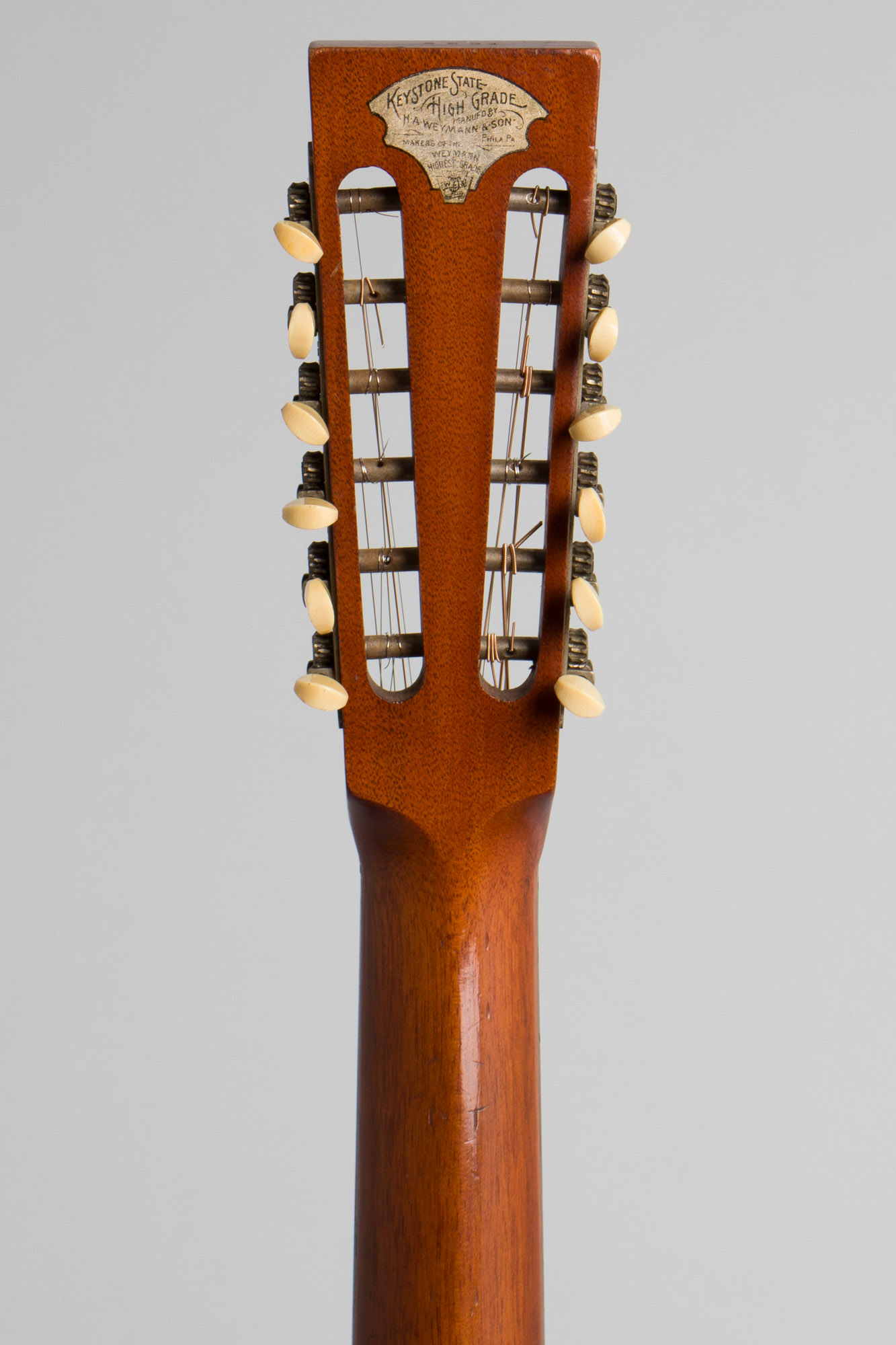
Weymann built a range of instruments in the early 1900s, constructed with the best materials by skilled craftsmen in their Philadelphia factory. Their flat-tops are mostly conventional but very high quality guitars, beautifully made and in many respects similar to those from C. F. Martin & Co. and Lyon & Healy. Records indicate the Weymann store sold Martin guitars, so they were certainly familiar with their Pennsylvania neighbor's designs! Weymann's lower priced guitars and banjos were sold under the "Keystone state" brand name, while better models carry a "Weymann High Grade" designation on the decorative gold decal on the headstock rear. This would fall into the mid-line area price wise, but was definitely a custom-ordered piece.
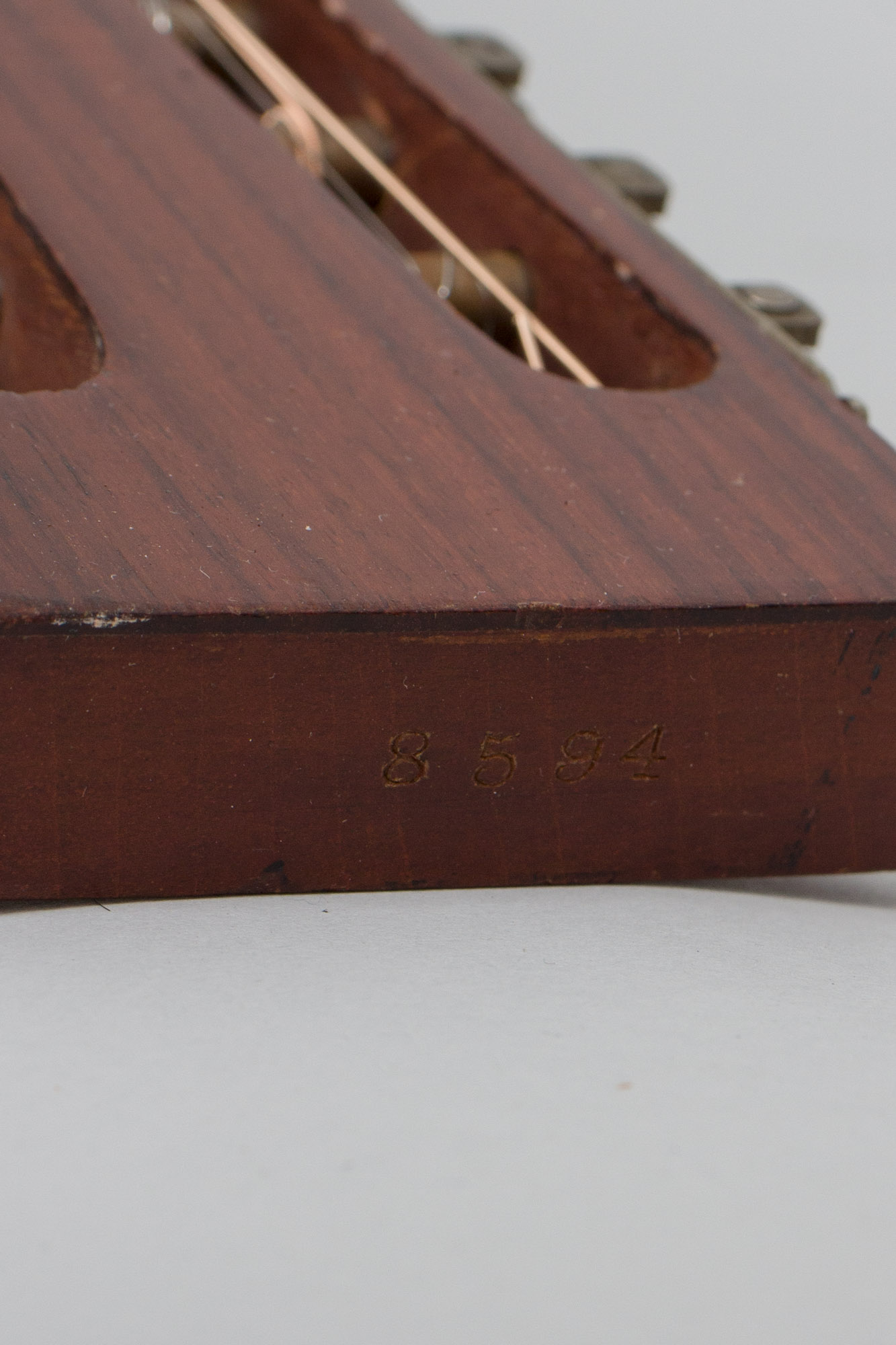
This Grand Concert sized 12-string is a truly spectacular and extremely rare example of their shop's work, one of only two such Weymanns currently known to exist. The serial number 8594 stamped on the top of the headstock dates it to about 1908, which marks it as one of the first generation of 12-strings. Grunewald, Holzapfel and likely Oscar Schmidt were building double-coursed guitars by that time, but any early 12-strings by these makers is quite rare today.
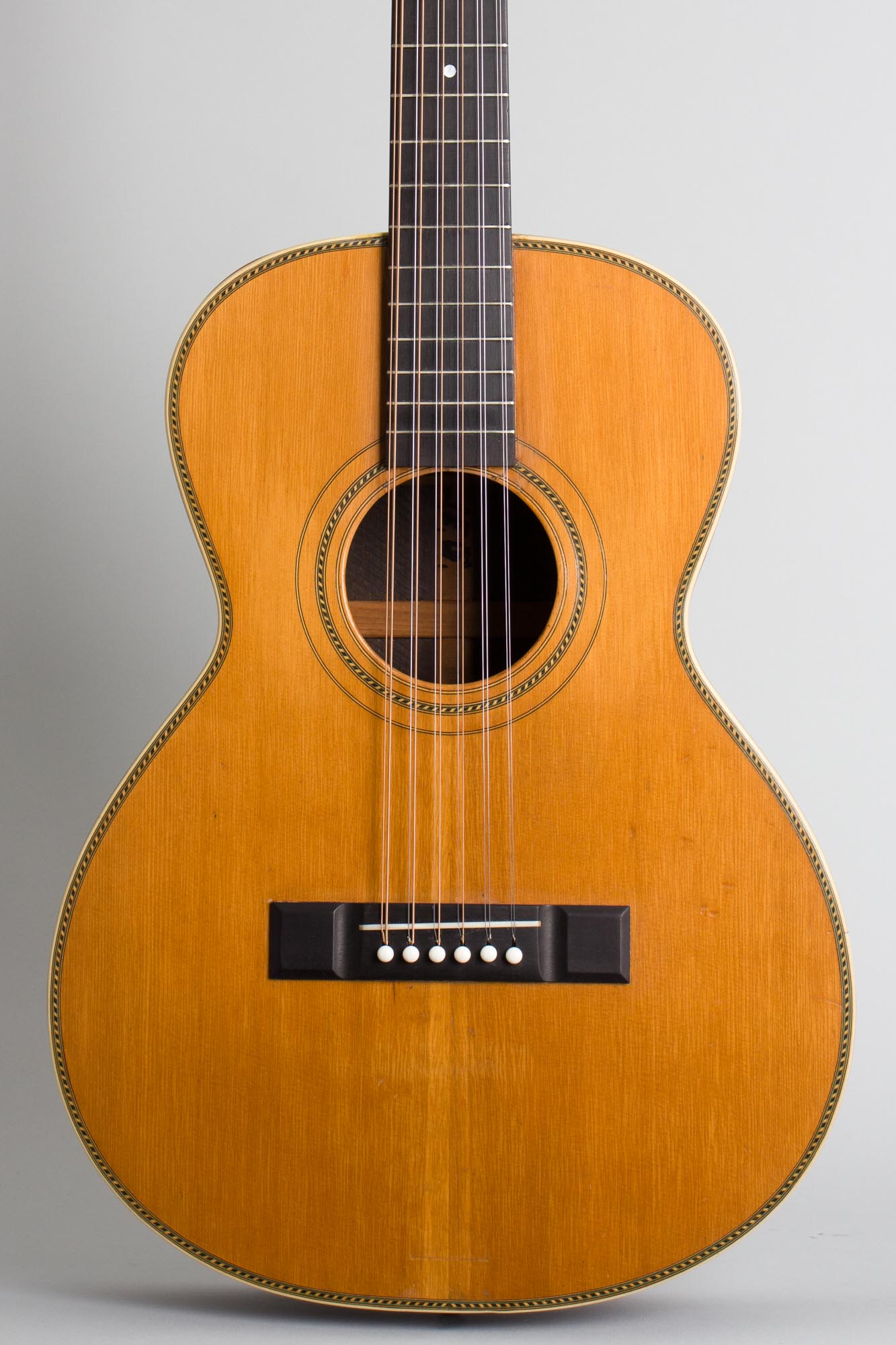
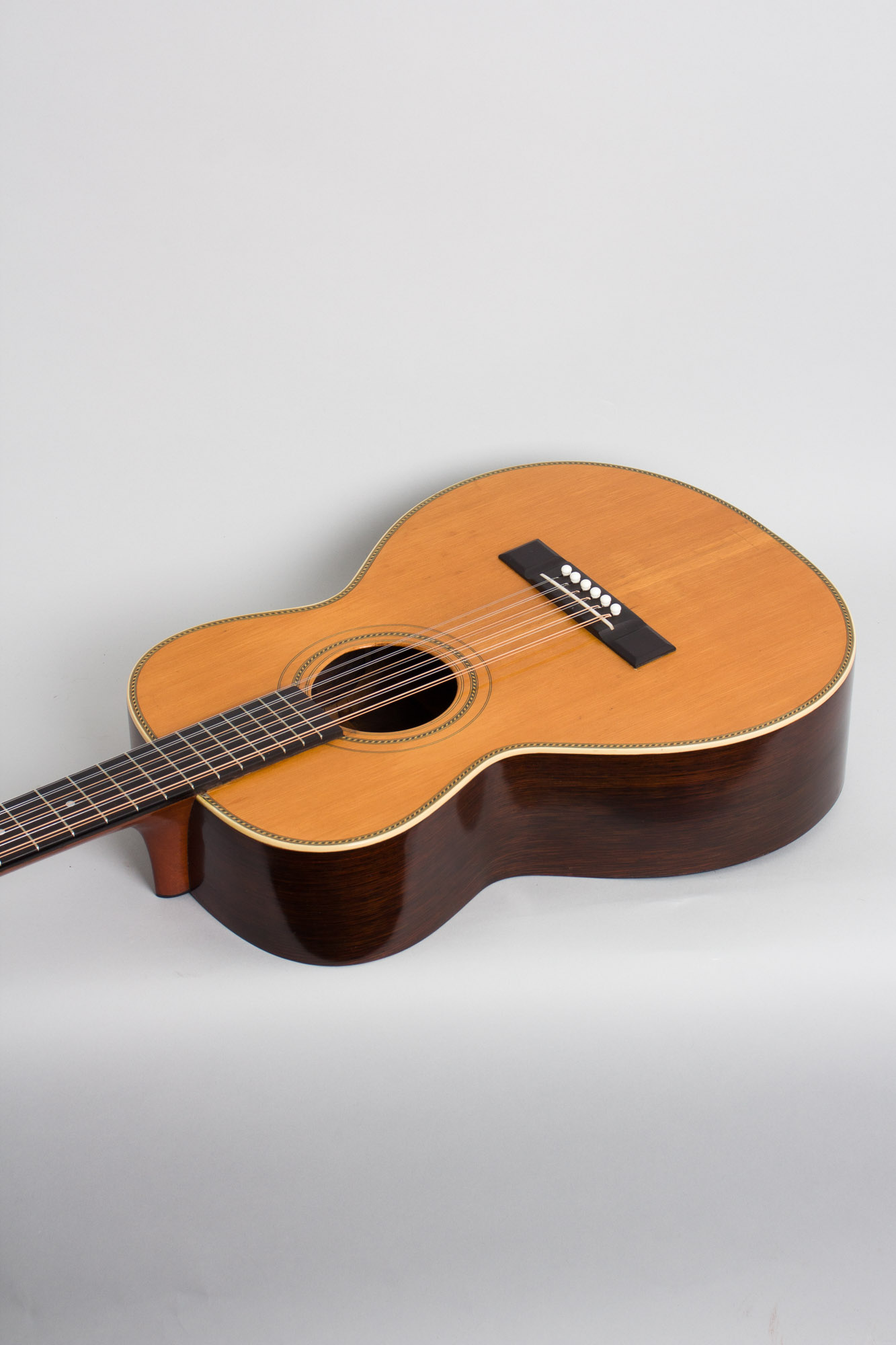
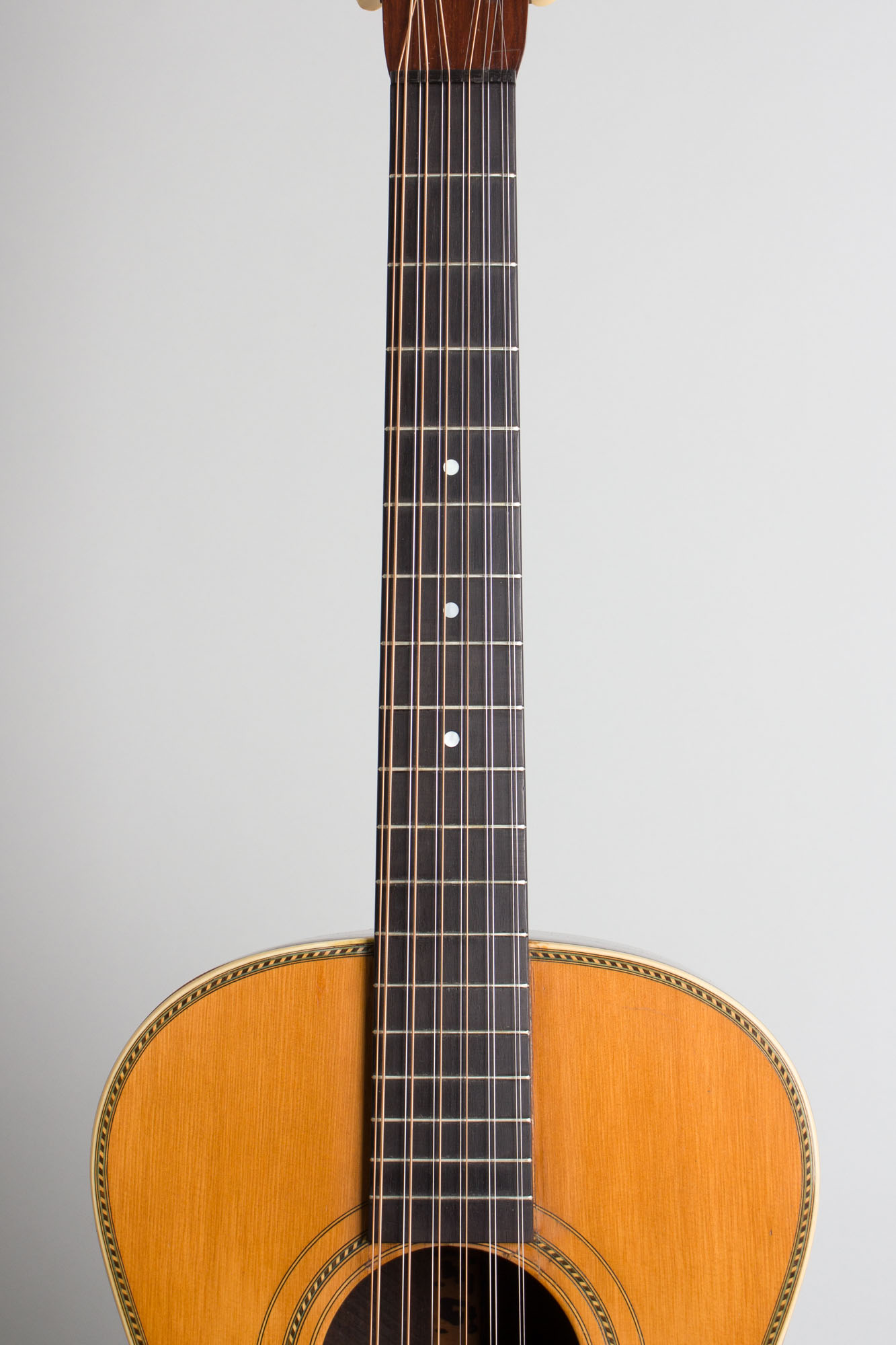
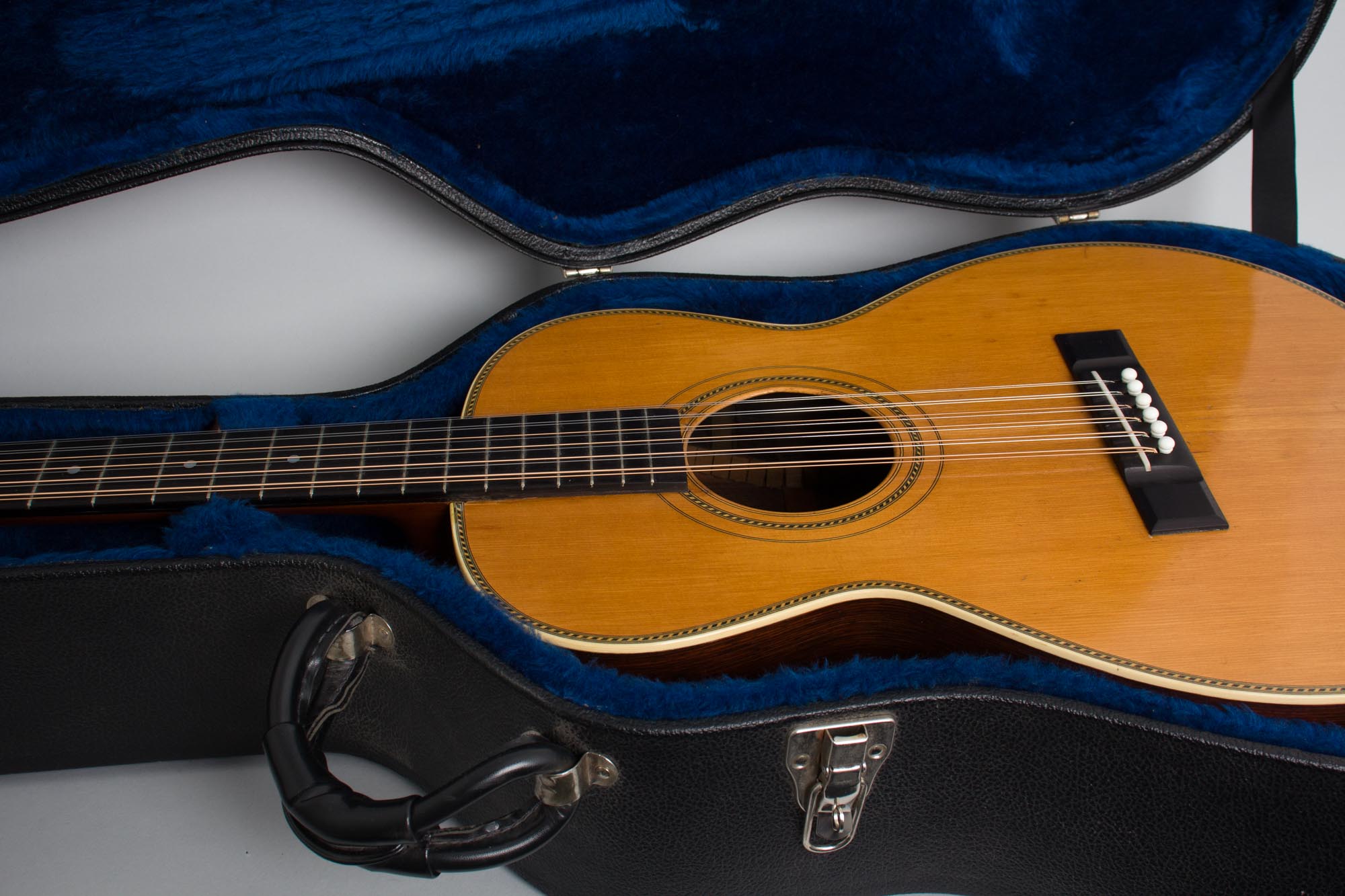
This guitar is fairly simple but beautifully made, with high grade Brazilian rosewood on the back and sides and a ladder-braced spruce top. The top is ivoroid bound with half-herringbone marquetry around the rim and sound hole. The bracing is typical for the era; three cross bars behind the soundhole and a thin top-spanning bridgeplate. This guitar was originally built with a pin bride (and is now restored to that layout again) but spent decades with a later pattern tailpiece setup.
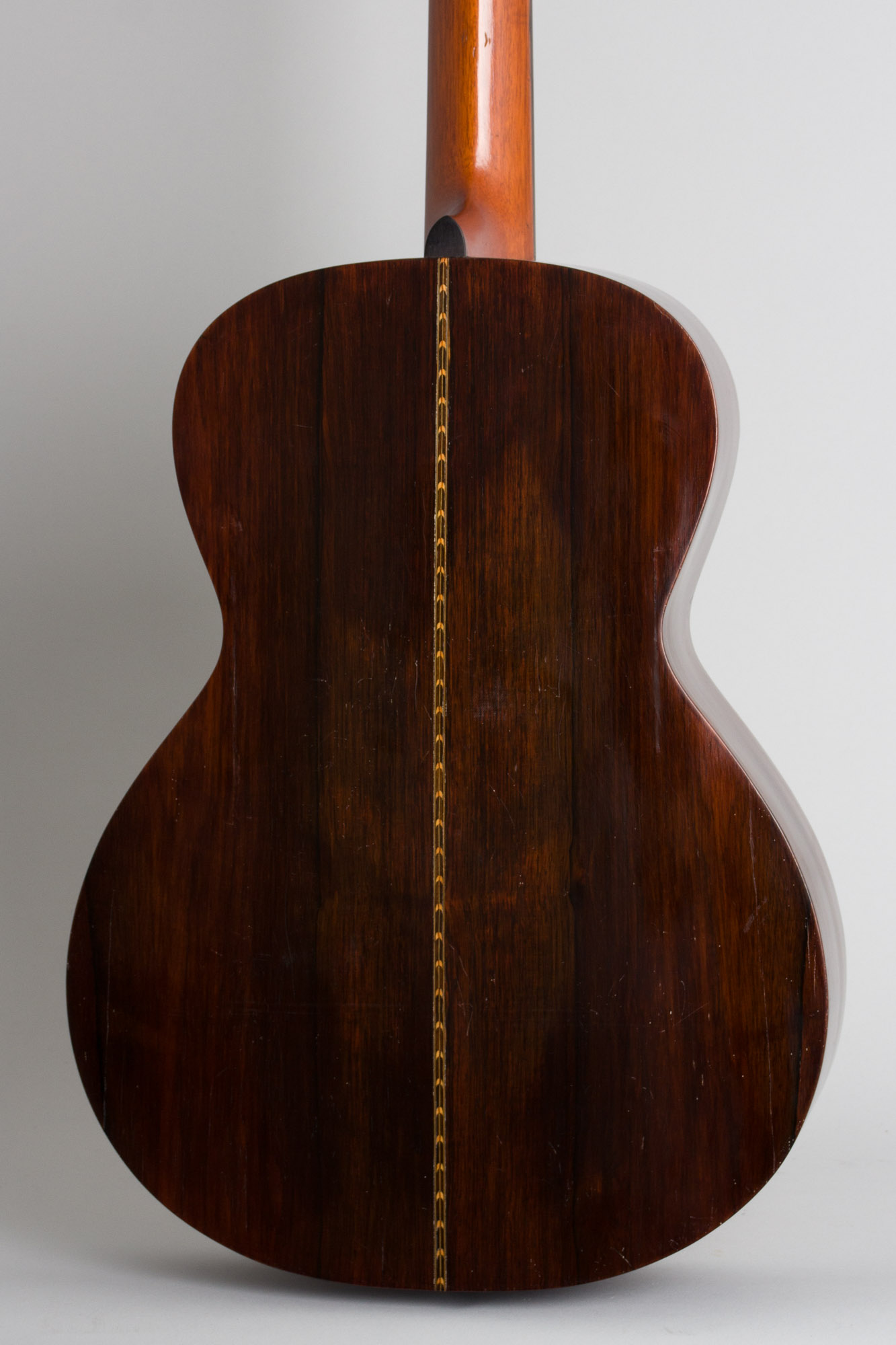
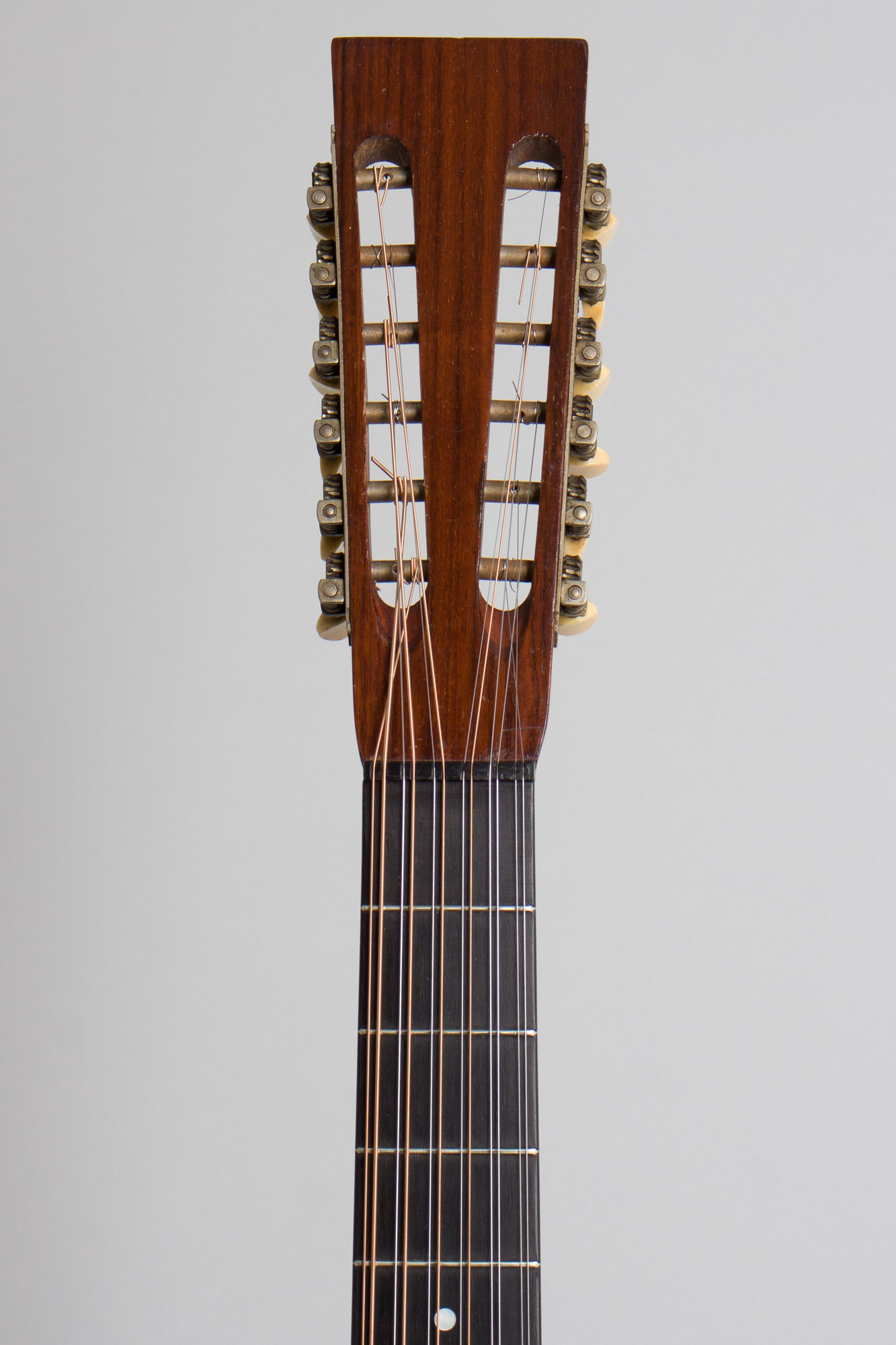
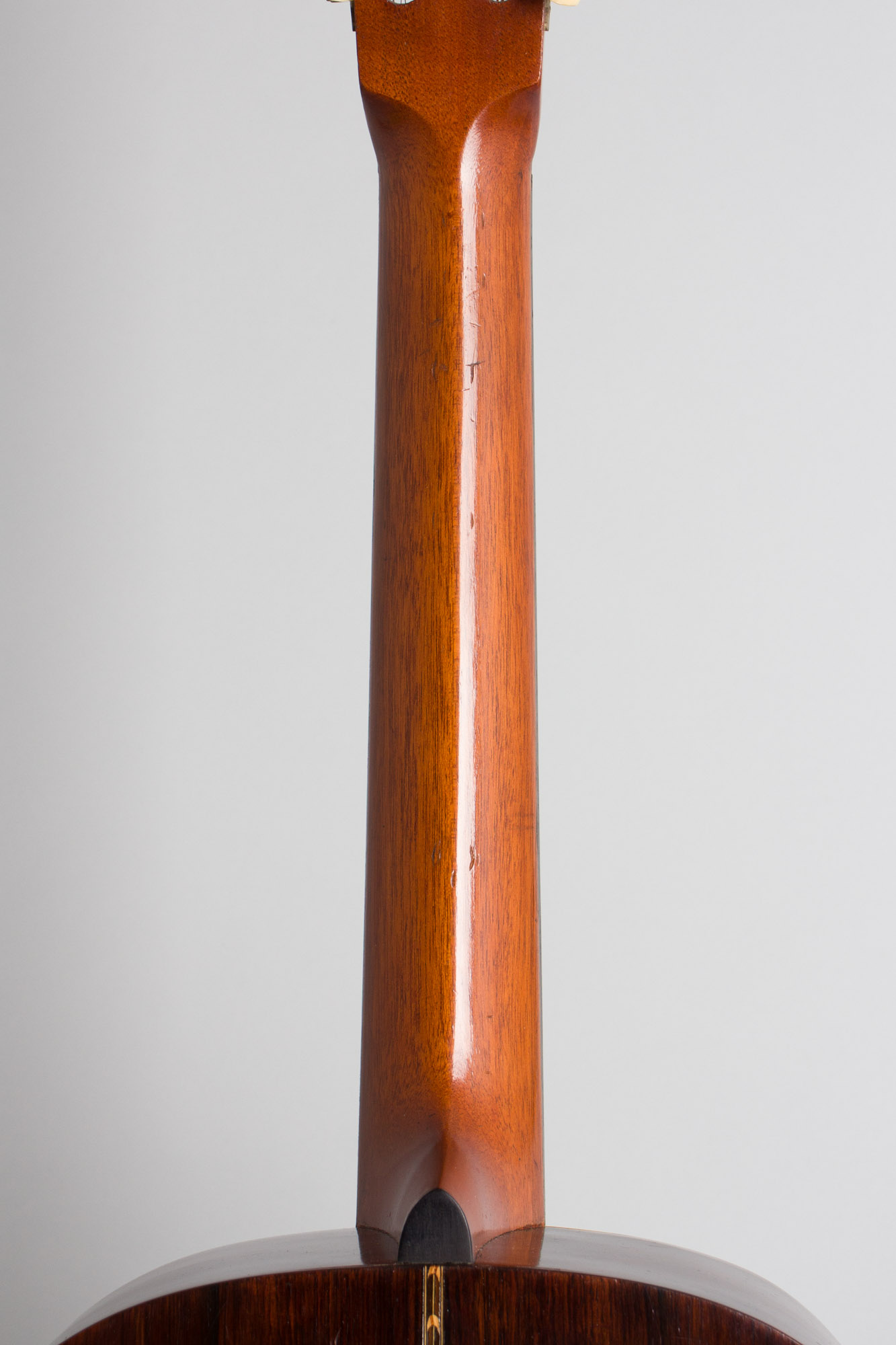
The back is not bound but features an inlaid chain pattern marquetry strip. The neck is mahogany, slimmer than many early 12-strings with a soft "V" profile. The dot-inlaid fingerboard and nut are ebony. The slotted headstock is fitted with period Handel tuners, faced with Brazilian rosewood and a "Keystone State High Grade" gold foil decal adorns the back.
Weymann products in general show a very high degree of craftsmanship typical of German-descended firms, and this lightly and very cleanly built one is no exception. It could be loosely described as "A Stella Built by Martin" without doing a disservice to any of these builders! This is a more delicate guitar than a Stella, not as loud or punchy but with a clear, shimmering sound with considerable depth. Virtually unique, this is a truly lovely fine-playing 12-string guitar with an enchanting sound all its own.
Overall length is 41 in. (104.1 cm.), 14 3/4 in. (37.5 cm.) wide at lower bout, and 4 3/8 in. (11.1 cm.) in depth at side, taken at the end block. Scale length is 25 in. (635 mm.). Width of nut is 1 13/16 in. (46 mm.).
Considering its age and rarity this is a very nicely preserved and amazingly original guitar, especially as it has been on Earth for something like 115 years. The thin varnish finish is original with some general wear, scuffs, dents and dings with some spots of light touchup, mostly over older repairs. The top has some deeper dings and dents but very little pickwear. The back and sides may have been partially lightly polished out, but have not had any full overspray.
The neck has been cleanly reset; there is a small and almost invisible split to the heel related to this that is very neatly repaired. There are two sealed rosewood grain crack repairs on the back, one near each waist. These have been sealed with some visible touchup. There is one more tightly sealed crack towards the lower bass bout edge. The top shows several sealed grain cracks below the bridge, the longest just off the center seam. There are several visible sealed grain splits below the fingerboard to the sound hole edge and repairs along the fingerboard extension, with a spruce plate reinforcing this area added underneath.
Internally the guitar otherwise remains original, it has not been re-braced as some are wont to do to old 12-strings. The replacement ebony bridge is period styled; it was matched to the original bridgeplate which had 6 holes only, in the pattern of some other period 12-strings. There was a tight endpin crack through the heel block glued, above this three small holes screw holes from a later tailpiece filled.
The fingerboard has been off and on, again very neat work, there may have been a non-metal reinforcement added at some point as the neck is quite straight. There is an ebony shim running under the entire length of the fingerboard that appears original, at least it matches exactly. The original frets have been neatly dressed and this is a fine playing guitar, very lovely sounding as well. There are some old initials inked on the backstrip, not particularly legible but possibly "J.E.G.".
We rarely find 12-string guitars of this era that are as functional and as original as this one. The great majority of older pre-war (WWI, that is) instruments of this type show the effects of decades of wear, neglect, and often poorly judged repairs. This small body 12-string Weymann a delight to play with a very responsive and somewhat "reverby" tone, a ticket right back to the gilded age. It is very suitable for vintage blues/ragtime or more abstract Kottke/Basho-style playing but really is quite versatile, at home with Byrds songs as well! As with all older 12-strings we recommend tuning below concert pitch; it seems to like "D" just fine! It resides in a modern HSC, a truly historic instrument and a real pleasure to play in any mode. Overall Excellent - Condition.
This exceptionally rare 100+ year old Weymann 12-string is a really historically interesting instrument as well as a wonderful player's piece. The firm of H. A. Weymann & Son was founded by German immigrant Henry Arnold Weymann in Philadelphia in 1852. It was originally a retail firm trading in goods such as jewelry and watches, much of it imported from Germany. When Henry died in 1892, his son Harry William Weymann took over and steered the business more into musical goods, which they then began to build as well as import.
Weymann built a range of instruments in the early 1900s, constructed with the best materials by skilled craftsmen in their Philadelphia factory. Their flat-tops are mostly conventional but very high quality guitars, beautifully made and in many respects similar to those from C. F. Martin & Co. and Lyon & Healy. Records indicate the Weymann store sold Martin guitars, so they were certainly familiar with their Pennsylvania neighbor's designs! Weymann's lower priced guitars and banjos were sold under the "Keystone state" brand name, while better models carry a "Weymann High Grade" designation on the decorative gold decal on the headstock rear. This would fall into the mid-line area price wise, but was definitely a custom-ordered piece.
This Grand Concert sized 12-string is a truly spectacular and extremely rare example of their shop's work, one of only two such Weymanns currently known to exist. The serial number 8594 stamped on the top of the headstock dates it to about 1908, which marks it as one of the first generation of 12-strings. Grunewald, Holzapfel and likely Oscar Schmidt were building double-coursed guitars by that time, but any early 12-strings by these makers is quite rare today.
This guitar is fairly simple but beautifully made, with high grade Brazilian rosewood on the back and sides and a ladder-braced spruce top. The top is ivoroid bound with half-herringbone marquetry around the rim and sound hole. The bracing is typical for the era; three cross bars behind the soundhole and a thin top-spanning bridgeplate. This guitar was originally built with a pin bride (and is now restored to that layout again) but spent decades with a later pattern tailpiece setup.
The back is not bound but features an inlaid chain pattern marquetry strip. The neck is mahogany, slimmer than many early 12-strings with a soft "V" profile. The dot-inlaid fingerboard and nut are ebony. The slotted headstock is fitted with period Handel tuners, faced with Brazilian rosewood and a "Keystone State High Grade" gold foil decal adorns the back.
Weymann products in general show a very high degree of craftsmanship typical of German-descended firms, and this lightly and very cleanly built one is no exception. It could be loosely described as "A Stella Built by Martin" without doing a disservice to any of these builders! This is a more delicate guitar than a Stella, not as loud or punchy but with a clear, shimmering sound with considerable depth. Virtually unique, this is a truly lovely fine-playing 12-string guitar with an enchanting sound all its own.
Overall length is 41 in. (104.1 cm.), 14 3/4 in. (37.5 cm.) wide at lower bout, and 4 3/8 in. (11.1 cm.) in depth at side, taken at the end block. Scale length is 25 in. (635 mm.). Width of nut is 1 13/16 in. (46 mm.).
Considering its age and rarity this is a very nicely preserved and amazingly original guitar, especially as it has been on Earth for something like 115 years. The thin varnish finish is original with some general wear, scuffs, dents and dings with some spots of light touchup, mostly over older repairs. The top has some deeper dings and dents but very little pickwear. The back and sides may have been partially lightly polished out, but have not had any full overspray.
The neck has been cleanly reset; there is a small and almost invisible split to the heel related to this that is very neatly repaired. There are two sealed rosewood grain crack repairs on the back, one near each waist. These have been sealed with some visible touchup. There is one more tightly sealed crack towards the lower bass bout edge. The top shows several sealed grain cracks below the bridge, the longest just off the center seam. There are several visible sealed grain splits below the fingerboard to the sound hole edge and repairs along the fingerboard extension, with a spruce plate reinforcing this area added underneath.
Internally the guitar otherwise remains original, it has not been re-braced as some are wont to do to old 12-strings. The replacement ebony bridge is period styled; it was matched to the original bridgeplate which had 6 holes only, in the pattern of some other period 12-strings. There was a tight endpin crack through the heel block glued, above this three small holes screw holes from a later tailpiece filled.
The fingerboard has been off and on, again very neat work, there may have been a non-metal reinforcement added at some point as the neck is quite straight. There is an ebony shim running under the entire length of the fingerboard that appears original, at least it matches exactly. The original frets have been neatly dressed and this is a fine playing guitar, very lovely sounding as well. There are some old initials inked on the backstrip, not particularly legible but possibly "J.E.G.".
We rarely find 12-string guitars of this era that are as functional and as original as this one. The great majority of older pre-war (WWI, that is) instruments of this type show the effects of decades of wear, neglect, and often poorly judged repairs. This small body 12-string Weymann a delight to play with a very responsive and somewhat "reverby" tone, a ticket right back to the gilded age. It is very suitable for vintage blues/ragtime or more abstract Kottke/Basho-style playing but really is quite versatile, at home with Byrds songs as well! As with all older 12-strings we recommend tuning below concert pitch; it seems to like "D" just fine! It resides in a modern HSC, a truly historic instrument and a real pleasure to play in any mode. Overall Excellent - Condition.