Gibson L-10 Arch Top Acoustic Guitar (1933)

LOADING IMAGES
This item has been sold.
Item # 11406
Prices subject to change without notice.
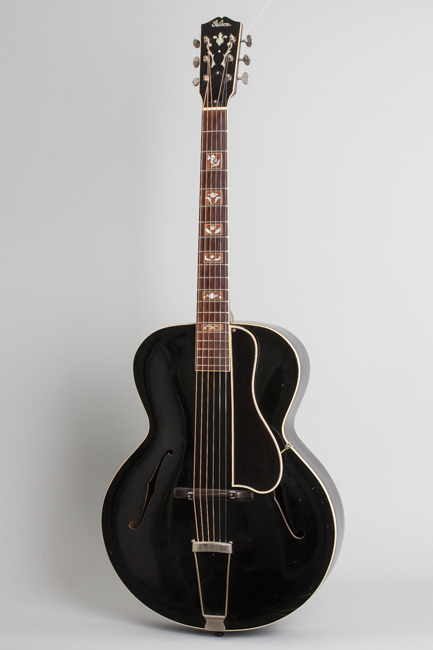
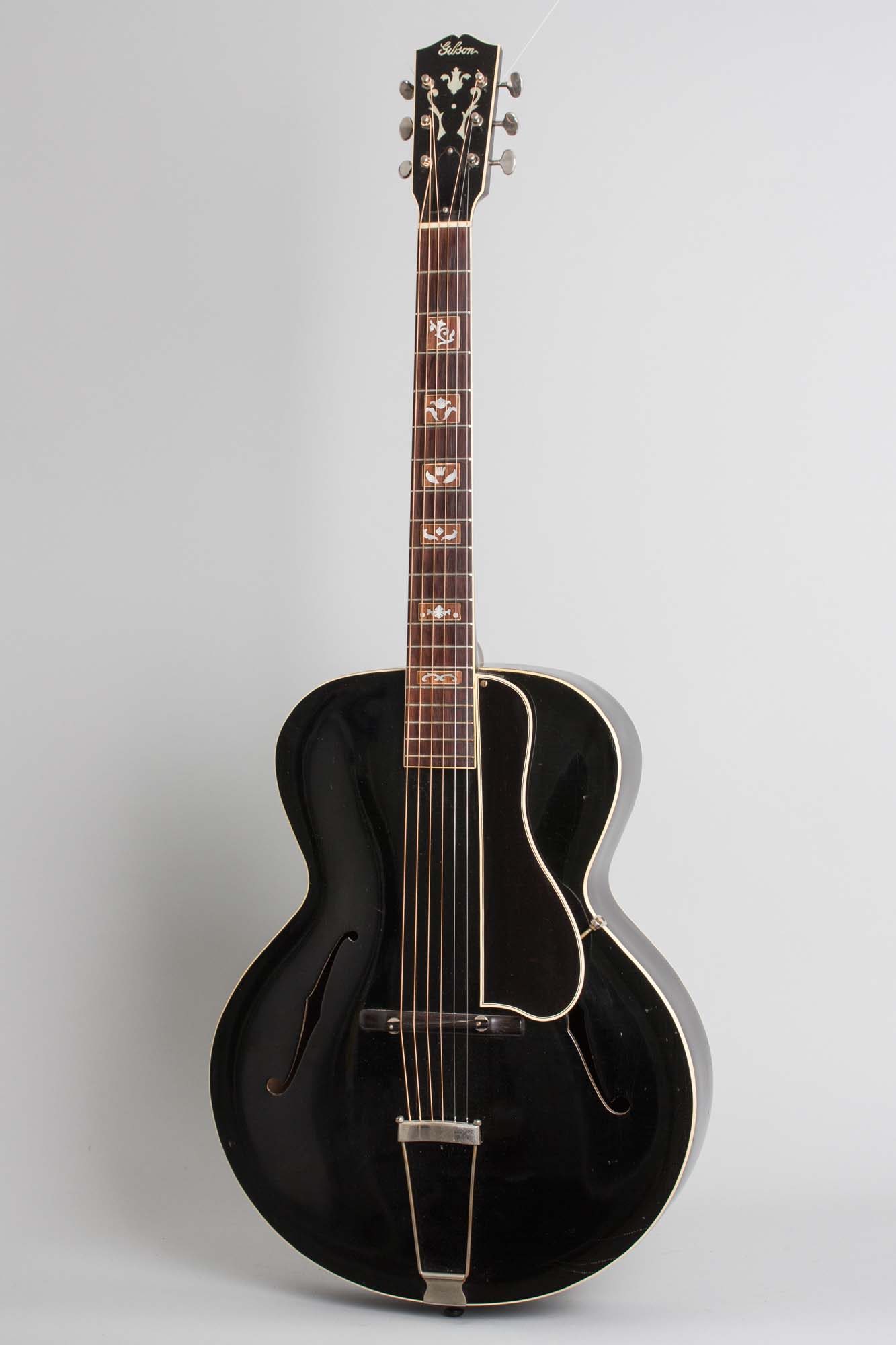
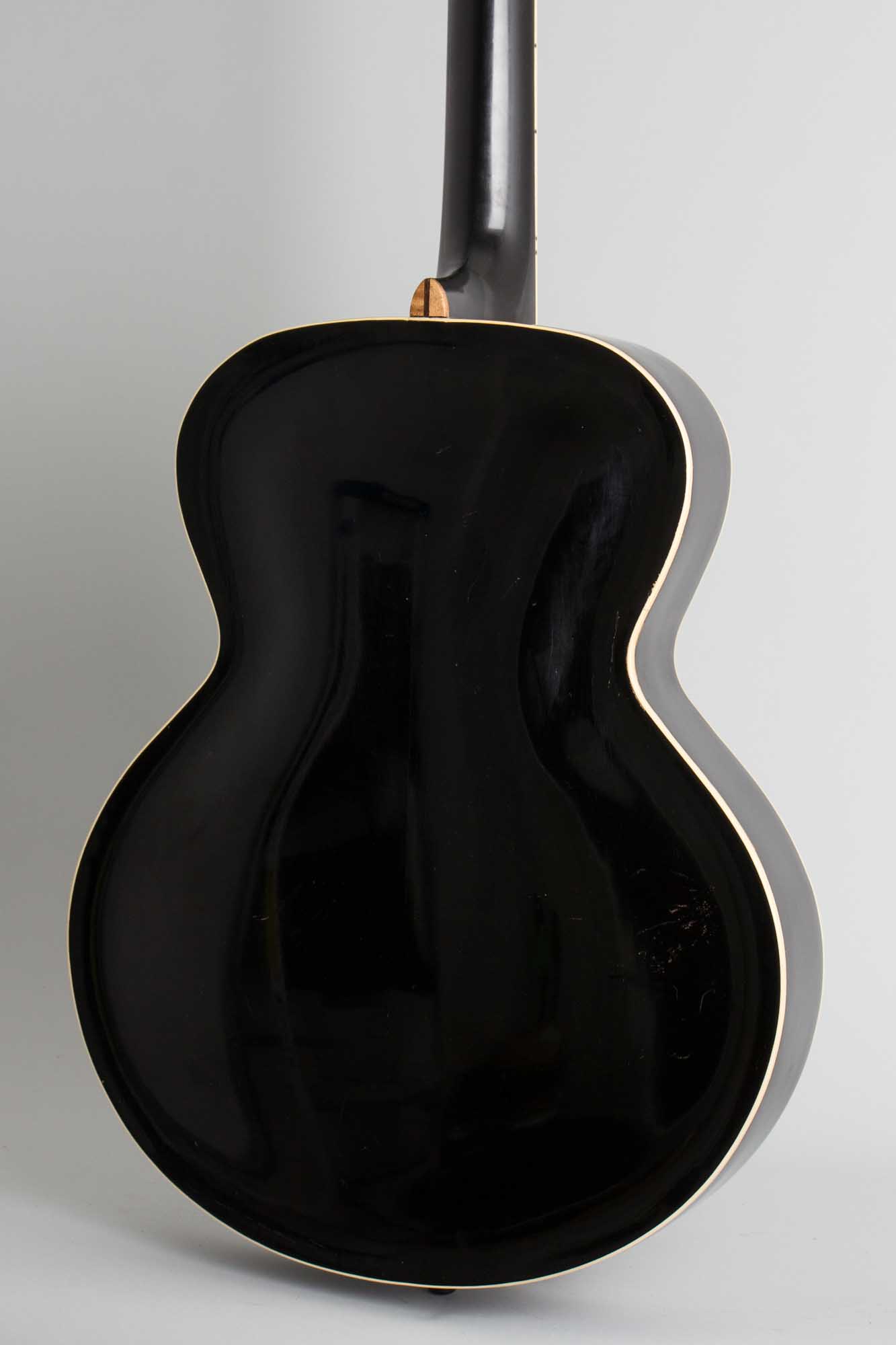
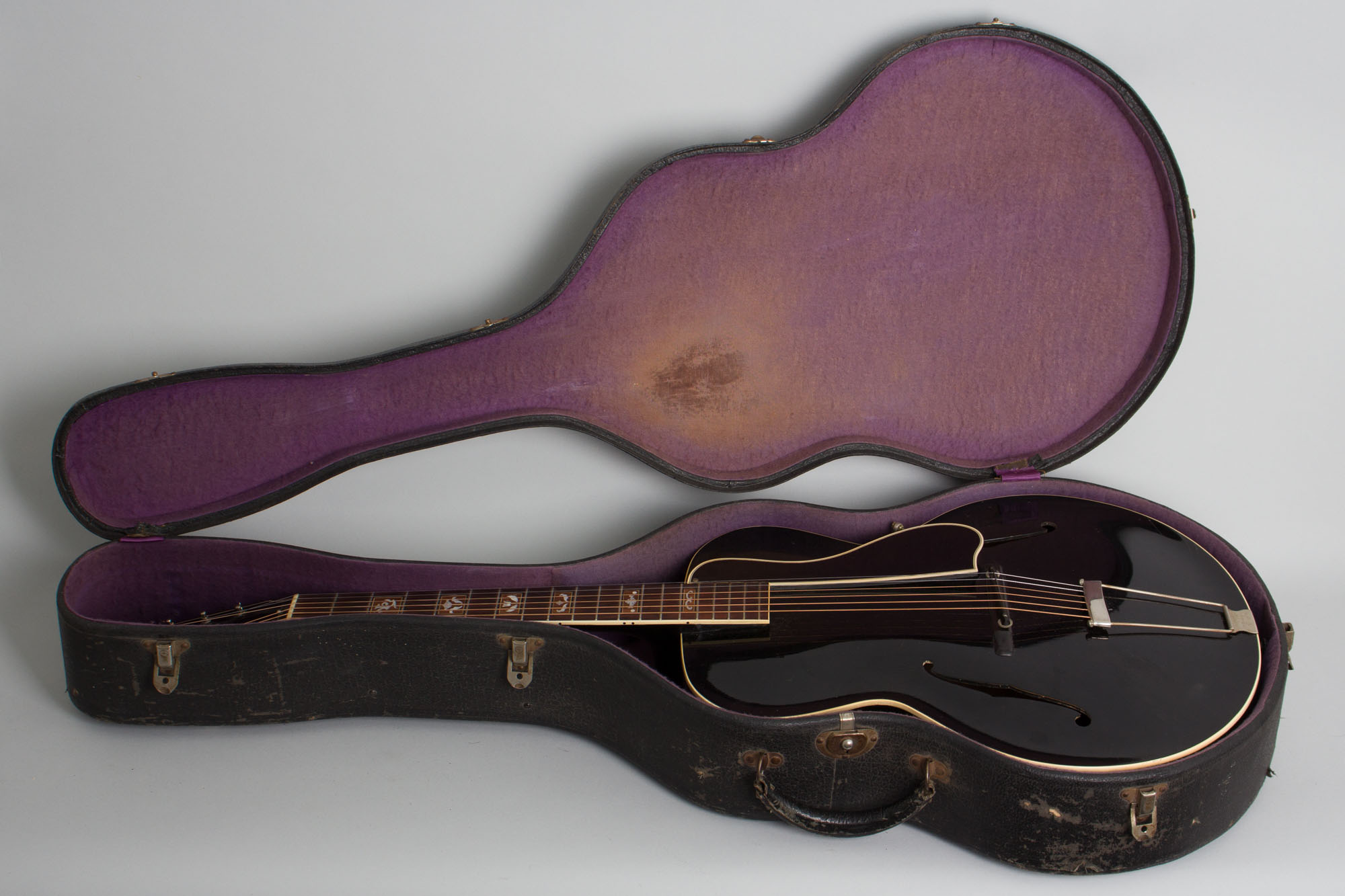
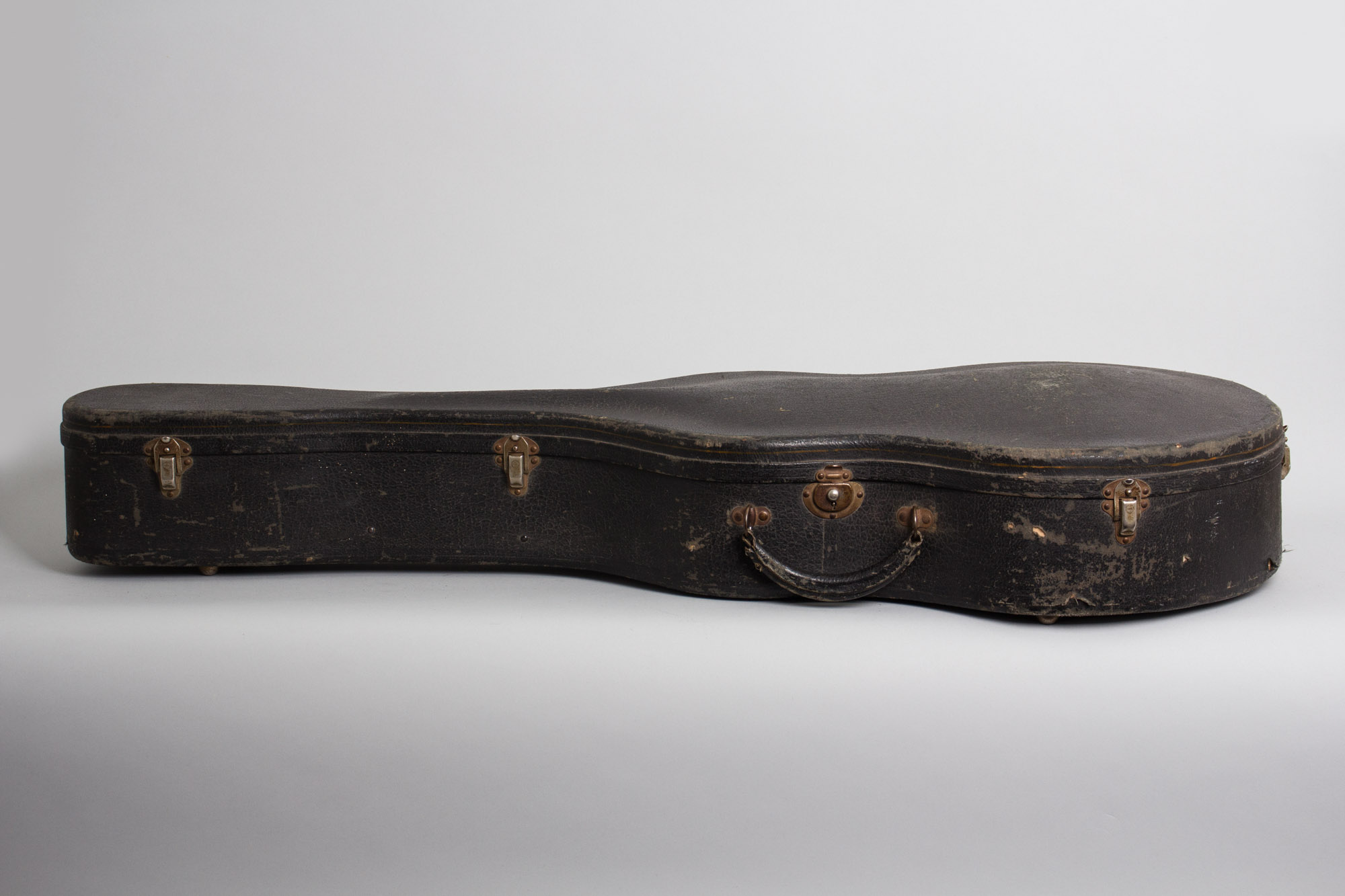
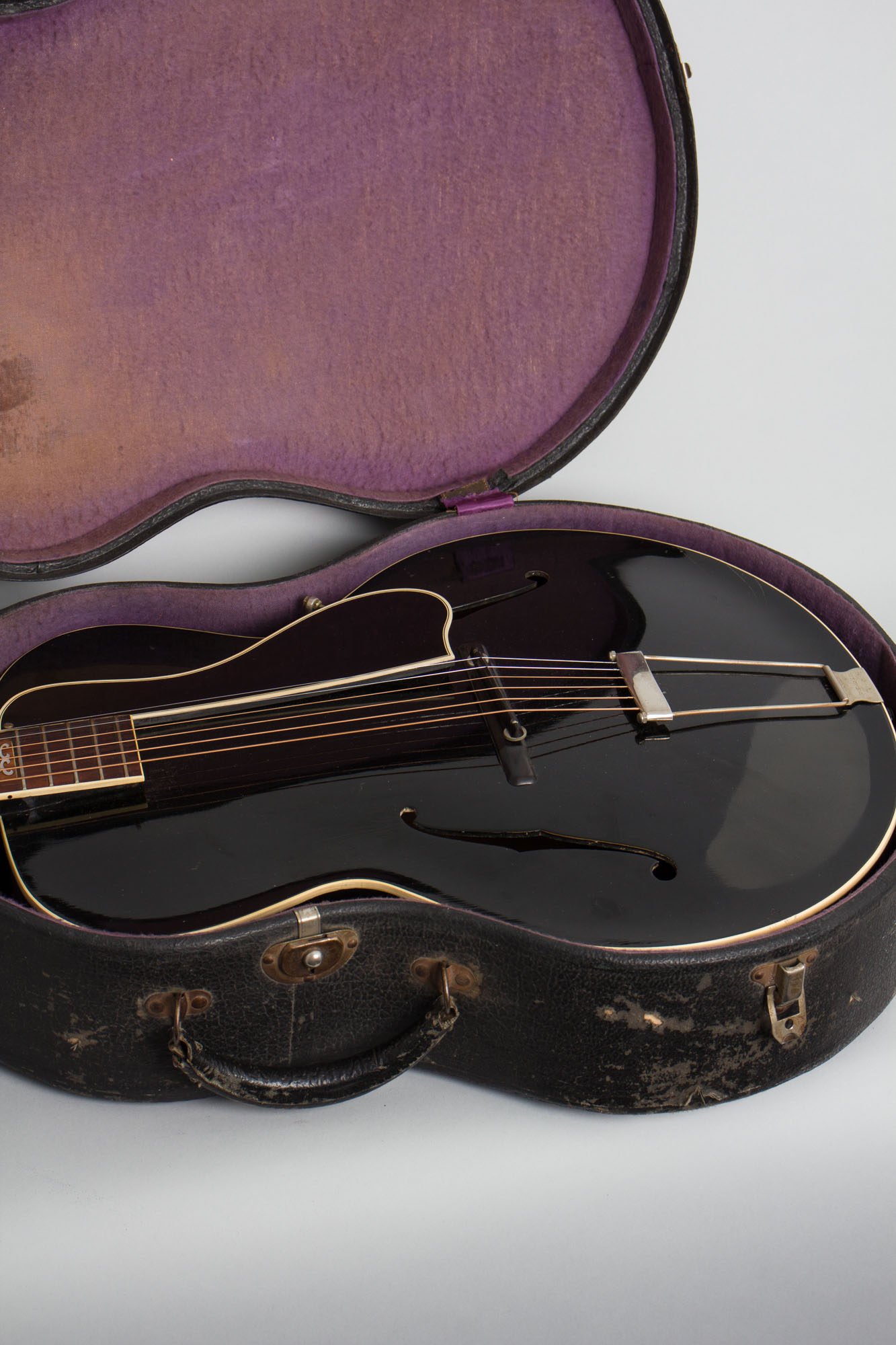
Gibson L-10 Model Arch Top Acoustic Guitar (1933), made in Kalamazoo, Michigan, serial # 90209, black lacquer finish, maple back and sides, spruce top;laminated maple neck with rosewood fingerboard, original black hard shell case.
This beautiful "tuxedo" finish Gibson L-10 dates to 1933-4, a transitional time for company's arch top instruments. The Kalamazoo firm was re-designing their arch-top line to compete with New York's Epiphone, which had flanked them with a large integrated catalog of carved guitars in mid-1931. Gibson was somewhat slow to respond but the L-10 was the first return salvo in the "Archtop wars" of the 1930s.
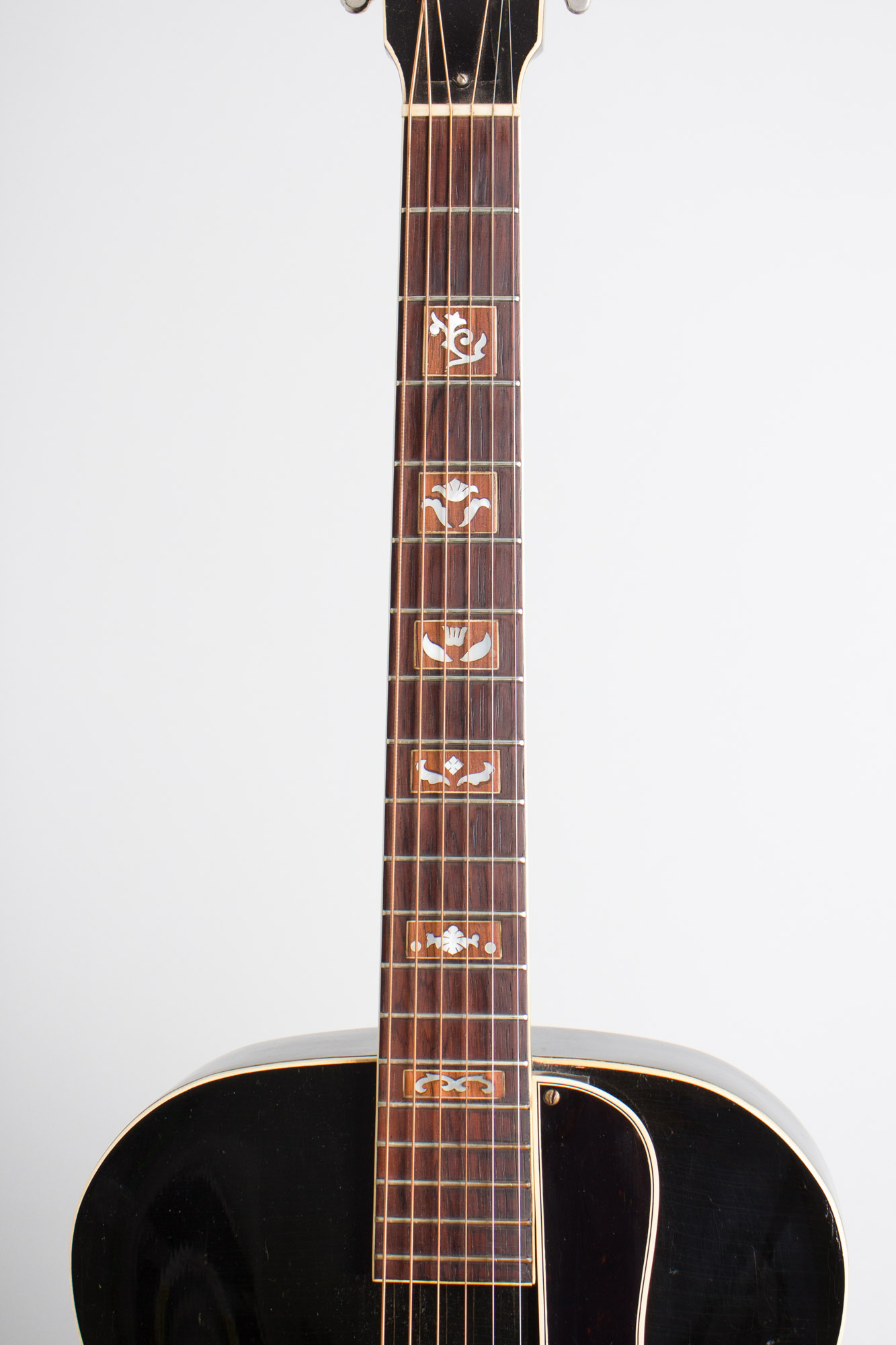
The L-10 was introduced In late 1931 as the next F-hole model down from the L-5, originally basically a plain Jane version of that fancy top line guitar with a black finish overall instead of sunburst. It was re-designed for 1934 Gibson catalog "W" as a more distinctive model in its own right thanks to the elaborate "picture box" inlay added to the fingerboard. The L-10 only existed in this striking ebony-finished but fancier form for about two years, so this is a fairly rare instrument.
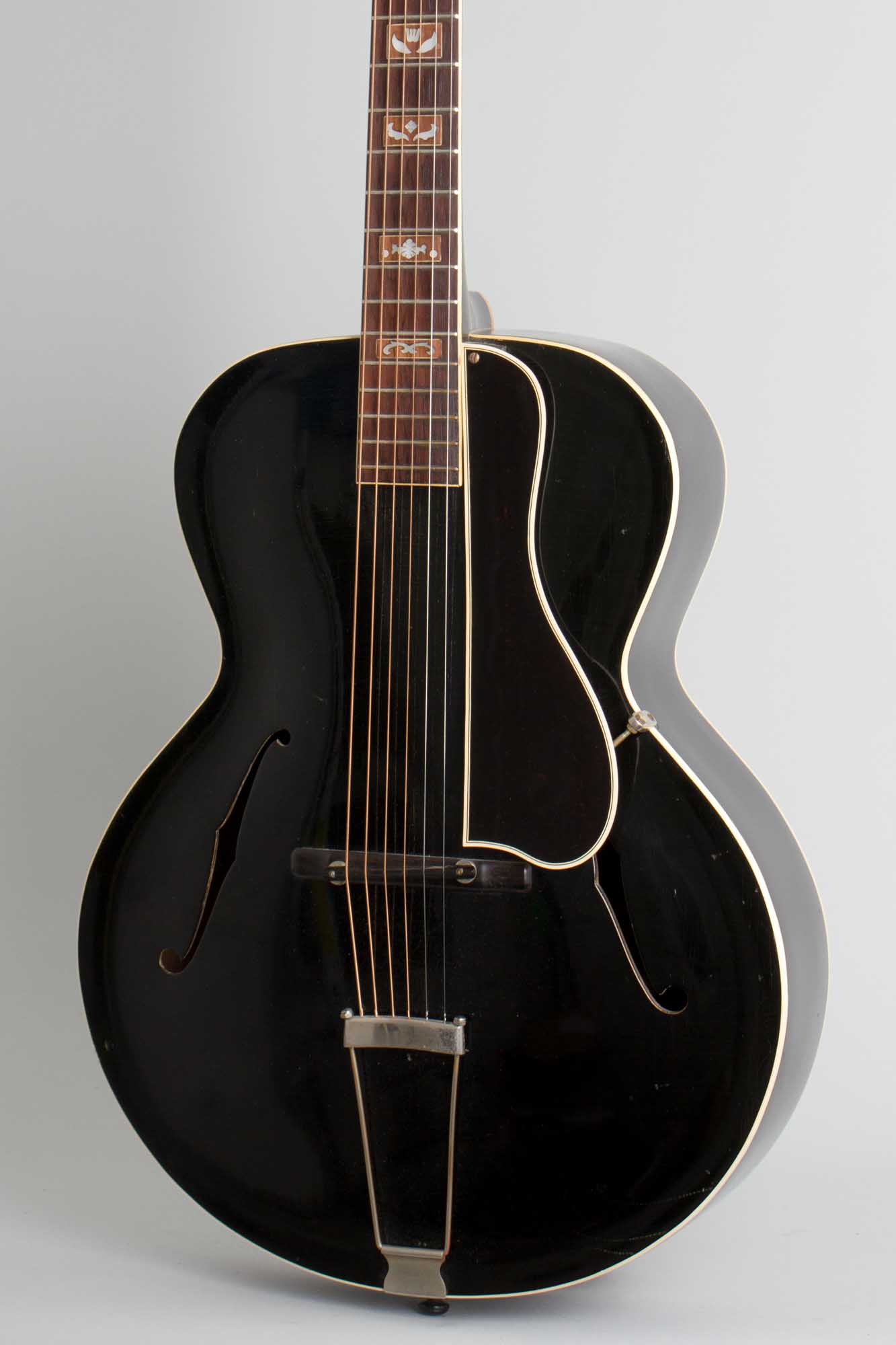
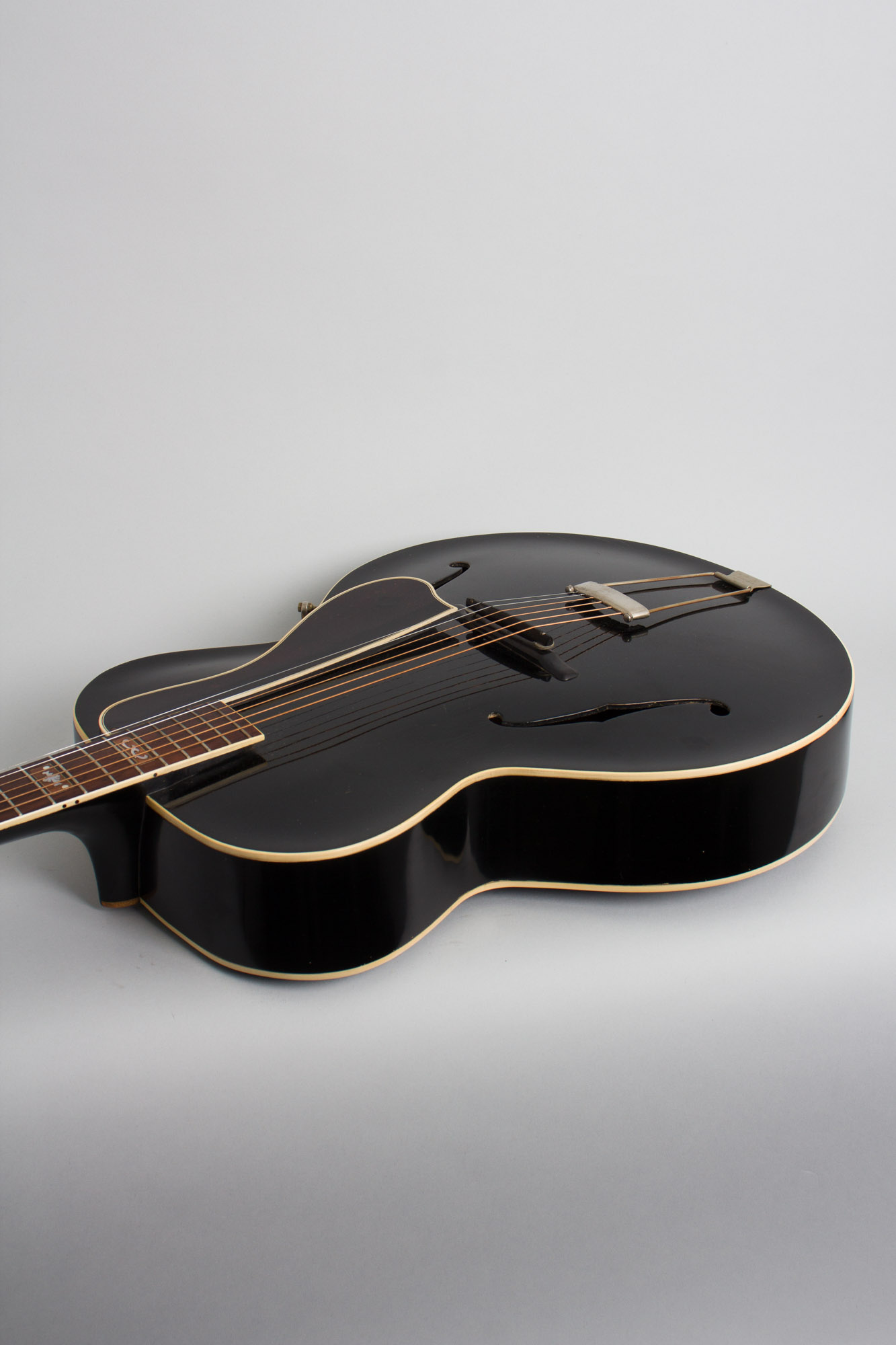
This guitar's factory order number indicates it was built in late 1933, and the serial number indicates shipment just as the calendar rolled over to 1934. This period L-10 is a 16" wide archtop with a fully carved top and back, single bound, with a parallel-braced top. The braces have a laminated cap but are not of the "kerfed" pattern seen on some. The F-holes are the early small pattern and unbound.
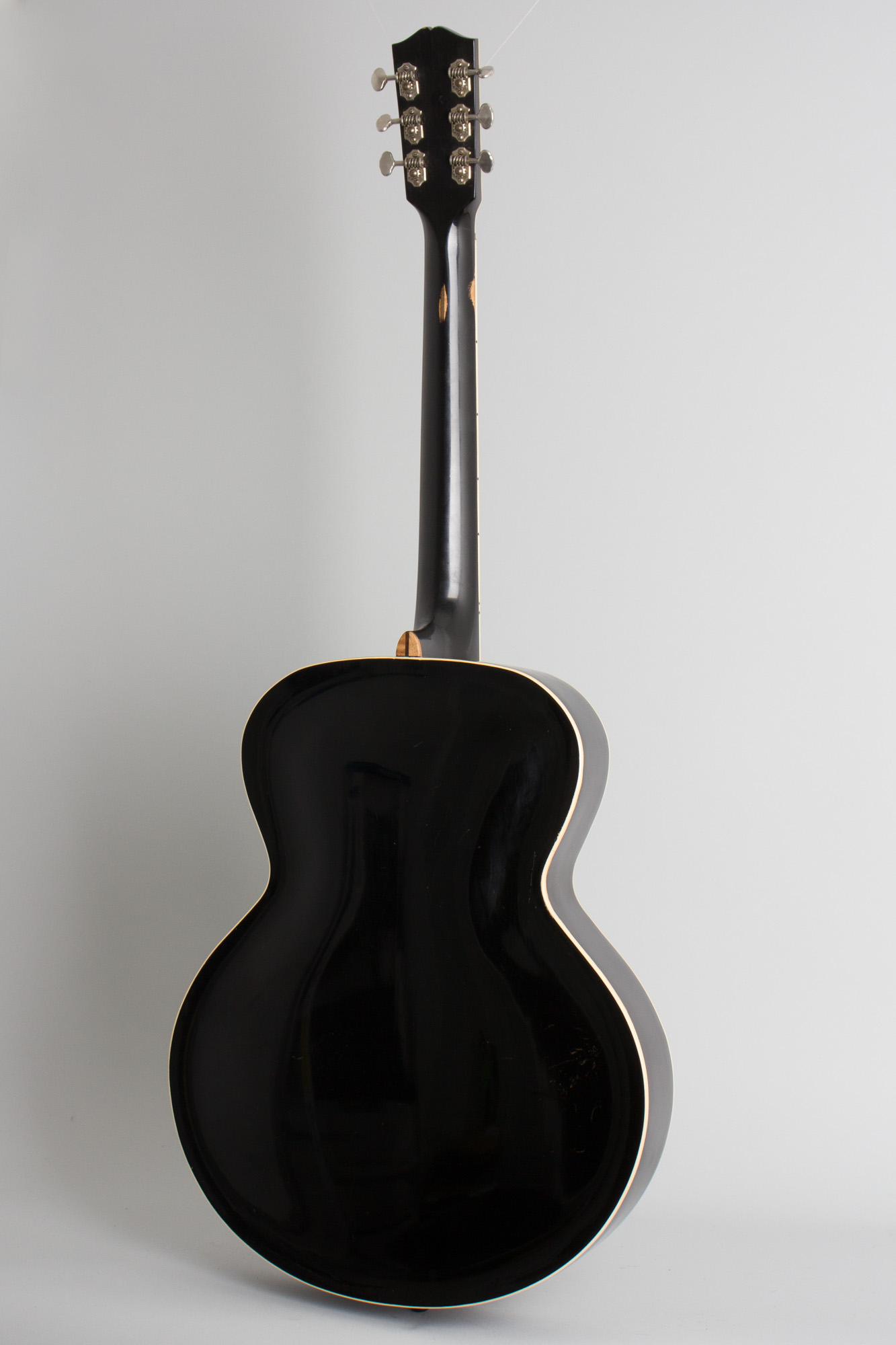
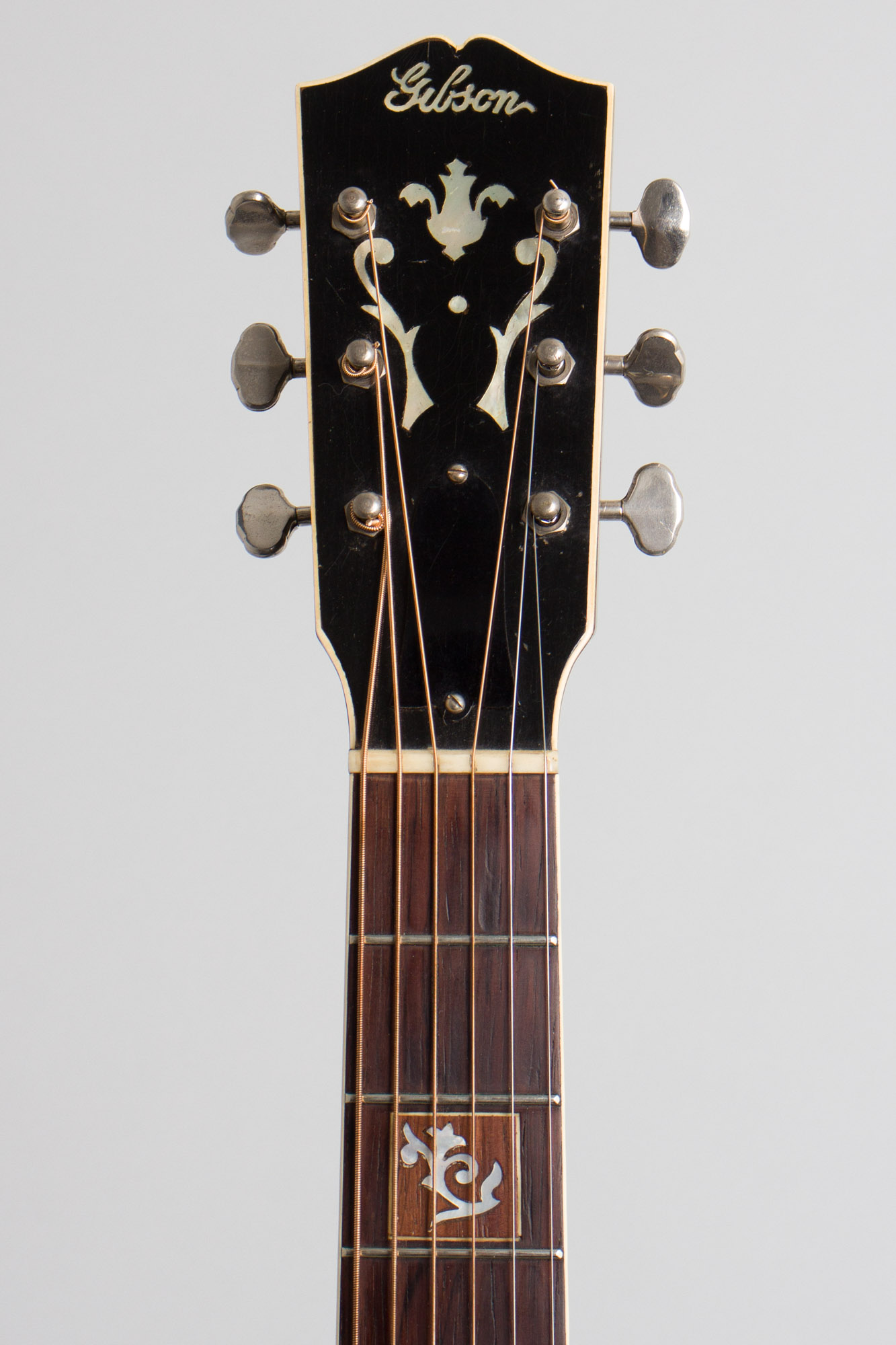
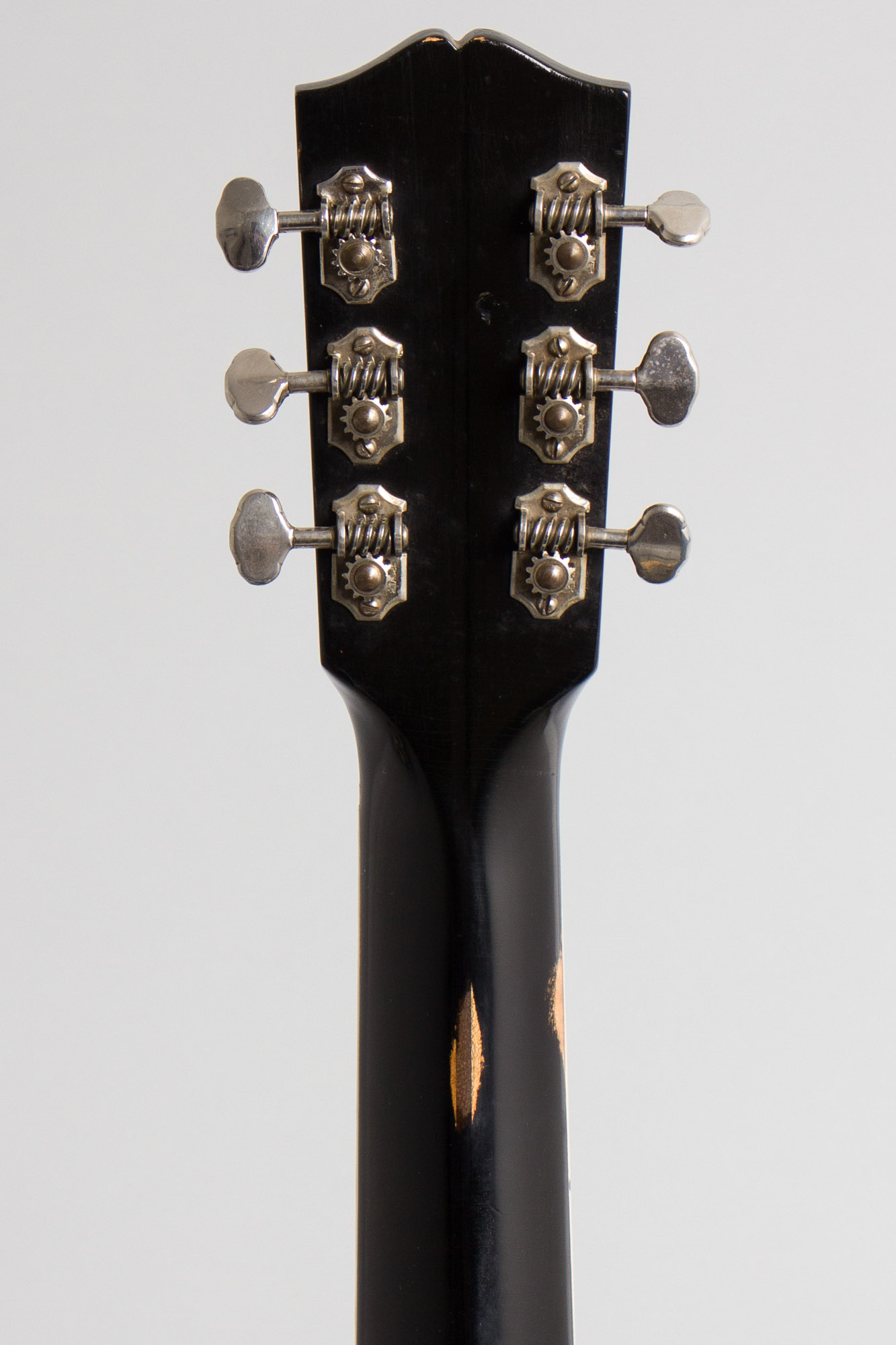
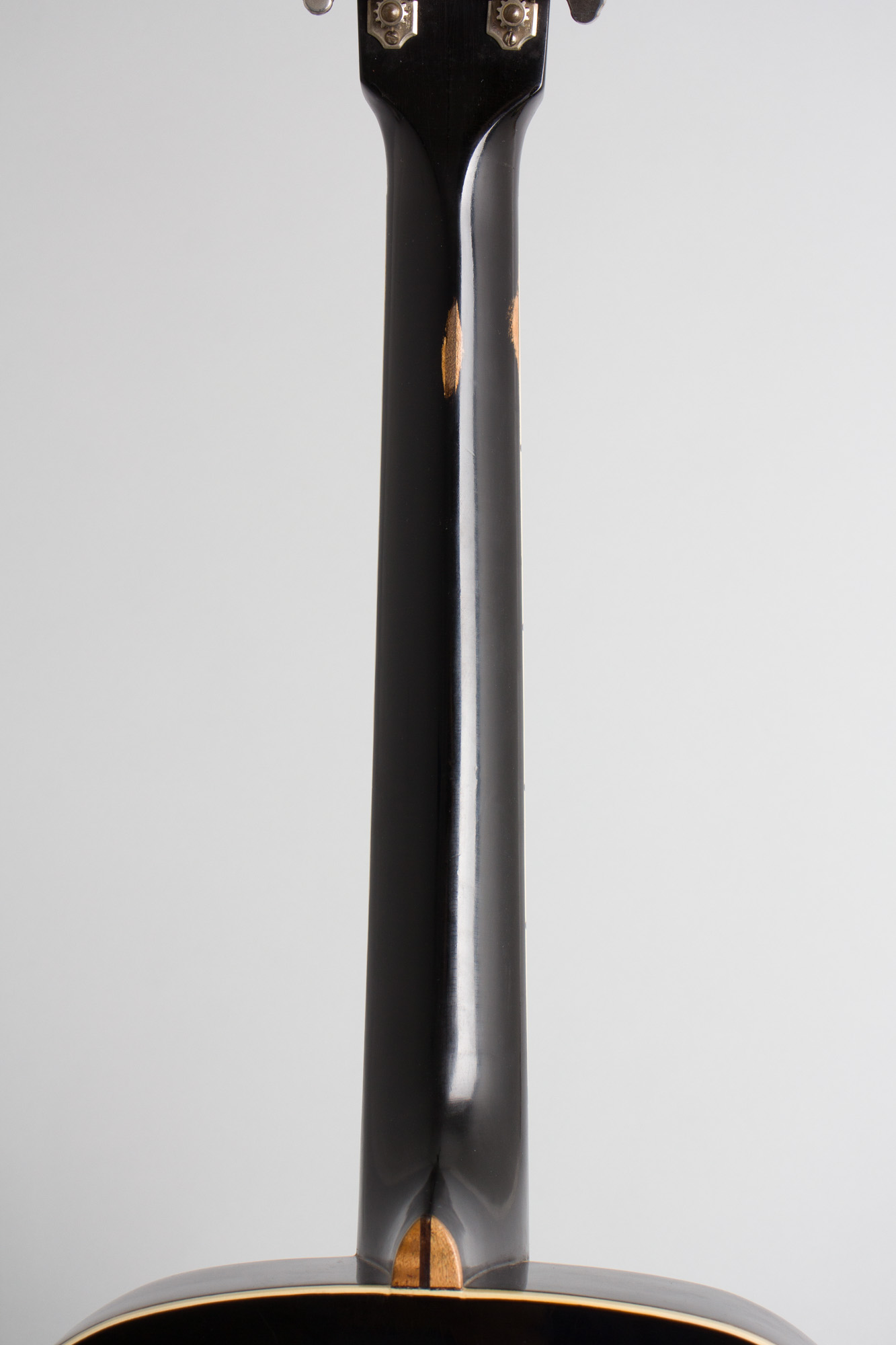
The neck is 3-piece laminated maple; the catalog spec. for 1934 is one-piece mahogany so this is an unusual higher-grade find. The bound and delicately inlaid rosewood fingerboard is a real showpiece, even if it was designed to use up material originally fashioned for banjos! The bound headstock has a pearl Gibson logo and "Vase" inlay on the face and mounts riveted first-generation Grover tuners. An odd feature is instead of a celluloid heelcap this heel has an unfinished extension of the laminate heel; this is unusual but appears to be original.
At this time the guitar retailed for $150 (plus case) which was still a considerable sum during the depression. "For orchestra playing" the 1934 Gibson catalog stated, and like its sister models the L-5 and L-7 this guitar was aimed at guitarists working in dance bands and the growing legion of swing orchestras and smaller combos. With enough "cut" to be heard in such a situation, this is a great sounding and playing guitar, with a lot of punch but still a well-modulated tone.
Overall length is 40 3/4 in. (103.5 cm.), 16 1/16 in. (40.8 cm.) wide at lower bout, and 3 1/4 in. (8.3 cm.) in depth at side, taken at the end block. Scale length is 24 3/4 in. (629 mm.). Width of nut is 1 3/4 in. (44 mm.).
This guitar is an excellent player and very clean for this period. The gleaming black finish shows some wear with dings, dents and scrapes and some small areas of touchup mostly to the top. There is ne scratch on the upper back near the waist that looks like a crack but does not go through the wood. There are some small areas rubbed away on the back of the neck, conveniently showing off the maple underneath.
The guitar appears all original except possibly for the pickguard, which is a correct original period piece but in more multi-bound the L-5 style; this may have been replaced long ago. The frets have some minor wear but nothing that affects play. This lovely instrument has a very big sound, barkier than some earlier 16" Gibsons but with a lot of depth and more subtly than many. A early Swing era gem, this excellent player is still complete in its original HSC. Overall Excellent Condition.
This beautiful "tuxedo" finish Gibson L-10 dates to 1933-4, a transitional time for company's arch top instruments. The Kalamazoo firm was re-designing their arch-top line to compete with New York's Epiphone, which had flanked them with a large integrated catalog of carved guitars in mid-1931. Gibson was somewhat slow to respond but the L-10 was the first return salvo in the "Archtop wars" of the 1930s.
The L-10 was introduced In late 1931 as the next F-hole model down from the L-5, originally basically a plain Jane version of that fancy top line guitar with a black finish overall instead of sunburst. It was re-designed for 1934 Gibson catalog "W" as a more distinctive model in its own right thanks to the elaborate "picture box" inlay added to the fingerboard. The L-10 only existed in this striking ebony-finished but fancier form for about two years, so this is a fairly rare instrument.
This guitar's factory order number indicates it was built in late 1933, and the serial number indicates shipment just as the calendar rolled over to 1934. This period L-10 is a 16" wide archtop with a fully carved top and back, single bound, with a parallel-braced top. The braces have a laminated cap but are not of the "kerfed" pattern seen on some. The F-holes are the early small pattern and unbound.
The neck is 3-piece laminated maple; the catalog spec. for 1934 is one-piece mahogany so this is an unusual higher-grade find. The bound and delicately inlaid rosewood fingerboard is a real showpiece, even if it was designed to use up material originally fashioned for banjos! The bound headstock has a pearl Gibson logo and "Vase" inlay on the face and mounts riveted first-generation Grover tuners. An odd feature is instead of a celluloid heelcap this heel has an unfinished extension of the laminate heel; this is unusual but appears to be original.
At this time the guitar retailed for $150 (plus case) which was still a considerable sum during the depression. "For orchestra playing" the 1934 Gibson catalog stated, and like its sister models the L-5 and L-7 this guitar was aimed at guitarists working in dance bands and the growing legion of swing orchestras and smaller combos. With enough "cut" to be heard in such a situation, this is a great sounding and playing guitar, with a lot of punch but still a well-modulated tone.
Overall length is 40 3/4 in. (103.5 cm.), 16 1/16 in. (40.8 cm.) wide at lower bout, and 3 1/4 in. (8.3 cm.) in depth at side, taken at the end block. Scale length is 24 3/4 in. (629 mm.). Width of nut is 1 3/4 in. (44 mm.).
This guitar is an excellent player and very clean for this period. The gleaming black finish shows some wear with dings, dents and scrapes and some small areas of touchup mostly to the top. There is ne scratch on the upper back near the waist that looks like a crack but does not go through the wood. There are some small areas rubbed away on the back of the neck, conveniently showing off the maple underneath.
The guitar appears all original except possibly for the pickguard, which is a correct original period piece but in more multi-bound the L-5 style; this may have been replaced long ago. The frets have some minor wear but nothing that affects play. This lovely instrument has a very big sound, barkier than some earlier 16" Gibsons but with a lot of depth and more subtly than many. A early Swing era gem, this excellent player is still complete in its original HSC. Overall Excellent Condition.