Gibson K-1 Carved Top Mandocello (1914)

LOADING IMAGES
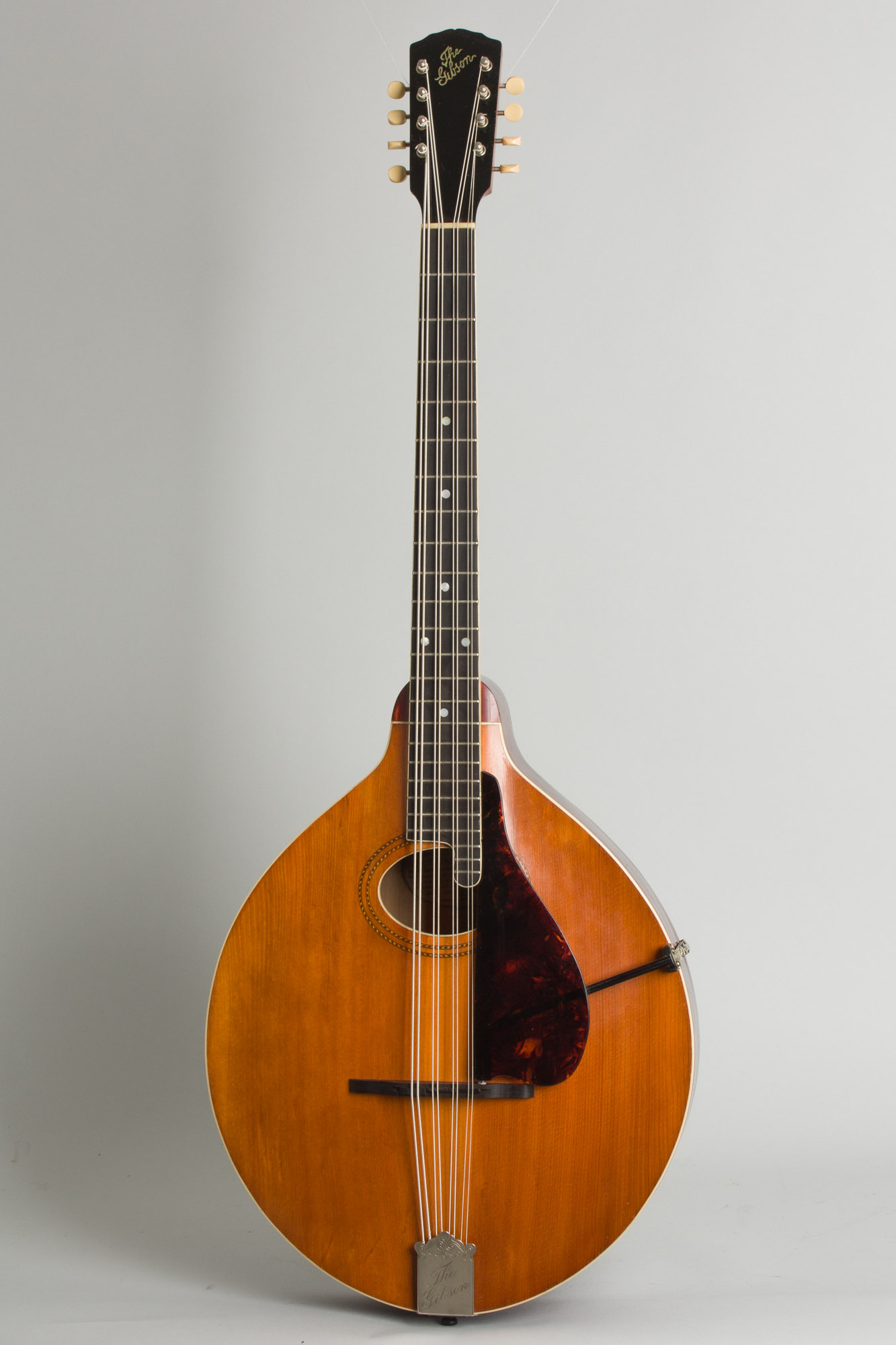
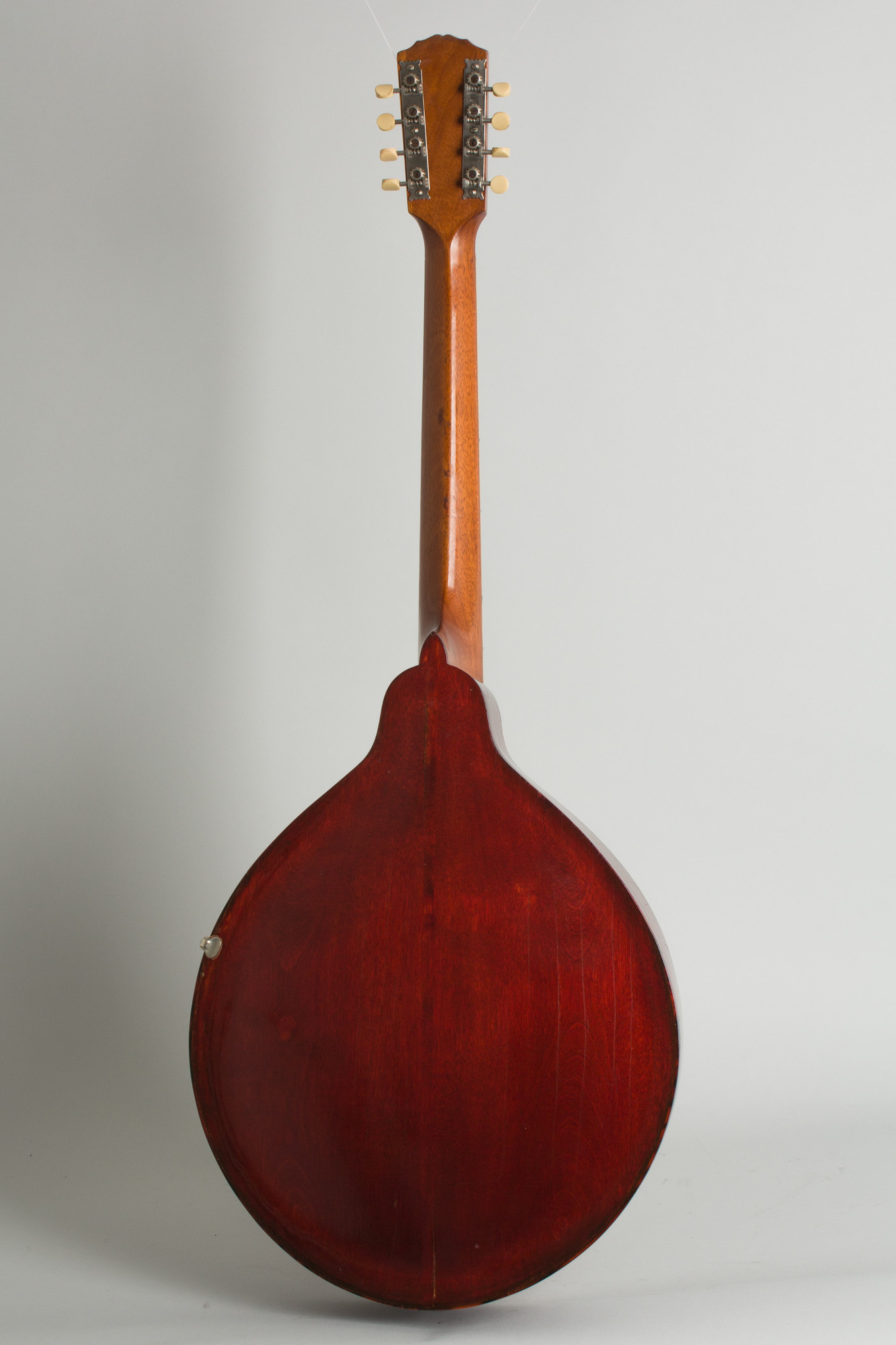
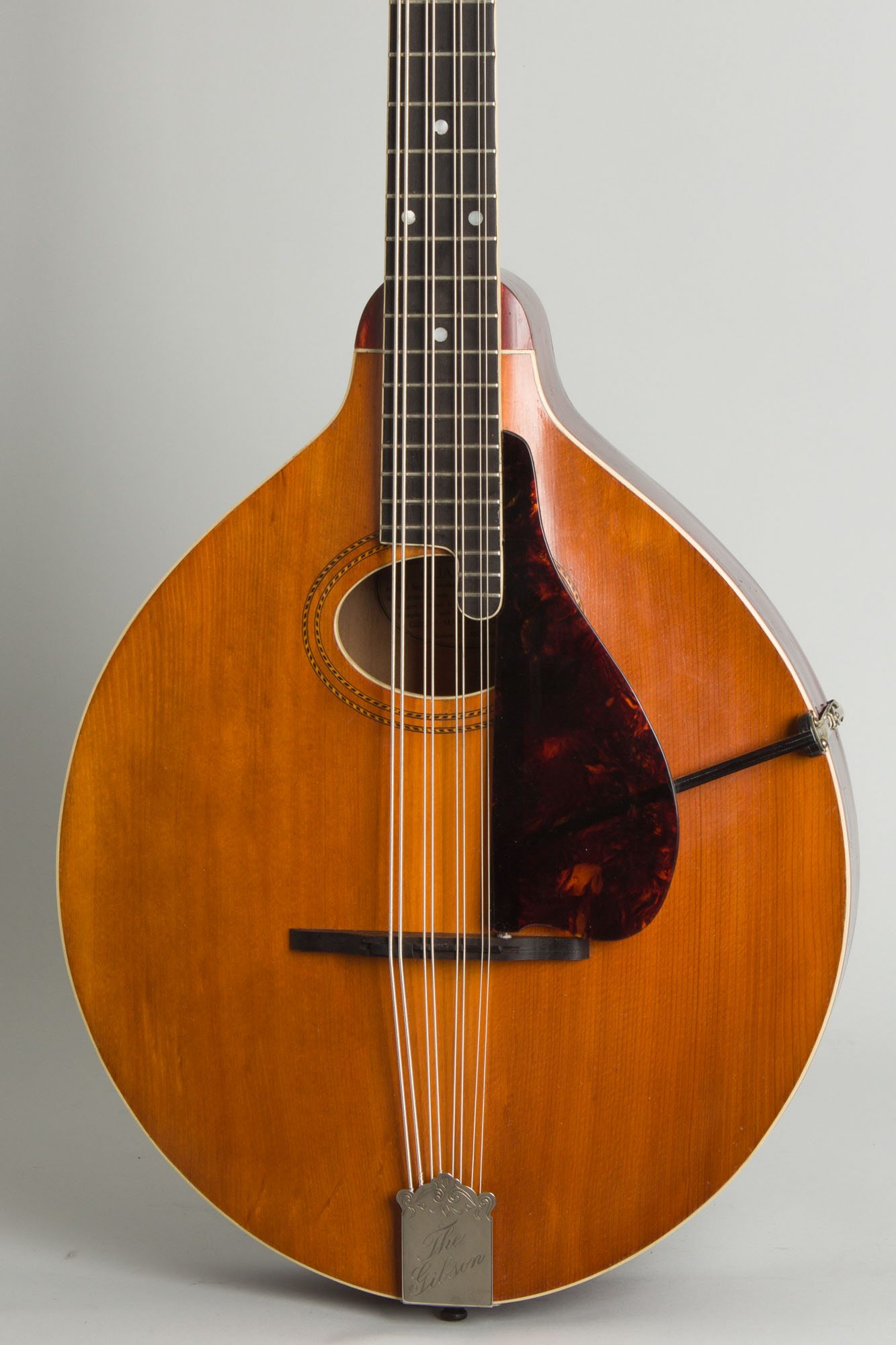
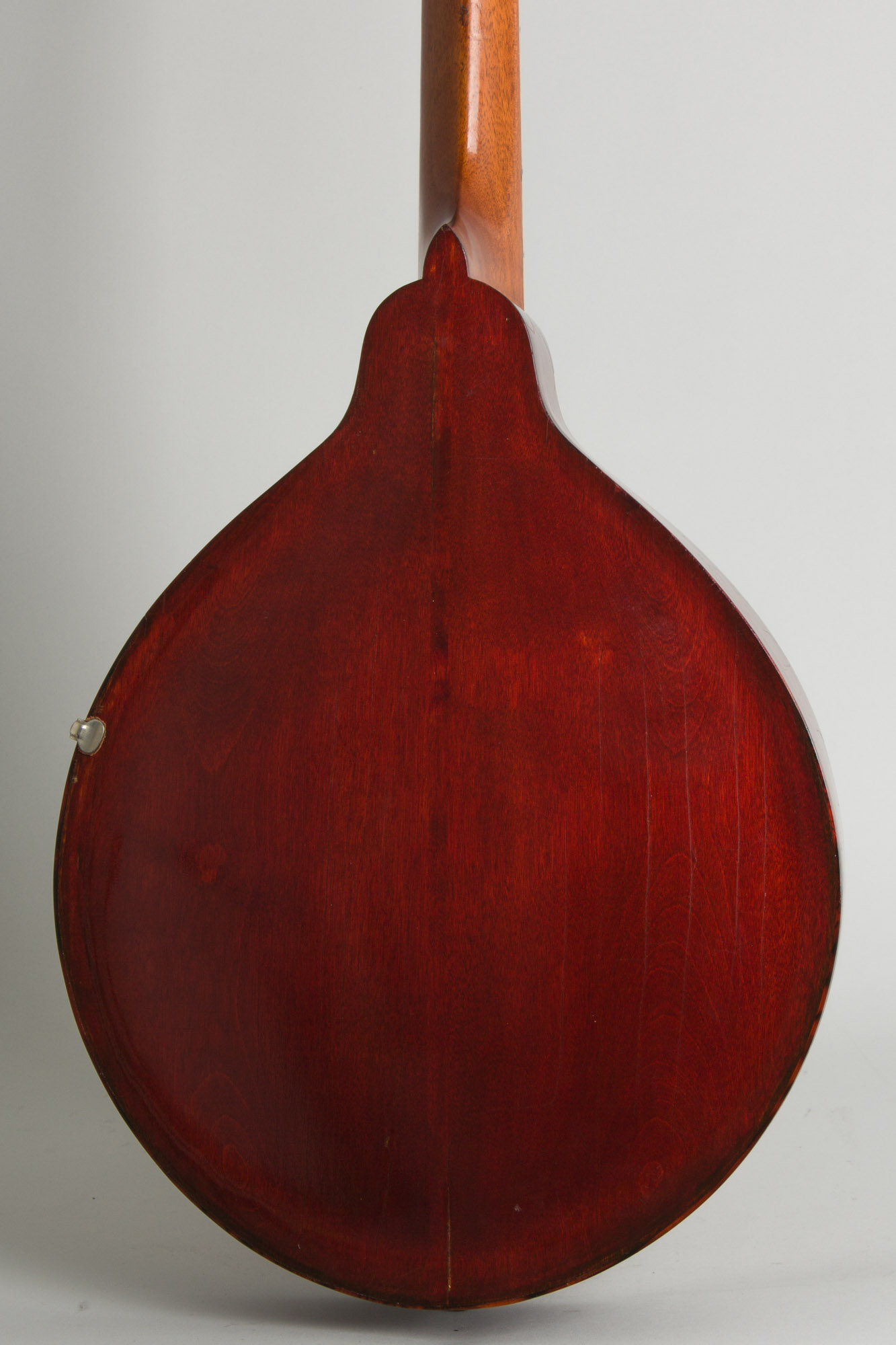
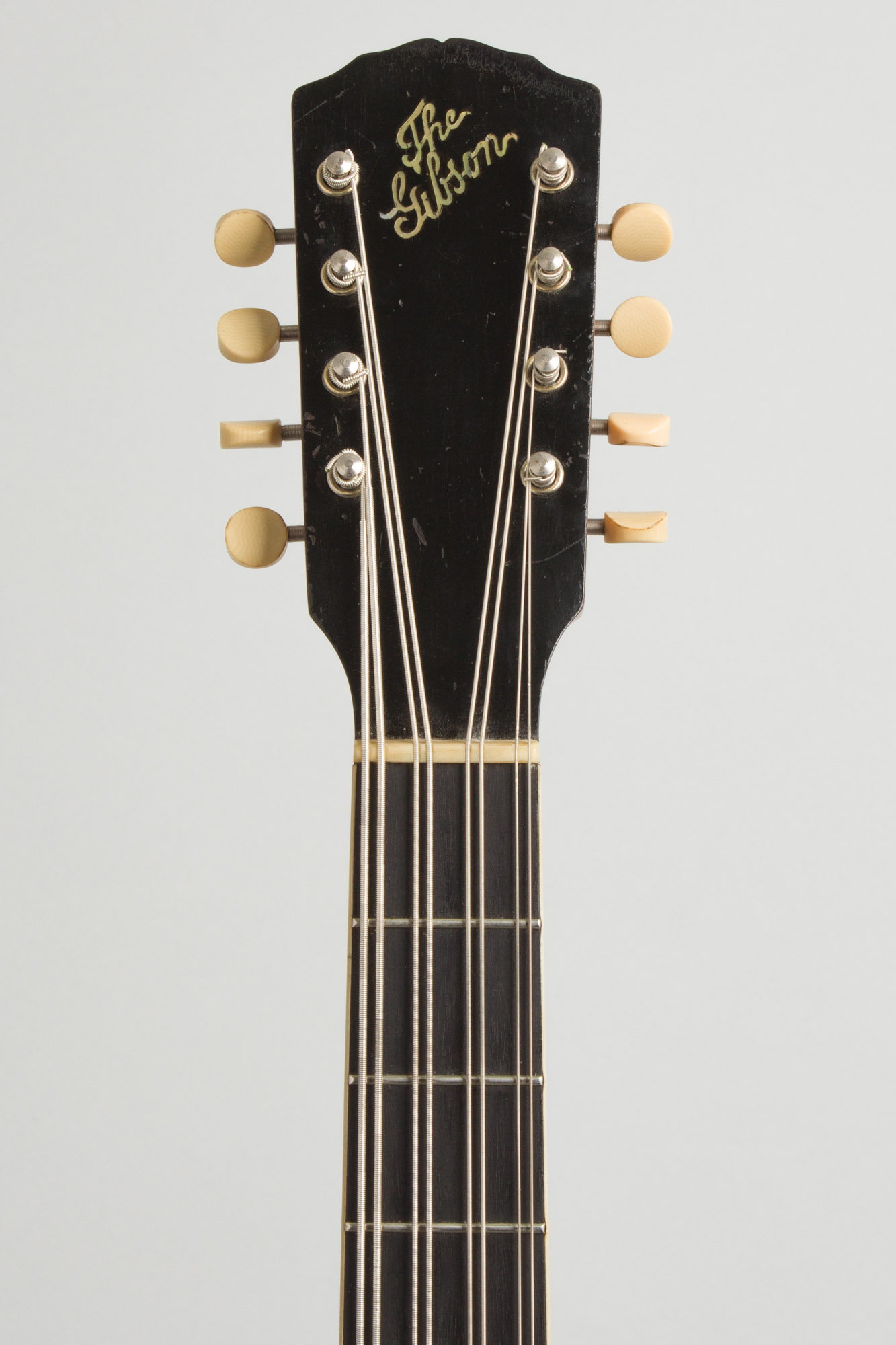
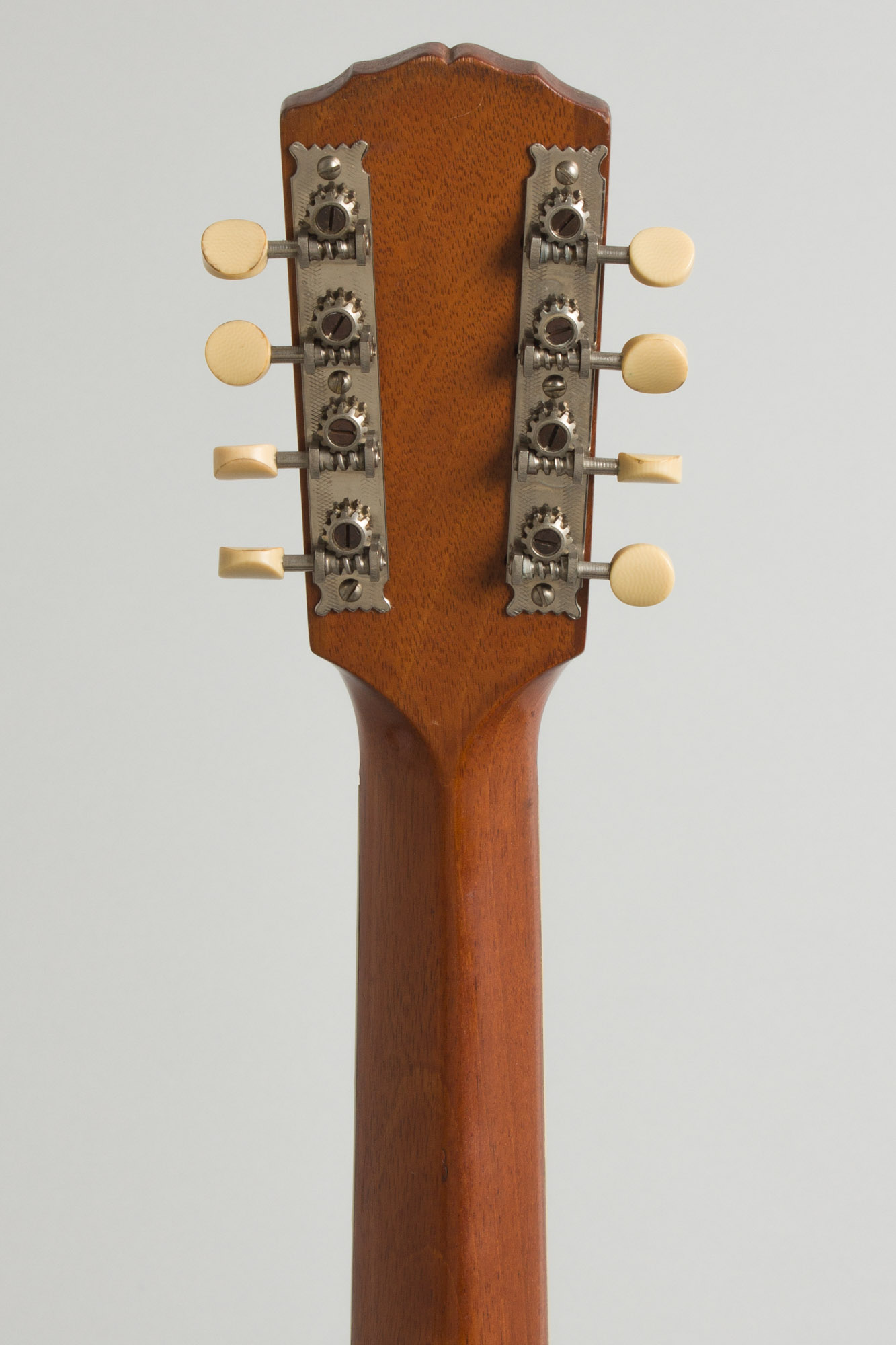
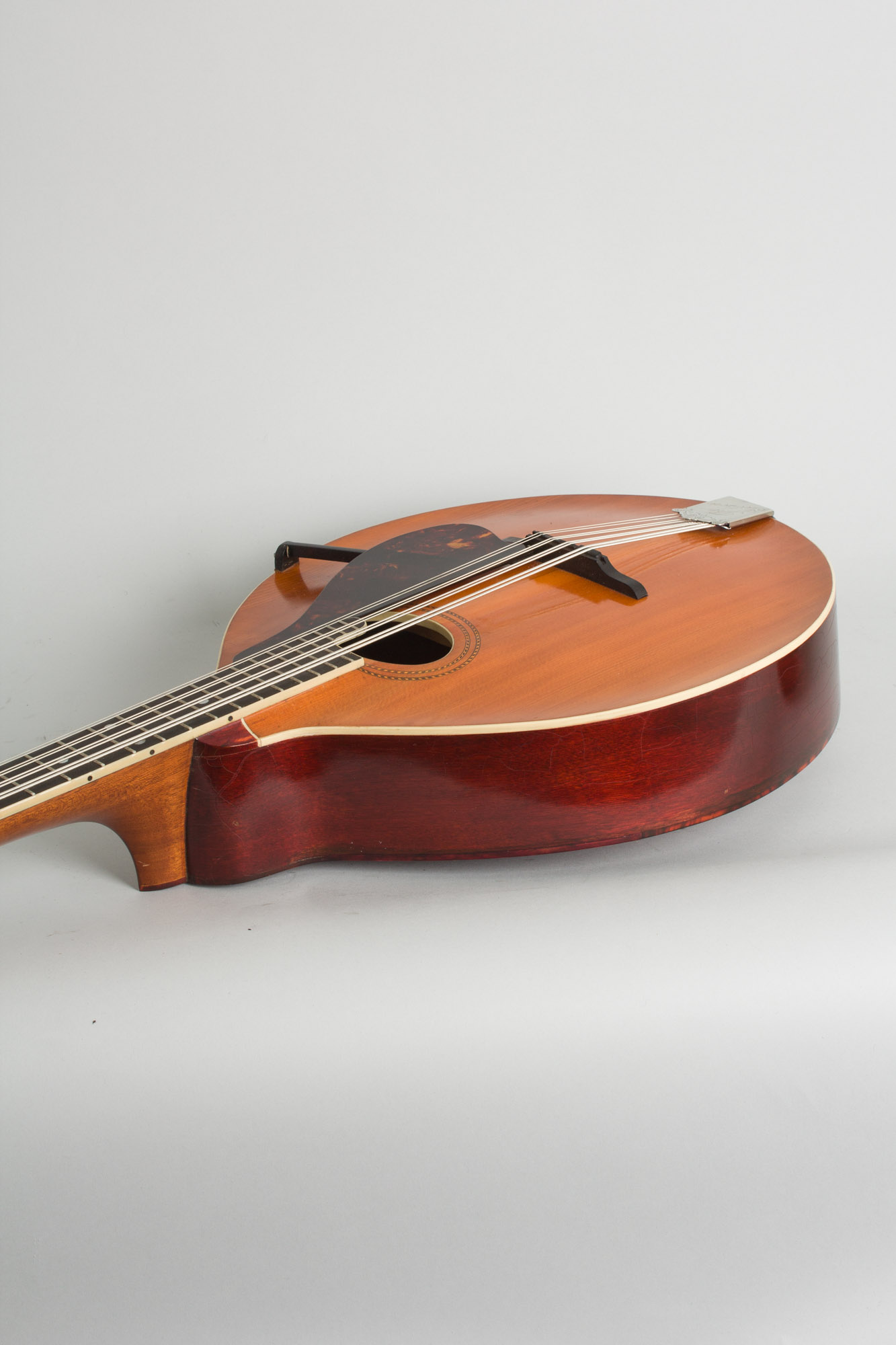
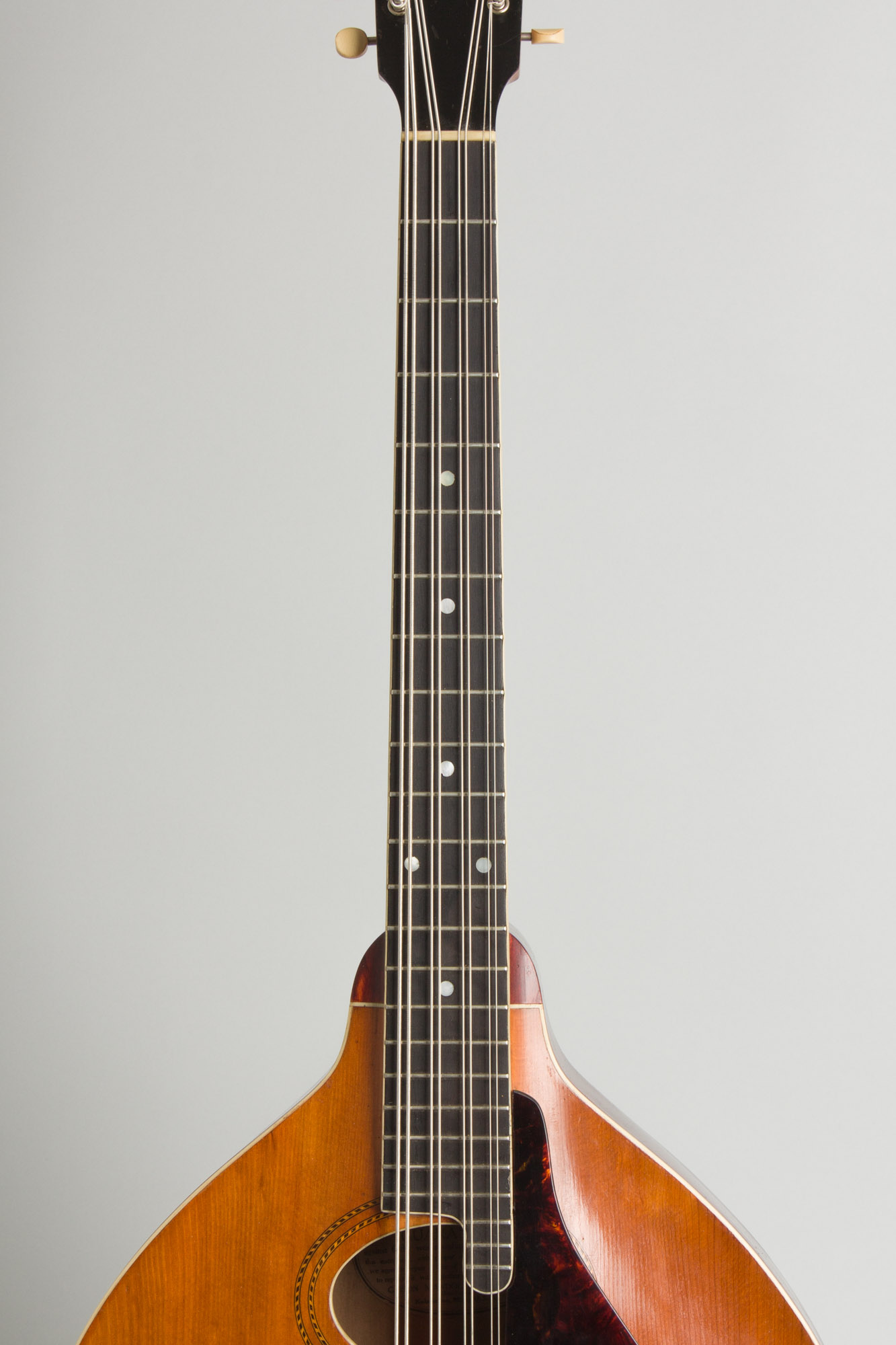
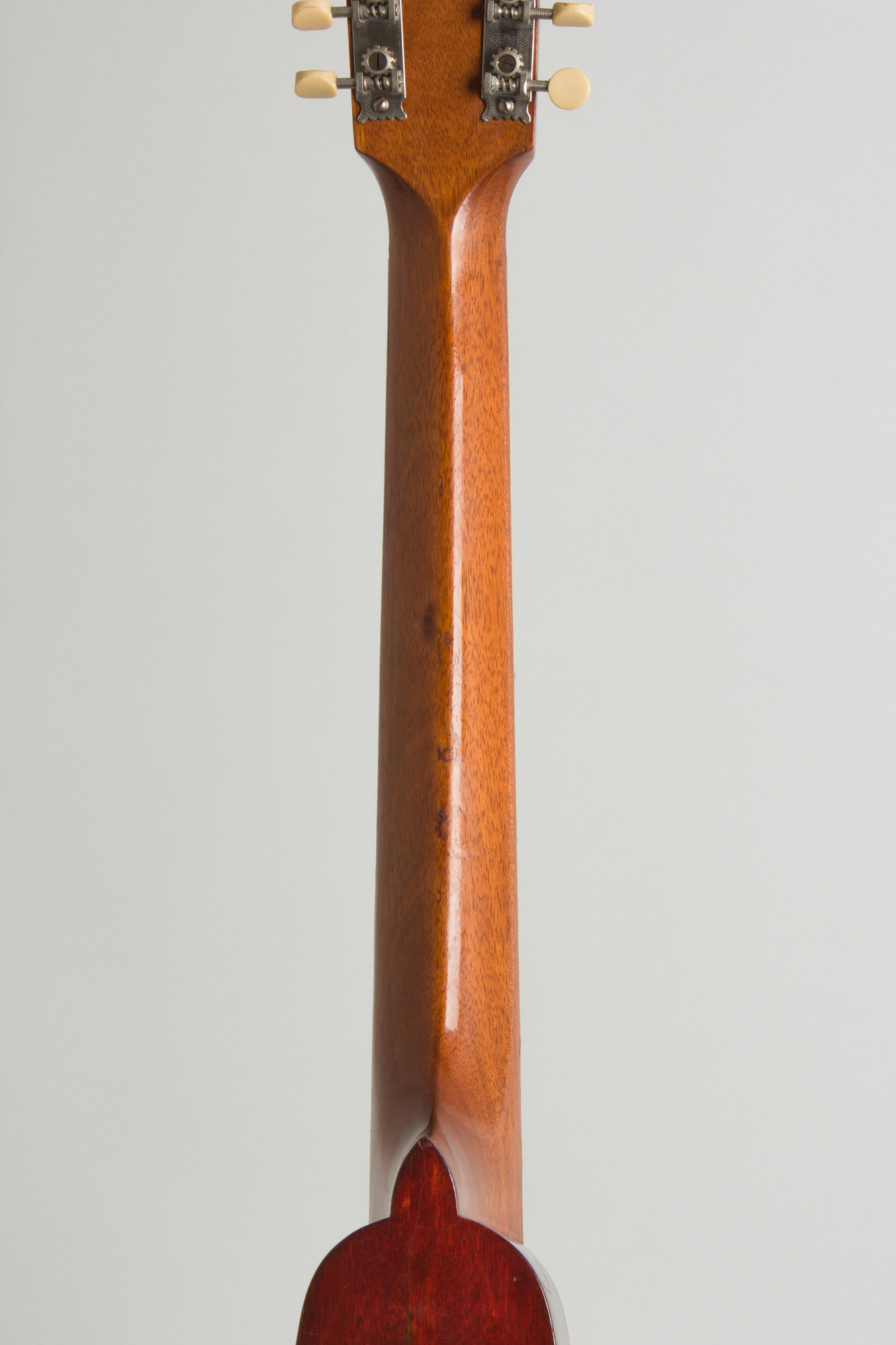
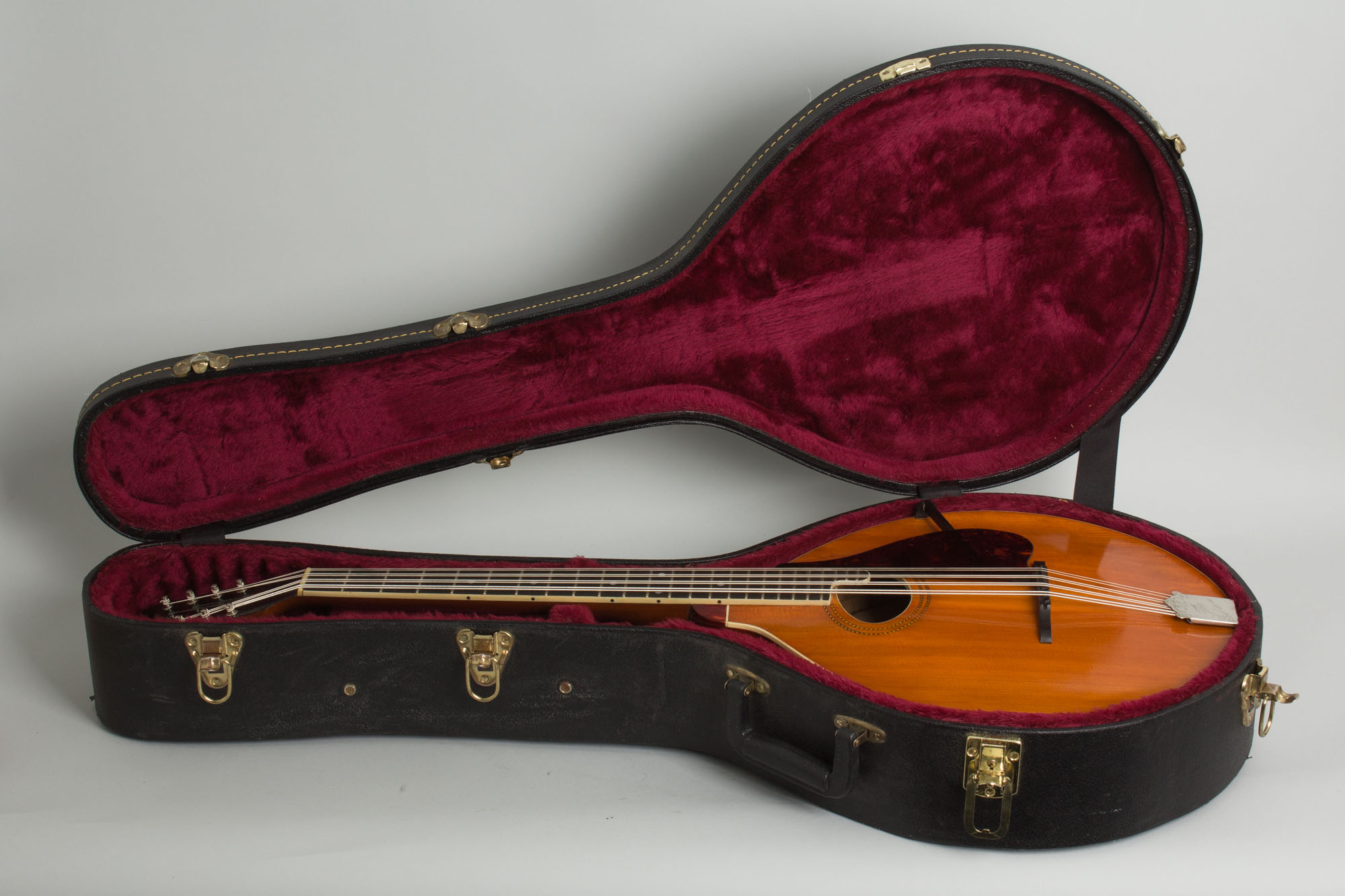
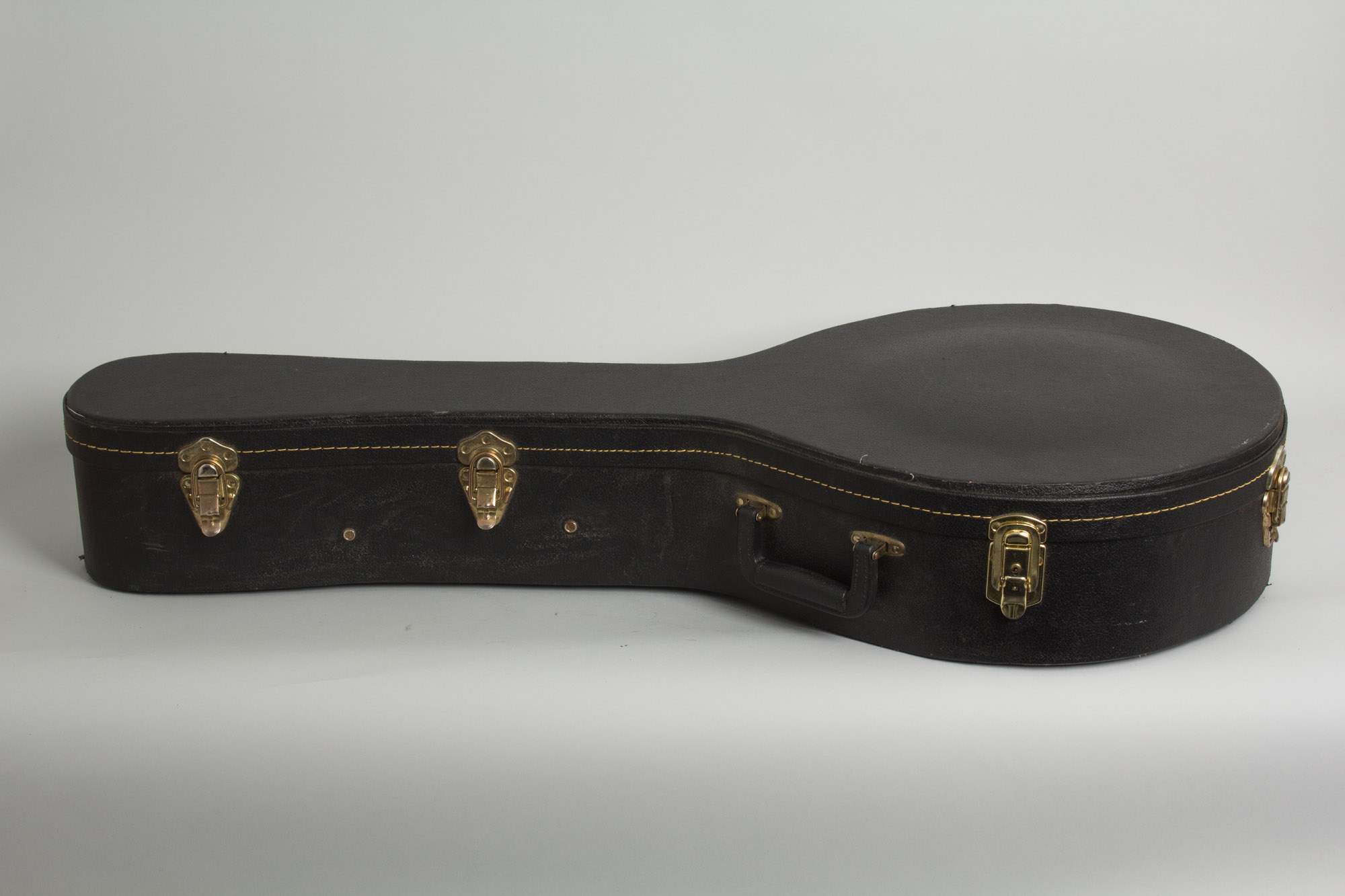
Gibson K-1 Model Carved Top Mandocello (1914), made in Kalamazoo, Michigan, serial # 27631, natural top, cherry stained back and sides finish, birch back and sides, spruce top; mahogany neck with ebony fingerboard, black tolex hard shell case.
We feel the Gibson Mandocello is one of the great under-appreciated instruments of the early 20th century. Originally designed for use in 1910s-era mandolin orchestras, these imposing beasts never found a home in any other style of music despite being wonderful and unique-sounding creations. Double-strung and tuned in fifths starting with the C below the low E on the guitar, the mandocello has an imposing tone and deep resonance quite unlike any other fretted instrument. OK, we're starting to sound like an old Gibson catalog here, but we really like these and are always happy to get one in stock!
This particular instrument is a lovely sounding Style K-1 which is an excellent player with some old repair work evident. This was the most basic of the three mandocello models Gibson offered in the 1910s but still a fairly expensive instrument when new. It is structurally the same as the fancier Model K-2 with a little less "geegaw" (decoration). The headstock face carries just a plain pearl "The Gibson" inlay while the openback strip tuners are tipped with unadorned ivoroid buttons.
The top is single bound and the sound hole decoration is made up of two separate half-herringbone wood inlaid rings and a bound edge. The K-2 had fancier versions of these decorative touches, but the physical features (and sound) were the same for both, with an oval body, bound carved spruce top with a flat oval soundhole and birch back. The necks on all models are mahogany with a bound and dot-inlaid ebony fingerboard.
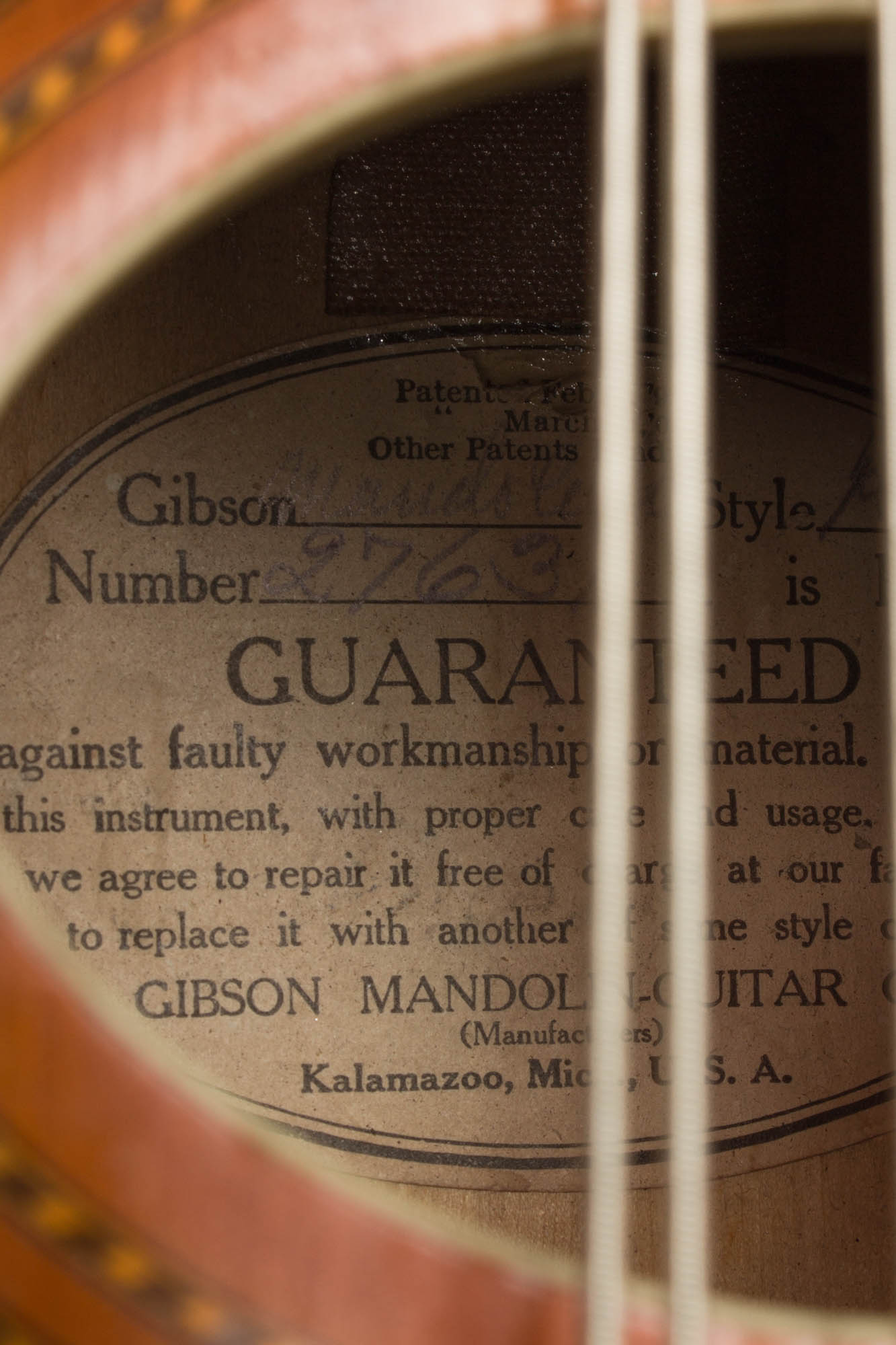
This "Pumpkin top" K-1 Mandocello dates to the decade when Gibson was defining the market for these mandolin family instruments. The combination of the FON (Factory Order Number) stamped on the neck block and the serial number penciled on the white label under the soundhole indicate it was built in late 1914 and shipped out early the next year. In the 1910s Gibsons were only available from licensed teacher-agents, and were usually purchased on a time payment plan along with lessons. As part of the deal, the students would often play in the teacher's fretted orchestra, and the low-tuned mandocello was crucial to achieving a full sound in these ensembles. Far fewer were sold compared to mandolins, however, making Gibson mandocellos from any era a comparative rarity.
With its 8 strings and "C" orchestral tuning the mandocello has a totally unique sound and makes an excellent recording instrument. While mandolin orchestras are rather thin on the ground in the 21st century these instruments can be employed for a wide range of playing styles, some still yet to be explored!
Overall length is 38 7/16 in. (97.6 cm.), 14 1/8 in. (35.9 cm.) width, and 3 3/8 in. (8.6 cm.) in depth, measured at side of rim. Scale length is 24 5/8 in. (625 mm.). Width of nut is 1 5/8 in. (41 mm.).
This over 110 year old K-1 shows some general wear and old repair; it is not the cleanest but one of the nicer sounding ones we have had. The original very thin varnish finish on the top has less micro-checking and pick wear than many, with some small dings, dents and scratches and minor polished out spots but no large areas of loss. The back of the neck remains original and is worn through to the wood in a few places, especially along the spine with some small scattered dinks that are feelable but not too distracting.
The back/side areas have seen a lot more work. Those seams must have been well out of alignment long ago, which is typical for these as the birch backs often have shrunken up noticeably. A single layer of tortoise Celluloid binding was added all along the outer edge of the back, which was removed for this repair many decades ago. The back and sides have an old clear lacquer overfinish which has checked noticeably in spots, and is uneven in some areas with later touch ups visible. There are sealed seam splits on the back along the center seam above the tailblock and off the heelblock. These were solidly glued up with bias tape reinforcement internally and finished over. There are no other visible cracks to the instrument, and these repairs appear largely done many decades ago.
Surviving original hardware includes the tuners, tailpiece and cover and the multi-saddle bridge, which has been lowered somewhat. The often missing pickguard is a correct style reproduction in tortoise celluloid using the original bracket clamp. The one-piece mahogany neck is very straight and has been refretted with wire slightly larger than the original very thin style, with little subsequent wear. While not an untouched original example this K-1 is an excellent playing and sounding mandocello with a comfortable low action and a sweet deep and round tone. It is strung with special LaBella strings of our own spec and includes a later (1980s?) HSC in very nice shape, a somewhat rare find and quite convenient at that! Overall Very Good + Condition.
We feel the Gibson Mandocello is one of the great under-appreciated instruments of the early 20th century. Originally designed for use in 1910s-era mandolin orchestras, these imposing beasts never found a home in any other style of music despite being wonderful and unique-sounding creations. Double-strung and tuned in fifths starting with the C below the low E on the guitar, the mandocello has an imposing tone and deep resonance quite unlike any other fretted instrument. OK, we're starting to sound like an old Gibson catalog here, but we really like these and are always happy to get one in stock!
This particular instrument is a lovely sounding Style K-1 which is an excellent player with some old repair work evident. This was the most basic of the three mandocello models Gibson offered in the 1910s but still a fairly expensive instrument when new. It is structurally the same as the fancier Model K-2 with a little less "geegaw" (decoration). The headstock face carries just a plain pearl "The Gibson" inlay while the openback strip tuners are tipped with unadorned ivoroid buttons.
The top is single bound and the sound hole decoration is made up of two separate half-herringbone wood inlaid rings and a bound edge. The K-2 had fancier versions of these decorative touches, but the physical features (and sound) were the same for both, with an oval body, bound carved spruce top with a flat oval soundhole and birch back. The necks on all models are mahogany with a bound and dot-inlaid ebony fingerboard.
This "Pumpkin top" K-1 Mandocello dates to the decade when Gibson was defining the market for these mandolin family instruments. The combination of the FON (Factory Order Number) stamped on the neck block and the serial number penciled on the white label under the soundhole indicate it was built in late 1914 and shipped out early the next year. In the 1910s Gibsons were only available from licensed teacher-agents, and were usually purchased on a time payment plan along with lessons. As part of the deal, the students would often play in the teacher's fretted orchestra, and the low-tuned mandocello was crucial to achieving a full sound in these ensembles. Far fewer were sold compared to mandolins, however, making Gibson mandocellos from any era a comparative rarity.
With its 8 strings and "C" orchestral tuning the mandocello has a totally unique sound and makes an excellent recording instrument. While mandolin orchestras are rather thin on the ground in the 21st century these instruments can be employed for a wide range of playing styles, some still yet to be explored!
Overall length is 38 7/16 in. (97.6 cm.), 14 1/8 in. (35.9 cm.) width, and 3 3/8 in. (8.6 cm.) in depth, measured at side of rim. Scale length is 24 5/8 in. (625 mm.). Width of nut is 1 5/8 in. (41 mm.).
This over 110 year old K-1 shows some general wear and old repair; it is not the cleanest but one of the nicer sounding ones we have had. The original very thin varnish finish on the top has less micro-checking and pick wear than many, with some small dings, dents and scratches and minor polished out spots but no large areas of loss. The back of the neck remains original and is worn through to the wood in a few places, especially along the spine with some small scattered dinks that are feelable but not too distracting.
The back/side areas have seen a lot more work. Those seams must have been well out of alignment long ago, which is typical for these as the birch backs often have shrunken up noticeably. A single layer of tortoise Celluloid binding was added all along the outer edge of the back, which was removed for this repair many decades ago. The back and sides have an old clear lacquer overfinish which has checked noticeably in spots, and is uneven in some areas with later touch ups visible. There are sealed seam splits on the back along the center seam above the tailblock and off the heelblock. These were solidly glued up with bias tape reinforcement internally and finished over. There are no other visible cracks to the instrument, and these repairs appear largely done many decades ago.
Surviving original hardware includes the tuners, tailpiece and cover and the multi-saddle bridge, which has been lowered somewhat. The often missing pickguard is a correct style reproduction in tortoise celluloid using the original bracket clamp. The one-piece mahogany neck is very straight and has been refretted with wire slightly larger than the original very thin style, with little subsequent wear. While not an untouched original example this K-1 is an excellent playing and sounding mandocello with a comfortable low action and a sweet deep and round tone. It is strung with special LaBella strings of our own spec and includes a later (1980s?) HSC in very nice shape, a somewhat rare find and quite convenient at that! Overall Very Good + Condition.