Fender 5E5 Pro-Amp Tube Amplifier (1955)

LOADING IMAGES
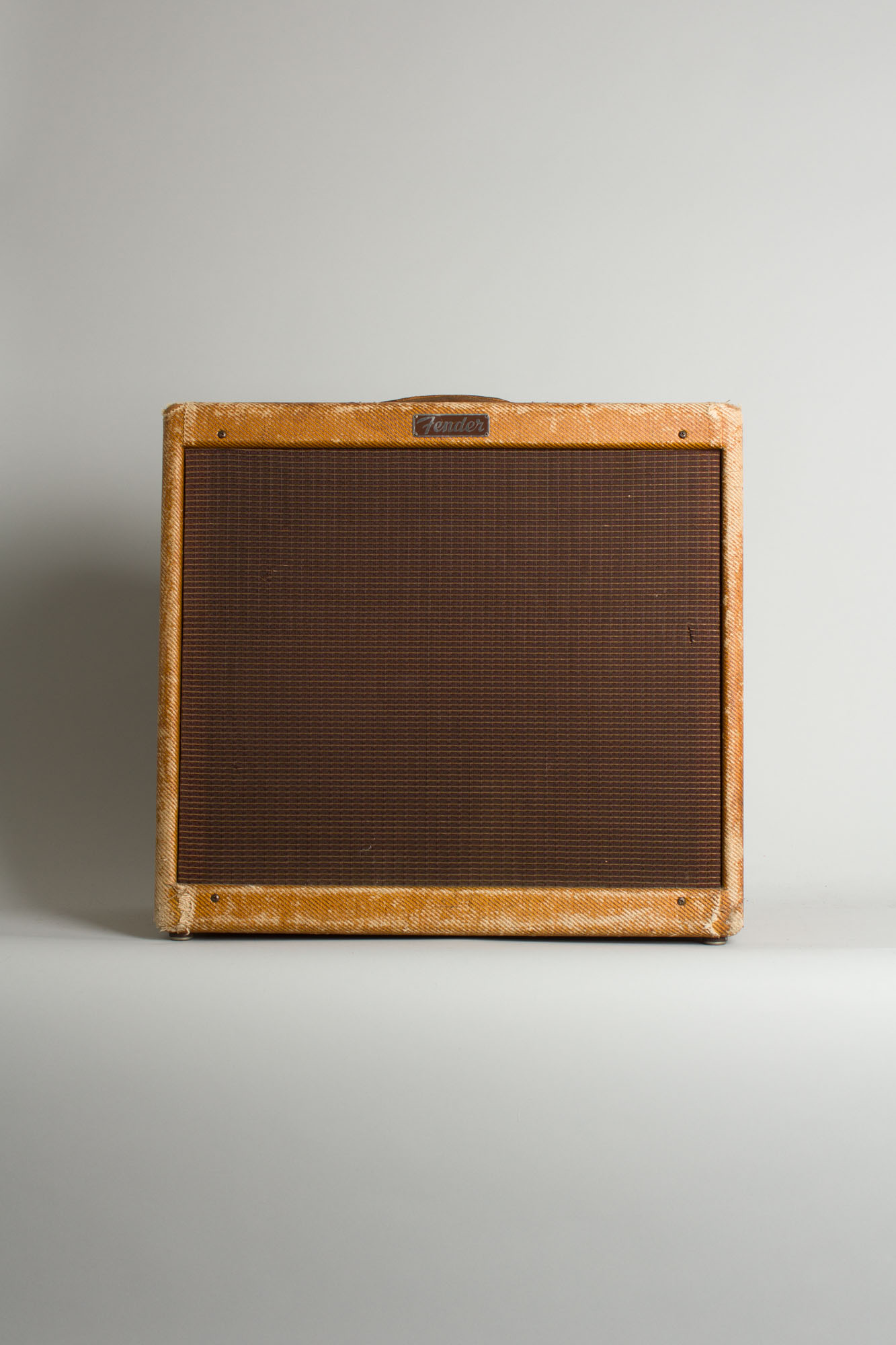
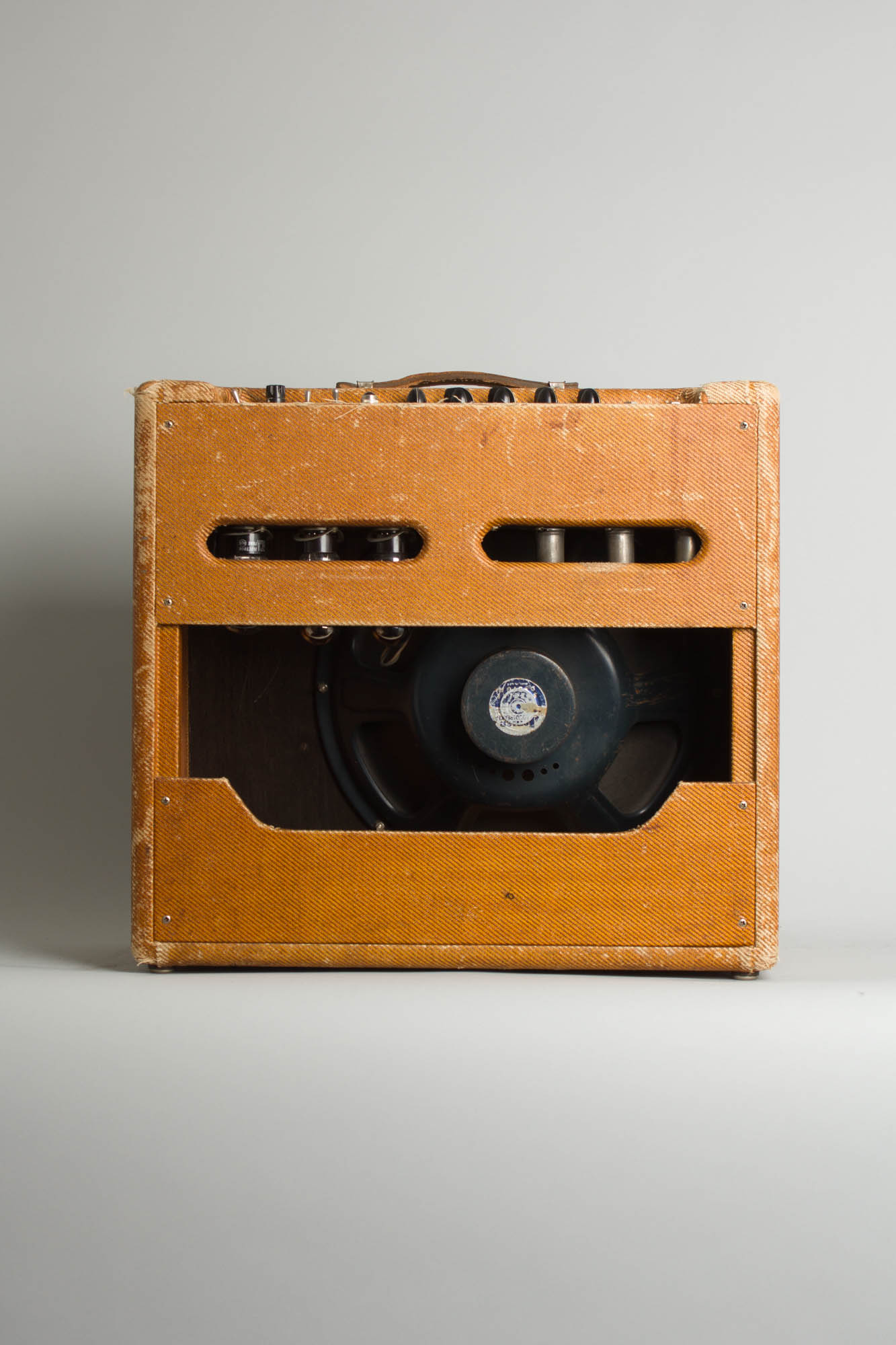
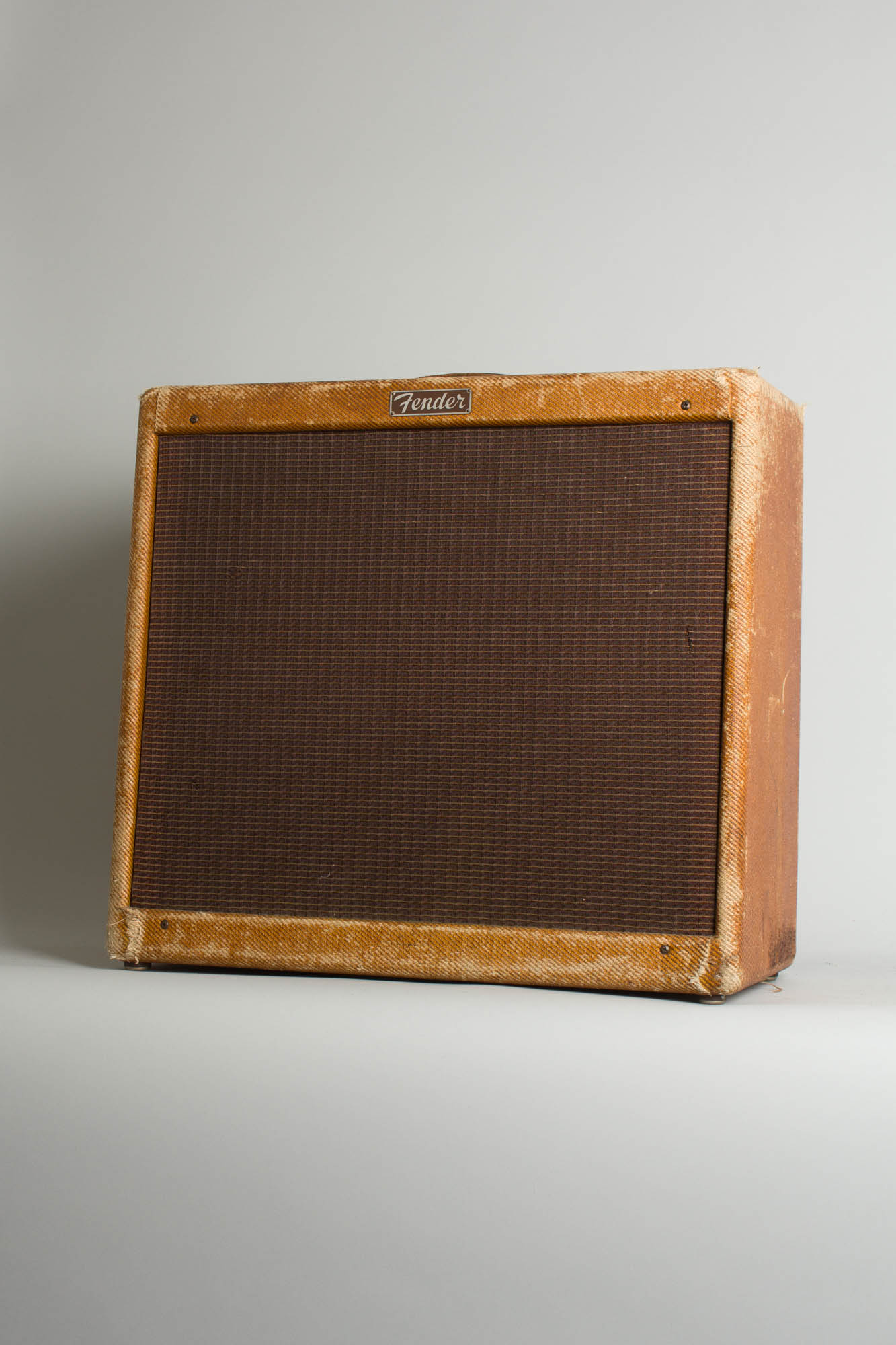


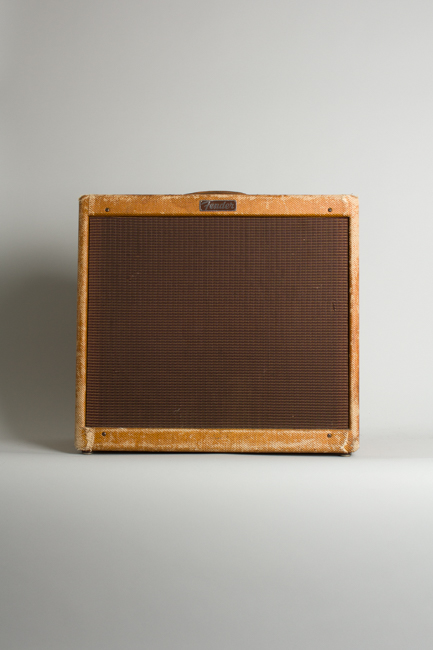
Fender 5E5 Pro-Amp Model Tube Amplifier (1955), made in Fullerton, California, serial # S-00437, tweed fabric covering finish.
This is a truly excellent example of a very early production narrow-panel Fender "Pro-Amp". The single 15" Pro had been the flagship design since the very humble beginnings of Leo Fender's company, the most powerful of the holy trinity of the "Woodies" of the late 40s. It was soon sharing the single 15" professional tier with both the earlier Bassman and Bandmasters. By the mid-1950's it was only recently supplanted at the top of the Fender line by the newly introduced "Twin-Amp".
The Pro with its single 15" Jensen speaker was still a formidable piece of work putting out plenty of volume and a deep growl with both steel and standard guitar. At $264.50 retail it was priced just above the 2x10" Super and the new 3x10" Bandmaster models. The Pro has for many decades been a beloved choice by many steel players and only in recent history re-discovered by the guitar community as one of the best kept Tweed secrets. This "narrow panel" iteration is a fairly rare find in the 21st century.
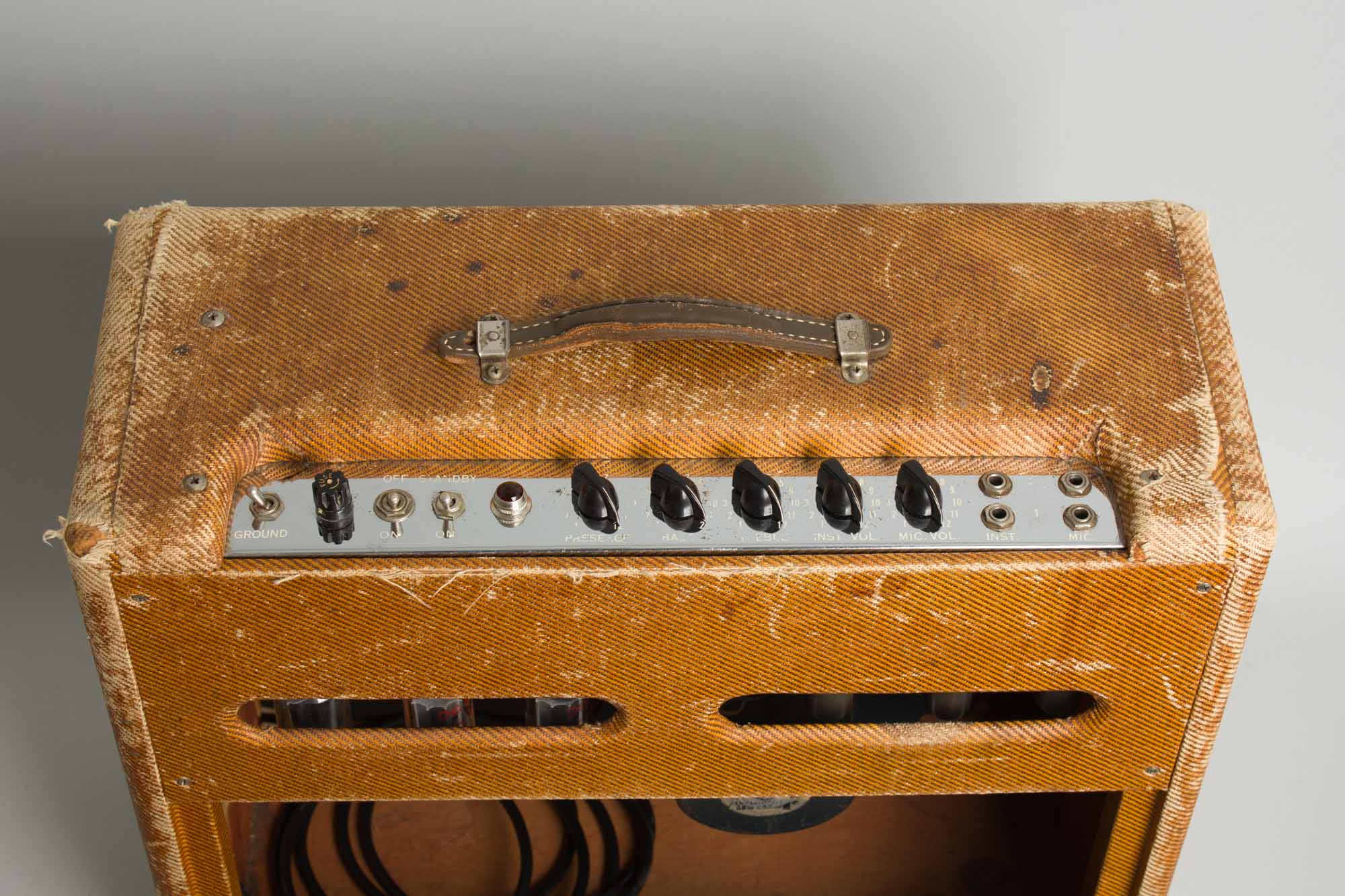
Like it's smaller siblings, the 5E3 Deluxe and 5E9 Tremolux, the 5E5 Pro features four input jacks and two channels, labeled instrument and mic, a volume control for each channel and a master tone control. With its beefed up dual-6L6 power section and bigger cabinet it puts out around 25-30 watts of power into the powerful single Jensen P15N speaker, it can be thought of as a Tweed Deluxe on steroids!
Height is 20 in. (50.8 cm.), 22 1/8 in. (56.2 cm.) width, and 10 1/4 in. (26 cm.) deep.
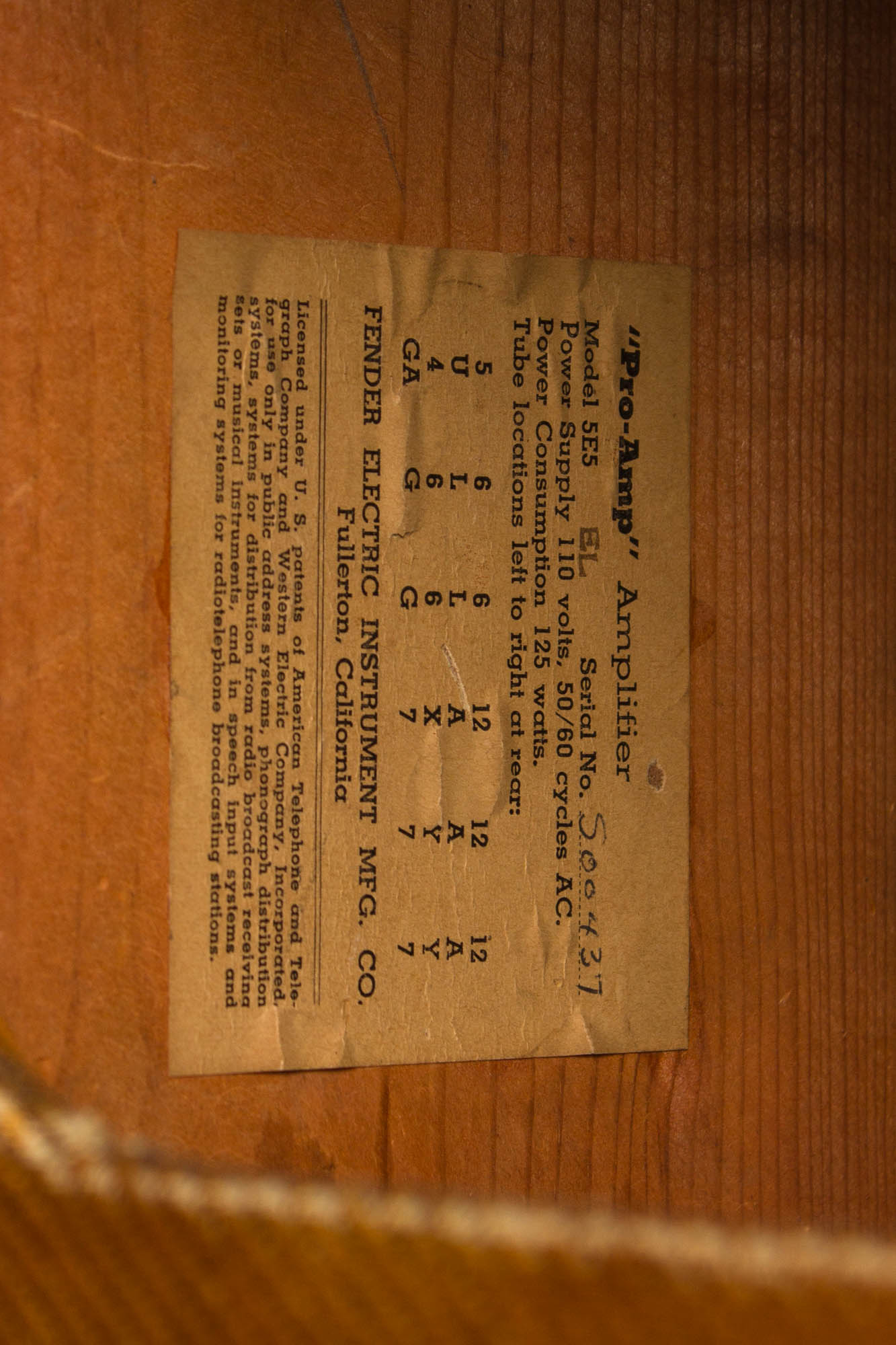
This is a very nicely preserved example overall. The tube chart bears the stamp "EL" indicating assembly in December of 1955. According to available serial number records, Fender only made around 700 5E5 Pro models that year, far less than several of the smaller combos. Cosmetically, the tweed covering shows it's fair share of use, including some heavier fraying and wear around corners and edges. Overall it remains in good shape and bears a very attractive patina. The grille cloth is nicely intact and clean overall with some light fraying here and there. The control panel is nicely shiny, though some of the stenciled lettering has worn off. The handle appears to be an older replacement.
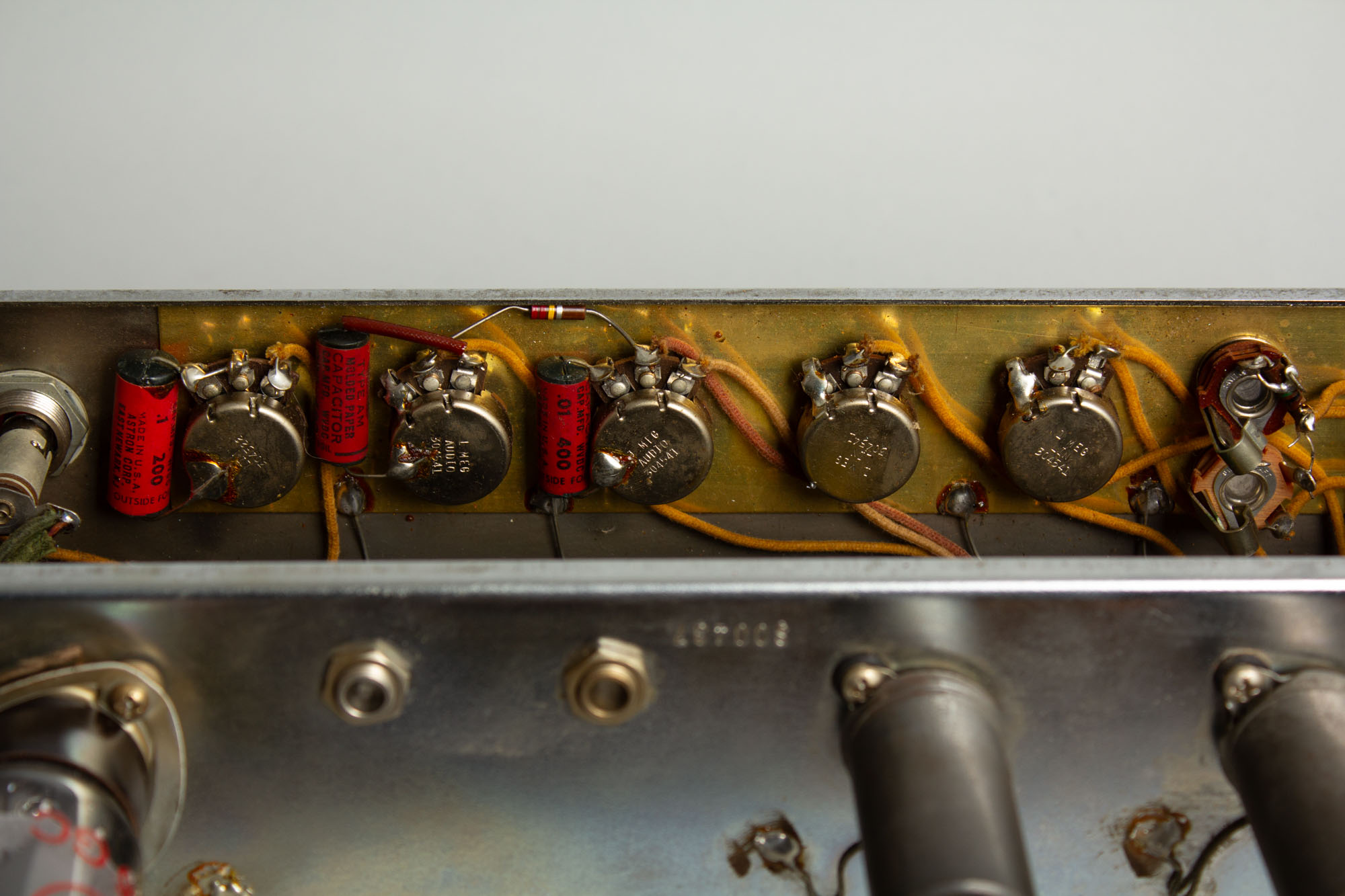
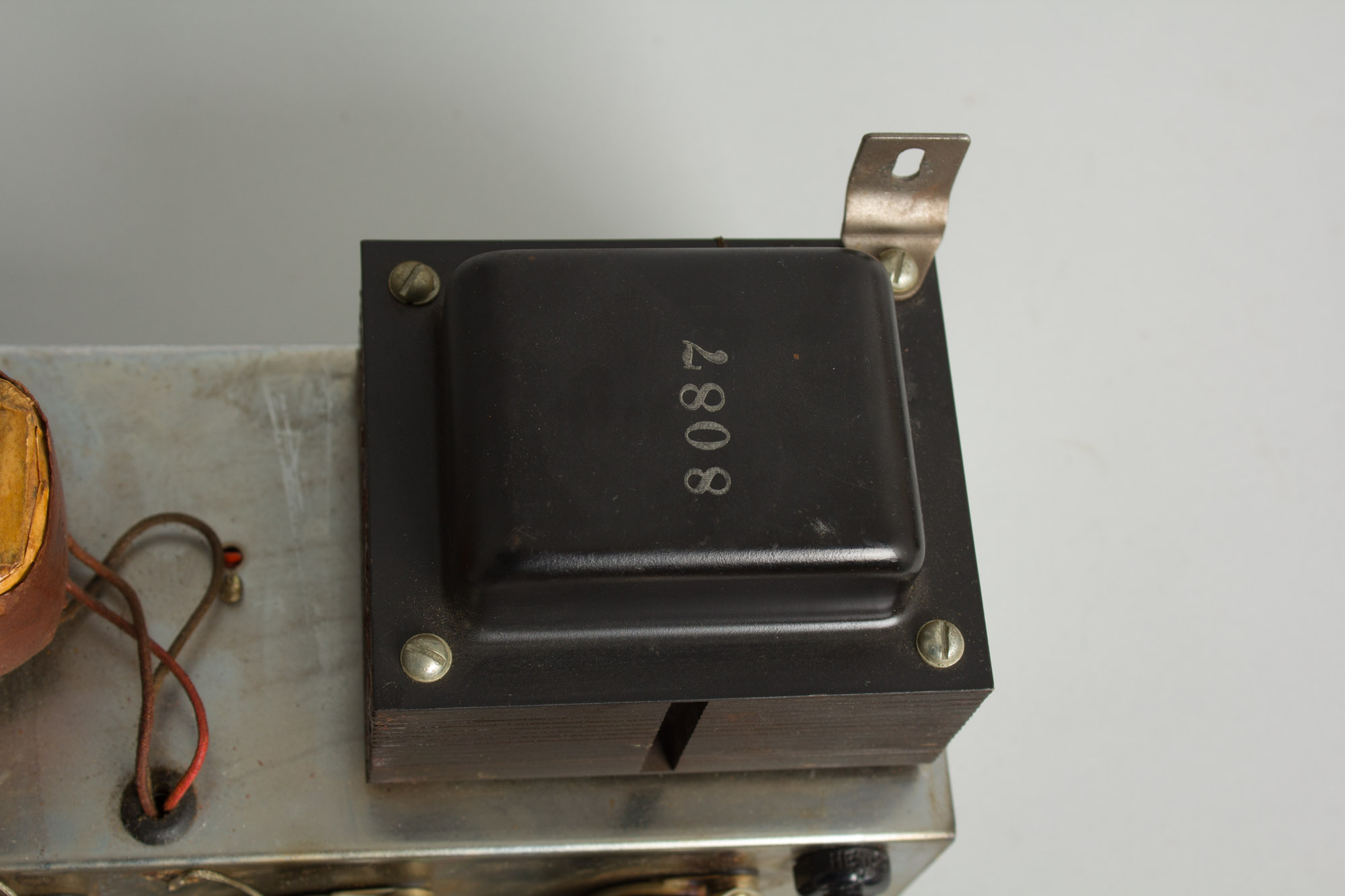
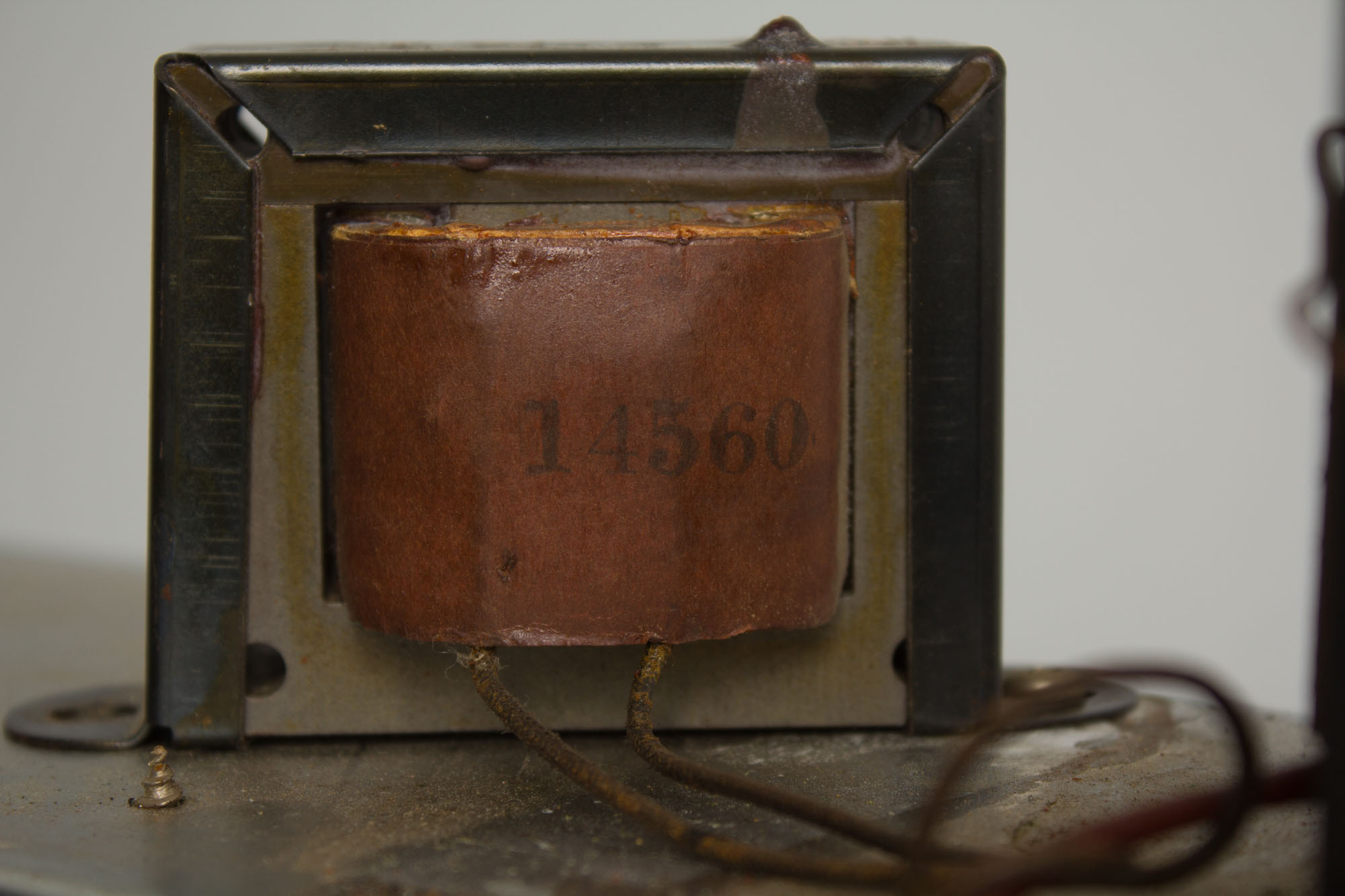
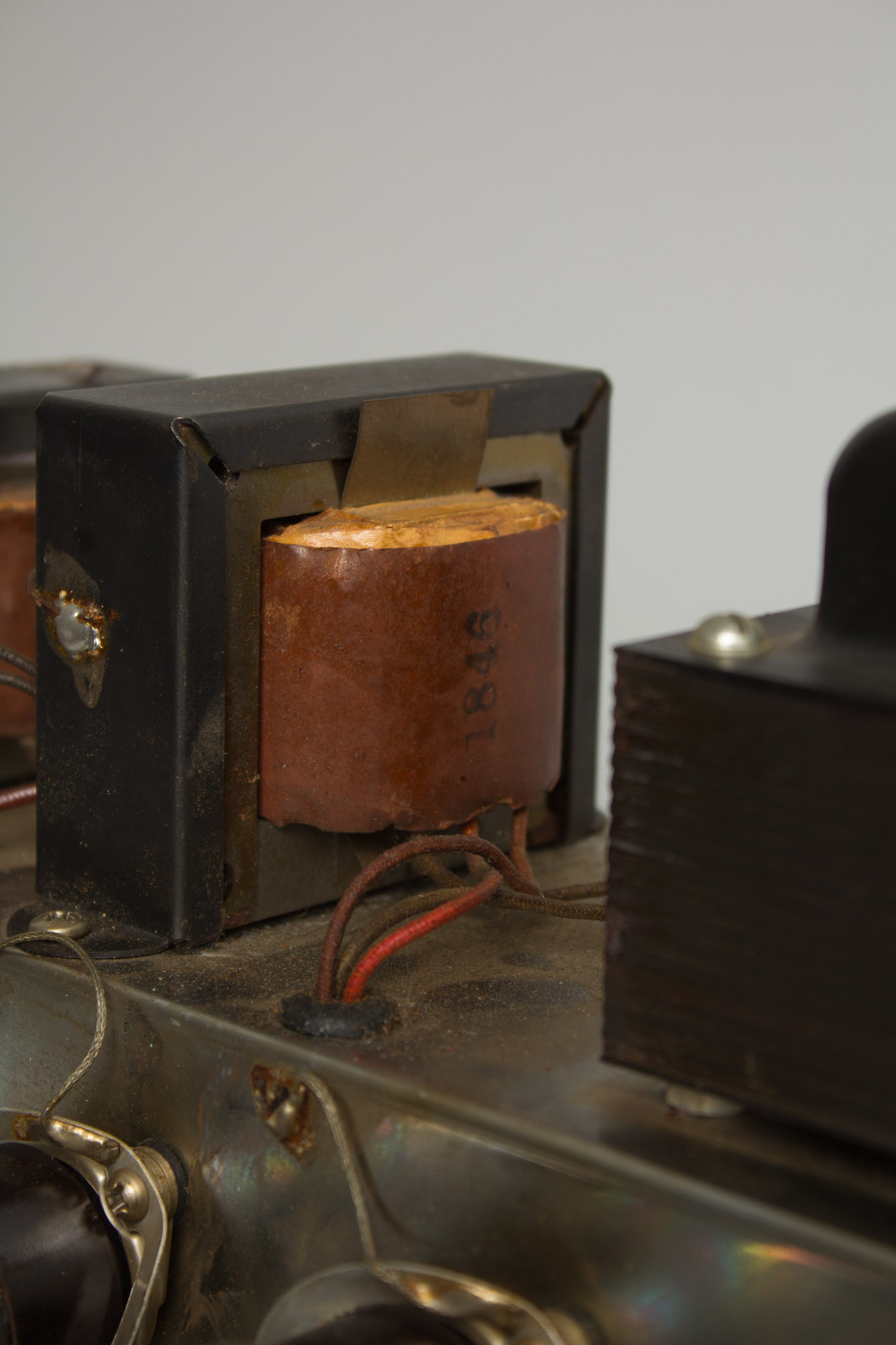
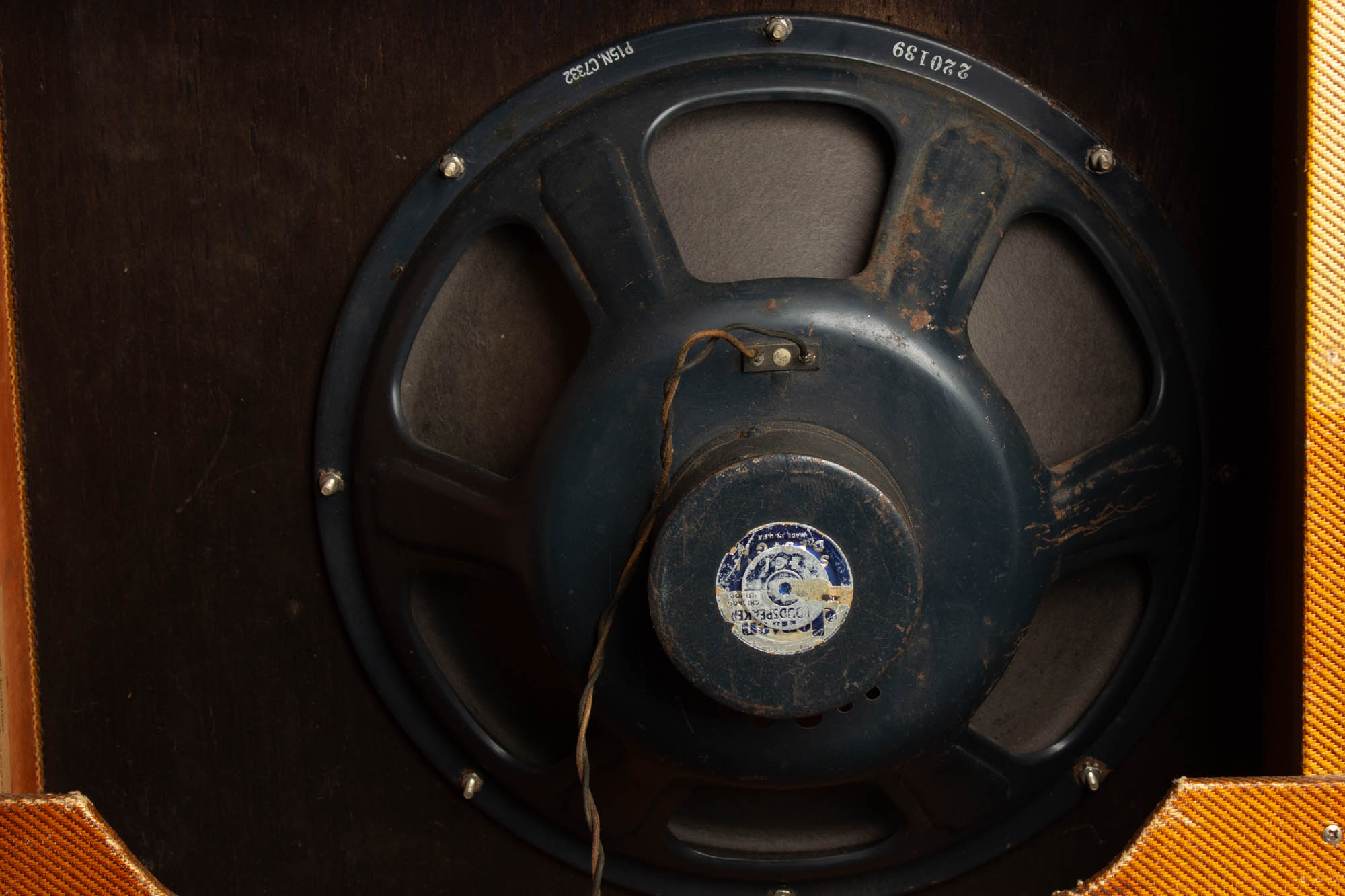
Electrically, this Pro is nearly all-original. The Jensen P15N speaker bears the code 220-139, dating it to the 39th week of 1961, and although not original, it is very much the correct speaker for this amp and sounds wonderful. The Triad-made power, choke and output transformers are all original, bearing the codes 8087, 1846 and 14560, respectively. The pots appear original and all date to the 41st week of 1955. The amp has otherwise seen our typical maintenance and servicing, including replacement of all electrolytic capacitors, a grounded 3-prong power cord, cleaning of all pots, sockets and jacks and biased to spec.
The Pro's deep and lush tone is unlike any other amp from this period, and shades into a massive roar when pushed into overdrive. This amp sounds truly great and in this era of small tweeds is quite an inspiration to play through! Very Good + Condition.
This is a truly excellent example of a very early production narrow-panel Fender "Pro-Amp". The single 15" Pro had been the flagship design since the very humble beginnings of Leo Fender's company, the most powerful of the holy trinity of the "Woodies" of the late 40s. It was soon sharing the single 15" professional tier with both the earlier Bassman and Bandmasters. By the mid-1950's it was only recently supplanted at the top of the Fender line by the newly introduced "Twin-Amp".
The Pro with its single 15" Jensen speaker was still a formidable piece of work putting out plenty of volume and a deep growl with both steel and standard guitar. At $264.50 retail it was priced just above the 2x10" Super and the new 3x10" Bandmaster models. The Pro has for many decades been a beloved choice by many steel players and only in recent history re-discovered by the guitar community as one of the best kept Tweed secrets. This "narrow panel" iteration is a fairly rare find in the 21st century.
Like it's smaller siblings, the 5E3 Deluxe and 5E9 Tremolux, the 5E5 Pro features four input jacks and two channels, labeled instrument and mic, a volume control for each channel and a master tone control. With its beefed up dual-6L6 power section and bigger cabinet it puts out around 25-30 watts of power into the powerful single Jensen P15N speaker, it can be thought of as a Tweed Deluxe on steroids!
Height is 20 in. (50.8 cm.), 22 1/8 in. (56.2 cm.) width, and 10 1/4 in. (26 cm.) deep.
This is a very nicely preserved example overall. The tube chart bears the stamp "EL" indicating assembly in December of 1955. According to available serial number records, Fender only made around 700 5E5 Pro models that year, far less than several of the smaller combos. Cosmetically, the tweed covering shows it's fair share of use, including some heavier fraying and wear around corners and edges. Overall it remains in good shape and bears a very attractive patina. The grille cloth is nicely intact and clean overall with some light fraying here and there. The control panel is nicely shiny, though some of the stenciled lettering has worn off. The handle appears to be an older replacement.
Electrically, this Pro is nearly all-original. The Jensen P15N speaker bears the code 220-139, dating it to the 39th week of 1961, and although not original, it is very much the correct speaker for this amp and sounds wonderful. The Triad-made power, choke and output transformers are all original, bearing the codes 8087, 1846 and 14560, respectively. The pots appear original and all date to the 41st week of 1955. The amp has otherwise seen our typical maintenance and servicing, including replacement of all electrolytic capacitors, a grounded 3-prong power cord, cleaning of all pots, sockets and jacks and biased to spec.
The Pro's deep and lush tone is unlike any other amp from this period, and shades into a massive roar when pushed into overdrive. This amp sounds truly great and in this era of small tweeds is quite an inspiration to play through! Very Good + Condition.