Gibson ES-355TD-SV Semi-Hollow Body Electric Guitar (1966)

LOADING IMAGES
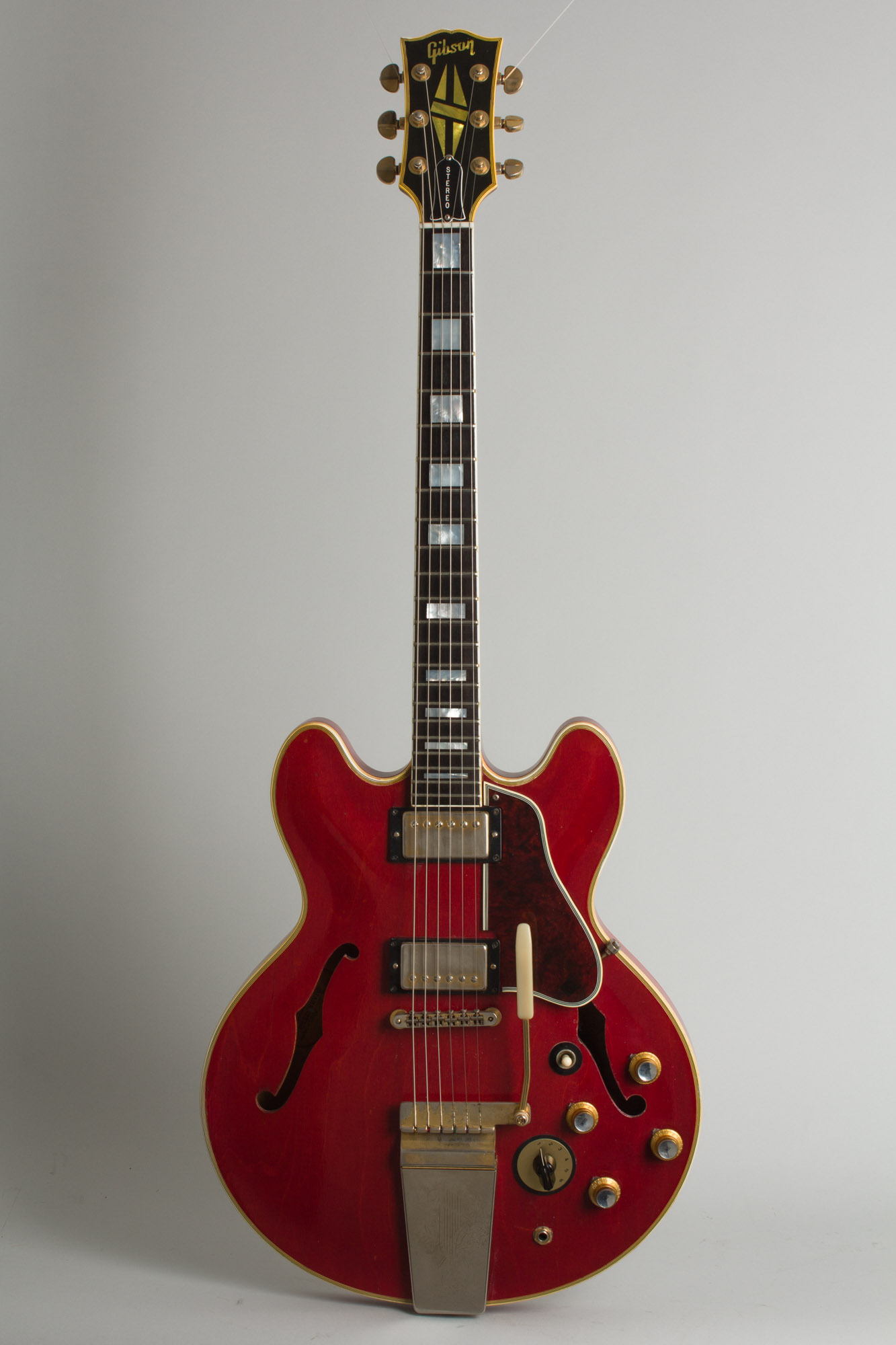
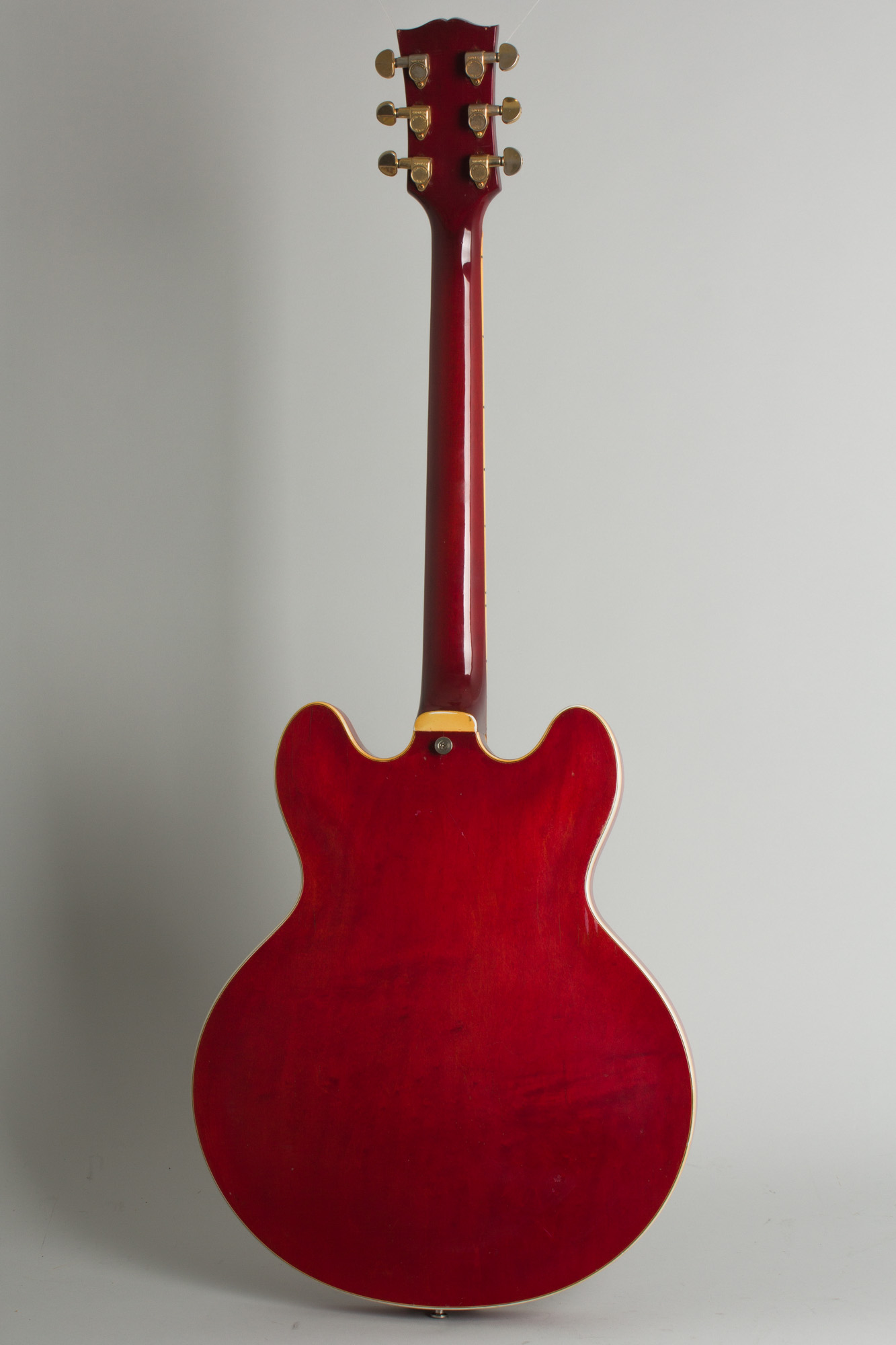
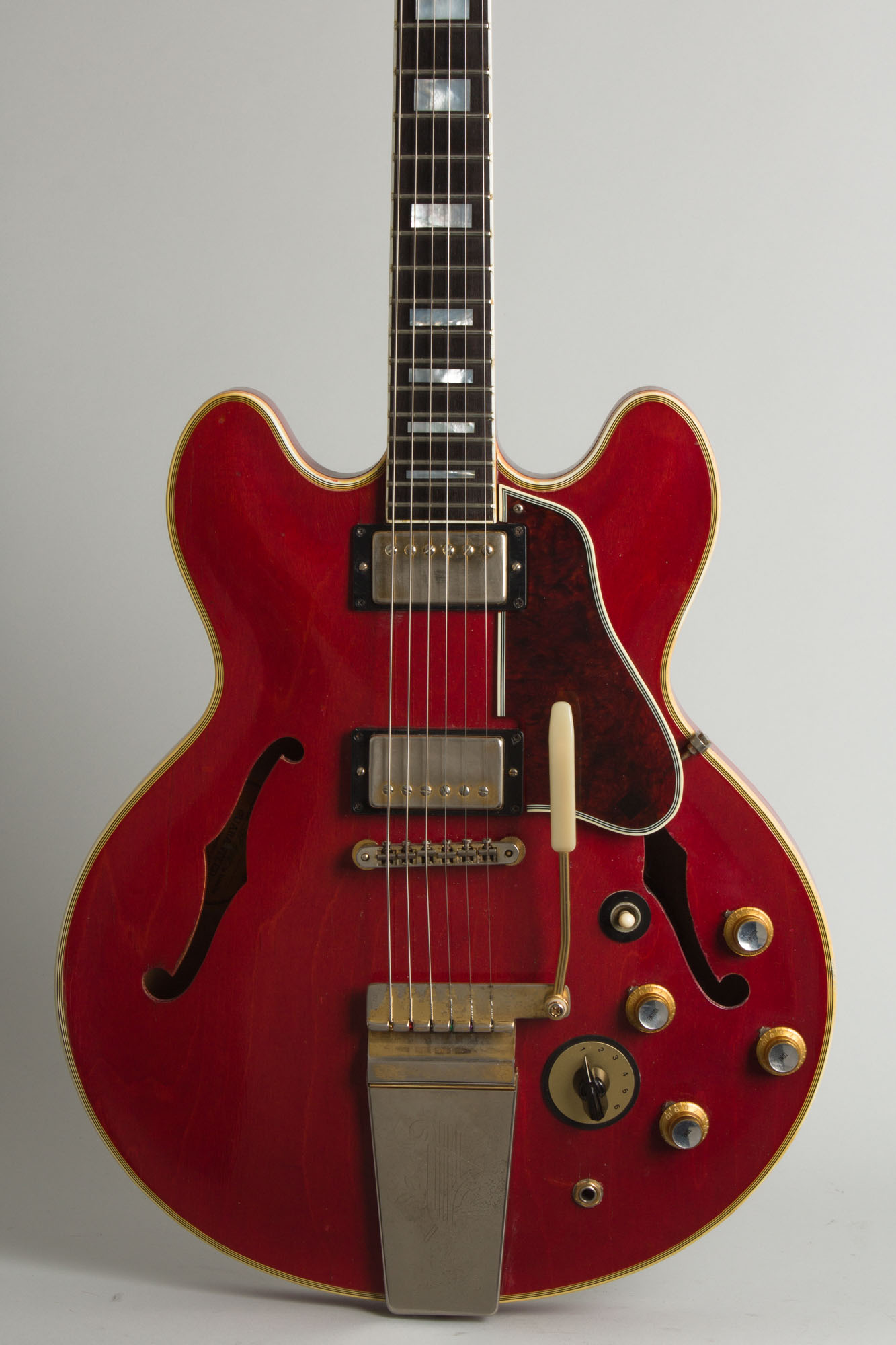
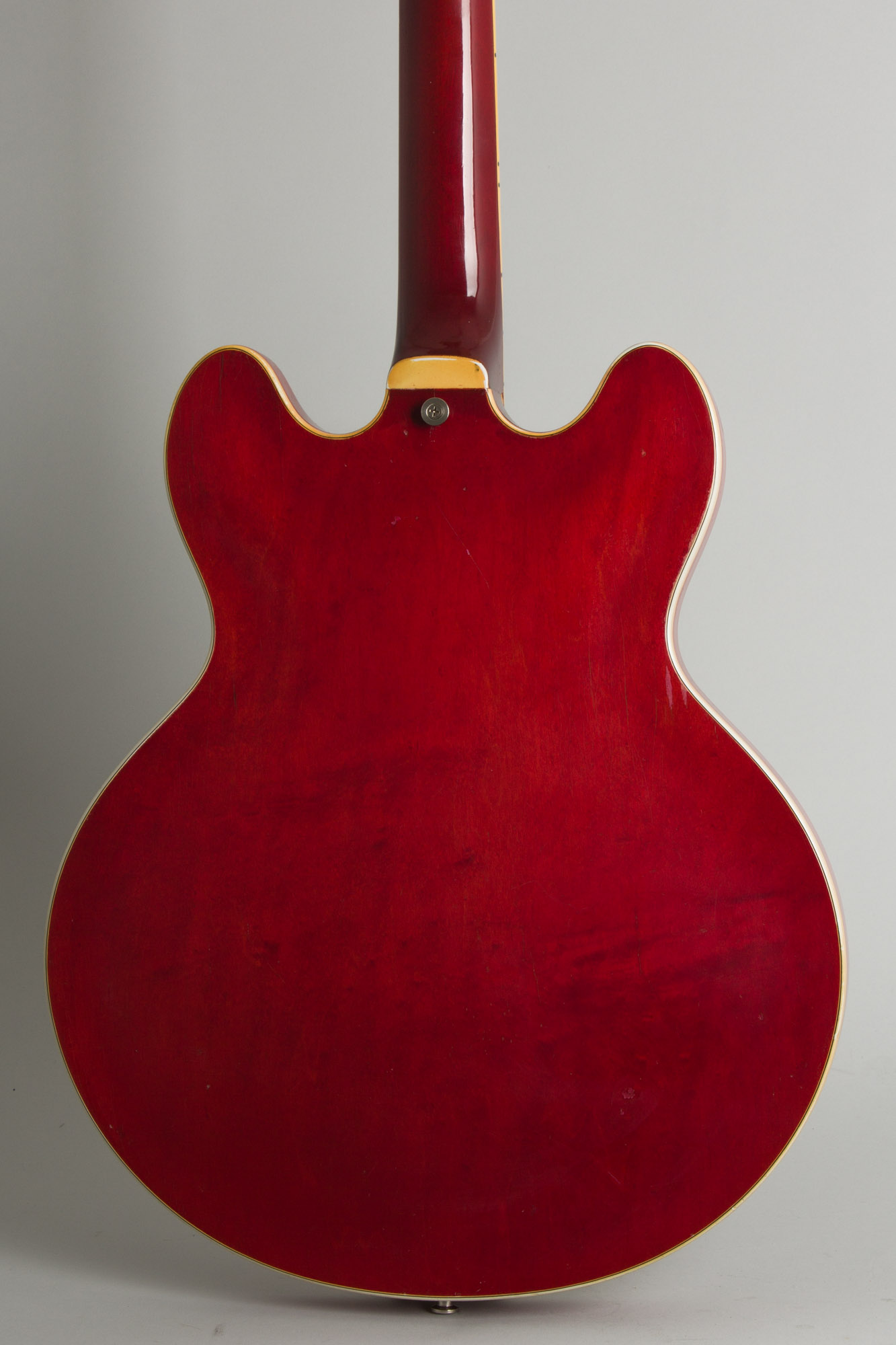
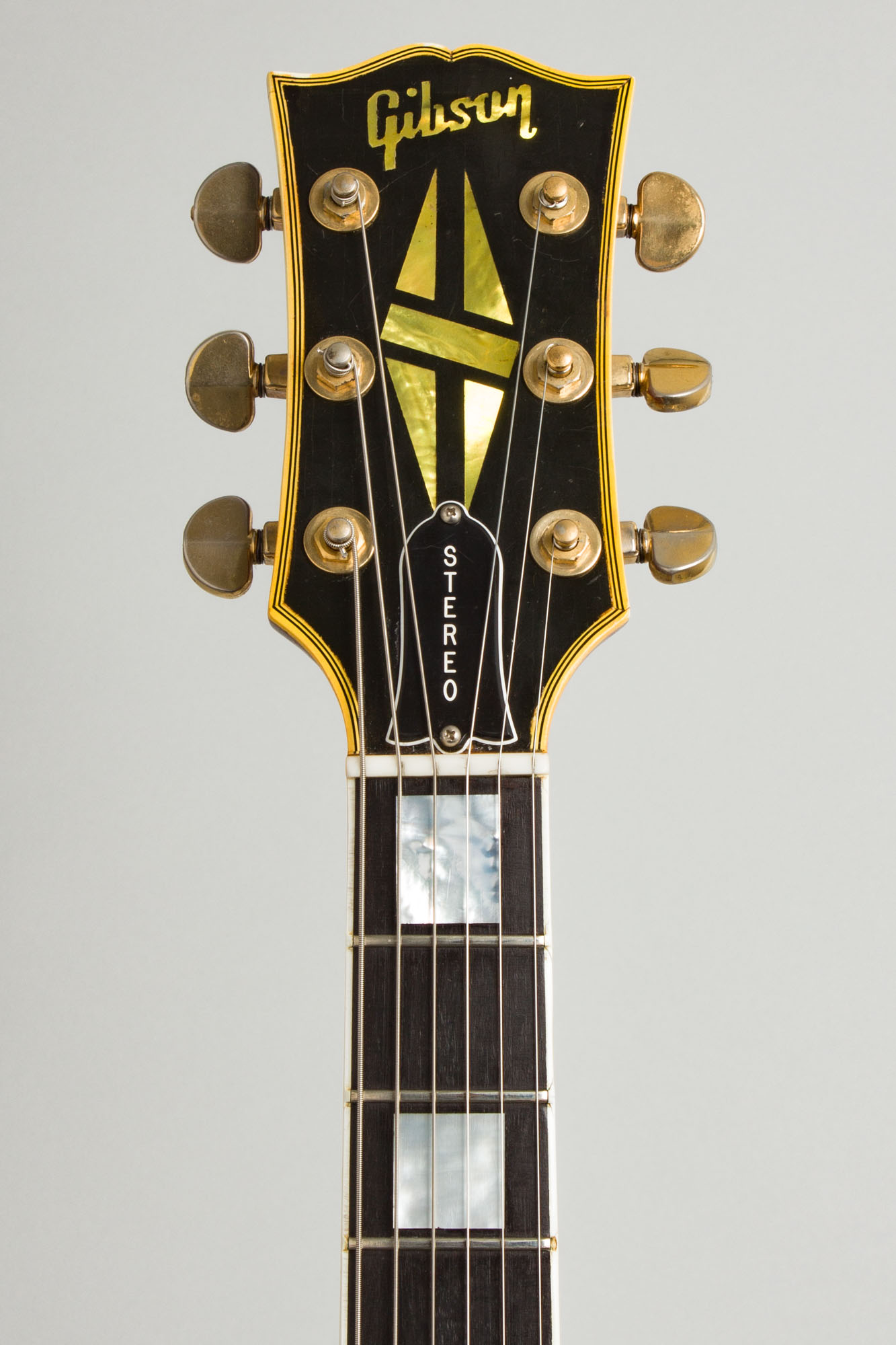
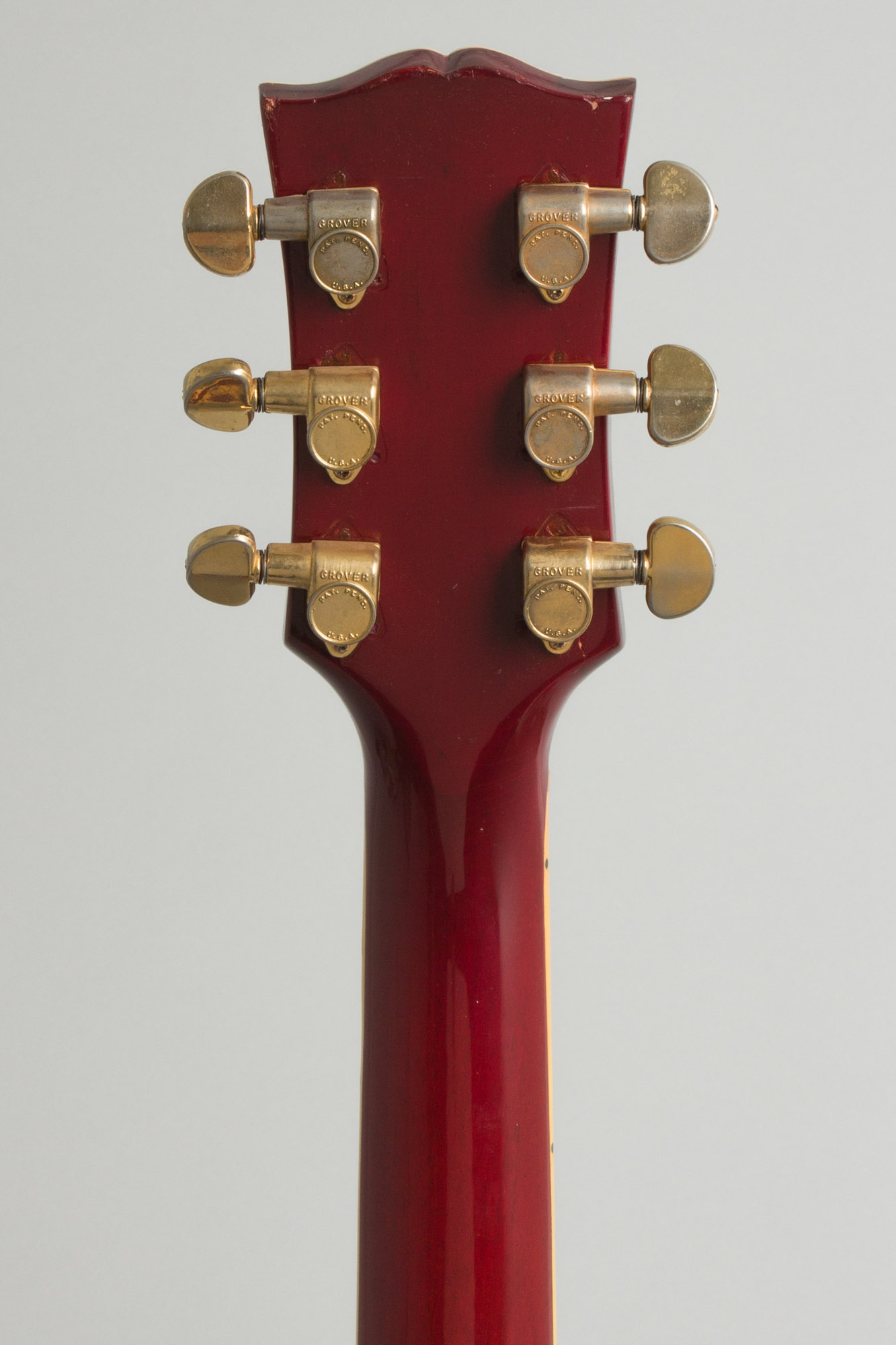
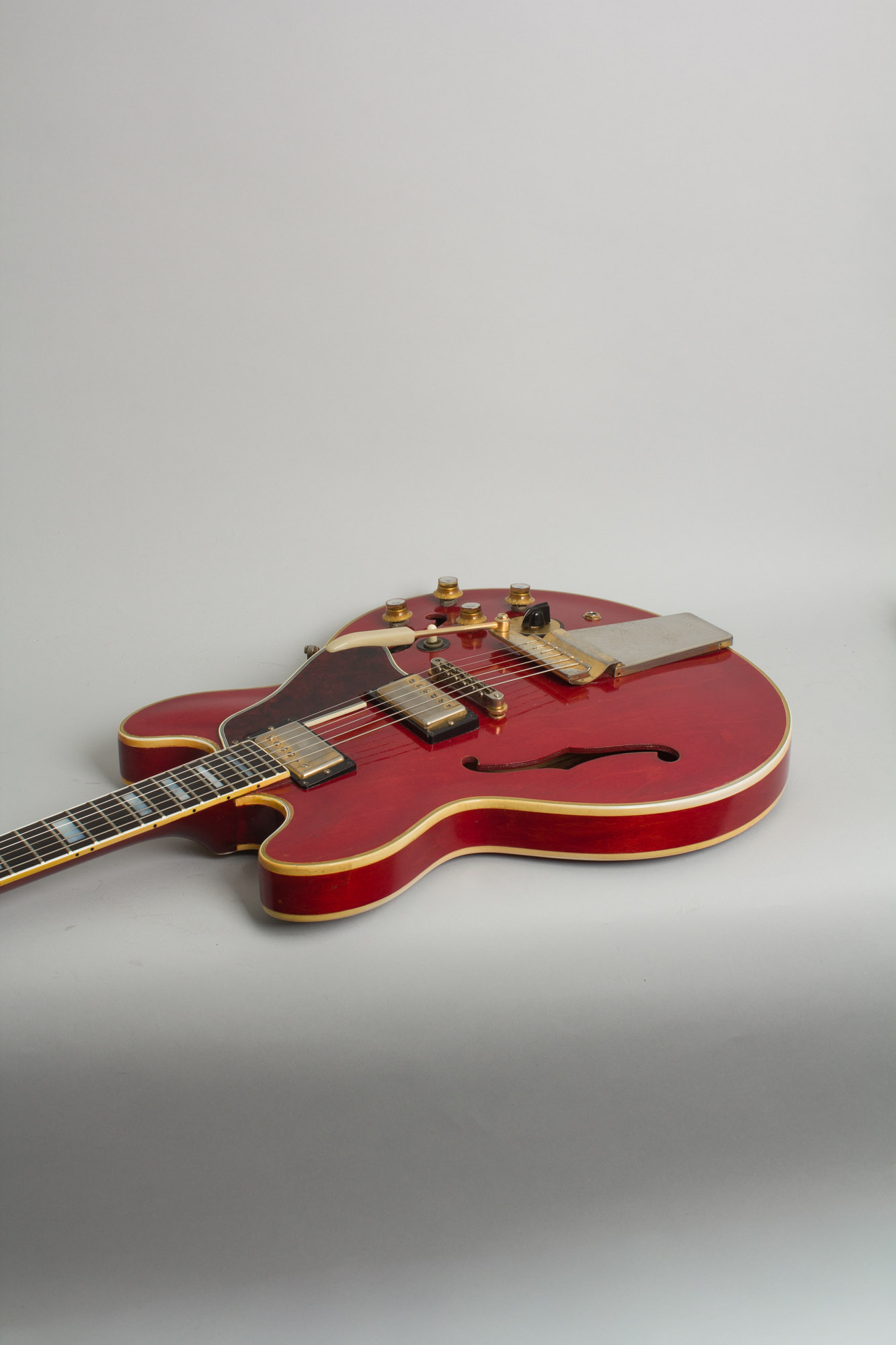
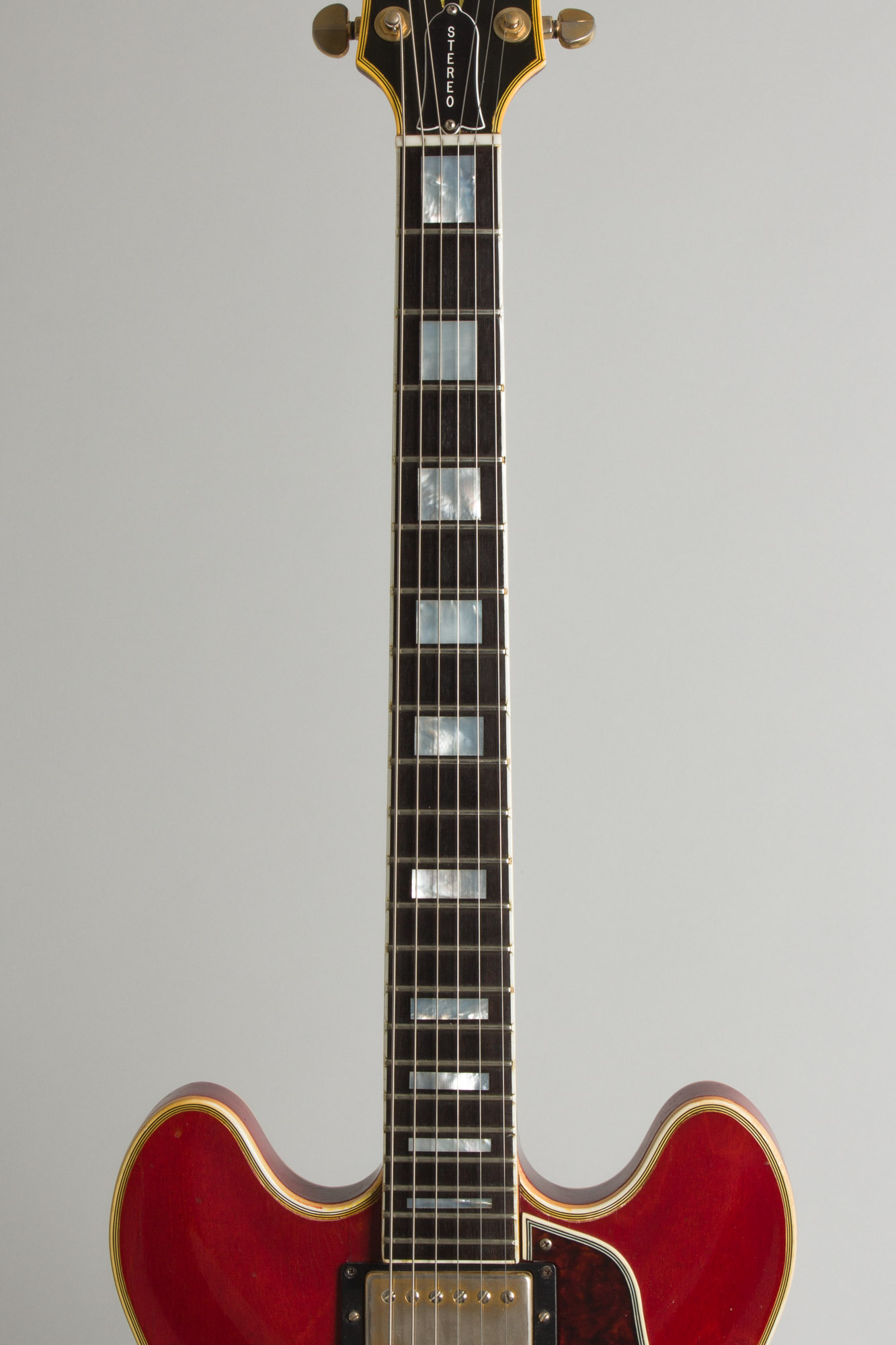
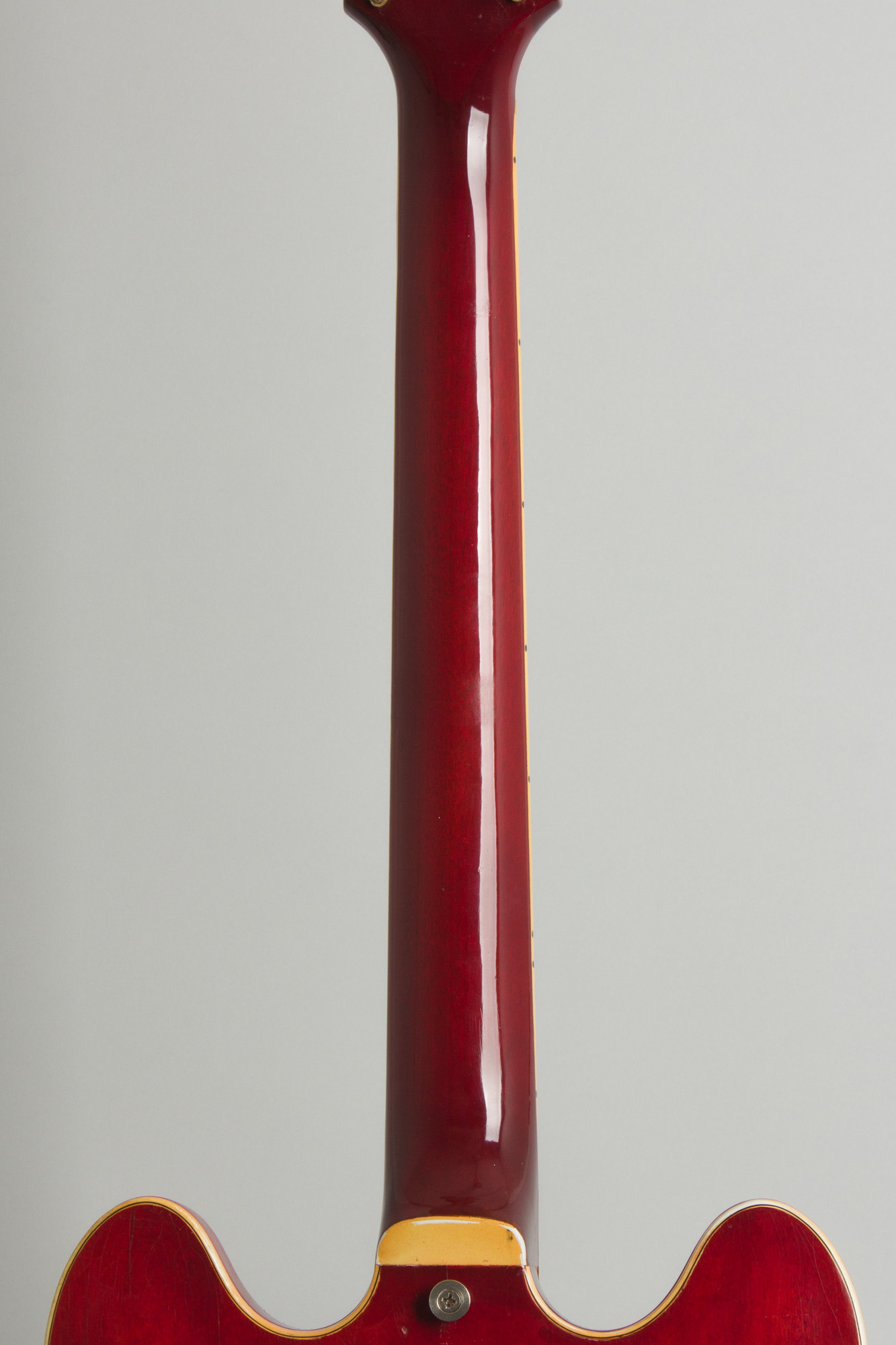
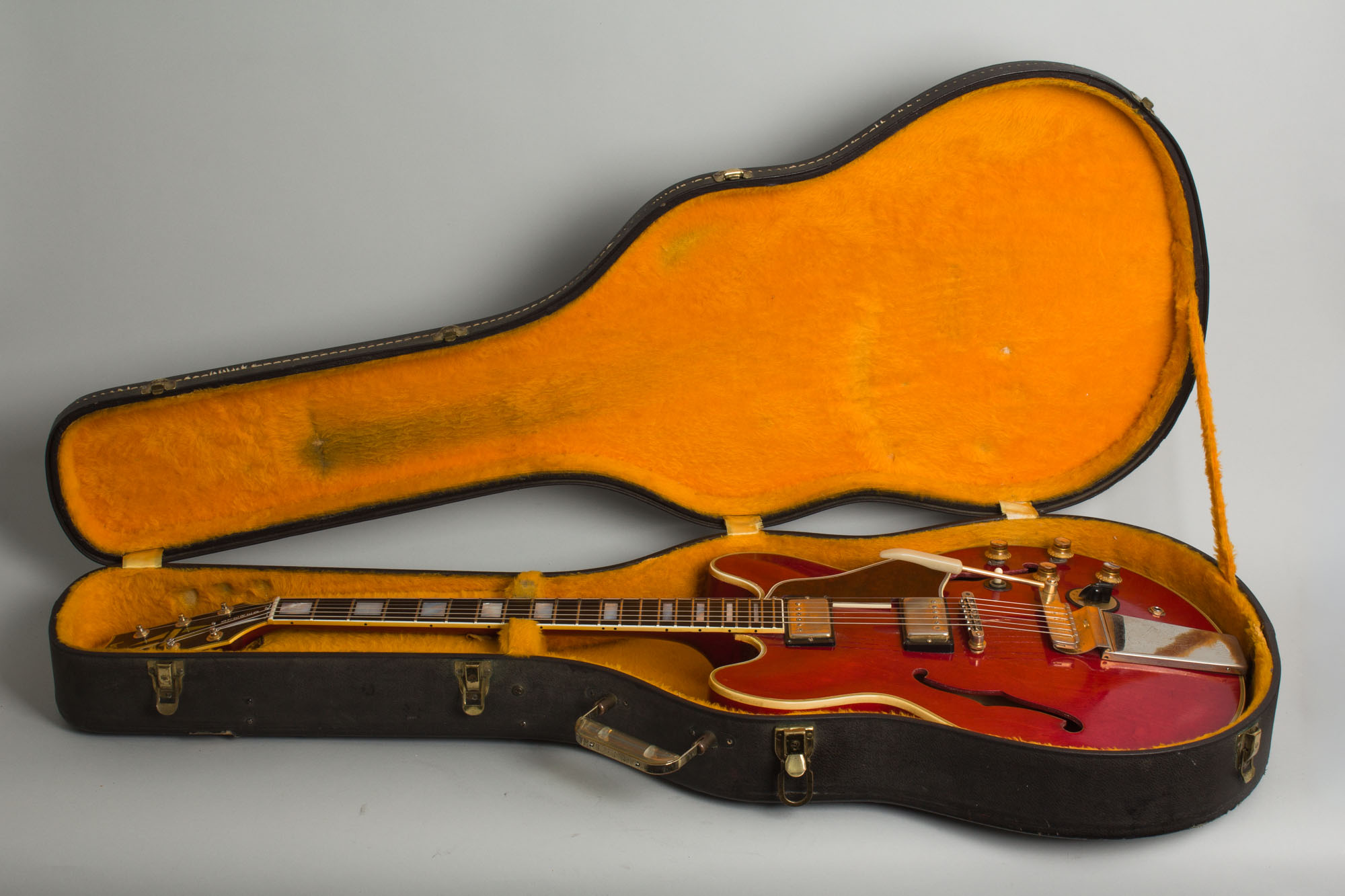
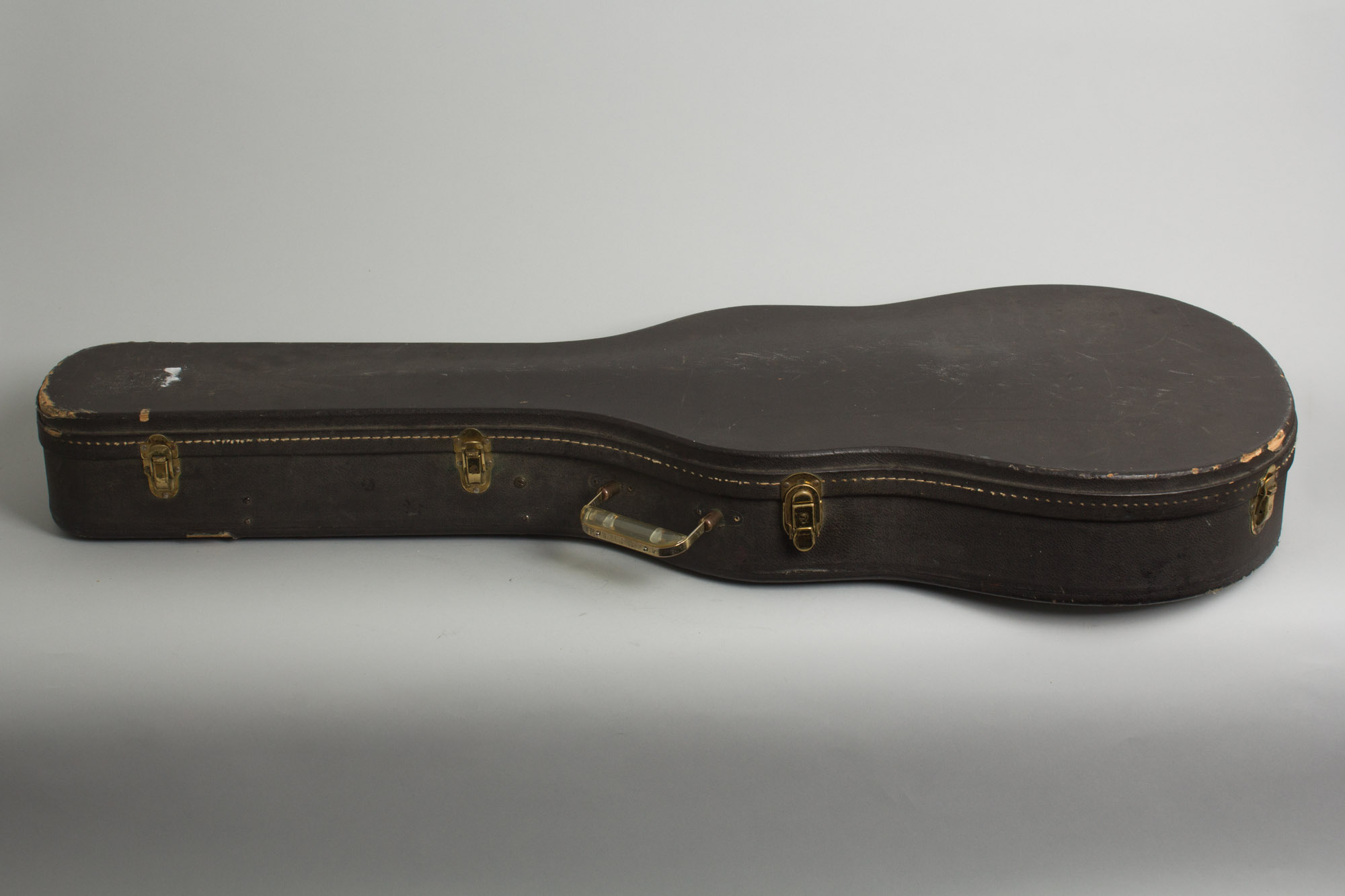
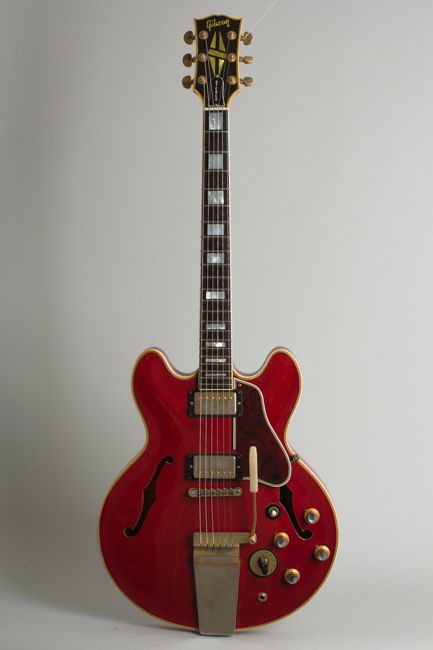
Gibson ES-355TD-SV Model Semi-Hollow Body Electric Guitar (1966), made in Kalamazoo, Michigan, serial # 348335, cherry lacquer finish, laminated maple body, mahogany neck with rosewood fingerboard, original black hard shell case.
This 1966 Gibson ES-355TD-SV must have had a bit of a life over the last 60 years; it has seen a headstock repair, neck reset and some rewiring in its past but survives as an excellent player's instrument. Although by the 1970s eclipsed by the success of the Les Paul the top-line thin semi-solid 355 model was always a showpiece for Gibson, often featured in catalogs and ads and a longtime favorite of discerning players.
The laminated maple body is finished in a deep rich cherry hue with 7-ply top binding, 3-ply back binding and unbound f-holes. The one piece mahogany neck has a bound ebony fingerboard with mother-of-pearl block inlays. The nut is not the very slim style typical of this period but a full 1 11/16". Although fairly wide this particular neck is also fairly slim back-to-front in the lower positions reminiscent of the 1960-62 style. The headstock face is 5-ply bound with abalone Super 400 style split block inlay and replaced Grover tuners. All the hardware is gold plated, including the stock long Vibrola tailpiece.
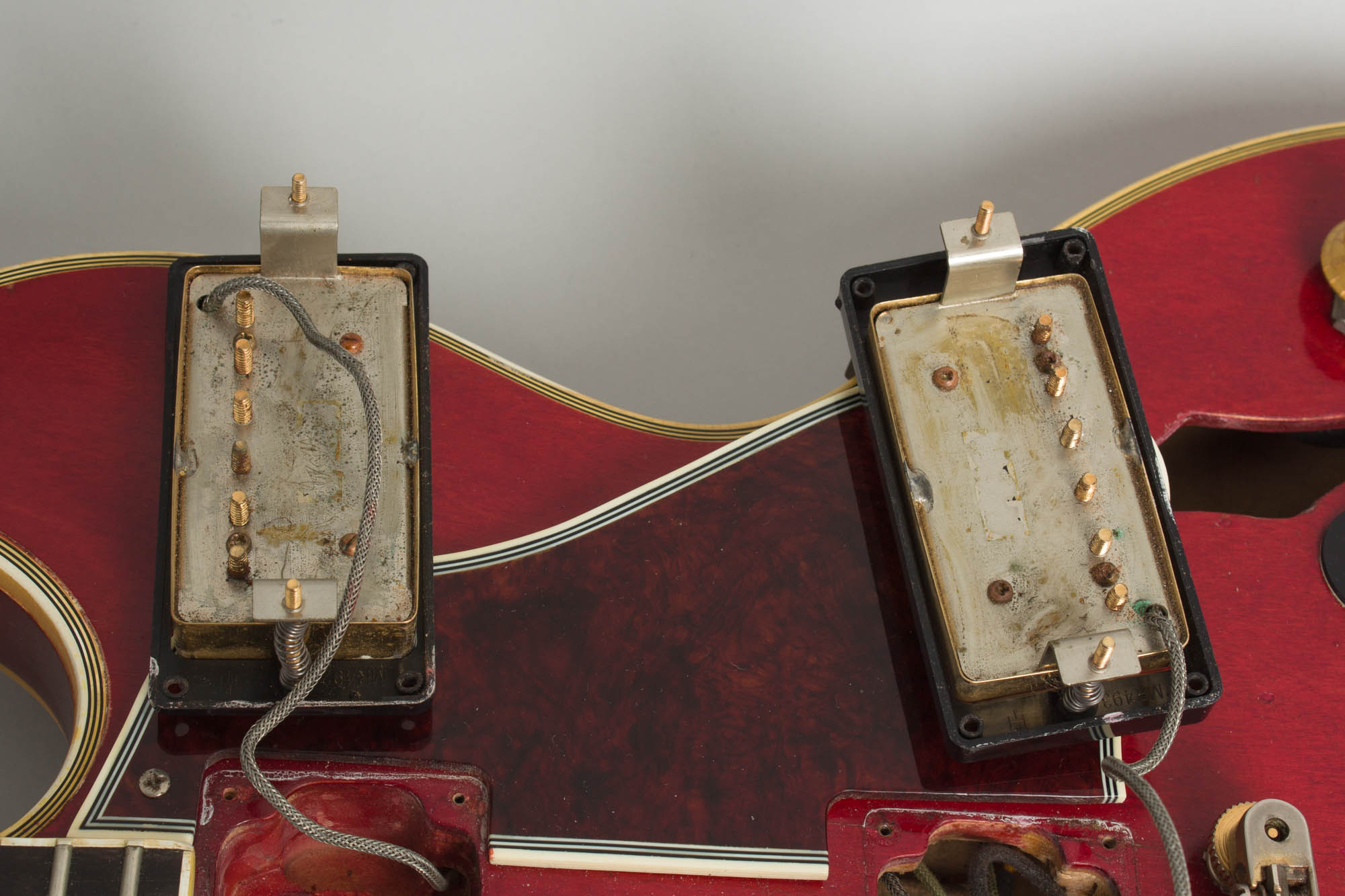
The gold plated Humbucking pickups on this ES-355 are the mid-60s Patent Number variety, although the stickers have gone missing. It was factory wired in stereo with the Vari-Tone system; it has been rewired to mono with the standard one switch, four knob rig working as expected. The two pickups were originally wired out of phase in the center position, a feature of the stereo model. This one has had a magnet reversal done to the neck pickup to render them in-phase. The Vari-Tone is still intact and functioning, not removed as was often the case.
Only 137 cherry "SV" 355s shipped out of Kalamazoo in 1966 at a whopping list price of $775, plus $66 for the case. At the time Gibson claimed this model "Offers the accomplished artist an amazing range of sound" and it has always been known as a very classy and versatile instrument. While designed primarily with jazz and country players in mind, the ES-355 has long been considered one of the classic electric blues guitars, and virtually from its introduction was standard equipment for many of the seminal players in that genre, especially Chuck Berry and B.B. King. This one has paid its dues along the way and is ready to play "Everyday I Have The Blues" everyday, or pretty much anything else for that matter!
Overall length is 41 3/4 in. (106 cm.), 16 in. (40.6 cm.) wide at lower bout, and 1 3/4 in. (4.4 cm.) in depth, measured at side of rim. Scale length is 24 3/4 in. (629 mm.). Width of nut is 1 11/16 in. (43 mm.).
Now nearly 60 years old this ES-355 has definitely had some adventures. The entire back of neck has been overfinished, with an added veneer over the back of the headstock under this finish. There was almost certainly some sort of headstock repair, though any crack would have been higher on the peghead than most. Examining inside the truss rod cavity shows some evidence of work; the rod itself works cleanly. The serial number is missing from the back of the peghead, but is still intact on the label inside the body. There is visible touch up at neck heel, and inside the bass pickup cavity; the neck was almost certainly removed and reset along the way. It does not appear the entire neck was replaced, as the headstock veneer, inlay and binding are consistent with mid-1960s practice. There have been several sets of tuners installed; currently there are Grover Rotomatics from the 1970s with small scars visible on the headstock rear from other machines.
The deep cherry body finish below the heck heel area remains original and shows only minor fade with typical checking, and dings, dents and scratches including some minor topical touch ups. The external hardware is largely original and complete except the multi-bound tortoise celluloid pickguard is a well done reproduction. The gold plating shows some typical loss, most noticeable on the pickup covers and the bridge from player wear. The tuners are cleaner with loss to the plating on the buttons. The vibrato tailpiece is complete with all arm fittings and also has some typical plating loss.
The guitar has been rewired correctly to a mono output, while the original Vari-Tone is still intact and working. The neck pickup has been opened to reverse magnet (required for in-phase operation in mono conversion) and there has been some re-wiring, while the pots and Vari-Tone hardware appear original. The pickups are the original units but both "Patent Number" decals have flaked off. For some reason someone added a small black plastic ring under the switch grommet and a black rubber ring under the Varitone plate. The strap buttons and truss rod cover are more recent.
The frets show some recrowning in the lower positions while the higher positions show intact nibs, the overfinished back of the neck is very clean with some small dinks. Despite all the re-working (or possible because of it) his guitar is a fine player with a good ring even acoustically. It comes in an original period yellow lined hard case, something of an enigma perhaps but a great gigging example of this classy Gibson classic. Overall Very Good Condition.
This 1966 Gibson ES-355TD-SV must have had a bit of a life over the last 60 years; it has seen a headstock repair, neck reset and some rewiring in its past but survives as an excellent player's instrument. Although by the 1970s eclipsed by the success of the Les Paul the top-line thin semi-solid 355 model was always a showpiece for Gibson, often featured in catalogs and ads and a longtime favorite of discerning players.
The laminated maple body is finished in a deep rich cherry hue with 7-ply top binding, 3-ply back binding and unbound f-holes. The one piece mahogany neck has a bound ebony fingerboard with mother-of-pearl block inlays. The nut is not the very slim style typical of this period but a full 1 11/16". Although fairly wide this particular neck is also fairly slim back-to-front in the lower positions reminiscent of the 1960-62 style. The headstock face is 5-ply bound with abalone Super 400 style split block inlay and replaced Grover tuners. All the hardware is gold plated, including the stock long Vibrola tailpiece.
The gold plated Humbucking pickups on this ES-355 are the mid-60s Patent Number variety, although the stickers have gone missing. It was factory wired in stereo with the Vari-Tone system; it has been rewired to mono with the standard one switch, four knob rig working as expected. The two pickups were originally wired out of phase in the center position, a feature of the stereo model. This one has had a magnet reversal done to the neck pickup to render them in-phase. The Vari-Tone is still intact and functioning, not removed as was often the case.
Only 137 cherry "SV" 355s shipped out of Kalamazoo in 1966 at a whopping list price of $775, plus $66 for the case. At the time Gibson claimed this model "Offers the accomplished artist an amazing range of sound" and it has always been known as a very classy and versatile instrument. While designed primarily with jazz and country players in mind, the ES-355 has long been considered one of the classic electric blues guitars, and virtually from its introduction was standard equipment for many of the seminal players in that genre, especially Chuck Berry and B.B. King. This one has paid its dues along the way and is ready to play "Everyday I Have The Blues" everyday, or pretty much anything else for that matter!
Overall length is 41 3/4 in. (106 cm.), 16 in. (40.6 cm.) wide at lower bout, and 1 3/4 in. (4.4 cm.) in depth, measured at side of rim. Scale length is 24 3/4 in. (629 mm.). Width of nut is 1 11/16 in. (43 mm.).
Now nearly 60 years old this ES-355 has definitely had some adventures. The entire back of neck has been overfinished, with an added veneer over the back of the headstock under this finish. There was almost certainly some sort of headstock repair, though any crack would have been higher on the peghead than most. Examining inside the truss rod cavity shows some evidence of work; the rod itself works cleanly. The serial number is missing from the back of the peghead, but is still intact on the label inside the body. There is visible touch up at neck heel, and inside the bass pickup cavity; the neck was almost certainly removed and reset along the way. It does not appear the entire neck was replaced, as the headstock veneer, inlay and binding are consistent with mid-1960s practice. There have been several sets of tuners installed; currently there are Grover Rotomatics from the 1970s with small scars visible on the headstock rear from other machines.
The deep cherry body finish below the heck heel area remains original and shows only minor fade with typical checking, and dings, dents and scratches including some minor topical touch ups. The external hardware is largely original and complete except the multi-bound tortoise celluloid pickguard is a well done reproduction. The gold plating shows some typical loss, most noticeable on the pickup covers and the bridge from player wear. The tuners are cleaner with loss to the plating on the buttons. The vibrato tailpiece is complete with all arm fittings and also has some typical plating loss.
The guitar has been rewired correctly to a mono output, while the original Vari-Tone is still intact and working. The neck pickup has been opened to reverse magnet (required for in-phase operation in mono conversion) and there has been some re-wiring, while the pots and Vari-Tone hardware appear original. The pickups are the original units but both "Patent Number" decals have flaked off. For some reason someone added a small black plastic ring under the switch grommet and a black rubber ring under the Varitone plate. The strap buttons and truss rod cover are more recent.
The frets show some recrowning in the lower positions while the higher positions show intact nibs, the overfinished back of the neck is very clean with some small dinks. Despite all the re-working (or possible because of it) his guitar is a fine player with a good ring even acoustically. It comes in an original period yellow lined hard case, something of an enigma perhaps but a great gigging example of this classy Gibson classic. Overall Very Good Condition.