Ampeg Dan Armstrong Solid Body Electric Guitar (1970)

LOADING IMAGES
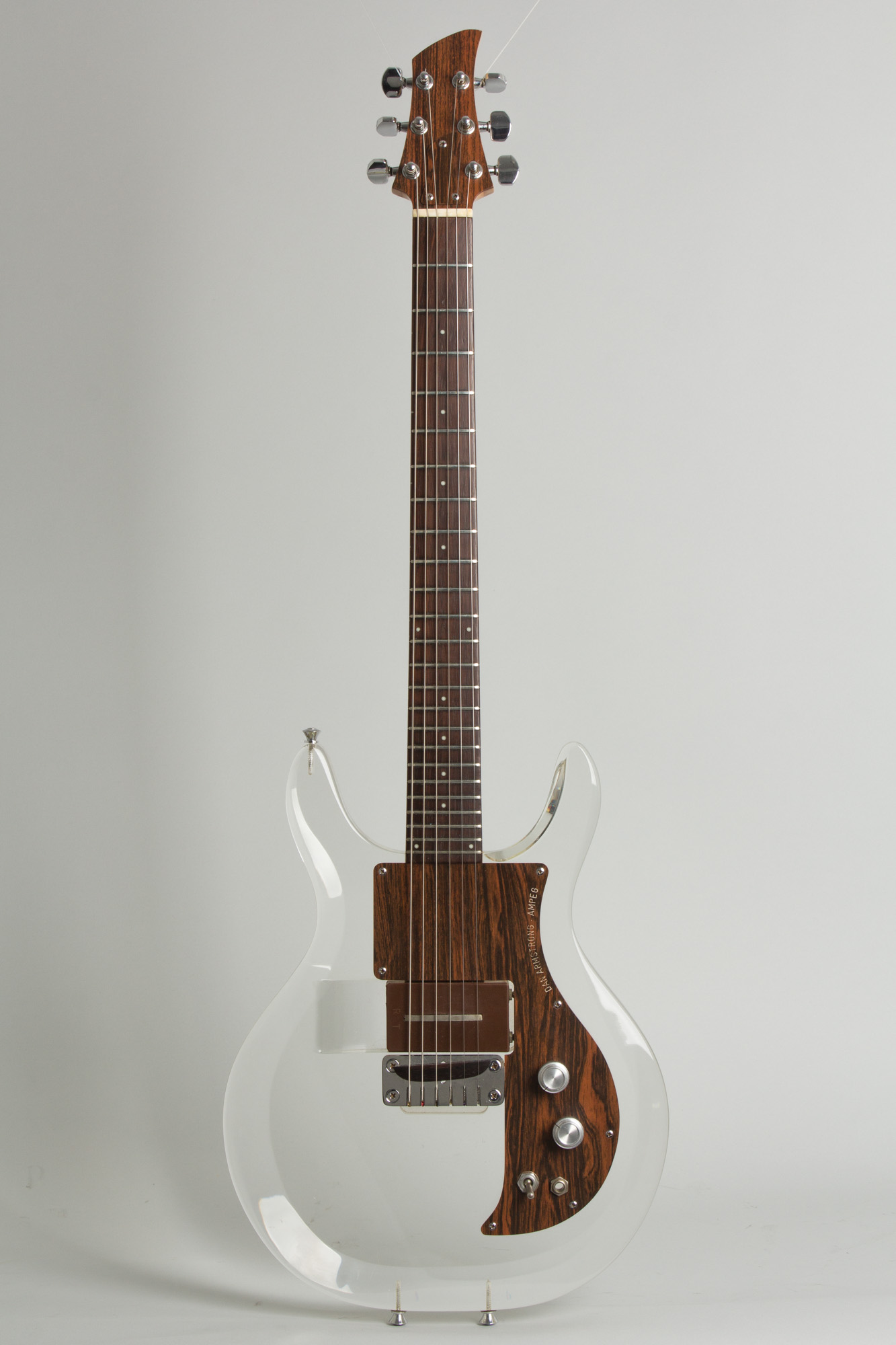
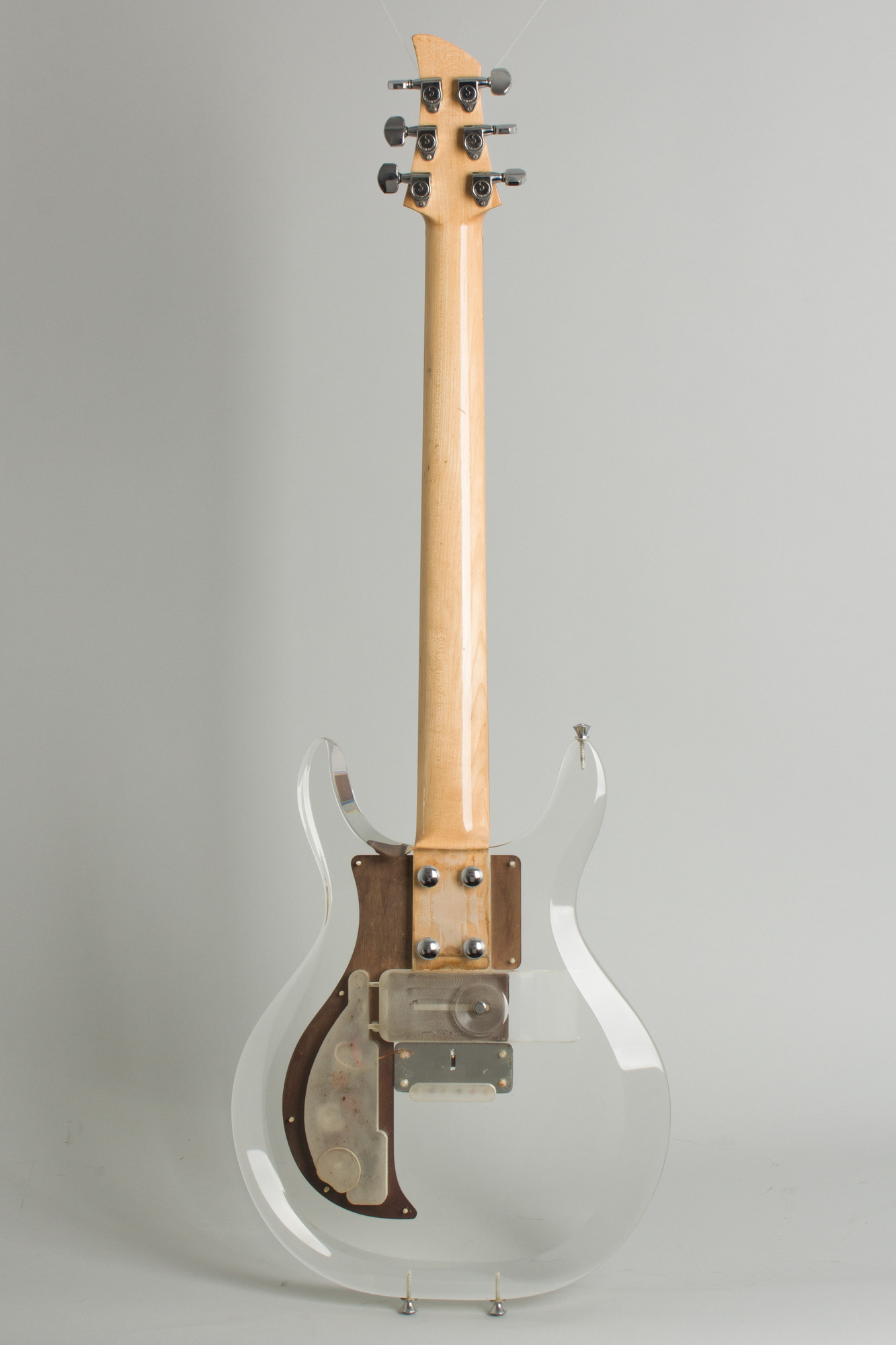
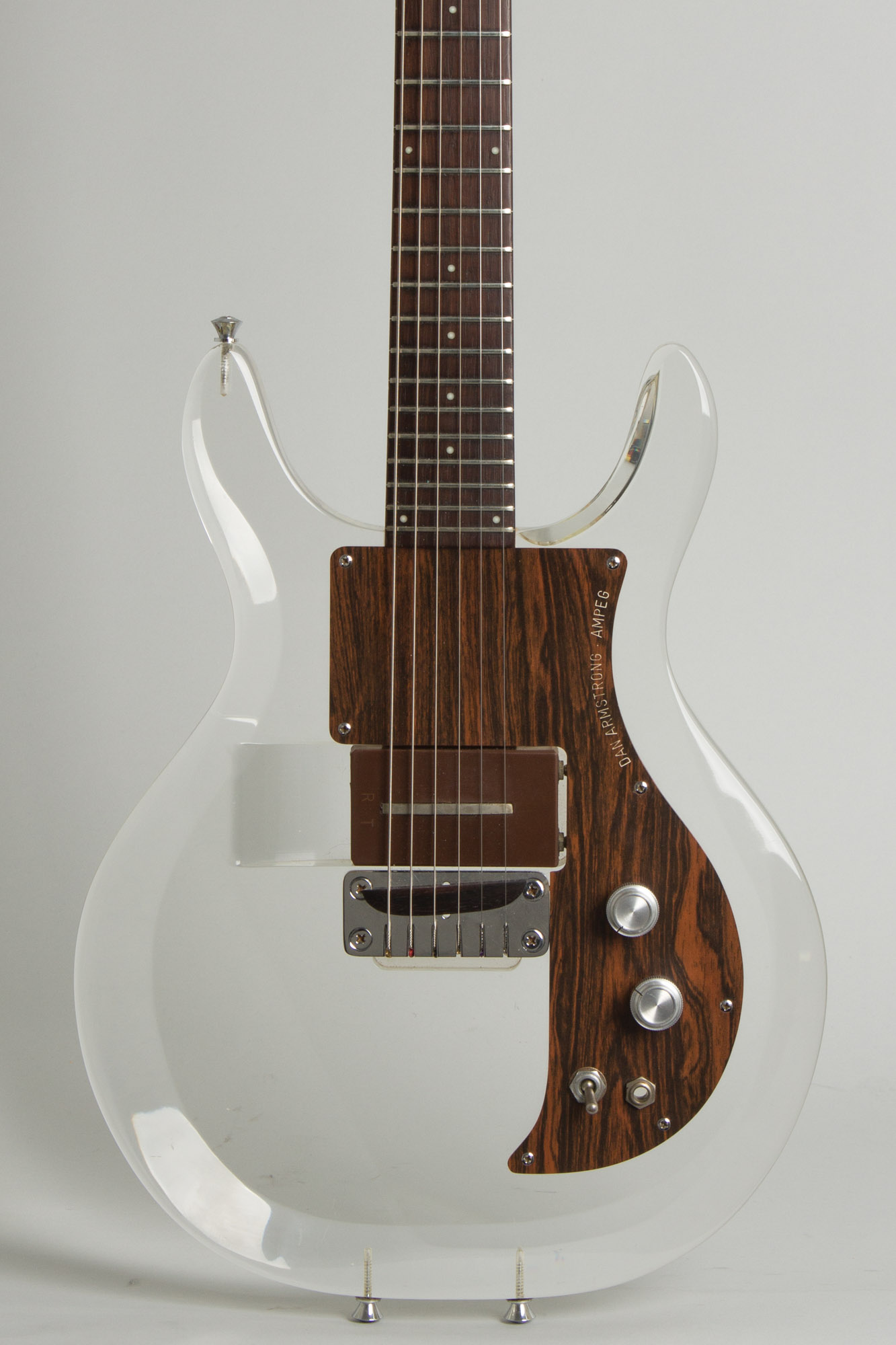
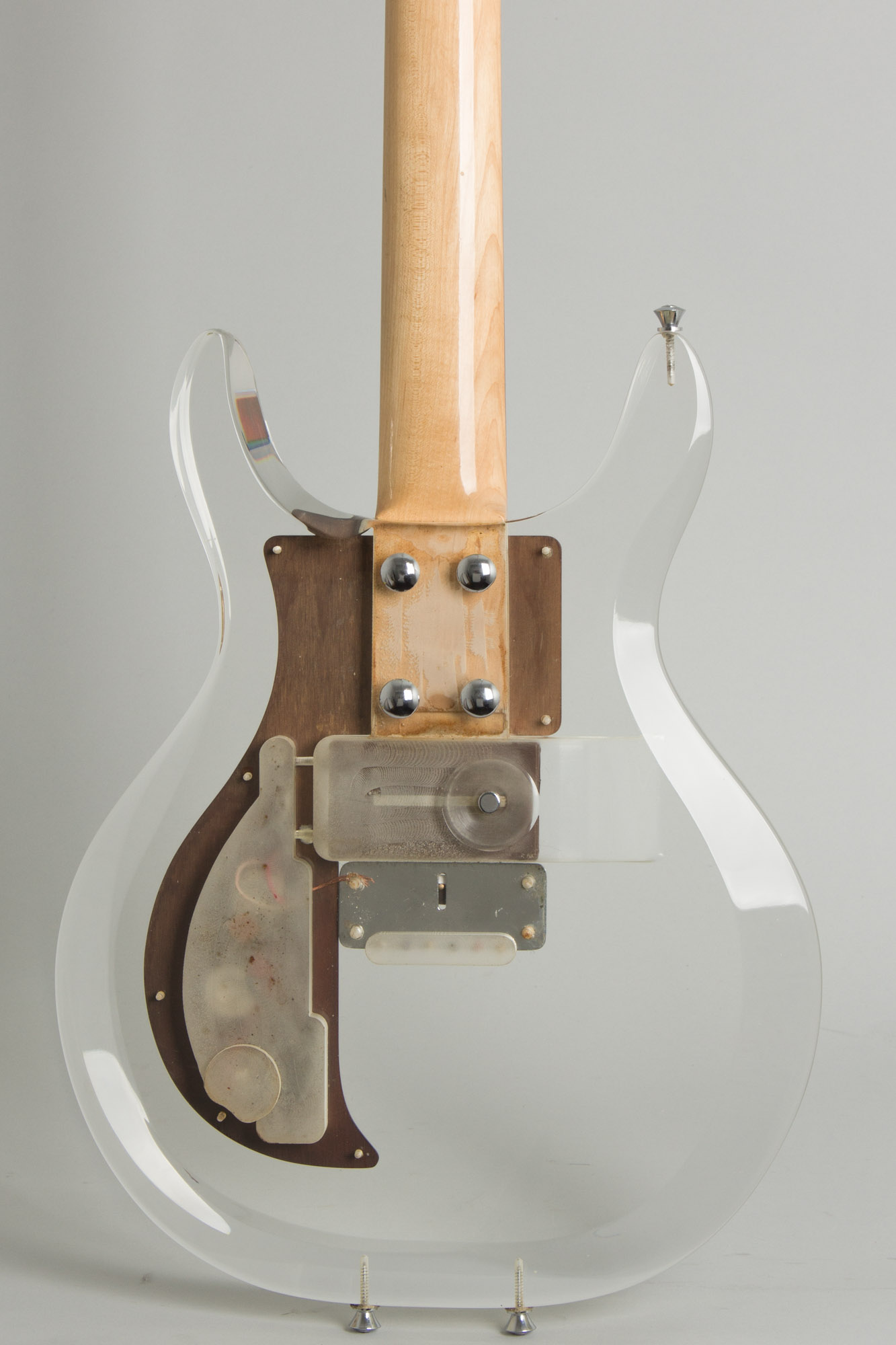
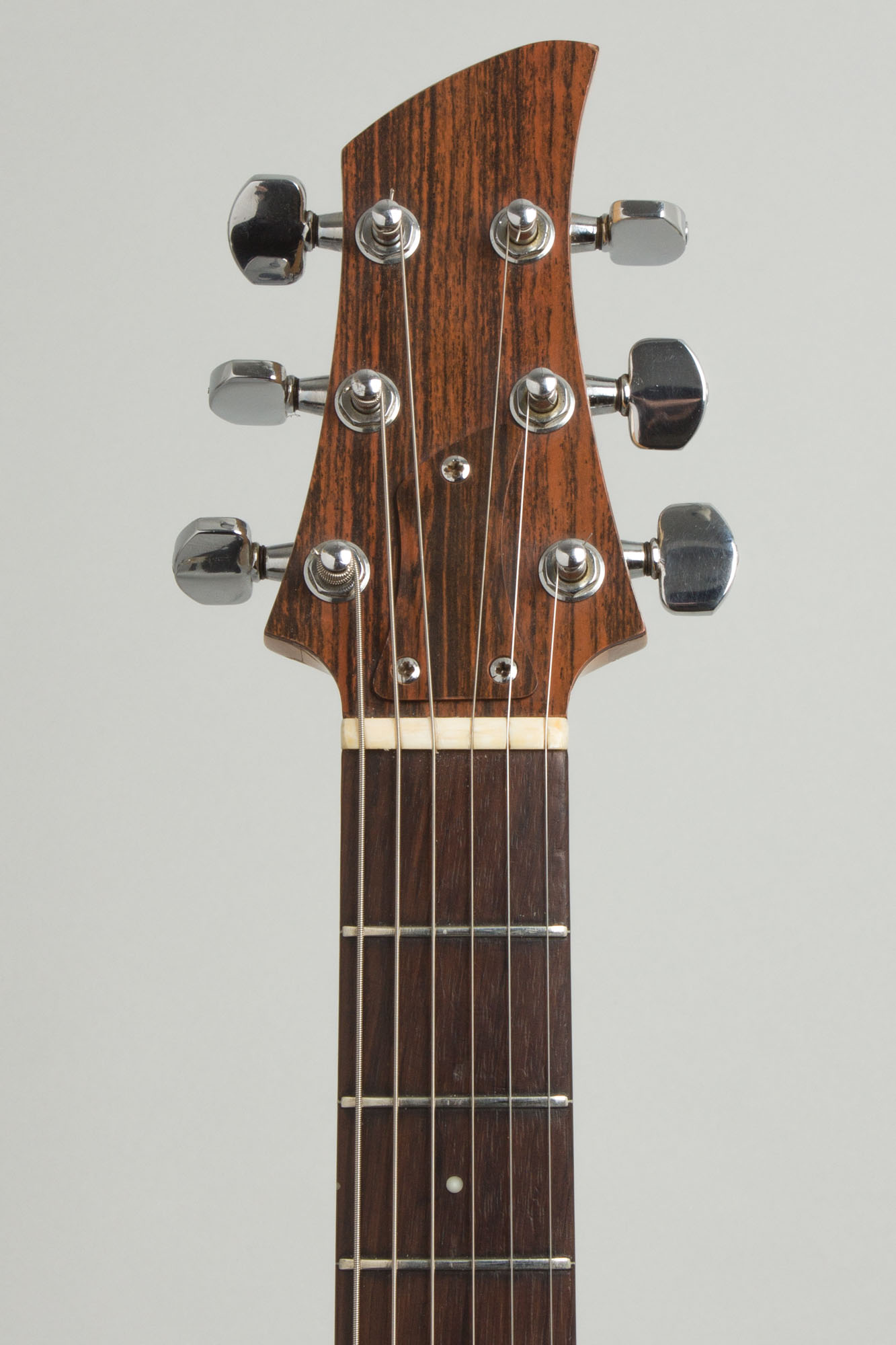

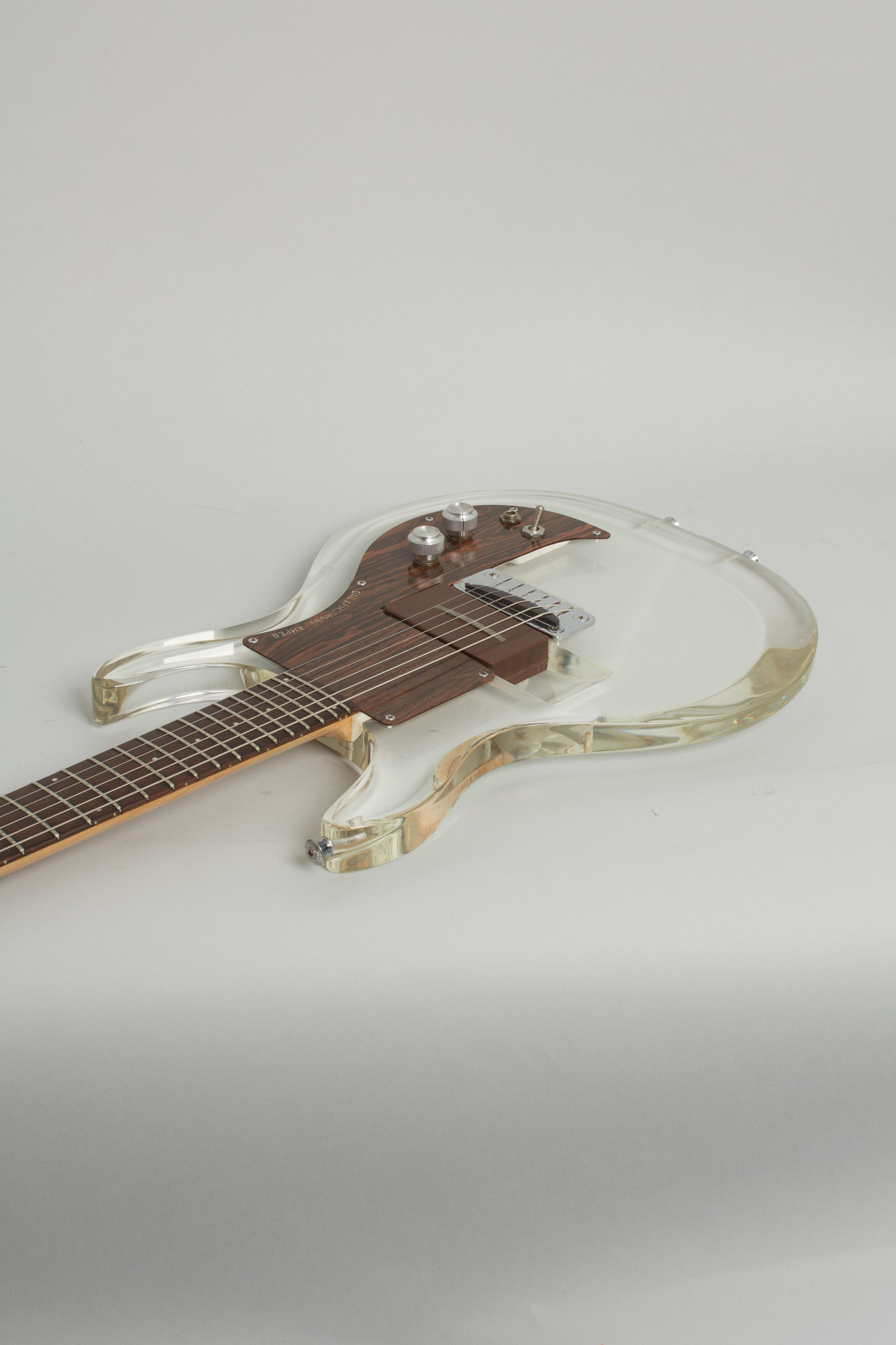
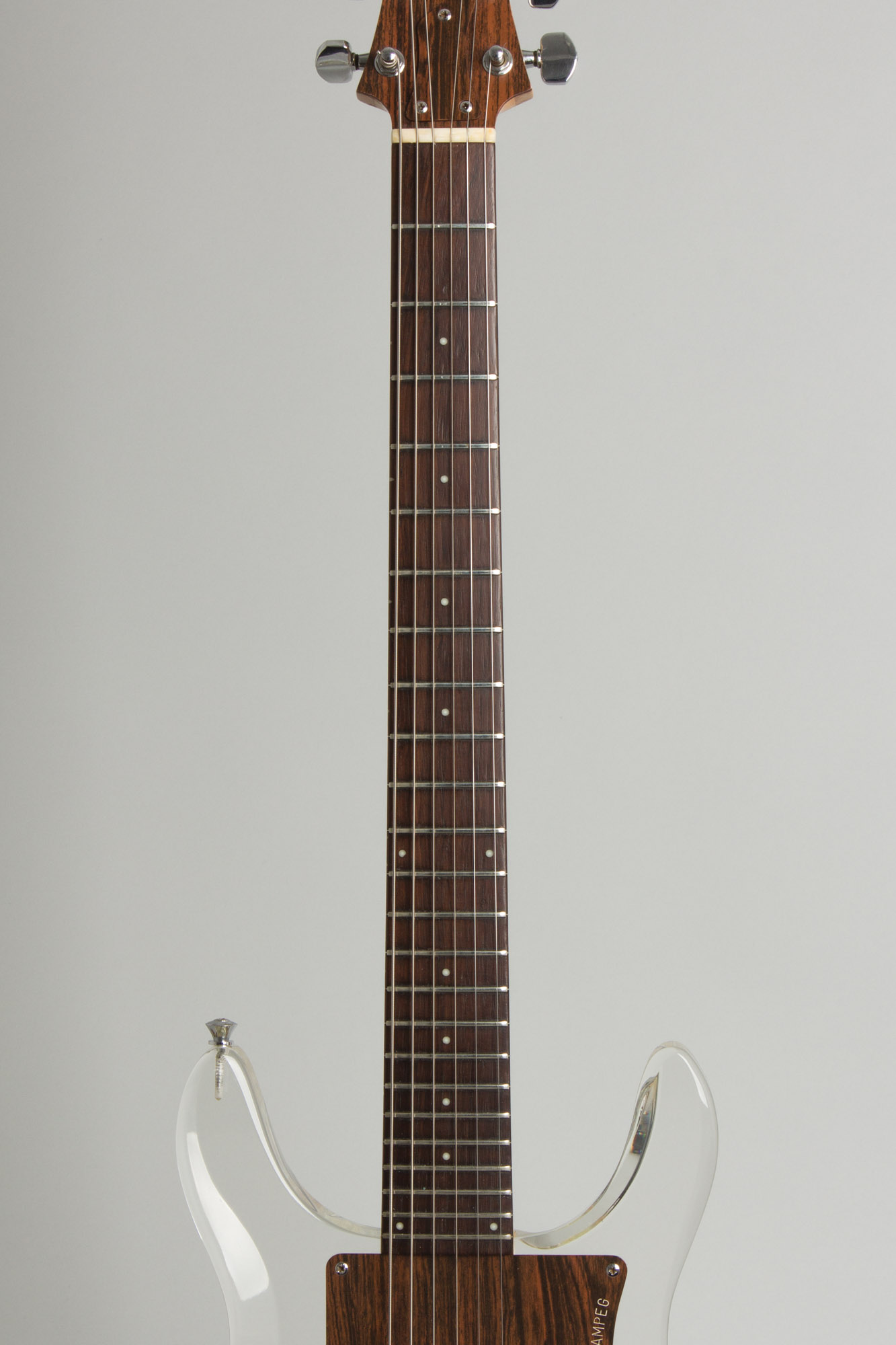
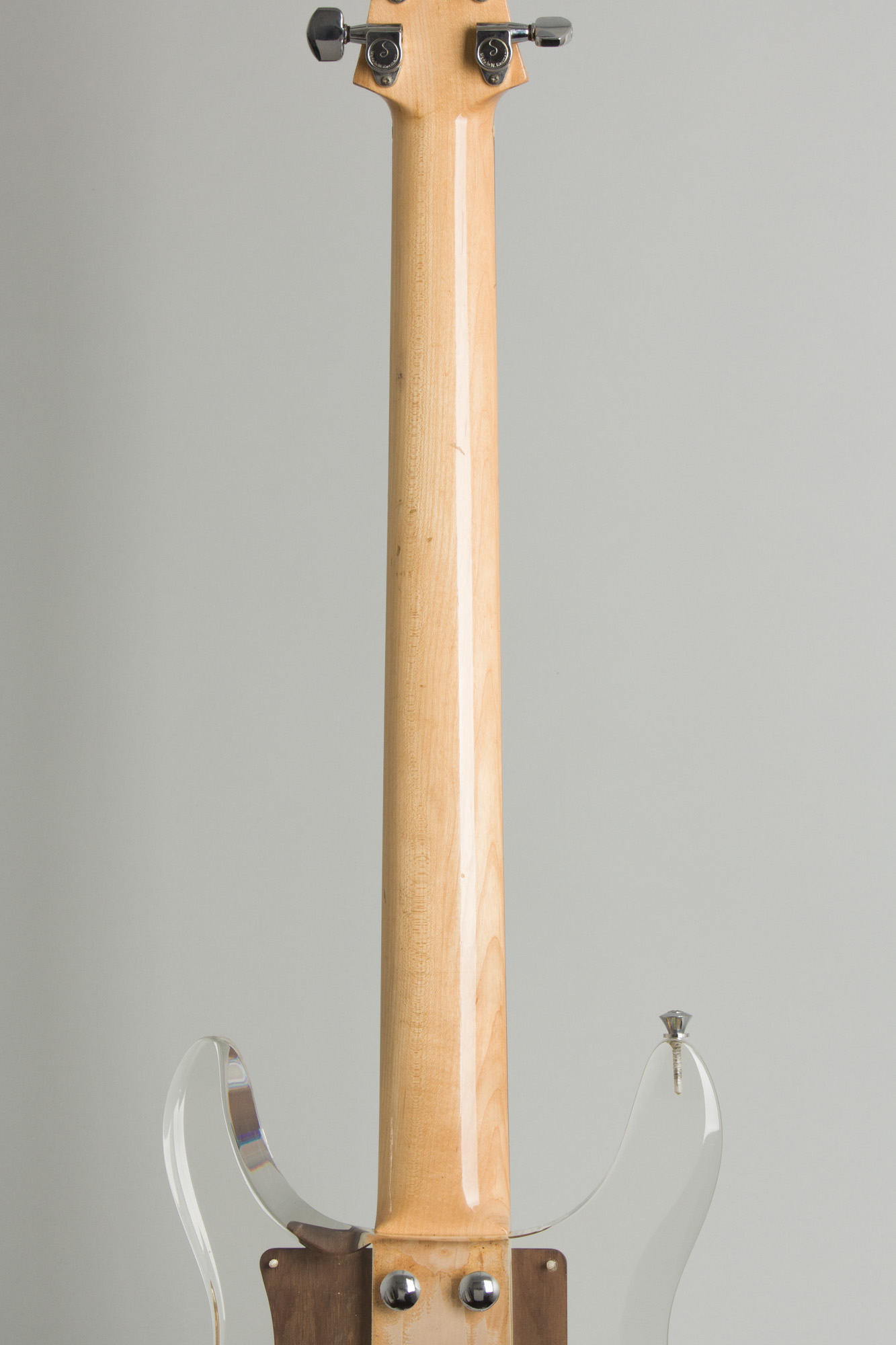
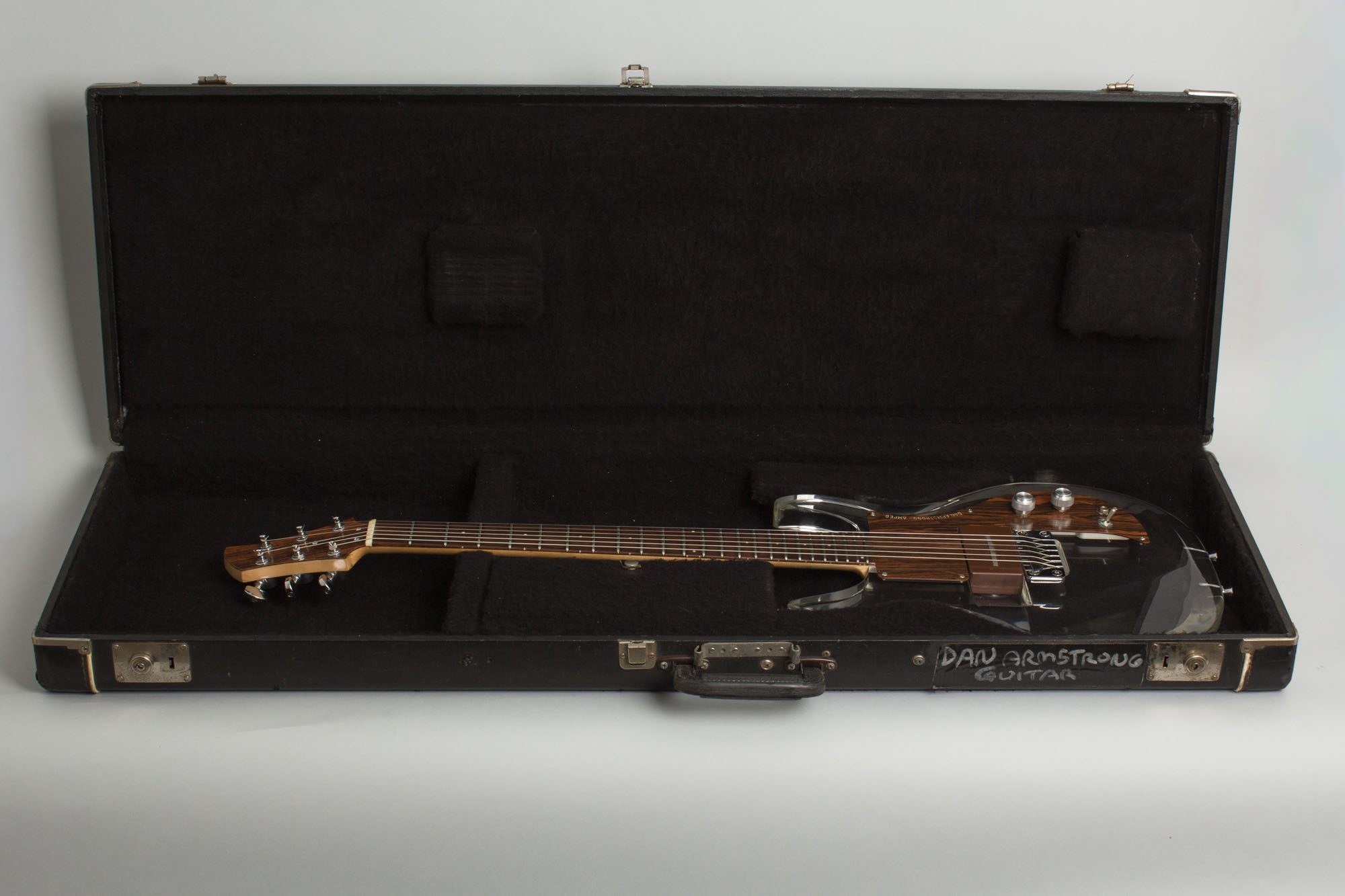
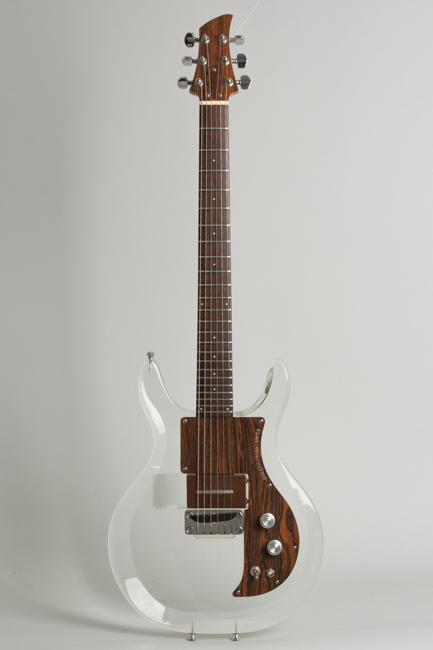
Ampeg Dan Armstrong Model Solid Body Electric Guitar (1970), made in New Jersey, serial # A589D, clear acrylic finish, acrylic body, maple neck with rosewood fingerboard, original black hard shell case.
This is a clean, all original and fairly early example of the last great 1960s American guitar: the Ampeg Dan Armstrong, nicknamed the "See Through" for obvious reasons. In 1968 amplifier giant Ampeg was looking to get seriously into the guitar market. They consulted New York-based Dan Armstrong whose "hip" guitar shop had become a Mecca for many star electric players. Armstrong agreed to design what they billed as "The Ultimate Guitar", a high quality solid body instrument that was a completely original concept. The resulting guitar was both visually striking and sonically unique. In contrast to many over-designed 1960s guitars, Armstrong emphasized clean lines and simplicity -- so clean, in fact, that you can see right through it!
The most radical element (the body) is cut from a block of transparent Lucite. The deep double cutaway offers access to all 24 frets, inspired by the Danelectro Longhorn. The edges were contoured to reduce weight and make it comfortable to play. The design has other kinship with Danelectros. The chrome bridgeplate was similar, but bolted solidly to the body with a similar one-piece rosewood saddle. A whimsical touch is a wood-grained Formica pickguard and headstock facing -- a visual pun on a plastic guitar!
A daring element at the time was equipping the "ultimate" guitar with only a single pickup. Armstrong knew many rock players used primarily the bridge pickup, and in the interest of a solid and compact guitar eliminated any other. The desire for sonic versatility led to another original concept: interchangeable pickups. The player could tailor the guitar to their own style or vary it for different situations by merely swapping one pickup for another.
Armstrong initially designed six of differently-voiced units, assisted by Bill Lawrence. Any one can be dropped into the body, secured by a small knurled knob on the back. Two came stock with the guitar, with others available separately for $35.00 each. The stock units were the "RT" (Rock Treble) and the "CB" (Country Bass); this guitar has the classic and most-desired "RT" installed.
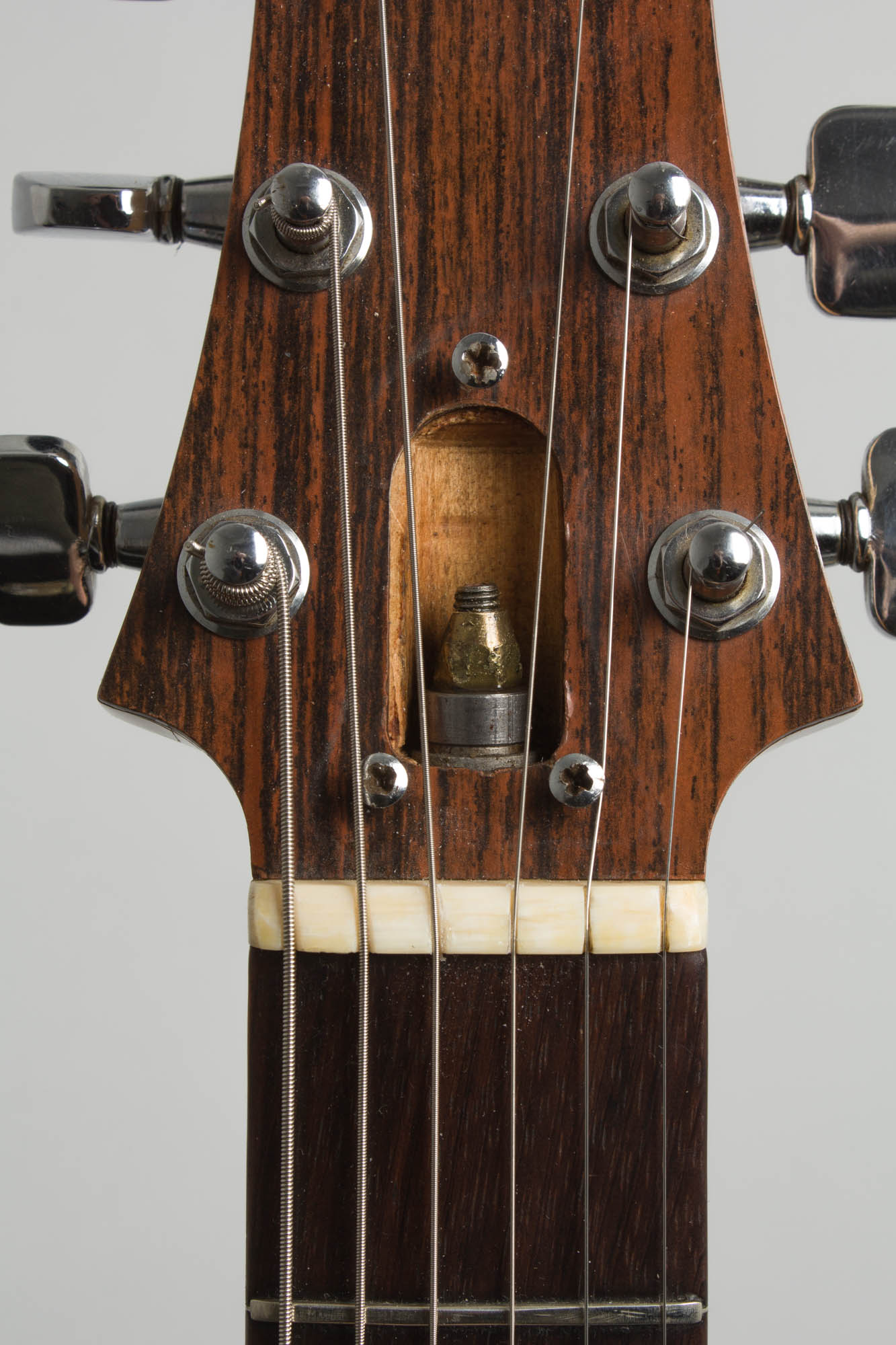
The neck is relatively traditional, made of maple with a rosewood fingerboard bolted solidly to the body. The small, slightly asymmetrical headstock looks graceful and still rather modern. The truss rod is adjusted at the head, which is equipped with heavy cast Schaller machine heads. The necks have a somewhat "Gibson-y" feel despite the Fender-like materials.
The Dan Armstrong/Ampeg guitar was launched at the June 1969 NAMM show at a time when the established guitar names were perceived as losing some luster. The "See Through" guitars (a term Ampeg trademarked) initially listed at $290.00 plus $60 for the case. The line got a huge boost when the Rolling Stones took a set on their epic 1969 US Tour. The guitar became forever linked to Keith Richards, and other players soon followed "Keef's" lead. Flamin' Groovies' guitarist Cyril Jordan picked one up in 1970 for the Groovies' masterwork TEENAGE HEAD and still plays it today. Mountain's Leslie West preferred the Ampeg for slide; the full fretboard access and solid sustain both assets. Stone/Face Ron Wood made use of one in the '70s and beyond. As the '70s wore on into the '80s, the Ampeg also became heavily associated with Greg Ginn of Black Flag; another occasional user was Television's Tom Verlaine.
Unfortunately the "See Through" had a short production life. The independently minded Armstrong had issues with Ampeg's management and eventually refused to continue his licensing agreement so the guitars ceased production in 1971. Around 3,000 each of the guitar and bass were produced over less than 2 years; this is a relatively early model with a serial number just under 600 made in 1970; the visible pot date is to the 14th week of that year. The Ampeg/Armstrong remains unique today despite many other subsequent guitars made from different plastics. It still exudes badass cool and sounds as unique as it looks.
Overall length is 38 in. (96.5 cm.), 13 in. (33 cm.) wide at lower bout, and 1 1/8 in. (2.9 cm.) in depth, measured at side of rim. Scale length is 24 1/2 in. (622 mm.). Width of nut is 1 11/16 in. (43 mm.)., 9.4 lbs.
This guitar is a clean and original example showing some light scuffing and dings, with a few deeper small dinks in the back of the neck. It remains all original and unaltered except for a shim under the bridge saddle and a large round shim added to the truss rod below the nut. The original frets have been crowned down a bit and the fingerboard has a bit of light wear inn the first position.
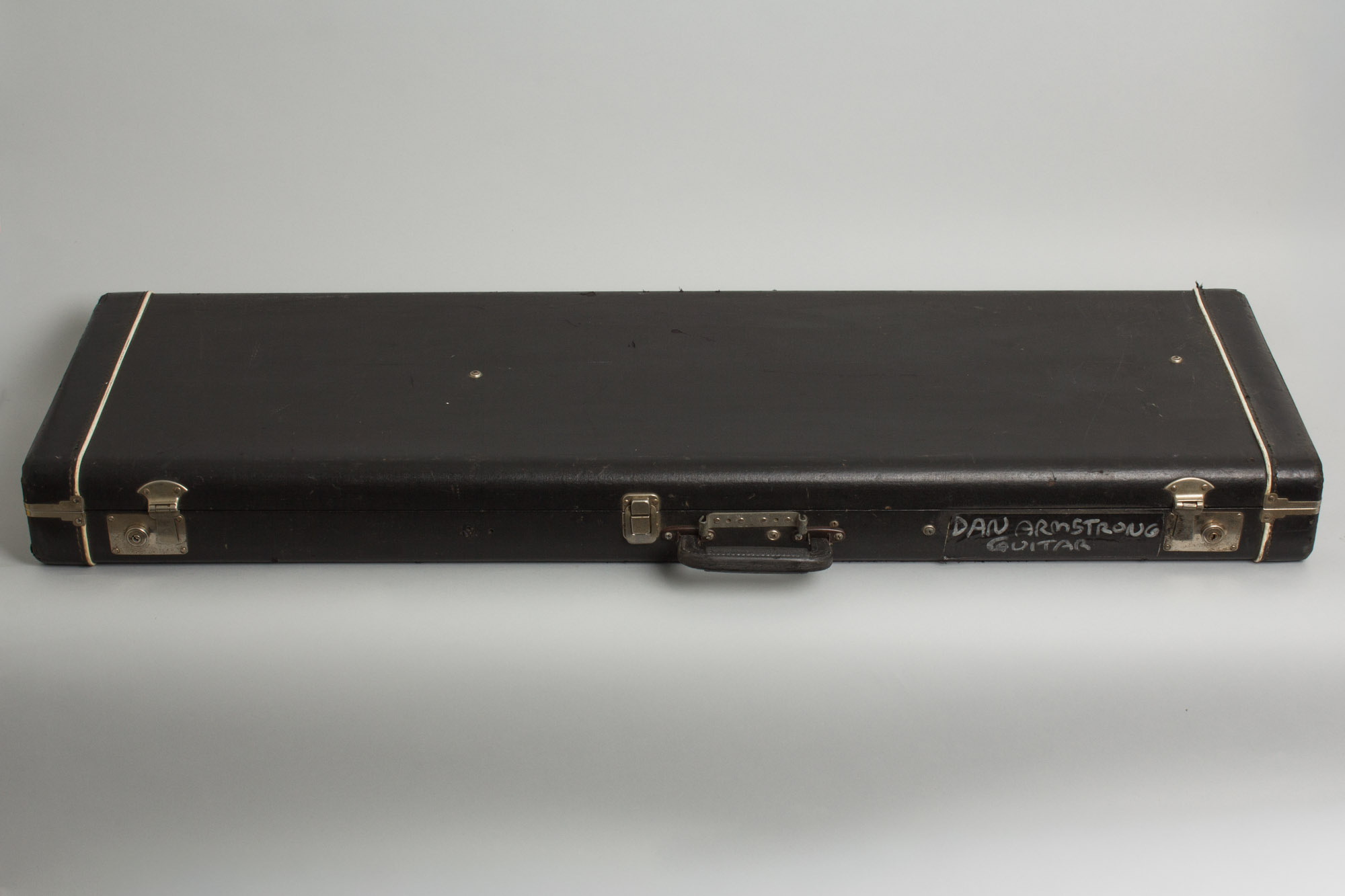
The somewhat fragile Formica pickguard is in perfect shape with no cracks, unlike many! The favorite "RT" pickup is mounted and sounds great, the guitar is a very nice player, more versatile than one might expect with a very snarly tone when pushed. It includes the original "universal size" HSC that also fits the bass with some light wear and "Dan Armstrong guitar" written on in a couple of spots. Overall Excellent Condition.
This is a clean, all original and fairly early example of the last great 1960s American guitar: the Ampeg Dan Armstrong, nicknamed the "See Through" for obvious reasons. In 1968 amplifier giant Ampeg was looking to get seriously into the guitar market. They consulted New York-based Dan Armstrong whose "hip" guitar shop had become a Mecca for many star electric players. Armstrong agreed to design what they billed as "The Ultimate Guitar", a high quality solid body instrument that was a completely original concept. The resulting guitar was both visually striking and sonically unique. In contrast to many over-designed 1960s guitars, Armstrong emphasized clean lines and simplicity -- so clean, in fact, that you can see right through it!
The most radical element (the body) is cut from a block of transparent Lucite. The deep double cutaway offers access to all 24 frets, inspired by the Danelectro Longhorn. The edges were contoured to reduce weight and make it comfortable to play. The design has other kinship with Danelectros. The chrome bridgeplate was similar, but bolted solidly to the body with a similar one-piece rosewood saddle. A whimsical touch is a wood-grained Formica pickguard and headstock facing -- a visual pun on a plastic guitar!
A daring element at the time was equipping the "ultimate" guitar with only a single pickup. Armstrong knew many rock players used primarily the bridge pickup, and in the interest of a solid and compact guitar eliminated any other. The desire for sonic versatility led to another original concept: interchangeable pickups. The player could tailor the guitar to their own style or vary it for different situations by merely swapping one pickup for another.
Armstrong initially designed six of differently-voiced units, assisted by Bill Lawrence. Any one can be dropped into the body, secured by a small knurled knob on the back. Two came stock with the guitar, with others available separately for $35.00 each. The stock units were the "RT" (Rock Treble) and the "CB" (Country Bass); this guitar has the classic and most-desired "RT" installed.
The neck is relatively traditional, made of maple with a rosewood fingerboard bolted solidly to the body. The small, slightly asymmetrical headstock looks graceful and still rather modern. The truss rod is adjusted at the head, which is equipped with heavy cast Schaller machine heads. The necks have a somewhat "Gibson-y" feel despite the Fender-like materials.
The Dan Armstrong/Ampeg guitar was launched at the June 1969 NAMM show at a time when the established guitar names were perceived as losing some luster. The "See Through" guitars (a term Ampeg trademarked) initially listed at $290.00 plus $60 for the case. The line got a huge boost when the Rolling Stones took a set on their epic 1969 US Tour. The guitar became forever linked to Keith Richards, and other players soon followed "Keef's" lead. Flamin' Groovies' guitarist Cyril Jordan picked one up in 1970 for the Groovies' masterwork TEENAGE HEAD and still plays it today. Mountain's Leslie West preferred the Ampeg for slide; the full fretboard access and solid sustain both assets. Stone/Face Ron Wood made use of one in the '70s and beyond. As the '70s wore on into the '80s, the Ampeg also became heavily associated with Greg Ginn of Black Flag; another occasional user was Television's Tom Verlaine.
Unfortunately the "See Through" had a short production life. The independently minded Armstrong had issues with Ampeg's management and eventually refused to continue his licensing agreement so the guitars ceased production in 1971. Around 3,000 each of the guitar and bass were produced over less than 2 years; this is a relatively early model with a serial number just under 600 made in 1970; the visible pot date is to the 14th week of that year. The Ampeg/Armstrong remains unique today despite many other subsequent guitars made from different plastics. It still exudes badass cool and sounds as unique as it looks.
Overall length is 38 in. (96.5 cm.), 13 in. (33 cm.) wide at lower bout, and 1 1/8 in. (2.9 cm.) in depth, measured at side of rim. Scale length is 24 1/2 in. (622 mm.). Width of nut is 1 11/16 in. (43 mm.)., 9.4 lbs.
This guitar is a clean and original example showing some light scuffing and dings, with a few deeper small dinks in the back of the neck. It remains all original and unaltered except for a shim under the bridge saddle and a large round shim added to the truss rod below the nut. The original frets have been crowned down a bit and the fingerboard has a bit of light wear inn the first position.
The somewhat fragile Formica pickguard is in perfect shape with no cracks, unlike many! The favorite "RT" pickup is mounted and sounds great, the guitar is a very nice player, more versatile than one might expect with a very snarly tone when pushed. It includes the original "universal size" HSC that also fits the bass with some light wear and "Dan Armstrong guitar" written on in a couple of spots. Overall Excellent Condition.