Gibson L-10 Arch Top Acoustic Guitar (1932)

LOADING IMAGES
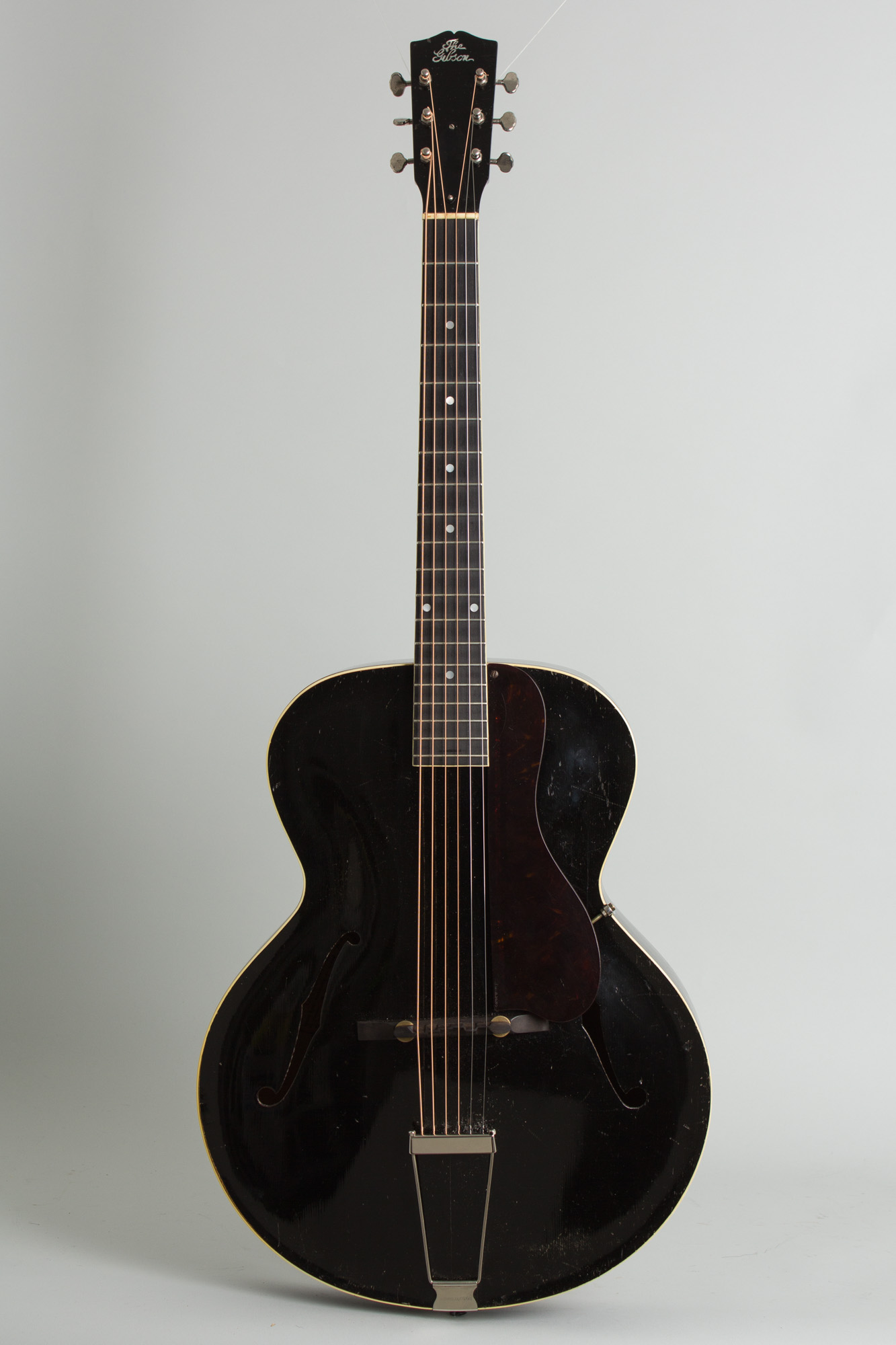
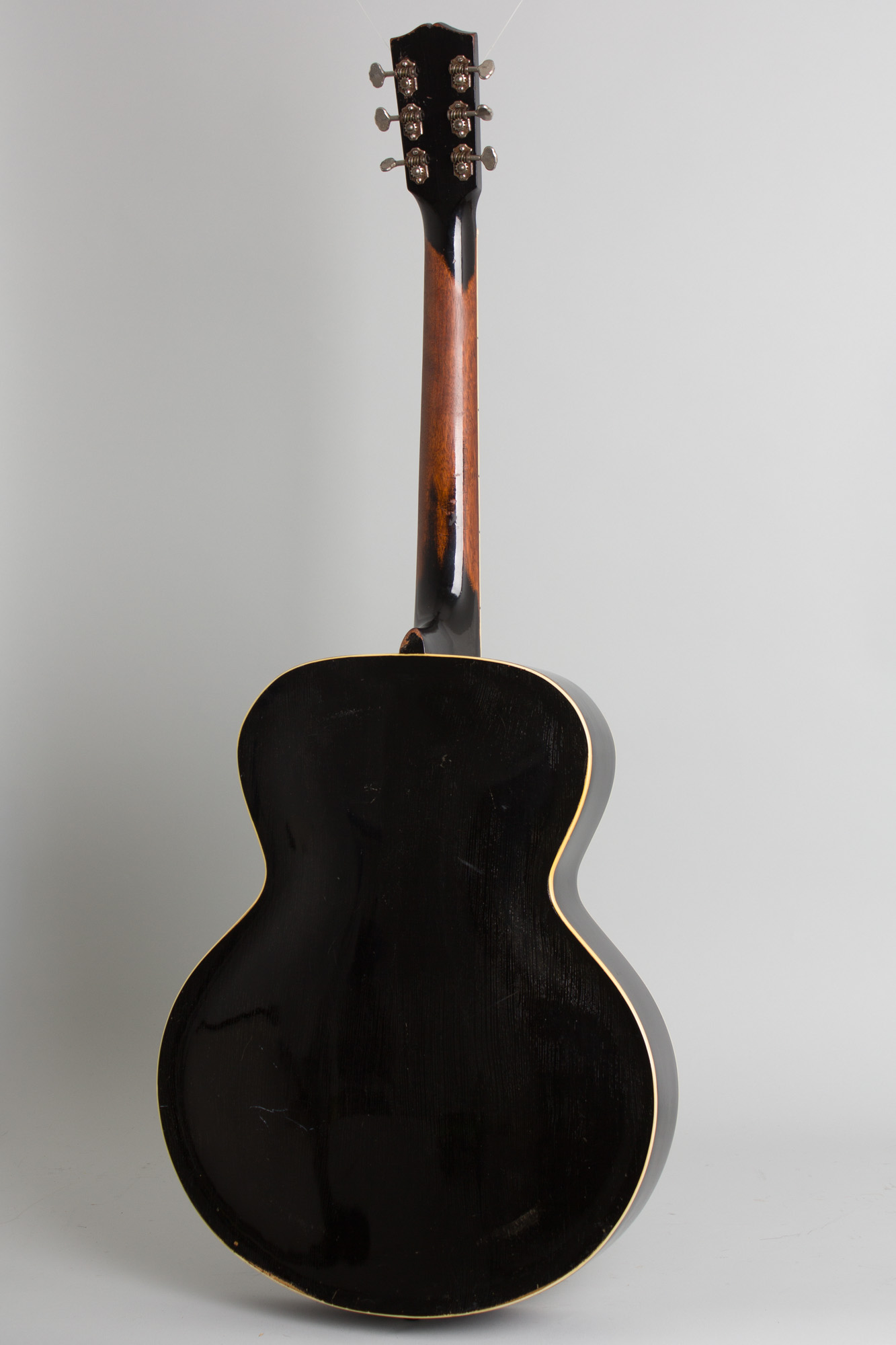
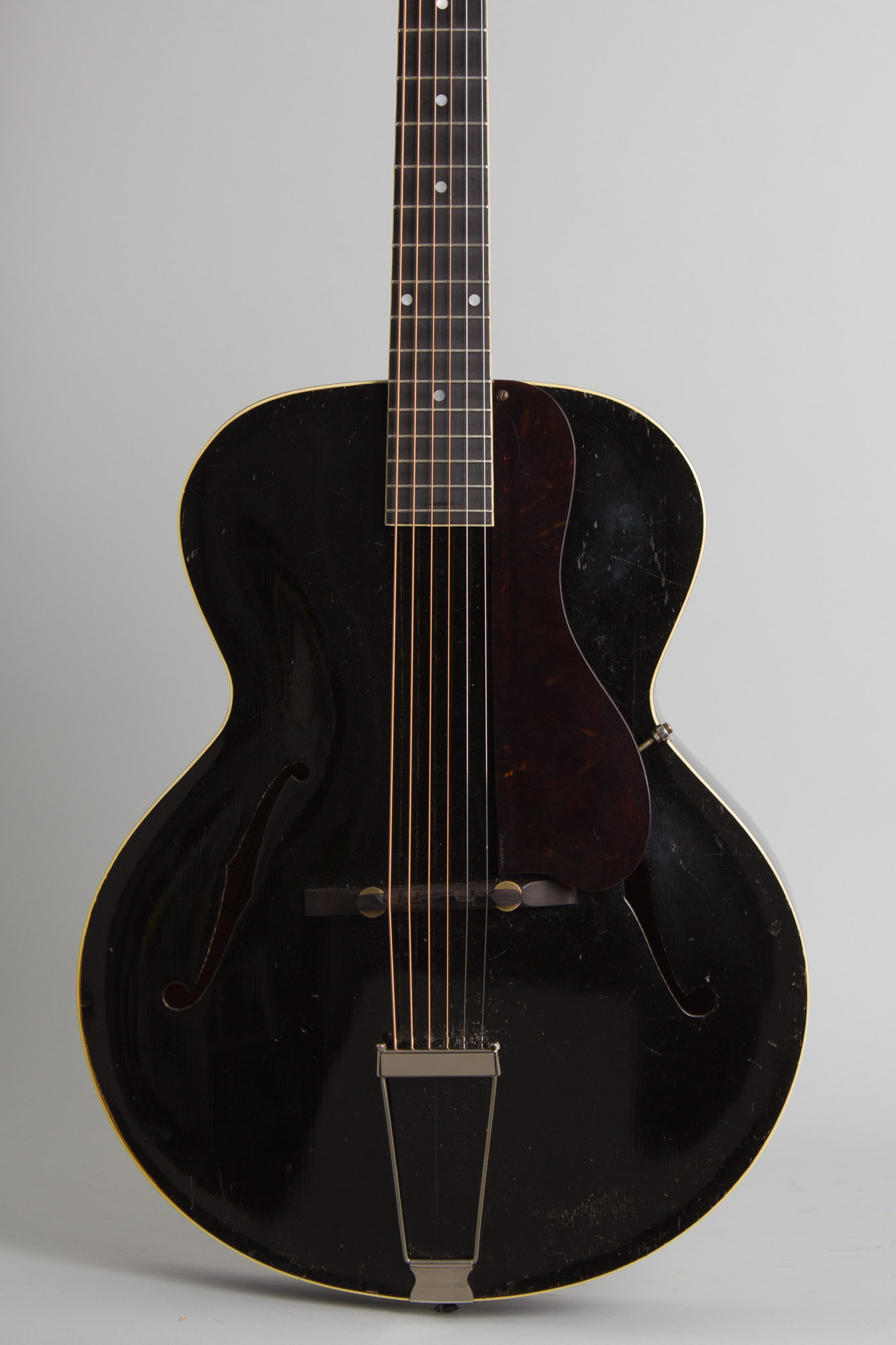
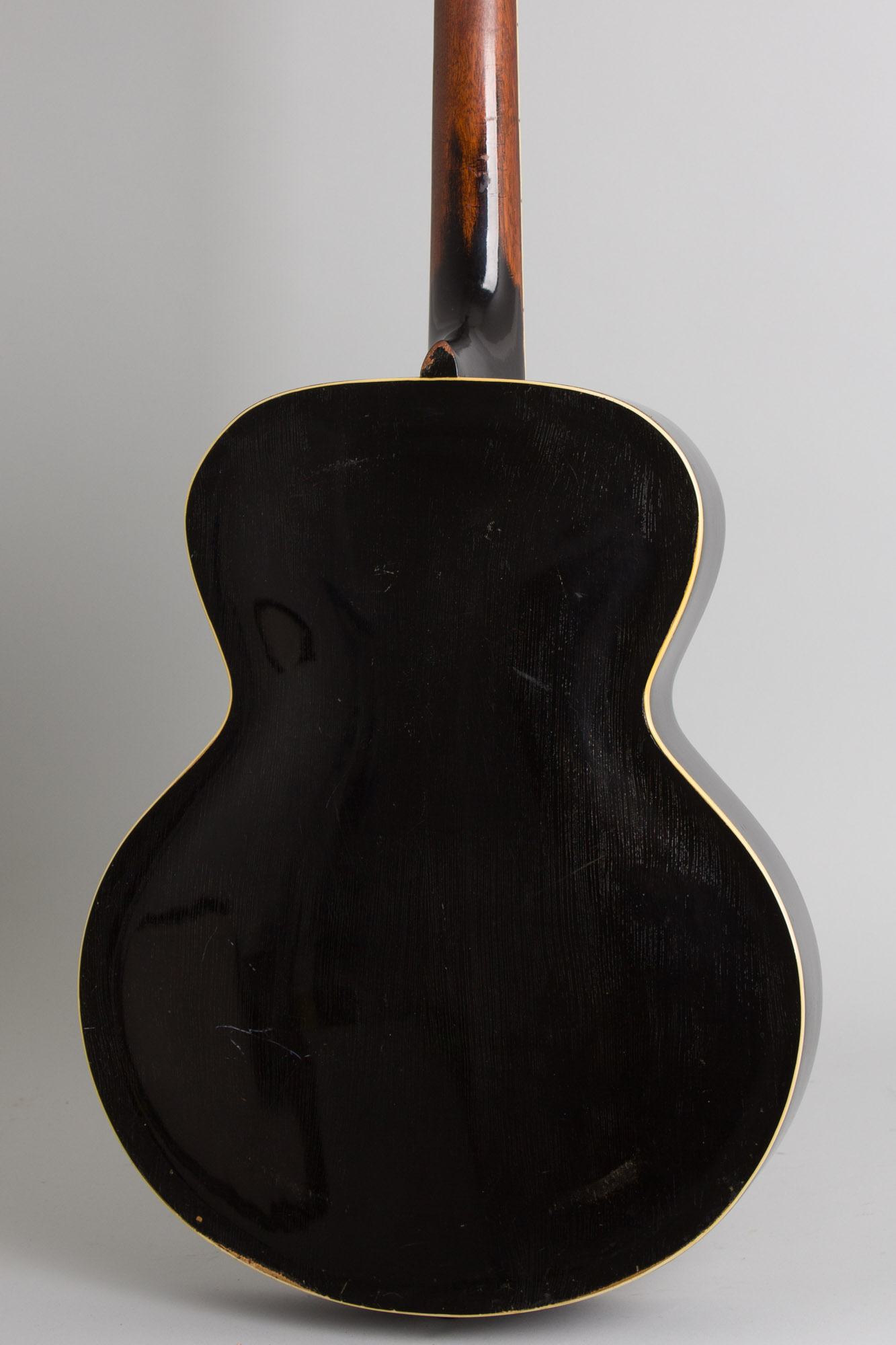
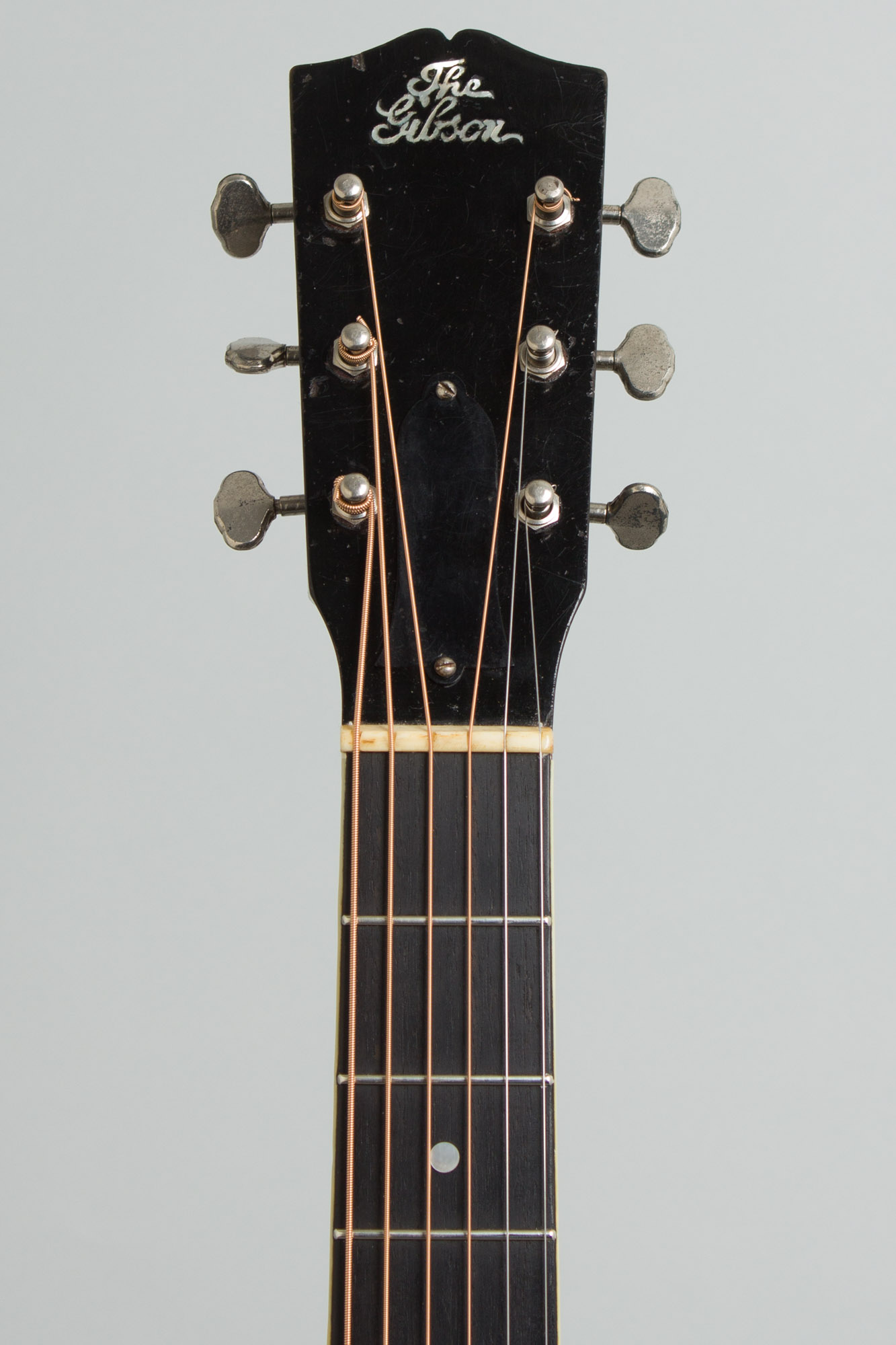
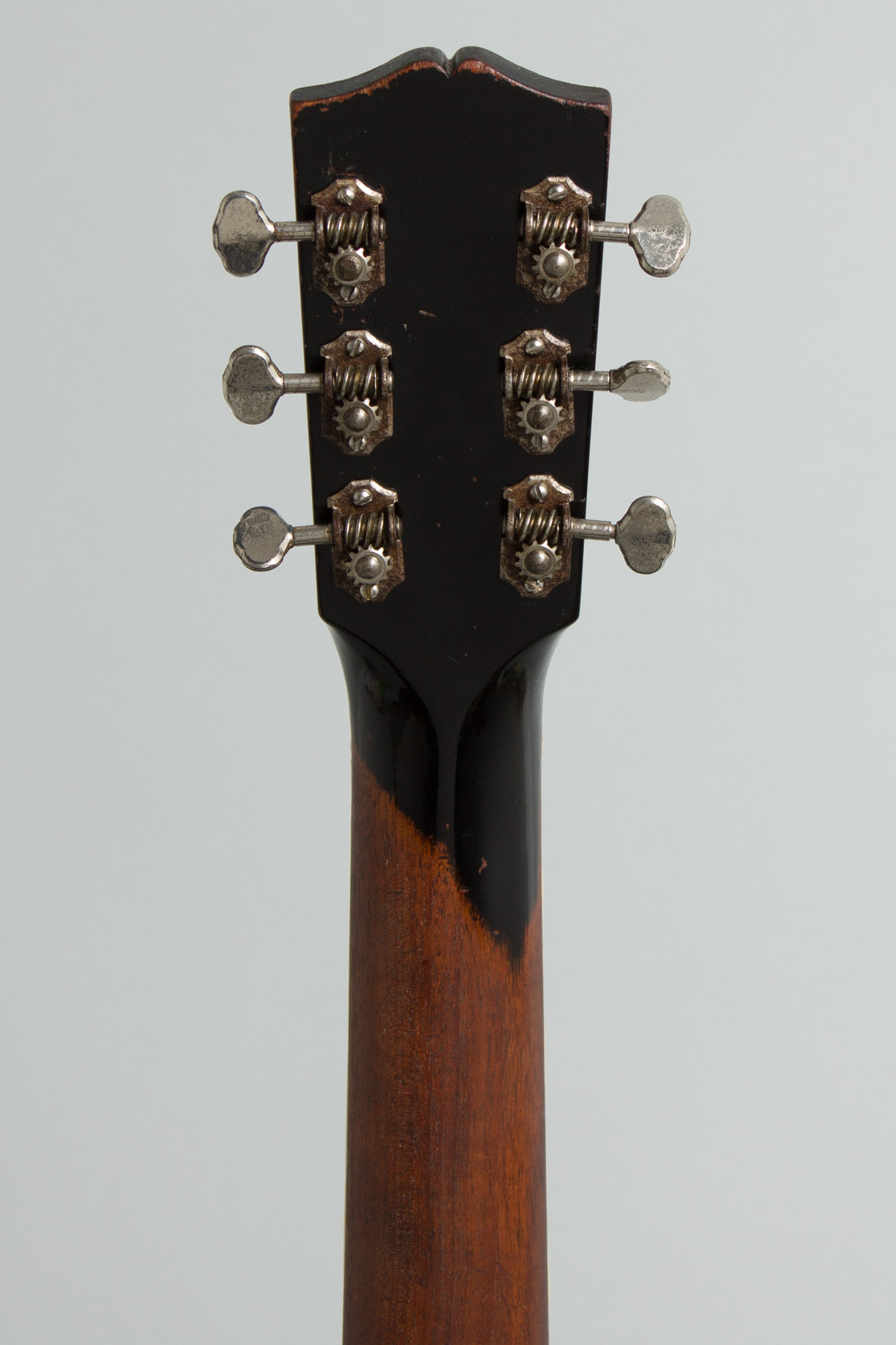
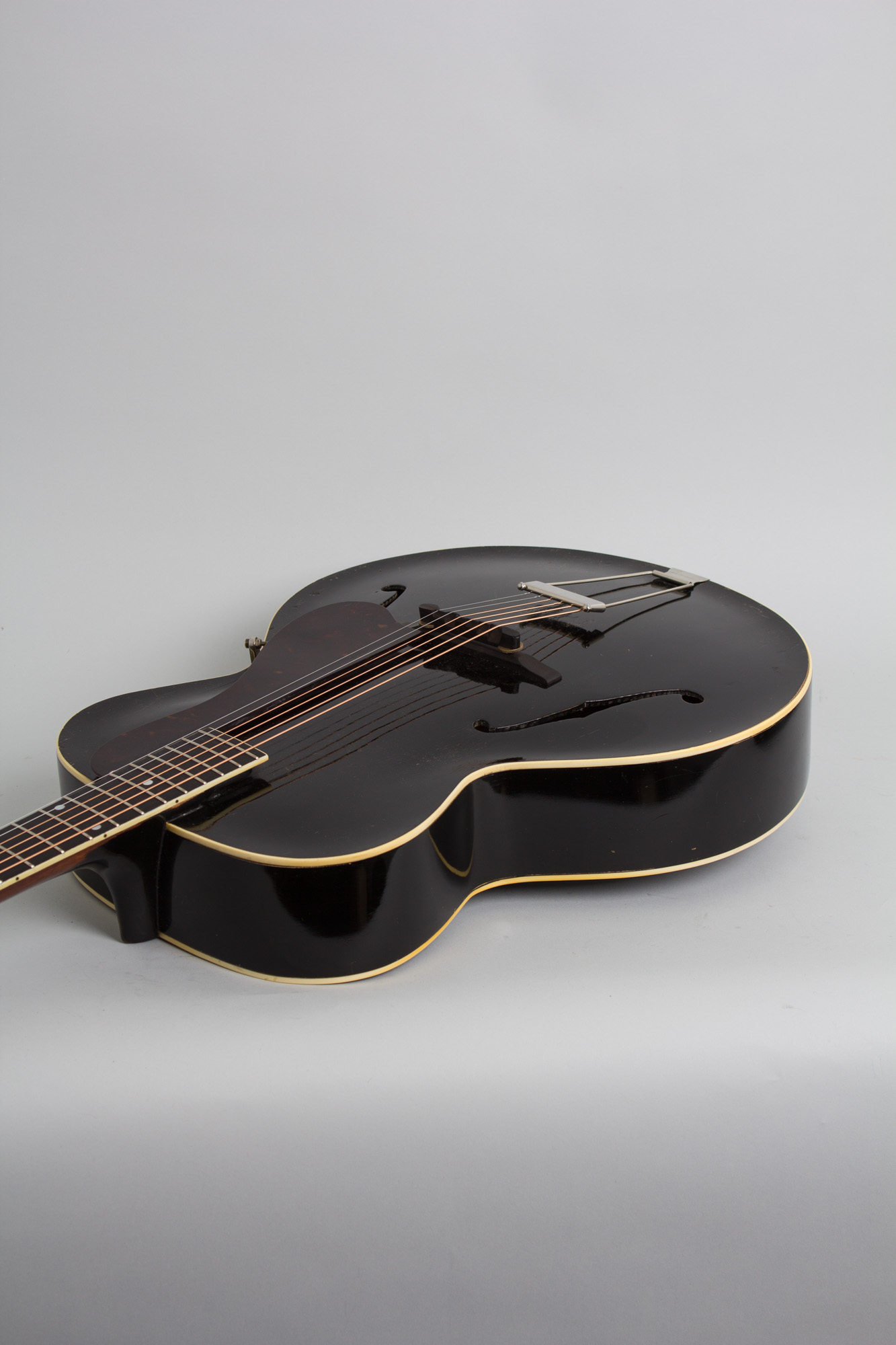
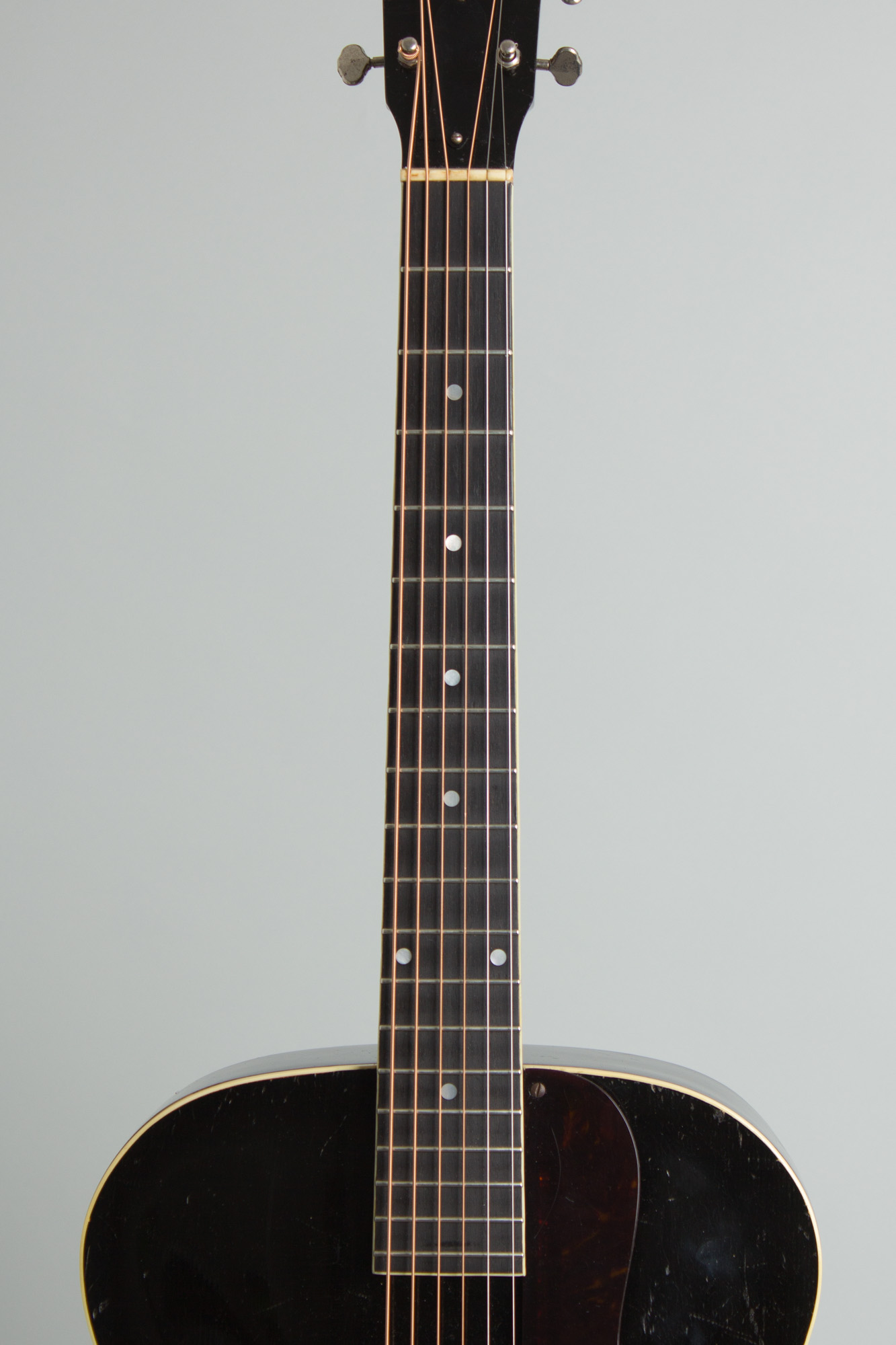
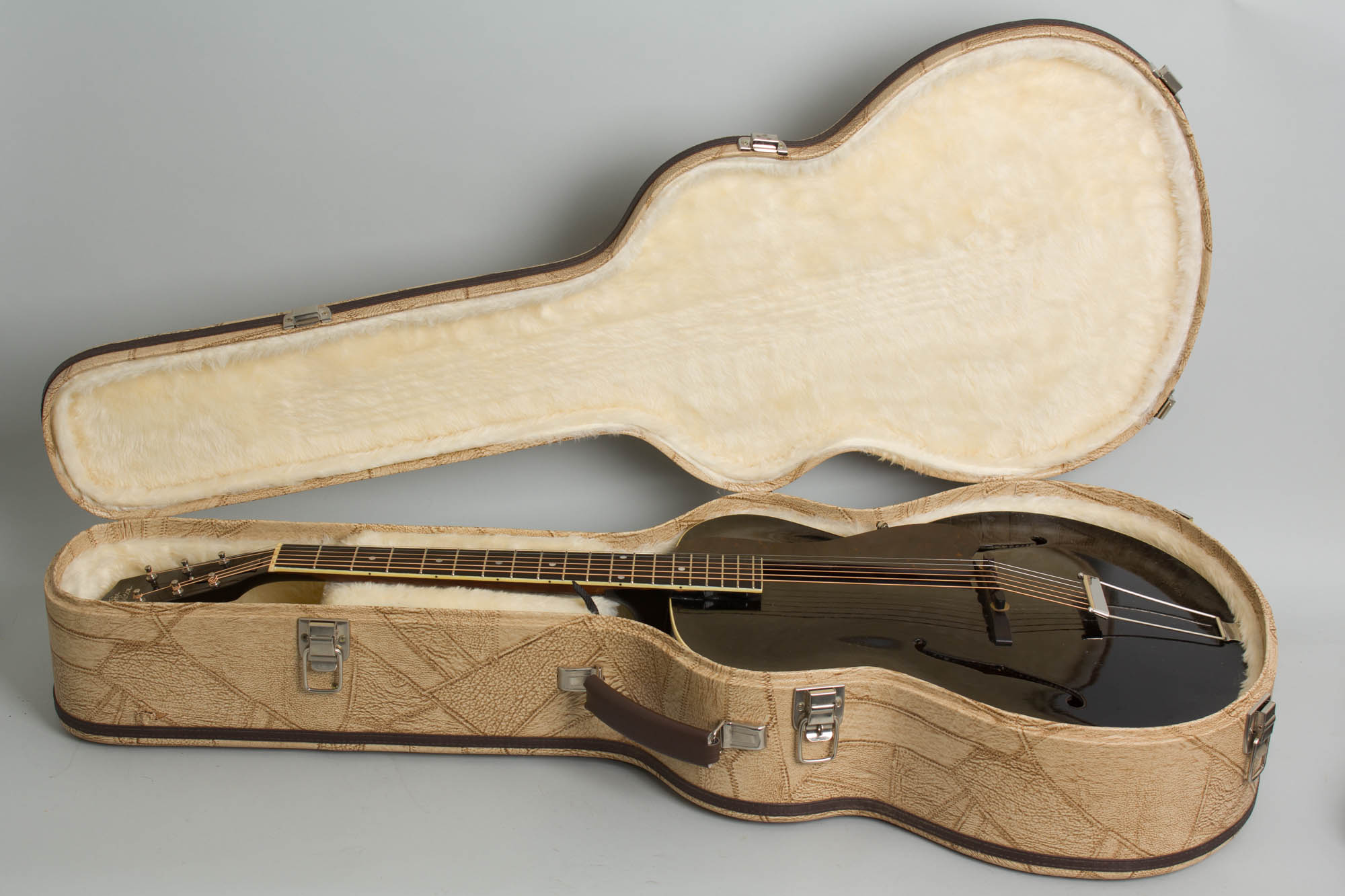
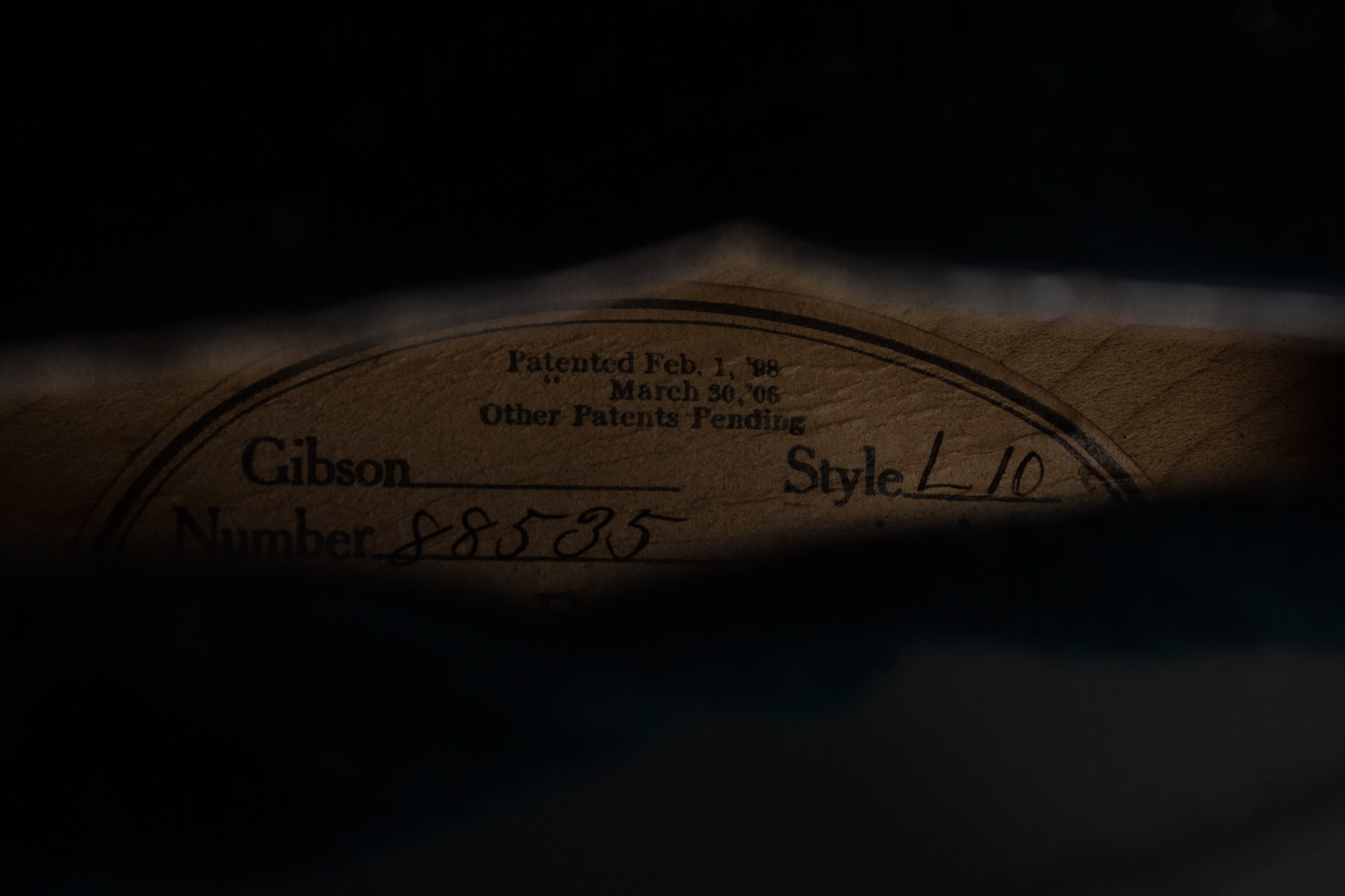
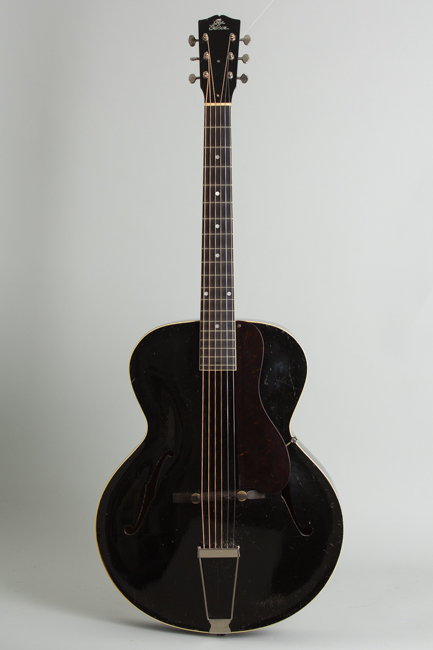
Gibson L-10 Model Arch Top Acoustic Guitar (1932), made in Kalamazoo, Michigan, serial # 88535, black lacquer finish, maple back and sides, spruce top; mahogany neck with rosewood fingerboard, hard shell case.
The L-10 is one of Gibson's more obscure and sometimes misunderstood carved top guitars, but nonetheless a historically important one. Although some sources claim the model existed in the late 1920s, the first concrete evidence of the L-10 being offered for sale appears on Gibson's late 1931 price list, showing the model at $175. This was a full $100 less than the top of the line L-5, at the time the ONLY F-hole arch top guitar Gibson offered. In summer 1931 Epiphone in New York announced an entire line of such instruments, which were quickly becoming the new paradigm in professional guitars. Gibson must have realized they had been outflanked, and this L-10 was their first response. The arrival of the depression and a demand for affordable F-hole archtops seems to have caught the usually trend-conscious Gibson management flat-footed.
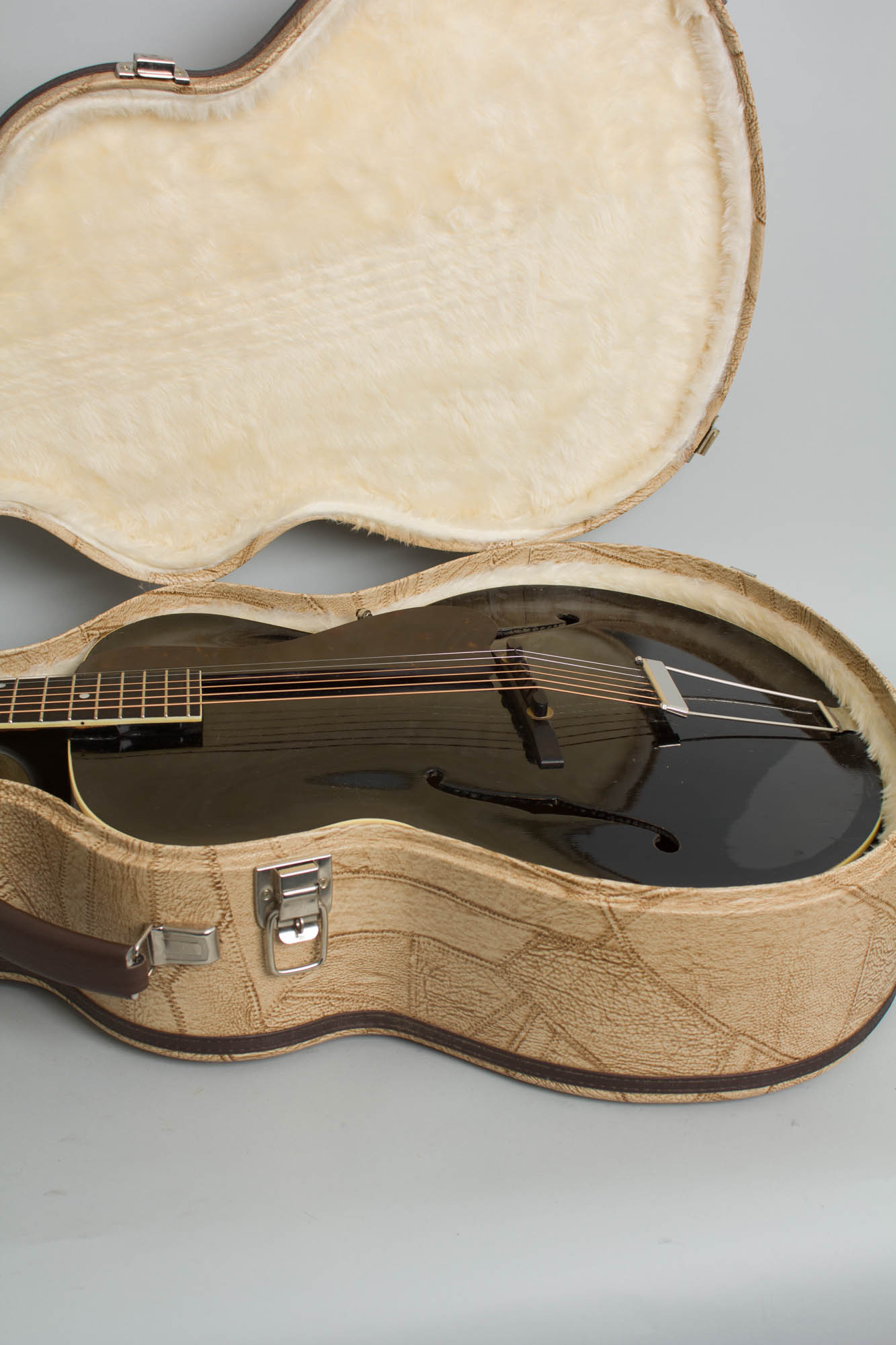
As the model down from the L-5, the L-10 was basically a "Plain Jane" version of that fancy guitar, with the same playing characteristics but lacking the ornamental bling. Obvious differences include a black finish overall instead of sunburst, a dot inlaid fingerboard, plain headstock with just a "The Gibson" logo and less binding everywhere. The single-bound spruce top with small unbound F-holes and the maple back are fully carved and the braces are solid carved pieces, not the "kerfed" bracing adopted around this time. Some of the earliest L-10s appear to have been built with components originally intended to be L-5s; This one has a one-piece mahogany neck instead of the L-5's laminated maple but the top, back and side pieces making up the body would have served for either model. The tortoise celluloid pickguard is the same shape but unbound, while the bridge and tailpiece were originally the same.
The Factory Order Number ink-stamped in this guitar is 237; that and the serial number date it to early 1932. In an odd quirk the white Guarantee label is pasted in upside down! Very few of these were made at the worst period of the depression; even if $100 cheaper than an L-5 the $175 (plus case) list price was prohibitive for anyone not a top professional player. Gibson's 1932 Catalog "U" stated "The only guitar made whose tonal power and richness approach the famous Master Gibson Guitar -- and yet at a remarkably low price, placing it easily within the reach of everyone" which was optimistic at best! The L-10 only existed in this original more austere form for less than two years; it was re-designed for 1934 with elaborate "picture box" inlay added to the fingerboard.
Like the L-5 this L-10 was aimed primarily at guitarists working in dance bands and the growing legion of swing orchestras and smaller combos. This was the "pro" market art the time, and Gibson had to play catch up to Epiphone to hold this crucial area. This L-10 may have been comparatively plain but with its "tuxedo" livery is still a striking looking, great sounding and playing guitar. It offers a lot of punch with enough "cut" to be heard in such a situation, but still retains a well-modulated tone. This is only the second first-generation L-10 we have had, a wonderful instrument both musically and historically.
Overall length is 41 1/8 in. (104.5 cm.), 16 in. (40.6 cm.) wide at lower bout, and 3 5/16 in. (8.4 cm.) in depth at side, taken at the end block. Scale length is 24 3/4 in. (629 mm.). Width of nut is 1 3/4 in. (44 mm.).
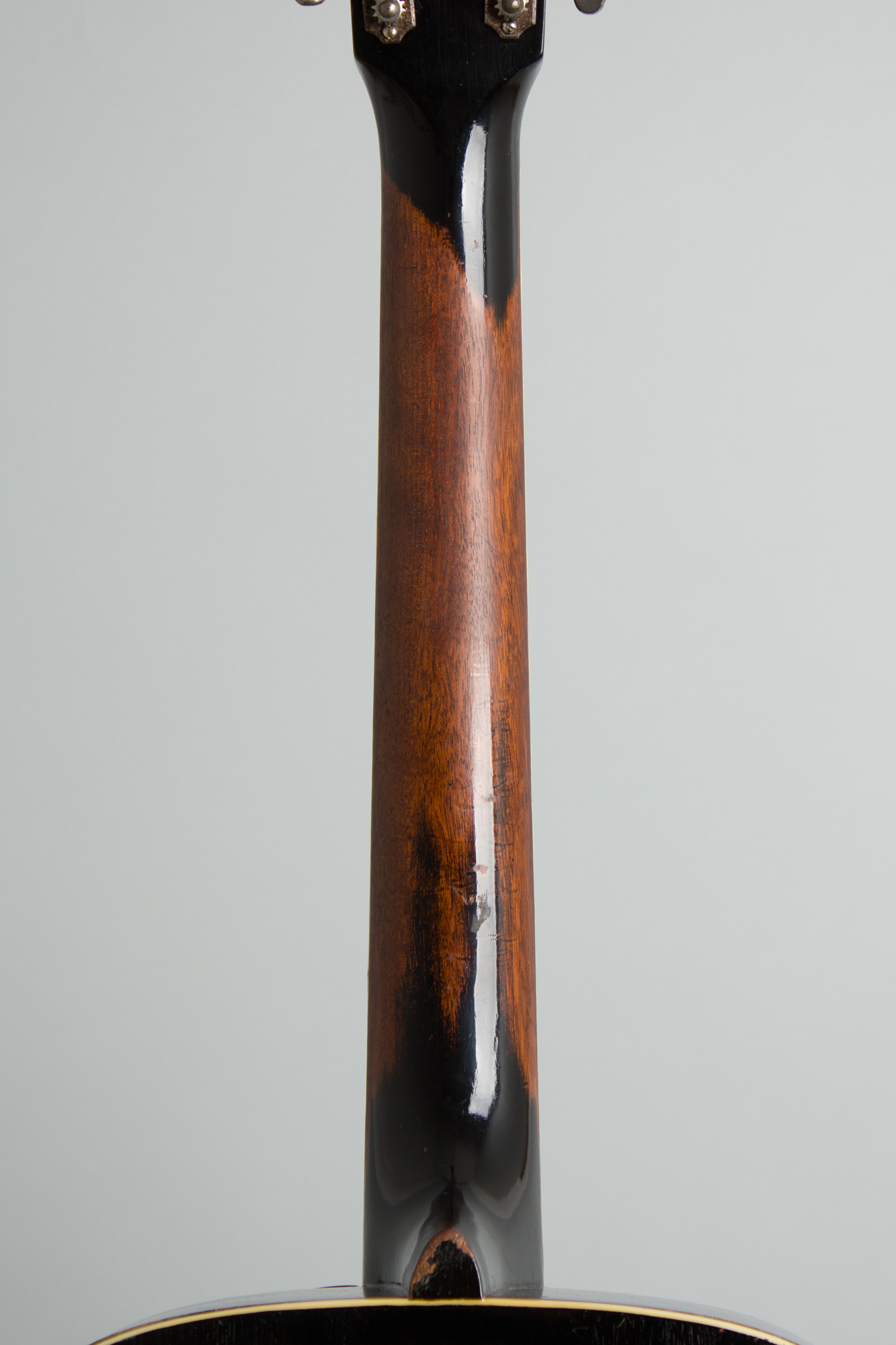
This 85+ year old guitar is an excellent player and relatively clean for this period but does show some wear and light typical repair. The gleaming black finish remains original showing checking (most heavily on the back) with dings, dents and scrapes overall; there are some tiny areas of touchup to dings mostly on the top. The heaviest top wear is "string end" marks under the tailpiece bar. There is an area worn through to the maple on then lower back edge. Much of the finish is warn away down to the wood on the back of the neck, with some heavier wear to the heel as well.
Some of the back/side seams look to have been resealed but there are only a couple of small crack repairs. A small grain split on the top near the treble side waist has been resealed with minimal touchup, as has the top center seam under the tailpiece. The headstock had several sets of tuning machines over the decades; at no little expense we have sourced a set of exact correct period Grover riveted tuners to restore the original configuration; some small scars remain on the headstock but the guitar is much happier now!
The other hardware is largely original including the pickguard and we believe the tailpiece, which is the then-new "string through" style. The adjustable bridge is a later generic piece but the full-contact base is well fitted. The guitar has been neatly refretted with wire somewhat larger than the (very narrow) 1932 spec.; these frets have hardly any wear. This lovely instrument has a very big sound, with a lot of depth and more subtly than many period archtops. A early Swing era gem, this excellent player rests in a modern HSC. Overall Very Good + Condition.
The L-10 is one of Gibson's more obscure and sometimes misunderstood carved top guitars, but nonetheless a historically important one. Although some sources claim the model existed in the late 1920s, the first concrete evidence of the L-10 being offered for sale appears on Gibson's late 1931 price list, showing the model at $175. This was a full $100 less than the top of the line L-5, at the time the ONLY F-hole arch top guitar Gibson offered. In summer 1931 Epiphone in New York announced an entire line of such instruments, which were quickly becoming the new paradigm in professional guitars. Gibson must have realized they had been outflanked, and this L-10 was their first response. The arrival of the depression and a demand for affordable F-hole archtops seems to have caught the usually trend-conscious Gibson management flat-footed.
As the model down from the L-5, the L-10 was basically a "Plain Jane" version of that fancy guitar, with the same playing characteristics but lacking the ornamental bling. Obvious differences include a black finish overall instead of sunburst, a dot inlaid fingerboard, plain headstock with just a "The Gibson" logo and less binding everywhere. The single-bound spruce top with small unbound F-holes and the maple back are fully carved and the braces are solid carved pieces, not the "kerfed" bracing adopted around this time. Some of the earliest L-10s appear to have been built with components originally intended to be L-5s; This one has a one-piece mahogany neck instead of the L-5's laminated maple but the top, back and side pieces making up the body would have served for either model. The tortoise celluloid pickguard is the same shape but unbound, while the bridge and tailpiece were originally the same.
The Factory Order Number ink-stamped in this guitar is 237; that and the serial number date it to early 1932. In an odd quirk the white Guarantee label is pasted in upside down! Very few of these were made at the worst period of the depression; even if $100 cheaper than an L-5 the $175 (plus case) list price was prohibitive for anyone not a top professional player. Gibson's 1932 Catalog "U" stated "The only guitar made whose tonal power and richness approach the famous Master Gibson Guitar -- and yet at a remarkably low price, placing it easily within the reach of everyone" which was optimistic at best! The L-10 only existed in this original more austere form for less than two years; it was re-designed for 1934 with elaborate "picture box" inlay added to the fingerboard.
Like the L-5 this L-10 was aimed primarily at guitarists working in dance bands and the growing legion of swing orchestras and smaller combos. This was the "pro" market art the time, and Gibson had to play catch up to Epiphone to hold this crucial area. This L-10 may have been comparatively plain but with its "tuxedo" livery is still a striking looking, great sounding and playing guitar. It offers a lot of punch with enough "cut" to be heard in such a situation, but still retains a well-modulated tone. This is only the second first-generation L-10 we have had, a wonderful instrument both musically and historically.
Overall length is 41 1/8 in. (104.5 cm.), 16 in. (40.6 cm.) wide at lower bout, and 3 5/16 in. (8.4 cm.) in depth at side, taken at the end block. Scale length is 24 3/4 in. (629 mm.). Width of nut is 1 3/4 in. (44 mm.).
This 85+ year old guitar is an excellent player and relatively clean for this period but does show some wear and light typical repair. The gleaming black finish remains original showing checking (most heavily on the back) with dings, dents and scrapes overall; there are some tiny areas of touchup to dings mostly on the top. The heaviest top wear is "string end" marks under the tailpiece bar. There is an area worn through to the maple on then lower back edge. Much of the finish is warn away down to the wood on the back of the neck, with some heavier wear to the heel as well.
Some of the back/side seams look to have been resealed but there are only a couple of small crack repairs. A small grain split on the top near the treble side waist has been resealed with minimal touchup, as has the top center seam under the tailpiece. The headstock had several sets of tuning machines over the decades; at no little expense we have sourced a set of exact correct period Grover riveted tuners to restore the original configuration; some small scars remain on the headstock but the guitar is much happier now!
The other hardware is largely original including the pickguard and we believe the tailpiece, which is the then-new "string through" style. The adjustable bridge is a later generic piece but the full-contact base is well fitted. The guitar has been neatly refretted with wire somewhat larger than the (very narrow) 1932 spec.; these frets have hardly any wear. This lovely instrument has a very big sound, with a lot of depth and more subtly than many period archtops. A early Swing era gem, this excellent player rests in a modern HSC. Overall Very Good + Condition.