Meazzi Hollywood Jupiter Solid Body Electric Guitar (1965)

LOADING IMAGES
This item has been sold.
Item # 13387
Prices subject to change without notice.
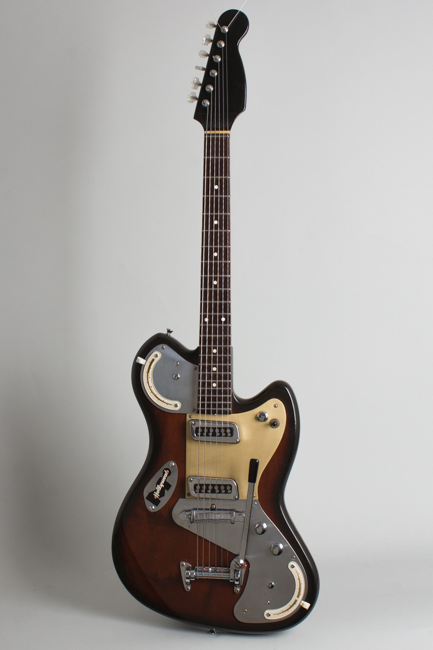
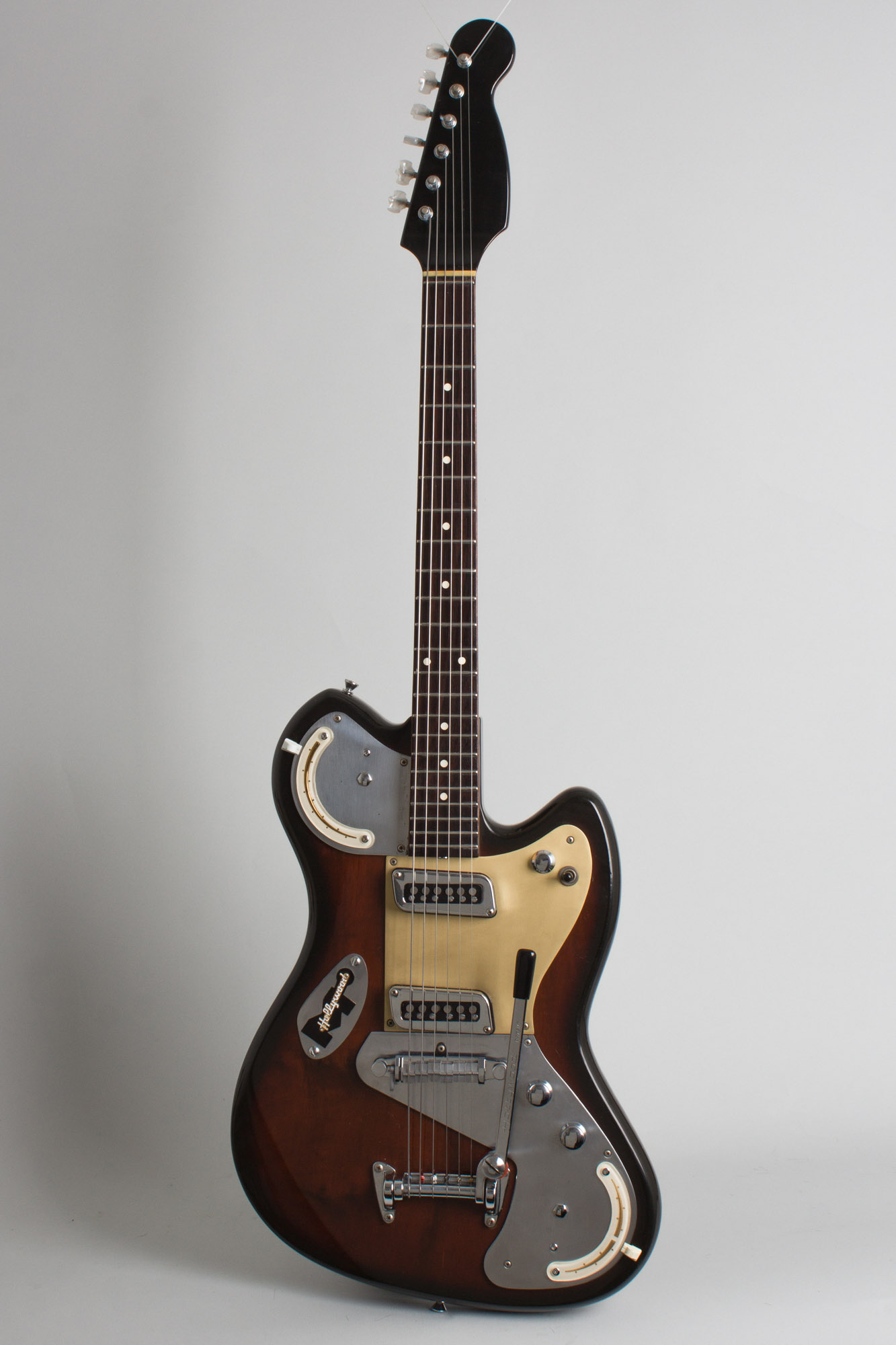
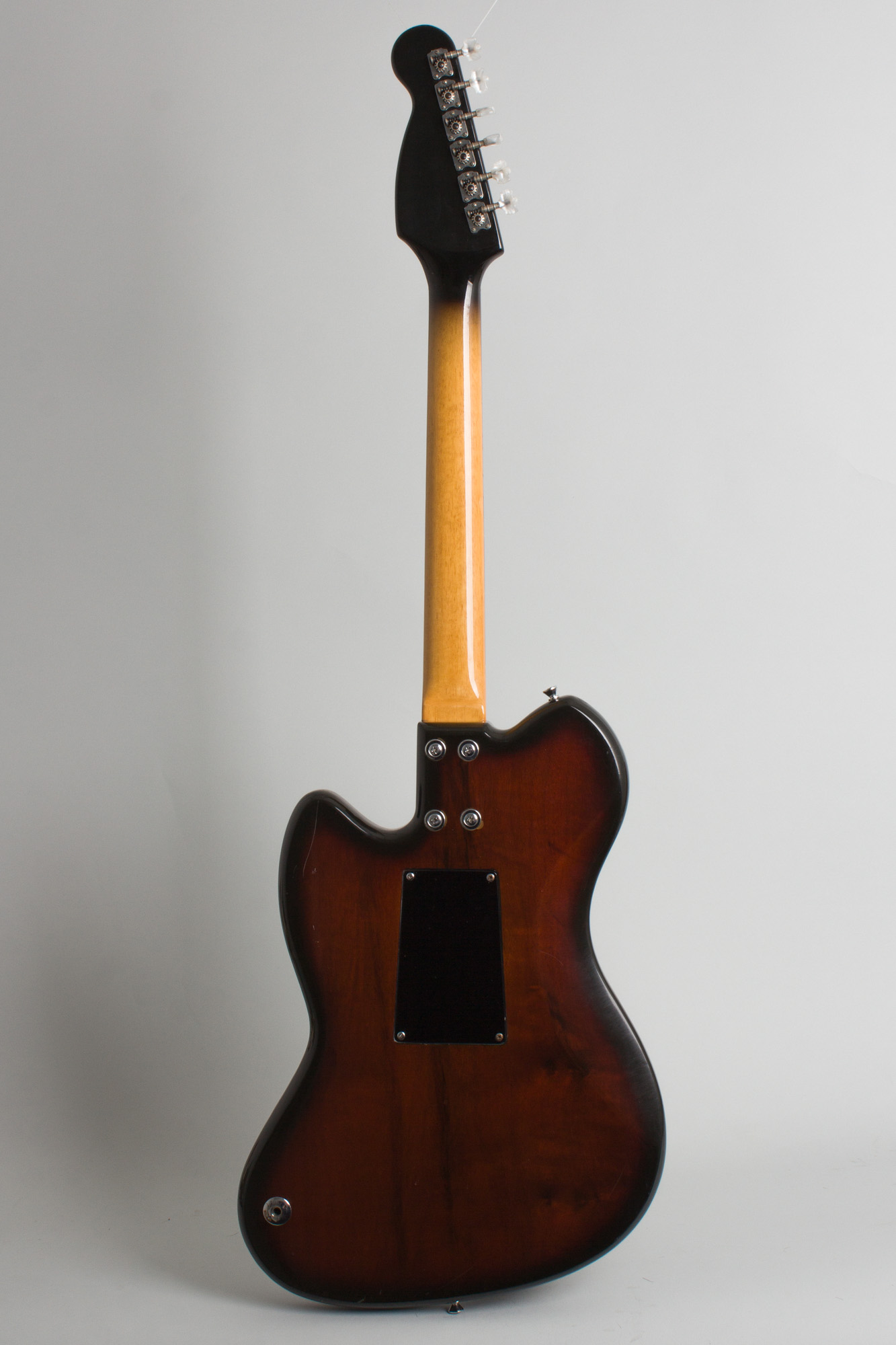
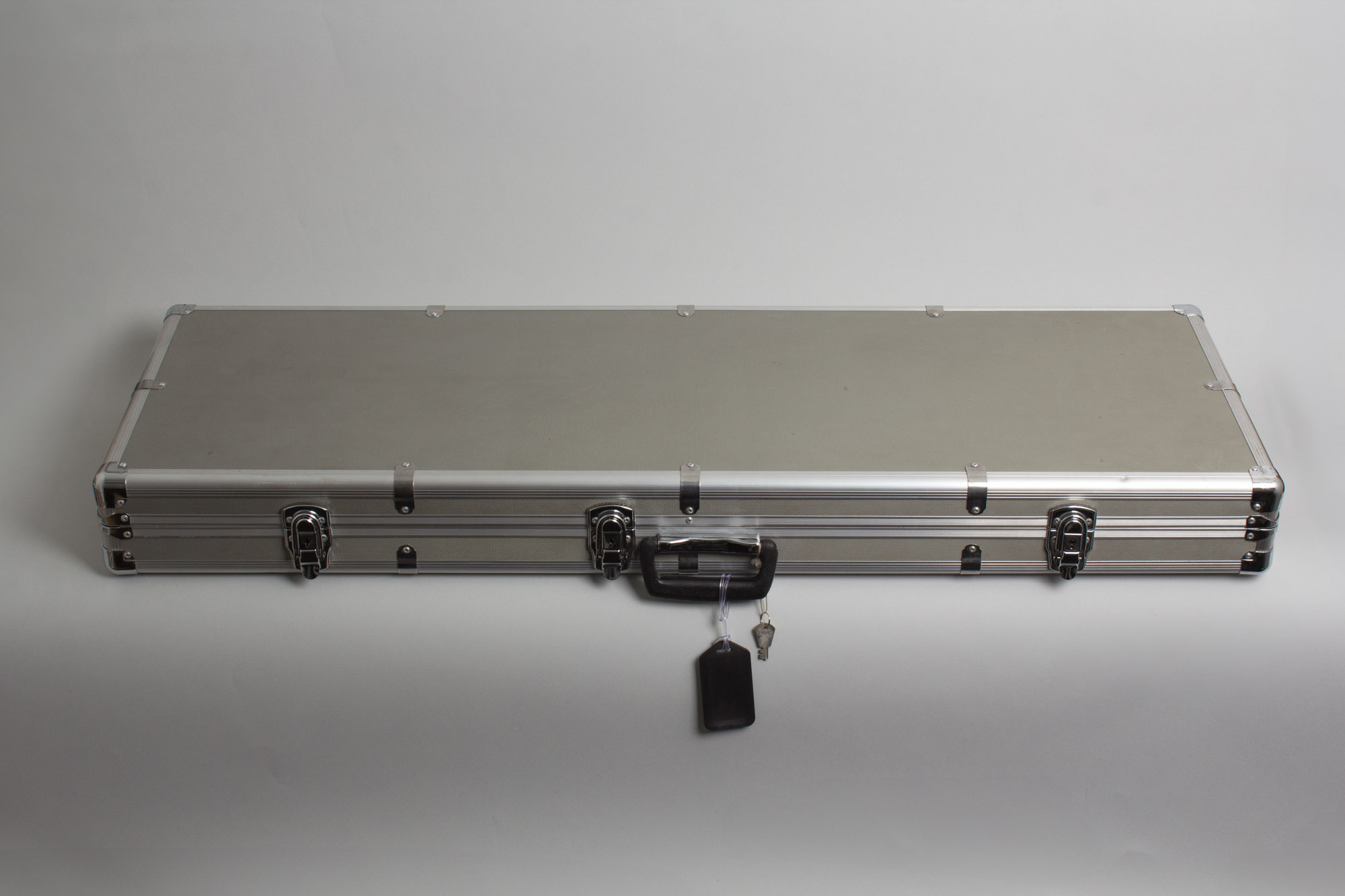
Meazzi Hollywood Jupiter Model Solid Body Electric Guitar (1965), made in Italy, sunburst finish, laminated mahogany body, maple neck witb\h rosewood fingerboard, silver hard shell case.
This Italian-made Meazzi Jupiter Hollywood is in many ways one of the most unusual and interesting guitars of the mid-1960s. While somewhat conventional in appearance (we said "somewhat") it boasts a number of unique and advanced features "under the hood" that were far ahead of their time in 1965; some of them still are!
The Meazzi brand is little known in the US, but they were bigger players in the European market. The company was founded by four Meazzi brothers, and overall their products manifest a higher build quality and especially design originality than other Italian firms (Wandre excluded!). Their line of guitars, basses and electronics was extensive, but only part of the company's output. The best known Meazzi products in the US were probably their Danelectro-clone "Dynelectron" guitars that appeared shortly after the original company went belly up, but those did not carry the Meazzi brand.
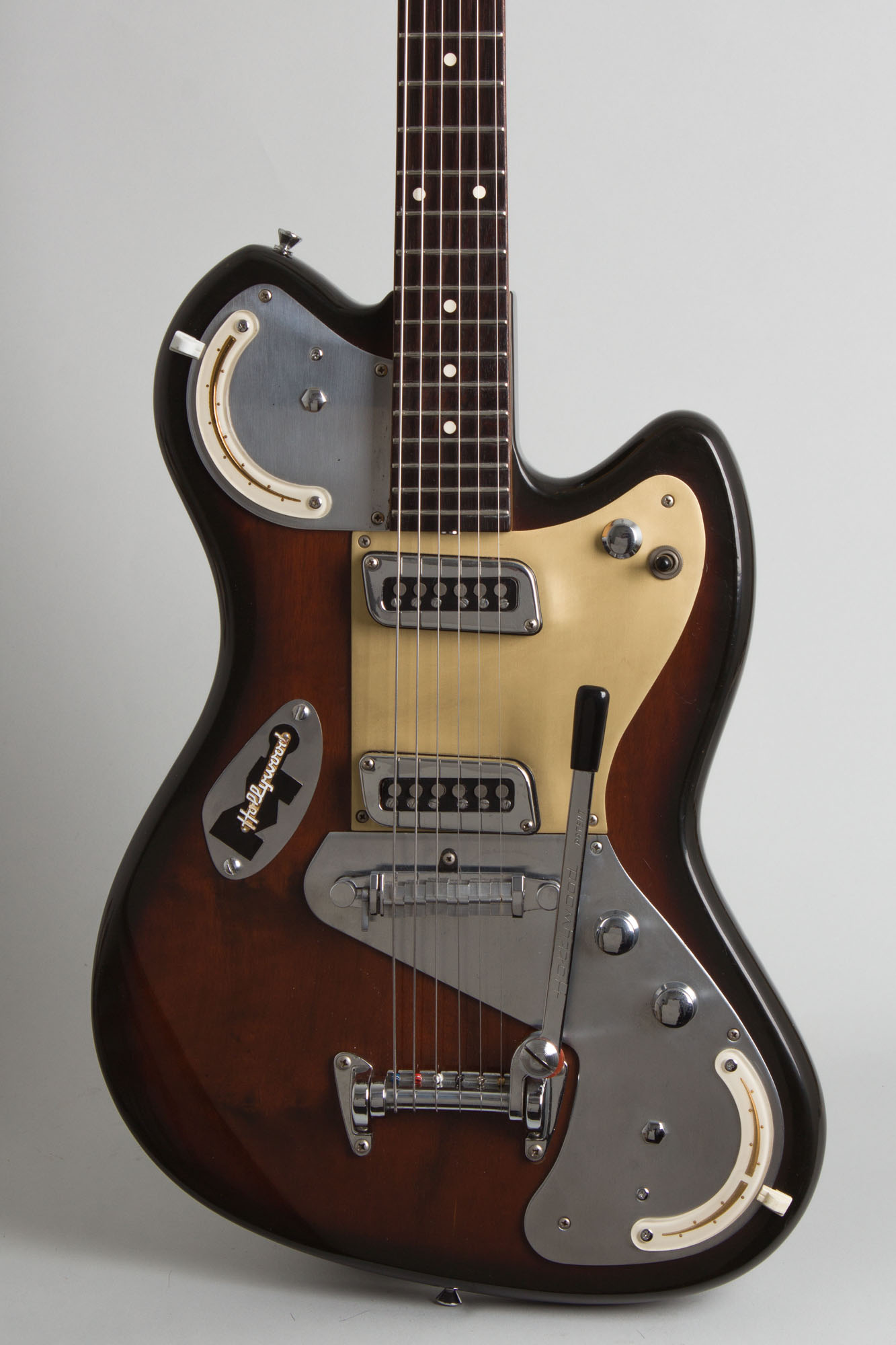
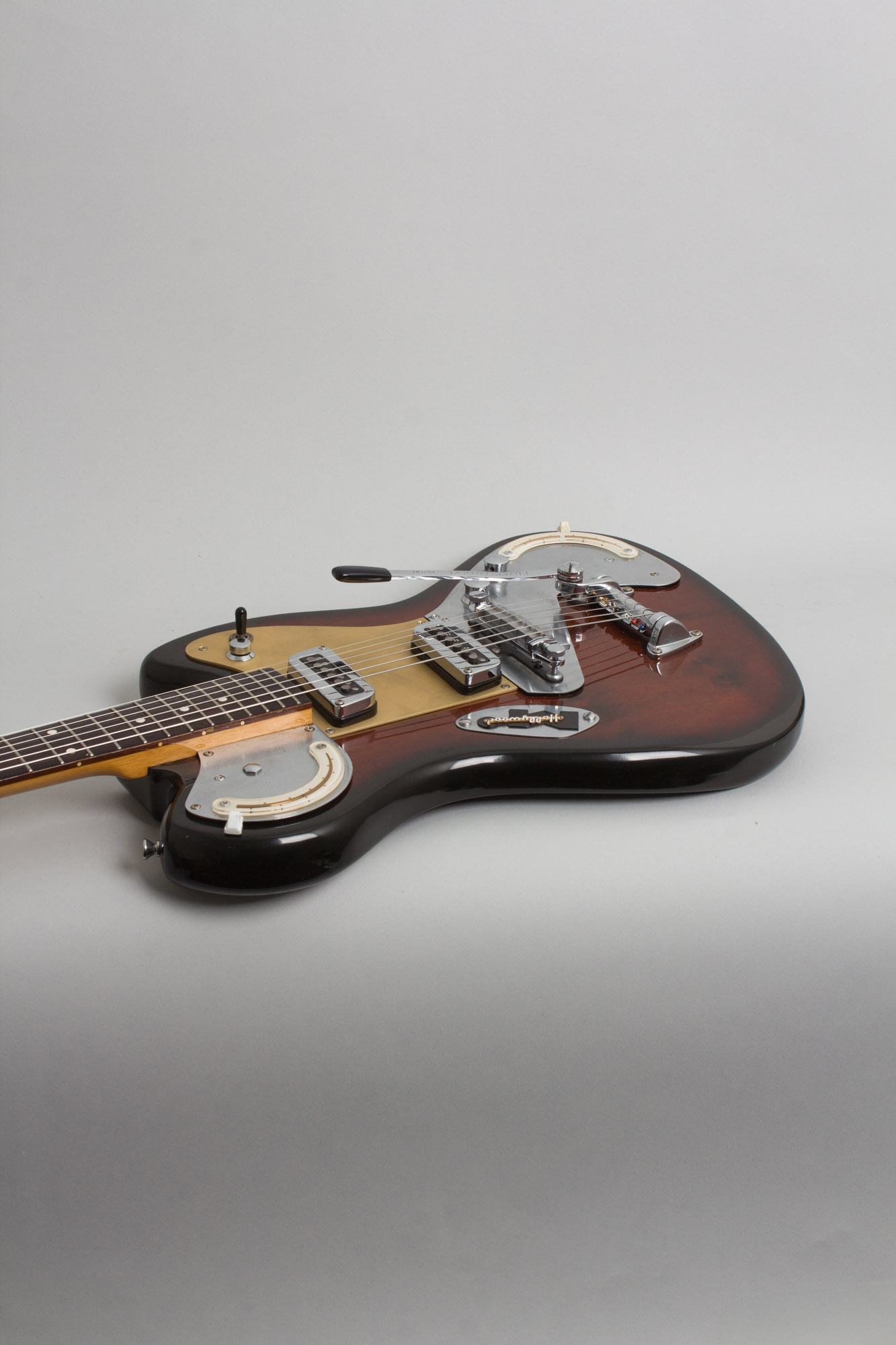
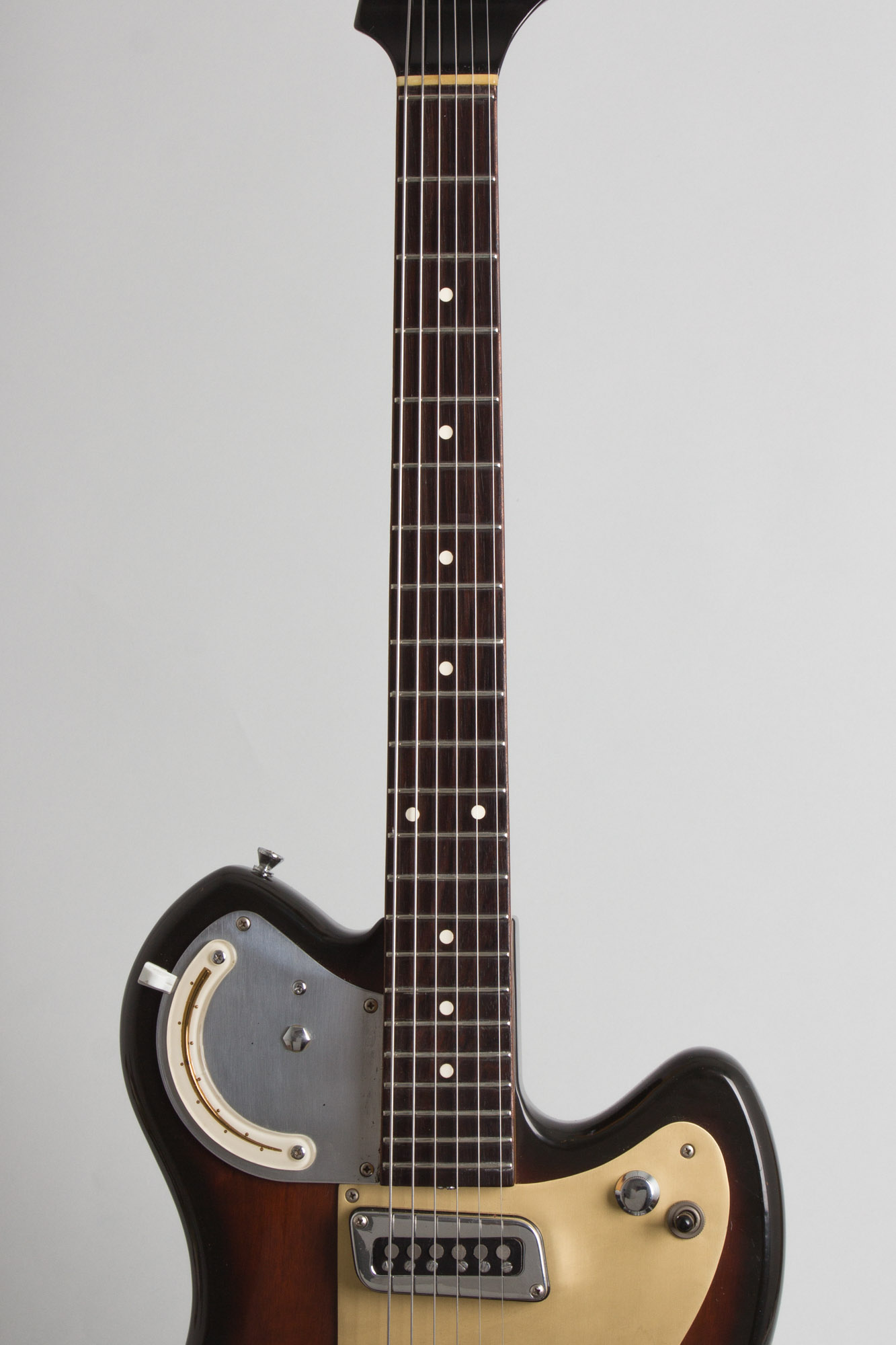
This Jupiter Hollywood is one of Meazzi's signature high end electrics of the mid-60s, never imported to the US in any significant numbers. The basic layout is a two pickup solidbody with a vaguely offset shape, looking rather like a Jazzmaster crossed with a Burns Vista-Sonic. This one is finished in a dark sunburst, several other colors were available. The large metal plates on the face (two silver, the center gold anodized) are the most distinctive visual feature, fitted with an odd-looking control array that takes some time to adjust to but has some very cool options when mastered.
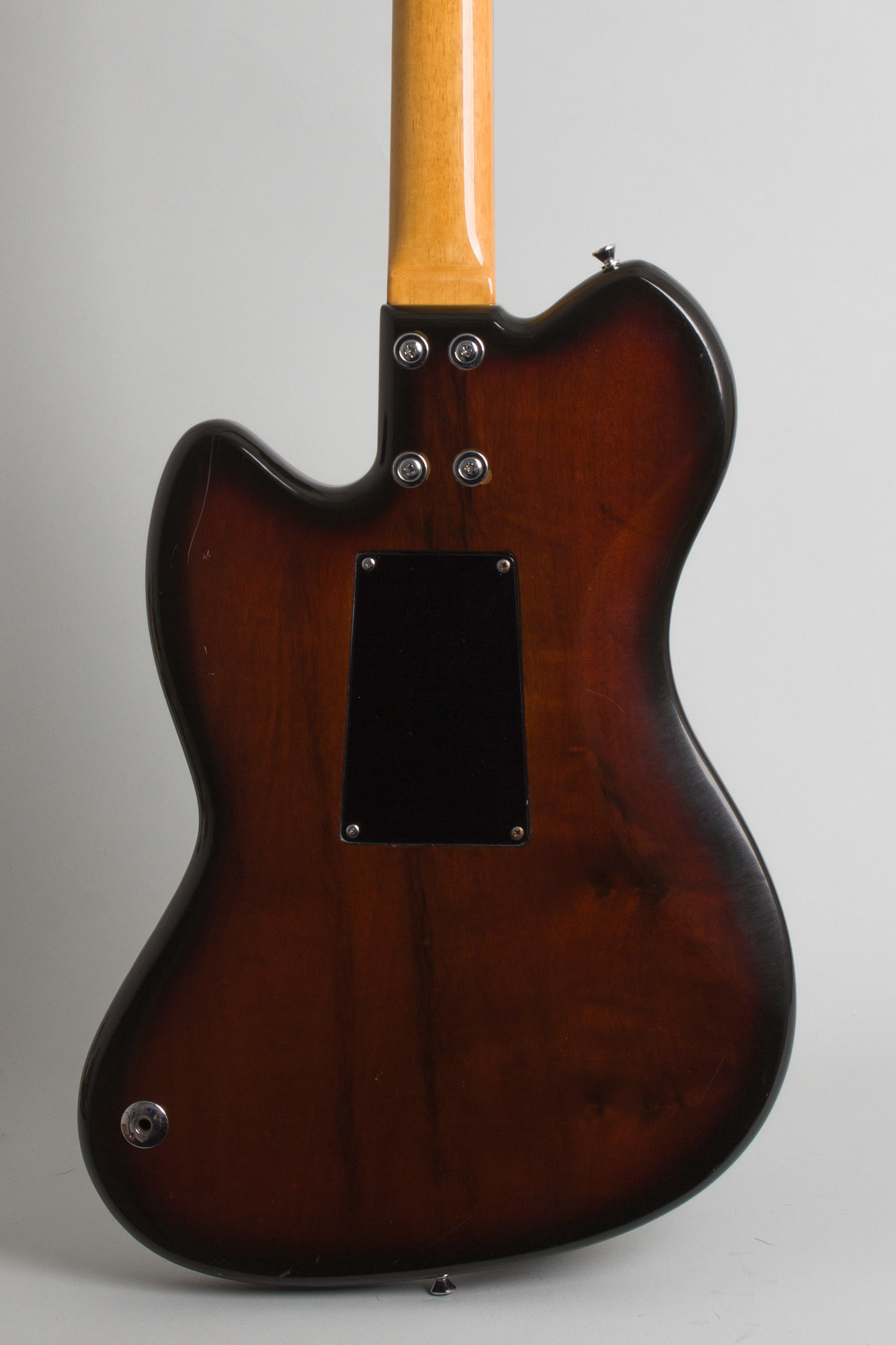
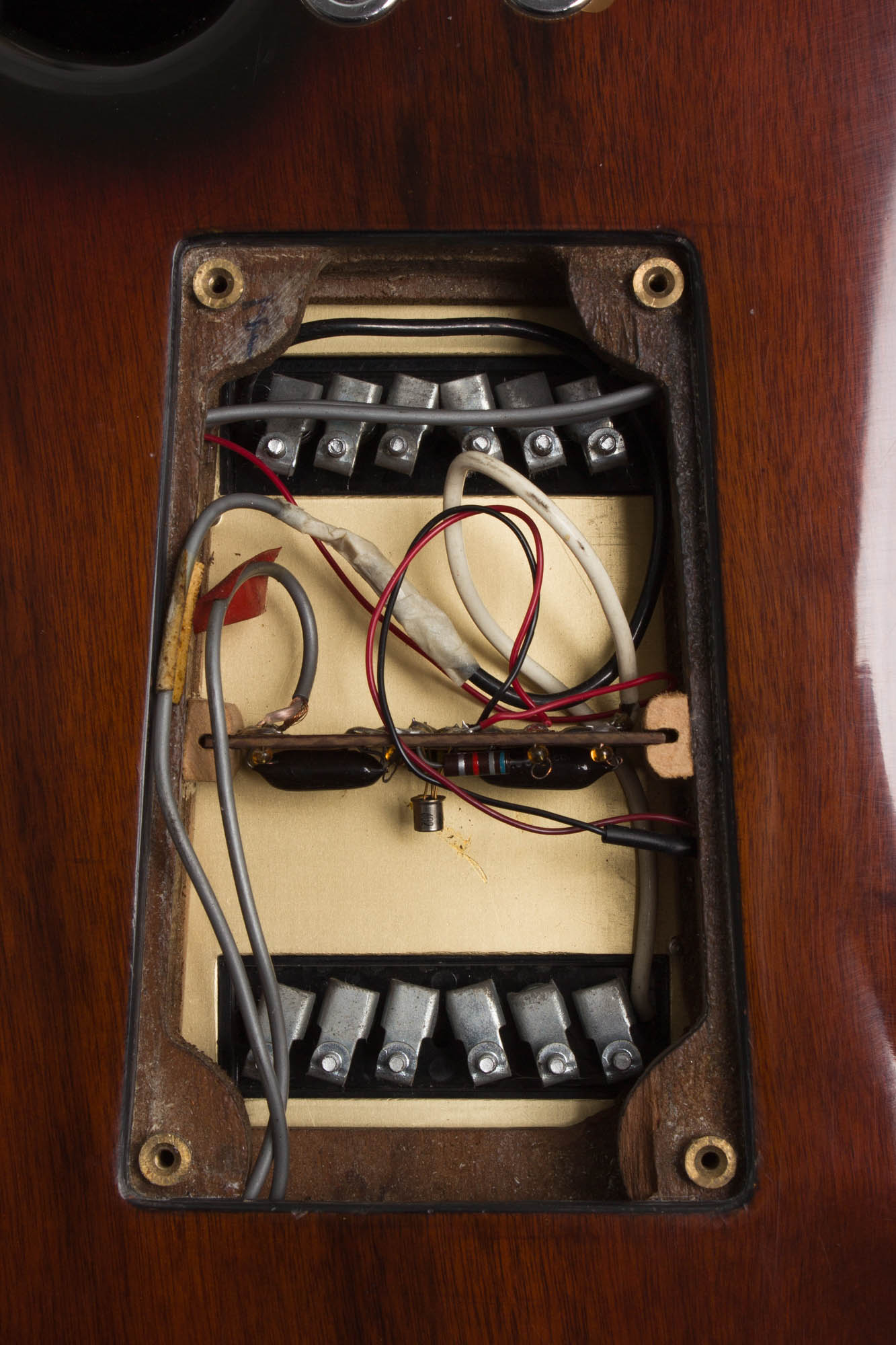
Although it appears to be a solidbody, the Jupiter's body is built up from several flat-stacked pieces of what looks like figured mahogany and has a large hollow cavity in the center. This holds the two single-coil pickups which appear "inspired" by DeArmond Dynasonics with a similar magnet-pole-in-a-cradle construction, distinguished by slightly offset trapezoidal cases. An unexpected feature in this void is a small transistorized Battery-operated pre-amp which works *only* on the bridge pickup, offering a rippingly bright ultra treble sound. While highly cutting on its own, when blended with the passive neck pickup it creates a really interesting range of sound. The battery is hidden under the "Hollywood" logo plate on the upper body. Only Jim Burns in England was working with similar pre-amp ideas in 1963-4.
The controls are wildly singular, even for a Euro-guitar of this period. The upper and lower metal plates have large conspicuous arced rotary lever controls practically unique to guitar applications. The upper bout lever acts as a volume in the upper position of the conventional 2-way switch on the lower bout, a function shifted to a small adjacent knob when that switch is flipped. The lower one offers the guitar's standout trick; it precisely mixes the neck and bridge pickups more finely than just about any other system, allowing easily dialing in blended sounds perfectly. The two metal knobs in front of this are individual tone controls for each pickup. The blend feature is really the Jupiter's ace-in-the-hole, allowing the two very different sounding pickups to be mixed together for a wide range of tones.
The jack is located on the lower back, which is pretty inconvenient unless a right angle cord is used (Kay in the US tried this trick briefly as well). An almost insanely weird feature was an automatic "standby" device which muted the volume AND disconnected the battery when the guitar was held in an upright position, achieved via a gravity activated Mercury kill switch! This has been (probably thankfully) removed from this example.
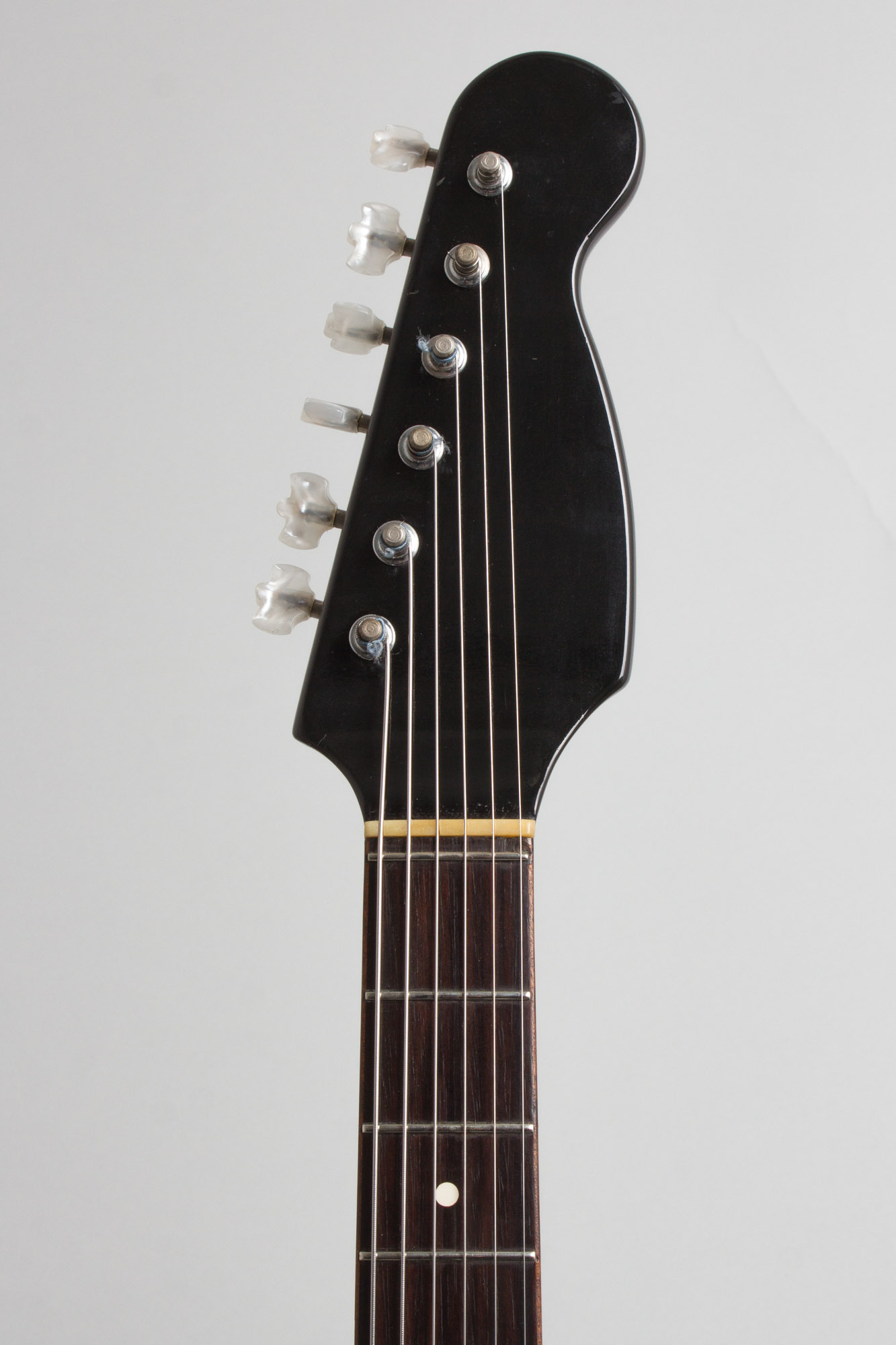
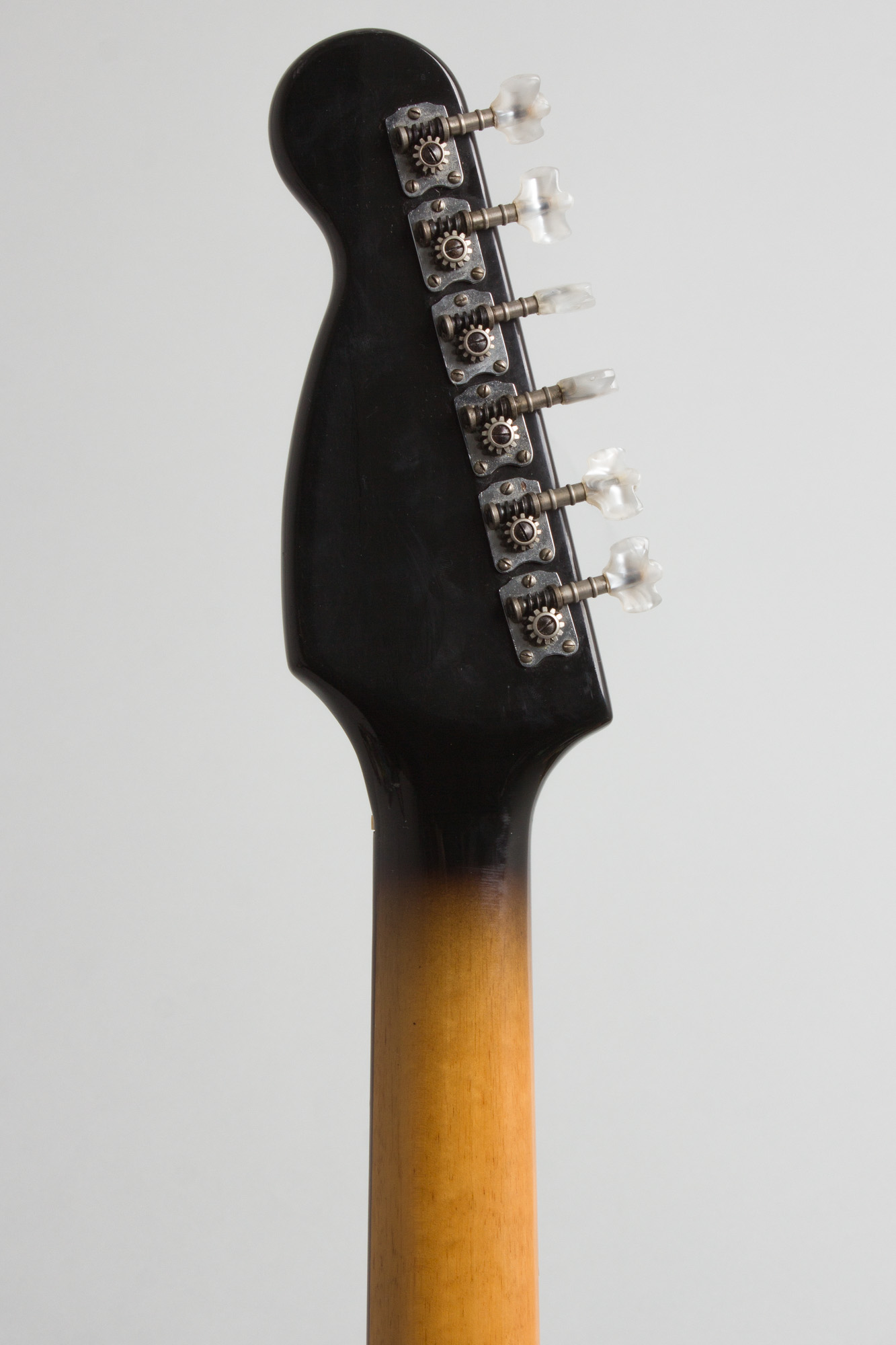
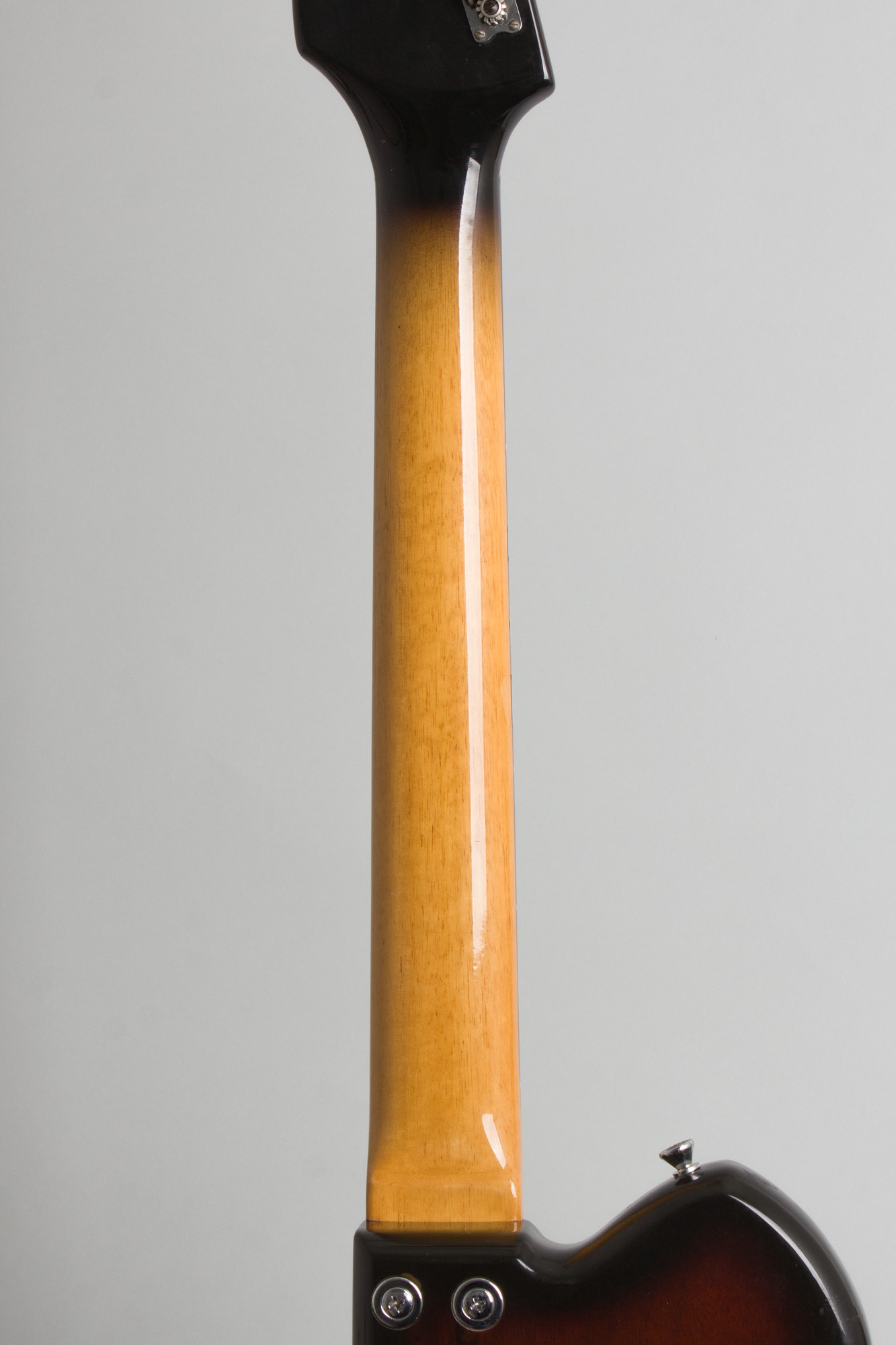
Compared to all this the bolt-on neck is relatively conventional, a more typical Italian Fender-style maple-ish with a dot-inlaid dark rosewood fingerboard and wood binding(!). The sort-of Fender headstock is finished dark, oddly carrying no logo and fitted with typical openback European tuners distinguished by unusually florid pearloid buttons. As with many Euro guitars a zero fret is employed, but overall the quality is better than most Italian necks of the 1960s. The clever adjustable bridge design has movable saddles locked by a small lever, and the simple spring-less vibrato is a variant of the Gibson Maestro from the early '60s. This is really a singular guitar, a far better quality instrument than the familiar cheese-grater pushbutton guitars imported from Italy in the 1960s. With a wildly retro-space age look and excellent sonics this is simply one of the coolest Italo-electrics of its era and feels like a lost classic waiting to be re-discovered!
Overall length is 41 1/4 in. (104.8 cm.), 14 1/4 in. (36.2 cm.) wide at lower bout, and 1 5/8 in. (4.1 cm.) in depth, measured at side of rim. Scale length is 24 1/2 in. (622 mm.). Width of nut is 1 11/32 in. (34 mm.).
This is a very clean guitar, superbly well preserved and recently overhauled resulting in a fine player, especially for an Italian instrument of this period. The original finish is quite clean overall with small scuffs and dings, there is one feelable finish chip missing from the upper side of the neck by the 6th fret, but really the finish is very nicely preserved overall. The metal has some light scuffing and worn spots but no heavy wear.
All hardware appears original; many of these Meazzis had a bridge mute assembly, this one does not so it is possible that one was removed. The upper control lever has had the internal plastic cog replaced and works perfectly; all the complex electronics appear to function as designed except the "kill" switch is no longer present. The battery operation has been updated to use a contemporary 9-volt from the original obsolete style.
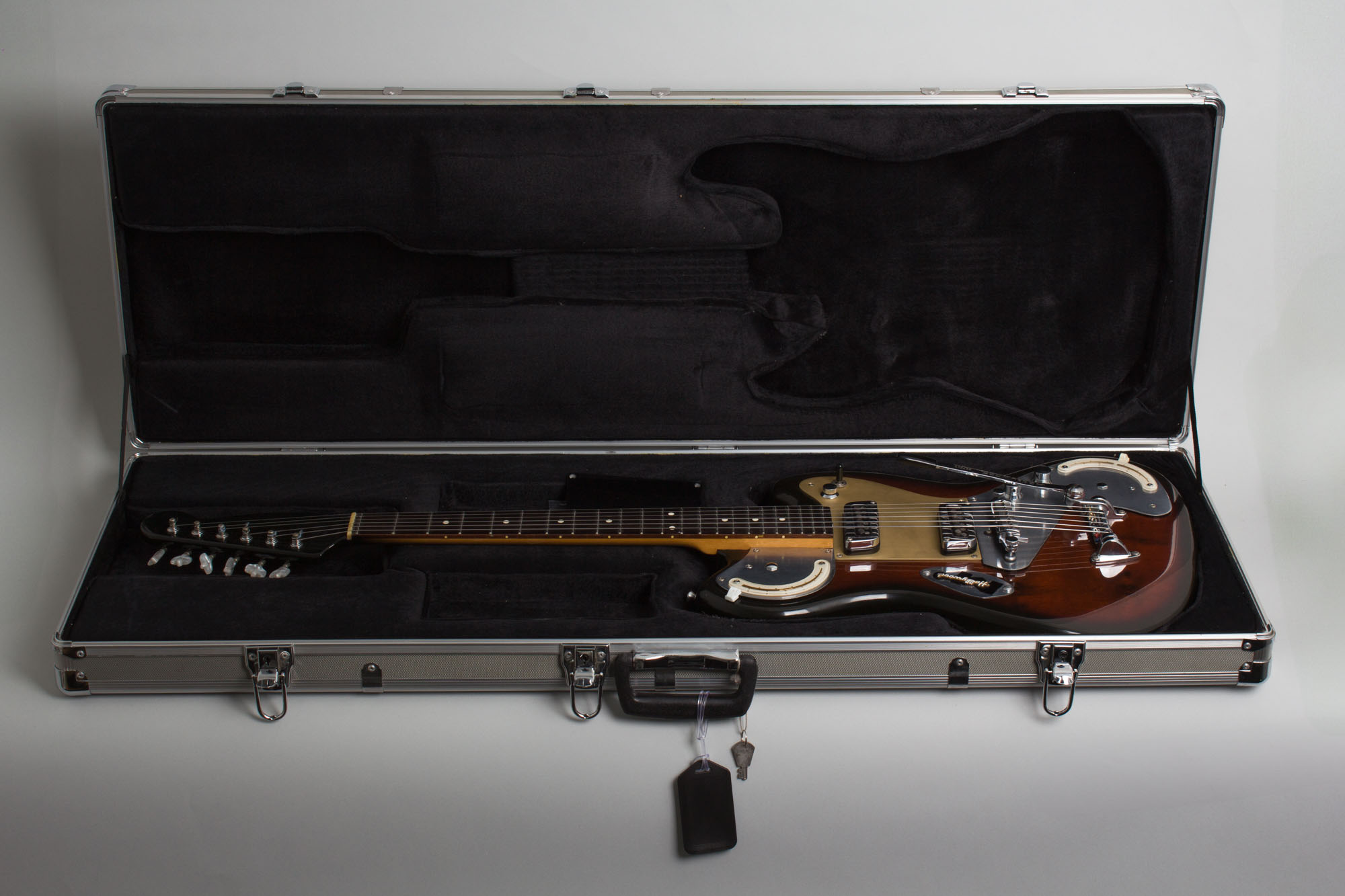
The guitar was neatly refretted and plays very well, far above the "pay grade" of most 1960s Italian electrics. It is currently strung with flatwound strings for the authentic 1960s experience, and sounds great. The pickup blending system is visually convenient and super easy to use, very versatile sounding and fun with a little practice. This rare and lovely guitar rests in a custom-cut foam-lined metal case, an unfortunately obscure guitar that rewards the player with an eye for the out-of-the-ordinary with a standout electric experience! Excellent Condition.
This Italian-made Meazzi Jupiter Hollywood is in many ways one of the most unusual and interesting guitars of the mid-1960s. While somewhat conventional in appearance (we said "somewhat") it boasts a number of unique and advanced features "under the hood" that were far ahead of their time in 1965; some of them still are!
The Meazzi brand is little known in the US, but they were bigger players in the European market. The company was founded by four Meazzi brothers, and overall their products manifest a higher build quality and especially design originality than other Italian firms (Wandre excluded!). Their line of guitars, basses and electronics was extensive, but only part of the company's output. The best known Meazzi products in the US were probably their Danelectro-clone "Dynelectron" guitars that appeared shortly after the original company went belly up, but those did not carry the Meazzi brand.
This Jupiter Hollywood is one of Meazzi's signature high end electrics of the mid-60s, never imported to the US in any significant numbers. The basic layout is a two pickup solidbody with a vaguely offset shape, looking rather like a Jazzmaster crossed with a Burns Vista-Sonic. This one is finished in a dark sunburst, several other colors were available. The large metal plates on the face (two silver, the center gold anodized) are the most distinctive visual feature, fitted with an odd-looking control array that takes some time to adjust to but has some very cool options when mastered.
Although it appears to be a solidbody, the Jupiter's body is built up from several flat-stacked pieces of what looks like figured mahogany and has a large hollow cavity in the center. This holds the two single-coil pickups which appear "inspired" by DeArmond Dynasonics with a similar magnet-pole-in-a-cradle construction, distinguished by slightly offset trapezoidal cases. An unexpected feature in this void is a small transistorized Battery-operated pre-amp which works *only* on the bridge pickup, offering a rippingly bright ultra treble sound. While highly cutting on its own, when blended with the passive neck pickup it creates a really interesting range of sound. The battery is hidden under the "Hollywood" logo plate on the upper body. Only Jim Burns in England was working with similar pre-amp ideas in 1963-4.
The controls are wildly singular, even for a Euro-guitar of this period. The upper and lower metal plates have large conspicuous arced rotary lever controls practically unique to guitar applications. The upper bout lever acts as a volume in the upper position of the conventional 2-way switch on the lower bout, a function shifted to a small adjacent knob when that switch is flipped. The lower one offers the guitar's standout trick; it precisely mixes the neck and bridge pickups more finely than just about any other system, allowing easily dialing in blended sounds perfectly. The two metal knobs in front of this are individual tone controls for each pickup. The blend feature is really the Jupiter's ace-in-the-hole, allowing the two very different sounding pickups to be mixed together for a wide range of tones.
The jack is located on the lower back, which is pretty inconvenient unless a right angle cord is used (Kay in the US tried this trick briefly as well). An almost insanely weird feature was an automatic "standby" device which muted the volume AND disconnected the battery when the guitar was held in an upright position, achieved via a gravity activated Mercury kill switch! This has been (probably thankfully) removed from this example.
Compared to all this the bolt-on neck is relatively conventional, a more typical Italian Fender-style maple-ish with a dot-inlaid dark rosewood fingerboard and wood binding(!). The sort-of Fender headstock is finished dark, oddly carrying no logo and fitted with typical openback European tuners distinguished by unusually florid pearloid buttons. As with many Euro guitars a zero fret is employed, but overall the quality is better than most Italian necks of the 1960s. The clever adjustable bridge design has movable saddles locked by a small lever, and the simple spring-less vibrato is a variant of the Gibson Maestro from the early '60s. This is really a singular guitar, a far better quality instrument than the familiar cheese-grater pushbutton guitars imported from Italy in the 1960s. With a wildly retro-space age look and excellent sonics this is simply one of the coolest Italo-electrics of its era and feels like a lost classic waiting to be re-discovered!
Overall length is 41 1/4 in. (104.8 cm.), 14 1/4 in. (36.2 cm.) wide at lower bout, and 1 5/8 in. (4.1 cm.) in depth, measured at side of rim. Scale length is 24 1/2 in. (622 mm.). Width of nut is 1 11/32 in. (34 mm.).
This is a very clean guitar, superbly well preserved and recently overhauled resulting in a fine player, especially for an Italian instrument of this period. The original finish is quite clean overall with small scuffs and dings, there is one feelable finish chip missing from the upper side of the neck by the 6th fret, but really the finish is very nicely preserved overall. The metal has some light scuffing and worn spots but no heavy wear.
All hardware appears original; many of these Meazzis had a bridge mute assembly, this one does not so it is possible that one was removed. The upper control lever has had the internal plastic cog replaced and works perfectly; all the complex electronics appear to function as designed except the "kill" switch is no longer present. The battery operation has been updated to use a contemporary 9-volt from the original obsolete style.
The guitar was neatly refretted and plays very well, far above the "pay grade" of most 1960s Italian electrics. It is currently strung with flatwound strings for the authentic 1960s experience, and sounds great. The pickup blending system is visually convenient and super easy to use, very versatile sounding and fun with a little practice. This rare and lovely guitar rests in a custom-cut foam-lined metal case, an unfortunately obscure guitar that rewards the player with an eye for the out-of-the-ordinary with a standout electric experience! Excellent Condition.