Gibson Style A Snakehead Carved Top Mandolin (1923)

LOADING IMAGES
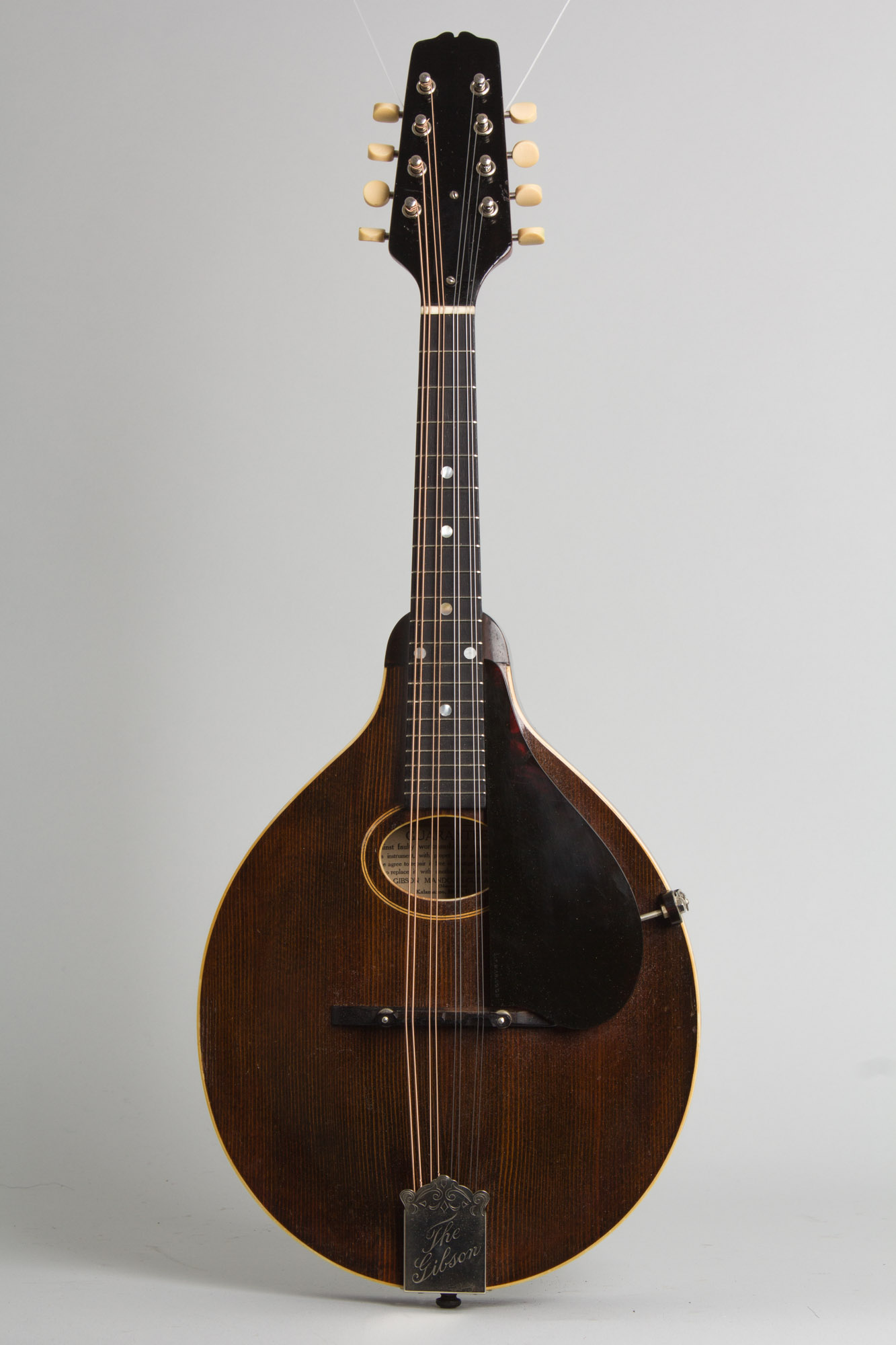
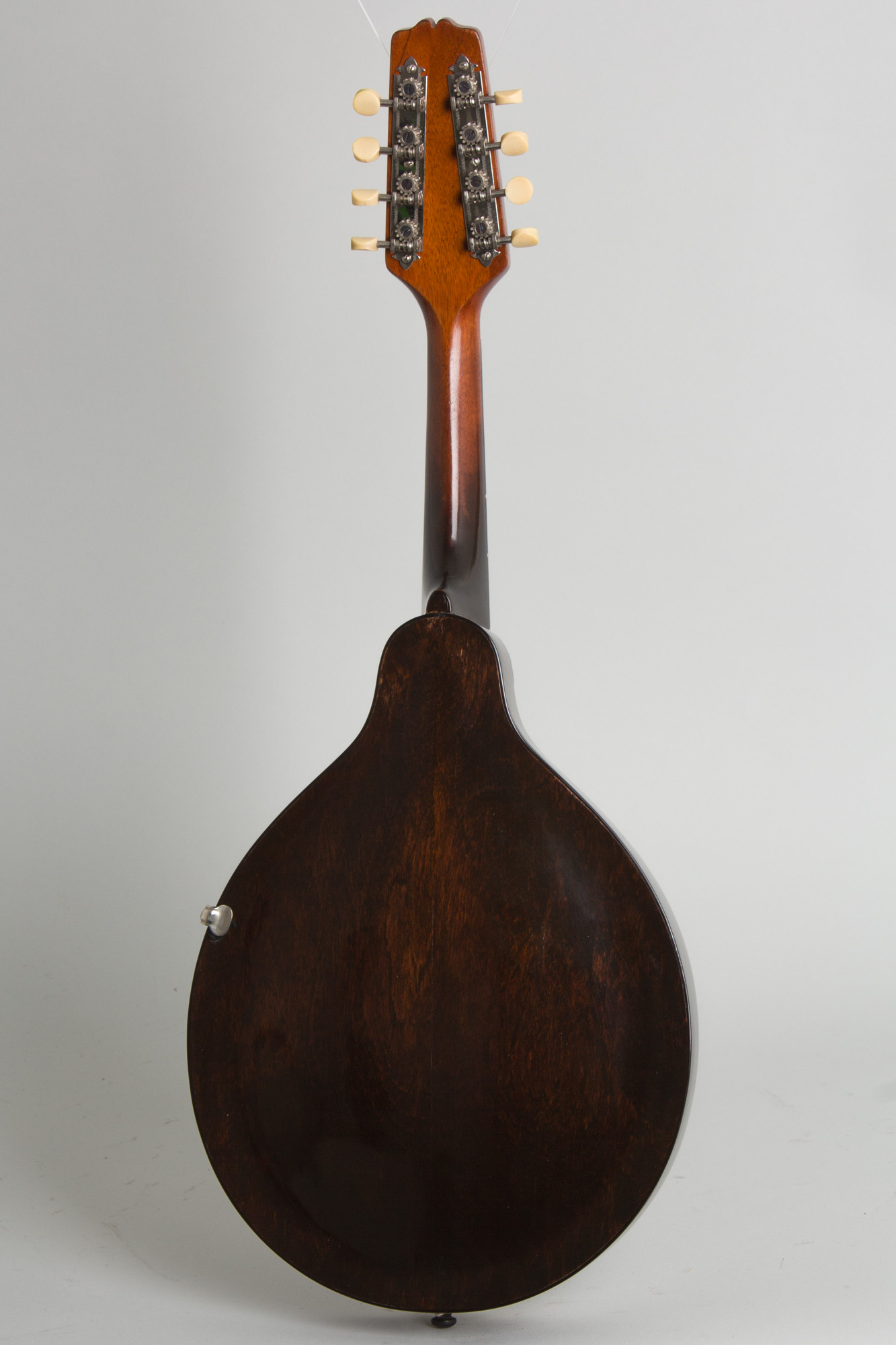

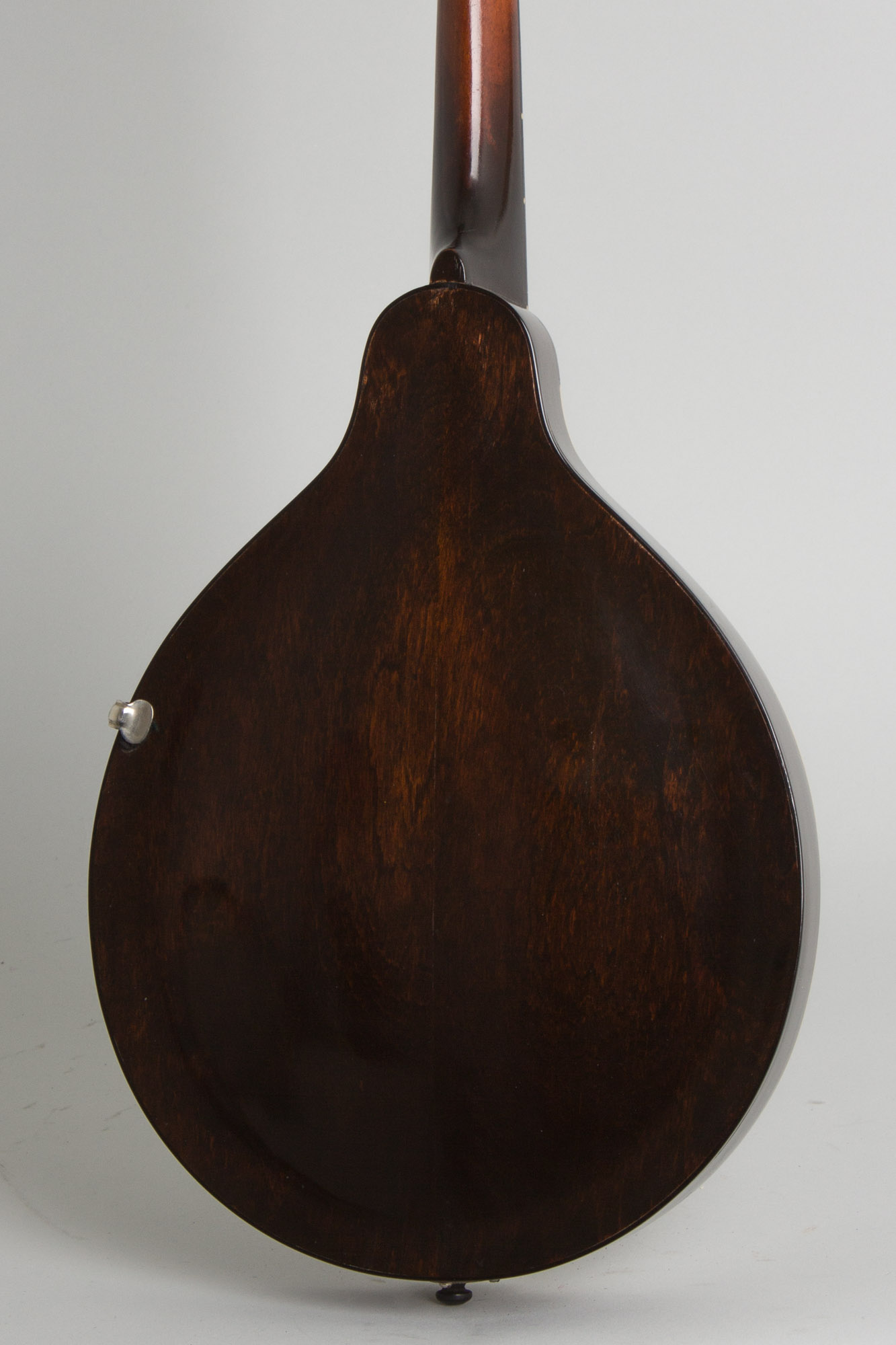
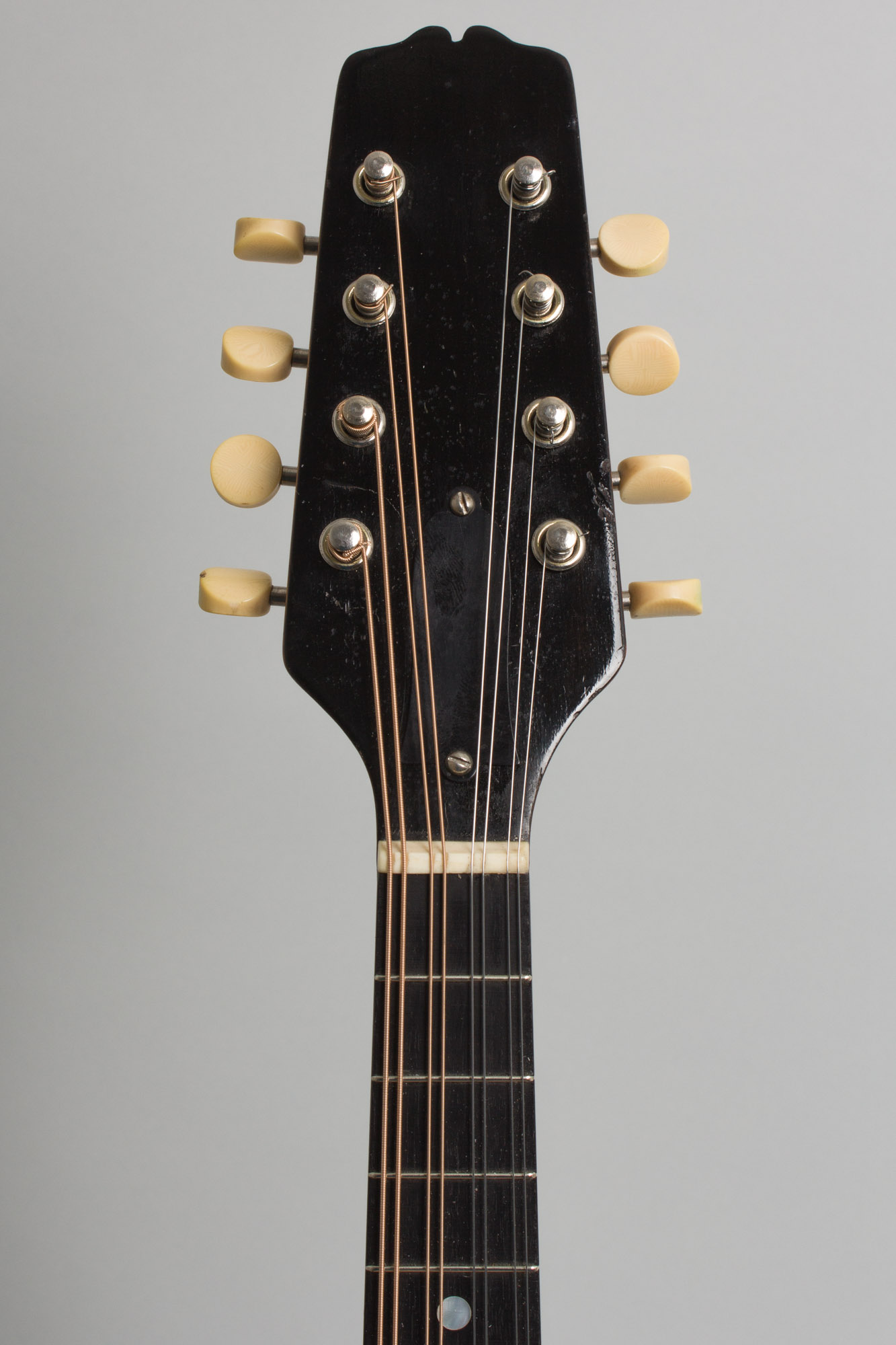
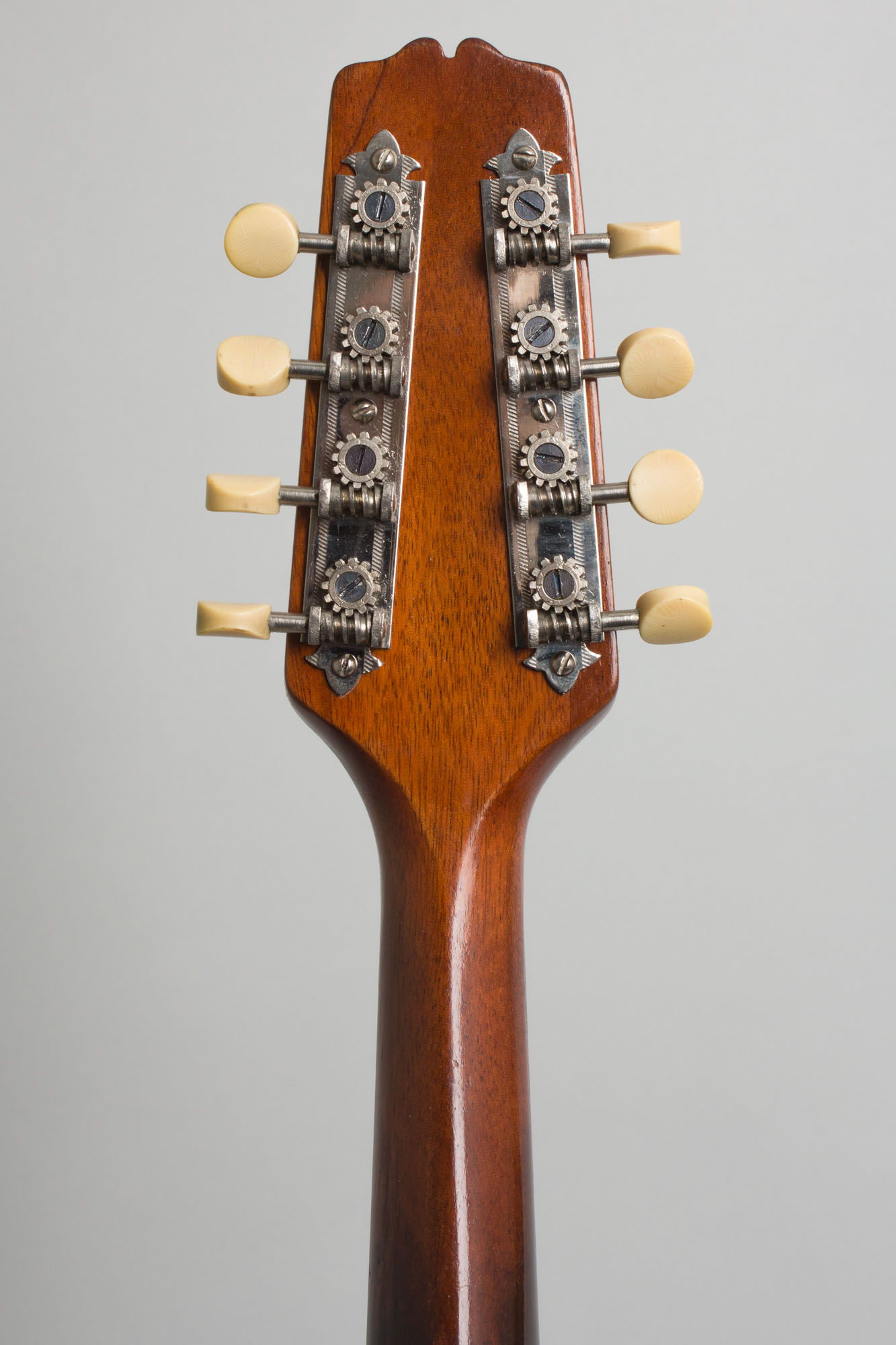
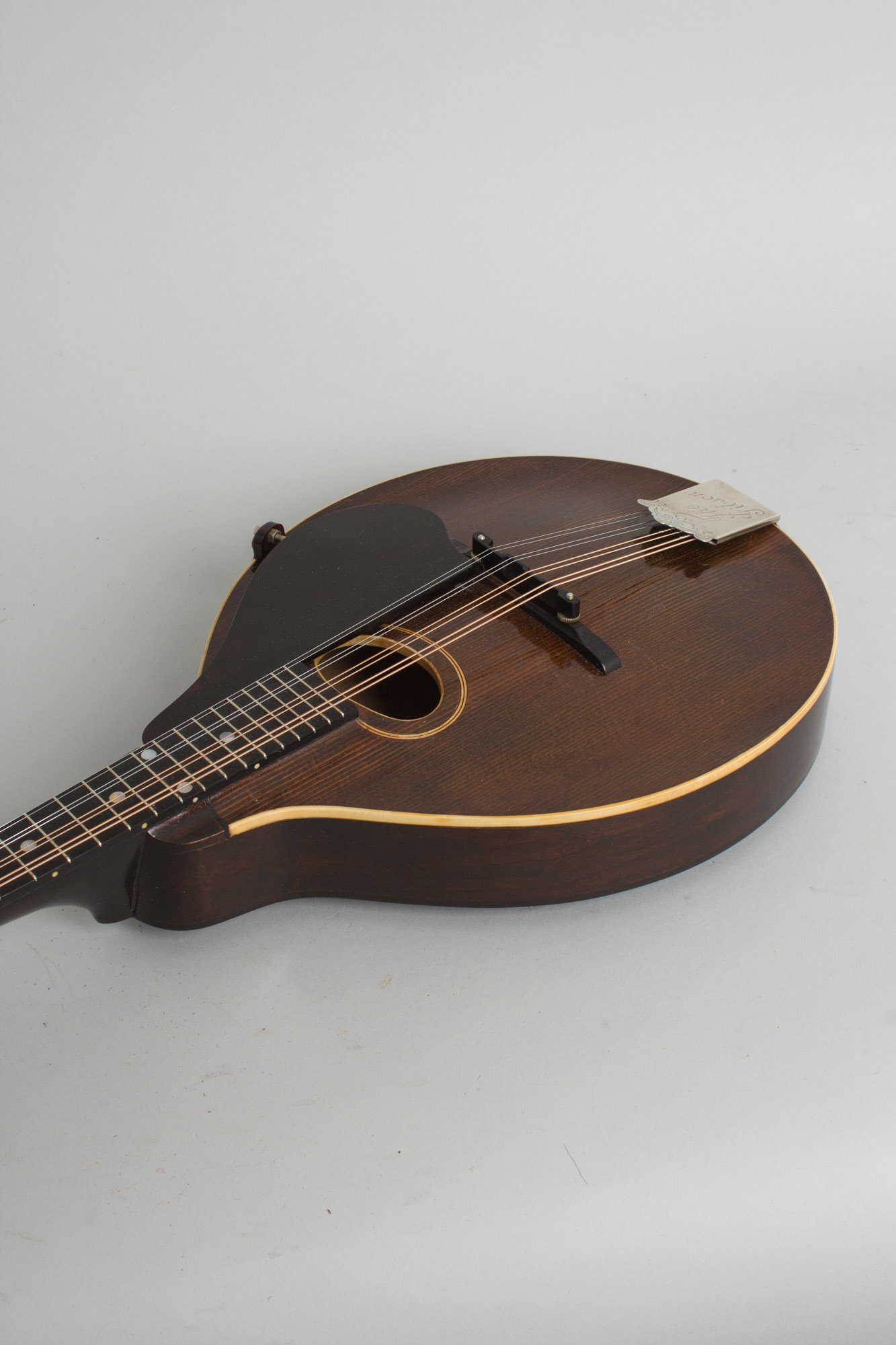
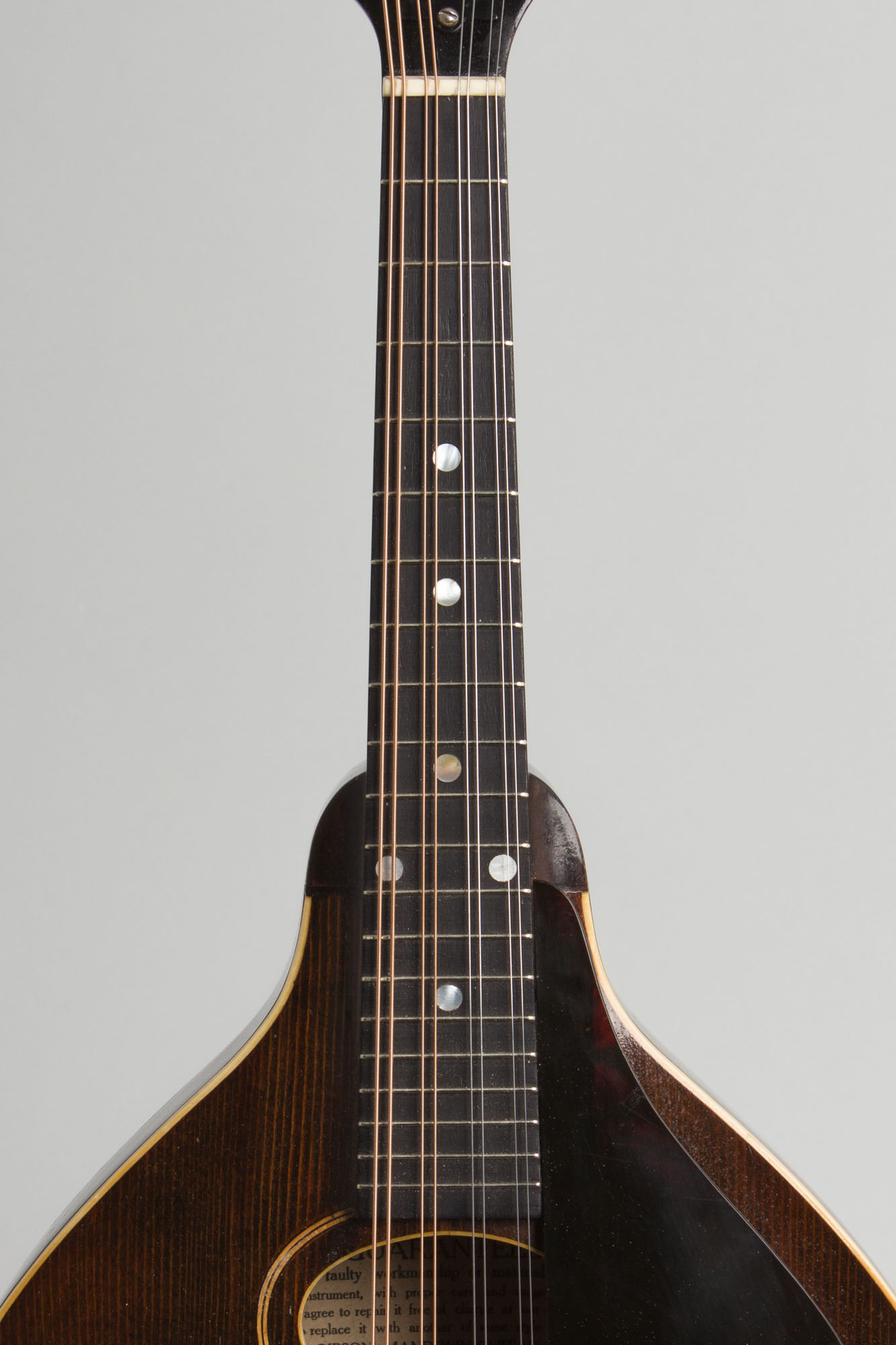
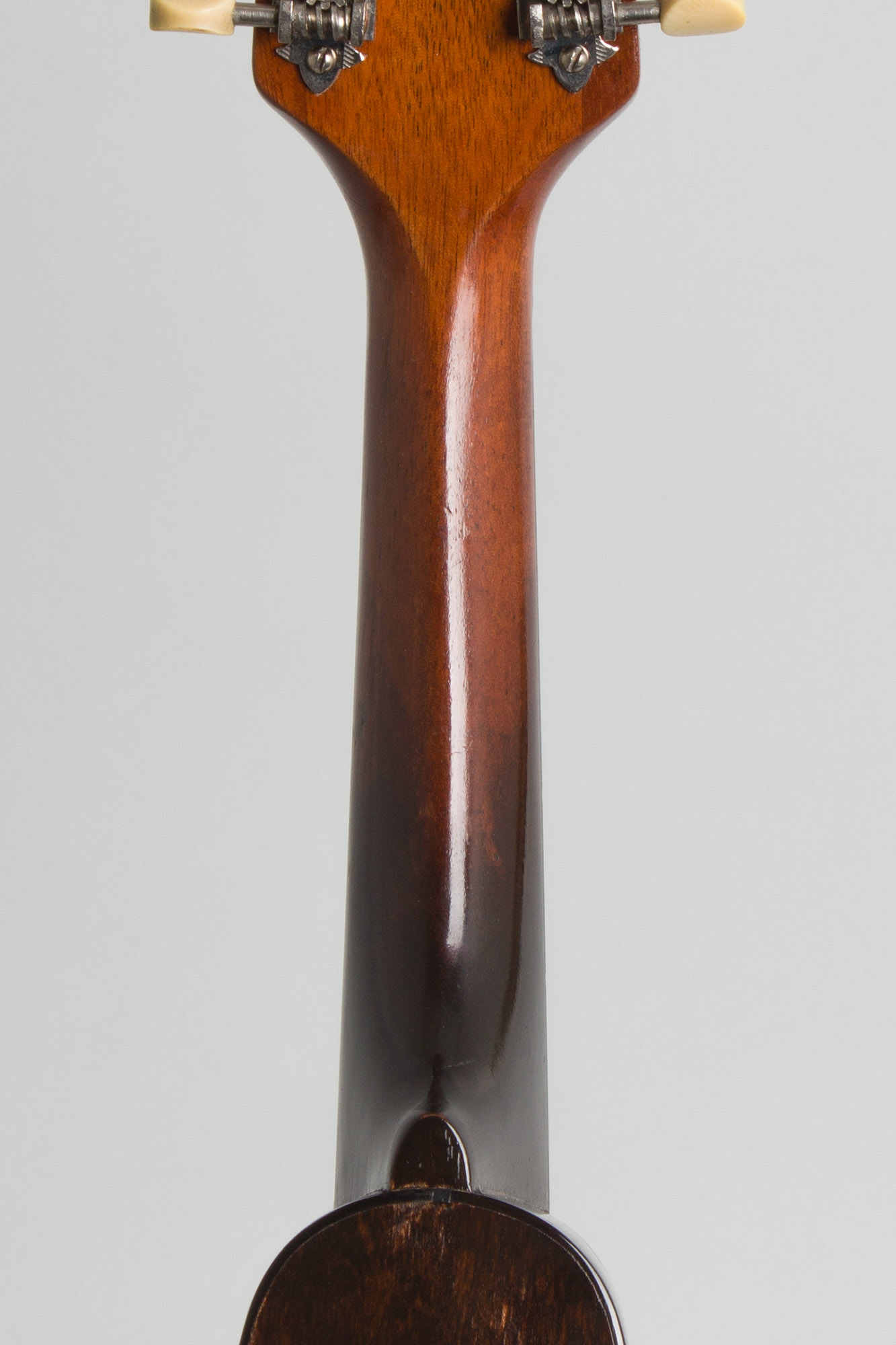
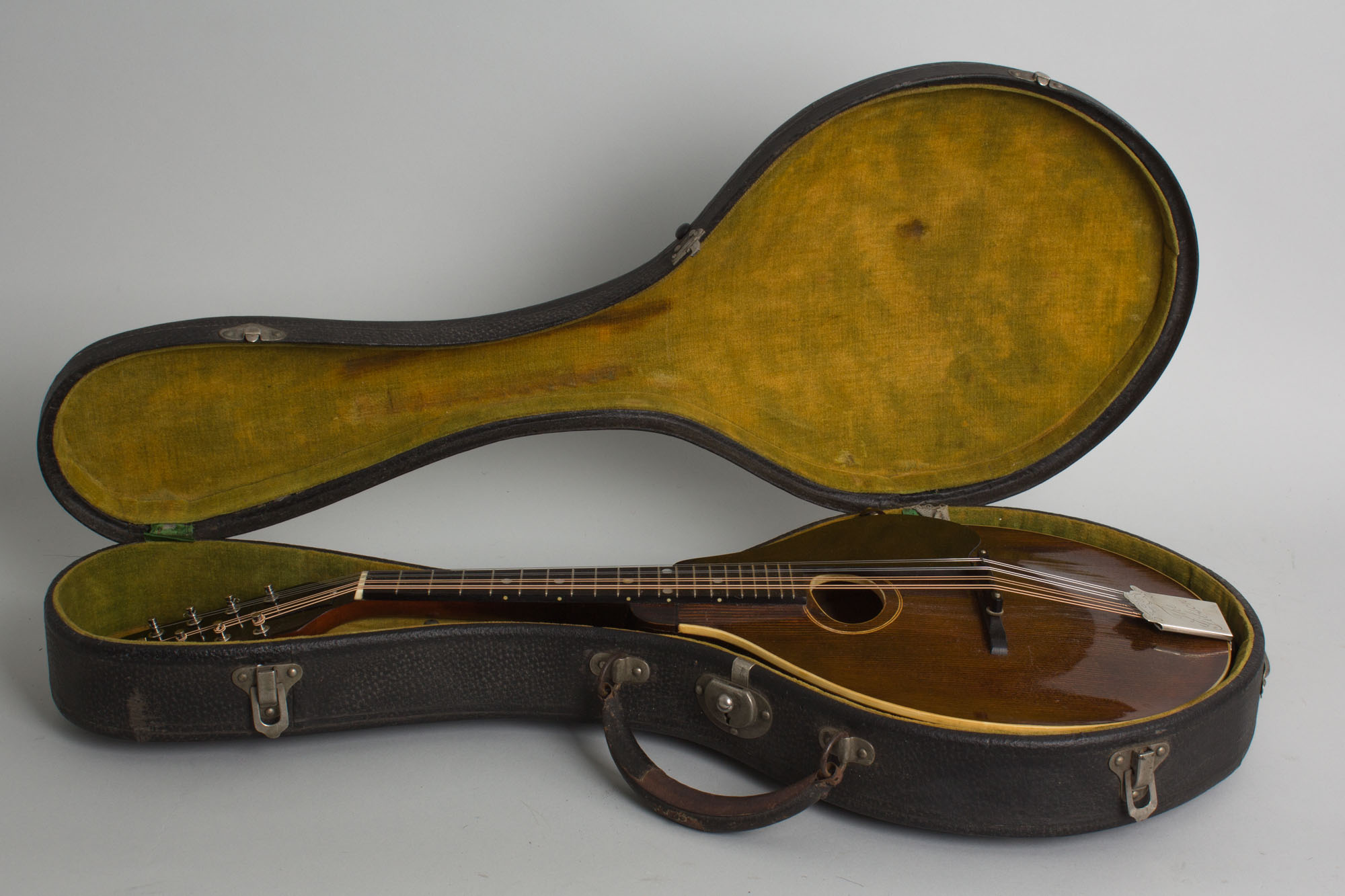
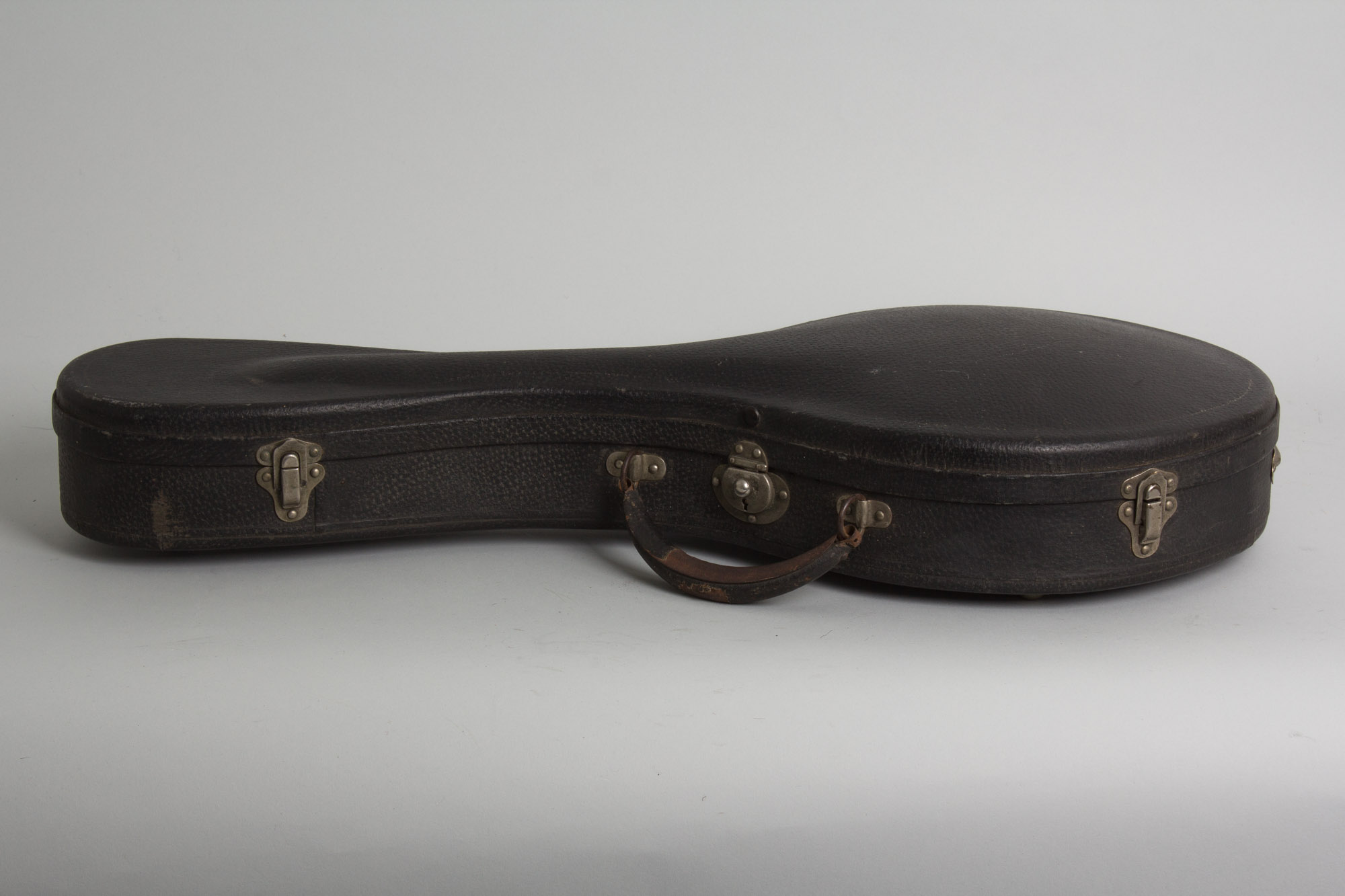

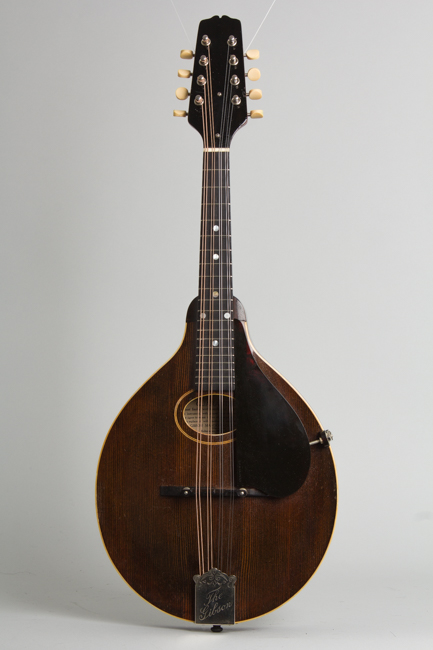
Gibson Style A Snakehead Model Carved Top Mandolin (1923), made in Kalamazoo, Michigan, serial # 72809, Sheraton brown top, dark stained back and sides finish, birch back and sides, spruce top, mahogany neck with ebony fingerboard, original black hard shell case.
This is a great-playing and sounding Style A mandolin made during 1923, the prime time of the "Loar era" at Gibson. These "Snakeheads" are generally considered the best-sounding oval hole A style mandolins ever made, and this one certainly bears it out. This is a fine example of Gibson's craftsmanship at the apex of the mandolin era, just before the company's focus shifted to banjos and then guitars. This one has a Factory Order Number (FON) indicating it was built fairly early in 1923; the serial number penciled on the white oval label suggests it was shipped out around the second quarter of the year.
These "Snakehead" instruments are named for their Loar-designed peghead that angles inward towards the tip, a very functional and logical design feature inexplicably abandoned by Gibson several years later. They are revered for their unmatched tone and projection and have the advanced playability-enhancing features of the period including the slimmed-down one piece mahogany neck with an adjustable truss rod and the adjustable ebony bridge.
The top on this Style A bears the older "Sheraton Brown" top finish, which was about to be discontinued in favor of basic black. The top is bound in white celluloid with a thin 5-ply inlaid soundhole ring. The back is bound in tortoise Celluloid, an unusual feature for a style A found only right around this time. The tailpiece has the engraved "The Gibson" cover plate and the tuners are pointed-end Waverly strips. The plain headstock does not bear a Gibson logo and the pickguard clamp is one of the last of the old 1910s pieces mated to the new metal shaft, a leftover fitting soon replaced with a simple screwed-on bracket.
Lloyd Loar's tenure as acoustic engineer at Gibson has become so mythical that separating fact from fiction is difficult. Certainly the mandolin family instruments made during the period of his employment are the most perfectly realized in Gibson's history, and have become the template for most similar instruments since. Mandolins in particular of the "Loar era" show the influence of a master player on design and execution, although other Gibson employees (especially Thaddeus McHugh and Lewis A. Williams) actually engineered many of the technical improvements. Loar was primarily concerned with 'voicing' the instruments properly; the Master Model Style 5 line was his greatest contribution with their violin-style F-hole tops, but all Gibson instruments were refined at the same time. Even this basic Style A mandolin has sonic and playing improvements benefitting from "Master Loar's" input still evident today, 100+ years on and these distinctive "snakehead" A mandolins have become ever more sought-after by discerning players.
Overall length is 25 3/4 in. (65.4 cm.), 10 in. (25.4 cm.) wide, and 1 7/8 in. (4.8 cm.) in depth, measured at side of rim. Scale length is 14 in. (356 mm.). Width of nut is 1 1/16 in. (27 mm.).
This is a great playing and sounding "snakehead" with some general wear and repair but remaining nicely original overall. The original finish is intact on most of the instrument except for the area around the heel (mostly on the back) which appears to have been polished out, losing some of the top lacquer coat. This is mostly visible under blacklight and almost certainly related to re-sealing of the back/side seams. This has been done in several different areas all along the back seams and the instrument is completely solid.
Otherwise the finish shows minor dings, scrapes and dents with an odd fine stippling pattern to the entire top, possibly from exposure to heat at some point. This is not overly conspicuous, but is noticeable when looked at closely. The face of the headstock has a little of this as well along with a few dings and scrapes. There is a little rub wear to the back of the neck.
All the body seams are now solid and there are no visible crack repairs to the wood. The adjustable ebony bridge, tuners, tailpiece and cover and pickguard/bracket assembly are all original. The original small frets and fingerboard show very little wear. Generally the mandolin appears not too much used over the last century, but possibly stored for a while in an unfriendly environment. It is now all together and a splendid survivor of "Master Loar's" signature period with a fabulous sound still in the original HSC. Overall Excellent - Condition.
This is a great-playing and sounding Style A mandolin made during 1923, the prime time of the "Loar era" at Gibson. These "Snakeheads" are generally considered the best-sounding oval hole A style mandolins ever made, and this one certainly bears it out. This is a fine example of Gibson's craftsmanship at the apex of the mandolin era, just before the company's focus shifted to banjos and then guitars. This one has a Factory Order Number (FON) indicating it was built fairly early in 1923; the serial number penciled on the white oval label suggests it was shipped out around the second quarter of the year.
These "Snakehead" instruments are named for their Loar-designed peghead that angles inward towards the tip, a very functional and logical design feature inexplicably abandoned by Gibson several years later. They are revered for their unmatched tone and projection and have the advanced playability-enhancing features of the period including the slimmed-down one piece mahogany neck with an adjustable truss rod and the adjustable ebony bridge.
The top on this Style A bears the older "Sheraton Brown" top finish, which was about to be discontinued in favor of basic black. The top is bound in white celluloid with a thin 5-ply inlaid soundhole ring. The back is bound in tortoise Celluloid, an unusual feature for a style A found only right around this time. The tailpiece has the engraved "The Gibson" cover plate and the tuners are pointed-end Waverly strips. The plain headstock does not bear a Gibson logo and the pickguard clamp is one of the last of the old 1910s pieces mated to the new metal shaft, a leftover fitting soon replaced with a simple screwed-on bracket.
Lloyd Loar's tenure as acoustic engineer at Gibson has become so mythical that separating fact from fiction is difficult. Certainly the mandolin family instruments made during the period of his employment are the most perfectly realized in Gibson's history, and have become the template for most similar instruments since. Mandolins in particular of the "Loar era" show the influence of a master player on design and execution, although other Gibson employees (especially Thaddeus McHugh and Lewis A. Williams) actually engineered many of the technical improvements. Loar was primarily concerned with 'voicing' the instruments properly; the Master Model Style 5 line was his greatest contribution with their violin-style F-hole tops, but all Gibson instruments were refined at the same time. Even this basic Style A mandolin has sonic and playing improvements benefitting from "Master Loar's" input still evident today, 100+ years on and these distinctive "snakehead" A mandolins have become ever more sought-after by discerning players.
Overall length is 25 3/4 in. (65.4 cm.), 10 in. (25.4 cm.) wide, and 1 7/8 in. (4.8 cm.) in depth, measured at side of rim. Scale length is 14 in. (356 mm.). Width of nut is 1 1/16 in. (27 mm.).
This is a great playing and sounding "snakehead" with some general wear and repair but remaining nicely original overall. The original finish is intact on most of the instrument except for the area around the heel (mostly on the back) which appears to have been polished out, losing some of the top lacquer coat. This is mostly visible under blacklight and almost certainly related to re-sealing of the back/side seams. This has been done in several different areas all along the back seams and the instrument is completely solid.
Otherwise the finish shows minor dings, scrapes and dents with an odd fine stippling pattern to the entire top, possibly from exposure to heat at some point. This is not overly conspicuous, but is noticeable when looked at closely. The face of the headstock has a little of this as well along with a few dings and scrapes. There is a little rub wear to the back of the neck.
All the body seams are now solid and there are no visible crack repairs to the wood. The adjustable ebony bridge, tuners, tailpiece and cover and pickguard/bracket assembly are all original. The original small frets and fingerboard show very little wear. Generally the mandolin appears not too much used over the last century, but possibly stored for a while in an unfriendly environment. It is now all together and a splendid survivor of "Master Loar's" signature period with a fabulous sound still in the original HSC. Overall Excellent - Condition.