Knutsen 16 String Harp Guitar , c. 1914

LOADING IMAGES
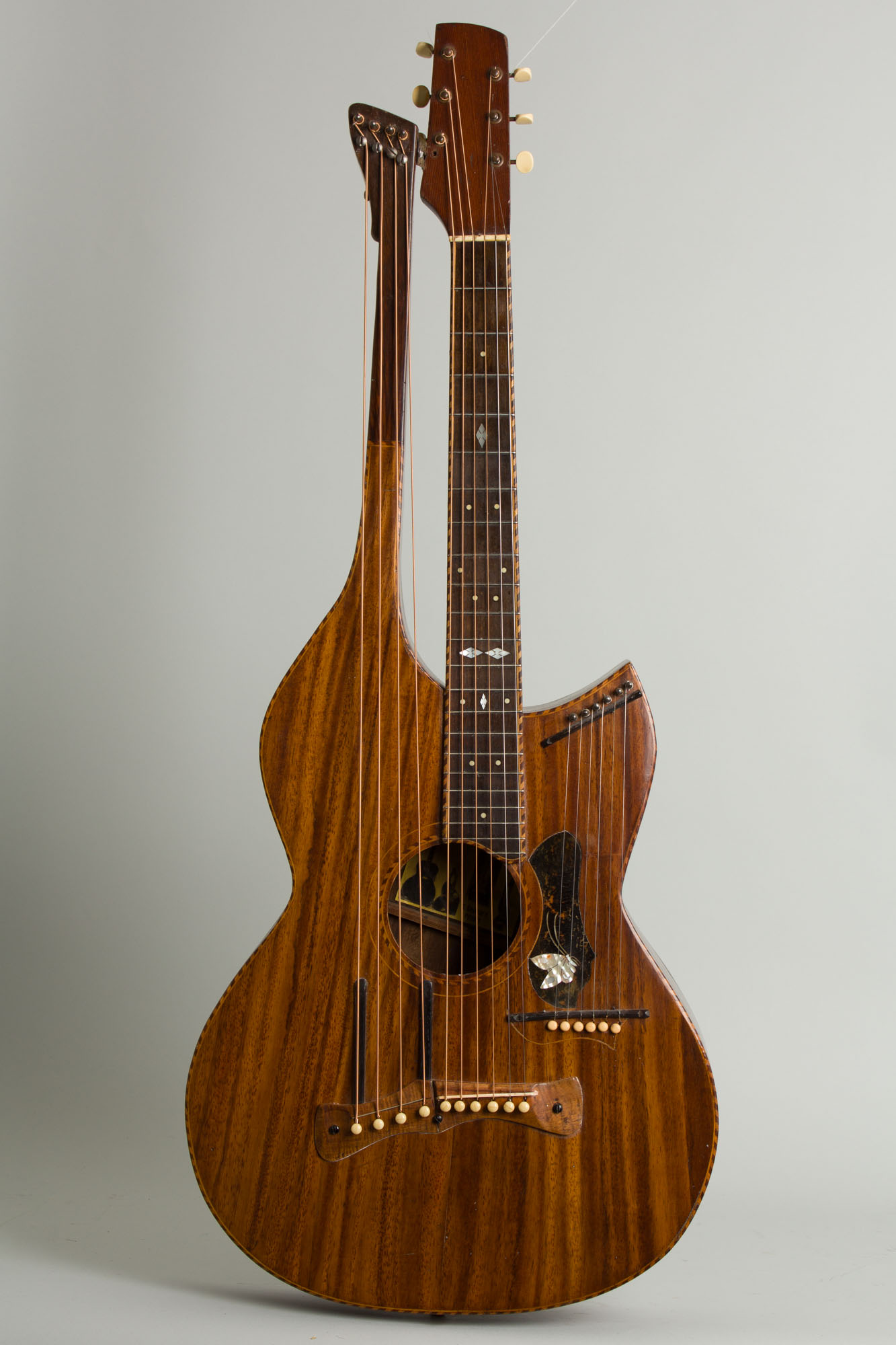
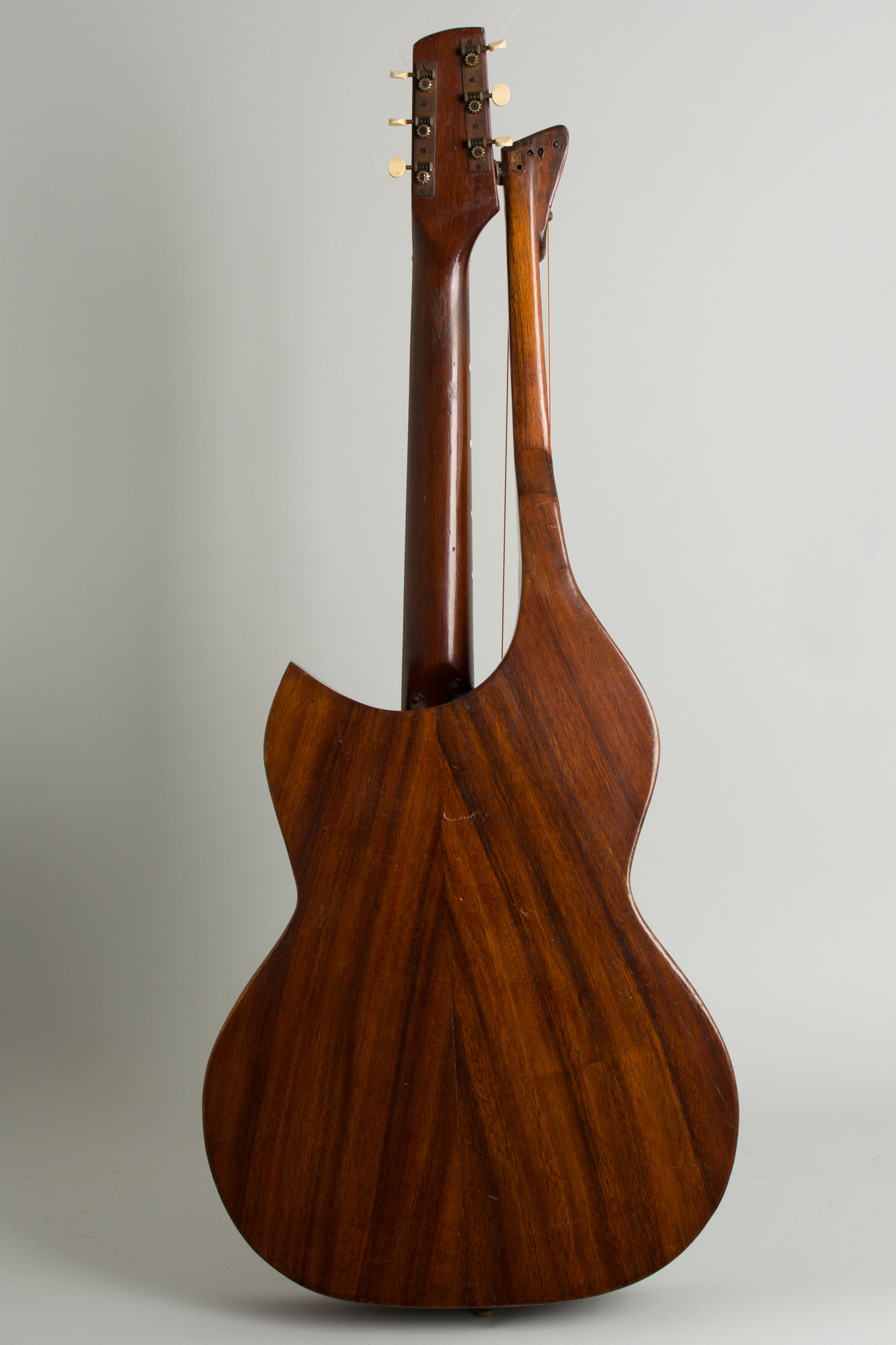

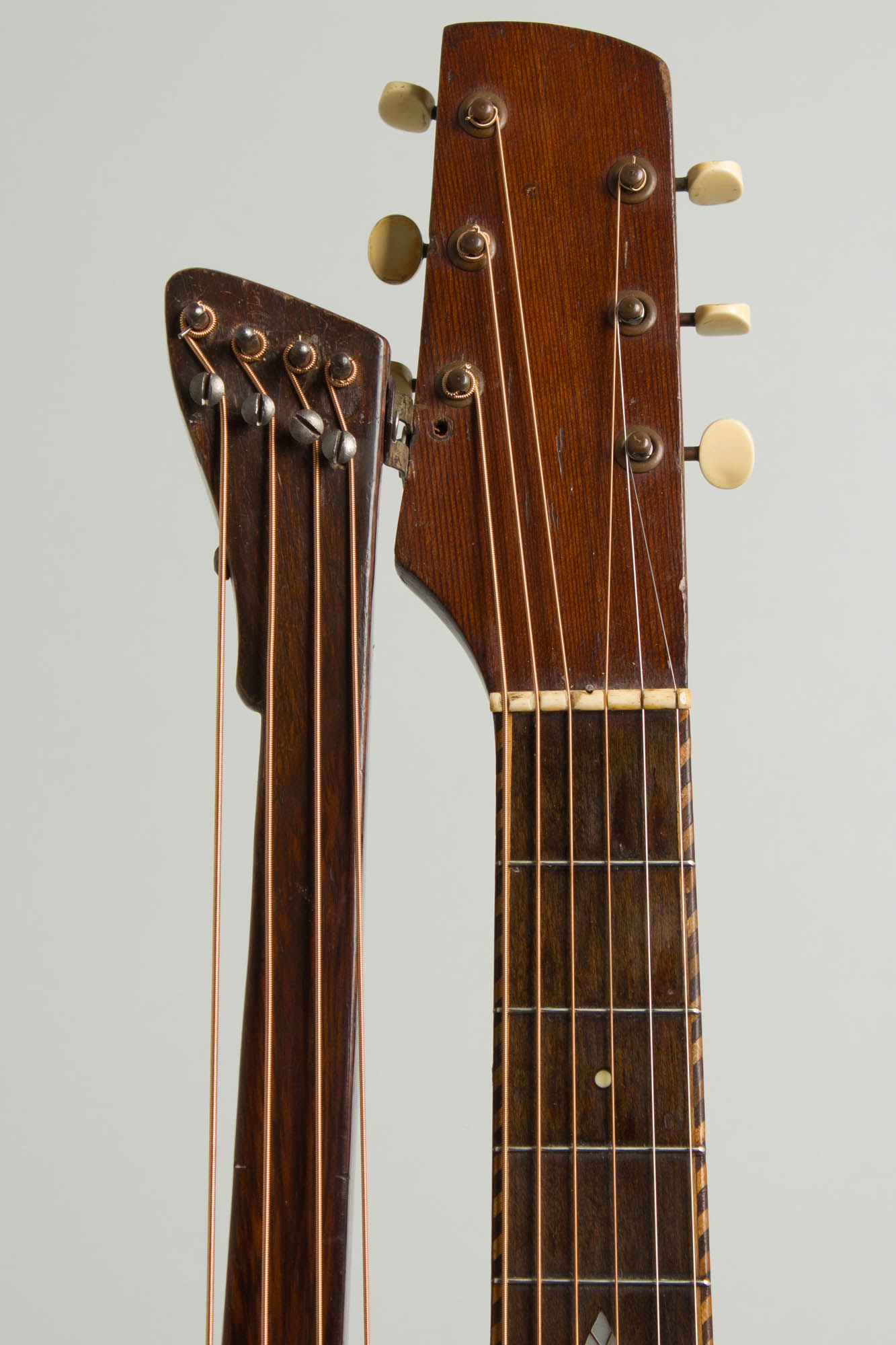
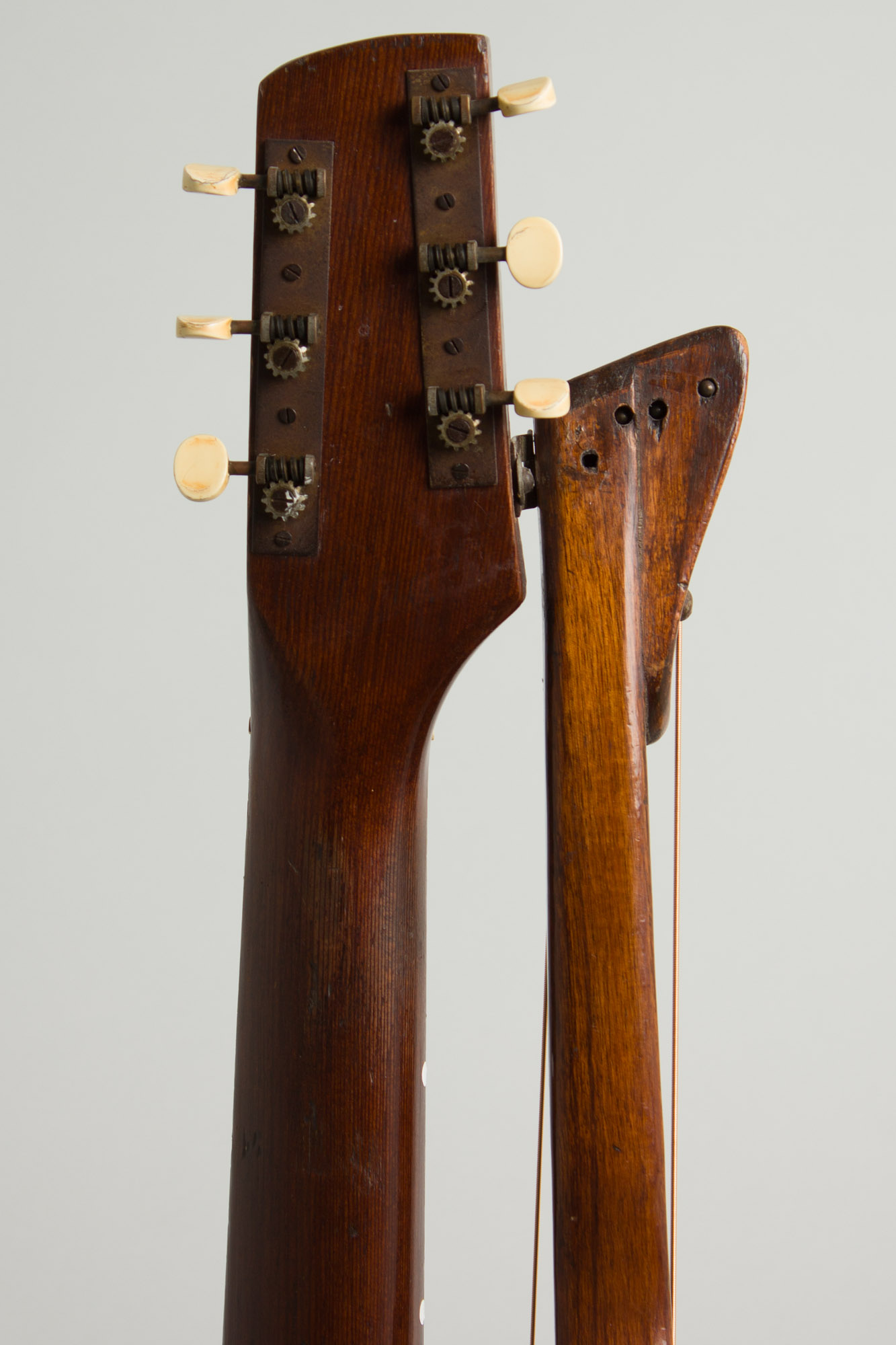
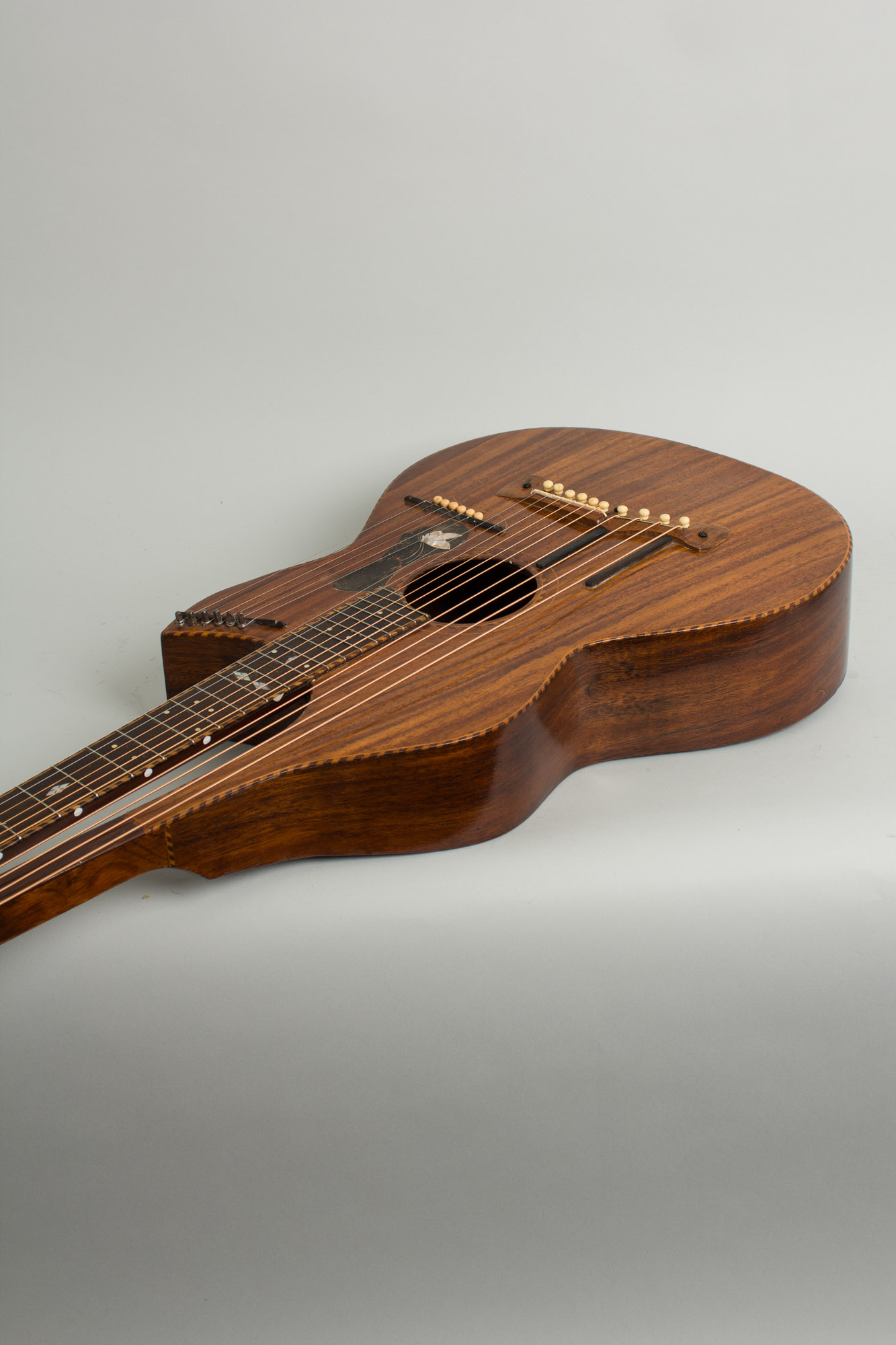

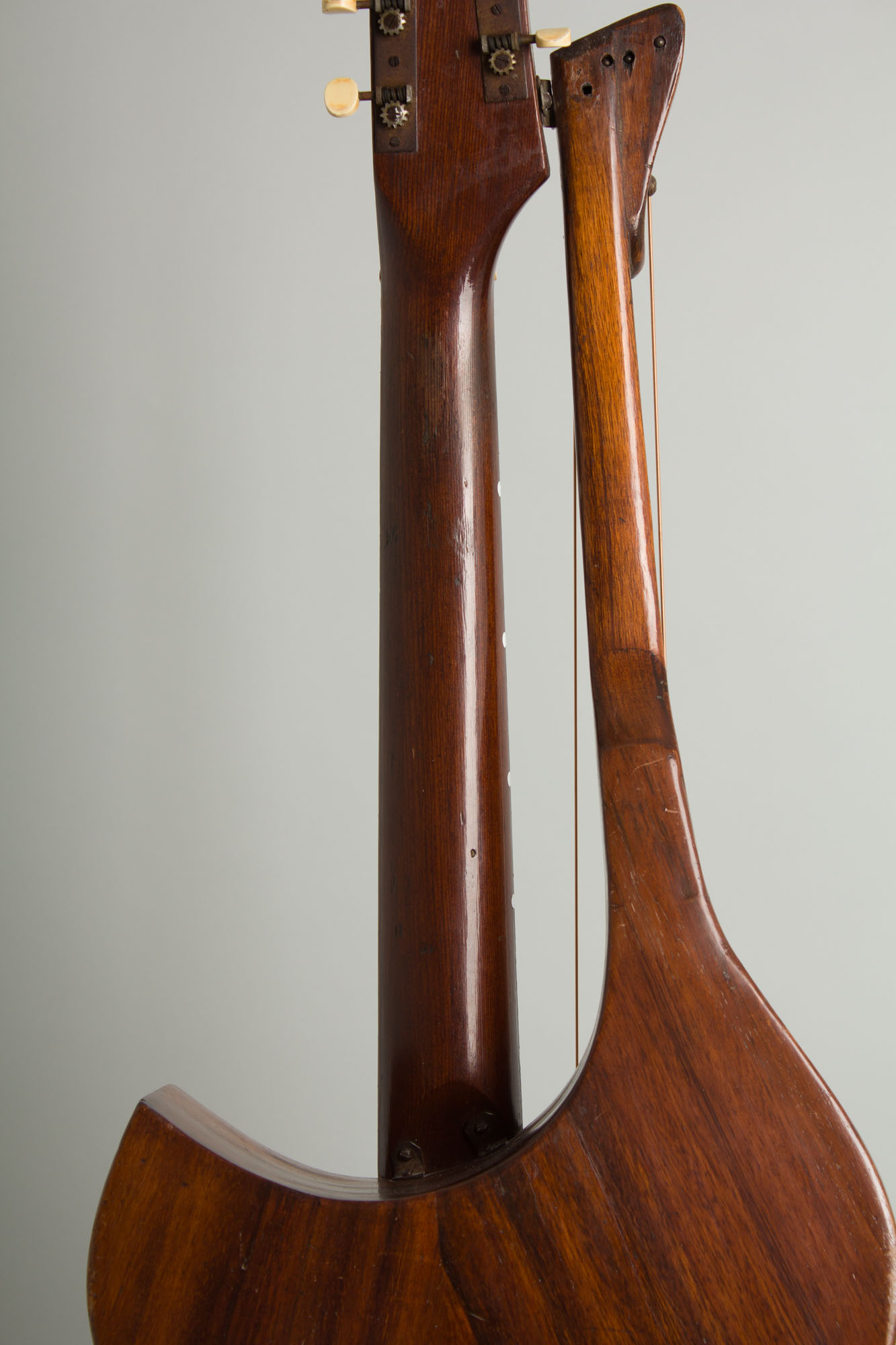
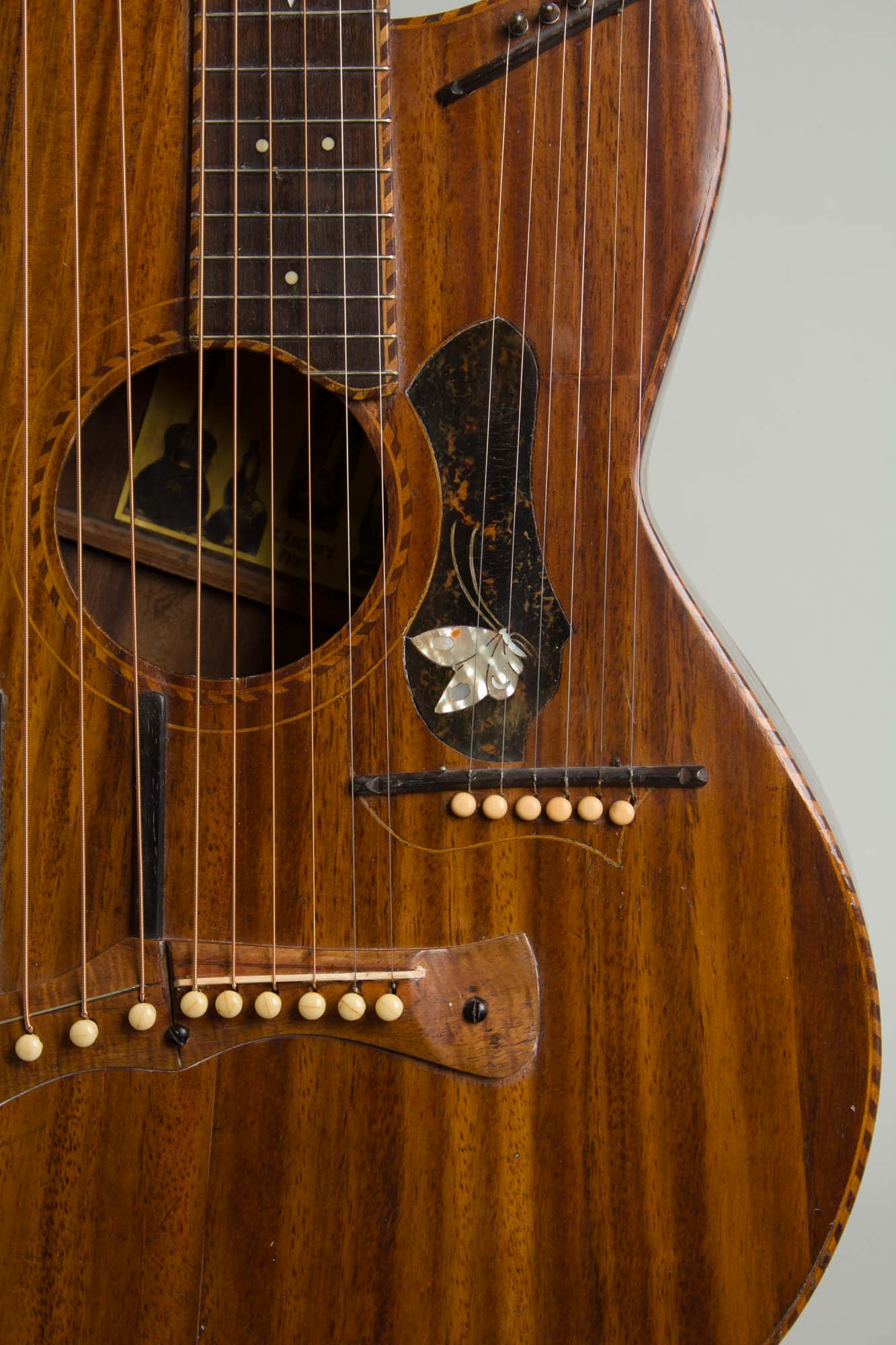
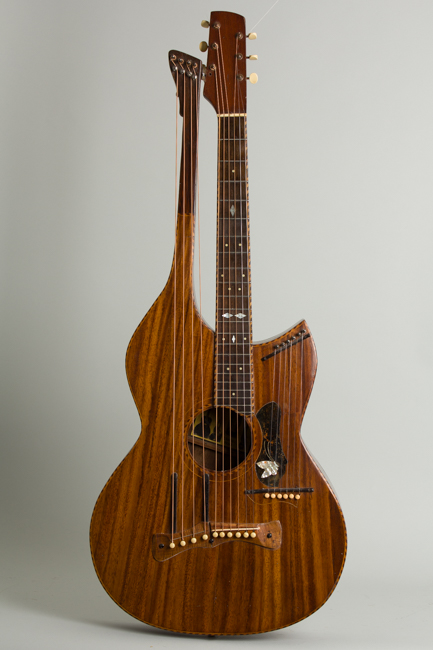
Knutsen 16 String Model Harp Guitar, c. 1914, made in Los Angeles, natural varnish finish, koa top, back and sides; Douglas fir neck with rosewood fingerboard, black gig bag case.
One of America's most creative (if least celebrated) early 20th century luthiers was Chris Knutsen, who hand-built his always amazingly eccentric instruments on the West Coast from the 1890s up into the 1920s. His original design for a hollow-neck Hawaiian guitar was popularized by Hermann Weissenborn and his Symphony Harp guitars perfected by the Larson Brothers (under the Dyer label), but Knutsen himself never made the leap from craftsman to full-scale manufacturer. He tinkered endlessly with unique and highly original stringed instrument concepts, coming up with one wildly eccentric instrument design after another. Each completely handmade instrument is distinctive, often appearing to be built from found woods and whatever hardware was available.
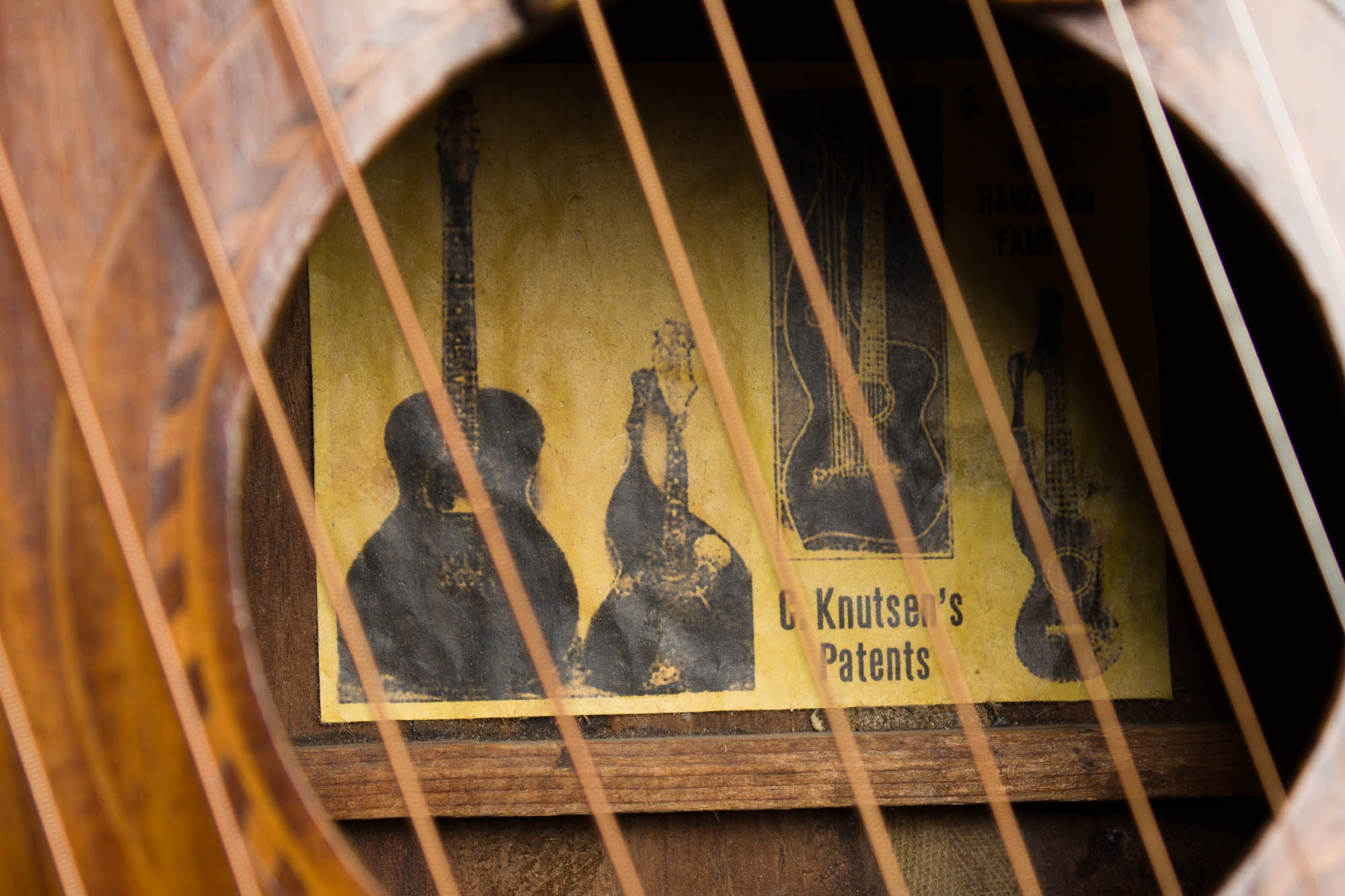
This 16" wide Harp guitar dates to soon after his move from Seattle to Los Angeles in 1914, towards the end of his fascination with these multi-sub-bass-string creations. It carries no date markings but the configuration and Hawaiian style wood trim mark it as built in the mid-teens when Knutsen's attentions had mostly begun shifting to lap-style instruments. An illustrated label under the soundhole pronounces this as part of "C. Knutsen's New Hawaiian Family" and indeed some genuine Hawaiian musicians were pictured playing Knutsen's creations in the 1910s. After well over 100+ years this remains a good sounding and quite playable example of Knutsen's work.
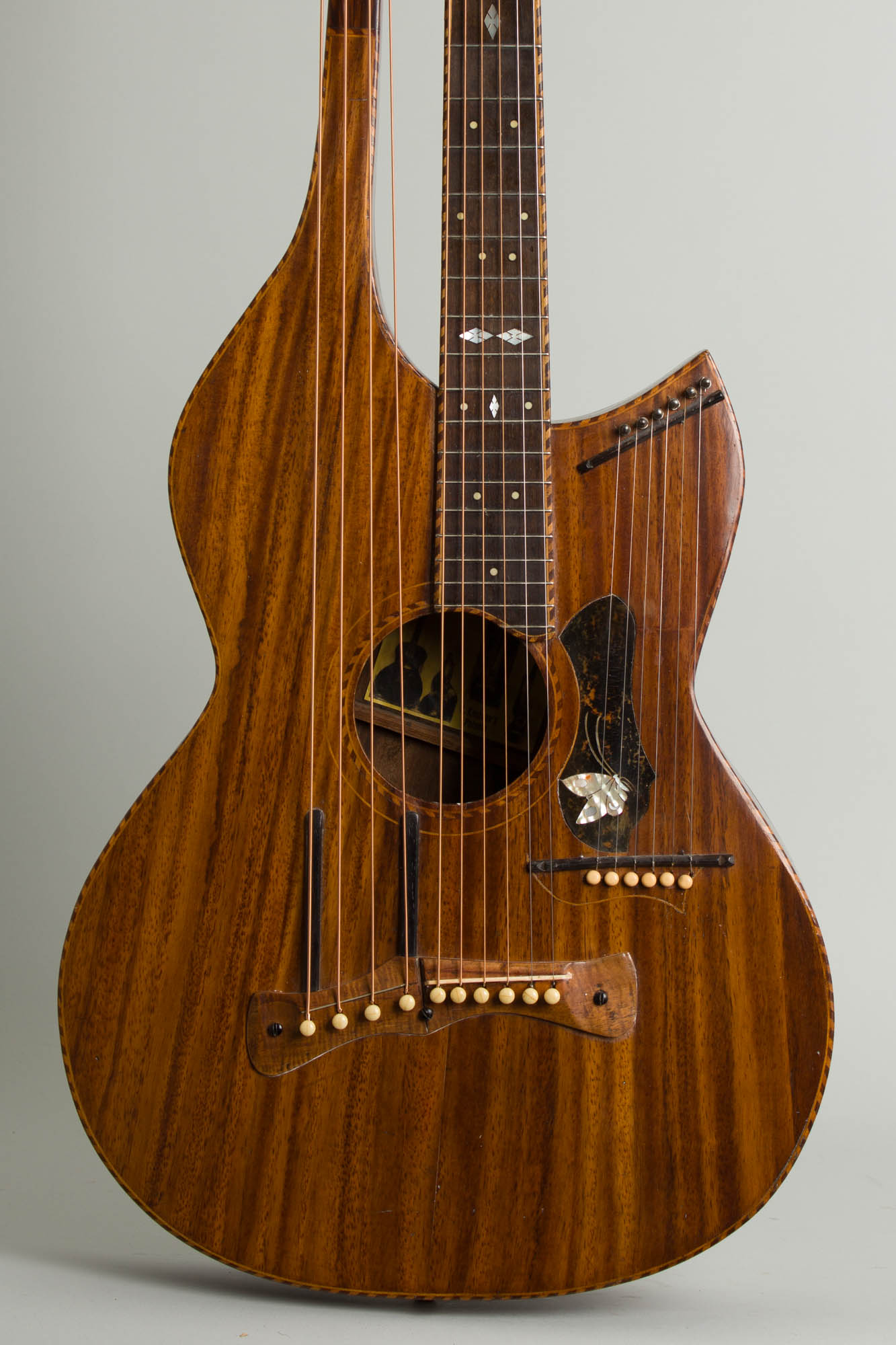
Practically everything about this guitar is unconventional. Except for a standard lower bout the lines are fluid to the point of abstract shape; even the headstocks have a liquid sculpture look. The 16"' wide body is large for the time and has many signature Knutsen features. The sharp pointed lower cutaway anchors six "super treble" strings, which run to their own small bridge ahead of the "main" bridge, secured by pins directly through the top. This treble array is a fairly rare feature even for Knutsen, seen on only a small proportion of his instruments. A small oblong tortoiseshell pickguard sits below these strings, decorated with a lovely pearl butterfly inlay.
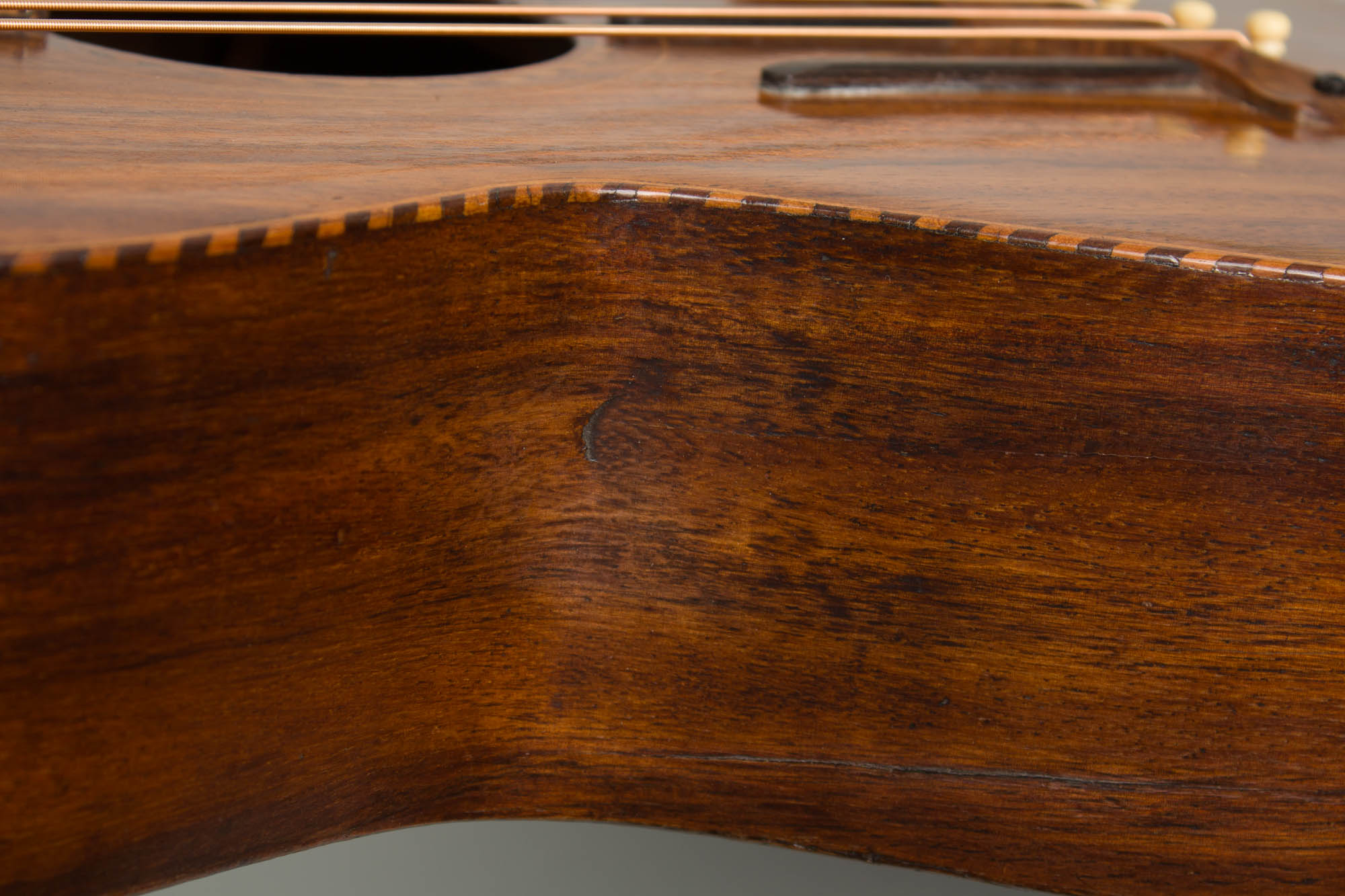
The extended arm above the neck holds a bank of 4 sub-bass strings. This is much slimmer with less hollow area the earlier "Symphony Harp" design, so the entire guitar is far less bulky and easier to handle. The 4 harp strings are tuned (like the super-trebles) with zither pegs, a light and cheap if not particularly user-friendly way of securing them. The top is bordered in alternating wood marquetry similar to Hawaiian ukes and guitars of the period and the fingerboard is elaborately trimmed the same way. The sound hole has multiple wooden rings and a similar "zipper" pattern rosette.
The round-backed one piece neck has an asymmetrical carve, thicker on the bass side. This idea has cropped up repeatedly over the last century tried by Gretsch in the 1940s and Rickenbacker in the '60s. The neck is secured to the body with screw brackets at the heel and headstock and is (to a limited degree) adjustable for angle, and topped by a well-decorated "zipper" bound rosewood fingerboard with mixed dots and pearl diamonds.
The bridge is a large abstract carved affair, the play strings have an added bone saddle while the adjacent harp strings retain the original fretwire saddle. There are two ebony struts glued to the top forward of the bridge under the outside bass strings adding support to the top; we cannot guarantee they are Knutsen's original work but appear to have been there a very long time and are the sort of thing he might well have done, especially if the instrument was returned for repair at some point. The three large bolts through the bridge ARE typical of Knutsen's work.
This is not a guitar for the conservative or faint-hearted player, but rewards the adventurous picker with a powerful and surprisingly sweet and versatile sound, even if the sub-bass and super-treble strings are ignored. Chris Knutsen was certainly one of the most original designers of fretted instruments in history, but his craftsmanship is somewhat uneven. The instruments of his early Los Angeles period are more "professionally" built than some of his creations (he may have had some help there!) and often are the best playing of his oeuvre; this guitar certainly bears this out.
Overall length is 39 in. (99.1 cm.), 16 in. (40.6 cm.) wide at lower bout, and 4 1/4 in. (10.8 cm.) in depth, measured at side of rim. Scale length is 25 1/2 in. (648 mm.). Width of nut is 1 3/4 in. (44 mm.).
Despite its wildly eccentric design this remains a surprisingly playable instrument, albeit an odd-feeling one. It sounds very nice with power and projection to spare and a more-useful-than-many sub-bass section, plus those zither-like treble strings. These are all more conveniently arrayed for the picking hand than some and with a little practice can be used to good effect.
The instrument is in structurally excellent condition and retains the original very thin varnish finish. This shows really pretty light wear for 110 or so years on Earth consisting of small dings, dents and scrapes but no wholesale loss. The back of the body has some deeper scrapes, the back of the neck has some wear through to the wood and a few feelable dings and dents.
There are a no top cracks, which is kind of amazing on a Knutsen, especially one with 16 strings! The vaguely A-pattern top bracing and bridgeplate are fully intact; these are-- literally -- little more than scraps of wood in some places but all remain intact and original with some cleats here and there also look original, as there are no cracks above them. There are a several old repaired cracks to both the treble and bass side waist areas that has been solidly but visibly sealed up, and a larger jagged split on the turn of the lower bass bout off the top edge. These appear due mostly to inherent instability in the large (and probably unseasoned) pieces of wood bent into shape for the sides, by the look of it somewhat reluctantly!
The fluidly shaped carved bridge is original, as are the large bolts securing it (another Knutsen trademark) while the bone saddle for the play strings is newer. The ebony reinforcing struts in front of the bridge are anyone's guess, but appear to have aided in keeping the top in one piece anyway. The original small bridges for the treble strings are held in place by pins, as is the nut; this all appears to be Knutsen's work. There is an extra screw hole in the headstock face below the low E tuner barrel; what this resulted from we do not know!
The frets and bone nut are original, and the neck is surprisingly straight and playable. The strip tuners on the six play strings remain original and work as well as they ever did, the original zither peg tuners for all the harp strings are intact, functional if not particularly convenient as a Zither wrench is required to tune them. This is one of the cleanest and most original of Chris Knutsen's off-the-wall masterpieces we have had, a spectacular looking instrument that is also good sounding and better playing than many. Many surviving Knutsen creations are interesting mostly as museum pieces, this is a functional instrument still suited to use by an adventurous player. There is no case but we were able to find a modern gig bag that is a functional if inexact fit. Overall Very Good + Condition.
One of America's most creative (if least celebrated) early 20th century luthiers was Chris Knutsen, who hand-built his always amazingly eccentric instruments on the West Coast from the 1890s up into the 1920s. His original design for a hollow-neck Hawaiian guitar was popularized by Hermann Weissenborn and his Symphony Harp guitars perfected by the Larson Brothers (under the Dyer label), but Knutsen himself never made the leap from craftsman to full-scale manufacturer. He tinkered endlessly with unique and highly original stringed instrument concepts, coming up with one wildly eccentric instrument design after another. Each completely handmade instrument is distinctive, often appearing to be built from found woods and whatever hardware was available.
This 16" wide Harp guitar dates to soon after his move from Seattle to Los Angeles in 1914, towards the end of his fascination with these multi-sub-bass-string creations. It carries no date markings but the configuration and Hawaiian style wood trim mark it as built in the mid-teens when Knutsen's attentions had mostly begun shifting to lap-style instruments. An illustrated label under the soundhole pronounces this as part of "C. Knutsen's New Hawaiian Family" and indeed some genuine Hawaiian musicians were pictured playing Knutsen's creations in the 1910s. After well over 100+ years this remains a good sounding and quite playable example of Knutsen's work.
Practically everything about this guitar is unconventional. Except for a standard lower bout the lines are fluid to the point of abstract shape; even the headstocks have a liquid sculpture look. The 16"' wide body is large for the time and has many signature Knutsen features. The sharp pointed lower cutaway anchors six "super treble" strings, which run to their own small bridge ahead of the "main" bridge, secured by pins directly through the top. This treble array is a fairly rare feature even for Knutsen, seen on only a small proportion of his instruments. A small oblong tortoiseshell pickguard sits below these strings, decorated with a lovely pearl butterfly inlay.
The extended arm above the neck holds a bank of 4 sub-bass strings. This is much slimmer with less hollow area the earlier "Symphony Harp" design, so the entire guitar is far less bulky and easier to handle. The 4 harp strings are tuned (like the super-trebles) with zither pegs, a light and cheap if not particularly user-friendly way of securing them. The top is bordered in alternating wood marquetry similar to Hawaiian ukes and guitars of the period and the fingerboard is elaborately trimmed the same way. The sound hole has multiple wooden rings and a similar "zipper" pattern rosette.
The round-backed one piece neck has an asymmetrical carve, thicker on the bass side. This idea has cropped up repeatedly over the last century tried by Gretsch in the 1940s and Rickenbacker in the '60s. The neck is secured to the body with screw brackets at the heel and headstock and is (to a limited degree) adjustable for angle, and topped by a well-decorated "zipper" bound rosewood fingerboard with mixed dots and pearl diamonds.
The bridge is a large abstract carved affair, the play strings have an added bone saddle while the adjacent harp strings retain the original fretwire saddle. There are two ebony struts glued to the top forward of the bridge under the outside bass strings adding support to the top; we cannot guarantee they are Knutsen's original work but appear to have been there a very long time and are the sort of thing he might well have done, especially if the instrument was returned for repair at some point. The three large bolts through the bridge ARE typical of Knutsen's work.
This is not a guitar for the conservative or faint-hearted player, but rewards the adventurous picker with a powerful and surprisingly sweet and versatile sound, even if the sub-bass and super-treble strings are ignored. Chris Knutsen was certainly one of the most original designers of fretted instruments in history, but his craftsmanship is somewhat uneven. The instruments of his early Los Angeles period are more "professionally" built than some of his creations (he may have had some help there!) and often are the best playing of his oeuvre; this guitar certainly bears this out.
Overall length is 39 in. (99.1 cm.), 16 in. (40.6 cm.) wide at lower bout, and 4 1/4 in. (10.8 cm.) in depth, measured at side of rim. Scale length is 25 1/2 in. (648 mm.). Width of nut is 1 3/4 in. (44 mm.).
Despite its wildly eccentric design this remains a surprisingly playable instrument, albeit an odd-feeling one. It sounds very nice with power and projection to spare and a more-useful-than-many sub-bass section, plus those zither-like treble strings. These are all more conveniently arrayed for the picking hand than some and with a little practice can be used to good effect.
The instrument is in structurally excellent condition and retains the original very thin varnish finish. This shows really pretty light wear for 110 or so years on Earth consisting of small dings, dents and scrapes but no wholesale loss. The back of the body has some deeper scrapes, the back of the neck has some wear through to the wood and a few feelable dings and dents.
There are a no top cracks, which is kind of amazing on a Knutsen, especially one with 16 strings! The vaguely A-pattern top bracing and bridgeplate are fully intact; these are-- literally -- little more than scraps of wood in some places but all remain intact and original with some cleats here and there also look original, as there are no cracks above them. There are a several old repaired cracks to both the treble and bass side waist areas that has been solidly but visibly sealed up, and a larger jagged split on the turn of the lower bass bout off the top edge. These appear due mostly to inherent instability in the large (and probably unseasoned) pieces of wood bent into shape for the sides, by the look of it somewhat reluctantly!
The fluidly shaped carved bridge is original, as are the large bolts securing it (another Knutsen trademark) while the bone saddle for the play strings is newer. The ebony reinforcing struts in front of the bridge are anyone's guess, but appear to have aided in keeping the top in one piece anyway. The original small bridges for the treble strings are held in place by pins, as is the nut; this all appears to be Knutsen's work. There is an extra screw hole in the headstock face below the low E tuner barrel; what this resulted from we do not know!
The frets and bone nut are original, and the neck is surprisingly straight and playable. The strip tuners on the six play strings remain original and work as well as they ever did, the original zither peg tuners for all the harp strings are intact, functional if not particularly convenient as a Zither wrench is required to tune them. This is one of the cleanest and most original of Chris Knutsen's off-the-wall masterpieces we have had, a spectacular looking instrument that is also good sounding and better playing than many. Many surviving Knutsen creations are interesting mostly as museum pieces, this is a functional instrument still suited to use by an adventurous player. There is no case but we were able to find a modern gig bag that is a functional if inexact fit. Overall Very Good + Condition.