Gretsch Synchromatic 300 Arch Top Acoustic Guitar (1946)

LOADING IMAGES

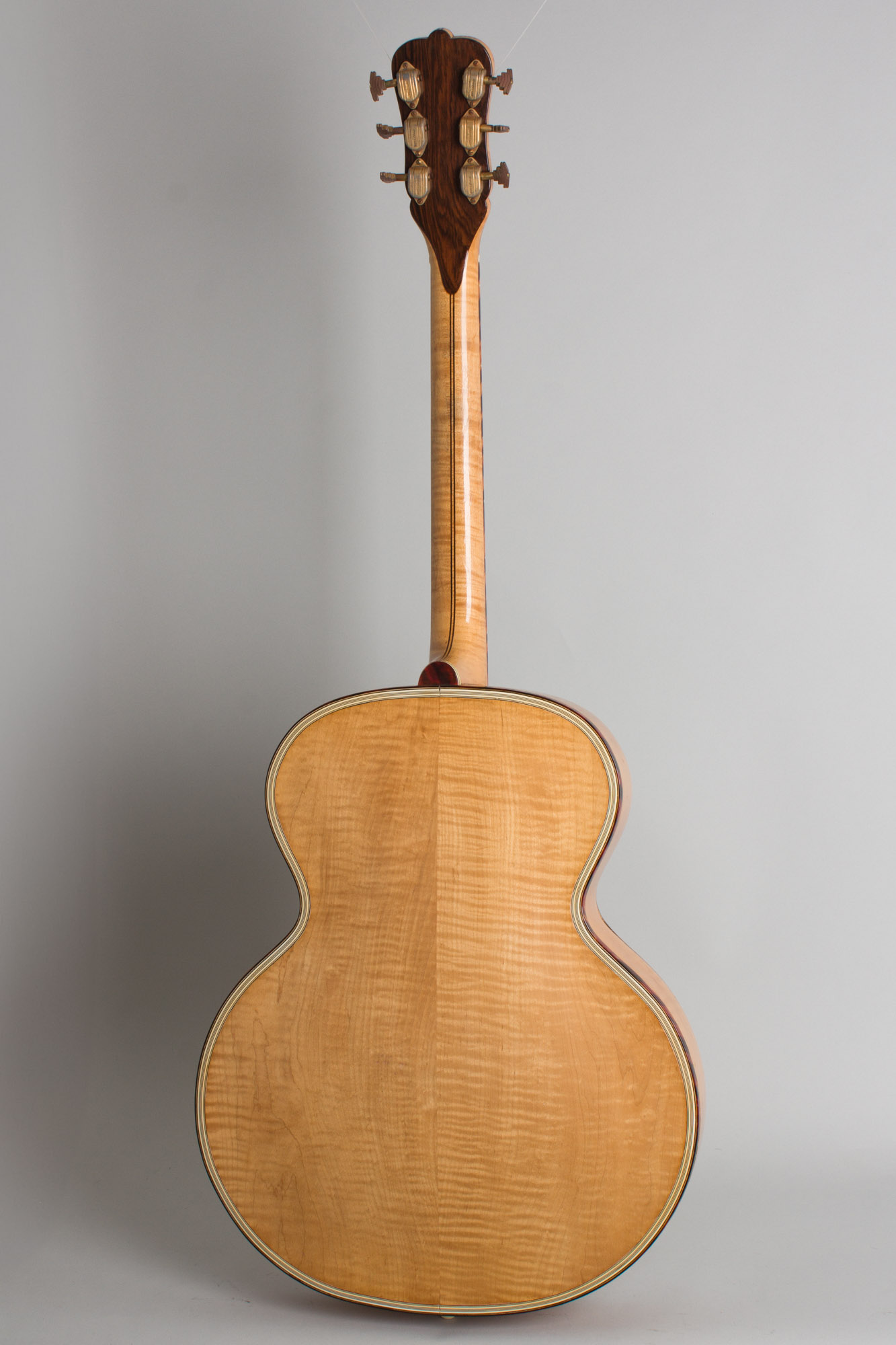

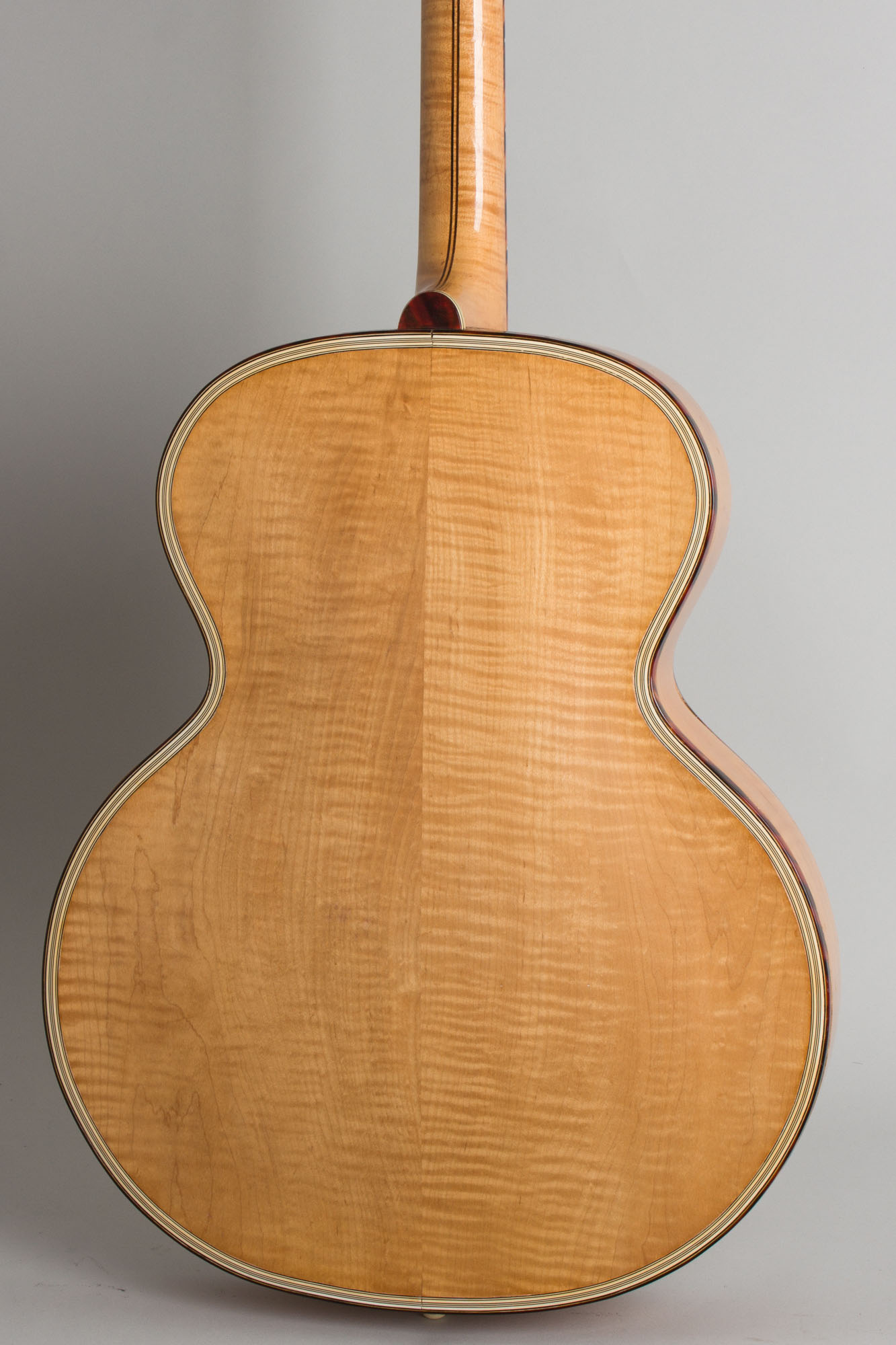
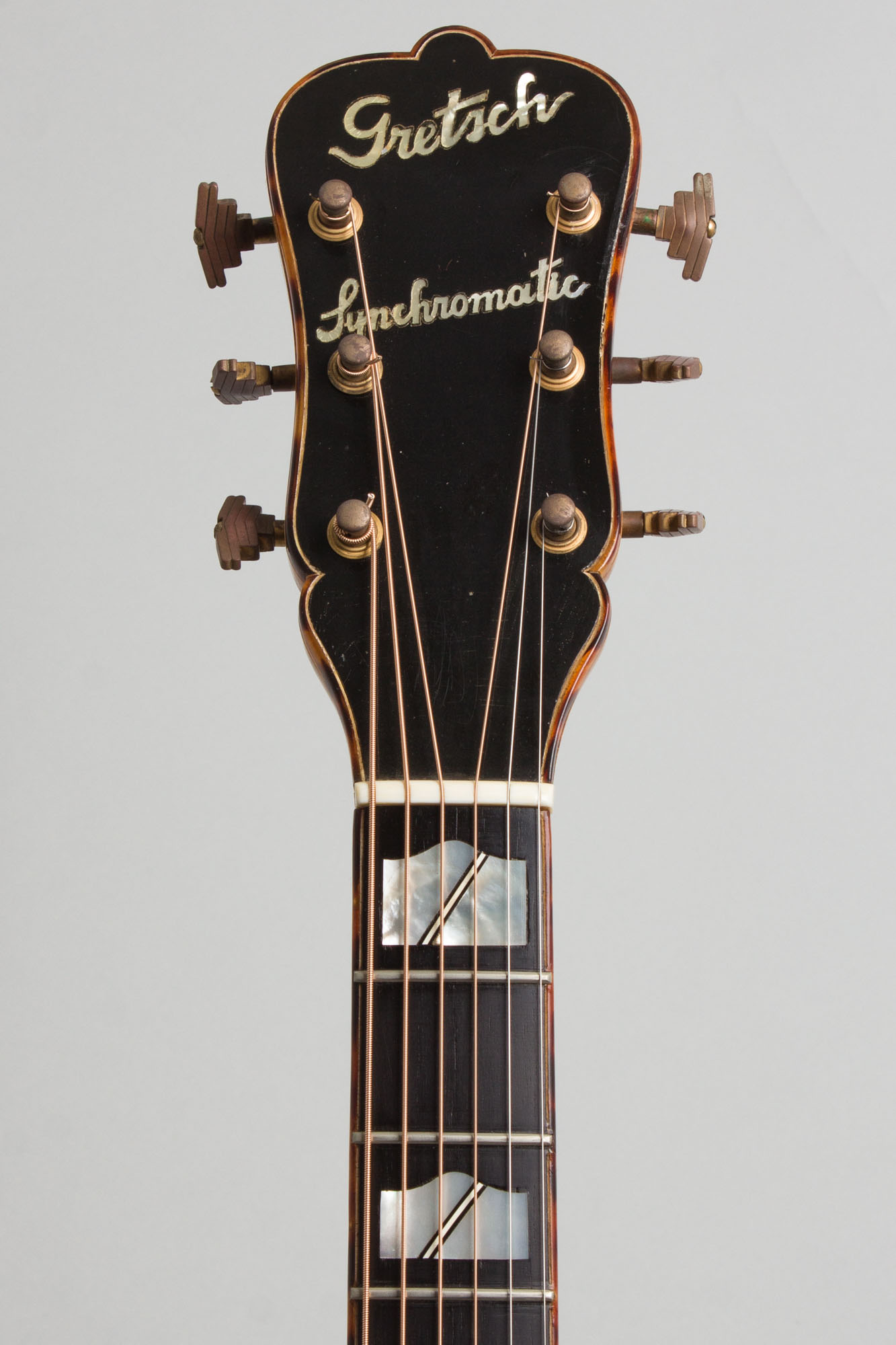
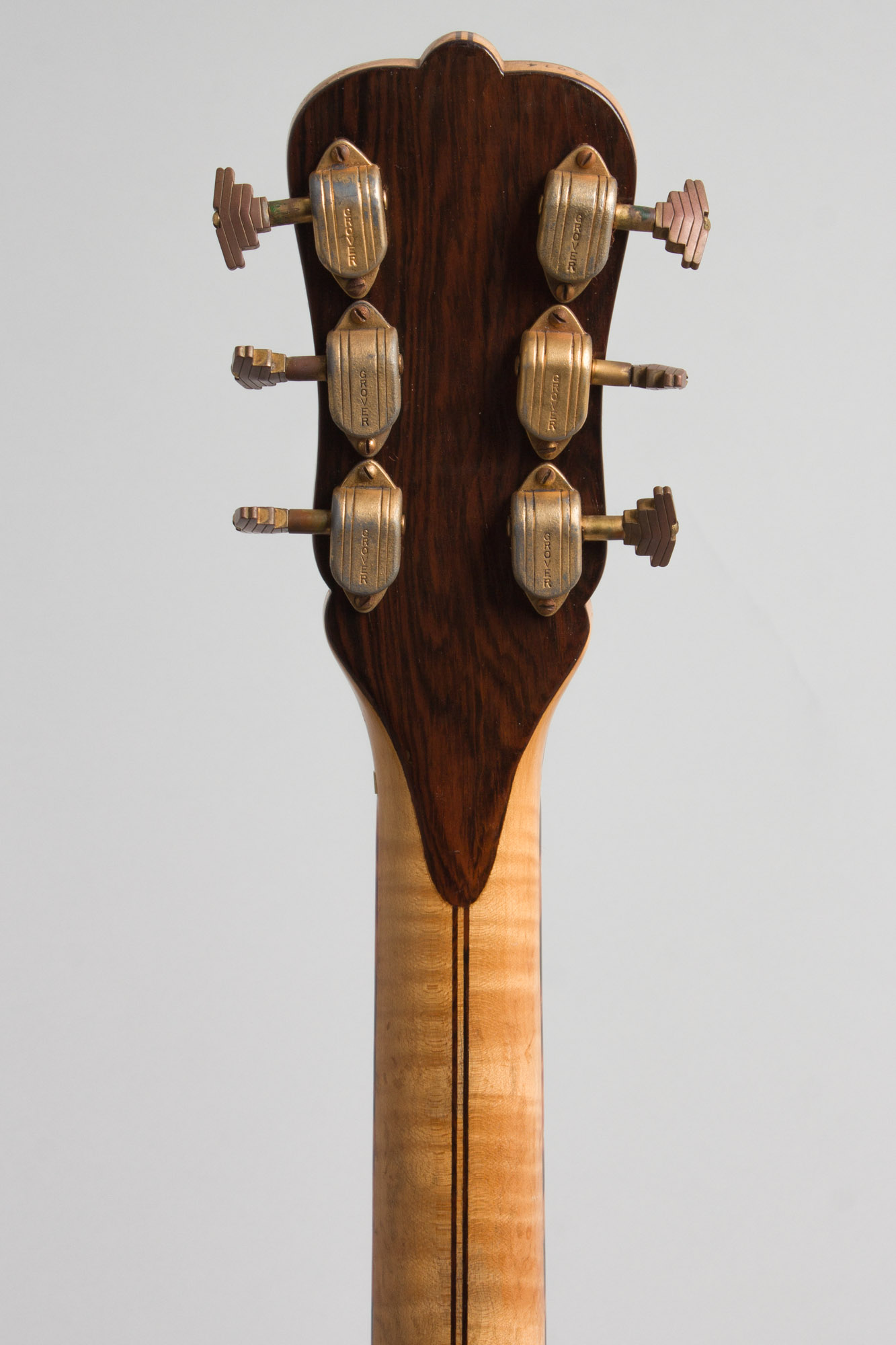

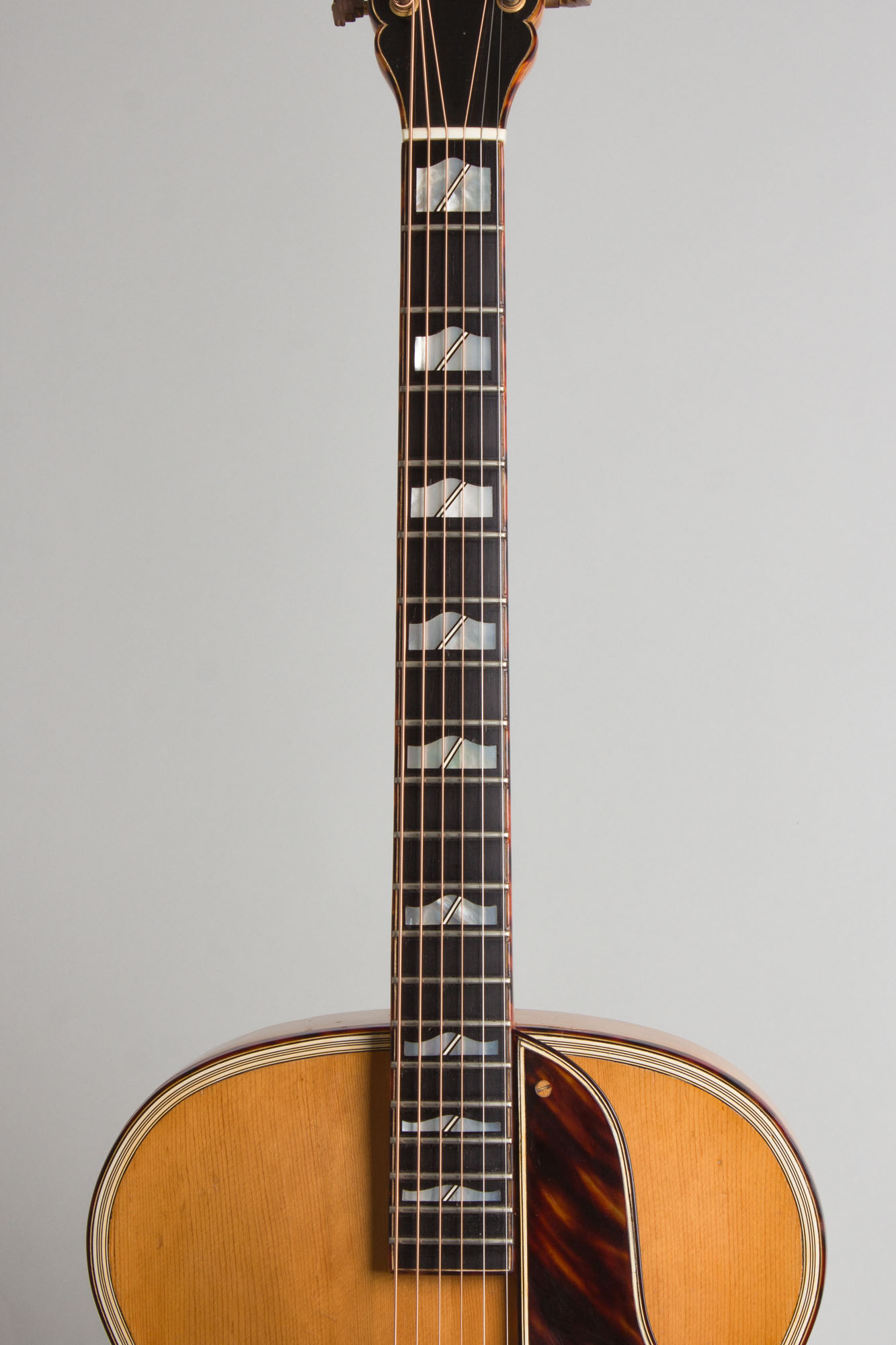
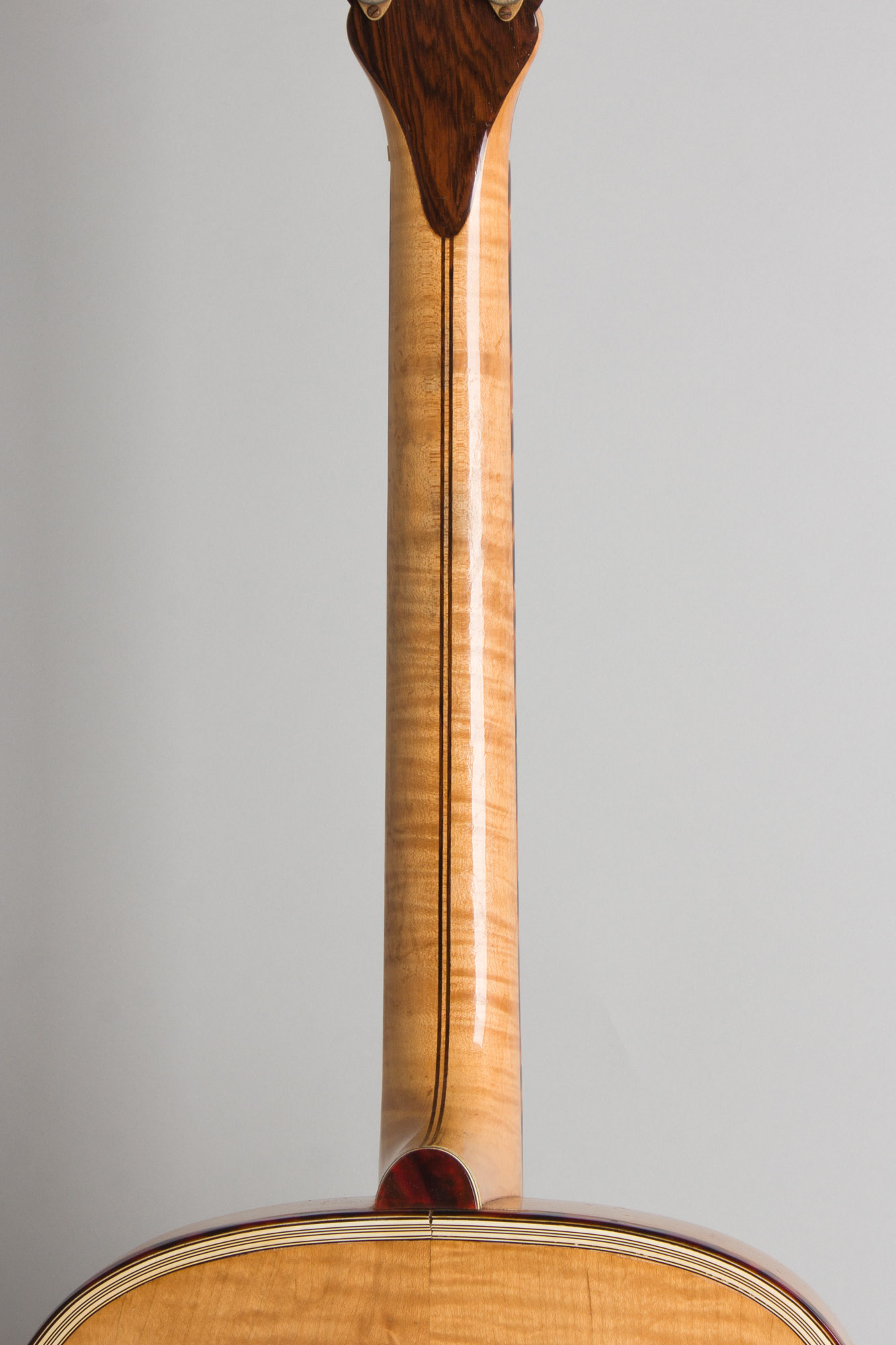
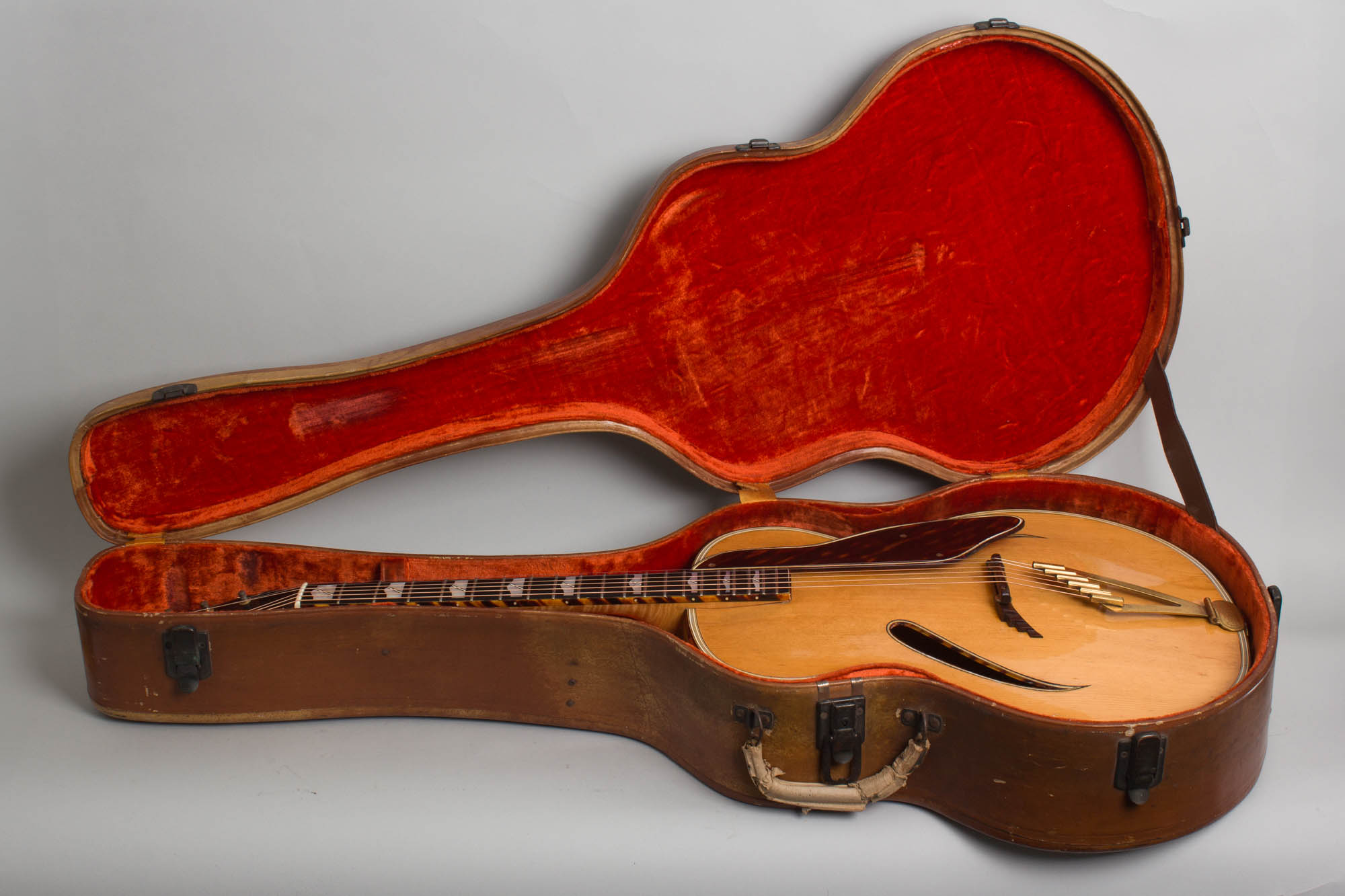
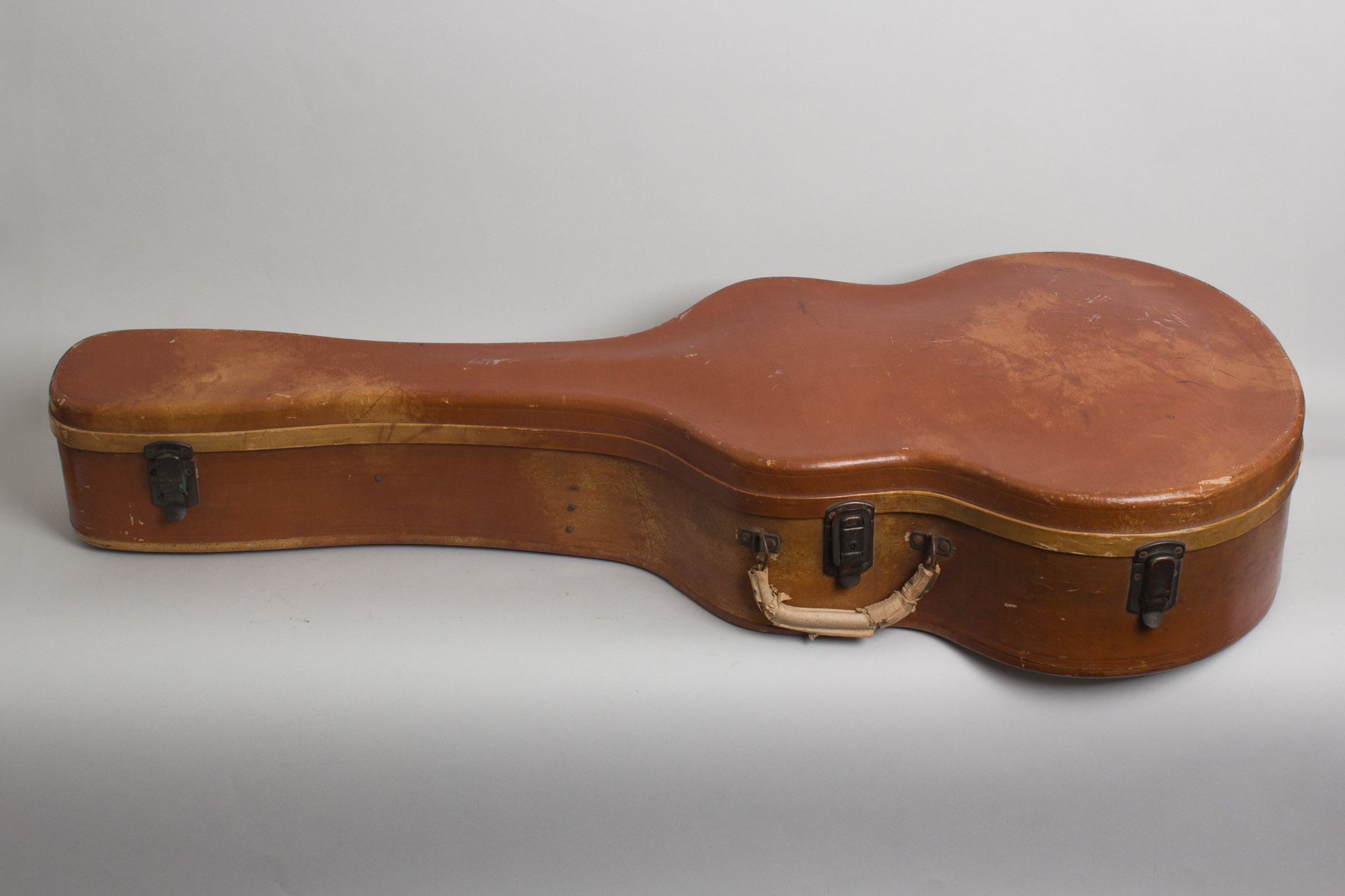
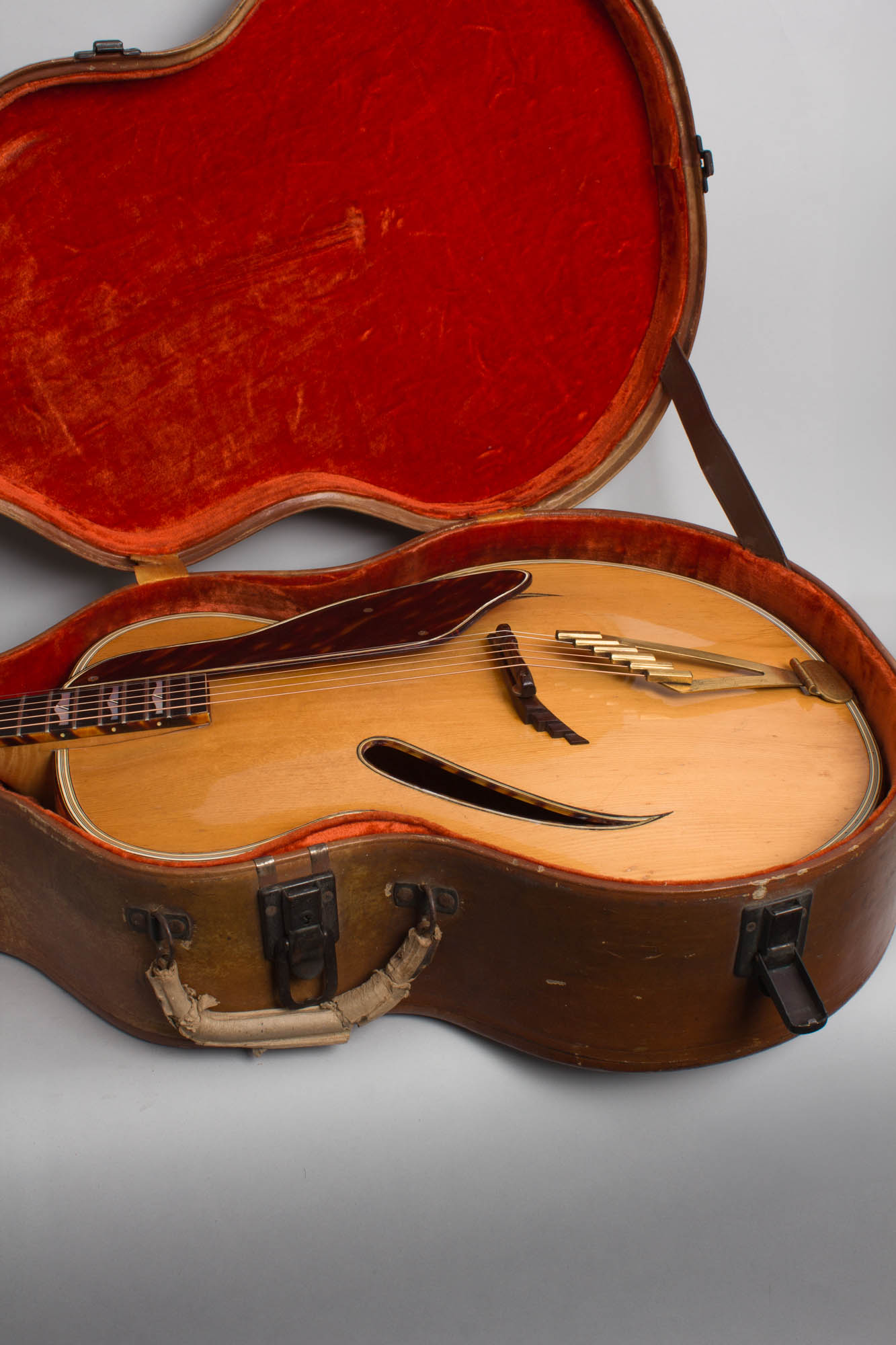
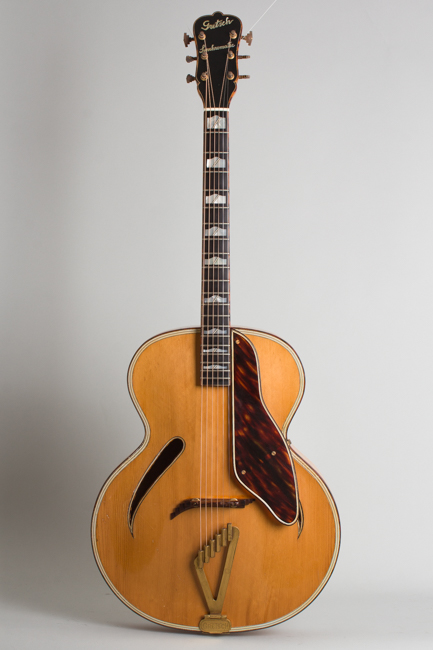
Gretsch Synchromatic 300 Model Arch Top Acoustic Guitar (1946), made in Brooklyn, NY, serial # 2014, natural lacquer finish, maple back, sides and neck;spruce top, ebony fingerboard, original brown hard shell case.
In the late 1930's Gretsch was an up-and-coming musical instrument company, and the professional guitar market was ruled by big, flashy acoustic archtops. The Brooklyn firm had built some decent guitars earlier in the decade but in 1939 threw their hat fully into the ring with some of the biggest and flashiest ever made. These were dubbed the "Synchromatic" line, and while the instruments never seriously rivaled Gibson or Epiphone in sales they remain singular creations, unlike anything before or since.
The Synchromatics are idiosyncratic in every way, built around features Gretsch termed "7 points of supremacy" and both visually and structurally a departure from anything previously offered anywhere. The "7 Points" touted the "non-pressure neck", "Streamlined tone holes", "Chromatic tailpiece" and "Synchronized bridge "as the most distinctive advantages, alongside more prosaic features like the finish and 3-year guarantee. The line was introduced in 1939 but the advent of WWII meant that Gretsch was a bit late to the archtop party, and production on the 4-model professional Synchromatic line (models 400, 300, 200 and 160) was extremely limited. Some were finished out and sold after the war (this one included) and the higher end models were still cataloged by Gretsch up through 1949, this blonde Model 300 listed at $325 including the Deluxe case.
This gleaming blonde Synchromatic 300 is a visually stunning guitar, but no slouch in the sound department either. At 17 1/8" wide the body is larger than the competing Gibson L-5 and close to the contemporary Epiphone Deluxe, the two models it directly competed with at a $300 list price. At 26" the scale length is longer than either, adding extra depth to the sound. The "Miracle neck" is quite slim with a slightly asymmetrical round-backed contour, built up with multiple layers of wood laminates under the fingerboard that Gretsch called "pregwood". The straight-grained top is carved fairly thin and has delicately sculpted parallel bracing resulting in a very lively sound. The large "Cat's Eye" soundholes are an uttetly distinctive feature, although Willi Wilkanowski (also in Brooklyn and sometime Gretsch contractor) used a variation on his guitars as well.
This guitar has many layers of binding everywhere with a striking boldly grained tortoise celluloid outer layer, including the "Light bulb" headstock, extended pickguard and ebony fingerboard, which has shaped split block inlay. The gold-plated tuners are the pre-war style Grover Imperials considered the best available the same time. The original "Synchronized" carved rosewood bridge and "Chromatic" harp-like tailpiece are stylish deco sculptures in their own right. This guitar plays very well and sounds fabulous, simply a superb Brooklyn rarity and one of the most individual and unique of all 1940s archtops.
Overall length is 43 in. (109.2 cm.), 17 1/8 in. (43.5 cm.) wide at lower bout, and 3 3/8 in. (8.6 cm.) in depth, measured at side of rim. Scale length is 26 in. (660 mm.). Width of nut is 1 11/16 in. (43 mm.).
This guitar is easily the best preserved of this very rare model we have ever seen. The original natural finish has general wear overall with typical scratches, dings and scuffs, most heavily on the top. There are some spots worn through along the back-side seam around the endpin and heavier wear to the back of the neck. The elaborate multi-layer celluloid binding on the body, neck and headstock appears original; it has been reglued in some spots, notably around the soundholes and the lower rim of the top. Some finish disturbance can be seen around the top edge where the binding meets the spruce, but this is not overly conspicuous. It is VERY rare to find one of these early Synchromatics where large sections of binding have not deteriorated badly or been completely replaced.
There is only one area of crack repairs evident, a few small spruce grain splits to the top coming off the curve of the back edge below the tailpiece. All of the hardware is original and complete including the oft-missing pickguard. There is some typical wear to the gold plating, most heavily on some of the tuners.
This guitar appears to have been refretted although the wire is close to original spec.; these originally had larger frets than most period guitars. The work is clean and there is minimal subsequent wear to the wire. The neck angle is very good; we would assume it to have been reset although there are no noticeable marks evident from this work. The neck itself is quite straight and playability is excellent. This beautiful blonde Synchromatic 300 is a real statement guitar; perhaps not for the faint of heart but a distinctive showpiece for the player with a taste for the unique. It is complete in a very nicely preserved deluxe OHSC; the paper-and-leather original handle has partially crumbled but can be replaced if desired. Overall Excellent - Condition.
In the late 1930's Gretsch was an up-and-coming musical instrument company, and the professional guitar market was ruled by big, flashy acoustic archtops. The Brooklyn firm had built some decent guitars earlier in the decade but in 1939 threw their hat fully into the ring with some of the biggest and flashiest ever made. These were dubbed the "Synchromatic" line, and while the instruments never seriously rivaled Gibson or Epiphone in sales they remain singular creations, unlike anything before or since.
The Synchromatics are idiosyncratic in every way, built around features Gretsch termed "7 points of supremacy" and both visually and structurally a departure from anything previously offered anywhere. The "7 Points" touted the "non-pressure neck", "Streamlined tone holes", "Chromatic tailpiece" and "Synchronized bridge "as the most distinctive advantages, alongside more prosaic features like the finish and 3-year guarantee. The line was introduced in 1939 but the advent of WWII meant that Gretsch was a bit late to the archtop party, and production on the 4-model professional Synchromatic line (models 400, 300, 200 and 160) was extremely limited. Some were finished out and sold after the war (this one included) and the higher end models were still cataloged by Gretsch up through 1949, this blonde Model 300 listed at $325 including the Deluxe case.
This gleaming blonde Synchromatic 300 is a visually stunning guitar, but no slouch in the sound department either. At 17 1/8" wide the body is larger than the competing Gibson L-5 and close to the contemporary Epiphone Deluxe, the two models it directly competed with at a $300 list price. At 26" the scale length is longer than either, adding extra depth to the sound. The "Miracle neck" is quite slim with a slightly asymmetrical round-backed contour, built up with multiple layers of wood laminates under the fingerboard that Gretsch called "pregwood". The straight-grained top is carved fairly thin and has delicately sculpted parallel bracing resulting in a very lively sound. The large "Cat's Eye" soundholes are an uttetly distinctive feature, although Willi Wilkanowski (also in Brooklyn and sometime Gretsch contractor) used a variation on his guitars as well.
This guitar has many layers of binding everywhere with a striking boldly grained tortoise celluloid outer layer, including the "Light bulb" headstock, extended pickguard and ebony fingerboard, which has shaped split block inlay. The gold-plated tuners are the pre-war style Grover Imperials considered the best available the same time. The original "Synchronized" carved rosewood bridge and "Chromatic" harp-like tailpiece are stylish deco sculptures in their own right. This guitar plays very well and sounds fabulous, simply a superb Brooklyn rarity and one of the most individual and unique of all 1940s archtops.
Overall length is 43 in. (109.2 cm.), 17 1/8 in. (43.5 cm.) wide at lower bout, and 3 3/8 in. (8.6 cm.) in depth, measured at side of rim. Scale length is 26 in. (660 mm.). Width of nut is 1 11/16 in. (43 mm.).
This guitar is easily the best preserved of this very rare model we have ever seen. The original natural finish has general wear overall with typical scratches, dings and scuffs, most heavily on the top. There are some spots worn through along the back-side seam around the endpin and heavier wear to the back of the neck. The elaborate multi-layer celluloid binding on the body, neck and headstock appears original; it has been reglued in some spots, notably around the soundholes and the lower rim of the top. Some finish disturbance can be seen around the top edge where the binding meets the spruce, but this is not overly conspicuous. It is VERY rare to find one of these early Synchromatics where large sections of binding have not deteriorated badly or been completely replaced.
There is only one area of crack repairs evident, a few small spruce grain splits to the top coming off the curve of the back edge below the tailpiece. All of the hardware is original and complete including the oft-missing pickguard. There is some typical wear to the gold plating, most heavily on some of the tuners.
This guitar appears to have been refretted although the wire is close to original spec.; these originally had larger frets than most period guitars. The work is clean and there is minimal subsequent wear to the wire. The neck angle is very good; we would assume it to have been reset although there are no noticeable marks evident from this work. The neck itself is quite straight and playability is excellent. This beautiful blonde Synchromatic 300 is a real statement guitar; perhaps not for the faint of heart but a distinctive showpiece for the player with a taste for the unique. It is complete in a very nicely preserved deluxe OHSC; the paper-and-leather original handle has partially crumbled but can be replaced if desired. Overall Excellent - Condition.