D'Angelico Scroll Headstock Carved Top Mandolin (1942)

LOADING IMAGES
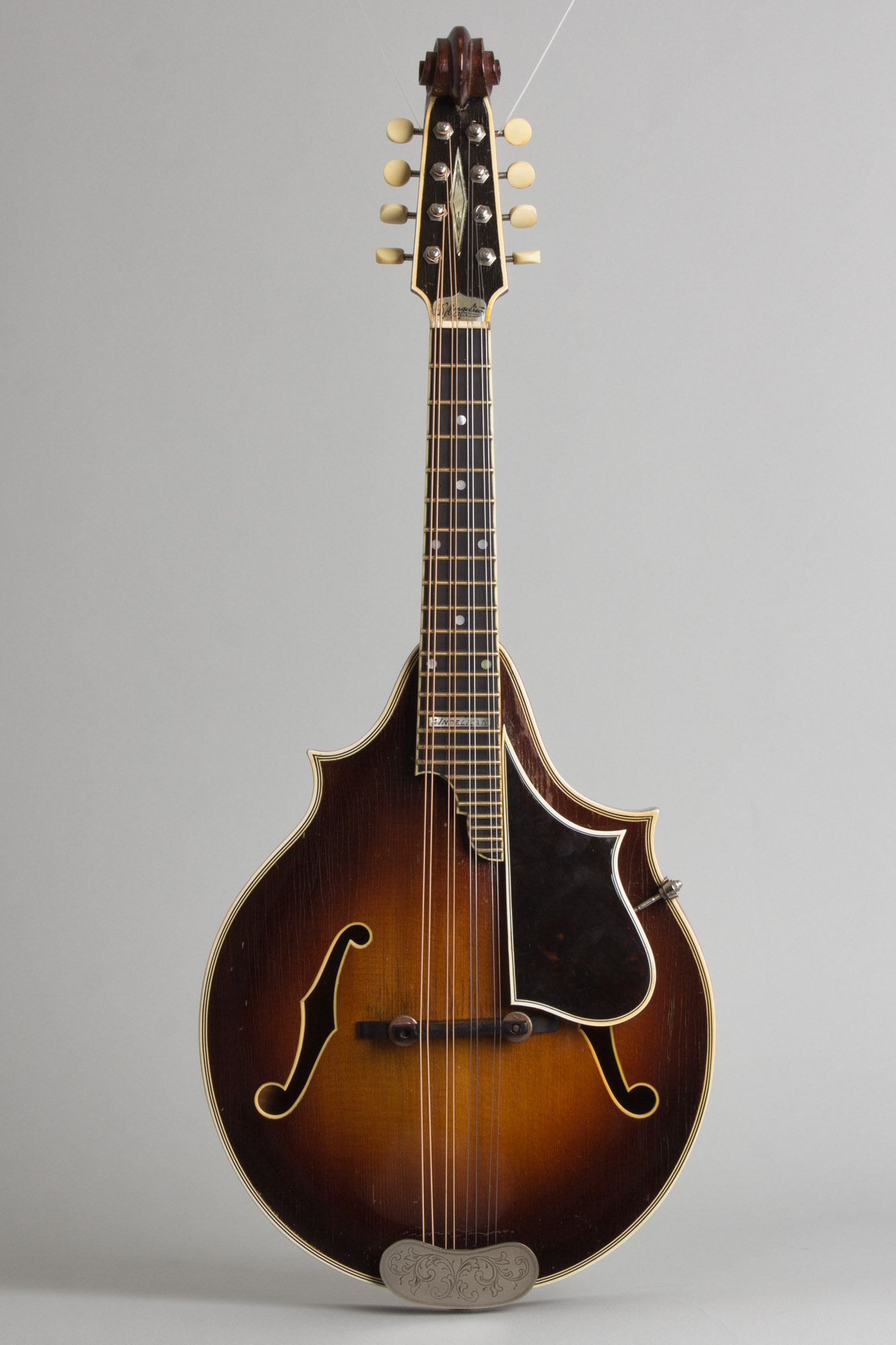
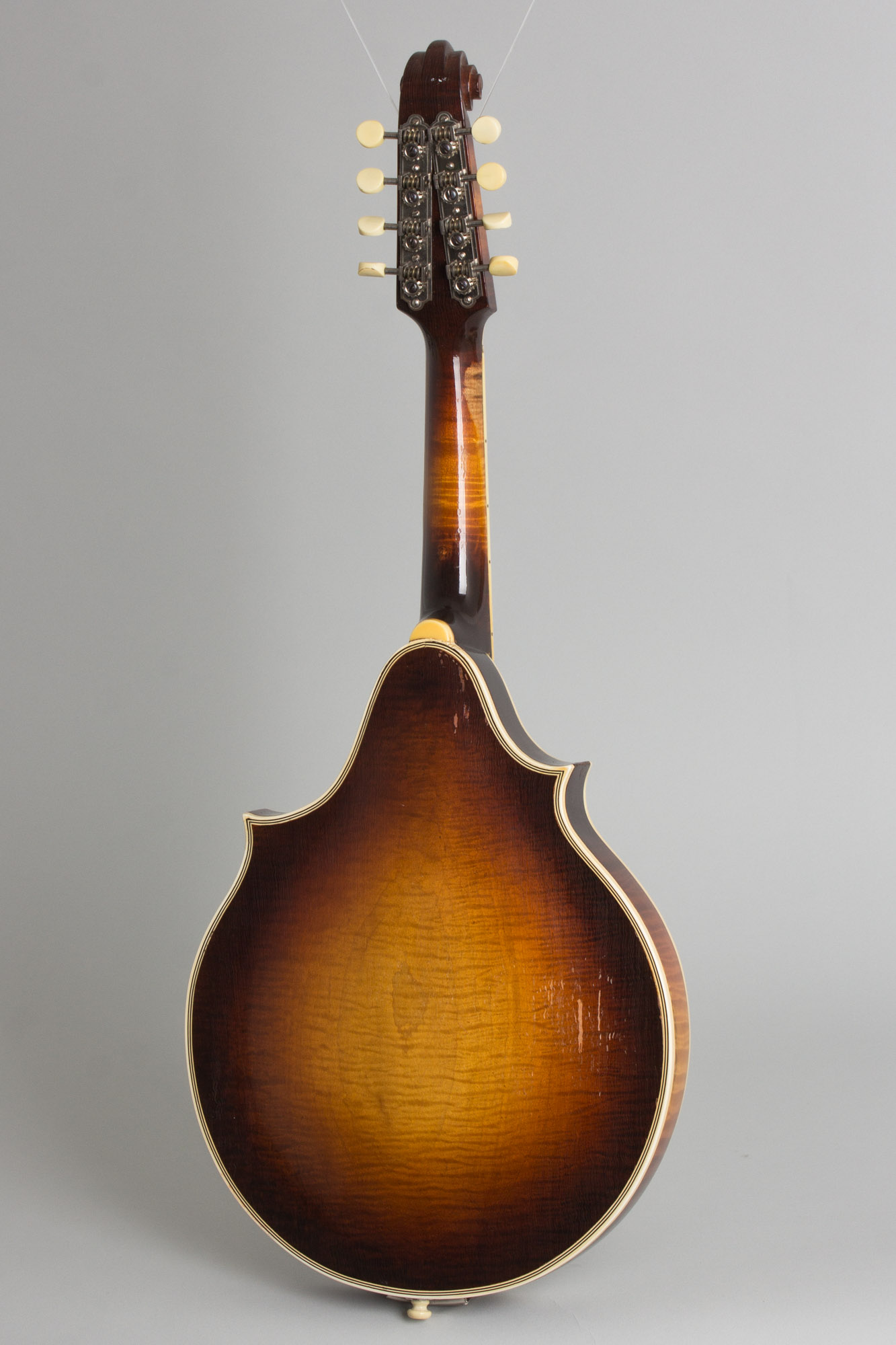
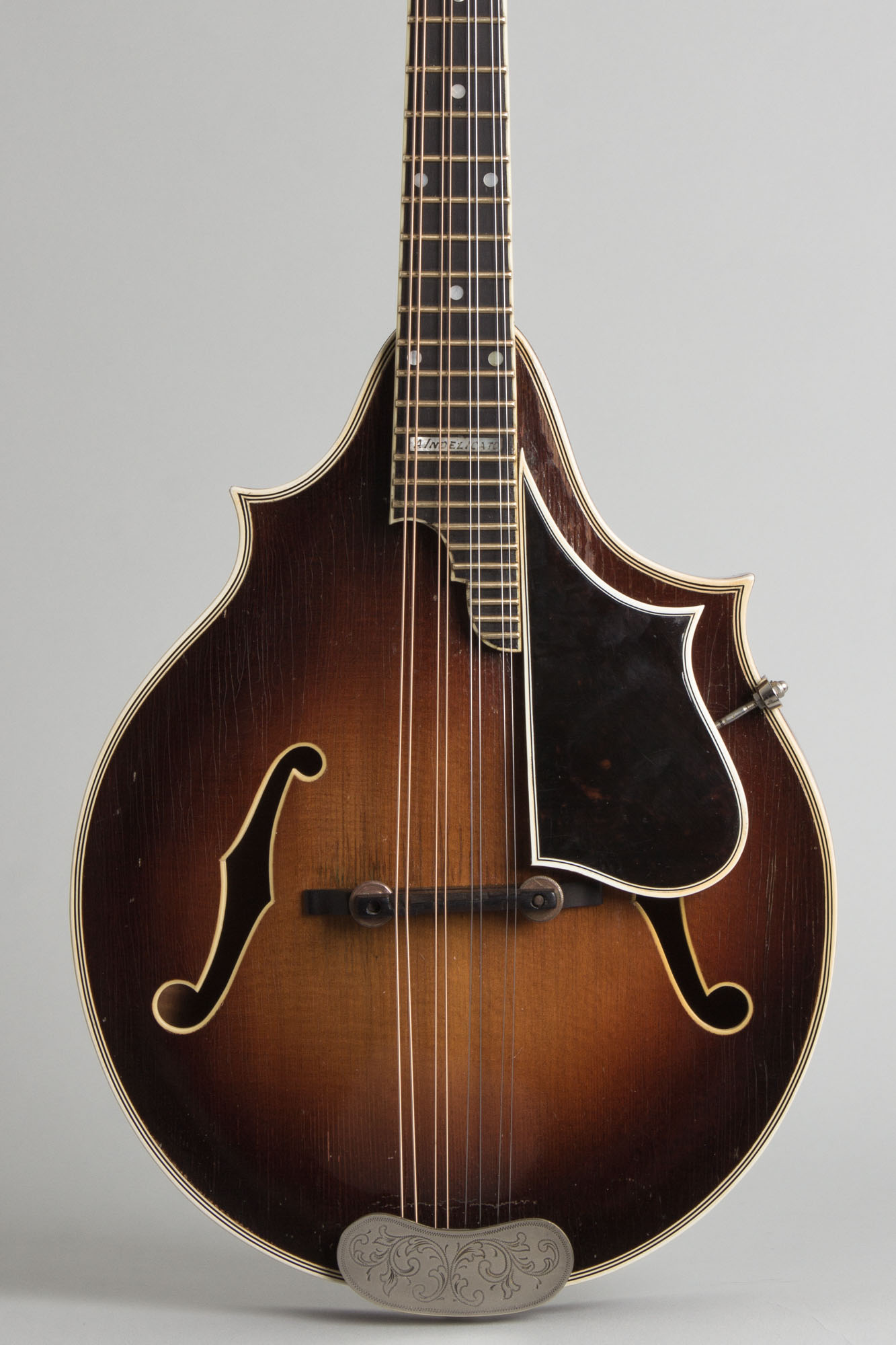
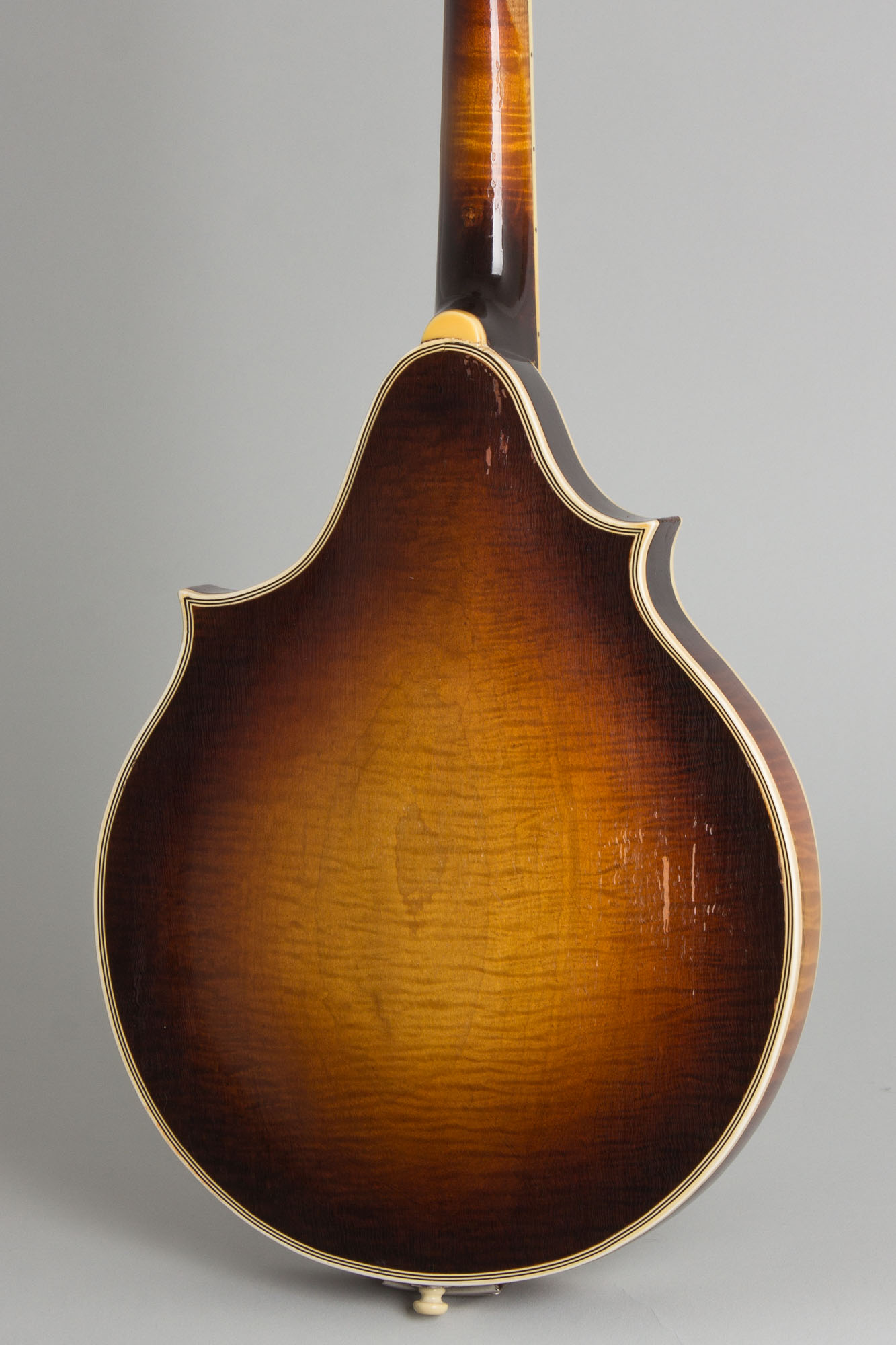
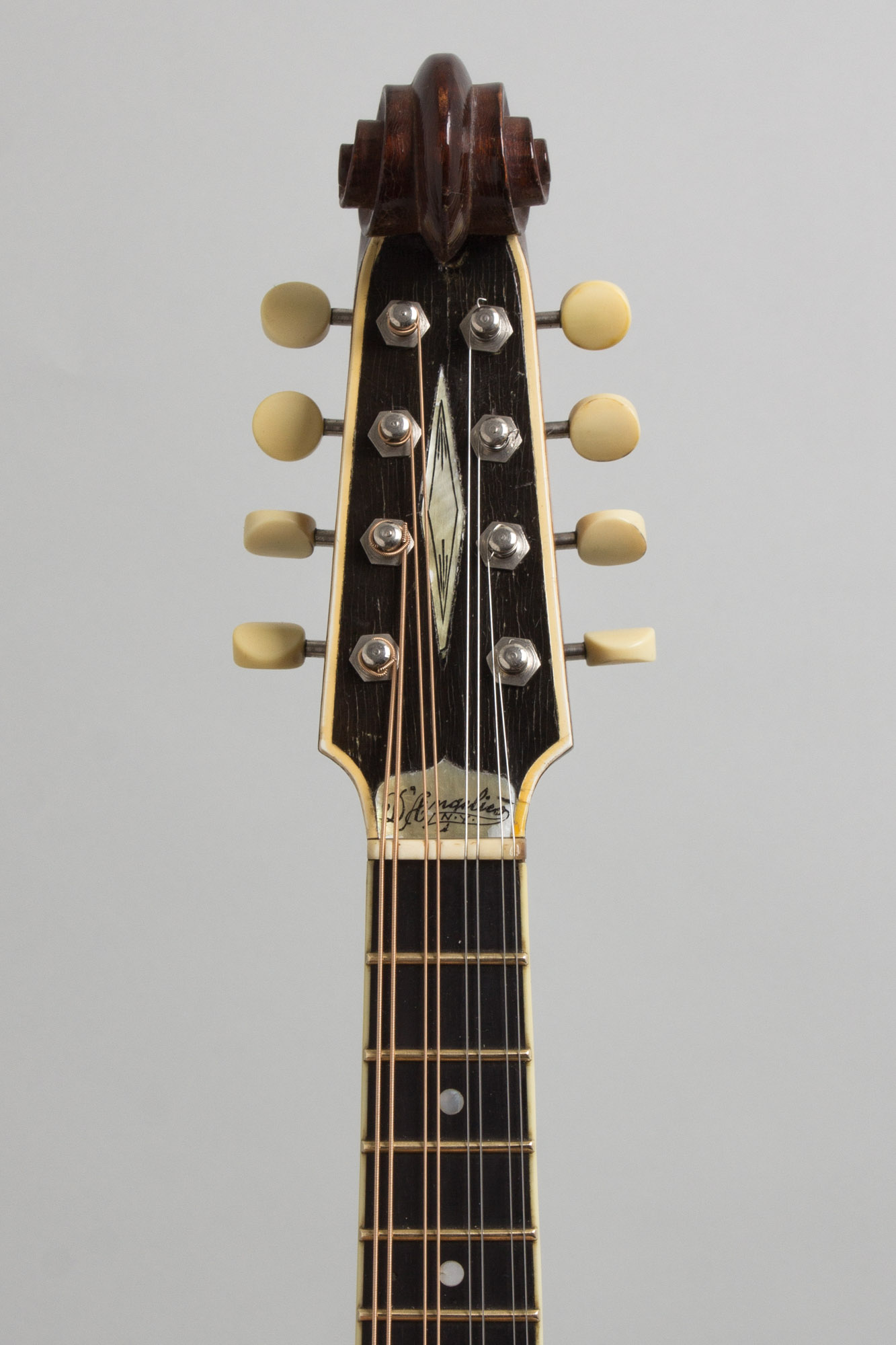
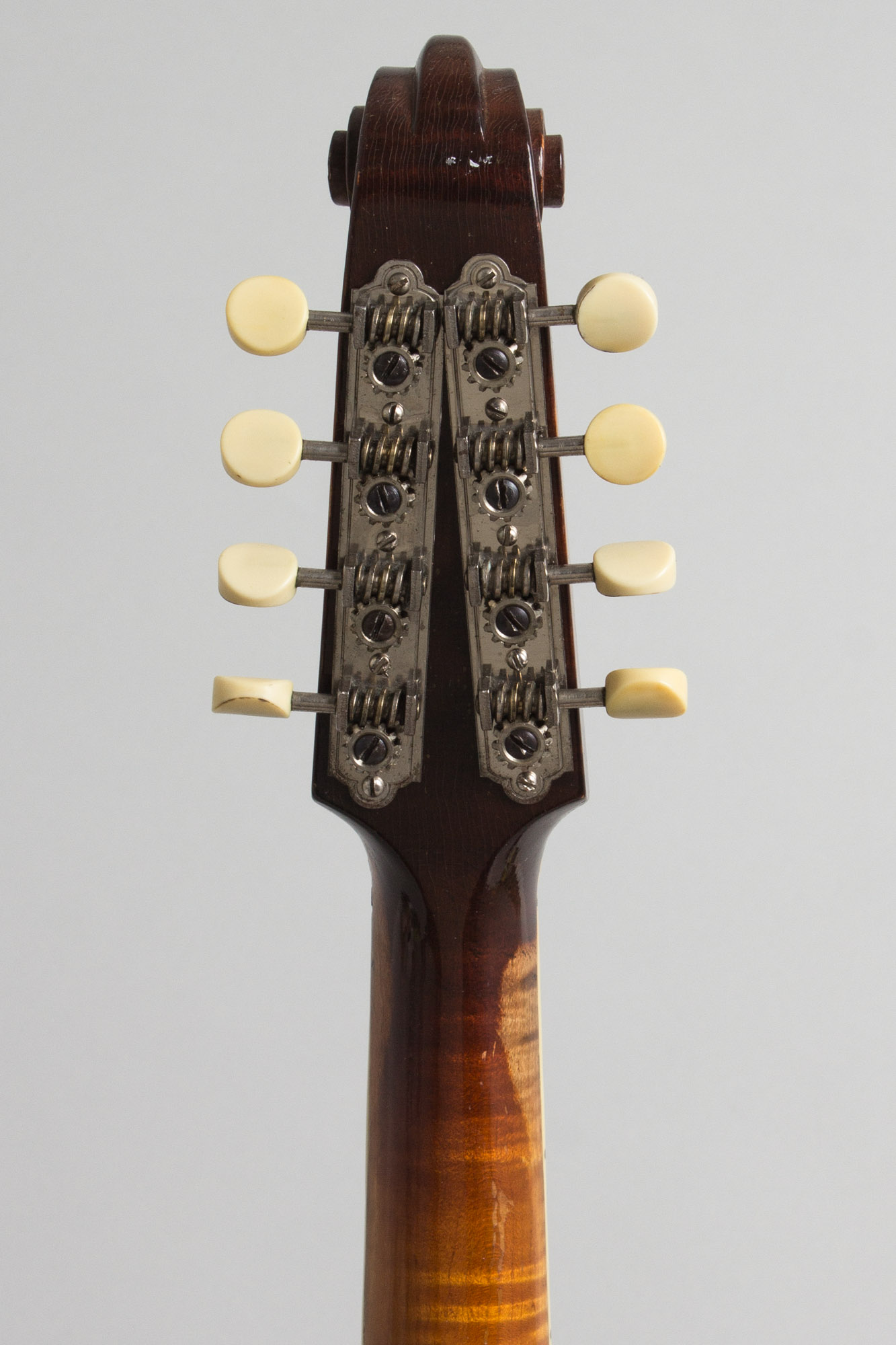
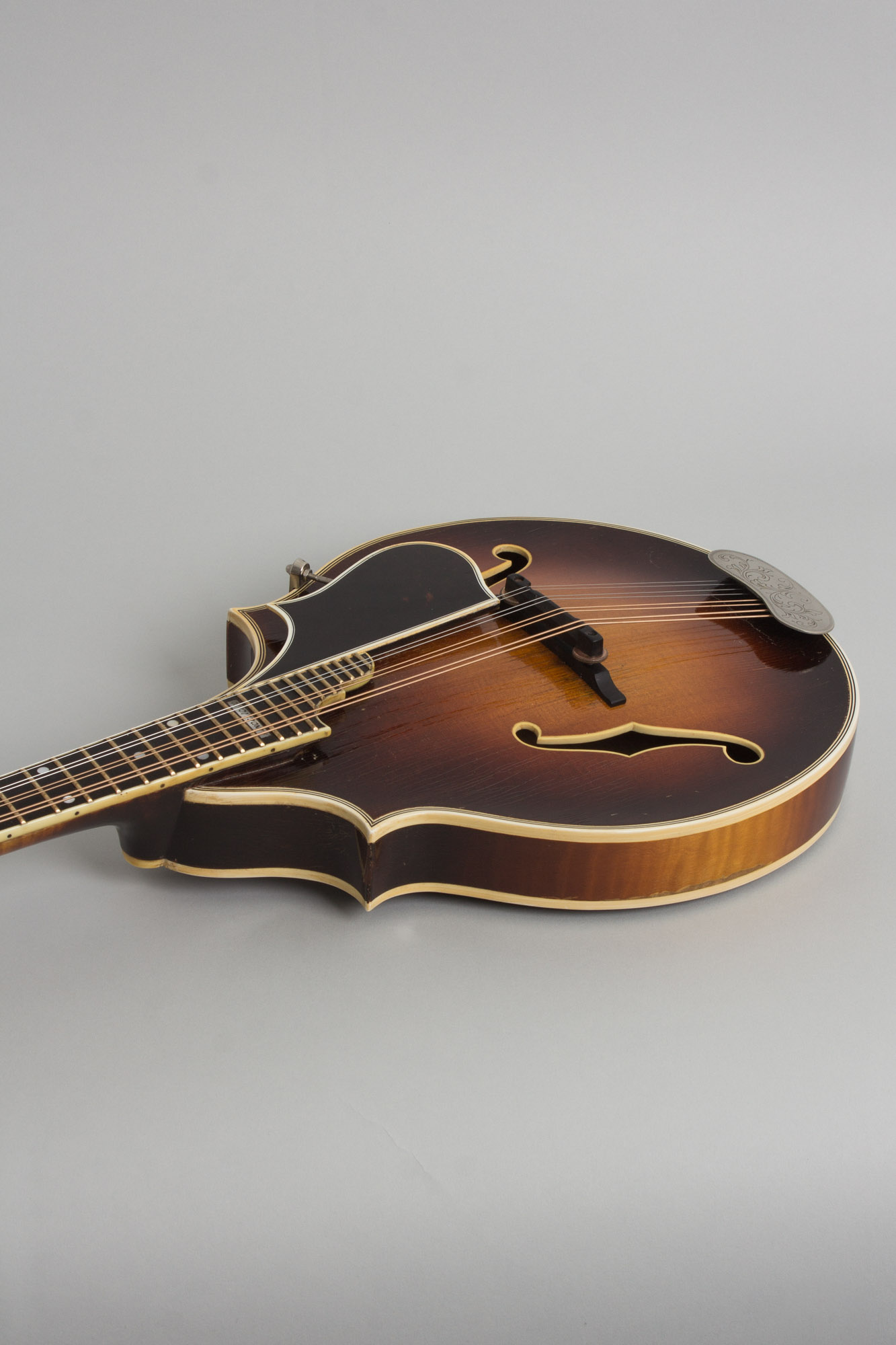
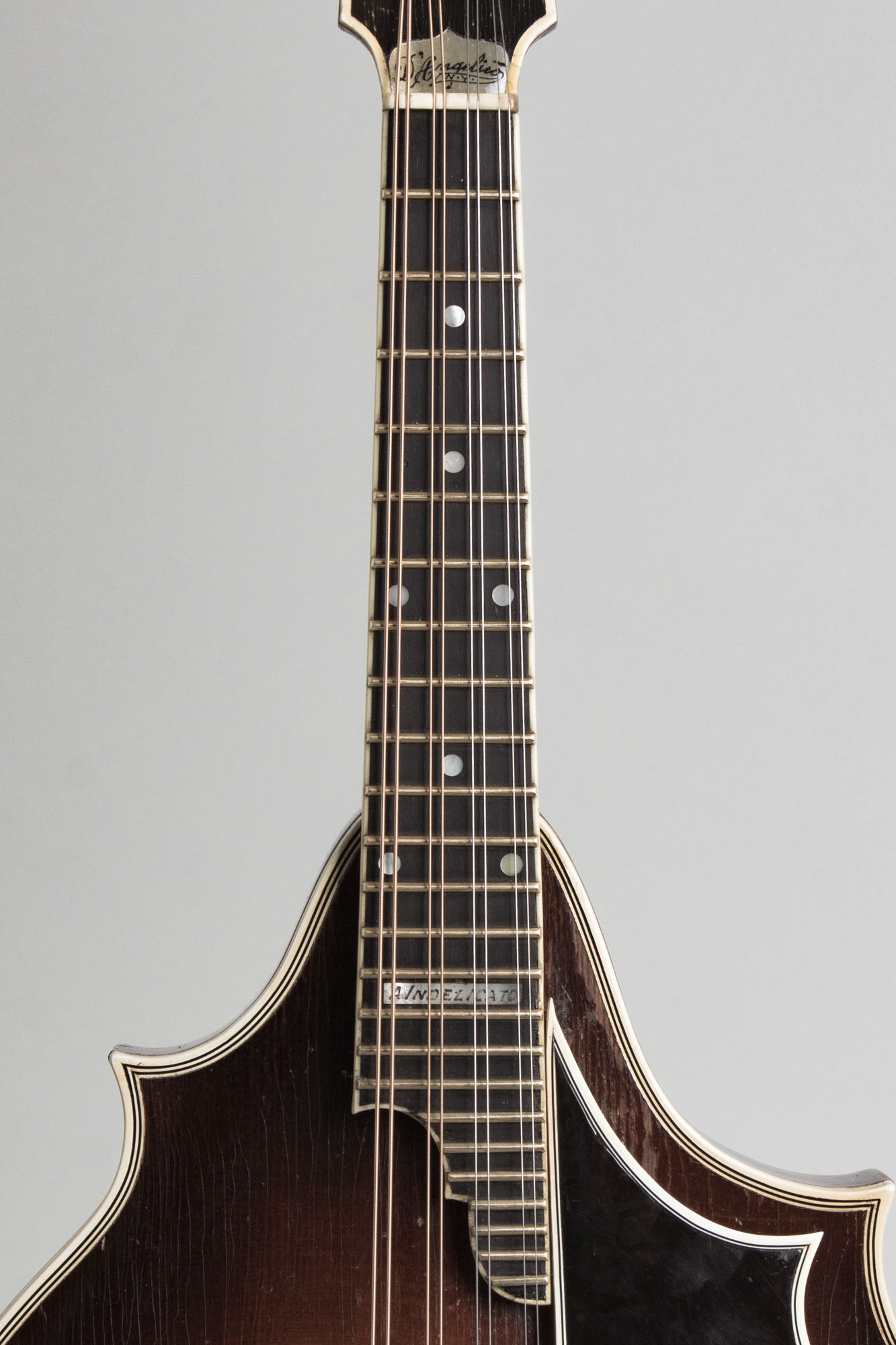
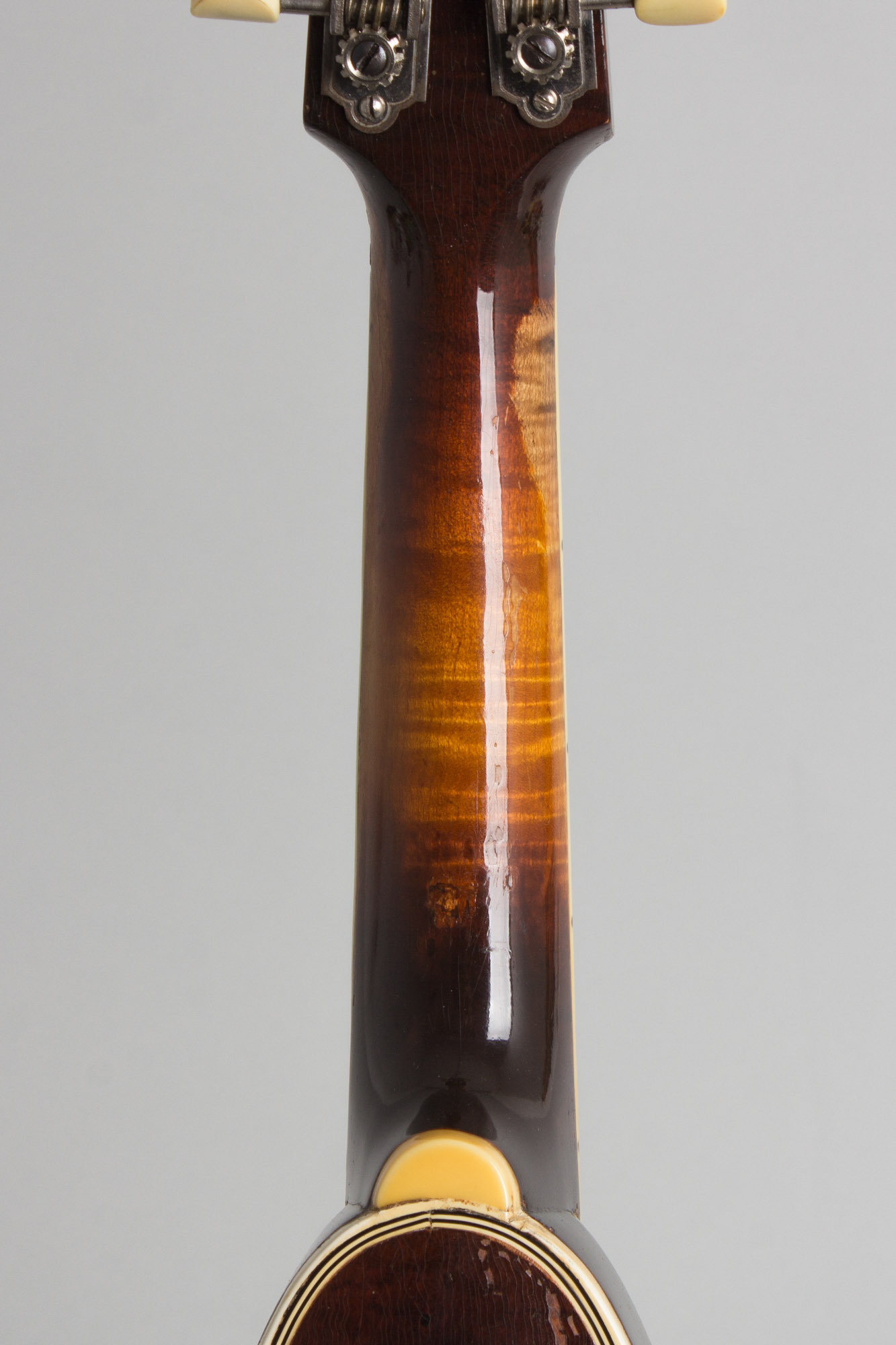
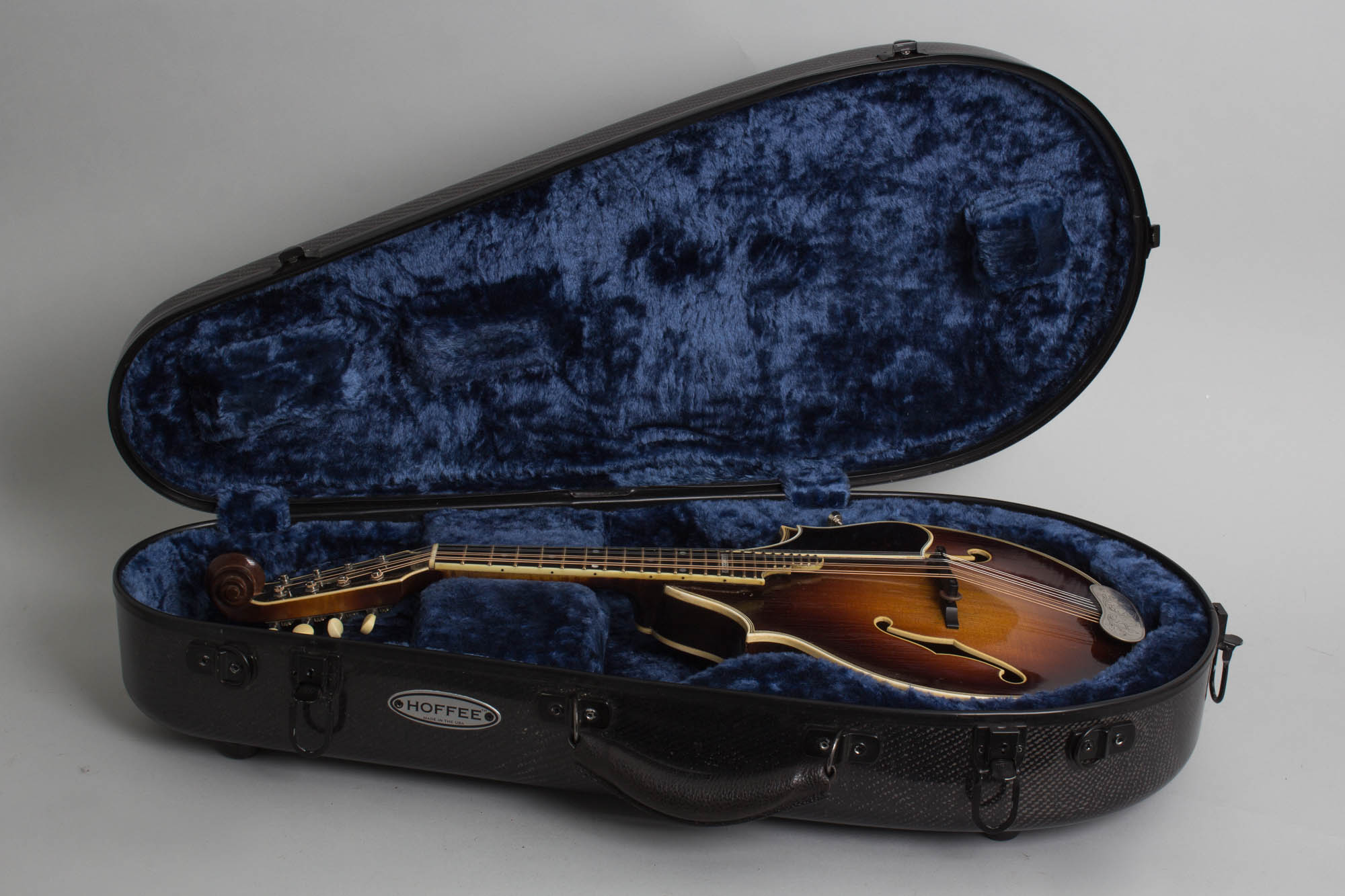
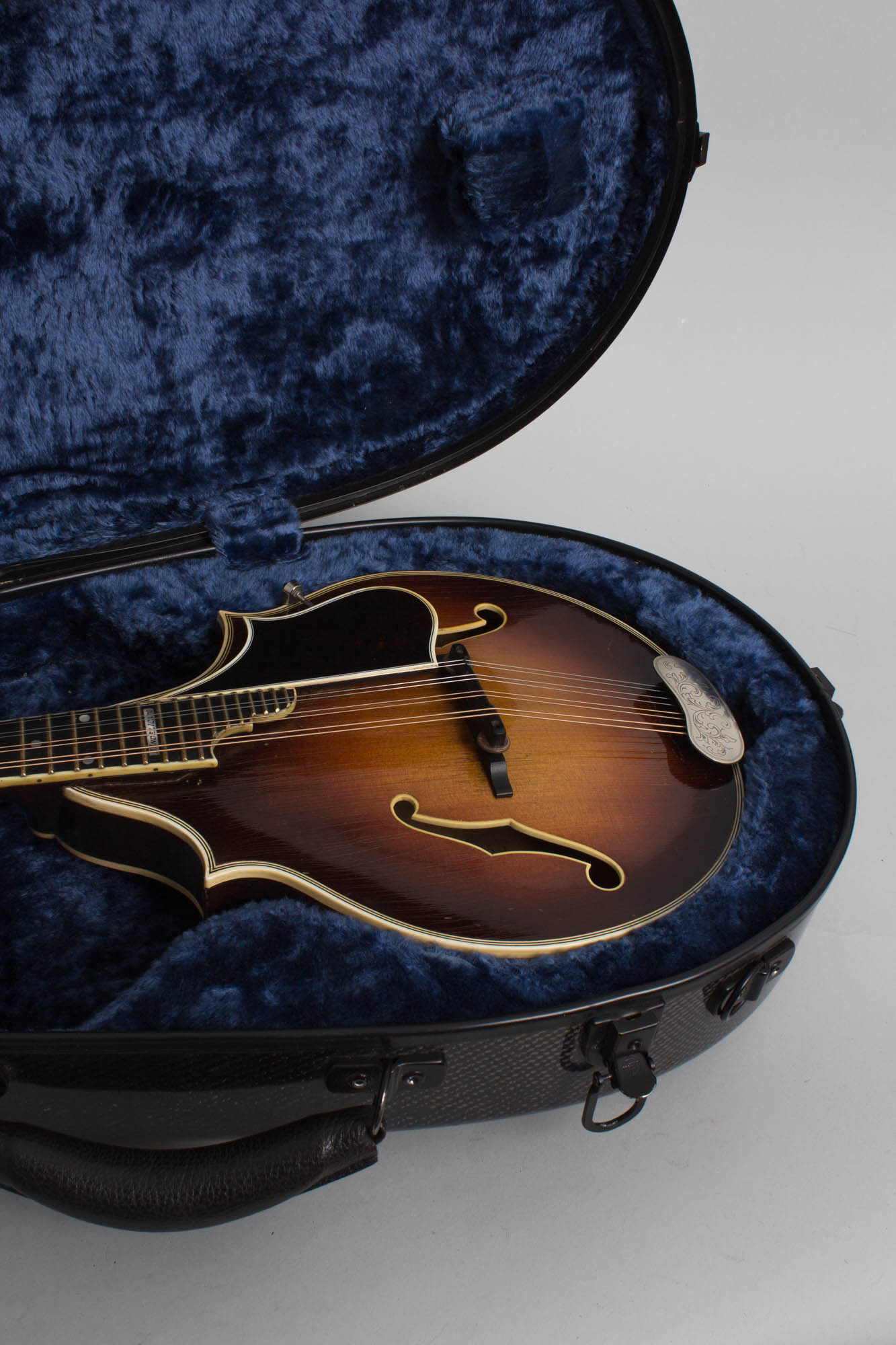
D'Angelico Scroll Headstock Model Carved Top Mandolin (1942), made in N.Y. City, serial # 151, sunburst lacquer finish, maple back, sides and neck; spruce top, ebony fingerboard, Hoffee hard shell case.
This beautiful carved 2-point F-hole mandolin was built by John D'Angelico in his Kenmare Street shop, recorded in his ledger as #151 sold to "Di Masi" on 9-25-42. That is interesting in itself, as the name delicately carved on the pearl block at the 12th fret is "A. Indelicato'. We don't know what the story of these two names is, but this is a fantastic example of John's higher grade mandolin designs that is beautiful to look at and even more so to play.
The Mandolin played a large part in John D'Angelico's early life. Born in New York in 1905, he was apprenticed to his luthier uncle Raphael Ciani when only nine years old. Bowlback mandolins were the Italian-American shop's primary product, along with violins, banjos and flat-top guitars. The young John took over running the operation when Ciani died young in the 1920s before hanging out his own shingle in 1932. His primary subsequent output as a luthier consisted of carved-top guitars but the mandolin was literally in his blood; his family came from Naples, birthplace of the modern mandolin!
D'Angelico mandolins in general are quite rare; it is not known exactly how many he created as those made before 1940 appear to bear no serial numbers; only 49 are subsequently listed in his shop ledgers. These are noted in three ascending design grades: plain, good, and scroll. This 1942 mandolin is an F-hole scroll model, a designation referring to the violin-style scrolled peghead, not a Gibson F-style body. This was the most advanced model sonically and cosmetically of the options offered; only 16 "Scroll" mandolins are recorded on John's ledger, and some of those have oval soundholes.
Much of the design of this mandolin is based on the 1910s-20s Lyon and Healy Style A. The two-point body is asymmetrical, with the treble point lower down on the body like the post-1920 Lyon & Healy. The body is slightly wider, but the main difference is the use of F-holes and parallel tone bars for the carved spruce top; these can be traced to Gibson's influence. The body edges are bound in 5-ply celluloid; the arched back is carved from a single piece of maple. The F-holes are single bound, the (replica) tortoise celluloid pickguard is triple bound. The adjustable bridge is carved from ebony, the tailpiece is a standard period part but with a fancy engraved cover.
The round-backed neck is carved from a single piece of flame maple with a bound, dot inlaid ebony fingerboard. This features an elevated extension on the treble side carrying 7 partial frets beyond the 17 full frets allowing the player a full double octave on the E string. The headstock face under the beautifully carved scroll is single-bound with an engraved pearl stickpin inlay and a D'Angelico script logo pearl block above the nut. The tuners are openback Waverly strips with ivoroid buttons.
This is simply a beautiful instrument, both visually and sonically. The sound is full, smooth and penetrating with a more sophisticated edge than many Gibsons. It is neither as classically polite as the Lyon & Healy it is descended from or as cutting as a Gibson F-5, but stakes out its own ground in between them. The most influential mandolinist of 1942 was Dave Apollon, a virtuoso showman who fronted a full orchestra; Bill Monroe's Bluegrass Boys had just been formed and were unknown nationally. D'Angelico was building mandolins for an urban, largely ethnically Italian clientele, and by 1942 was reputedly discouraging further orders to allow him to fully concentrate on guitars! Nonetheless this stunning instrument with its combination of beauty, power and clarity would have offered a compelling incentive for any serious player to own one.
Overall length is 25 1/2 in. (64.8 cm.), 10 3/8 in. (26.4 cm.) wide at lower bout, and 1 3/4 in. (4.4 cm.) in depth, measured at side of rim. Scale length is 13 5/8 in. (346 mm.). Width of nut is 1 1/4 in. (32 mm.).
This mandolin remains in fine playing condition overall and largely original. There is some finish wear to the back and sides and back of the neck but the only notable alterations to the finish are due to the disintegration of the original celluloid pickguard. There is some scarring to the top finish (under the guard) and a replaced piece of binding where the guard attaches.
The finish on the back of the heel was carefully patched and blended where the gassing celluloid caused the original to flake. There is no heel crack or repair but as the guard crumbled inside the case pieces of the disintegrating celluloid ended up in the well under the heel and damaged the finish in that area only. The rest of the mandolin shows only light play wear and some minor flaked spots but no other damage; all other finish and hardware are original except for a reproduction pickguard and new non-correct style bracket.
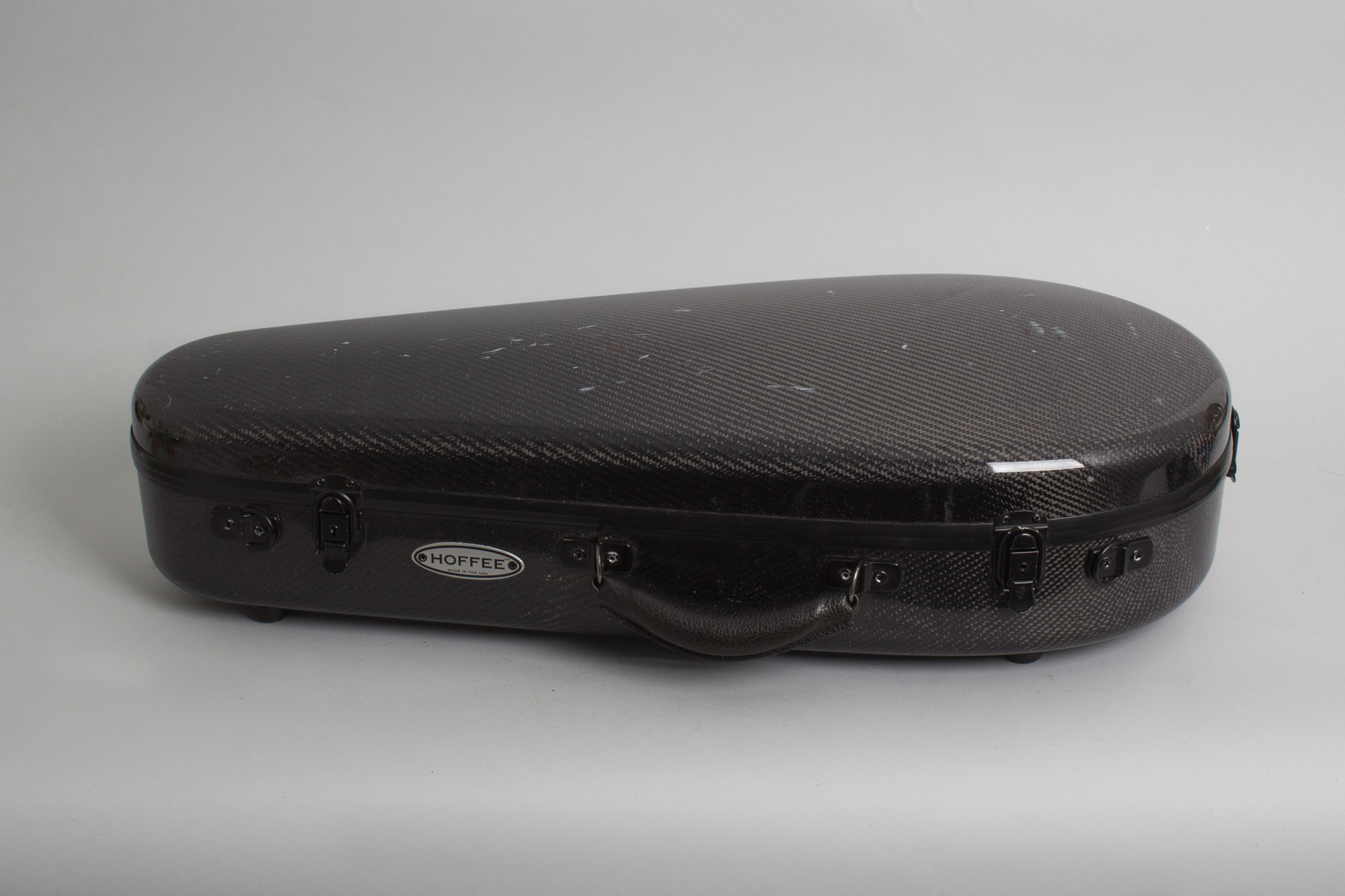
The frets have been replaced with modern Evo wire somewhat larger than the original style. Playability is excellent and the sound is just heavenly. This is simply one of the finest mandolins we have handled, very different from the typical Gibson but with its own superb character. This is a serious part of New York musical history, housed in a modern Hoffee molded carbon fiber case with some surface wear. Overall Excellent - Condition.
This beautiful carved 2-point F-hole mandolin was built by John D'Angelico in his Kenmare Street shop, recorded in his ledger as #151 sold to "Di Masi" on 9-25-42. That is interesting in itself, as the name delicately carved on the pearl block at the 12th fret is "A. Indelicato'. We don't know what the story of these two names is, but this is a fantastic example of John's higher grade mandolin designs that is beautiful to look at and even more so to play.
The Mandolin played a large part in John D'Angelico's early life. Born in New York in 1905, he was apprenticed to his luthier uncle Raphael Ciani when only nine years old. Bowlback mandolins were the Italian-American shop's primary product, along with violins, banjos and flat-top guitars. The young John took over running the operation when Ciani died young in the 1920s before hanging out his own shingle in 1932. His primary subsequent output as a luthier consisted of carved-top guitars but the mandolin was literally in his blood; his family came from Naples, birthplace of the modern mandolin!
D'Angelico mandolins in general are quite rare; it is not known exactly how many he created as those made before 1940 appear to bear no serial numbers; only 49 are subsequently listed in his shop ledgers. These are noted in three ascending design grades: plain, good, and scroll. This 1942 mandolin is an F-hole scroll model, a designation referring to the violin-style scrolled peghead, not a Gibson F-style body. This was the most advanced model sonically and cosmetically of the options offered; only 16 "Scroll" mandolins are recorded on John's ledger, and some of those have oval soundholes.
Much of the design of this mandolin is based on the 1910s-20s Lyon and Healy Style A. The two-point body is asymmetrical, with the treble point lower down on the body like the post-1920 Lyon & Healy. The body is slightly wider, but the main difference is the use of F-holes and parallel tone bars for the carved spruce top; these can be traced to Gibson's influence. The body edges are bound in 5-ply celluloid; the arched back is carved from a single piece of maple. The F-holes are single bound, the (replica) tortoise celluloid pickguard is triple bound. The adjustable bridge is carved from ebony, the tailpiece is a standard period part but with a fancy engraved cover.
The round-backed neck is carved from a single piece of flame maple with a bound, dot inlaid ebony fingerboard. This features an elevated extension on the treble side carrying 7 partial frets beyond the 17 full frets allowing the player a full double octave on the E string. The headstock face under the beautifully carved scroll is single-bound with an engraved pearl stickpin inlay and a D'Angelico script logo pearl block above the nut. The tuners are openback Waverly strips with ivoroid buttons.
This is simply a beautiful instrument, both visually and sonically. The sound is full, smooth and penetrating with a more sophisticated edge than many Gibsons. It is neither as classically polite as the Lyon & Healy it is descended from or as cutting as a Gibson F-5, but stakes out its own ground in between them. The most influential mandolinist of 1942 was Dave Apollon, a virtuoso showman who fronted a full orchestra; Bill Monroe's Bluegrass Boys had just been formed and were unknown nationally. D'Angelico was building mandolins for an urban, largely ethnically Italian clientele, and by 1942 was reputedly discouraging further orders to allow him to fully concentrate on guitars! Nonetheless this stunning instrument with its combination of beauty, power and clarity would have offered a compelling incentive for any serious player to own one.
Overall length is 25 1/2 in. (64.8 cm.), 10 3/8 in. (26.4 cm.) wide at lower bout, and 1 3/4 in. (4.4 cm.) in depth, measured at side of rim. Scale length is 13 5/8 in. (346 mm.). Width of nut is 1 1/4 in. (32 mm.).
This mandolin remains in fine playing condition overall and largely original. There is some finish wear to the back and sides and back of the neck but the only notable alterations to the finish are due to the disintegration of the original celluloid pickguard. There is some scarring to the top finish (under the guard) and a replaced piece of binding where the guard attaches.
The finish on the back of the heel was carefully patched and blended where the gassing celluloid caused the original to flake. There is no heel crack or repair but as the guard crumbled inside the case pieces of the disintegrating celluloid ended up in the well under the heel and damaged the finish in that area only. The rest of the mandolin shows only light play wear and some minor flaked spots but no other damage; all other finish and hardware are original except for a reproduction pickguard and new non-correct style bracket.
The frets have been replaced with modern Evo wire somewhat larger than the original style. Playability is excellent and the sound is just heavenly. This is simply one of the finest mandolins we have handled, very different from the typical Gibson but with its own superb character. This is a serious part of New York musical history, housed in a modern Hoffee molded carbon fiber case with some surface wear. Overall Excellent - Condition.