Gibson GB-3 Mastertone Guitar Banjo (1927)

LOADING IMAGES
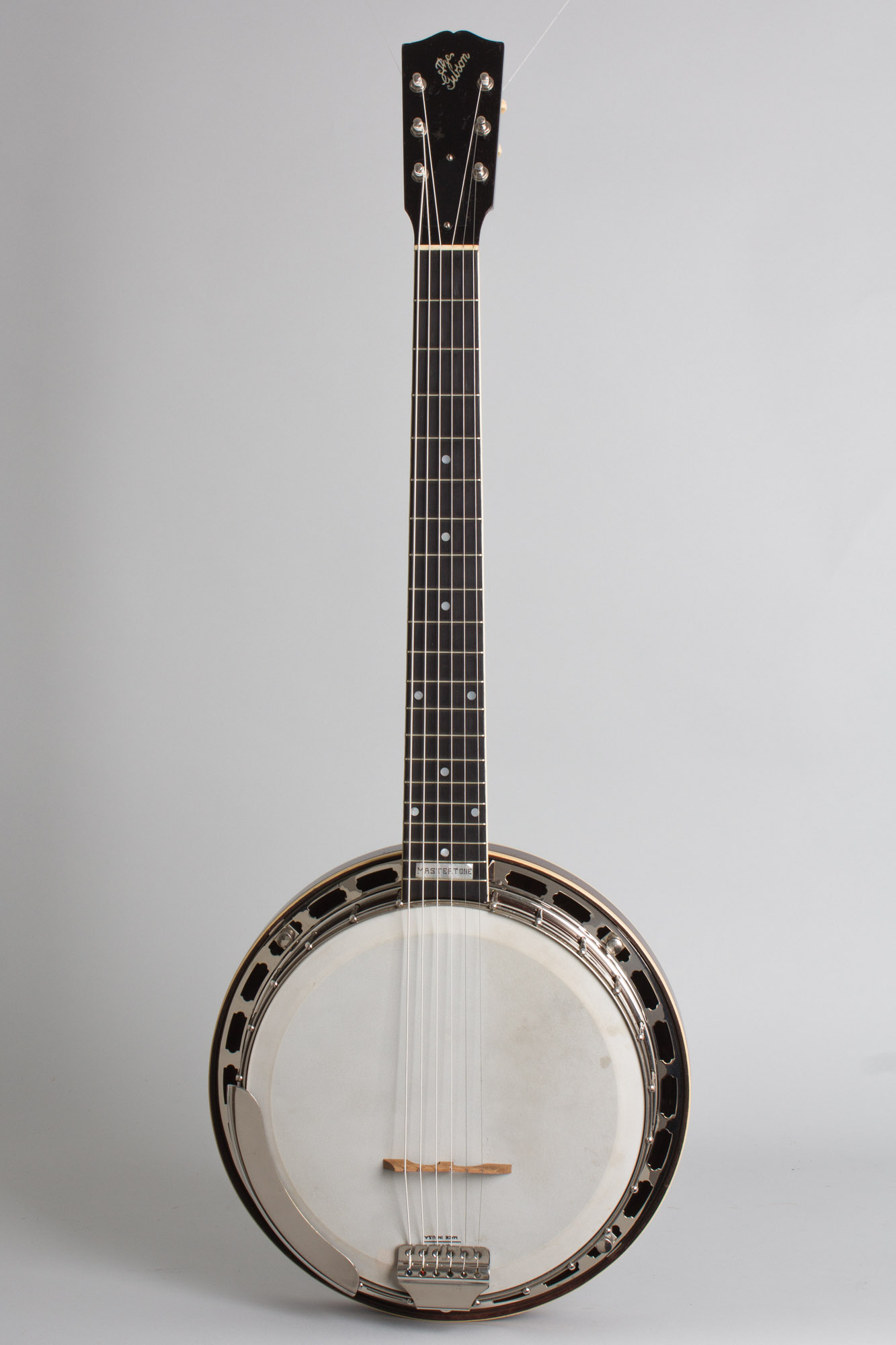
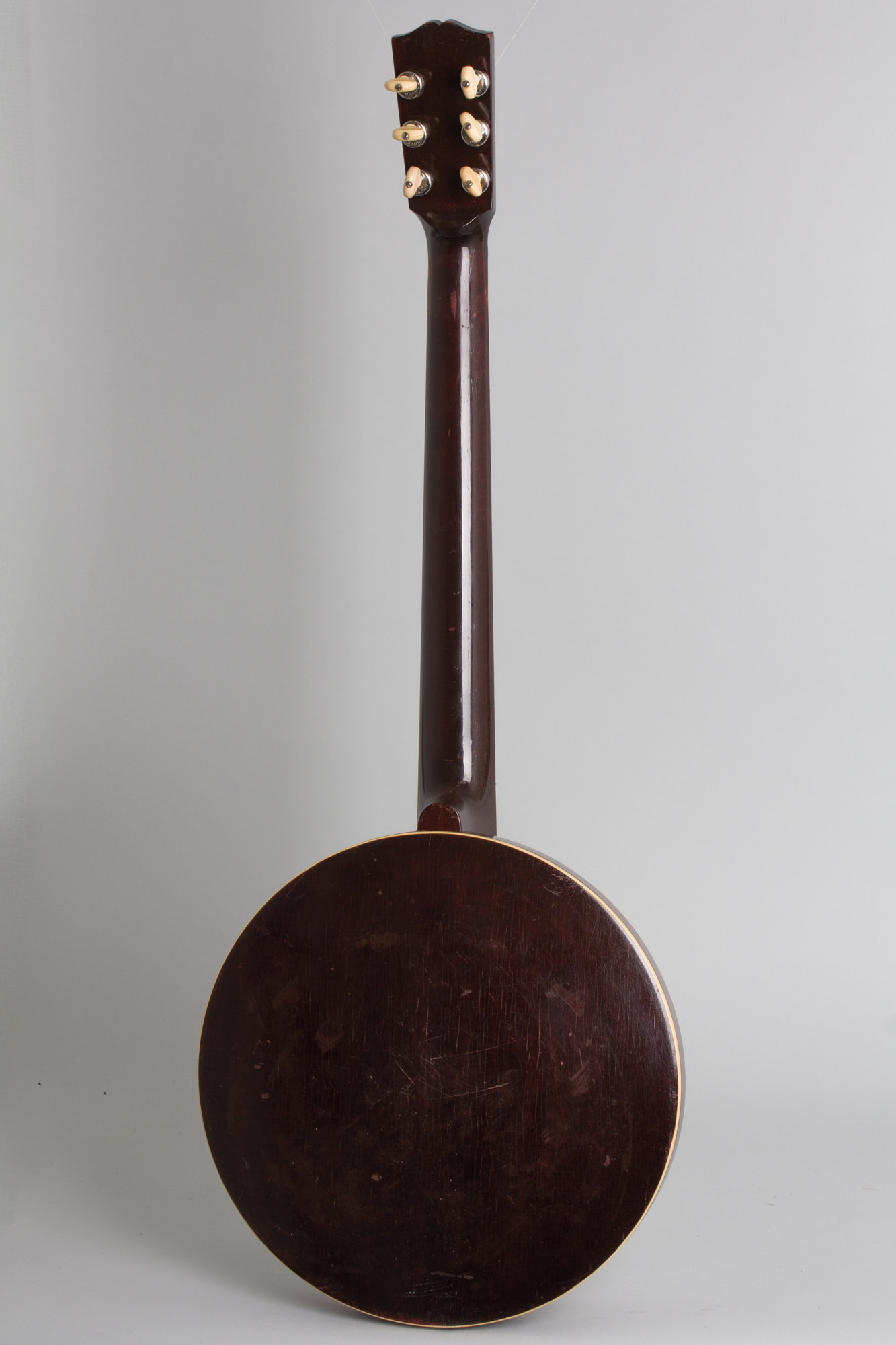
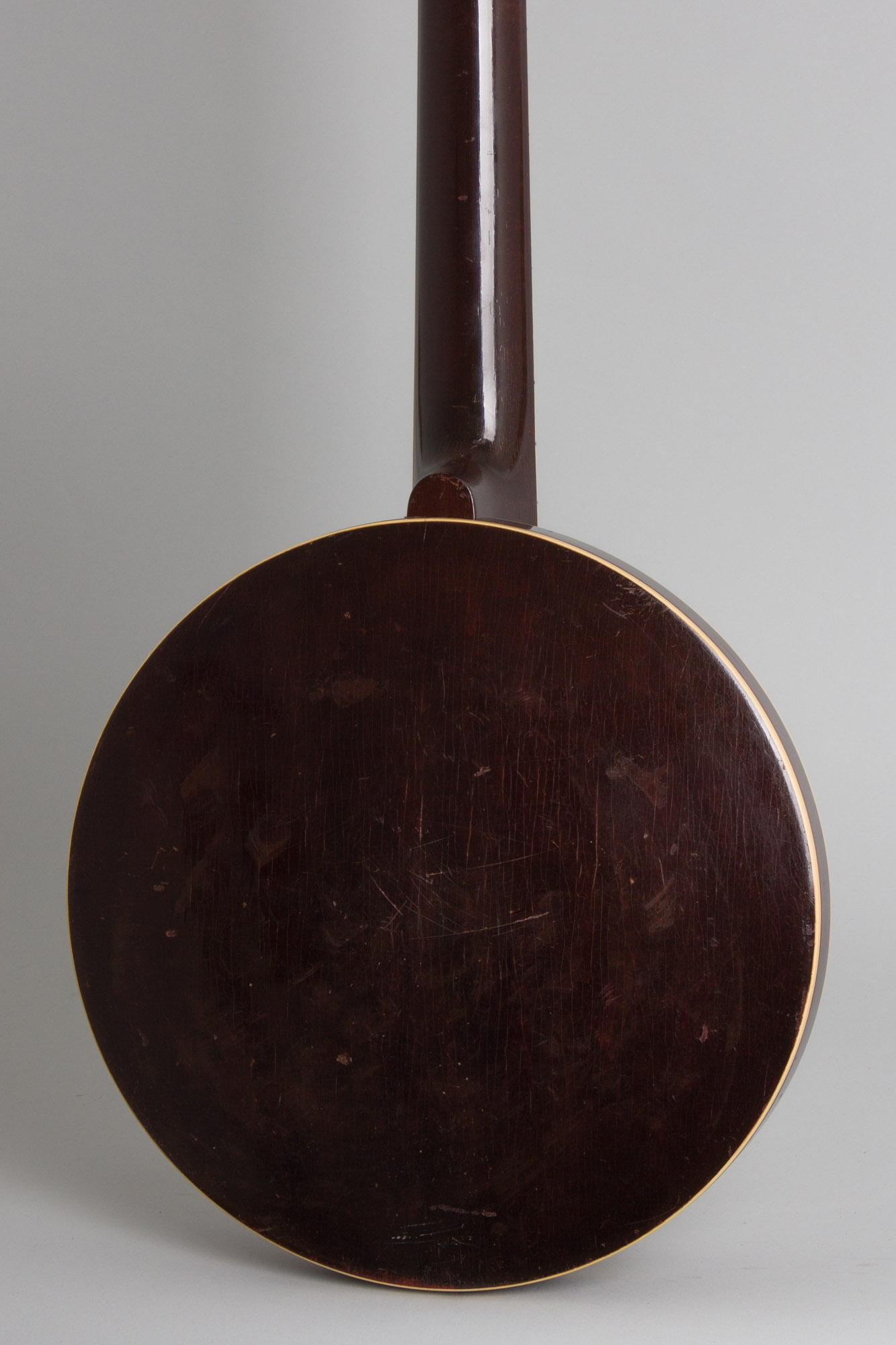
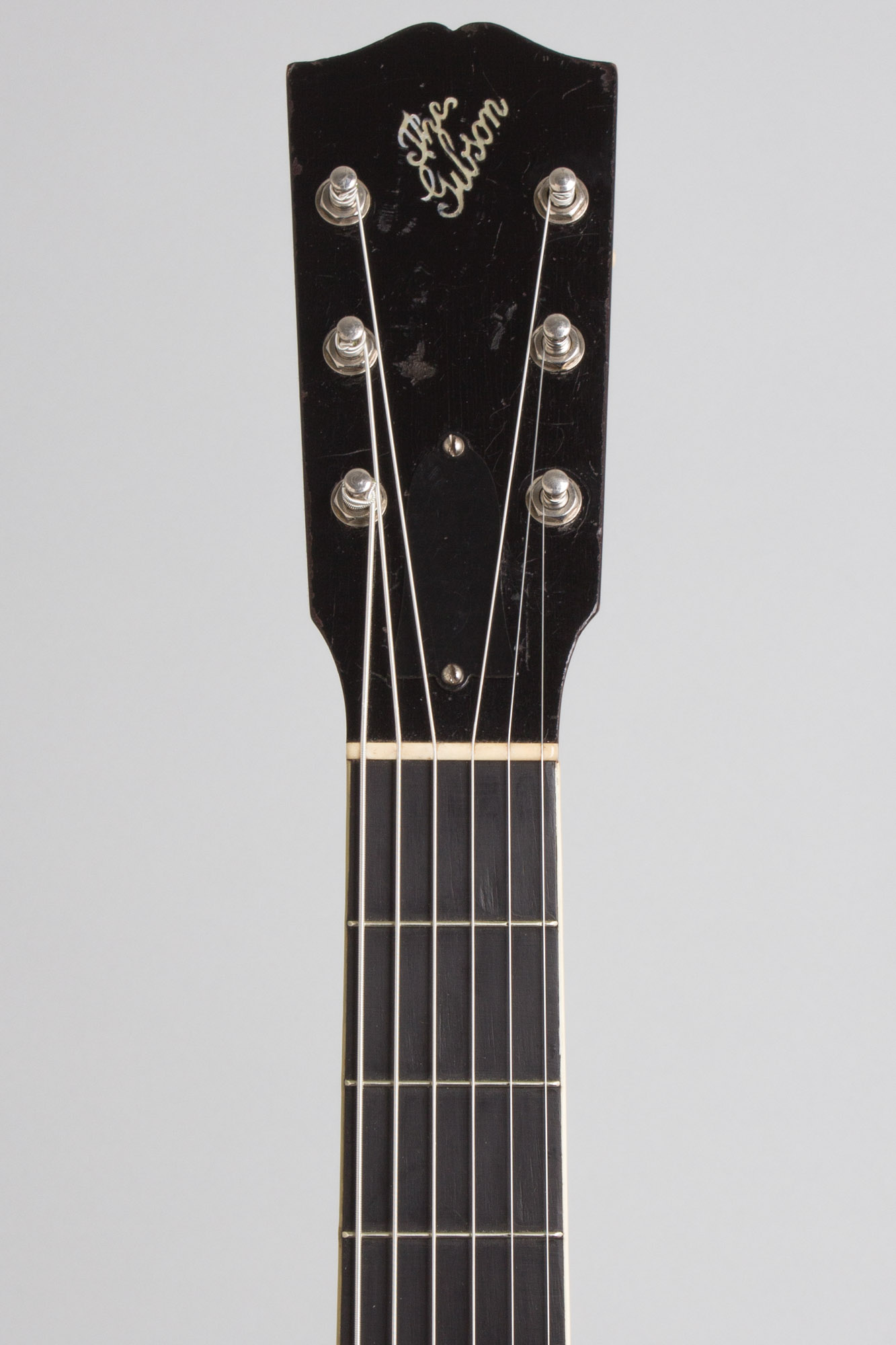
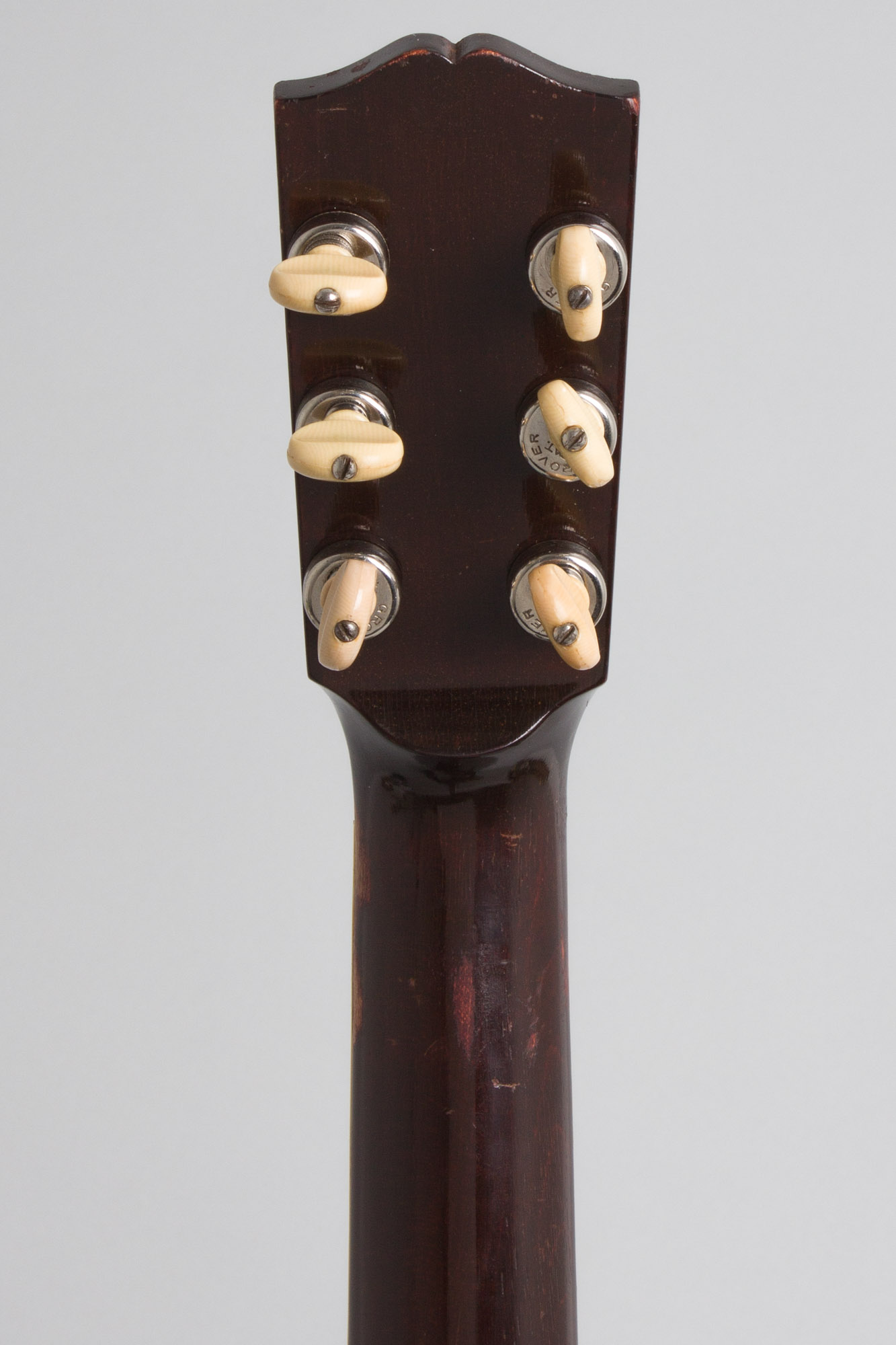
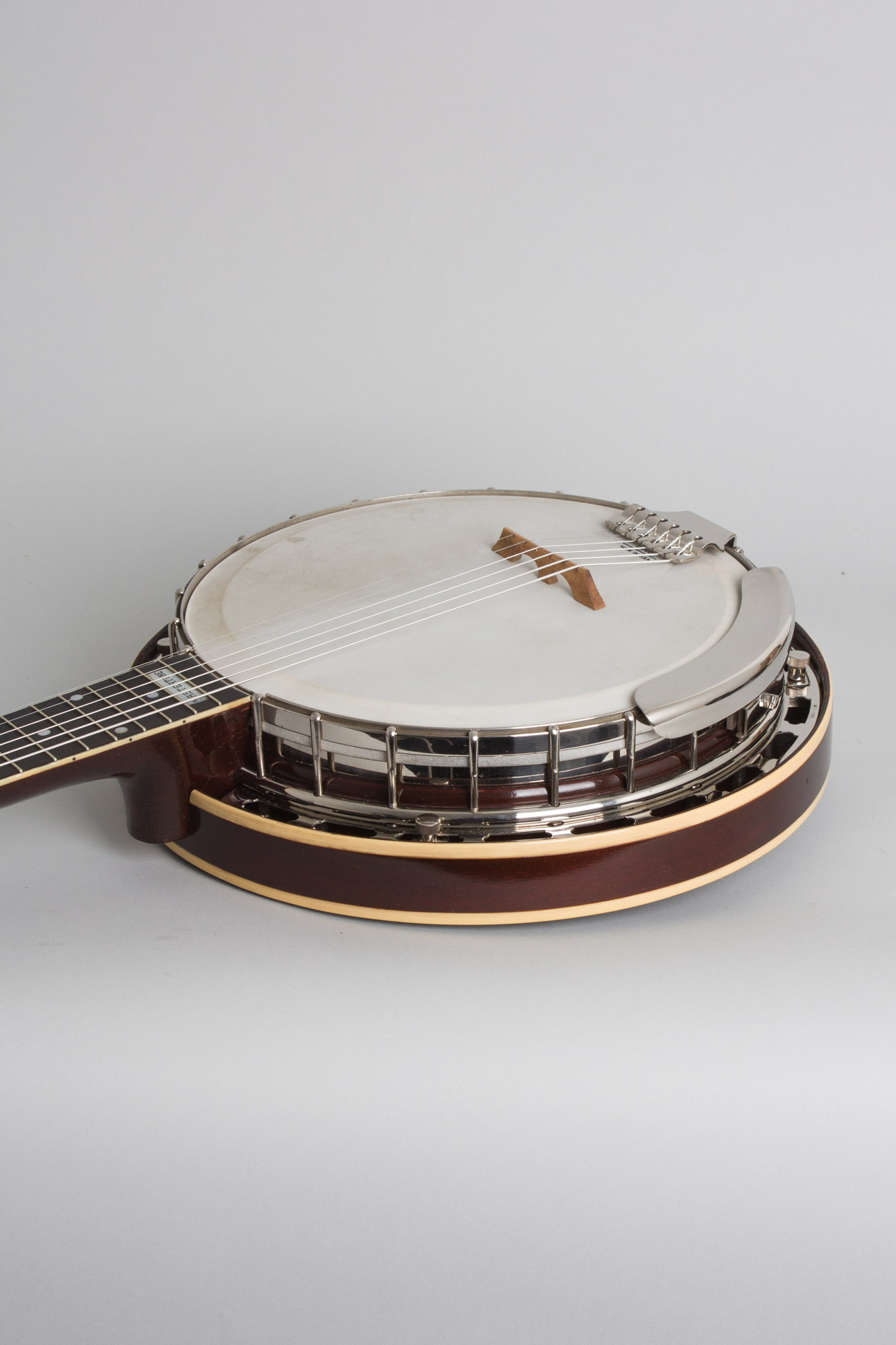
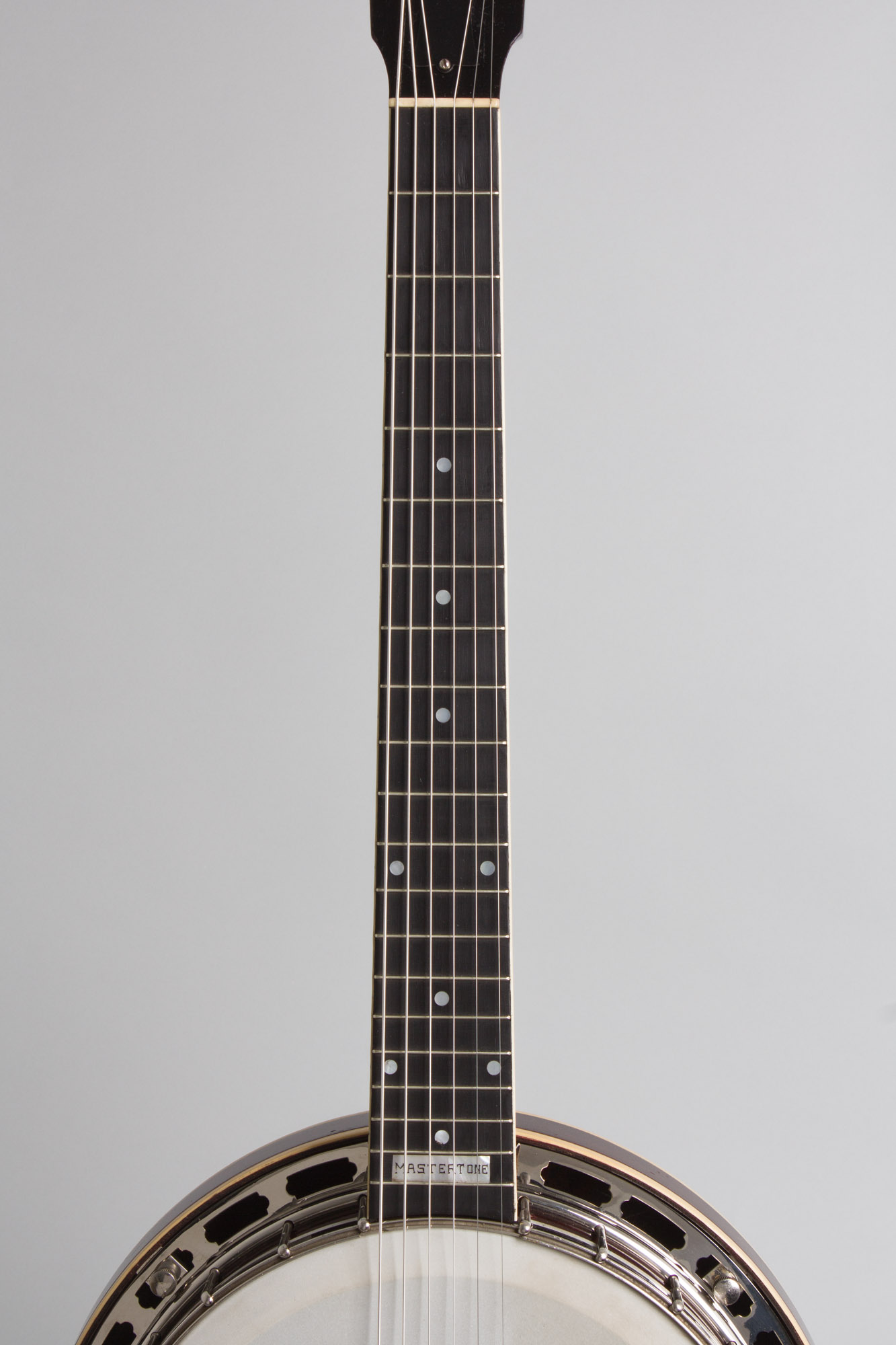
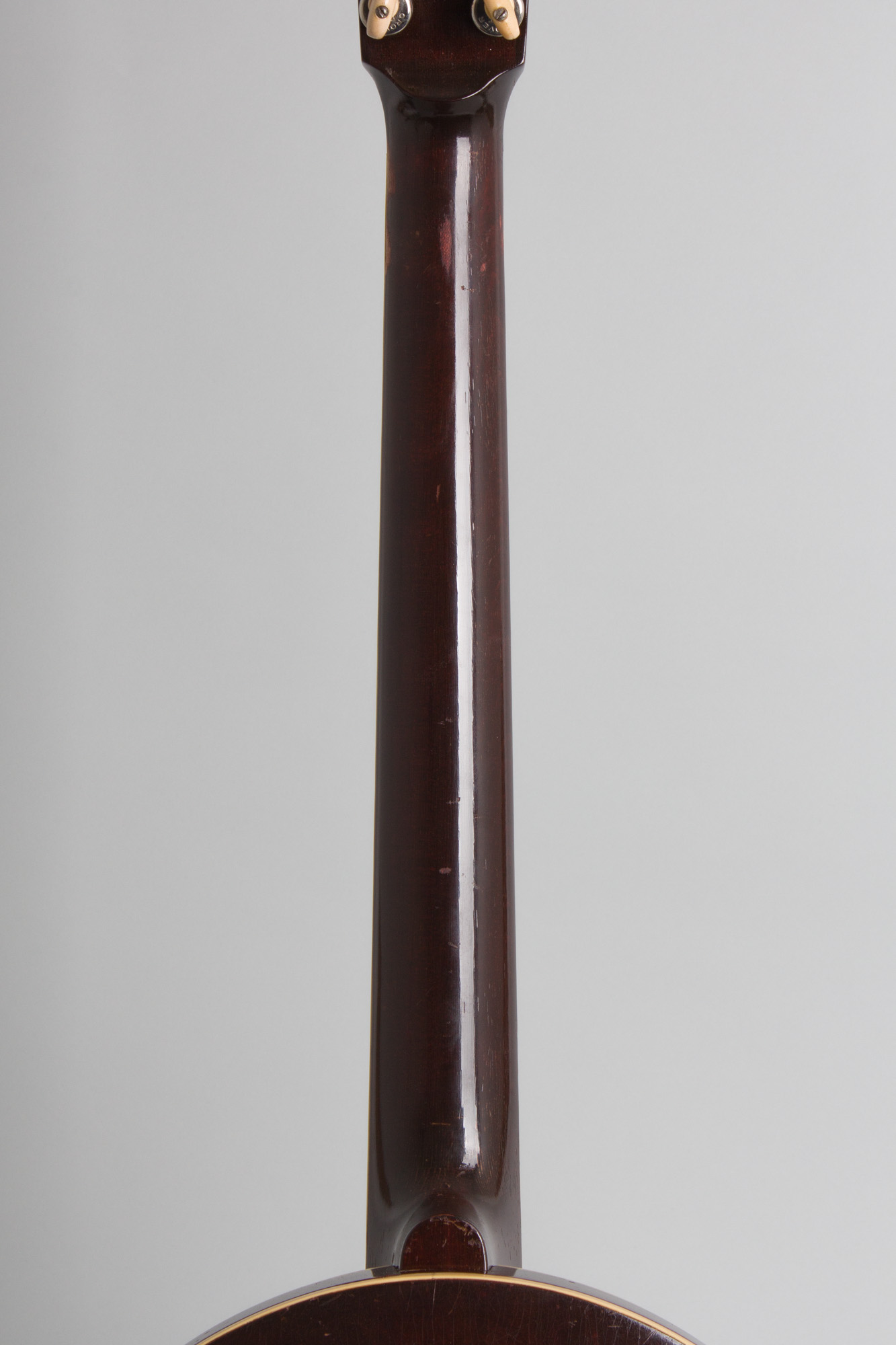
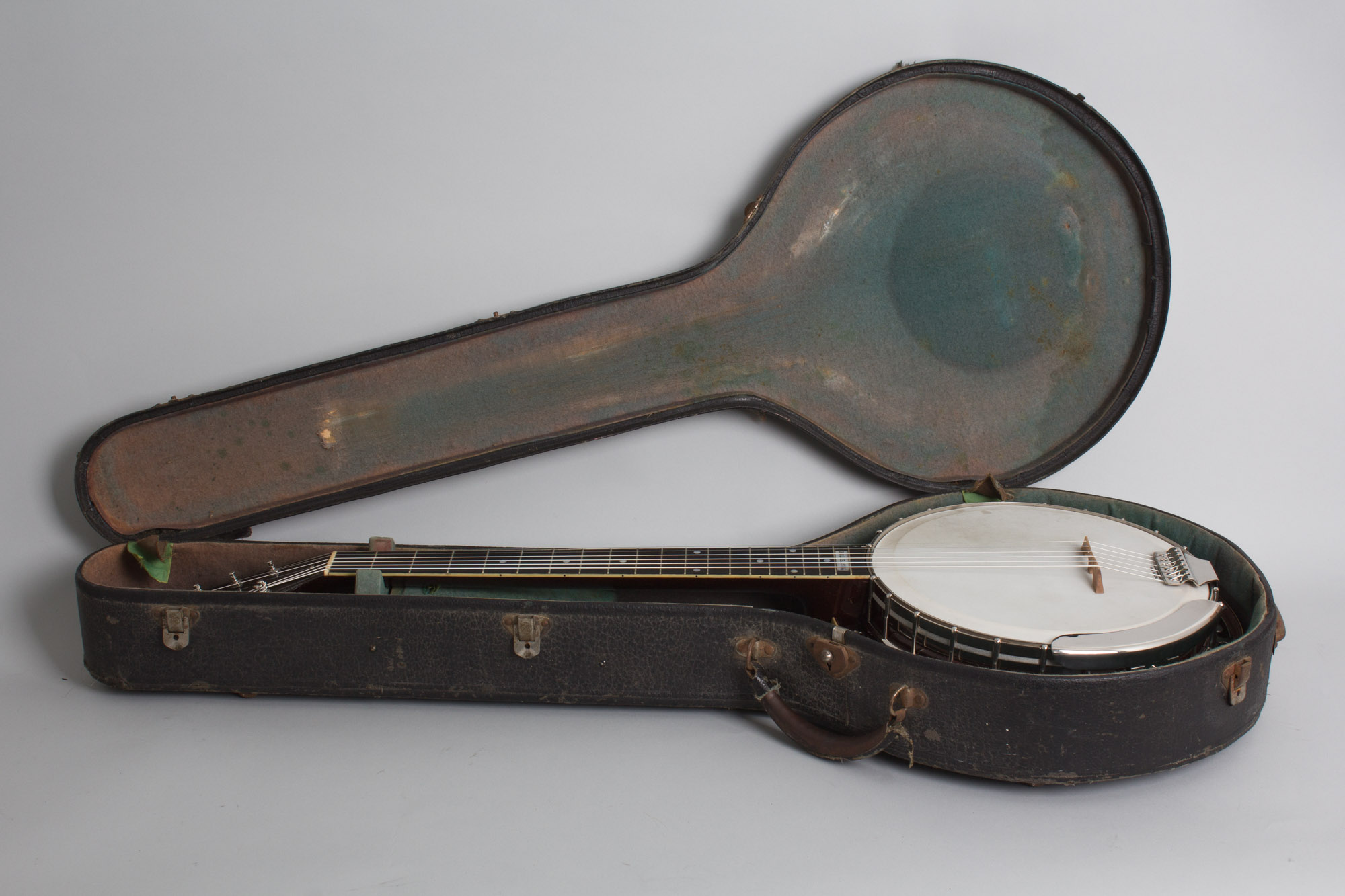

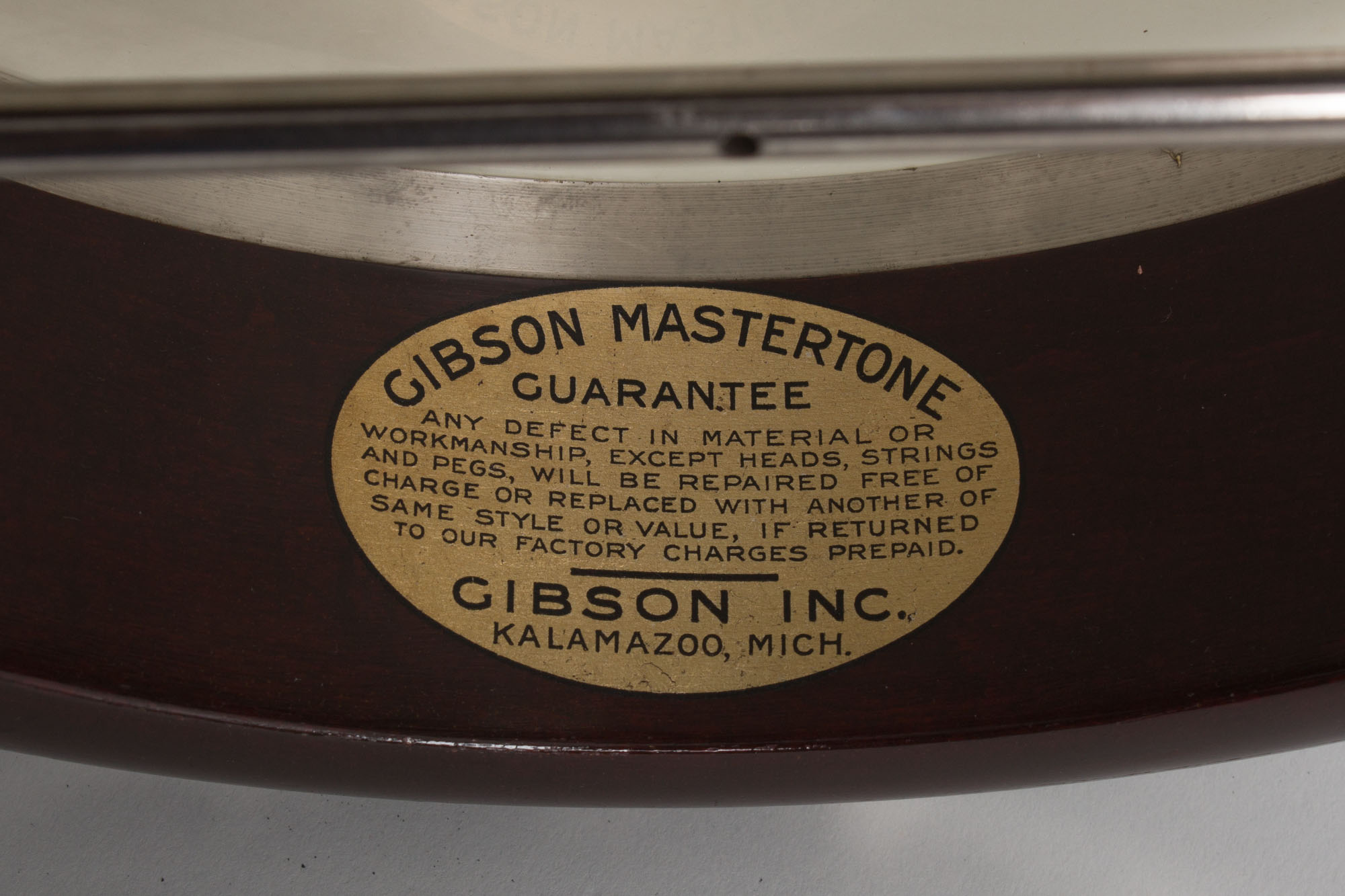
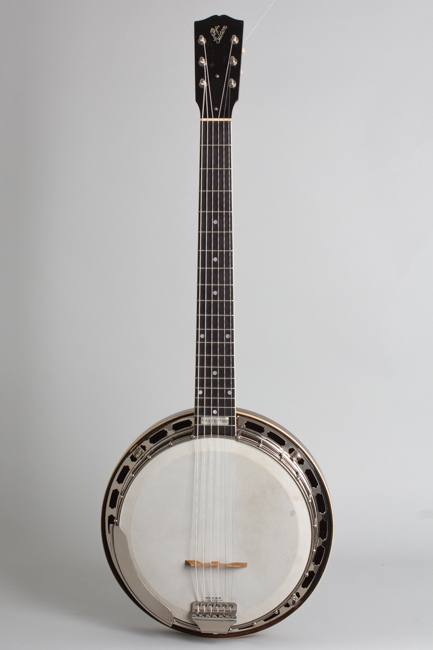
Gibson GB-3 Mastertone Model Guitar Banjo (1927), made in Kalamazoo, Michigan, serial # 8852-7 (FON), dark brown rim, natural neck finish, laminated maple rim; mahogany neck with rosewood fingerboard, original black hard shell case.
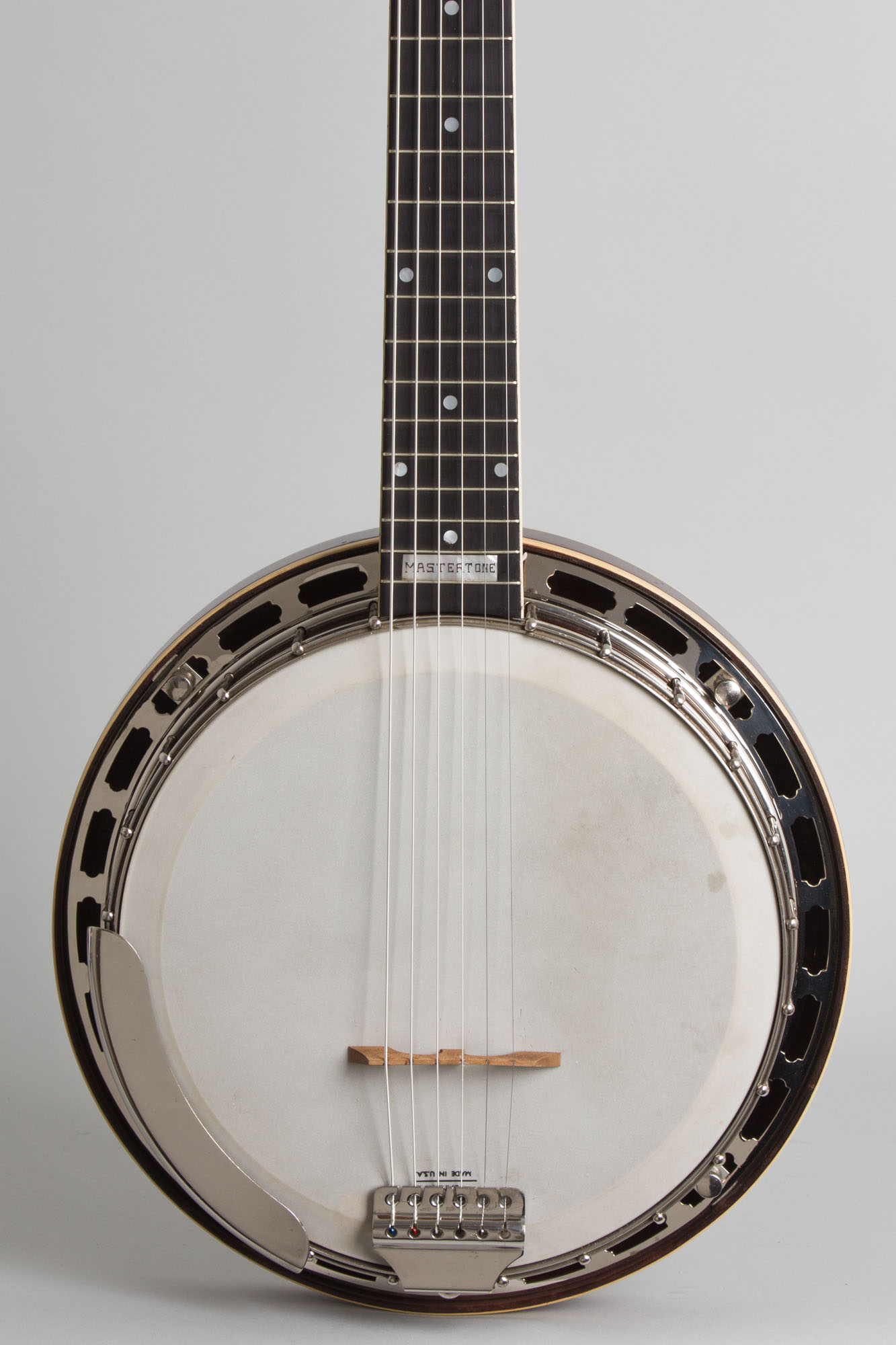
This is a really superb example of one of Gibson's more elusive creations: the six-string Mastertone banjo. This is a very rare instrument, even more so than the earlier "trap door"-style guitar banjos built prior to 1925. It was made in the latter part of 1927, part of one of a relatively few batches of six-strings ever completed. This is a full Masterton rim, equivalent to the TB-3 from the same year with a two-piece tube-and-plate flange and the rare solid no-hole archtop tone ring which had just replaced the earlier spring-loaded ball-bearing version. This is an important feature of this particular instrument as the earlier models have the less well regarded floating ball-bearing tone ring; the sound on this banjo is more focused with less overring and more snap.
The neck is a substantial round-backed affair with a bound dot inlaid ebony fingerboard; this one is a bit slimmer than some we have had. The guitar-shaped headstock has the slanted 1920s "The Gibson" inlaid in pearl script and six "Pancake" Grover patent geared tuners. All standard the Gibson rim hardware is present, including the special six-string Kershner "Improved Unique" tailpiece used only on this model.
The GB-3 is an obscure instrument but has seen a couple of notable users over the last nearly 100 years. Seminal early country fingerpicker Sam McGee used one of these to back Uncle Dave Macon live and on disc and recorded several of his most famous pieces with it. In more recent years this model is associated with Neil Young, who often plays a song or two on his during acoustic concert segments; "For the Turnstiles" is a notable favorite. The Mastertone GB-3 is one of the coolest of Gibson rarities and certainly one of the best banjo-guitars ever made; this one plays and sounds fantastic and is one of the nicest we have had, complete in the original HSC. This later 1927 model is only the second example with a solid tone ring we have had the pleasure of offering.
Overall length is 36 1/2 in. (92.7 cm.), 11 in. (27.9 cm.) diameter head, and 3 7/16 in. (8.7 cm.) in depth, measured at side of rim. Scale length is 25 1/2 in. (648 mm.). Width of nut is 1 3/4 in. (44 mm.).
This nearly century-old GB-3 remains in fine original condition showing some typical checking and wear but no repairs or alterations. The banjo retains all of its original finish and hardware. The back of the resonator shows the most wear as usual, with the heaviest checking and general scuffing and scraping over the entire surface. The sides are less worn by comparison, with some dings, scuffs and rubbed spots mostly on the lower side. The neck finish is worn to the wood in a couple of small spots in the first position and has some small dings and dents, the headstock face has tight checking and a couple of noticeable dings and chips.
The hardware is all original and intact, including all tailpiece parts. The plating is nicely intact with only minor wear; the armrest has some light dings and dents. The original frets are in excellent shape and the fingerboard is quite clean. The head is a modern plastic Remo and the maple bridge (which looks hand carved) is old but not original. Overall this is a lovely example of an early Mastertone GB-3 with the more sought-after solid archtop tone ring, complete with the original HSC which is also correct for a Plectrum or 5-string. Overall Excellent - Condition.
This is a really superb example of one of Gibson's more elusive creations: the six-string Mastertone banjo. This is a very rare instrument, even more so than the earlier "trap door"-style guitar banjos built prior to 1925. It was made in the latter part of 1927, part of one of a relatively few batches of six-strings ever completed. This is a full Masterton rim, equivalent to the TB-3 from the same year with a two-piece tube-and-plate flange and the rare solid no-hole archtop tone ring which had just replaced the earlier spring-loaded ball-bearing version. This is an important feature of this particular instrument as the earlier models have the less well regarded floating ball-bearing tone ring; the sound on this banjo is more focused with less overring and more snap.
The neck is a substantial round-backed affair with a bound dot inlaid ebony fingerboard; this one is a bit slimmer than some we have had. The guitar-shaped headstock has the slanted 1920s "The Gibson" inlaid in pearl script and six "Pancake" Grover patent geared tuners. All standard the Gibson rim hardware is present, including the special six-string Kershner "Improved Unique" tailpiece used only on this model.
The GB-3 is an obscure instrument but has seen a couple of notable users over the last nearly 100 years. Seminal early country fingerpicker Sam McGee used one of these to back Uncle Dave Macon live and on disc and recorded several of his most famous pieces with it. In more recent years this model is associated with Neil Young, who often plays a song or two on his during acoustic concert segments; "For the Turnstiles" is a notable favorite. The Mastertone GB-3 is one of the coolest of Gibson rarities and certainly one of the best banjo-guitars ever made; this one plays and sounds fantastic and is one of the nicest we have had, complete in the original HSC. This later 1927 model is only the second example with a solid tone ring we have had the pleasure of offering.
Overall length is 36 1/2 in. (92.7 cm.), 11 in. (27.9 cm.) diameter head, and 3 7/16 in. (8.7 cm.) in depth, measured at side of rim. Scale length is 25 1/2 in. (648 mm.). Width of nut is 1 3/4 in. (44 mm.).
This nearly century-old GB-3 remains in fine original condition showing some typical checking and wear but no repairs or alterations. The banjo retains all of its original finish and hardware. The back of the resonator shows the most wear as usual, with the heaviest checking and general scuffing and scraping over the entire surface. The sides are less worn by comparison, with some dings, scuffs and rubbed spots mostly on the lower side. The neck finish is worn to the wood in a couple of small spots in the first position and has some small dings and dents, the headstock face has tight checking and a couple of noticeable dings and chips.
The hardware is all original and intact, including all tailpiece parts. The plating is nicely intact with only minor wear; the armrest has some light dings and dents. The original frets are in excellent shape and the fingerboard is quite clean. The head is a modern plastic Remo and the maple bridge (which looks hand carved) is old but not original. Overall this is a lovely example of an early Mastertone GB-3 with the more sought-after solid archtop tone ring, complete with the original HSC which is also correct for a Plectrum or 5-string. Overall Excellent - Condition.