Gibson ES-330TC Thinline Hollow Body Electric Guitar (1960)

LOADING IMAGES
This item has been sold.
Item # 13669
Prices subject to change without notice.
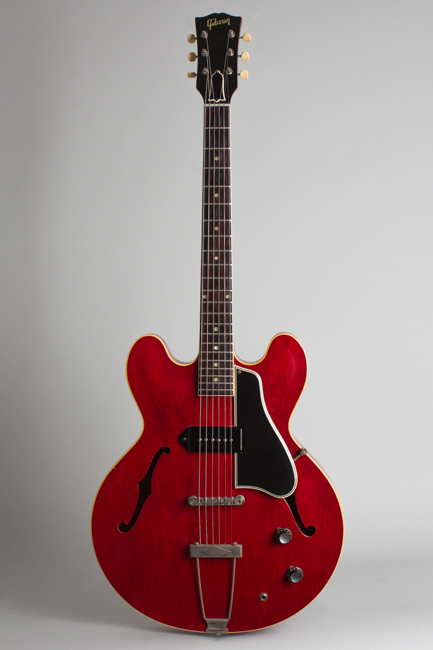
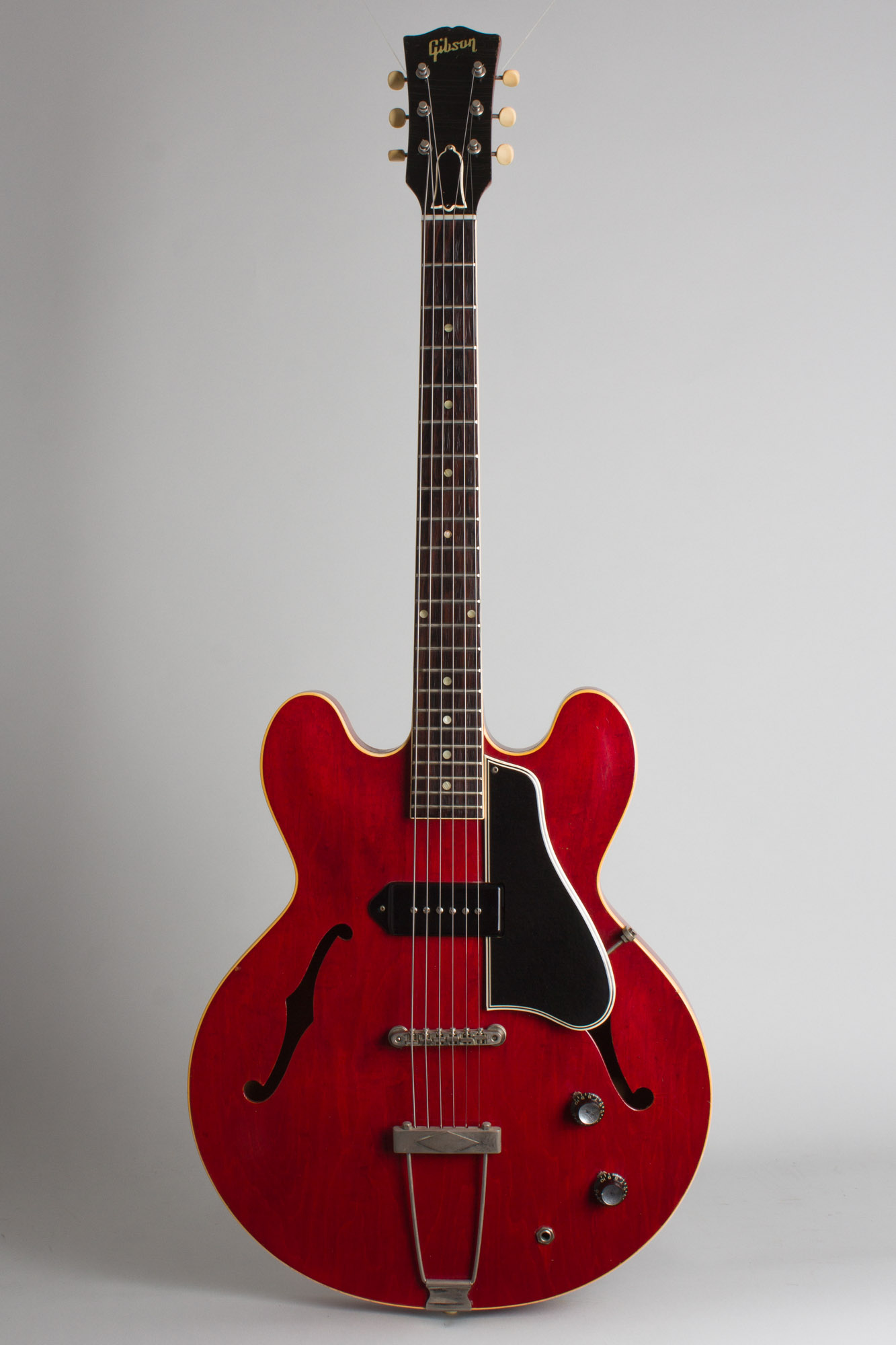
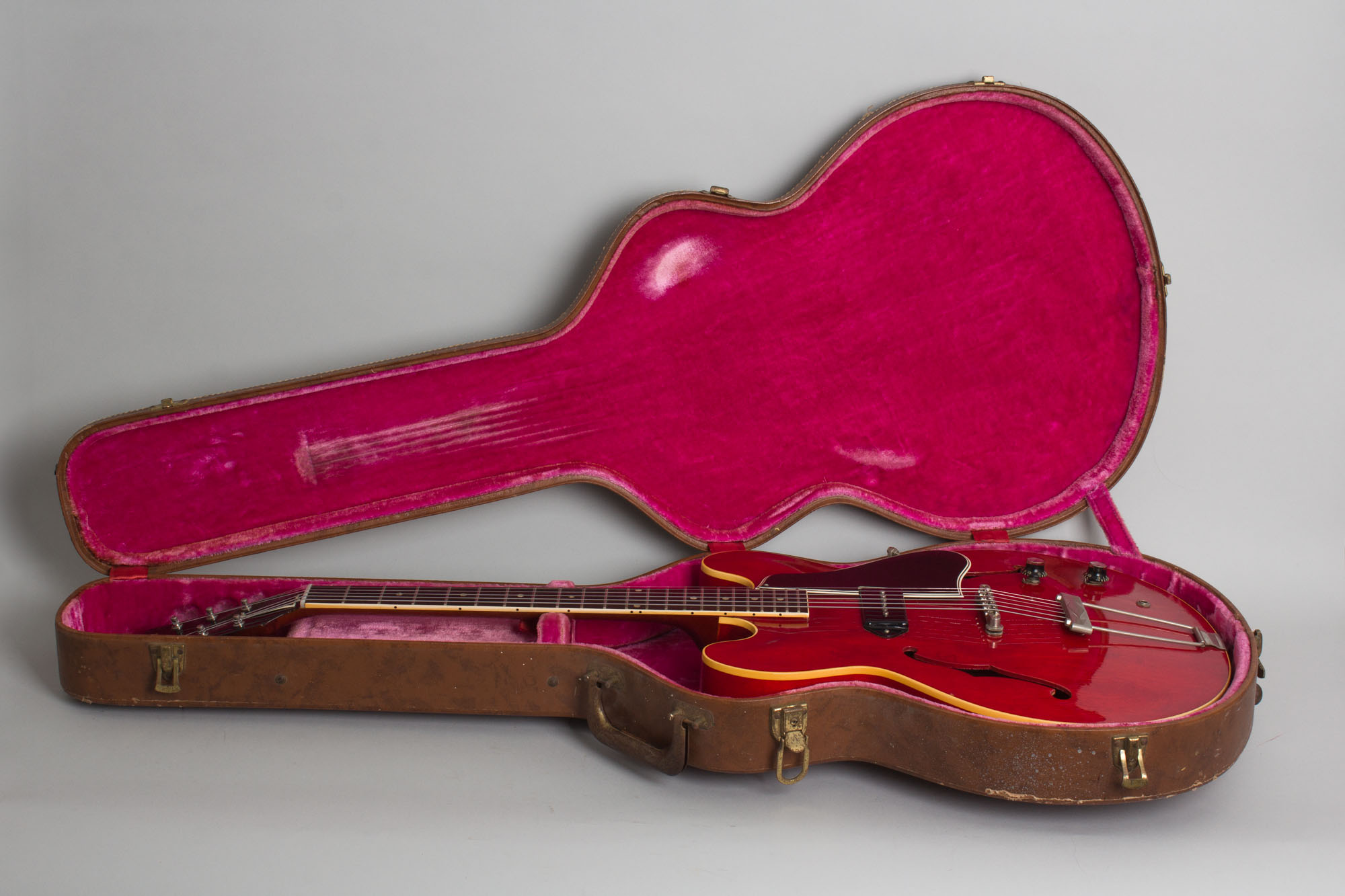
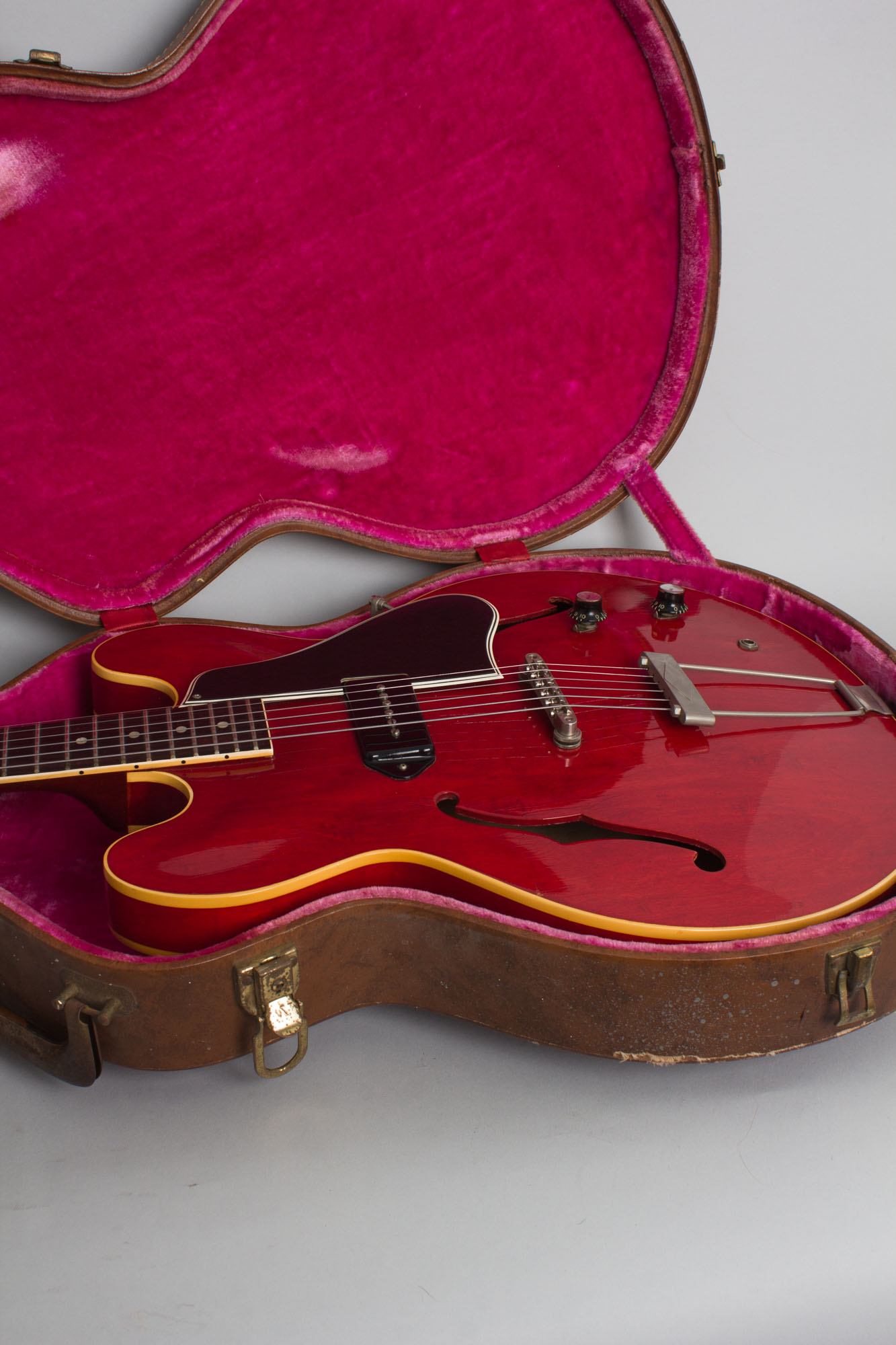
Gibson ES-330TC Model Thinline Hollow Body Electric Guitar (1960), made in Kalamazoo, Michigan, serial # R5071-10, cherry lacquer finish, laminated maple body, mahogany neck with rosewood fingerboard, original brown hard shell case.
This is a nice original example of one of the very first cherry-finish Gibson ES-330T models from 1960, the initial year of production. The ES-330T (with no "D") was the relatively short-lived single pickup version of the popular ES-330TD, one of Gibson's big successes in the early-mid 1960s. By comparison the cherry single-pickup ES-330 is a fairly rare guitar, with only 582 produced from 1960-'63. all of 37 cherry finish 330Ts are listed as having been shipped in 1960; this option replaced an even rarer natural version towards the end of that year. This one has a factory order number dating to 1960 but as these were applied early in construction it is possible it was actually sold in 1961, one of 214 registered that year.
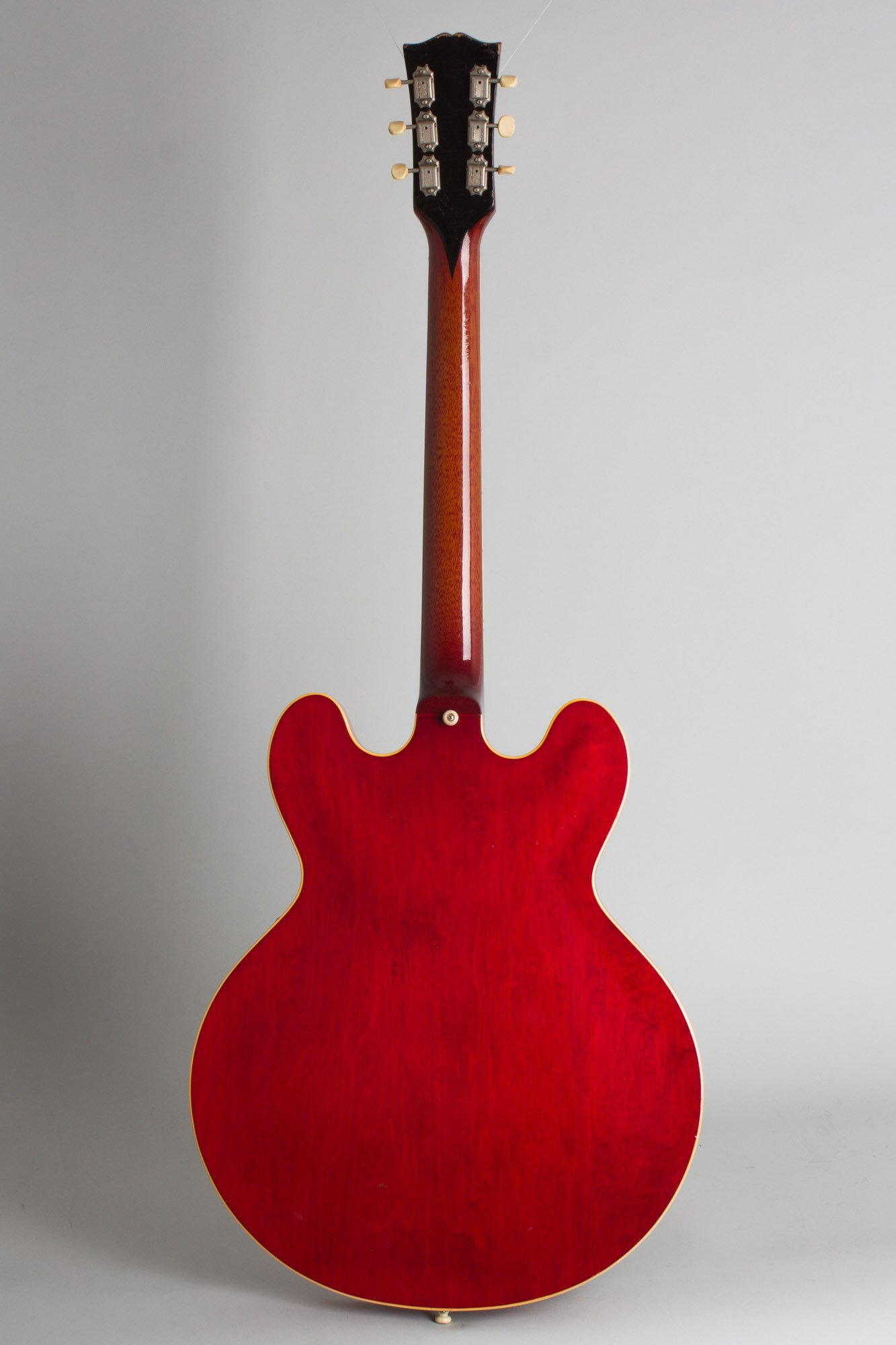
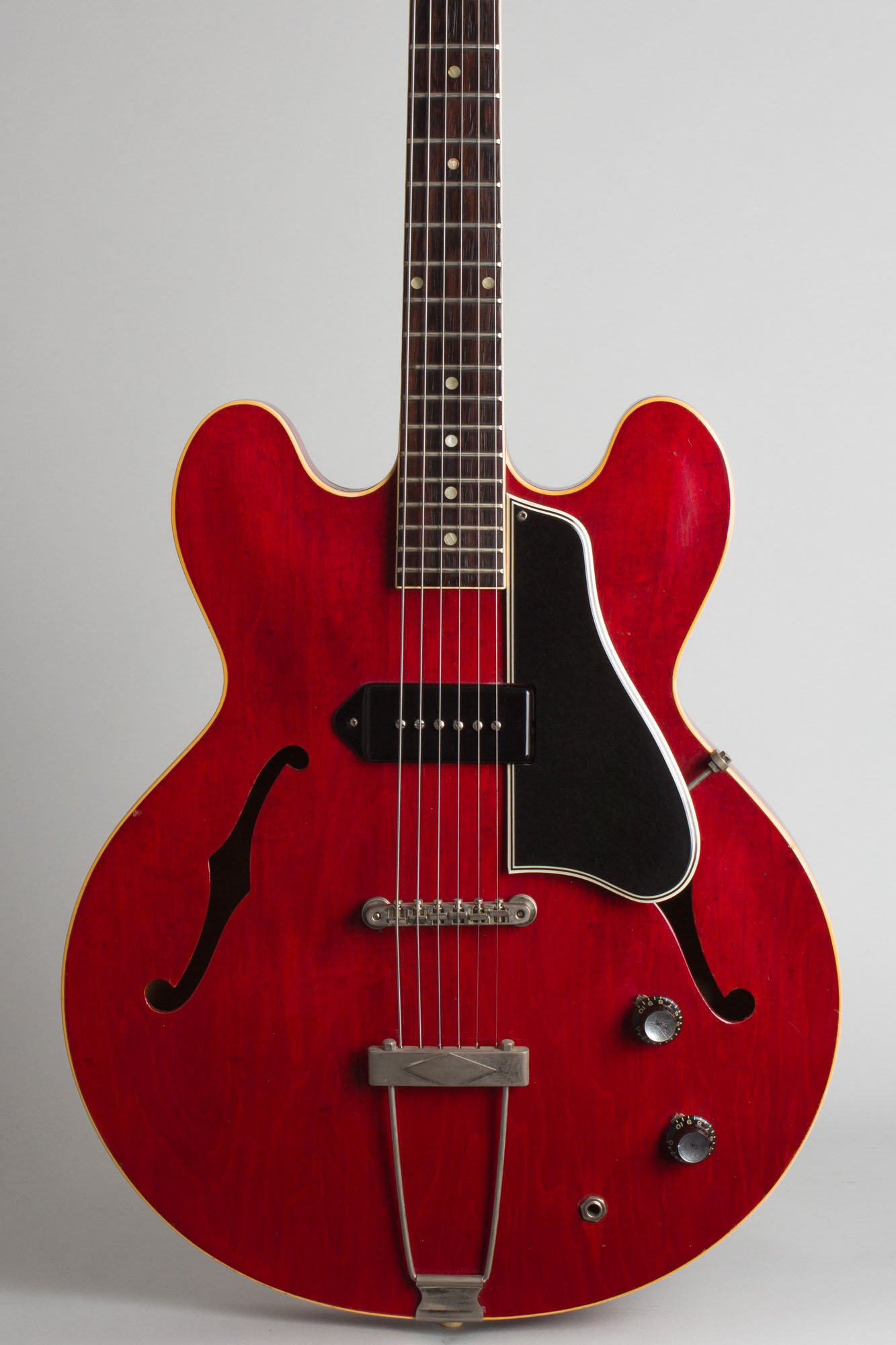
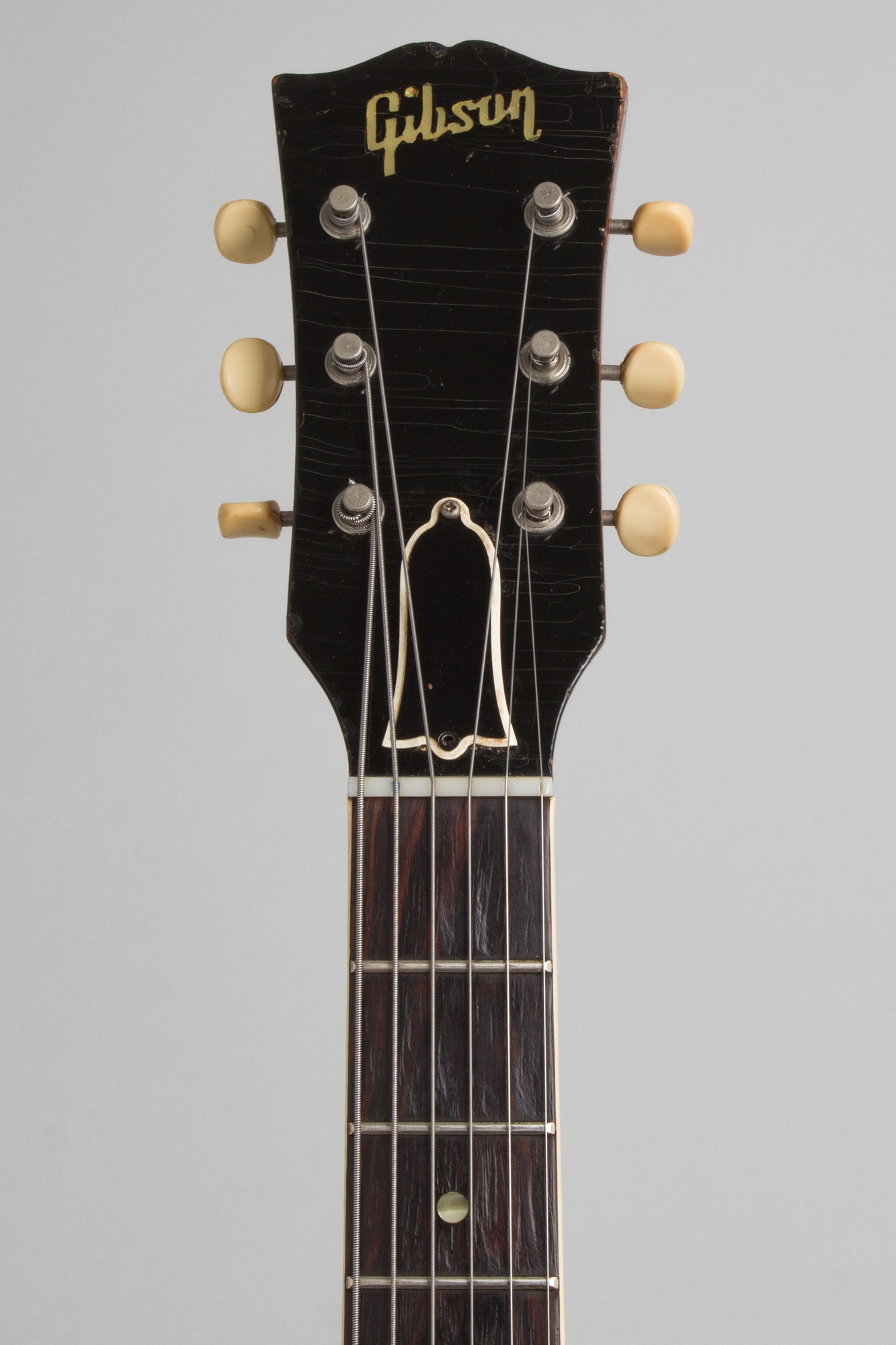
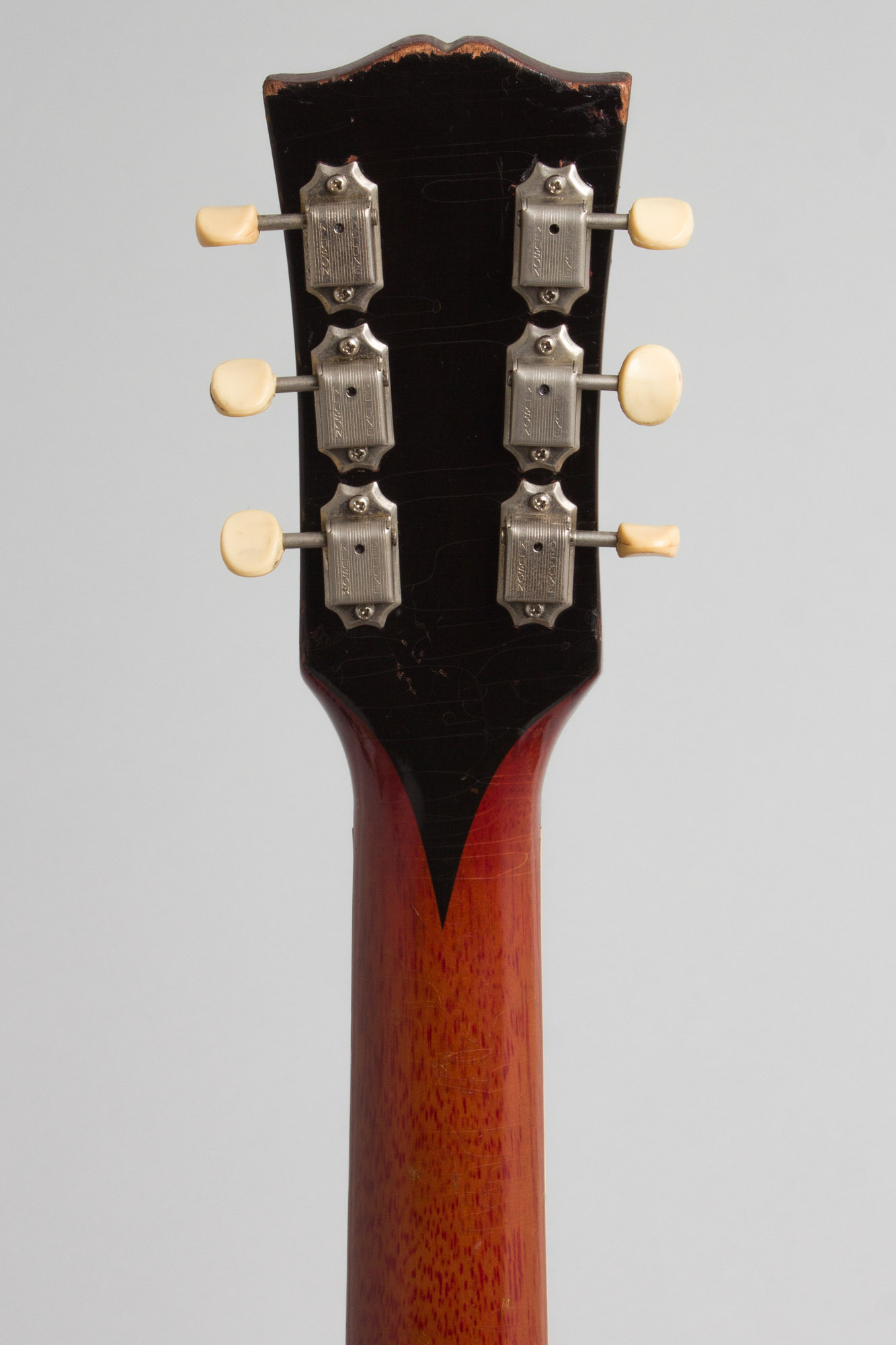
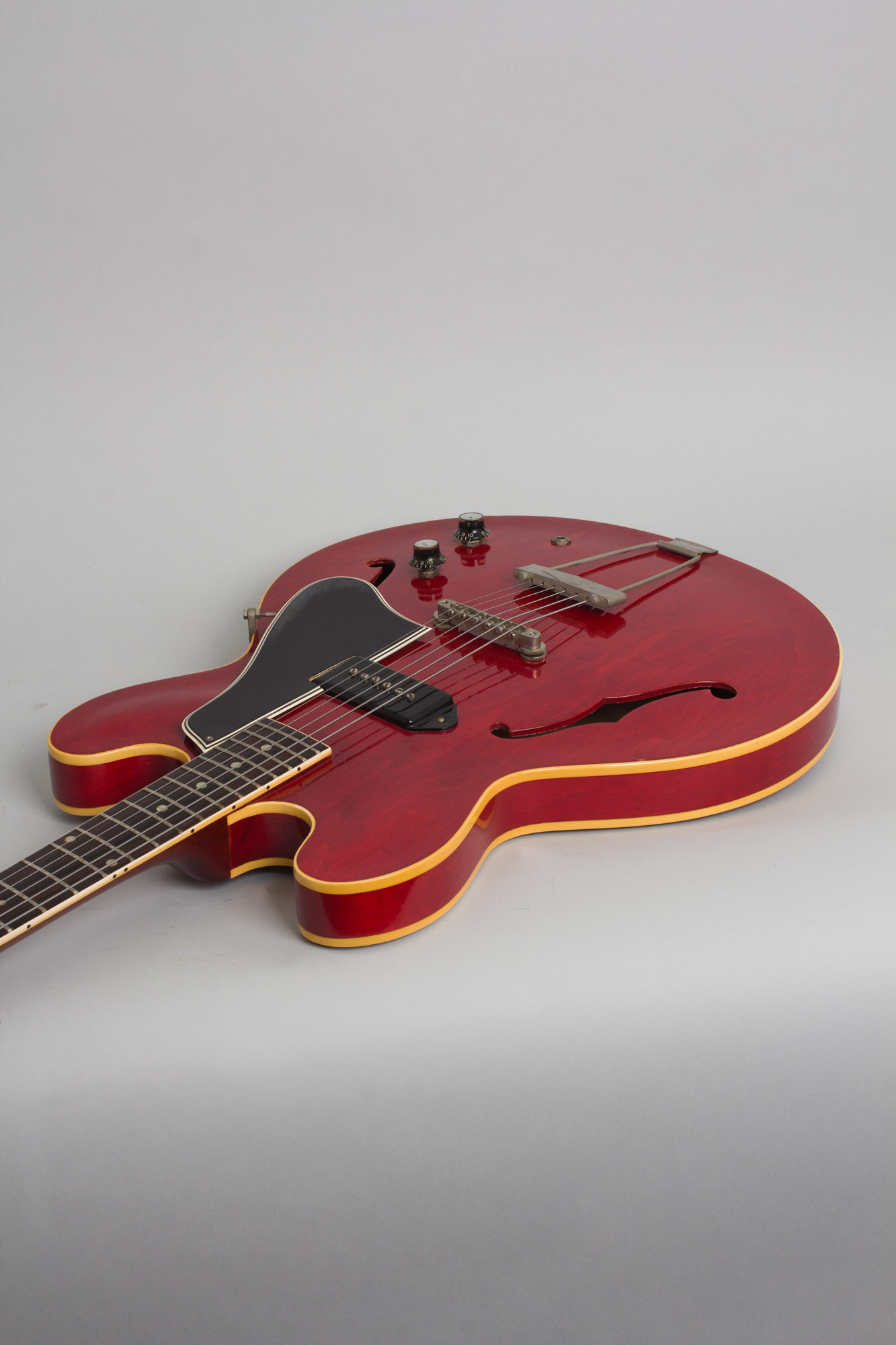
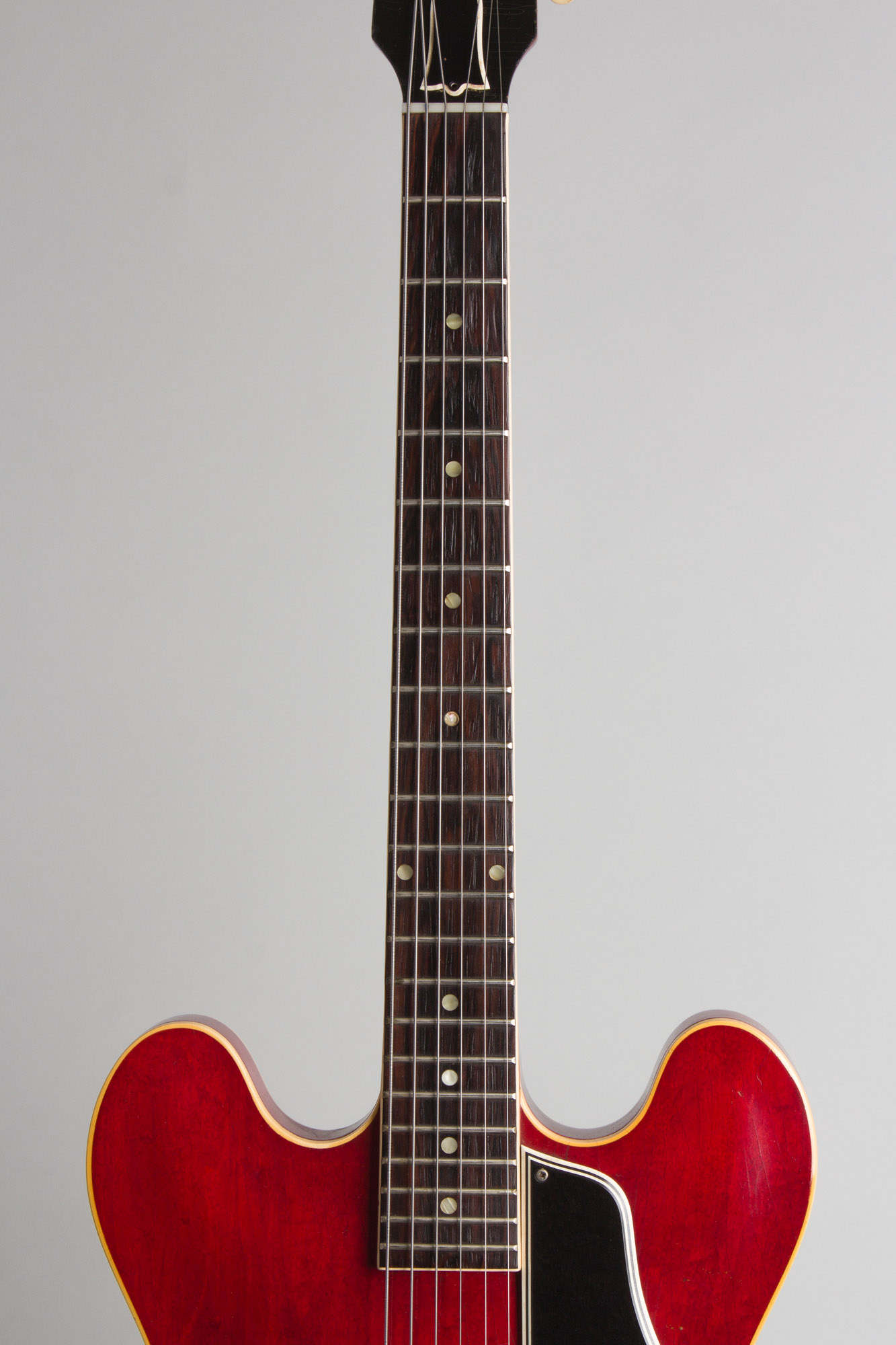
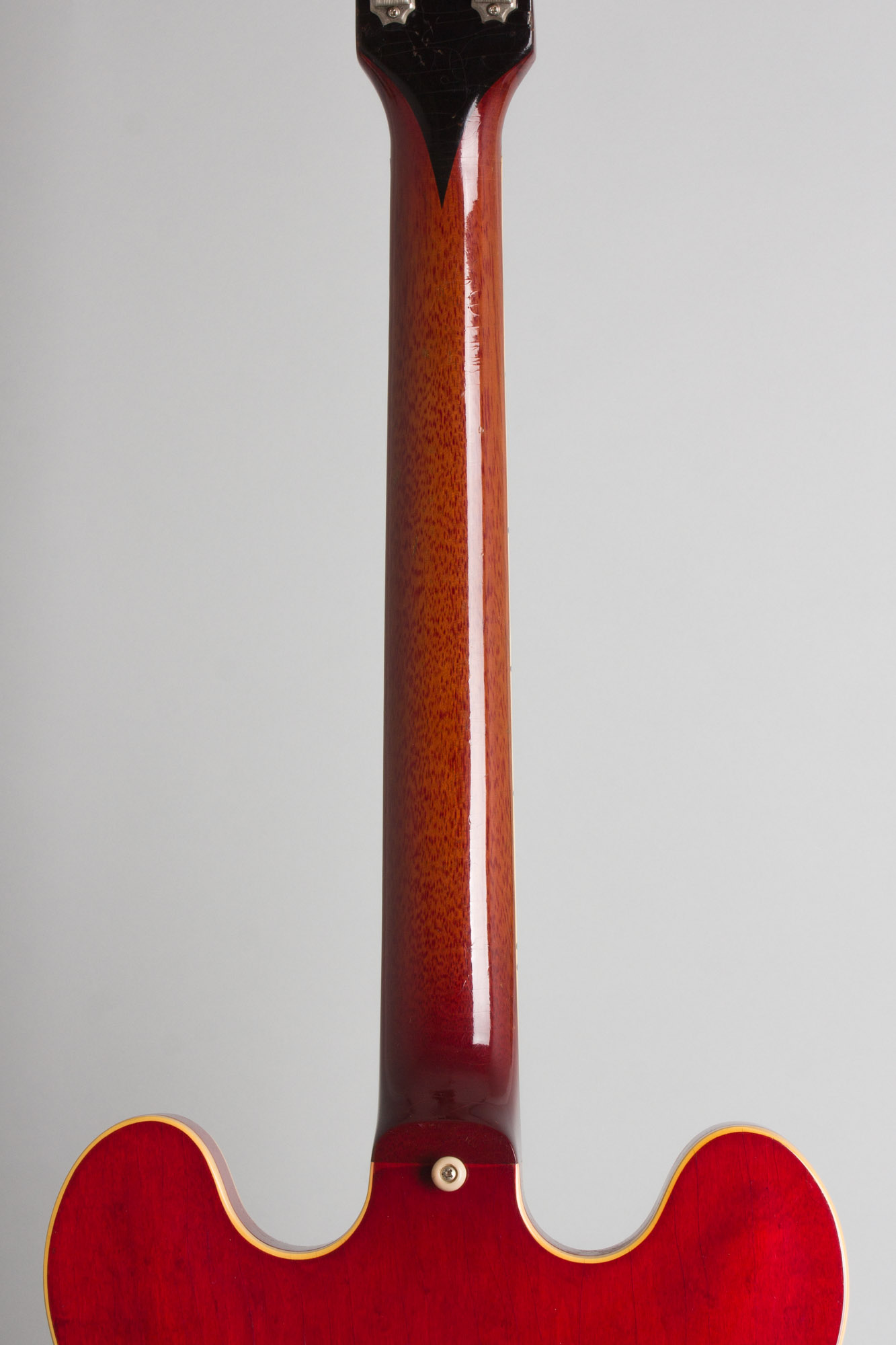
Regardless of when it was sent out into the world, this guitar was built in later 1960 and shows first-generation ES-330 features including the bound dot inlaid rosewood fingerboard, rounder "Mickey Mouse" cutaway horns on the body and a black plastic P-90 pickup cover. The nickel-plated ABR-1 Tune-O-Matic bridge is the first "no-wire" pattern with nickel saddles. The single-bound body is fully hollow with a deep cherry finish and the neck joins at the 16th fret, in common with all early ES-330 variants. This one has something we rarely see on 330's, a black painted headstock rear with a "stinger" pointing down the neck. This was a Gibson factory trick usually used to cover some cosmetic flaw, but it actually is quite attractive and gives the guitar a bit more class than usual. There ARE actually "stinger" collectors out there!
The distinctive feature of the ES-330T is the single P-90 pickup mounted right smack in the middle of the body. This center pickup placement was used by Gibson on just two midline models, the ES-225T and ES-330T, as a sort of tonal compromise between the standard neck or bridge placement options. It gives the guitar a smooth midrange-rich tone, obviously not as versatile as the twin pickup ES-330TD, but with a distinctive sound all its own. When not pushed too hard through an overdriven amp it has an interesting acoustic-y character; we have found some players used to gigging with an amplified flat-top have been quite taken with this model.
This early 330TC is also simply a superbly easy-handling and great-playing guitar, super lightweight and comfortable in any context. The neck has the relatively flat profile seen on most 1960-61 Gibson guitars specific to this period. While not one of the most collected of vintage Gibsons, this is a very friendly instrument to play with a surprising amount of sound "unplugged"; we've been told they make not only great "couch" guitars but a fine "back porch" go-to as well!
Overall length is 43 1/8 in. (109.5 cm.), 16 1/8 in. (41 cm.) wide at lower bout, and 1 5/8 in. (4.1 cm.) in depth, measured at side of rim. Scale length is 24 3/4 in. (629 mm.). Width of nut is 1 21/32 in. (27 mm.).
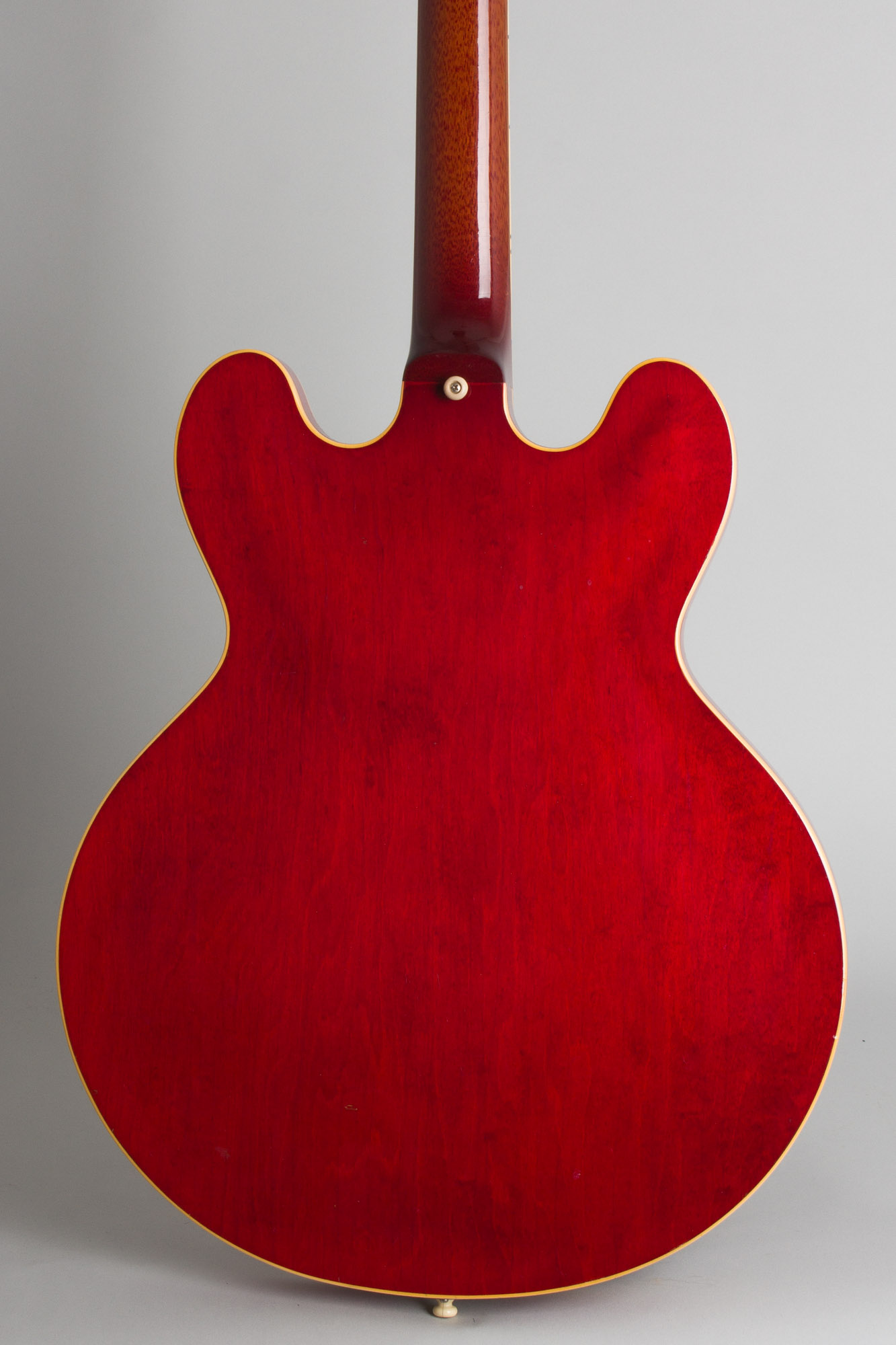
Overall this is a nicely original guitar showing typical light wear. The original cherry finish shows light typical checking over most of the instrument but very little fade, retaining a strong red hue. There is some general wear including small dings and chips most notably to the headstock edges but in general this is a very well cared for guitar. The face of the headstock has a few glue marks around the truss rod cover due to a slight construction anomaly; the cover was mounted a hair to high and the lower screw has nothing to grab on to. It is currently held firm by the single upper screw, no lower screw is fitted.
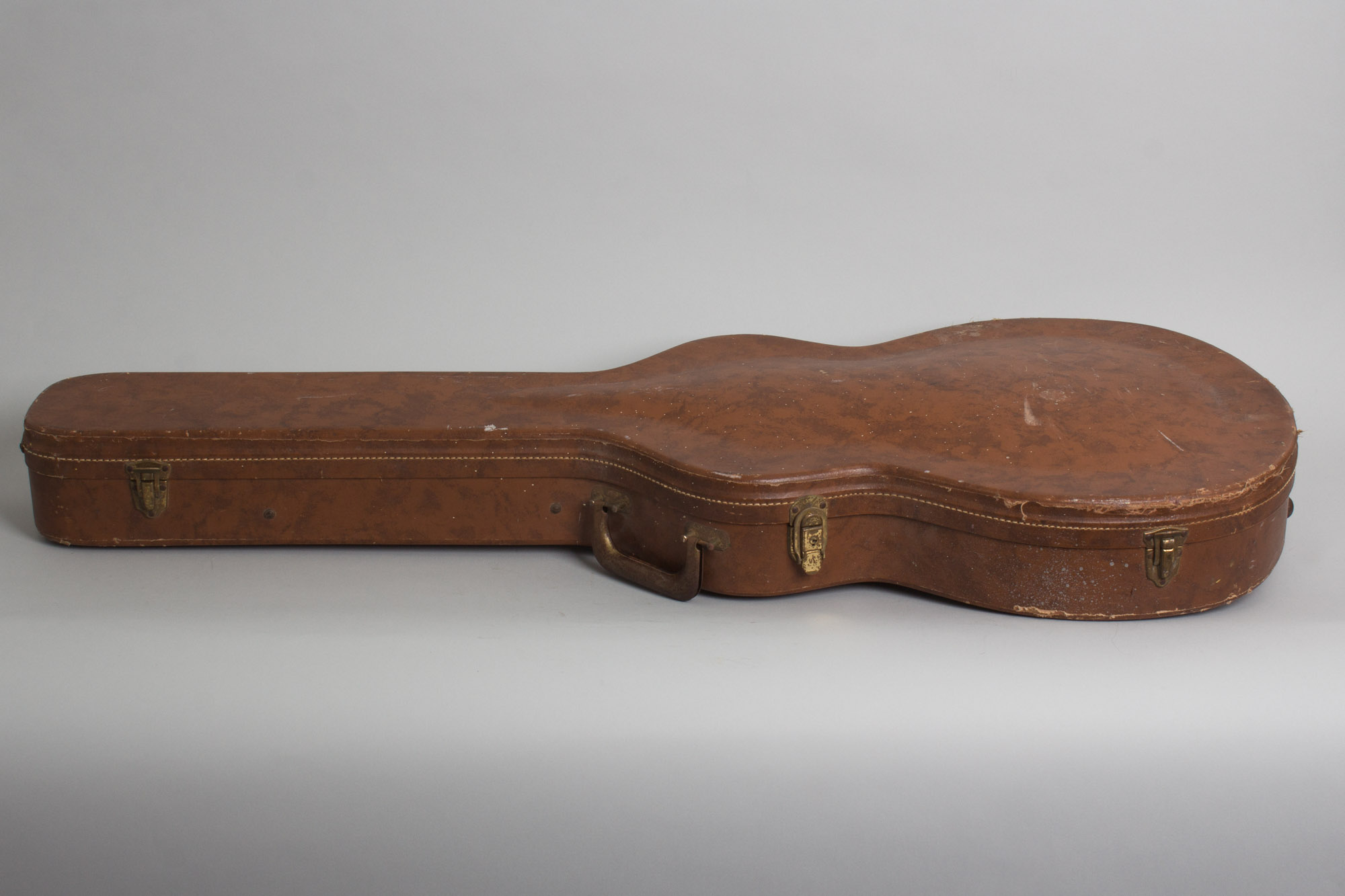
The only alteration is a period Gibson white plastic strap button fitted to the heel; this is almost ubiquitous on this model and was likely done by the original dealer. All hardware is original except the tuners, which are period correct but the "double line" casings indicate they date to the 1964 and after period; there are no errant marks from any other style machines. There is light wear to the nickel plating overall. The original frets show some light wear as do the lower positions of fingerboard. This is a fine-playing and sounding guitar complete in a worn but solid original brown Gibson HSC, which also correct for the period ES-335/45 and has some substantial value in itself. Overall Excellent - Condition.
This is a nice original example of one of the very first cherry-finish Gibson ES-330T models from 1960, the initial year of production. The ES-330T (with no "D") was the relatively short-lived single pickup version of the popular ES-330TD, one of Gibson's big successes in the early-mid 1960s. By comparison the cherry single-pickup ES-330 is a fairly rare guitar, with only 582 produced from 1960-'63. all of 37 cherry finish 330Ts are listed as having been shipped in 1960; this option replaced an even rarer natural version towards the end of that year. This one has a factory order number dating to 1960 but as these were applied early in construction it is possible it was actually sold in 1961, one of 214 registered that year.
Regardless of when it was sent out into the world, this guitar was built in later 1960 and shows first-generation ES-330 features including the bound dot inlaid rosewood fingerboard, rounder "Mickey Mouse" cutaway horns on the body and a black plastic P-90 pickup cover. The nickel-plated ABR-1 Tune-O-Matic bridge is the first "no-wire" pattern with nickel saddles. The single-bound body is fully hollow with a deep cherry finish and the neck joins at the 16th fret, in common with all early ES-330 variants. This one has something we rarely see on 330's, a black painted headstock rear with a "stinger" pointing down the neck. This was a Gibson factory trick usually used to cover some cosmetic flaw, but it actually is quite attractive and gives the guitar a bit more class than usual. There ARE actually "stinger" collectors out there!
The distinctive feature of the ES-330T is the single P-90 pickup mounted right smack in the middle of the body. This center pickup placement was used by Gibson on just two midline models, the ES-225T and ES-330T, as a sort of tonal compromise between the standard neck or bridge placement options. It gives the guitar a smooth midrange-rich tone, obviously not as versatile as the twin pickup ES-330TD, but with a distinctive sound all its own. When not pushed too hard through an overdriven amp it has an interesting acoustic-y character; we have found some players used to gigging with an amplified flat-top have been quite taken with this model.
This early 330TC is also simply a superbly easy-handling and great-playing guitar, super lightweight and comfortable in any context. The neck has the relatively flat profile seen on most 1960-61 Gibson guitars specific to this period. While not one of the most collected of vintage Gibsons, this is a very friendly instrument to play with a surprising amount of sound "unplugged"; we've been told they make not only great "couch" guitars but a fine "back porch" go-to as well!
Overall length is 43 1/8 in. (109.5 cm.), 16 1/8 in. (41 cm.) wide at lower bout, and 1 5/8 in. (4.1 cm.) in depth, measured at side of rim. Scale length is 24 3/4 in. (629 mm.). Width of nut is 1 21/32 in. (27 mm.).
Overall this is a nicely original guitar showing typical light wear. The original cherry finish shows light typical checking over most of the instrument but very little fade, retaining a strong red hue. There is some general wear including small dings and chips most notably to the headstock edges but in general this is a very well cared for guitar. The face of the headstock has a few glue marks around the truss rod cover due to a slight construction anomaly; the cover was mounted a hair to high and the lower screw has nothing to grab on to. It is currently held firm by the single upper screw, no lower screw is fitted.
The only alteration is a period Gibson white plastic strap button fitted to the heel; this is almost ubiquitous on this model and was likely done by the original dealer. All hardware is original except the tuners, which are period correct but the "double line" casings indicate they date to the 1964 and after period; there are no errant marks from any other style machines. There is light wear to the nickel plating overall. The original frets show some light wear as do the lower positions of fingerboard. This is a fine-playing and sounding guitar complete in a worn but solid original brown Gibson HSC, which also correct for the period ES-335/45 and has some substantial value in itself. Overall Excellent - Condition.