Gibson Firebird VII Solid Body Electric Guitar (1964)

LOADING IMAGES
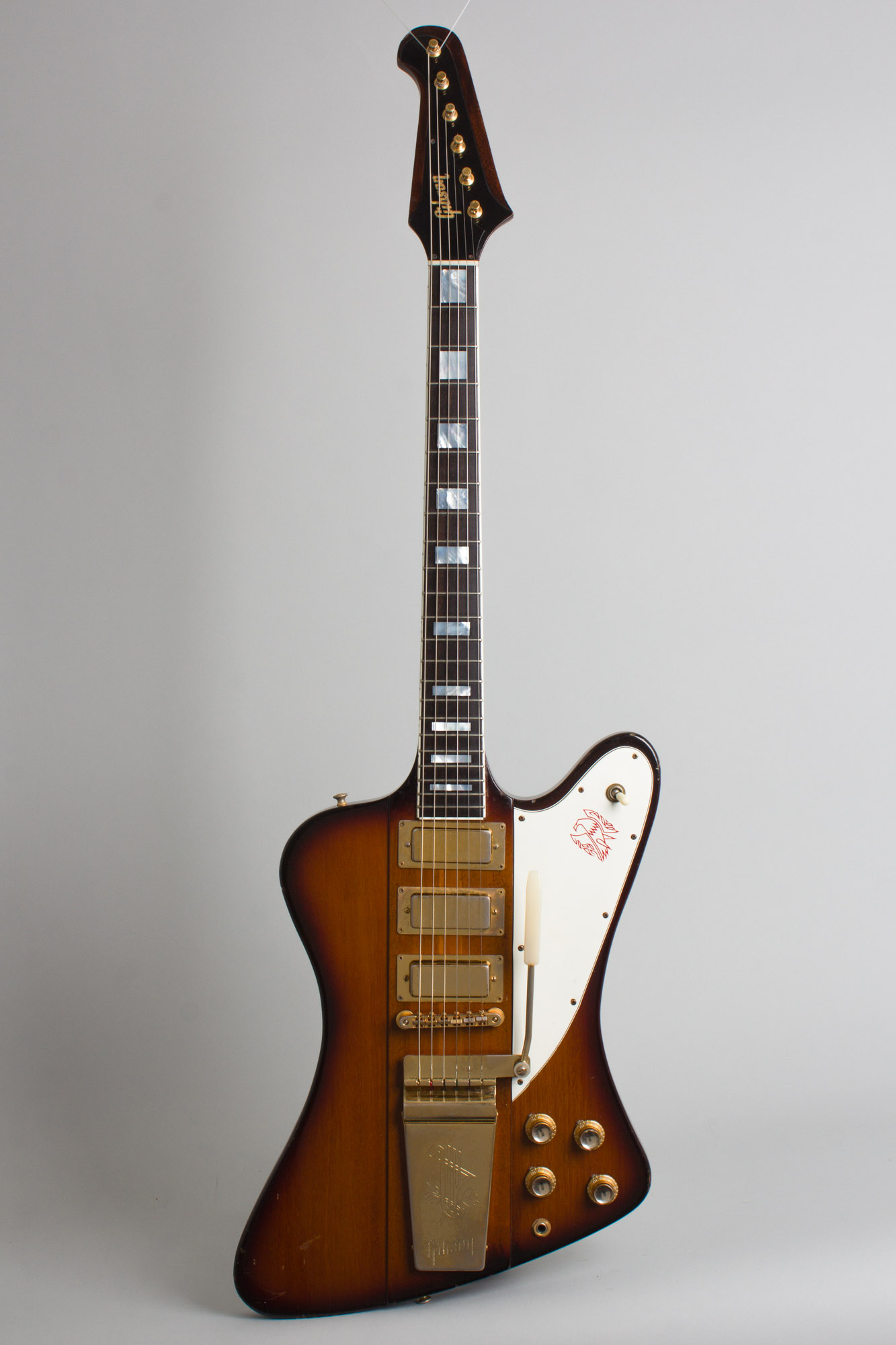
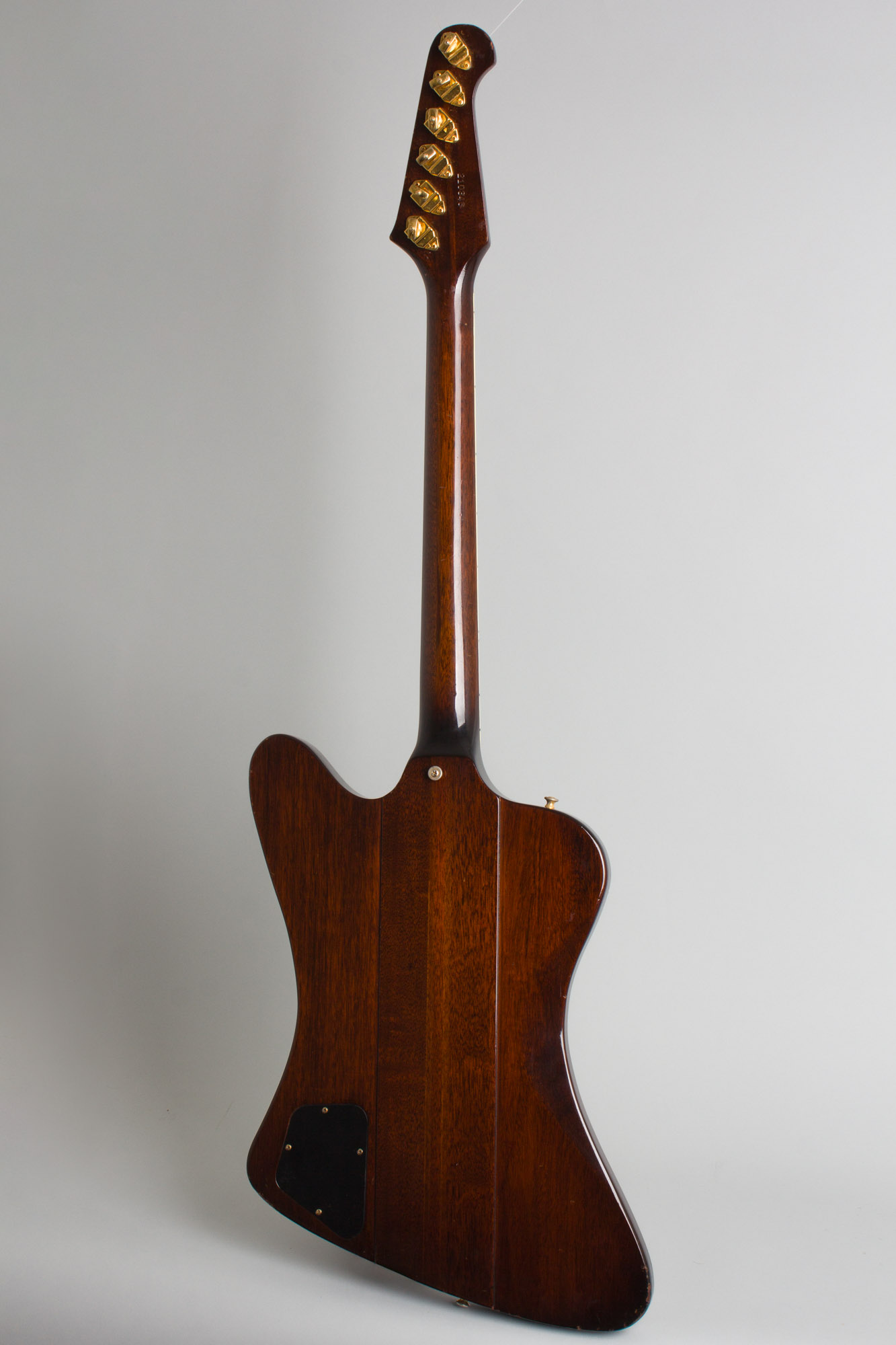
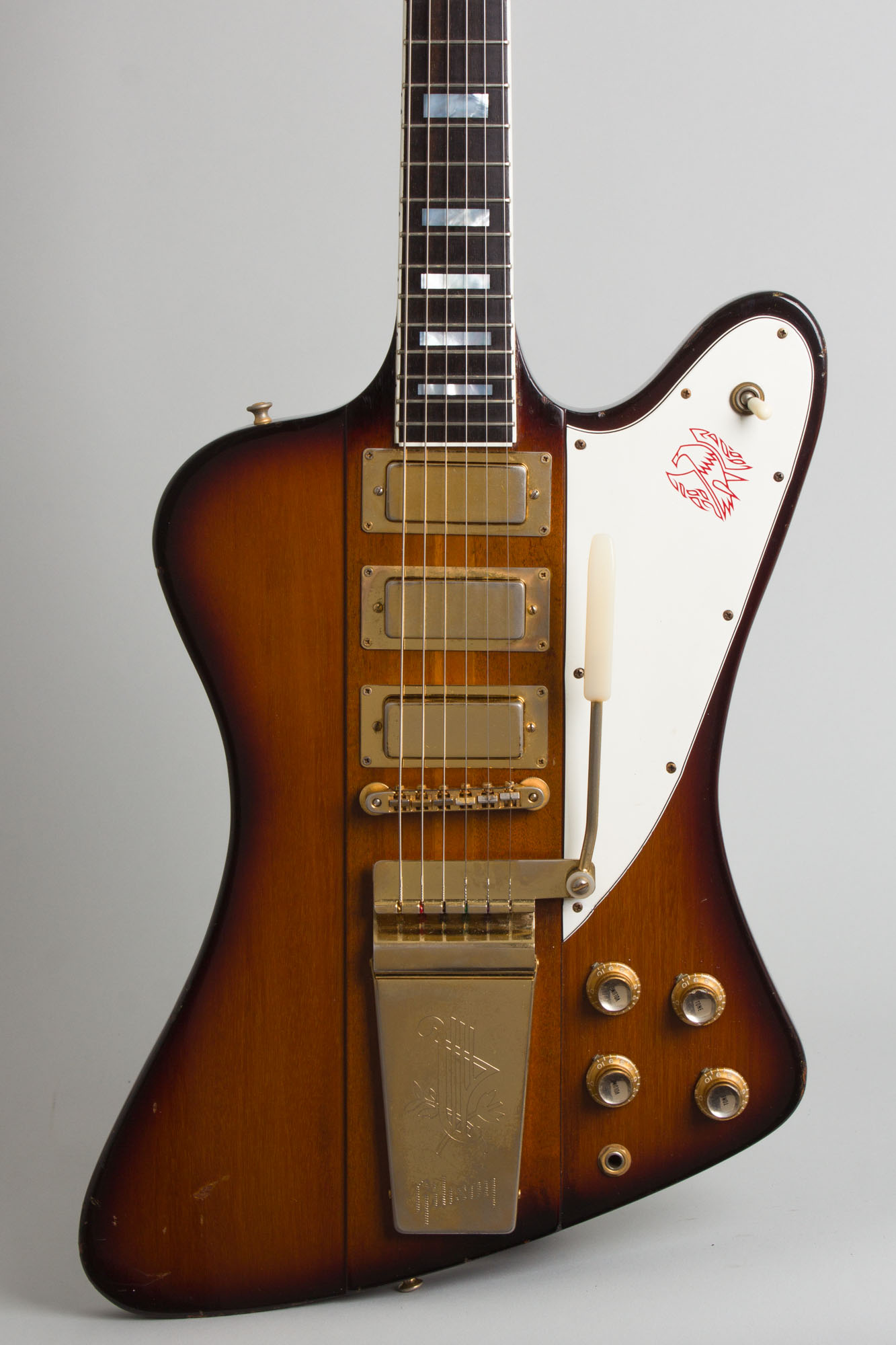
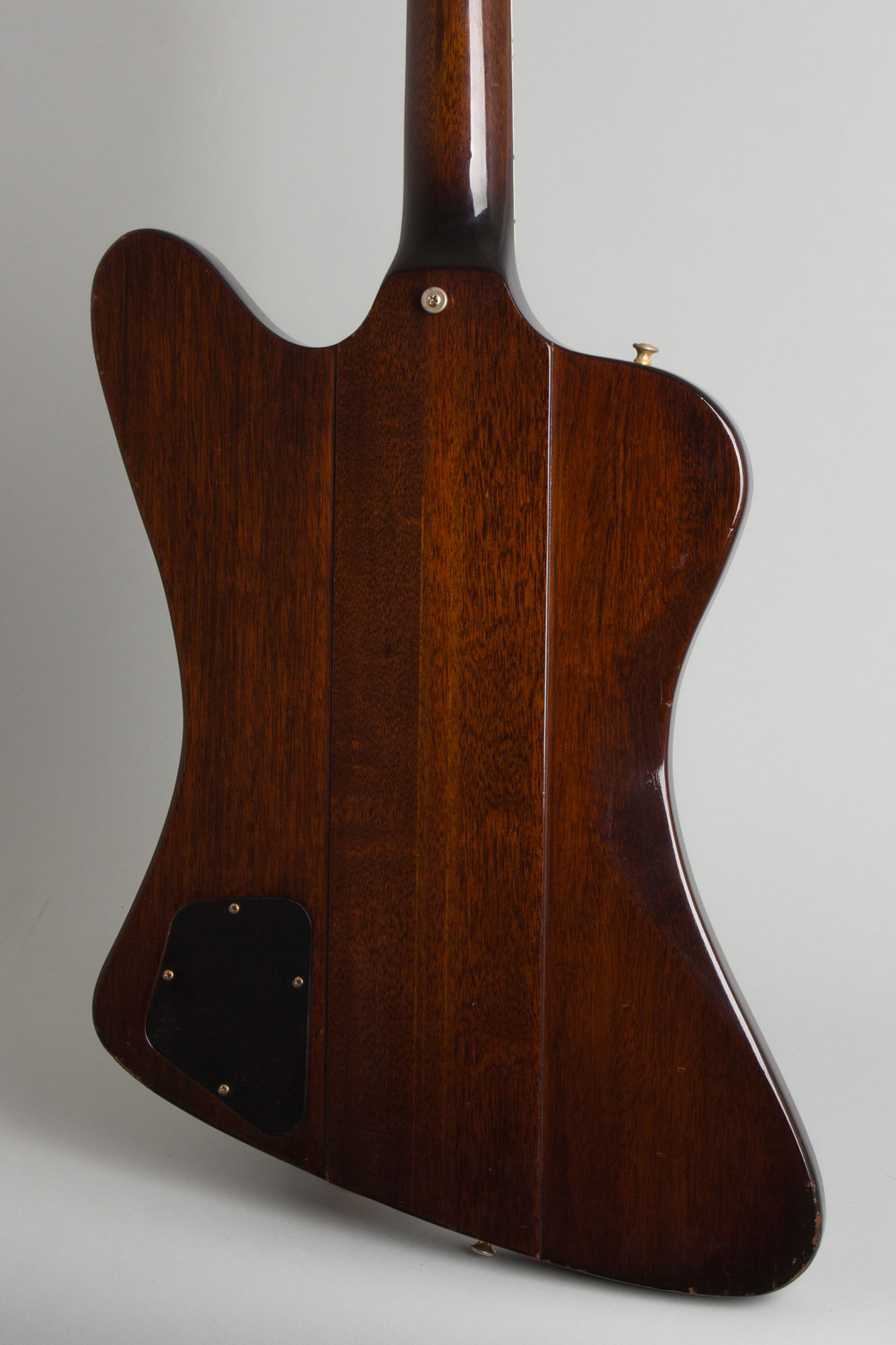
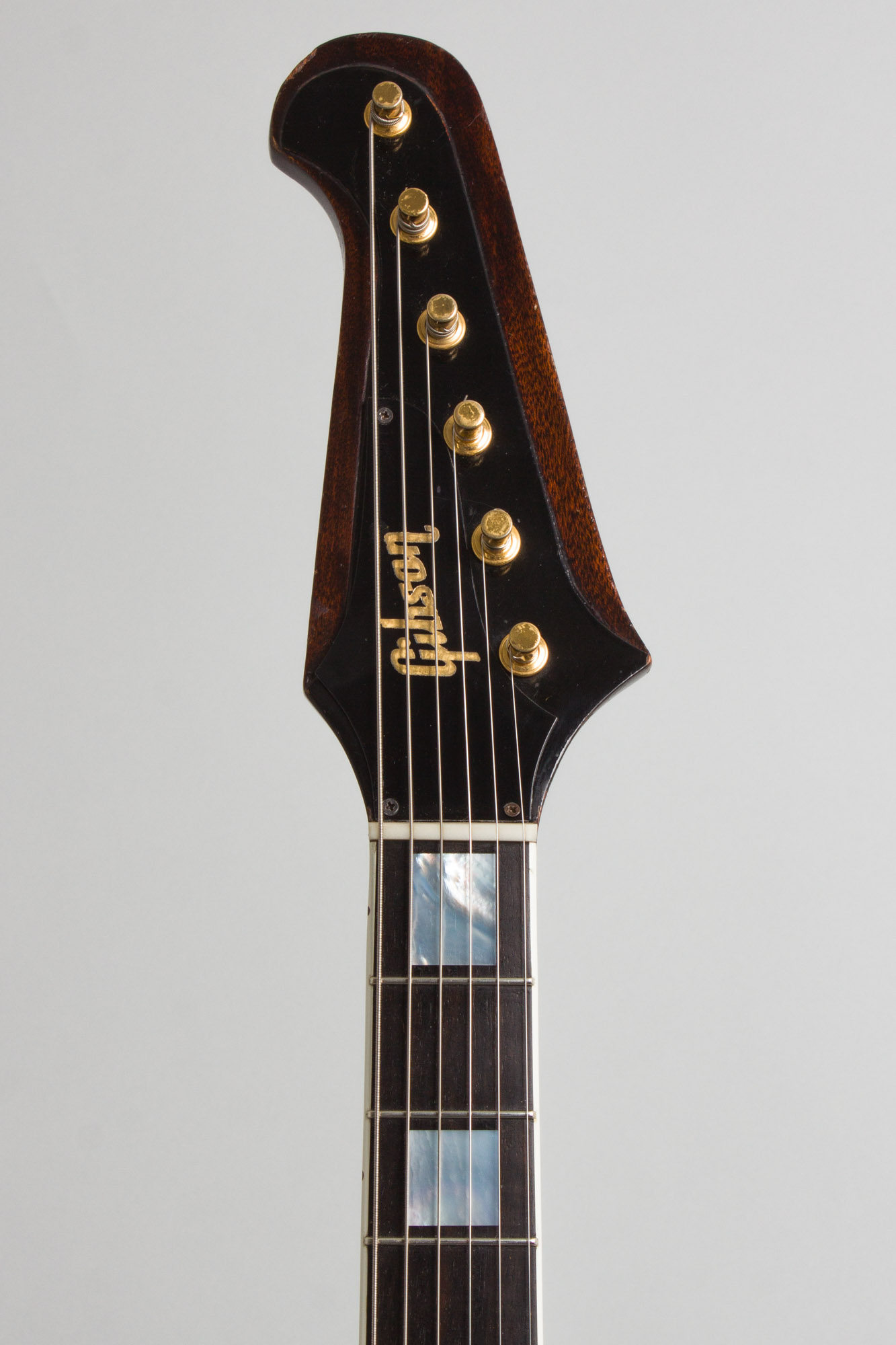

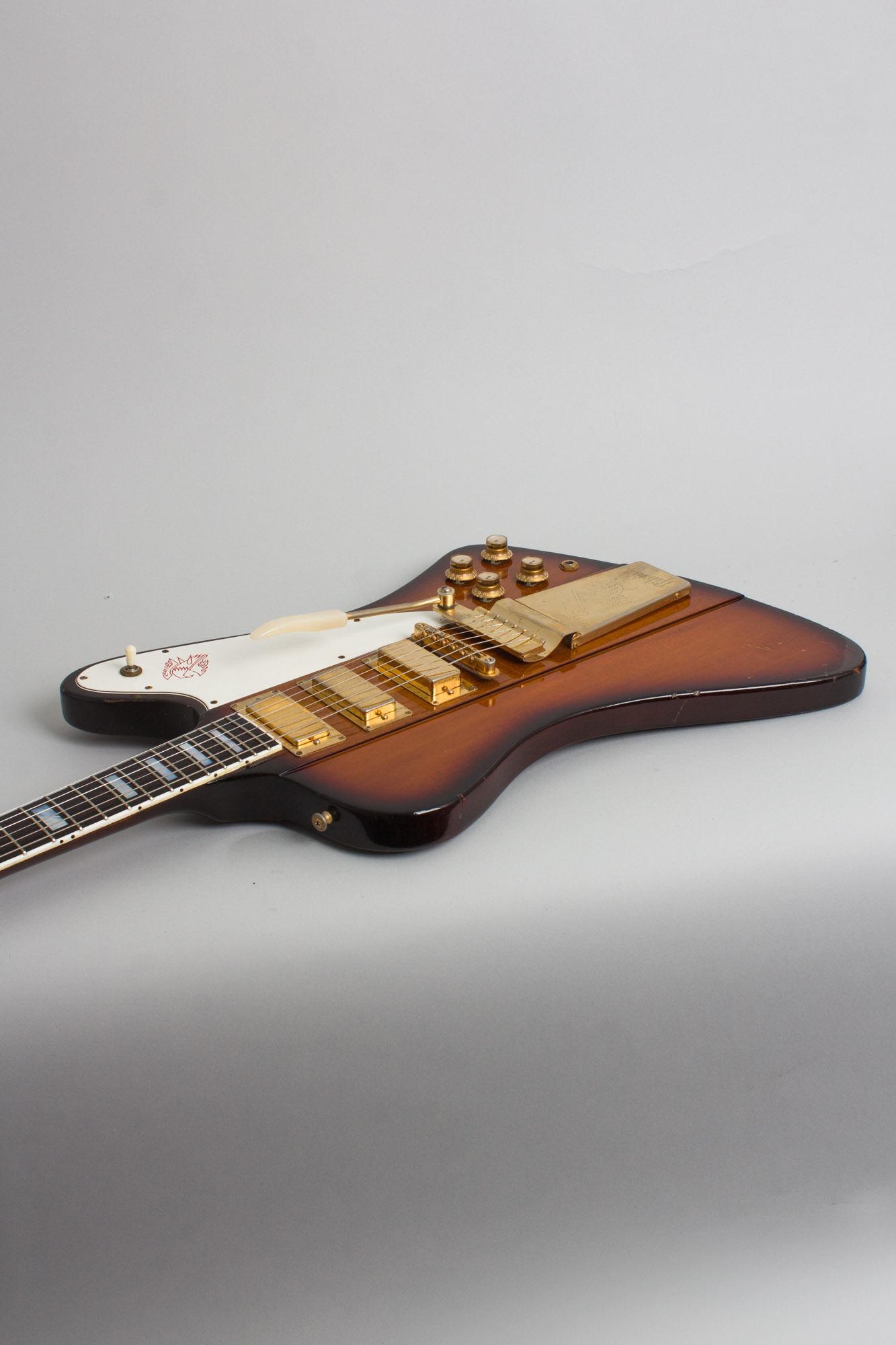

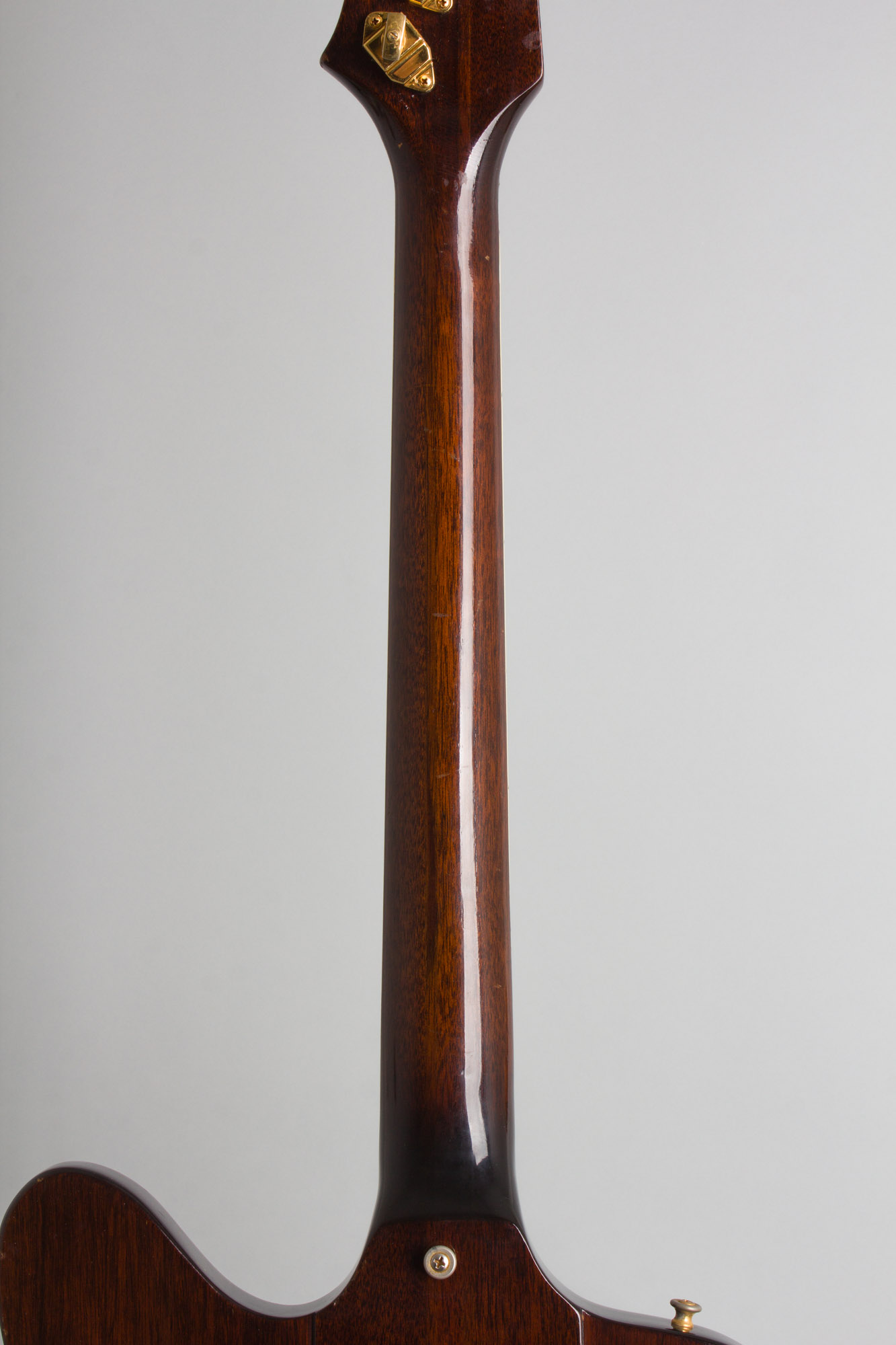
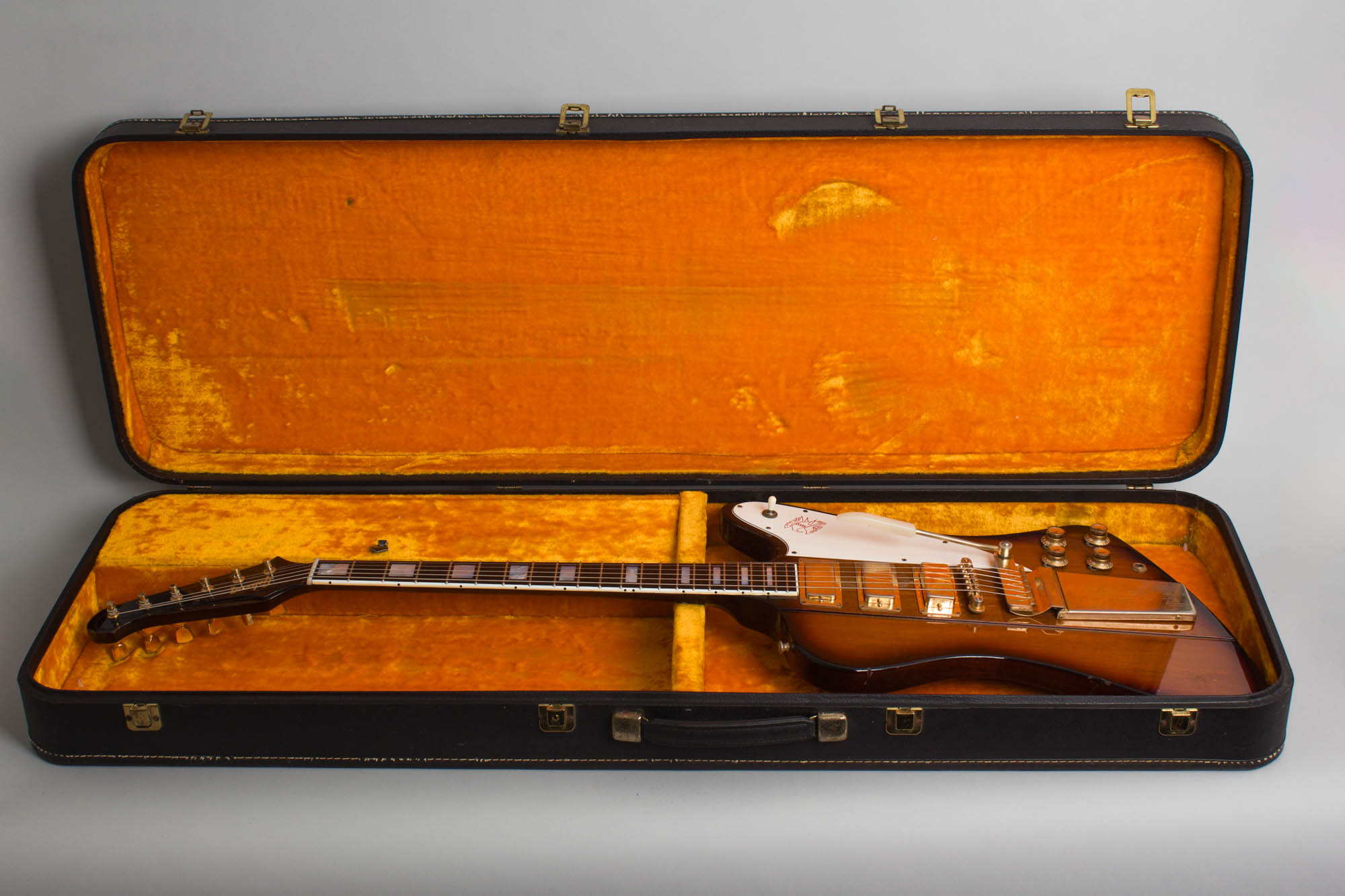
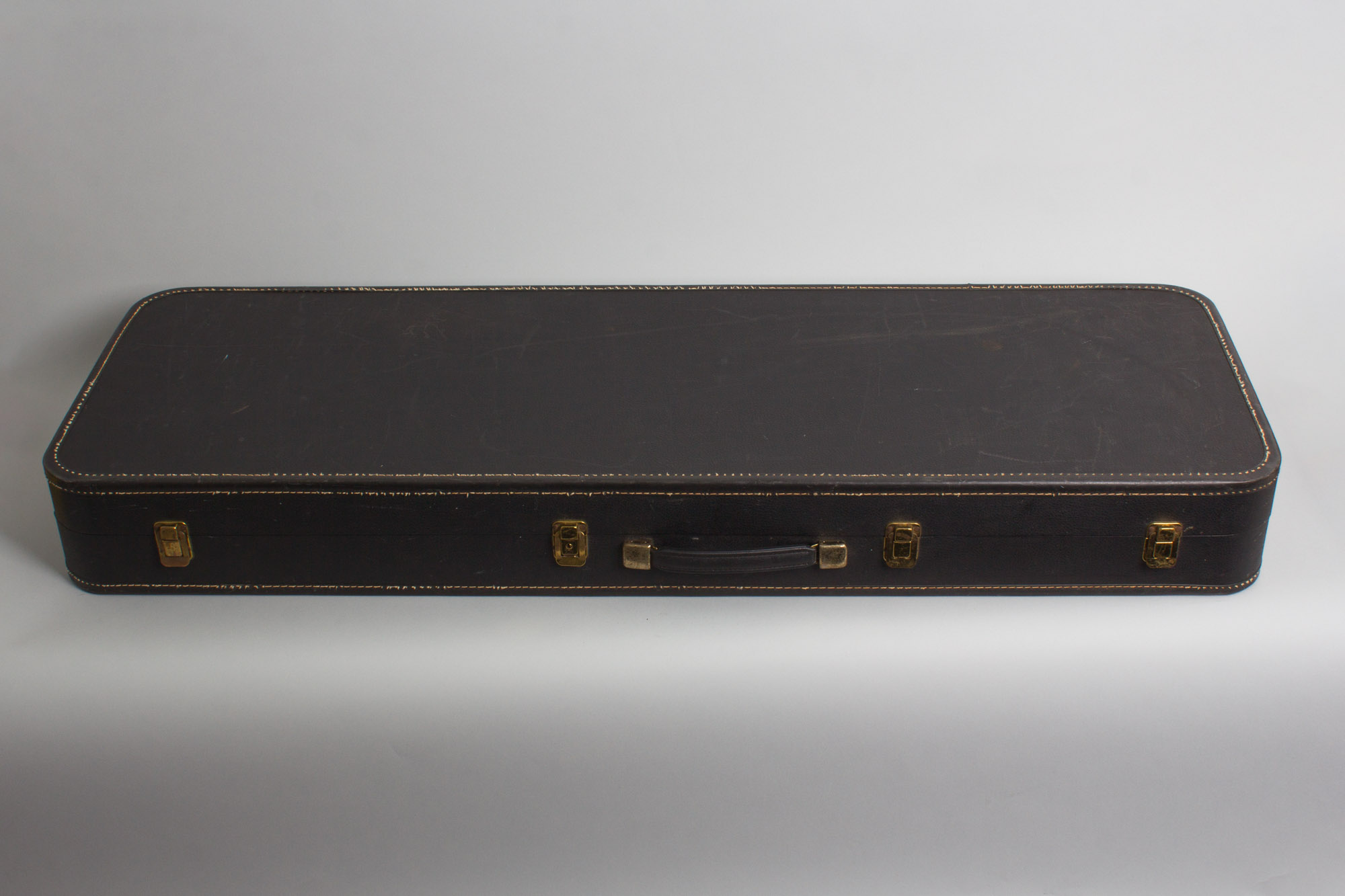
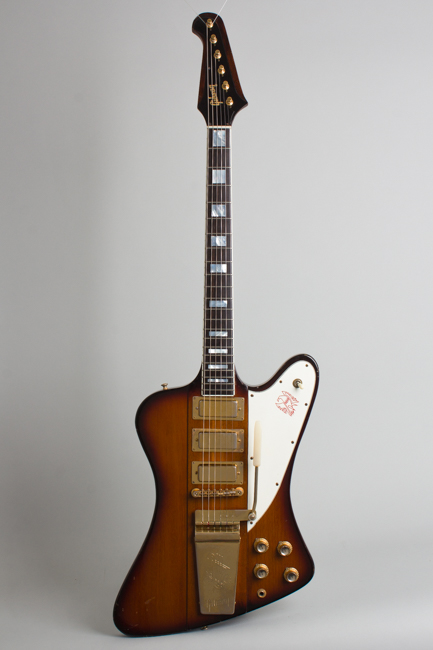
Gibson Firebird VII Model Solid Body Electric Guitar (1964), made in Kalamazoo, Michigan, serial # 210346, sunburst lacquer finish, laminated mahogany body and neck, ebony fingerboard, original black hard shell case.
The ghost of Brian Jones may be hovering in the room when this guitar is present! This is a super example of one of his signature instruments, the rare 1964 "reverse" Gibson Firebird VII. This instrument was the top of the short-lived new solidbody line Gibson introduced in late 1963 only to completely revamp before the July 1965 NAMM show. The very expensive Firebird VII was produced in the smallest quantity, with all of 173 registered as shipped in 1964 and an estimated only 200 or so of this original version ever made.
The first pattern "reverse" Firebird design is a 1960s classic with its futuristic sweeping lines and innovative neck-through-body construction. This is topped off by the unique "backwards" sculpted headstock with individual Kluson banjo tuners. The limited production window meant these models barely had a chance to get established in the market before being replaced by the more conventional "non-reverse" version, greatly simplified for ease of production. The originals have been a sought-after guitar since, re-issued, revamped but never really equaled in the Gibson pantheon. The bottom of the line Firebird I (associated with Cream-era Eric Clapton) and this top-line VII (most associated with the Rolling Stones and Jones in particular) are the rarest and most sought-after versions.
The Firebird VII is the highest grade model of the original 'birds, a very flashy guitar with some similar features to the Les Paul/SG Custom. The bound, pearl block inlaid ebony fingerboard is the defining element, along with three mini-humbucking Firebird pickups and gold-plating everywhere. Much of the hardware and layout is otherwise shared with the next model down, the Firebird V, but the VII is a much more deluxe looking and feeling instrument. Other fittings include a long Gibson Vibrola tailpiece with the lyre-engraved cover and plastic-tipped handle paired with a Tune-O-Matic bridge.
The laminated pickguard covers just the lower body horn and carries the 3-way selector switch; it is also decorated with a nifty Firebird emblem, particularly bold and well-preserved in this case. The wiring on this VII model is typical of three-pickup Gibsons, with the center pickup only used in the middle switch position to create an out-of-phase combination with the bridge unit; the other available selections are neck or bridge alone.
Practically everything about the original Firebirds is unique; the long laminated neck-through-body centerpiece with "wings" glued to the sides, the fluid body shape with the longer lower cutaway horn and that headstock with the tuner buttons hidden from the front and the low E farthest from the nut. The neck is generally bigger than the contemporary SG series with a comfortable round-backed profile; this one is a bit slimmer feeling with more sloped shoulders than some of the reverse 'birds we have had.
The original Firebirds hardly had a chance to establish themselves in the market before the model was drastically revamped. A threatened lawsuit from Fender is often cited as the reason, but it is more likely the complex design simply proved uneconomical to produce. The elaborate sculpting of the body and headstock and the eccentric neck-through construction make for a beautiful instrument, but one that was difficult for Gibson to build on a cost-effective basis. The Firebird VII listed at an even $500 in the September 1964 Gibson pricelist ($20 more than an SG Custom) plus $46 for the #1210 hardshell case. Another $15 would get you a Custom Color finish, an investment that would have paid off extravagantly 60 years later!
Despite use with a number of major bands of the day these beautiful birds flew off into oblivion far too quickly. A set of reverse Firebird VII's was given to the Rolling Stones in 1965 and featured both live and on many of their period recordings including the infamous fuzz line in "Satisfaction". The model was subsequently mostly seen with Brian Jones, who continued to use one for much of the rest of his career. Firebird VII's were also seen in 1965 with the Lovin' Spoonful and the 4 Seasons. In the 1970's the Faces' Ron Wood sometimes featured a VII, as did P.J Harvey decades later and it has been the signature instrument of Roxy Music's Phil Manzanera, his in a particularly striking Cardinal Red finish. He even named his 2008 instrumental album after the guitar!
With the estimate of about 200 original "Reverse" Firebird VIIs produced between late '63 and mid '65 this is a rare guitar; many Firebirds have suffered cracks in the headstock area and/or been played heavily or modified. This all-original 'bird shows only some fairly minor wear and is a splendid survivor as well as a great all-around guitar with a stunning look and unique and powerful sound.
Overall length is 45 in. (114.3 cm.), 13 1/2 in. (34.3 cm.) wide at lower bout, and 1 1/8 in. (2.9 cm.) in depth, measured at side of rim. Scale length is 24 3/4 in. (629 mm.). Width of nut is 1 11/16 in. (43 mm.).
This guitar shows some fairly light general wear, no major damage and the only alteration is a refret with appropriate wire. Most importantly the headstock and control cavity have no breaks or cracks, which all Firebirds are unfortunately prone to. The finish has general play wear overall but very little fade with some small chips, scratches and dings over the instrument, mostly on the edges with a larger scrape and scratch on the upper rear "wing" of the top. The back has hardly any buckle wear while the lower body edge shows one worn away spot. The back of the neck has a few small dings and dents but the finish is not worn through.
As noted the ebony fingerboard has been refretted; the wire is slim but fairly tall. These early VII's came stock with the very thin, flat "Les Paul Custom Fretless Wonder" wire, so this is a common situation. The nut was replaced as well and some of the fingerboard binding over the body was reglued. The pickguard overall shows just a bit of the typical shrinkage, with the lower rear corner piece re-attached and the lower front corner showing a tight crack. The engraved and painted bird emblem in unusually good condition. The gold plating shows some wear as would be expected, mostly as usual to the tailpiece and pickup covers.
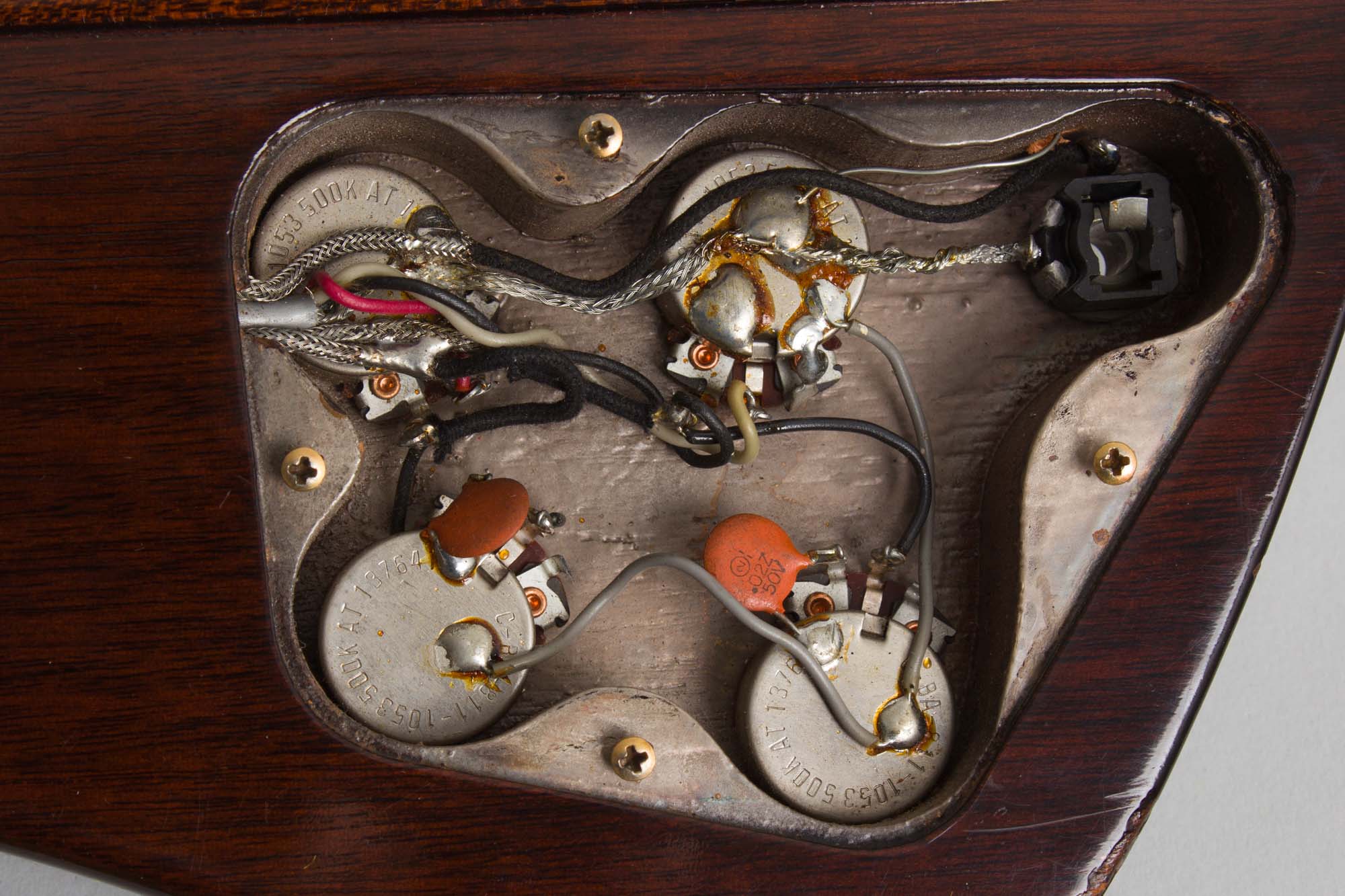
The wiring remains all original with pots dated to 1964; most of the markings are soldered over. This guitar has an extremely good neck angle (critical on a neck-through design) and playability is excellent. Overall this is easily the nicest VII we have had, and one of the best 'birds of any feather. The original yellow-lined hard shell case is included; it is very nice shape and still holds this magnificent 'bird as safely as it ever did! Overall Excellent - Condition.
The ghost of Brian Jones may be hovering in the room when this guitar is present! This is a super example of one of his signature instruments, the rare 1964 "reverse" Gibson Firebird VII. This instrument was the top of the short-lived new solidbody line Gibson introduced in late 1963 only to completely revamp before the July 1965 NAMM show. The very expensive Firebird VII was produced in the smallest quantity, with all of 173 registered as shipped in 1964 and an estimated only 200 or so of this original version ever made.
The first pattern "reverse" Firebird design is a 1960s classic with its futuristic sweeping lines and innovative neck-through-body construction. This is topped off by the unique "backwards" sculpted headstock with individual Kluson banjo tuners. The limited production window meant these models barely had a chance to get established in the market before being replaced by the more conventional "non-reverse" version, greatly simplified for ease of production. The originals have been a sought-after guitar since, re-issued, revamped but never really equaled in the Gibson pantheon. The bottom of the line Firebird I (associated with Cream-era Eric Clapton) and this top-line VII (most associated with the Rolling Stones and Jones in particular) are the rarest and most sought-after versions.
The Firebird VII is the highest grade model of the original 'birds, a very flashy guitar with some similar features to the Les Paul/SG Custom. The bound, pearl block inlaid ebony fingerboard is the defining element, along with three mini-humbucking Firebird pickups and gold-plating everywhere. Much of the hardware and layout is otherwise shared with the next model down, the Firebird V, but the VII is a much more deluxe looking and feeling instrument. Other fittings include a long Gibson Vibrola tailpiece with the lyre-engraved cover and plastic-tipped handle paired with a Tune-O-Matic bridge.
The laminated pickguard covers just the lower body horn and carries the 3-way selector switch; it is also decorated with a nifty Firebird emblem, particularly bold and well-preserved in this case. The wiring on this VII model is typical of three-pickup Gibsons, with the center pickup only used in the middle switch position to create an out-of-phase combination with the bridge unit; the other available selections are neck or bridge alone.
Practically everything about the original Firebirds is unique; the long laminated neck-through-body centerpiece with "wings" glued to the sides, the fluid body shape with the longer lower cutaway horn and that headstock with the tuner buttons hidden from the front and the low E farthest from the nut. The neck is generally bigger than the contemporary SG series with a comfortable round-backed profile; this one is a bit slimmer feeling with more sloped shoulders than some of the reverse 'birds we have had.
The original Firebirds hardly had a chance to establish themselves in the market before the model was drastically revamped. A threatened lawsuit from Fender is often cited as the reason, but it is more likely the complex design simply proved uneconomical to produce. The elaborate sculpting of the body and headstock and the eccentric neck-through construction make for a beautiful instrument, but one that was difficult for Gibson to build on a cost-effective basis. The Firebird VII listed at an even $500 in the September 1964 Gibson pricelist ($20 more than an SG Custom) plus $46 for the #1210 hardshell case. Another $15 would get you a Custom Color finish, an investment that would have paid off extravagantly 60 years later!
Despite use with a number of major bands of the day these beautiful birds flew off into oblivion far too quickly. A set of reverse Firebird VII's was given to the Rolling Stones in 1965 and featured both live and on many of their period recordings including the infamous fuzz line in "Satisfaction". The model was subsequently mostly seen with Brian Jones, who continued to use one for much of the rest of his career. Firebird VII's were also seen in 1965 with the Lovin' Spoonful and the 4 Seasons. In the 1970's the Faces' Ron Wood sometimes featured a VII, as did P.J Harvey decades later and it has been the signature instrument of Roxy Music's Phil Manzanera, his in a particularly striking Cardinal Red finish. He even named his 2008 instrumental album after the guitar!
With the estimate of about 200 original "Reverse" Firebird VIIs produced between late '63 and mid '65 this is a rare guitar; many Firebirds have suffered cracks in the headstock area and/or been played heavily or modified. This all-original 'bird shows only some fairly minor wear and is a splendid survivor as well as a great all-around guitar with a stunning look and unique and powerful sound.
Overall length is 45 in. (114.3 cm.), 13 1/2 in. (34.3 cm.) wide at lower bout, and 1 1/8 in. (2.9 cm.) in depth, measured at side of rim. Scale length is 24 3/4 in. (629 mm.). Width of nut is 1 11/16 in. (43 mm.).
This guitar shows some fairly light general wear, no major damage and the only alteration is a refret with appropriate wire. Most importantly the headstock and control cavity have no breaks or cracks, which all Firebirds are unfortunately prone to. The finish has general play wear overall but very little fade with some small chips, scratches and dings over the instrument, mostly on the edges with a larger scrape and scratch on the upper rear "wing" of the top. The back has hardly any buckle wear while the lower body edge shows one worn away spot. The back of the neck has a few small dings and dents but the finish is not worn through.
As noted the ebony fingerboard has been refretted; the wire is slim but fairly tall. These early VII's came stock with the very thin, flat "Les Paul Custom Fretless Wonder" wire, so this is a common situation. The nut was replaced as well and some of the fingerboard binding over the body was reglued. The pickguard overall shows just a bit of the typical shrinkage, with the lower rear corner piece re-attached and the lower front corner showing a tight crack. The engraved and painted bird emblem in unusually good condition. The gold plating shows some wear as would be expected, mostly as usual to the tailpiece and pickup covers.
The wiring remains all original with pots dated to 1964; most of the markings are soldered over. This guitar has an extremely good neck angle (critical on a neck-through design) and playability is excellent. Overall this is easily the nicest VII we have had, and one of the best 'birds of any feather. The original yellow-lined hard shell case is included; it is very nice shape and still holds this magnificent 'bird as safely as it ever did! Overall Excellent - Condition.