Rickenbacker Model 420 Solid Body Electric Guitar (1973)

LOADING IMAGES

This item has been sold.
Item # 13749
Prices subject to change without notice.
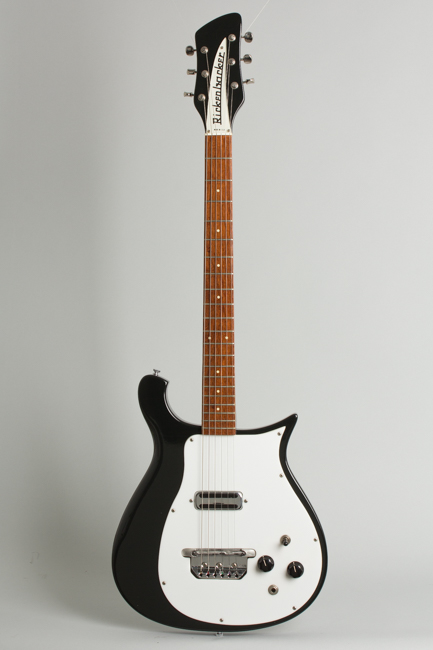
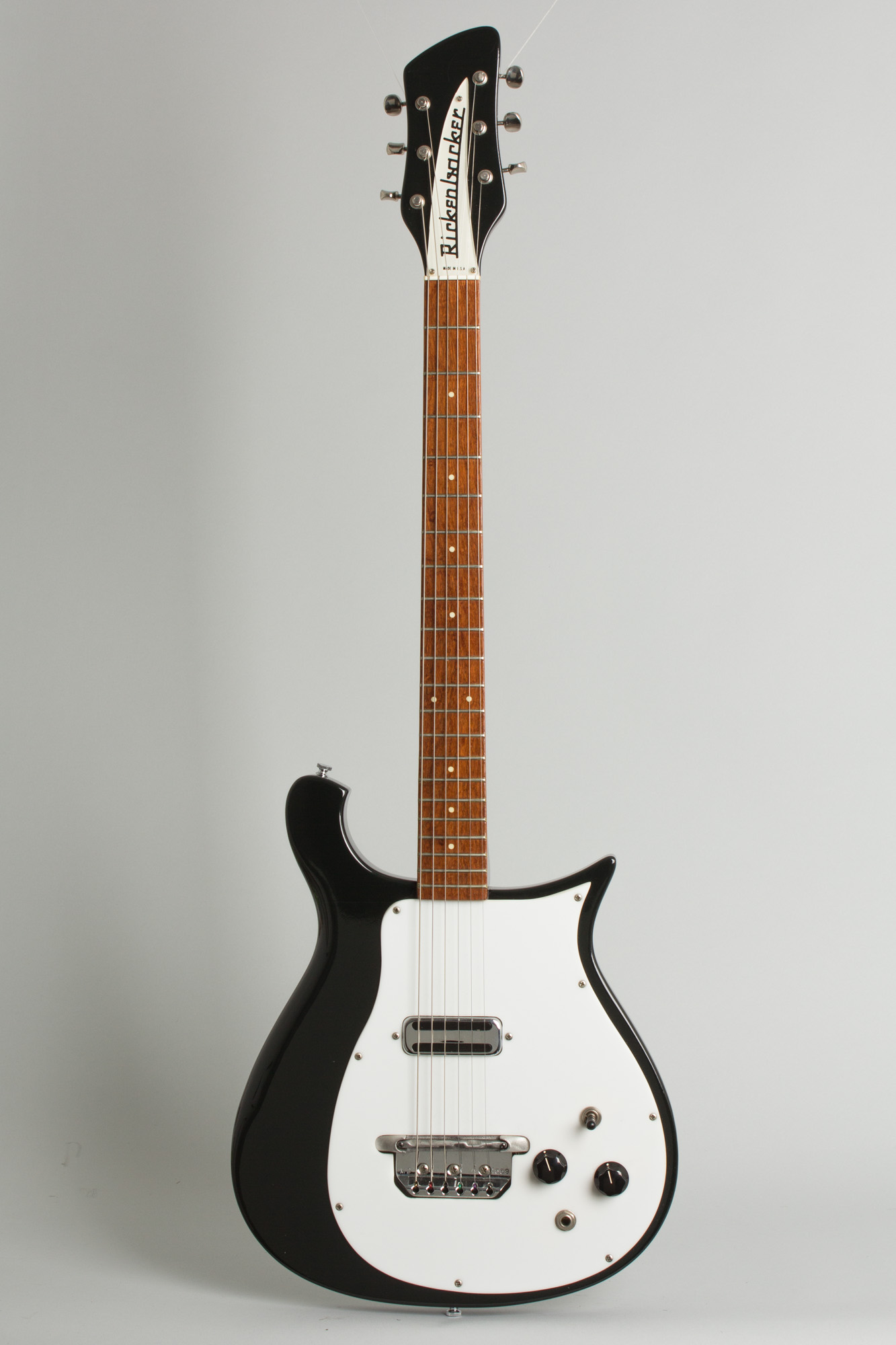
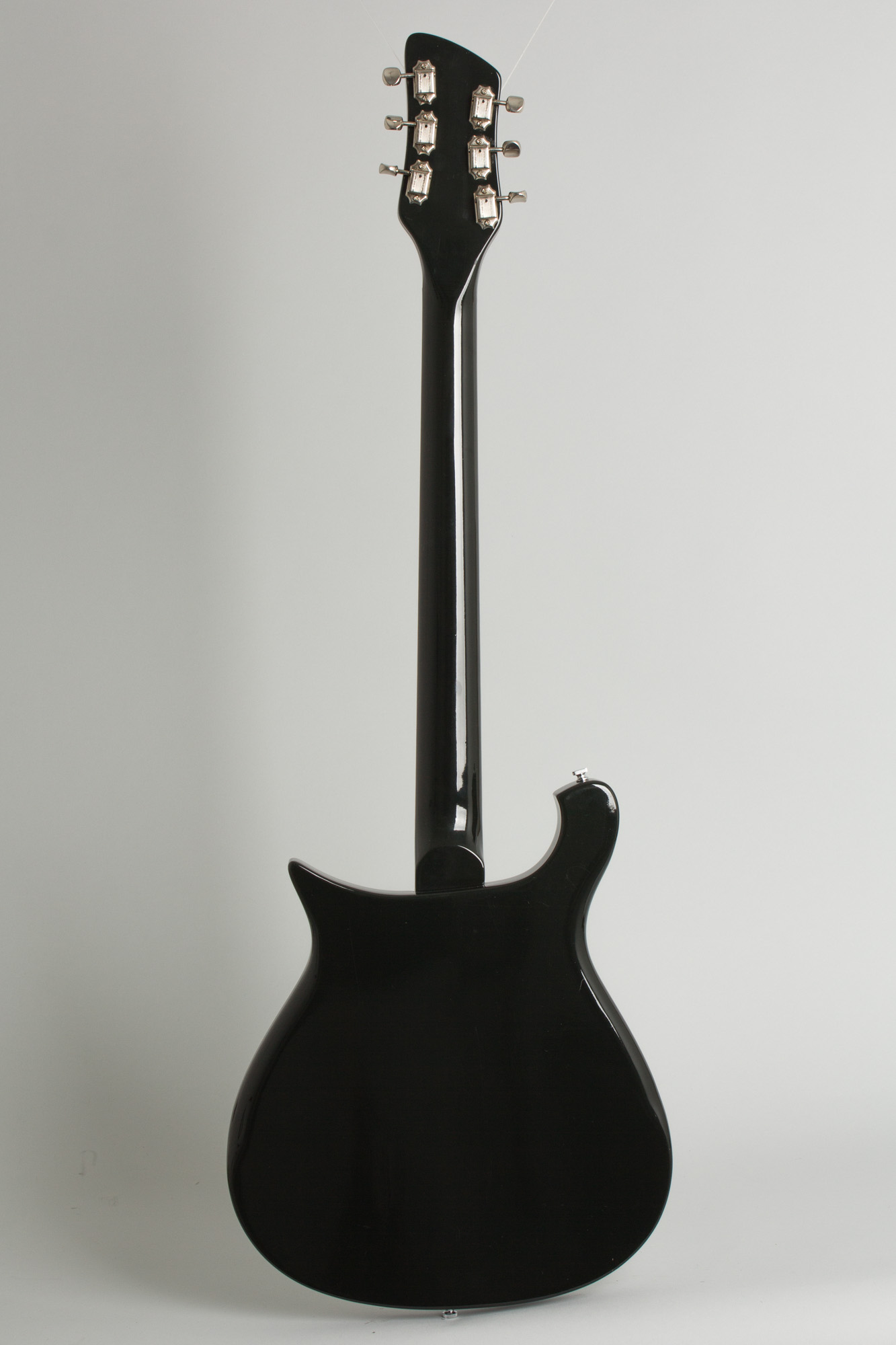
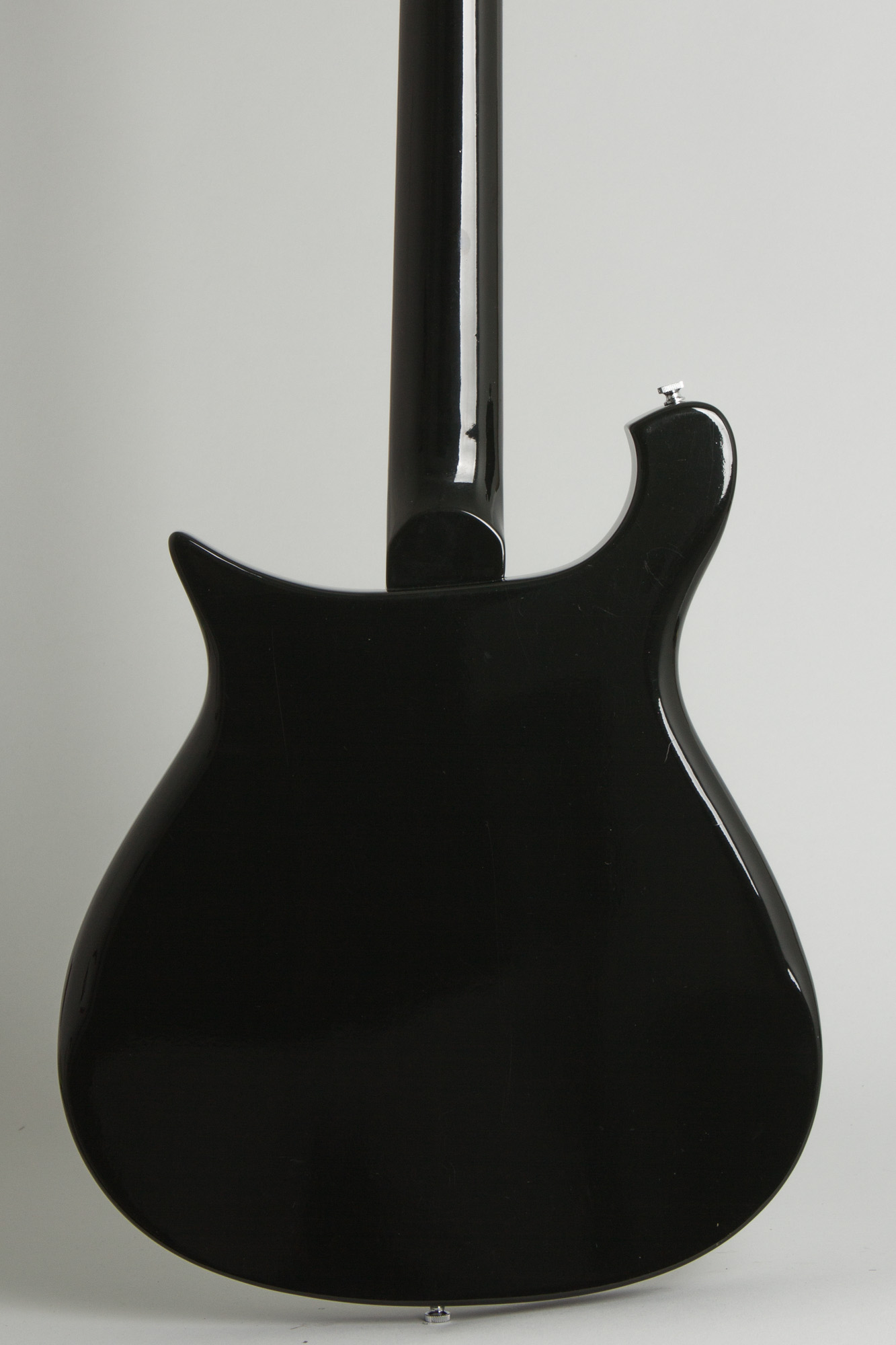
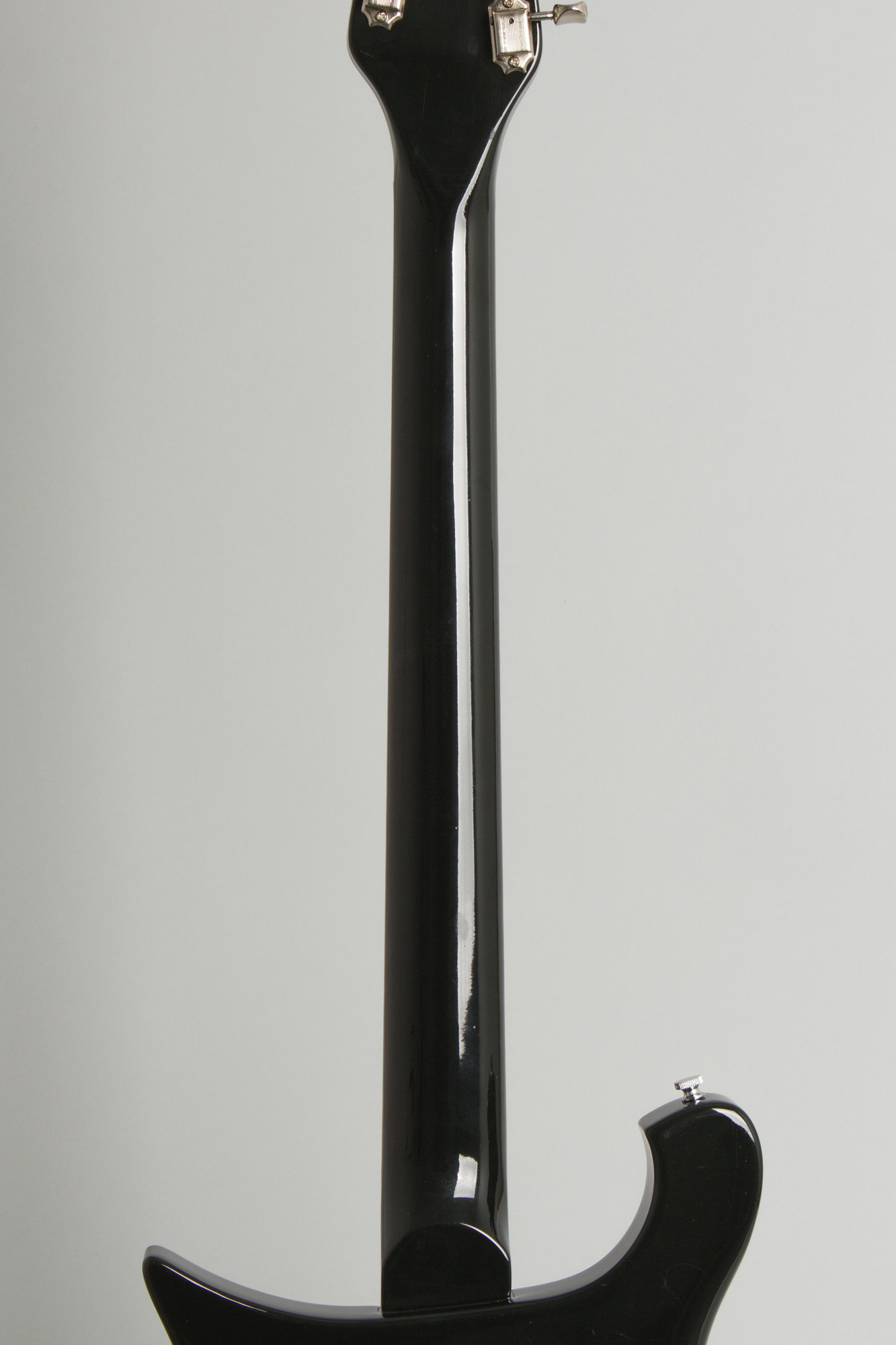
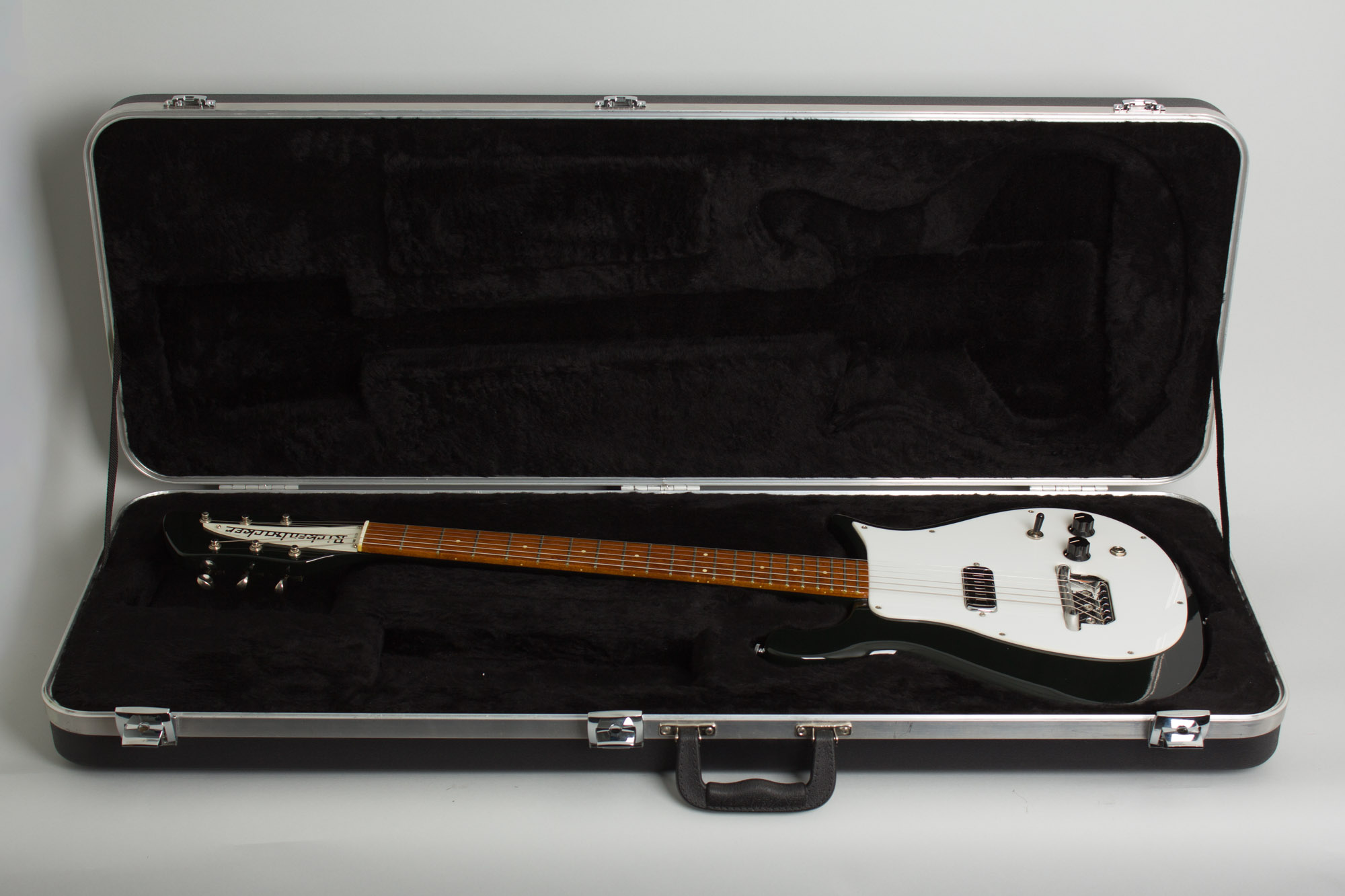
Rickenbacker Model 420 Model Solid Body Electric Guitar (1973), made in Los Angeles, serial # MD1559, Jetglo black lacquer finish, maple body and neck, padouk fingerboard, molded plastic hard shell case.
This beautiful Jetglo Model 420 is a bit of a unicorn, a mid-1960s style Rickenbacker instrument made in the early 1970s. At the time the company's production comprised almost entirely Model 4001 basses, which had become hugely popular in the new decade. The company's guitars had largely fallen out of favor in the "heavy music" era, seen as relics of the jangly mid-60s. This 420 may well have been started years earlier, pulled from stock and finished out when an order (possibly from a die-hard Beatle fan) came in.
The single-pickup solidbody Rickenbacker 425 is a somewhat obscure model but does have a legacy as a true (if "Dark Horse") Beatle guitar, especially in this tuxedo finish. George Harrison bought a new Model 425 while visiting his sister in the US in 1963; it was originally Fireglo but the shop refinished it in black at his request to match John Lennon's 325. While George did not use the guitar for very long, it was seen in his hands during some notable appearances with the group in later 1963. This non-vibrato model was called the 425 at the time; it was later amended to the more Rickenbacker-system-correct 420.
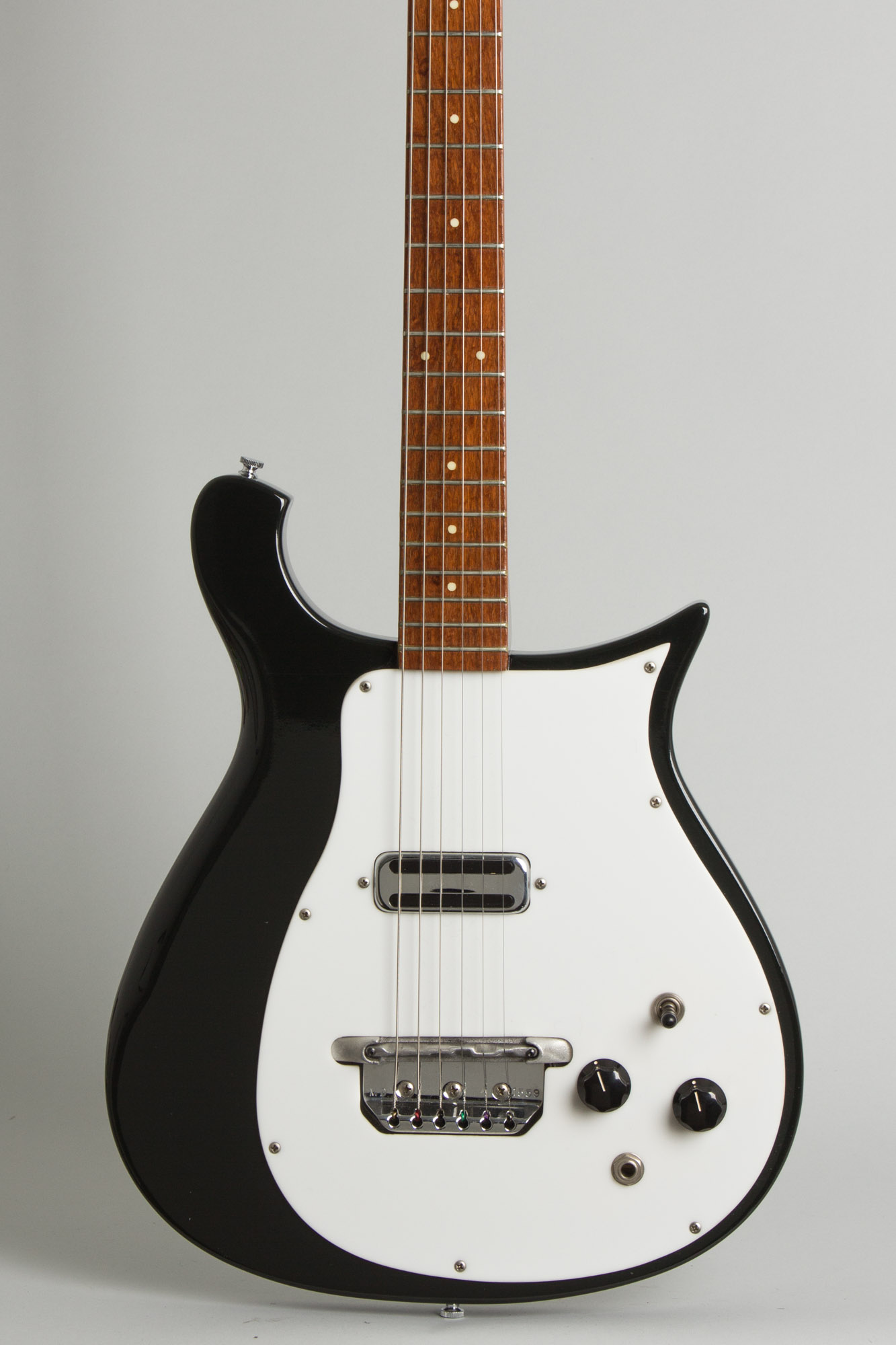
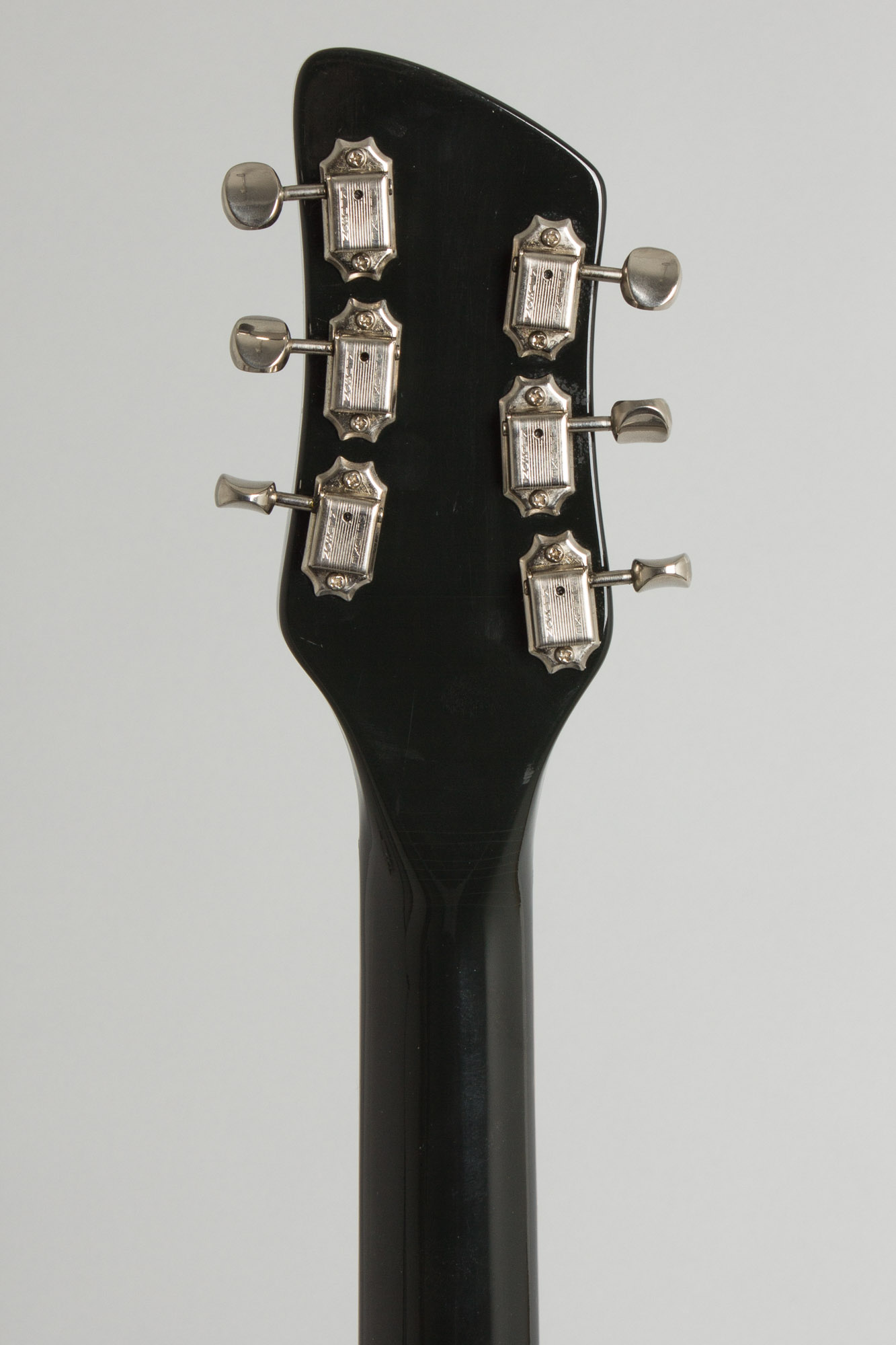
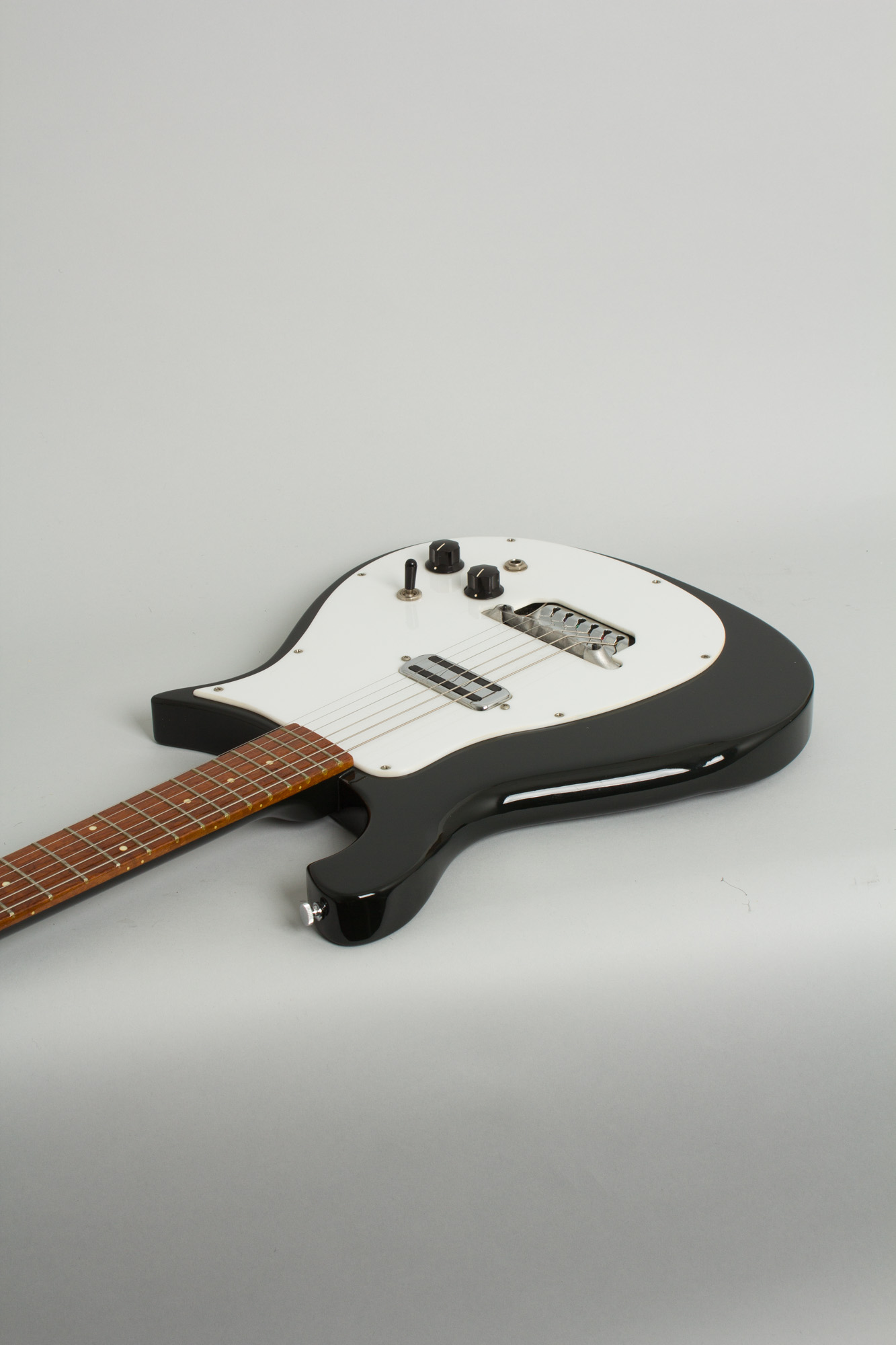
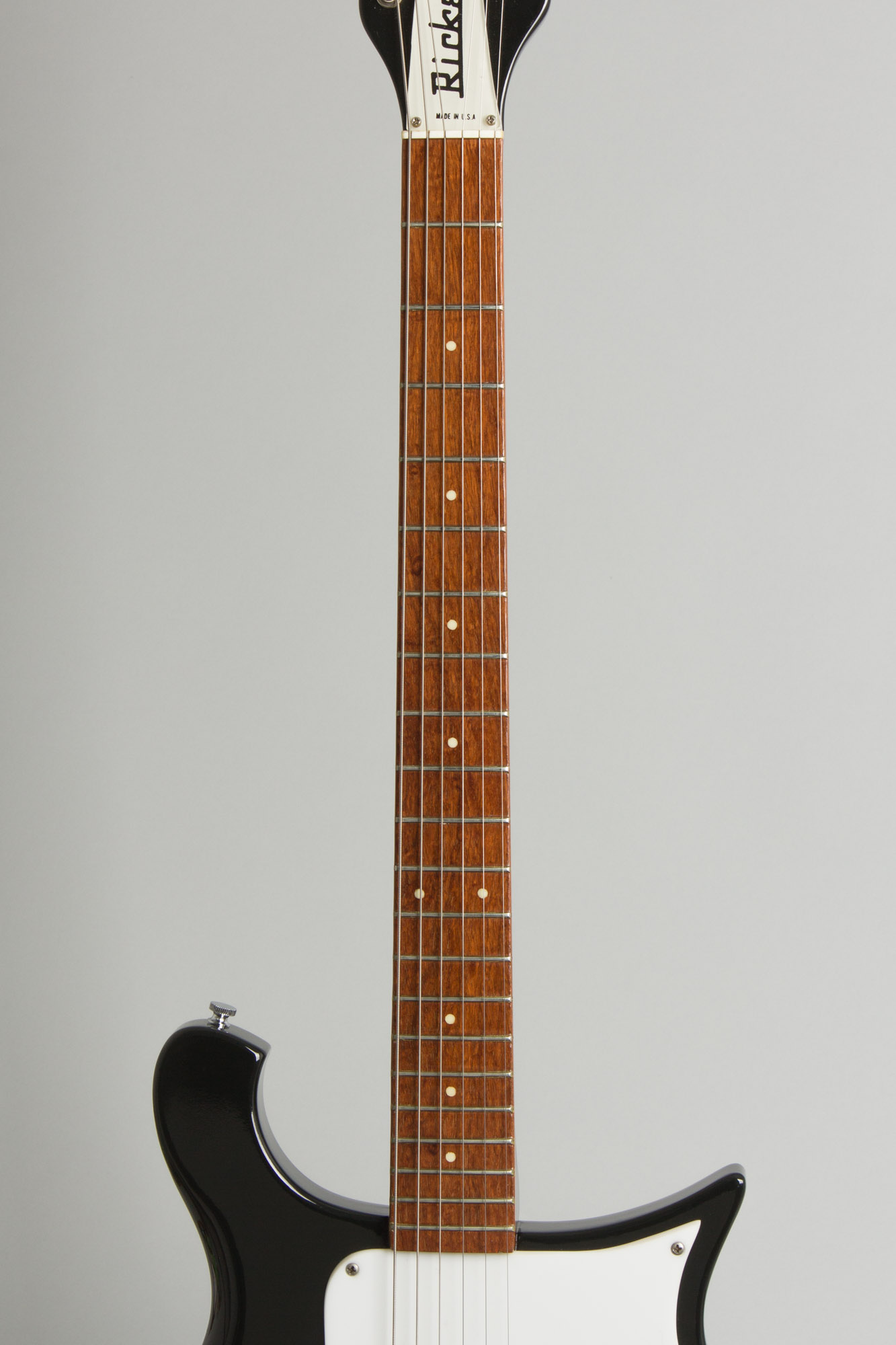
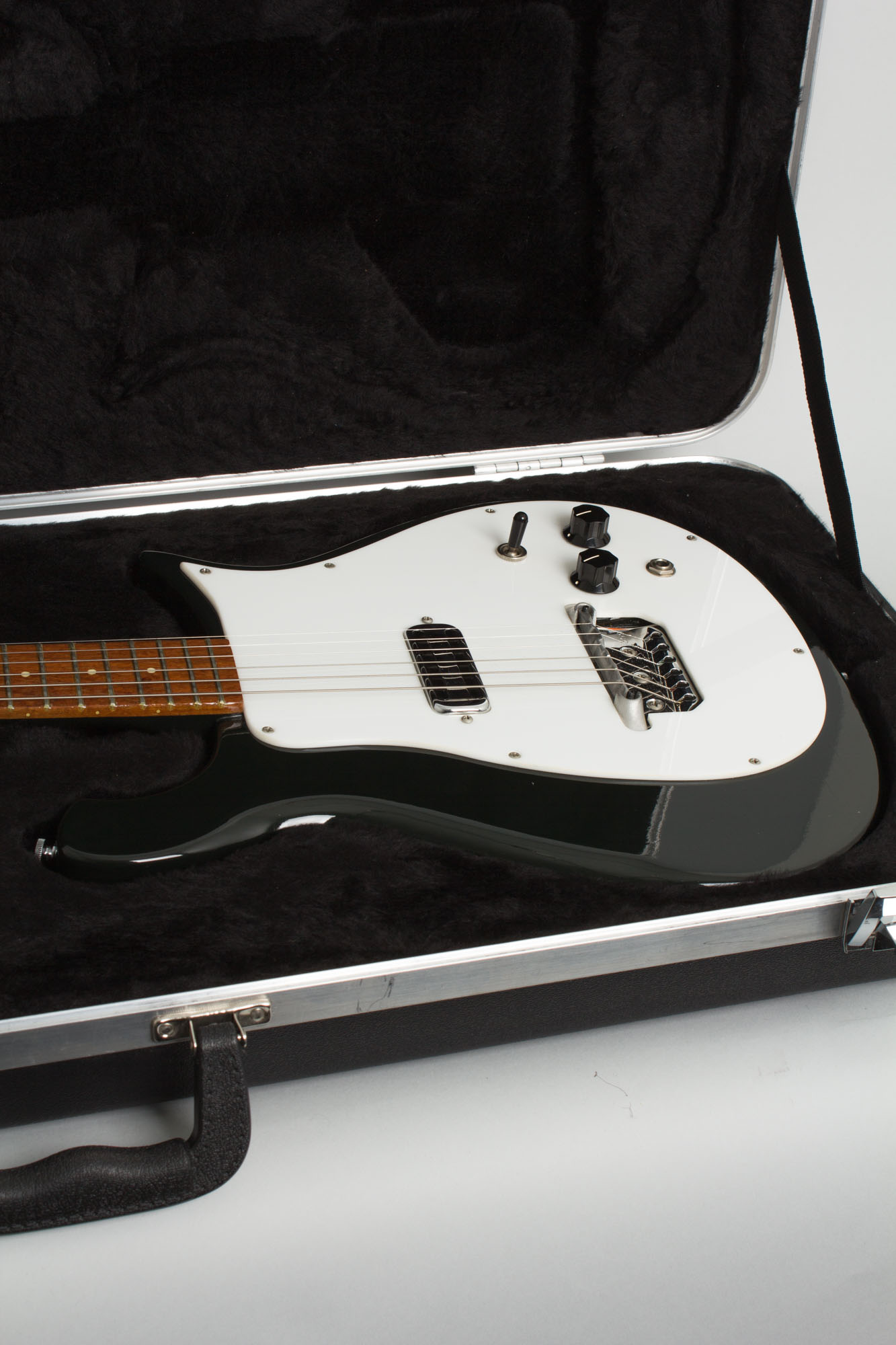
The 420/425 was the most basic model in the company's "cresting wave" solid-body series, with one "toaster top" pickup mounted through the white pickguard, plain dot fingerboard inlay and slightly eccentric 2-knob, 1 switch circuitry. The standard slim Rickenbacker neck has a full 24 3/4" scale, dot inlaid fingerboard and the classic Rick headstock, fitted with Kluson Deluxe machines. The guitar is built to a neck-through design, with the maple body "wings" added to the solid centerpiece. The face is mostly covered by the white Lucite pickguard, mirrored by the logo plate on the headstock covering the dual truss rods. The bridge has a flat plate integral tailpiece mounted beneath a solid height-adjustable bridge saddle Rick collectors have nicknamed the "Chrome worm"'
The center-mounted single pickup configuration makes for a pleasant sounding if not particularly versatile guitar. The wiring scheme is odd but functional; the volume knob is the lower of the two, while the 3-way tone switch works in conjunction with the upper knob offering full bass, variable tone or bypass. This guitar has a serial number dating to April 1973 but other components may well be earlier; the "toaster top" pickup was already considered "obsolete" by Rickenbacker at the time.
The 420 was officially discontinued this same year, so this would be one of the last ones made. There is very little practical difference in this 1973 guitar from a 1963 example; the Jetglo finish is a bit thicker and the wiring is subtly different but the feel and sound are the same. While not as iconic to the "British invasion" era as the company's semi-hollow 330-375 models, this solid-body 420 in its Beatle-correct livery is a super sharp-looking guitar, a fine player with an utterly distinctive character.
Overall length is 37 in. (94 cm.), 12 11/16 in. (32.2 cm.) wide at lower bout, and 1 5/8 in. (4.1 cm.) in depth, measured at side of rim. Scale length is 24 3/4 in. (629 mm.). Width of nut is 1 5/8 in. (41 mm.).
This very clean, all original guitar shows few signs of 50+ years on the planet with only some light scuffs overall, but no really notable wear or damage. All components are original and complete, again showing only very light general wear. The original frets have hardly any wear and the instrument plays very well, with the classic Rick sound complete in a modern molded Rickenbacker HSC. Overall Excellent + Condition.
This beautiful Jetglo Model 420 is a bit of a unicorn, a mid-1960s style Rickenbacker instrument made in the early 1970s. At the time the company's production comprised almost entirely Model 4001 basses, which had become hugely popular in the new decade. The company's guitars had largely fallen out of favor in the "heavy music" era, seen as relics of the jangly mid-60s. This 420 may well have been started years earlier, pulled from stock and finished out when an order (possibly from a die-hard Beatle fan) came in.
The single-pickup solidbody Rickenbacker 425 is a somewhat obscure model but does have a legacy as a true (if "Dark Horse") Beatle guitar, especially in this tuxedo finish. George Harrison bought a new Model 425 while visiting his sister in the US in 1963; it was originally Fireglo but the shop refinished it in black at his request to match John Lennon's 325. While George did not use the guitar for very long, it was seen in his hands during some notable appearances with the group in later 1963. This non-vibrato model was called the 425 at the time; it was later amended to the more Rickenbacker-system-correct 420.
The 420/425 was the most basic model in the company's "cresting wave" solid-body series, with one "toaster top" pickup mounted through the white pickguard, plain dot fingerboard inlay and slightly eccentric 2-knob, 1 switch circuitry. The standard slim Rickenbacker neck has a full 24 3/4" scale, dot inlaid fingerboard and the classic Rick headstock, fitted with Kluson Deluxe machines. The guitar is built to a neck-through design, with the maple body "wings" added to the solid centerpiece. The face is mostly covered by the white Lucite pickguard, mirrored by the logo plate on the headstock covering the dual truss rods. The bridge has a flat plate integral tailpiece mounted beneath a solid height-adjustable bridge saddle Rick collectors have nicknamed the "Chrome worm"'
The center-mounted single pickup configuration makes for a pleasant sounding if not particularly versatile guitar. The wiring scheme is odd but functional; the volume knob is the lower of the two, while the 3-way tone switch works in conjunction with the upper knob offering full bass, variable tone or bypass. This guitar has a serial number dating to April 1973 but other components may well be earlier; the "toaster top" pickup was already considered "obsolete" by Rickenbacker at the time.
The 420 was officially discontinued this same year, so this would be one of the last ones made. There is very little practical difference in this 1973 guitar from a 1963 example; the Jetglo finish is a bit thicker and the wiring is subtly different but the feel and sound are the same. While not as iconic to the "British invasion" era as the company's semi-hollow 330-375 models, this solid-body 420 in its Beatle-correct livery is a super sharp-looking guitar, a fine player with an utterly distinctive character.
Overall length is 37 in. (94 cm.), 12 11/16 in. (32.2 cm.) wide at lower bout, and 1 5/8 in. (4.1 cm.) in depth, measured at side of rim. Scale length is 24 3/4 in. (629 mm.). Width of nut is 1 5/8 in. (41 mm.).
This very clean, all original guitar shows few signs of 50+ years on the planet with only some light scuffs overall, but no really notable wear or damage. All components are original and complete, again showing only very light general wear. The original frets have hardly any wear and the instrument plays very well, with the classic Rick sound complete in a modern molded Rickenbacker HSC. Overall Excellent + Condition.