Ampeg AUB-1 Electric Bass Guitar (1966)

LOADING IMAGES
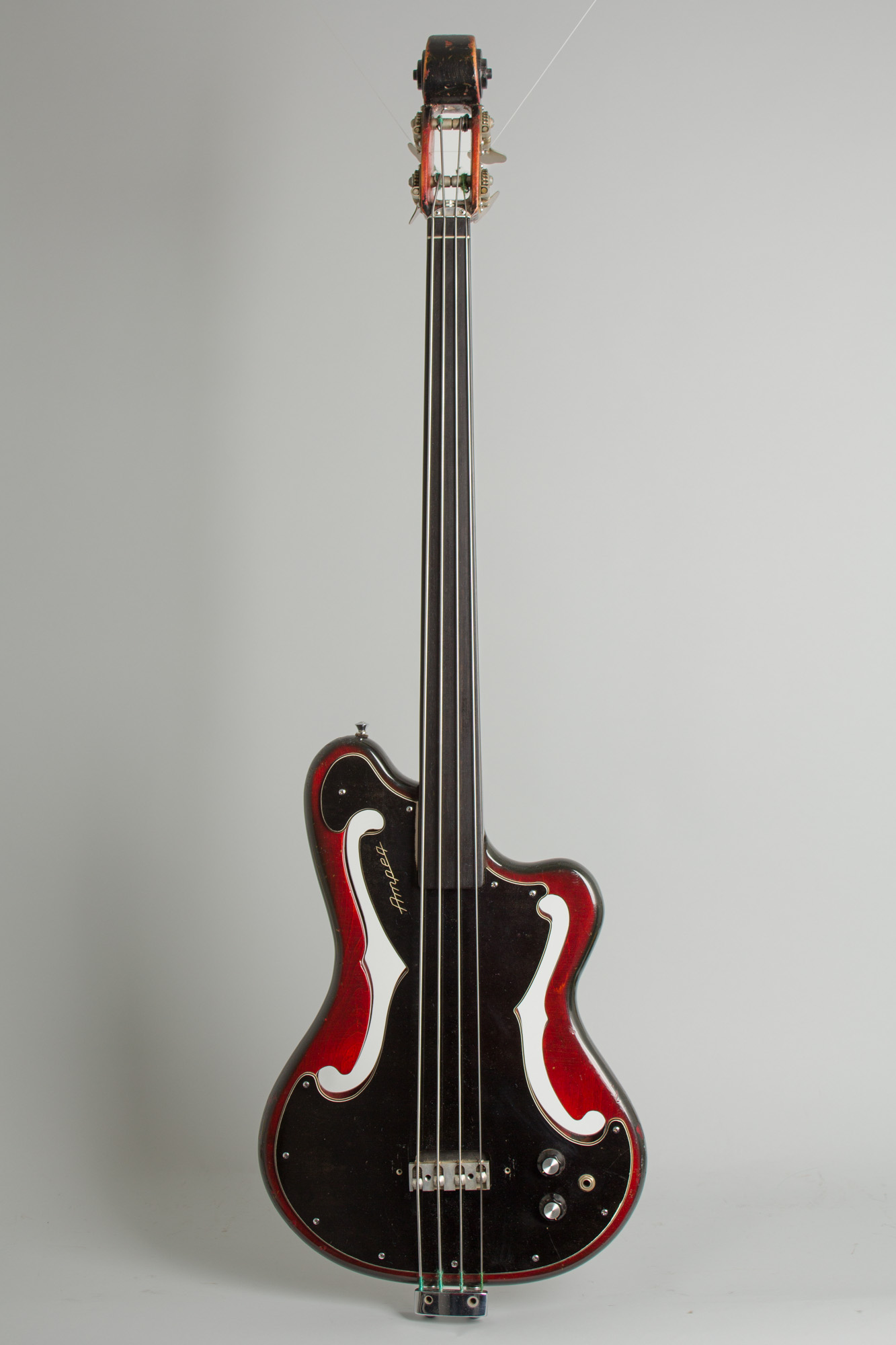
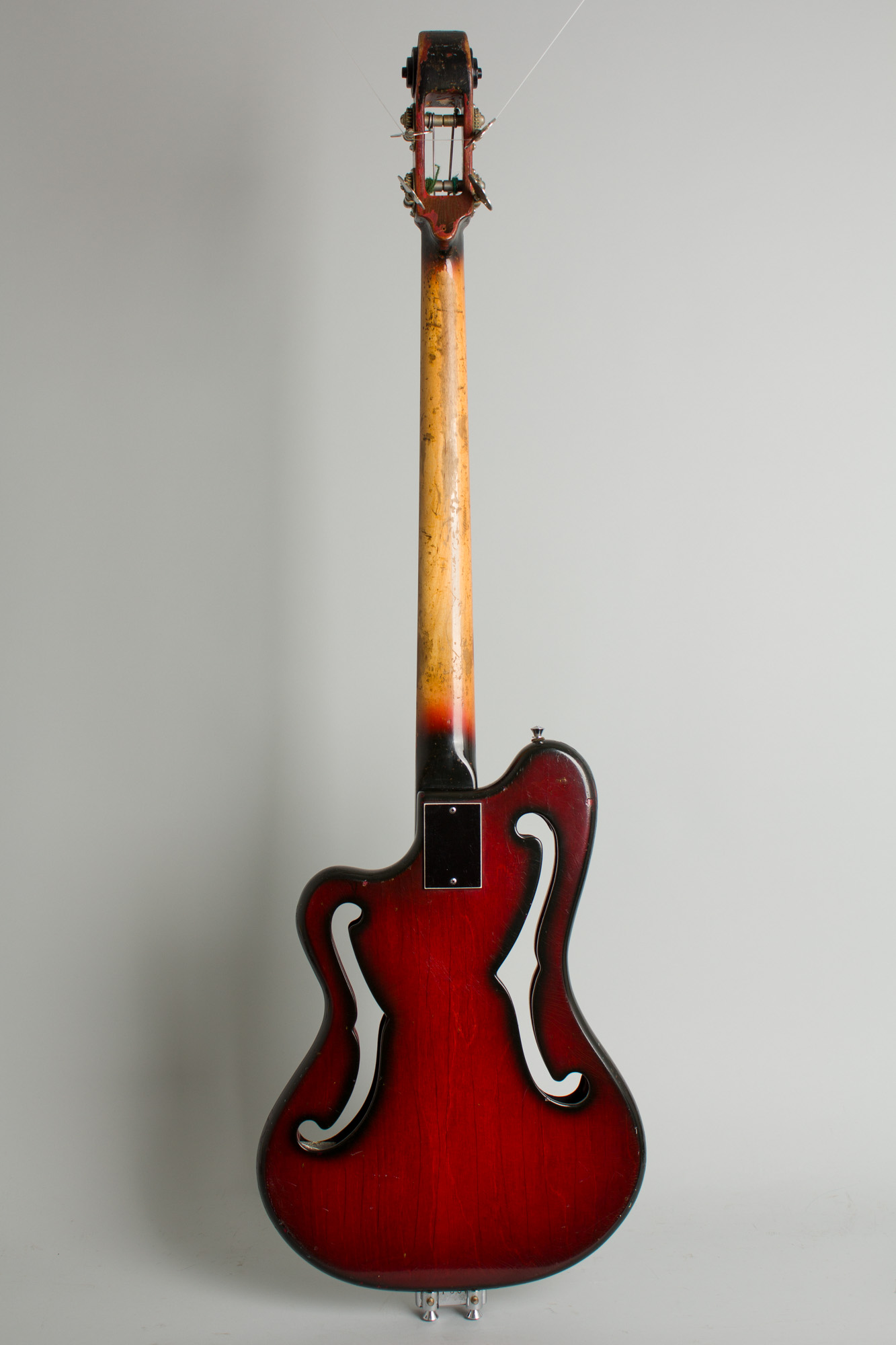
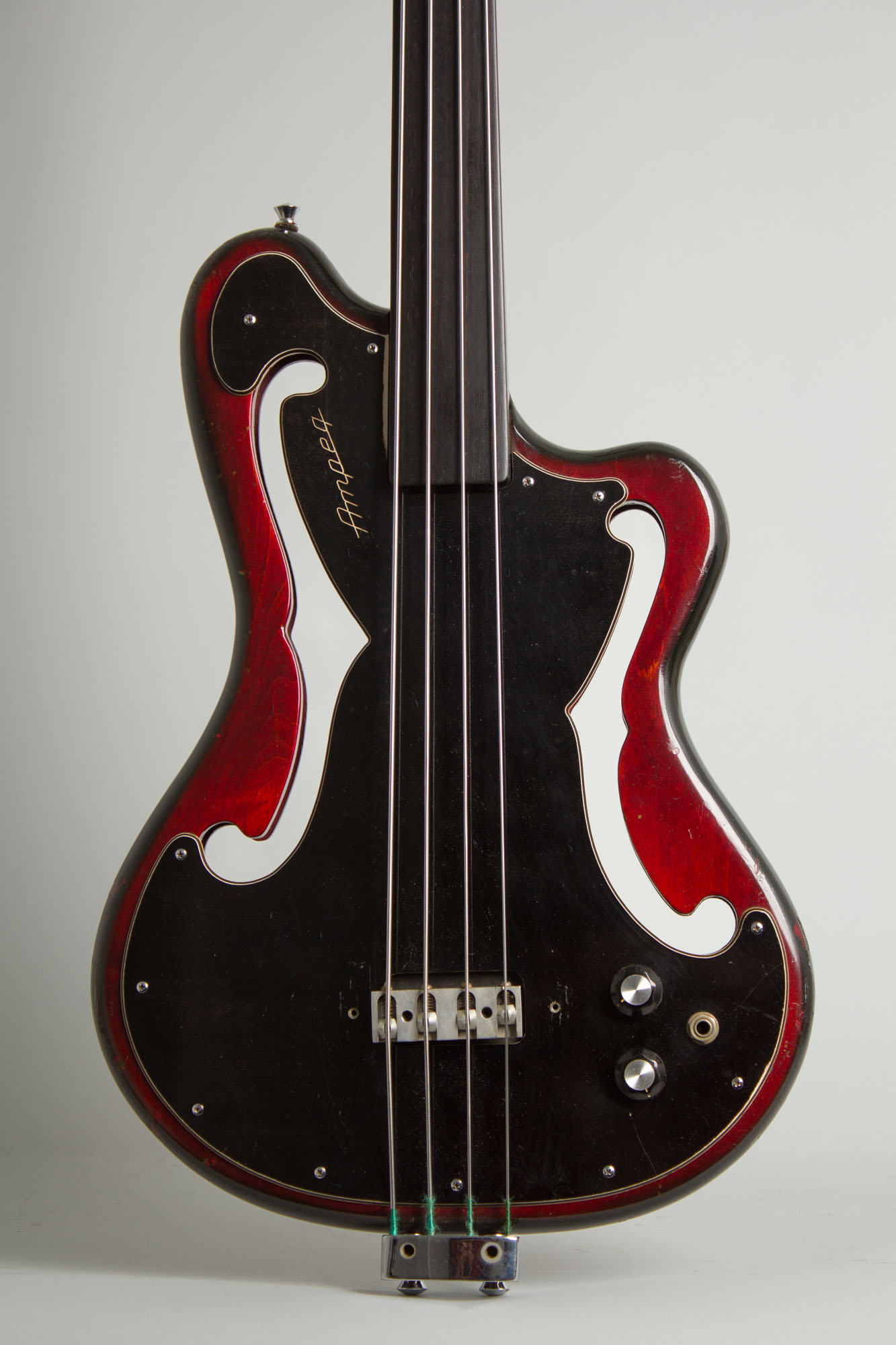
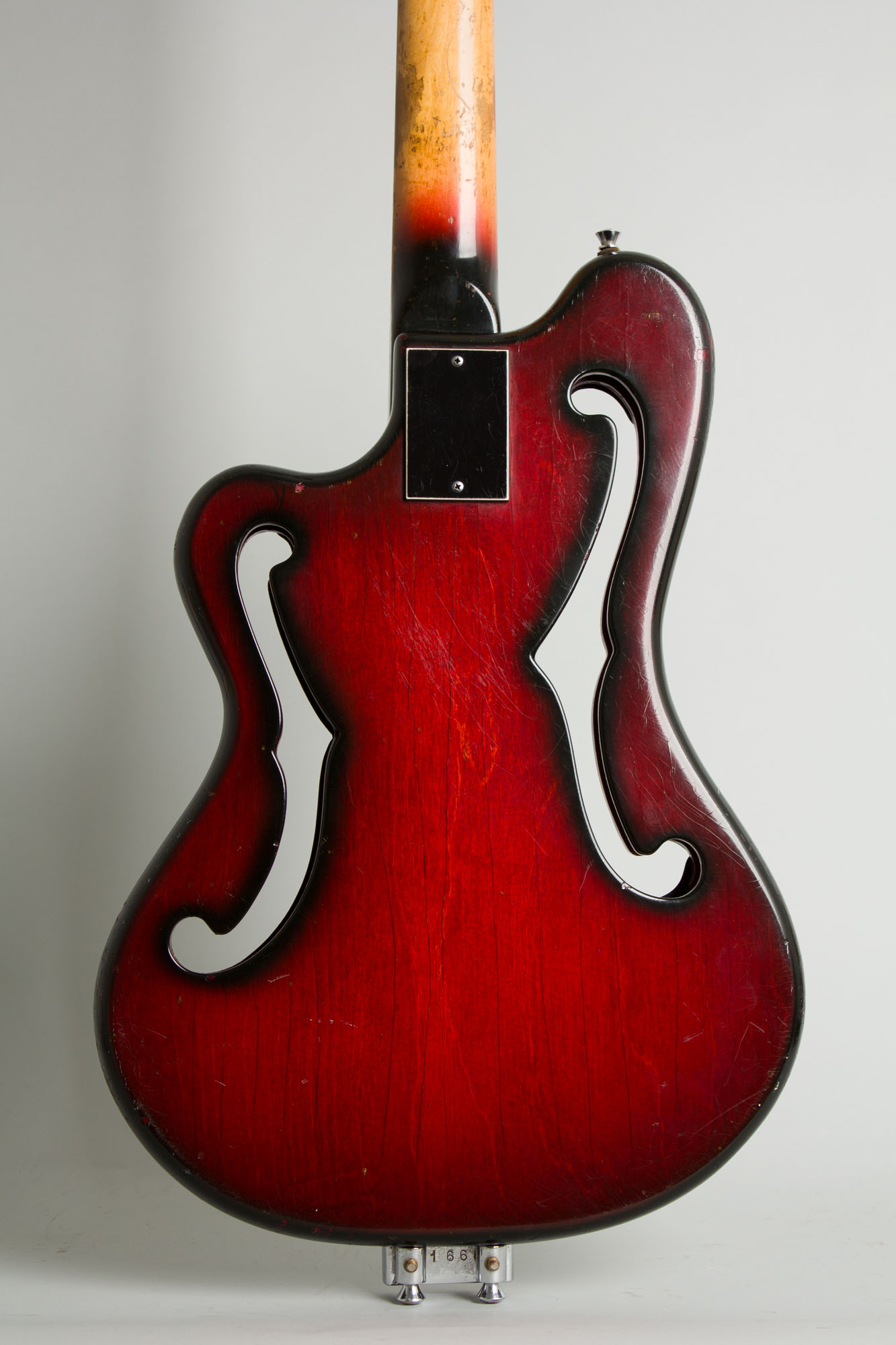
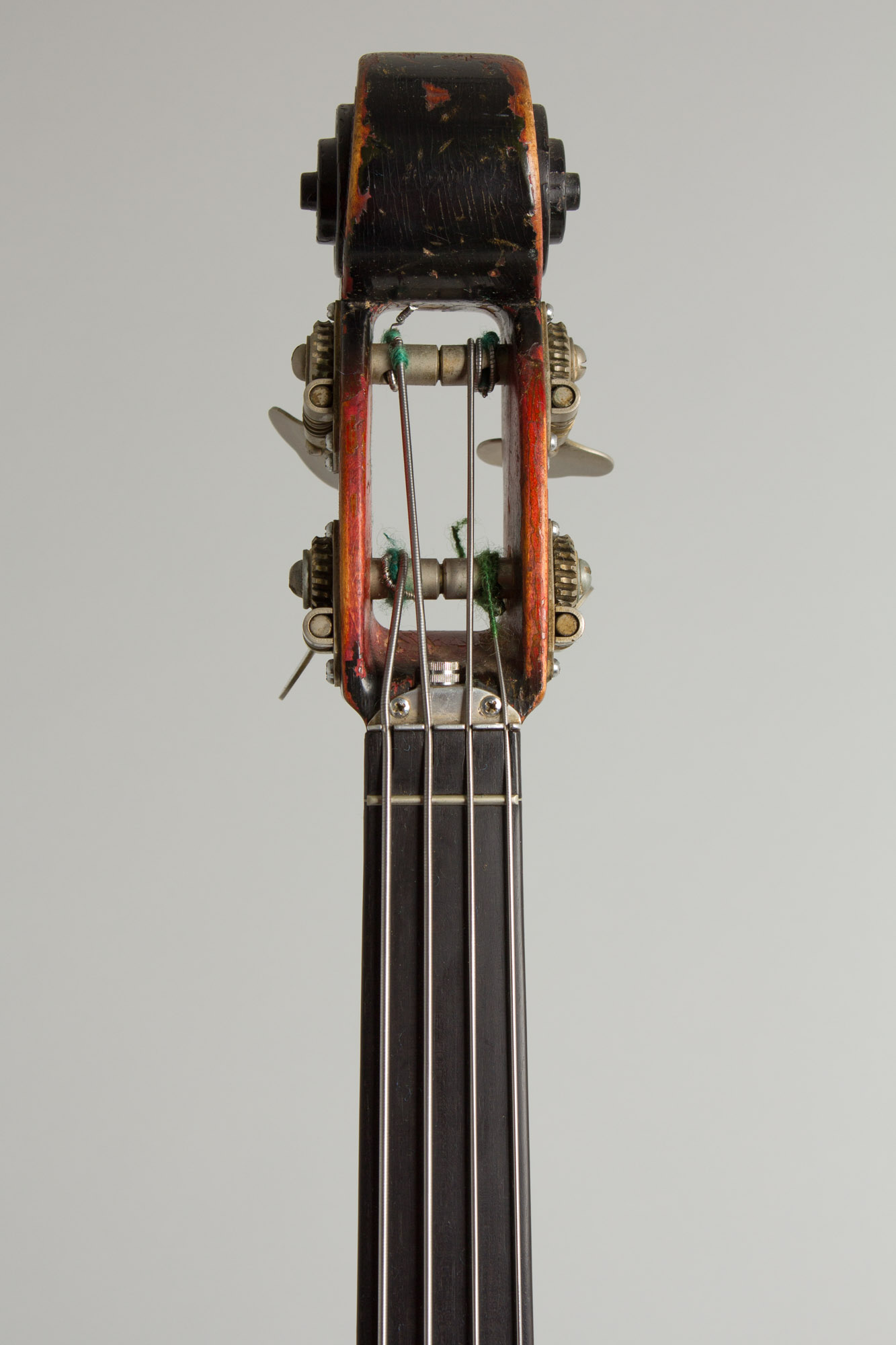
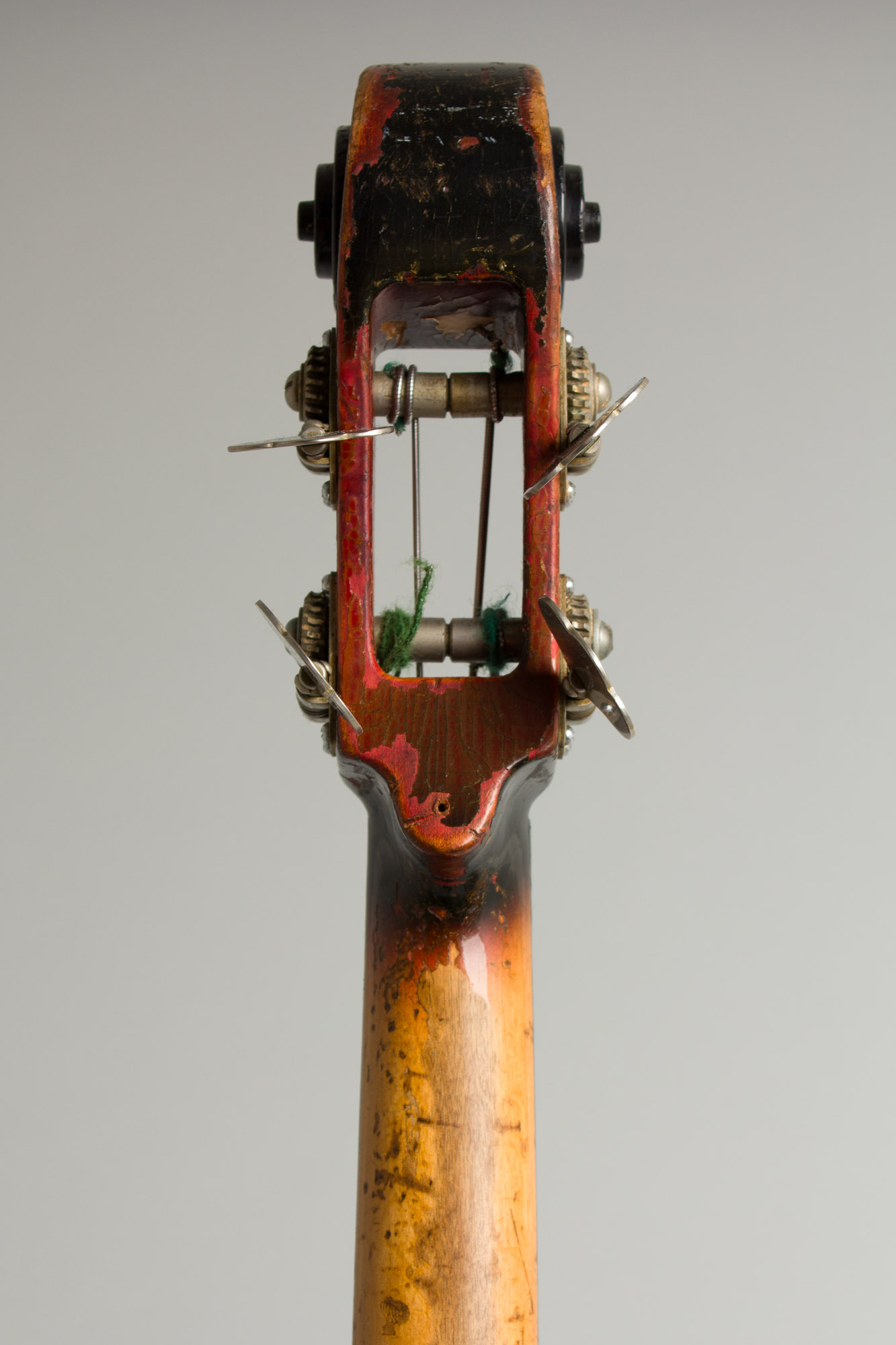
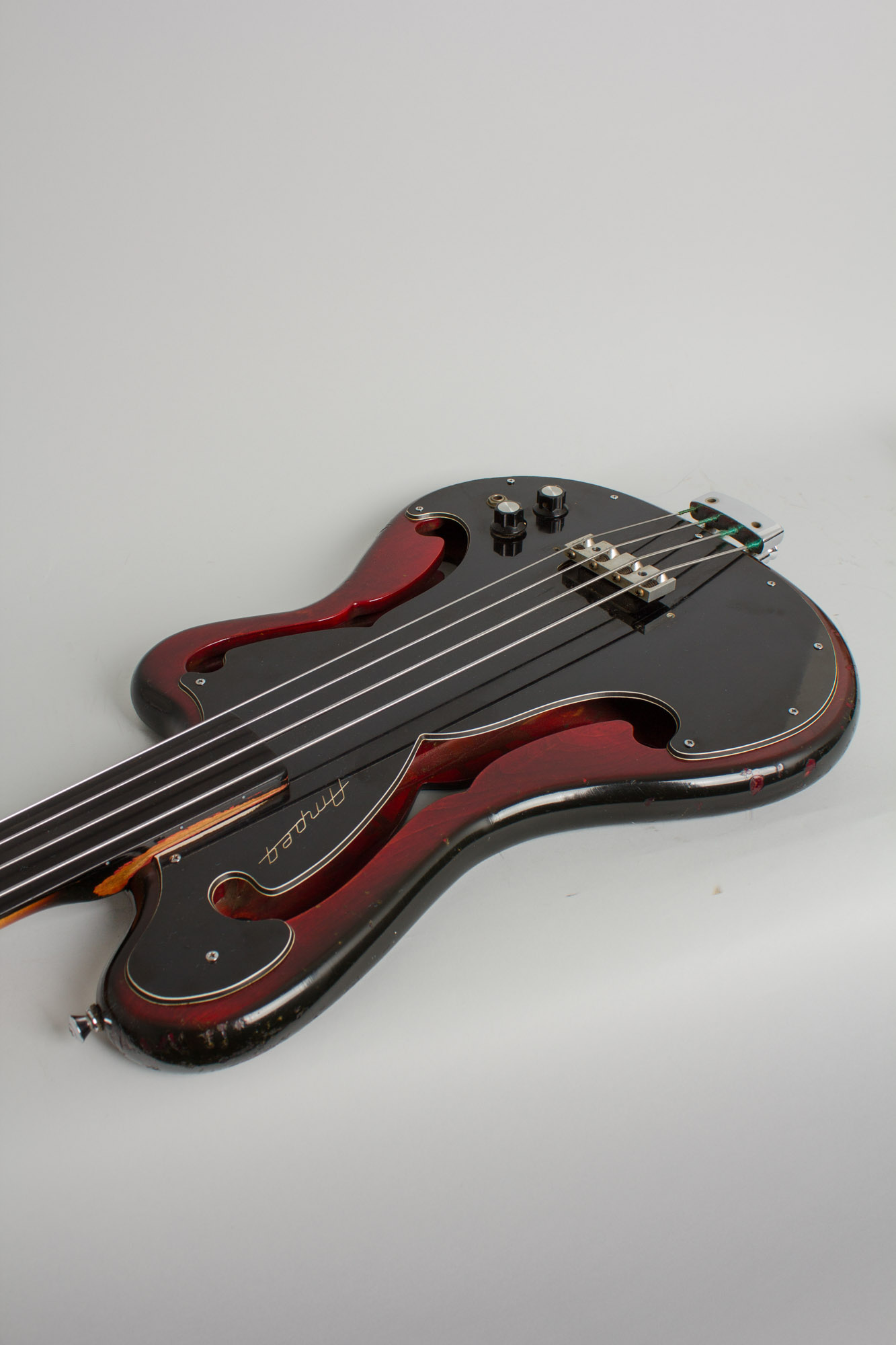
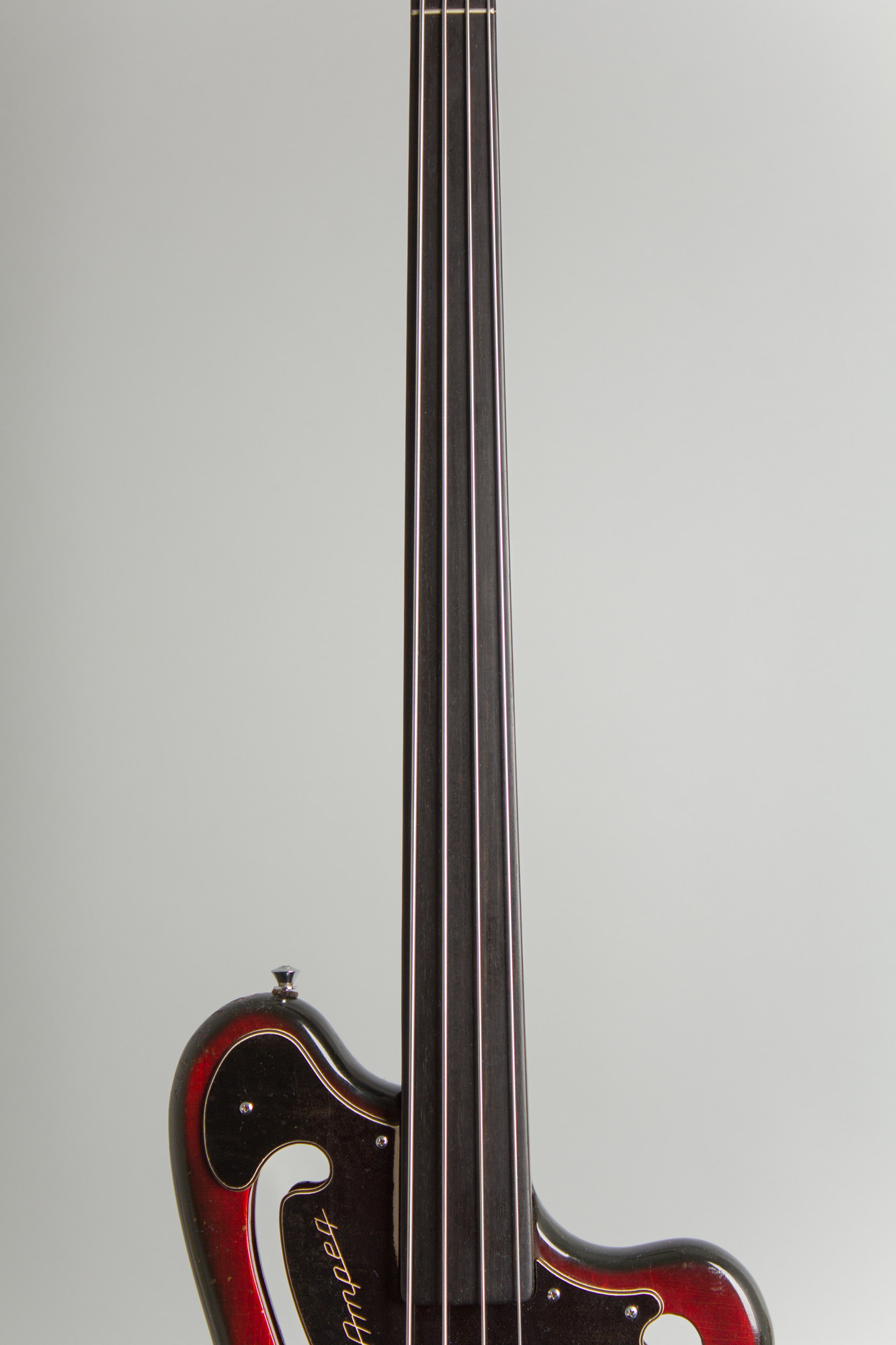
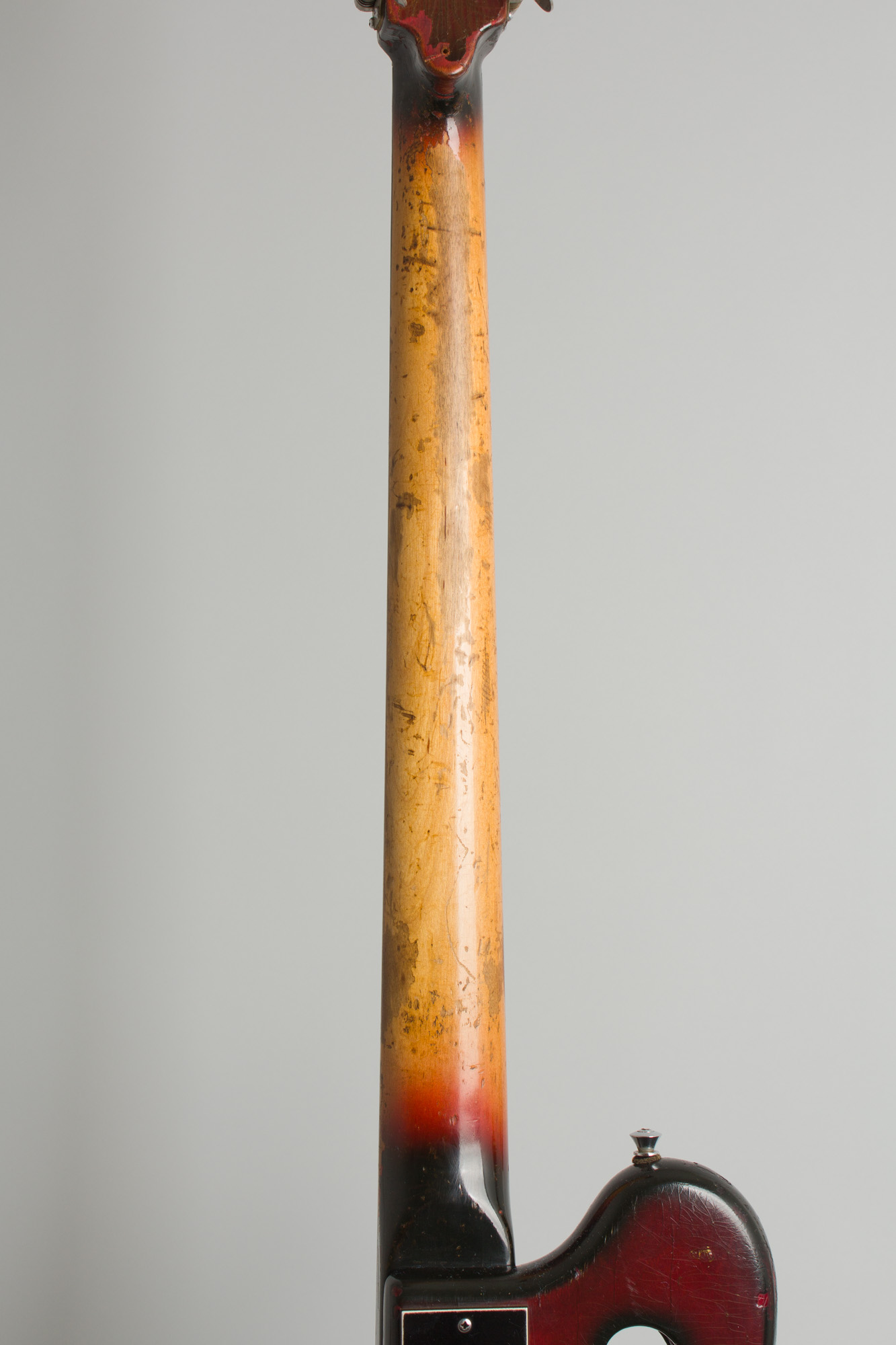
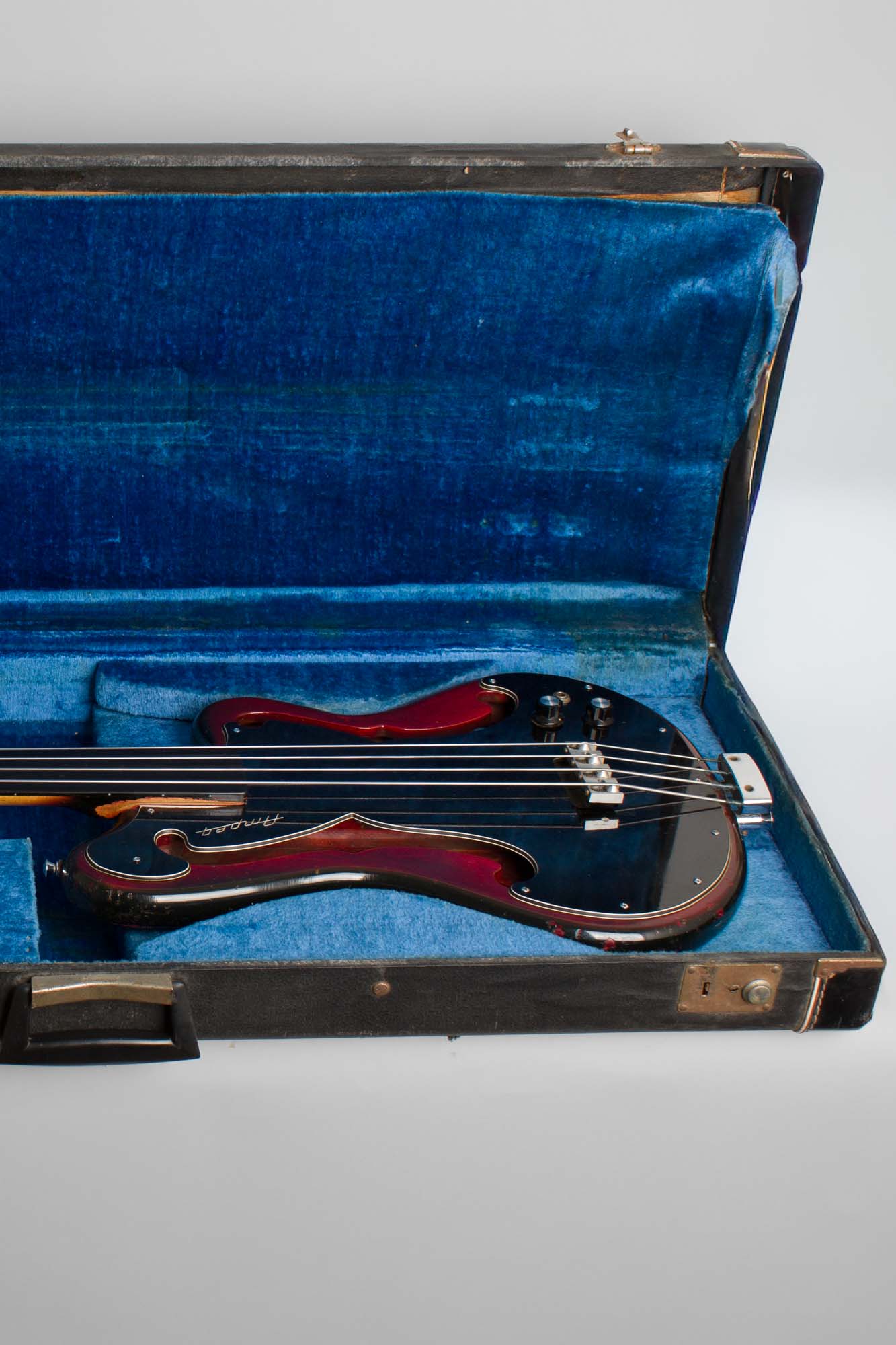
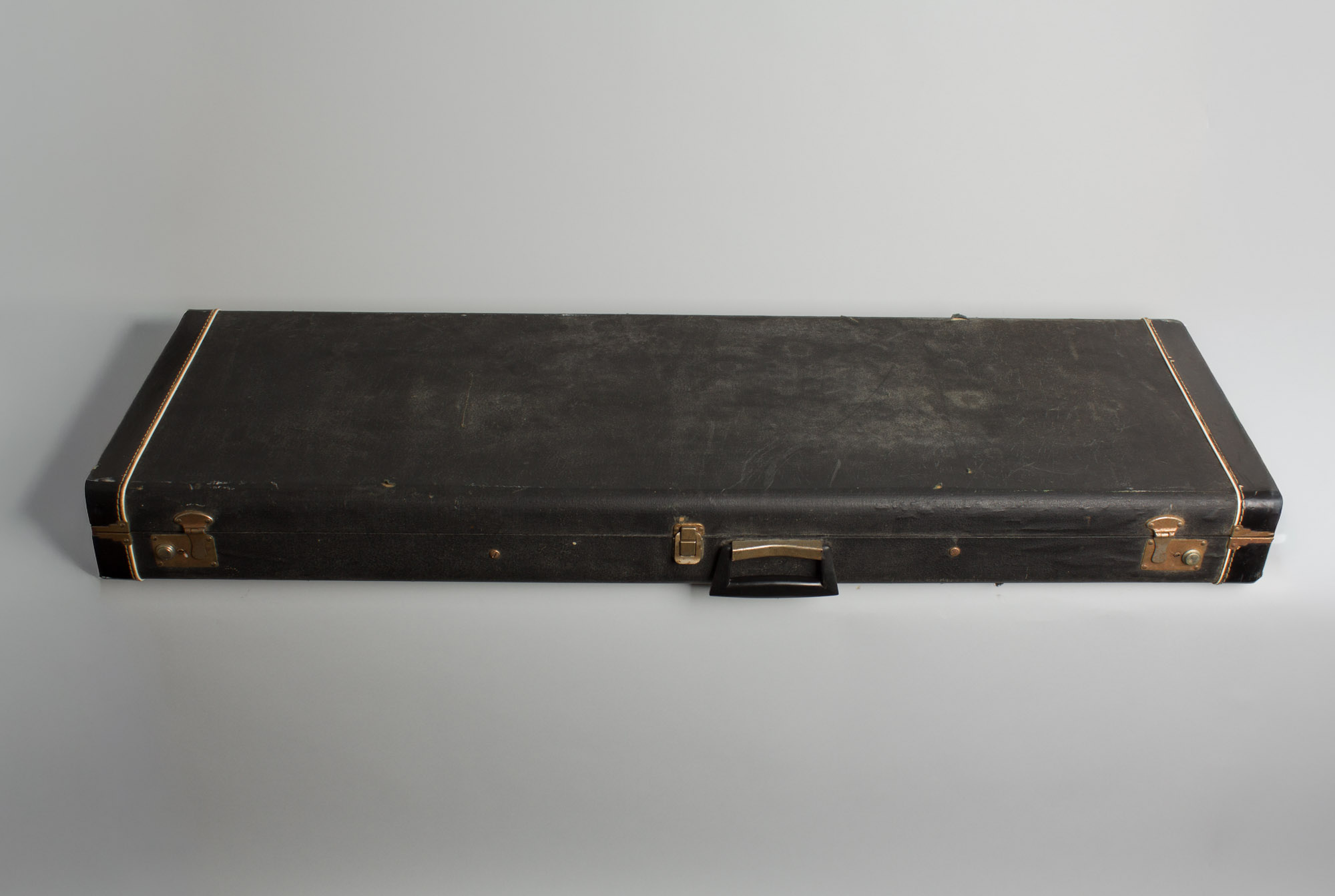
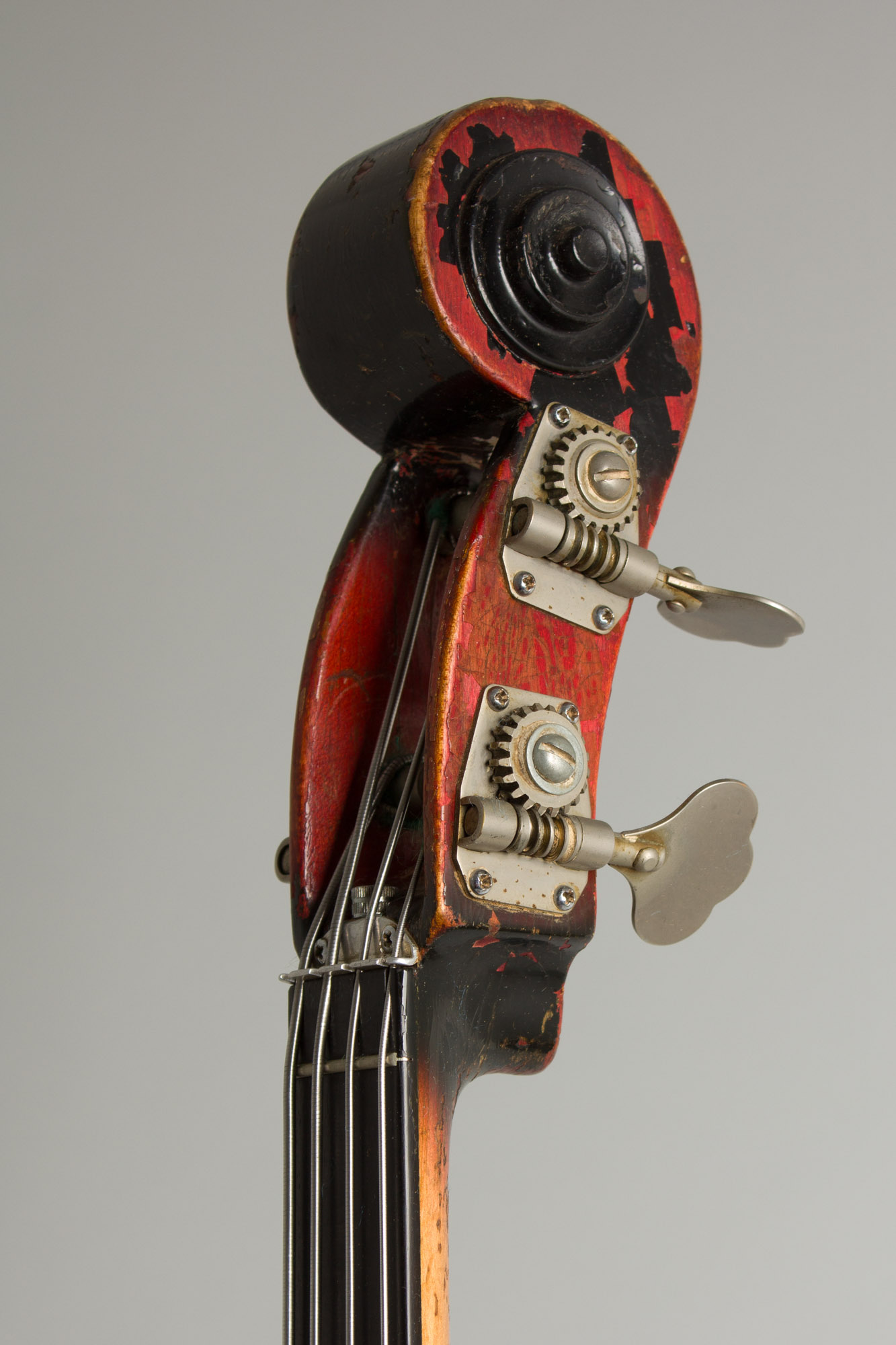
Ampeg AUB-1 Model Electric Bass Guitar (1966), made in Linden NJ, serial # 166, red/black sunburst finish, maple body, maple neck with ebony fingerboard, original black hard shell case.
This is a well-worn, played in but unaltered early original example of the fretless Ampeg AUB-1 (Ampeg Unfretted Bass #1), the company's first production "horizontal" bass. While Ampeg had prospered with amplifiers since the 1950s, they had made only half-hearted attempts to market instruments before 1966. The first was the fiberglass upright electric "Baby Bass" in 1961, and then they dabbled with importing re-branded Burns of London guitars. After that experiment ended, Ampeg decided to create a truly unique original design for bassists exclusively. These Ampeg basses were launched at the 1966 NAMM show with some fanfare and have become a '60s classic, although never mounting serious competition to the Fender Precision or Jazz bass that dominated the market. This one has a very low serial number (#166) and would date to that initial year.
These models were designed primarily by Ampeg employee Dennis Kager, but the instrument's character was strongly shaped by company founder Everett Hull's extreme distaste for the Fender bass. Hull was a purist who considered the upright bass to be the only legitimate low end instrument, and wanted to cater to traditional jazz and even classical players! To this end, this first Ampeg "Horizontal Bass" does not have a conventional magnetic pickup. It utilizes the same vibration-activated "Mystery Pickup" located under the bridge as the upright Baby Bass, allowing use of gut strings as well as steel. This point Hull insisted on, much to the chagrin of his employees who knew rock'n'roll players were the mass market. The unique scrolled headstock was another nod to bass tradition added on to Kager's design.
Ampeg had these instruments in production by late 1966, offering fretted and fretless models designated the AEB-1 and AUB-1. The fretless bass was a genuine innovation, designed to help upright players transition to the electric with the familiar microtonal fingerboard retained. This was a direct opposite concept to Fender's fretted "Precision" bass. Unfortunately in the ever higher-volume playing environments of the late 1960s, the rather microphonic and fairly low output pickup proved somewhat impractical and the instrument was re-designed in late 1967 to use a more a conventional magnetic pickup. Pickup oddities aside, the rest of the design is extremely well-engineered and quite functional.
The unusual offset body is built of laminate woods; the most notable feature is the large open f-holes cut in either side. The maple neck has an ebony fingerboard inlaid only on the top edge with tiny dots to mark the positions. The bridge unit is milled aluminum and adjustable for height and intonation. The strings run to a separate heavy tailpiece mounted off the bottom of the body which can be adjusted to put more or less tension on the bridge. This setup requires special extra-long strings, although the scale length is the same as a Fender at 34". The serial number is stamped under the tailpiece bar.
This particular bass has seen a lot of use; someone obviously made this fretless mystery-pickup model their go-to instrument for quite a while. The sound sits somewhere in between a fretless bass guitar and an upright. The acoustic-y twang of the "mystery" unit can be mellowed using the volume and tone controls, but it does take some experience to understand how to get a variety of sounds from the instrument. The combination of the fretless fingerboard and bridge mutes can create a fairly convincing electric upright sound if used carefully, just as Everett Hull envisioned. While admittedly not to every taste, the original AUB-1 is a connoisseur's delight for the bassist with an eye to its unique character and history.
Overall length is 47 in. (119.4 cm.), 14 1/2 in. (36.8 cm.) wide at lower bout, and 1 1/4 in. (3.2 cm.) in depth, measured at side of rim. Scale length is 34 1/2 in. (876 mm.). Width of nut is 1 5/8 in. (41 mm.).
This bass shows noticeable cosmetic wear overall but remains nicely original. These first-pattern Ampeg "Scroll" basses have often fallen into disrepair or been heavily modified (especially the pickups) over the last 50+ years; The bass has been played a lot but never altered. The original lacquer shows heavy checking (mostly on the back) with dings, chips and scrapes on the body edges with smaller dings, dents and chips to the back and face. The back of the neck has areas worn to the wood with dings, dents and scratches over its length. There is a noticeable wear spot to the top of the neck over the body and the pickguard below; someone anchored their thumb there quite a bit. The rest of the guard is scuffed but has no cracks or other worn through spots. There is some heavy wear to the headstock edges.
There is no structural damage or repair. There is one small screw hole on the lower back of the headstock, purpose unknown. The smooth fingerboard is surprisingly well-preserved and the bass appears to have always been played with flatwound strings. The bass is still set up with a period set of correctly fitted flatwound strings offering a great, deep warm sound; they have likely been in place since the 1960s and we would suggest never removing them!
The hardware is also original and remains complete except for two bushings on the tuning keys and the sliding bridge cover which as usual is long gone. This AUB-1 a very good player, eccentric-sounding for sure, but it performs exactly as intended. All in all it is a fine "real relic" player's example of this unique New Jersey creation and one of the most interesting and distinctive of all vintage American basses. The rare (and huge) original HSC is included in very solid shape with some wear. Overall Very Good + Condition.
This is a well-worn, played in but unaltered early original example of the fretless Ampeg AUB-1 (Ampeg Unfretted Bass #1), the company's first production "horizontal" bass. While Ampeg had prospered with amplifiers since the 1950s, they had made only half-hearted attempts to market instruments before 1966. The first was the fiberglass upright electric "Baby Bass" in 1961, and then they dabbled with importing re-branded Burns of London guitars. After that experiment ended, Ampeg decided to create a truly unique original design for bassists exclusively. These Ampeg basses were launched at the 1966 NAMM show with some fanfare and have become a '60s classic, although never mounting serious competition to the Fender Precision or Jazz bass that dominated the market. This one has a very low serial number (#166) and would date to that initial year.
These models were designed primarily by Ampeg employee Dennis Kager, but the instrument's character was strongly shaped by company founder Everett Hull's extreme distaste for the Fender bass. Hull was a purist who considered the upright bass to be the only legitimate low end instrument, and wanted to cater to traditional jazz and even classical players! To this end, this first Ampeg "Horizontal Bass" does not have a conventional magnetic pickup. It utilizes the same vibration-activated "Mystery Pickup" located under the bridge as the upright Baby Bass, allowing use of gut strings as well as steel. This point Hull insisted on, much to the chagrin of his employees who knew rock'n'roll players were the mass market. The unique scrolled headstock was another nod to bass tradition added on to Kager's design.
Ampeg had these instruments in production by late 1966, offering fretted and fretless models designated the AEB-1 and AUB-1. The fretless bass was a genuine innovation, designed to help upright players transition to the electric with the familiar microtonal fingerboard retained. This was a direct opposite concept to Fender's fretted "Precision" bass. Unfortunately in the ever higher-volume playing environments of the late 1960s, the rather microphonic and fairly low output pickup proved somewhat impractical and the instrument was re-designed in late 1967 to use a more a conventional magnetic pickup. Pickup oddities aside, the rest of the design is extremely well-engineered and quite functional.
The unusual offset body is built of laminate woods; the most notable feature is the large open f-holes cut in either side. The maple neck has an ebony fingerboard inlaid only on the top edge with tiny dots to mark the positions. The bridge unit is milled aluminum and adjustable for height and intonation. The strings run to a separate heavy tailpiece mounted off the bottom of the body which can be adjusted to put more or less tension on the bridge. This setup requires special extra-long strings, although the scale length is the same as a Fender at 34". The serial number is stamped under the tailpiece bar.
This particular bass has seen a lot of use; someone obviously made this fretless mystery-pickup model their go-to instrument for quite a while. The sound sits somewhere in between a fretless bass guitar and an upright. The acoustic-y twang of the "mystery" unit can be mellowed using the volume and tone controls, but it does take some experience to understand how to get a variety of sounds from the instrument. The combination of the fretless fingerboard and bridge mutes can create a fairly convincing electric upright sound if used carefully, just as Everett Hull envisioned. While admittedly not to every taste, the original AUB-1 is a connoisseur's delight for the bassist with an eye to its unique character and history.
Overall length is 47 in. (119.4 cm.), 14 1/2 in. (36.8 cm.) wide at lower bout, and 1 1/4 in. (3.2 cm.) in depth, measured at side of rim. Scale length is 34 1/2 in. (876 mm.). Width of nut is 1 5/8 in. (41 mm.).
This bass shows noticeable cosmetic wear overall but remains nicely original. These first-pattern Ampeg "Scroll" basses have often fallen into disrepair or been heavily modified (especially the pickups) over the last 50+ years; The bass has been played a lot but never altered. The original lacquer shows heavy checking (mostly on the back) with dings, chips and scrapes on the body edges with smaller dings, dents and chips to the back and face. The back of the neck has areas worn to the wood with dings, dents and scratches over its length. There is a noticeable wear spot to the top of the neck over the body and the pickguard below; someone anchored their thumb there quite a bit. The rest of the guard is scuffed but has no cracks or other worn through spots. There is some heavy wear to the headstock edges.
There is no structural damage or repair. There is one small screw hole on the lower back of the headstock, purpose unknown. The smooth fingerboard is surprisingly well-preserved and the bass appears to have always been played with flatwound strings. The bass is still set up with a period set of correctly fitted flatwound strings offering a great, deep warm sound; they have likely been in place since the 1960s and we would suggest never removing them!
The hardware is also original and remains complete except for two bushings on the tuning keys and the sliding bridge cover which as usual is long gone. This AUB-1 a very good player, eccentric-sounding for sure, but it performs exactly as intended. All in all it is a fine "real relic" player's example of this unique New Jersey creation and one of the most interesting and distinctive of all vintage American basses. The rare (and huge) original HSC is included in very solid shape with some wear. Overall Very Good + Condition.