D'Angelico Style A-1 Arch Top Acoustic Guitar (1938)

LOADING IMAGES
This item is currently on hold.
Item # 13775
Prices subject to change without notice.
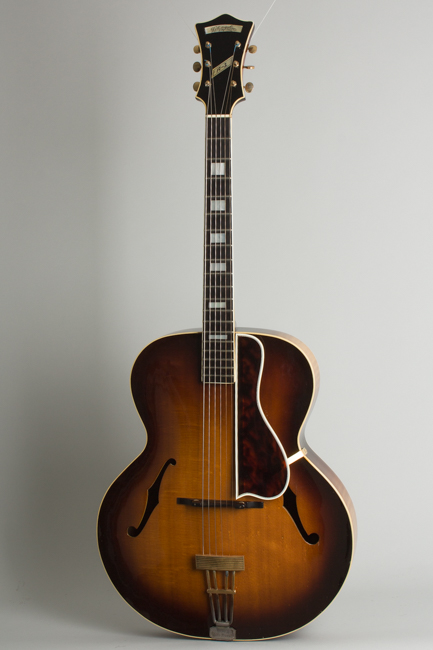
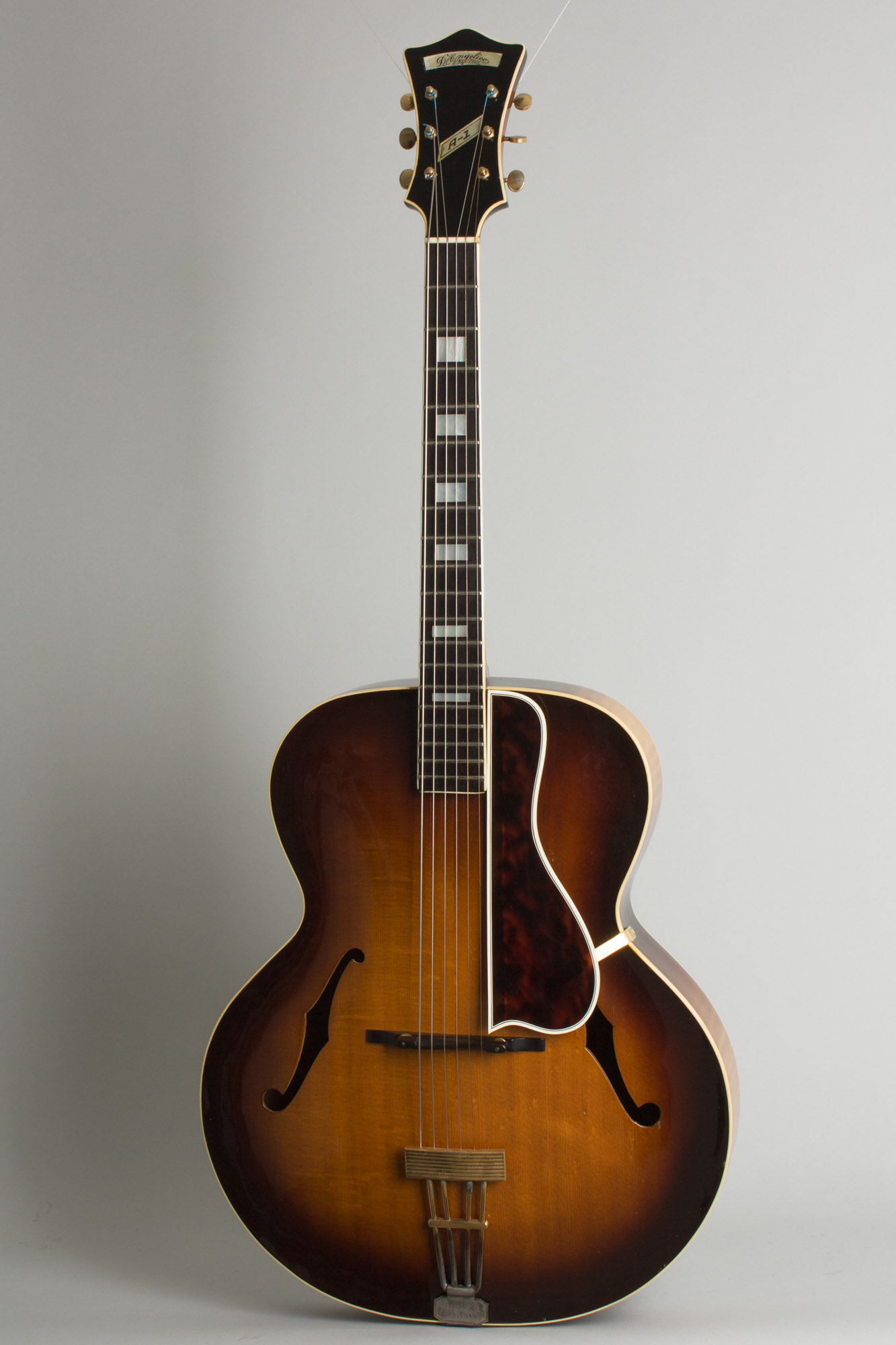
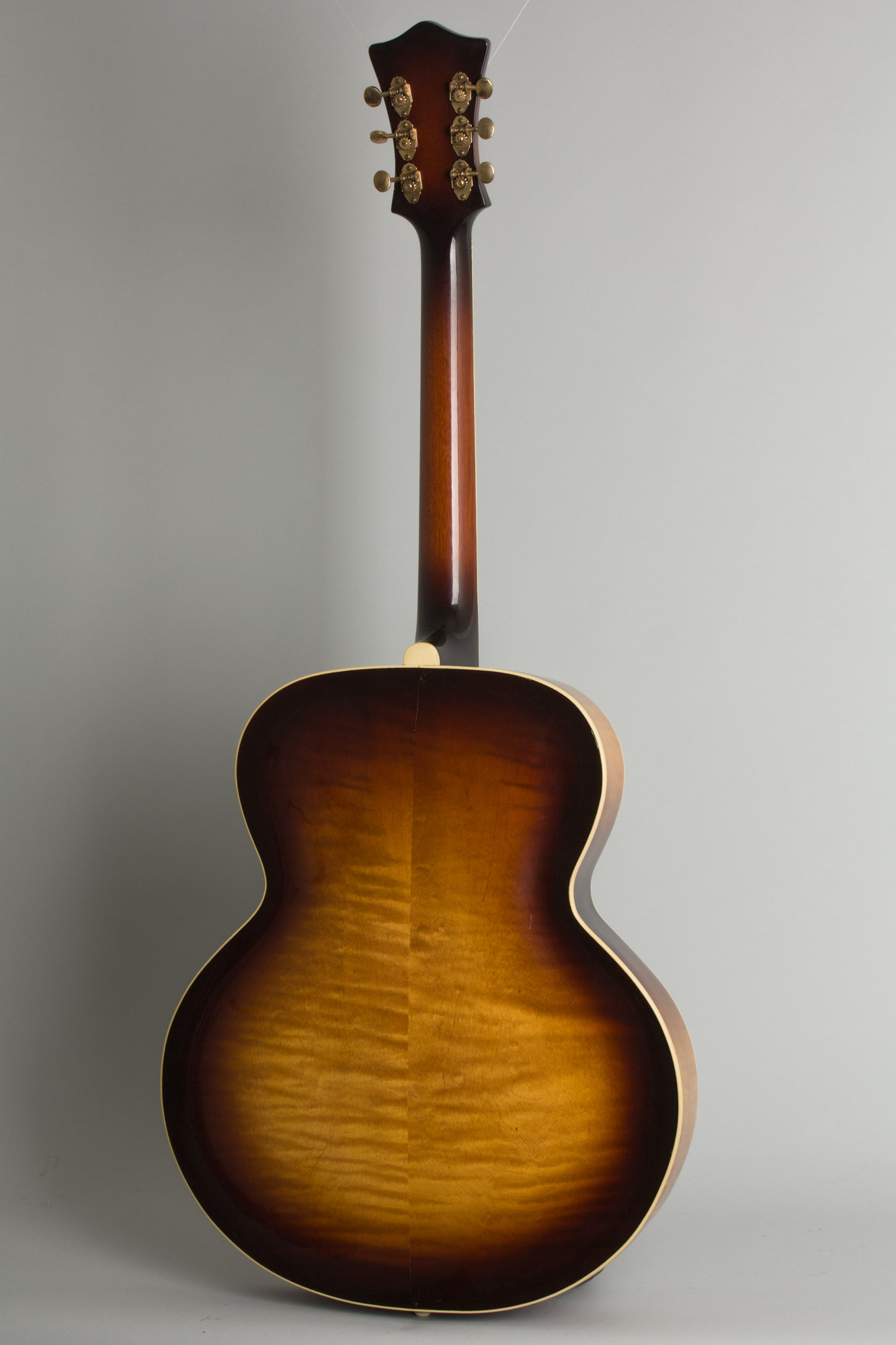
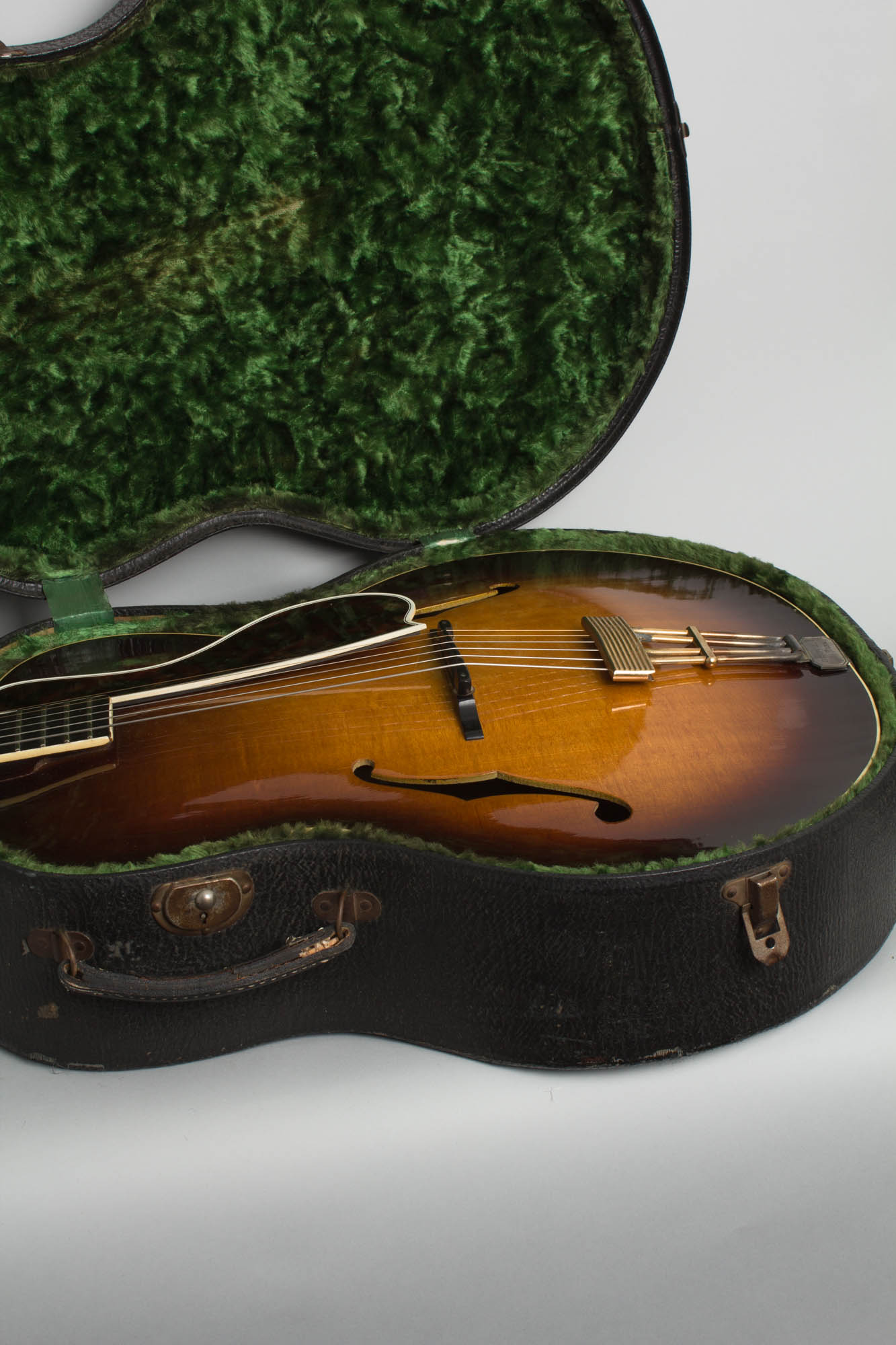
D'Angelico Style A-1 Model Arch Top Acoustic Guitar (1938), made in New York City, serial # 1369, sunburst lacquer finish, maple back and sides, spruce top; mahogany neck with ebony fingerboard, original black hard shell case.
This is a lovely example of a Pre-WWII guitar from the man considered the undisputed dean of arch top builders, John D'Angelico. At the time this Style A-1 was made, D'Angelico had had his own shop for about 6-7 years and was well into developing a signature style both cosmetically and sonically. His first carved top instruments closely resembled Gibson's L-5, but around 1934-5 began to take on their own distinctive character both in appearance and sound. His top-of-the-line Excel model took elements from Gibson and Epiphone and combined them into his own recipe. This 1938 Style A-1 was a more austere creation at the bottom of his line; but still a serious professional grade guitar, simply not as fancy as the more expensive top-line models.
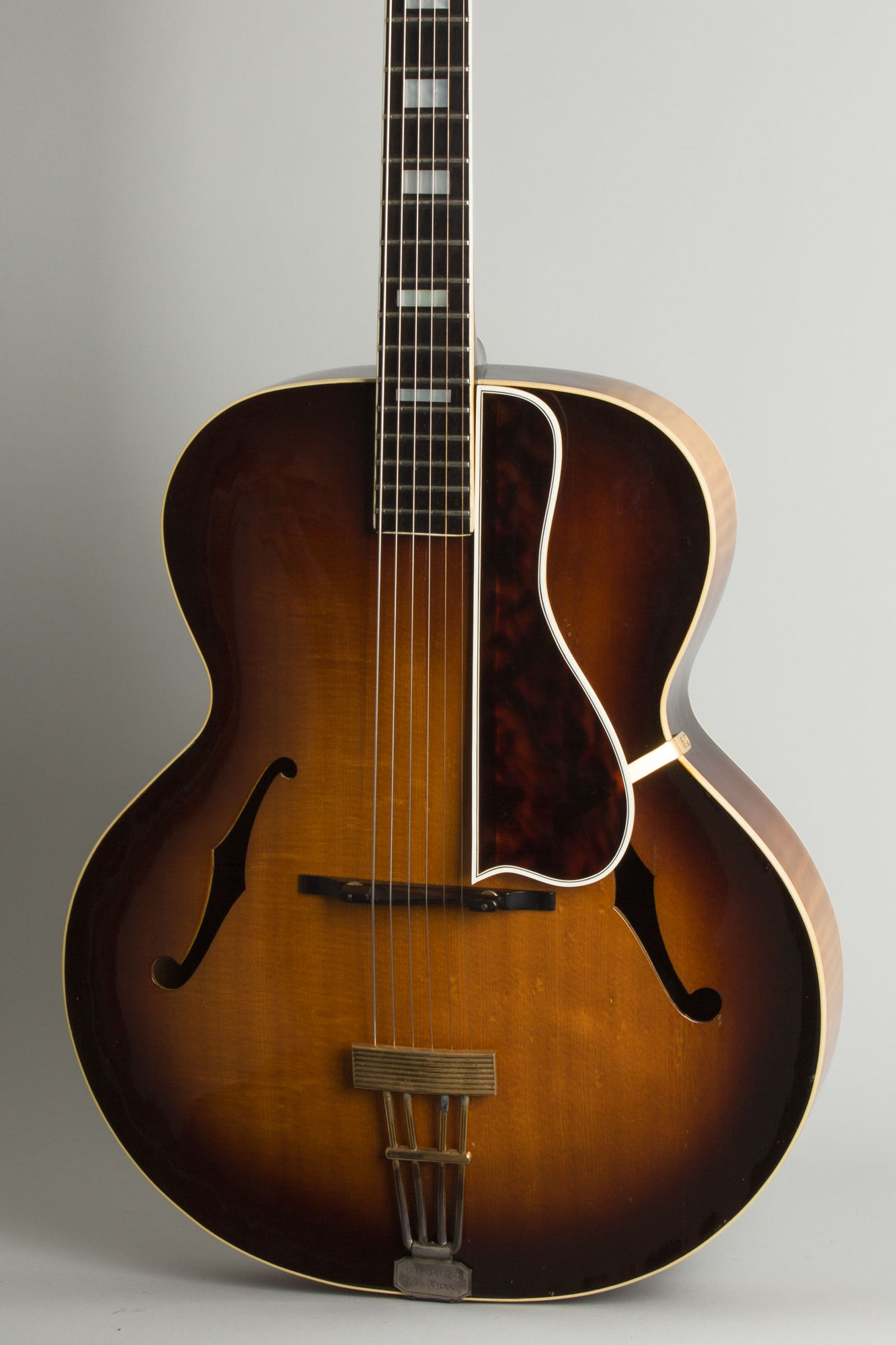
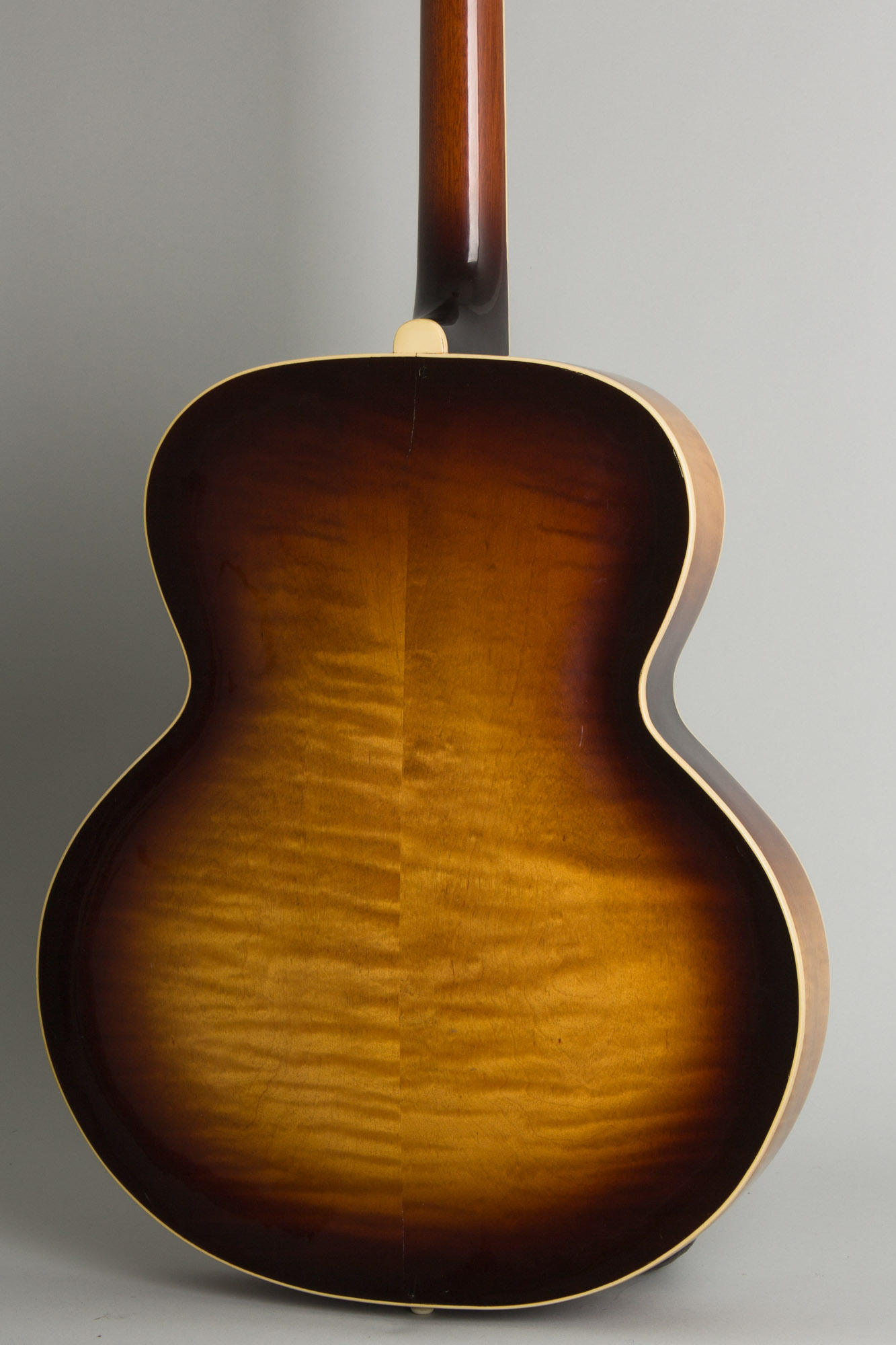
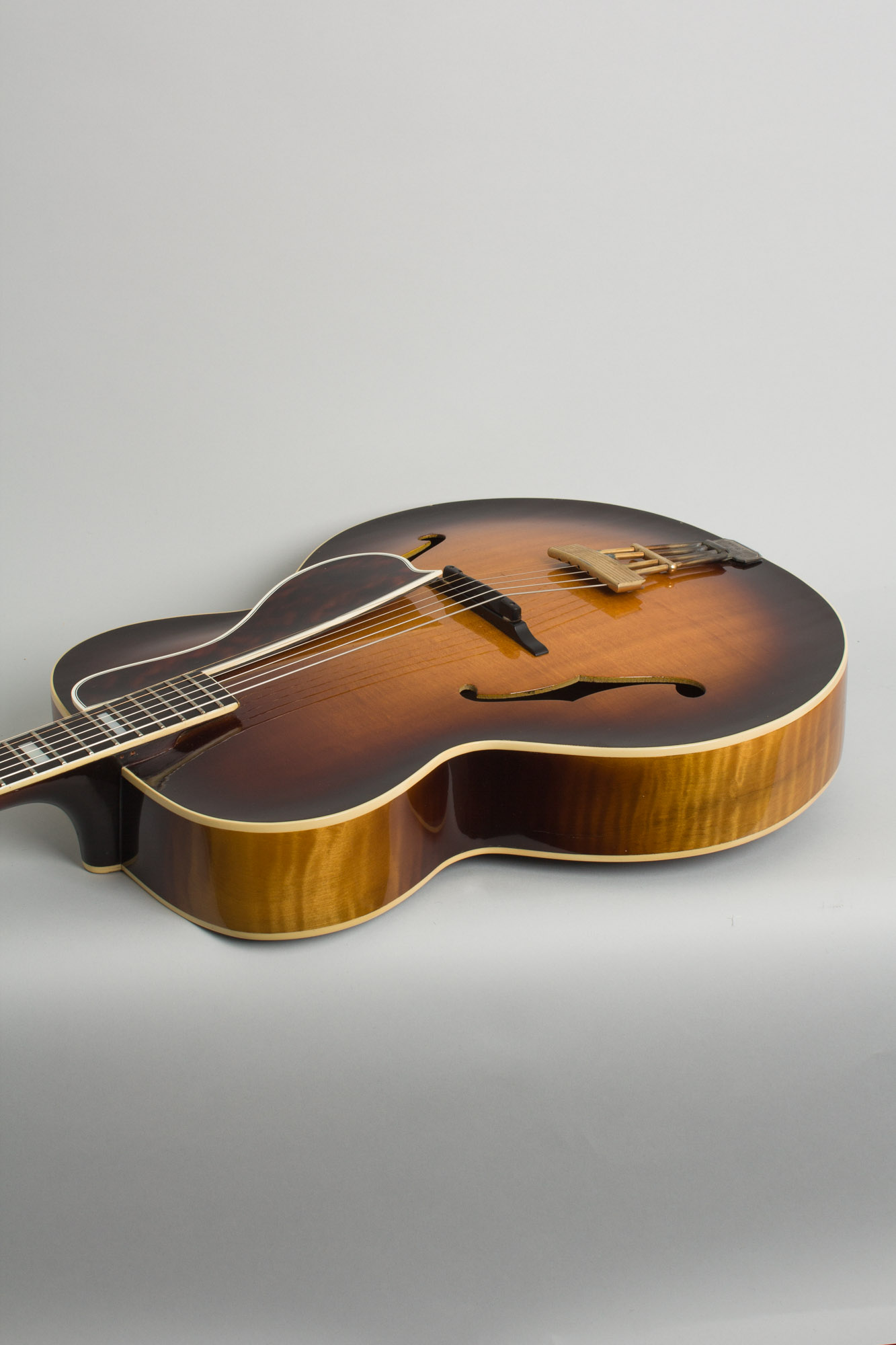
This guitar has a 17 1/8" wide body, just a bit larger than the "advanced' Gibson L-5 introduced in late 1935. Despite being originally priced around $125 under the Excel, the Style A-1 is built with the same care and top-grade materials throughout. The hand carved top is nicely grained spruce and the back and sides are maple, with some light flame grain. The top and back are single bound in white celluloid and finished overall in a beautiful dark blended sunburst. The top is carved relatively thin for a D'Angelico and is parallel braced, with traditionally shaped unbound F-holes.
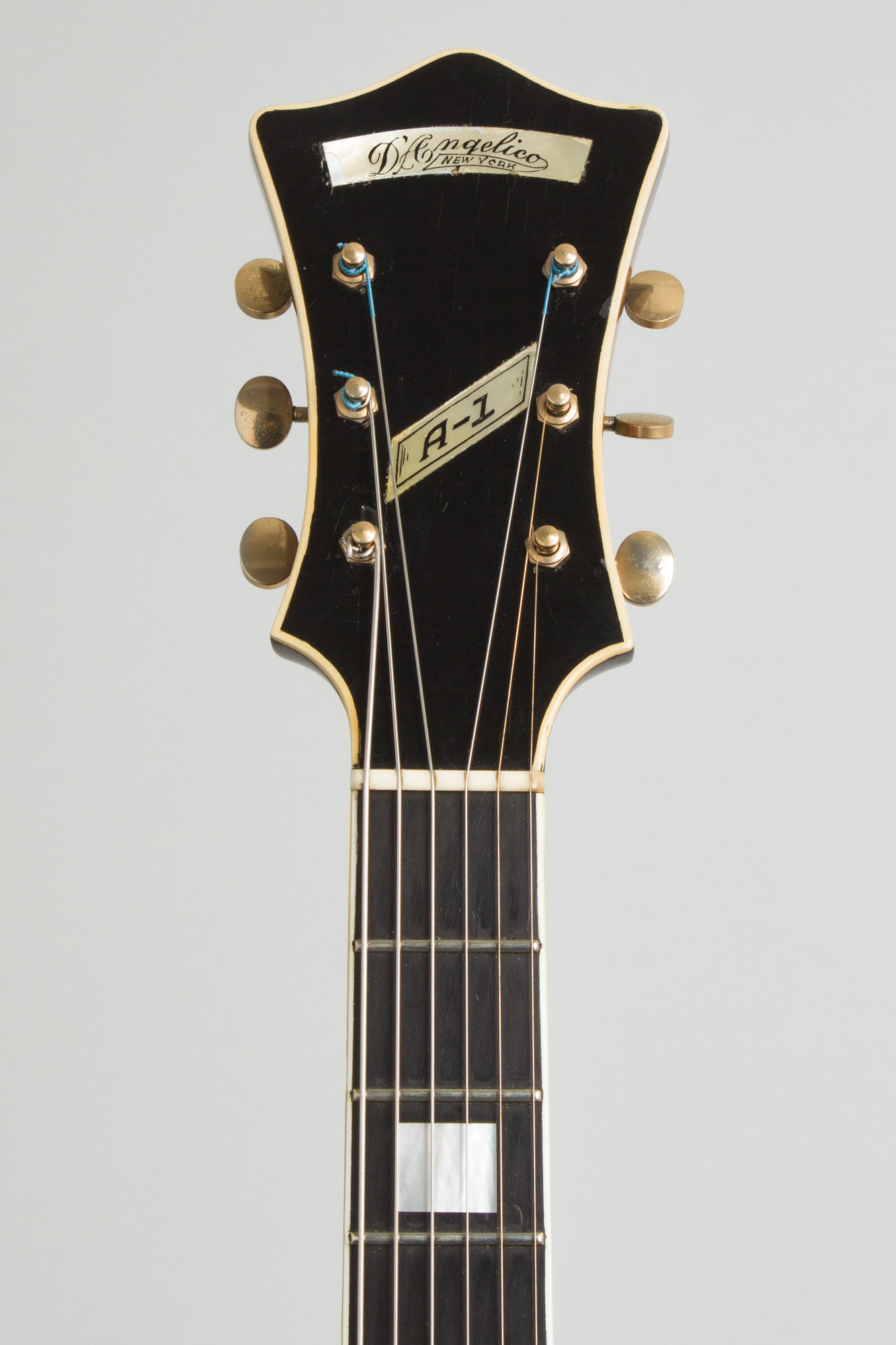
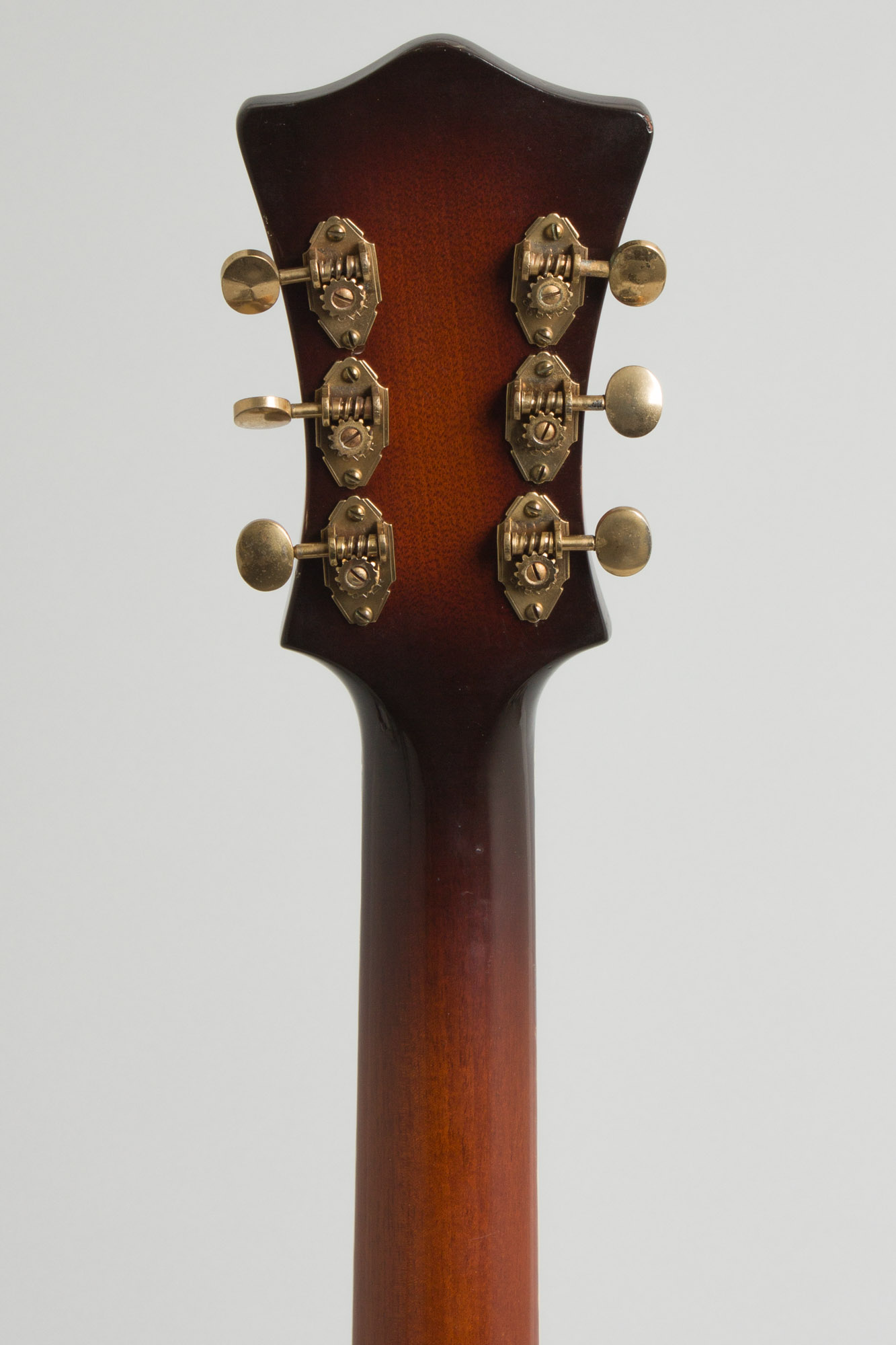
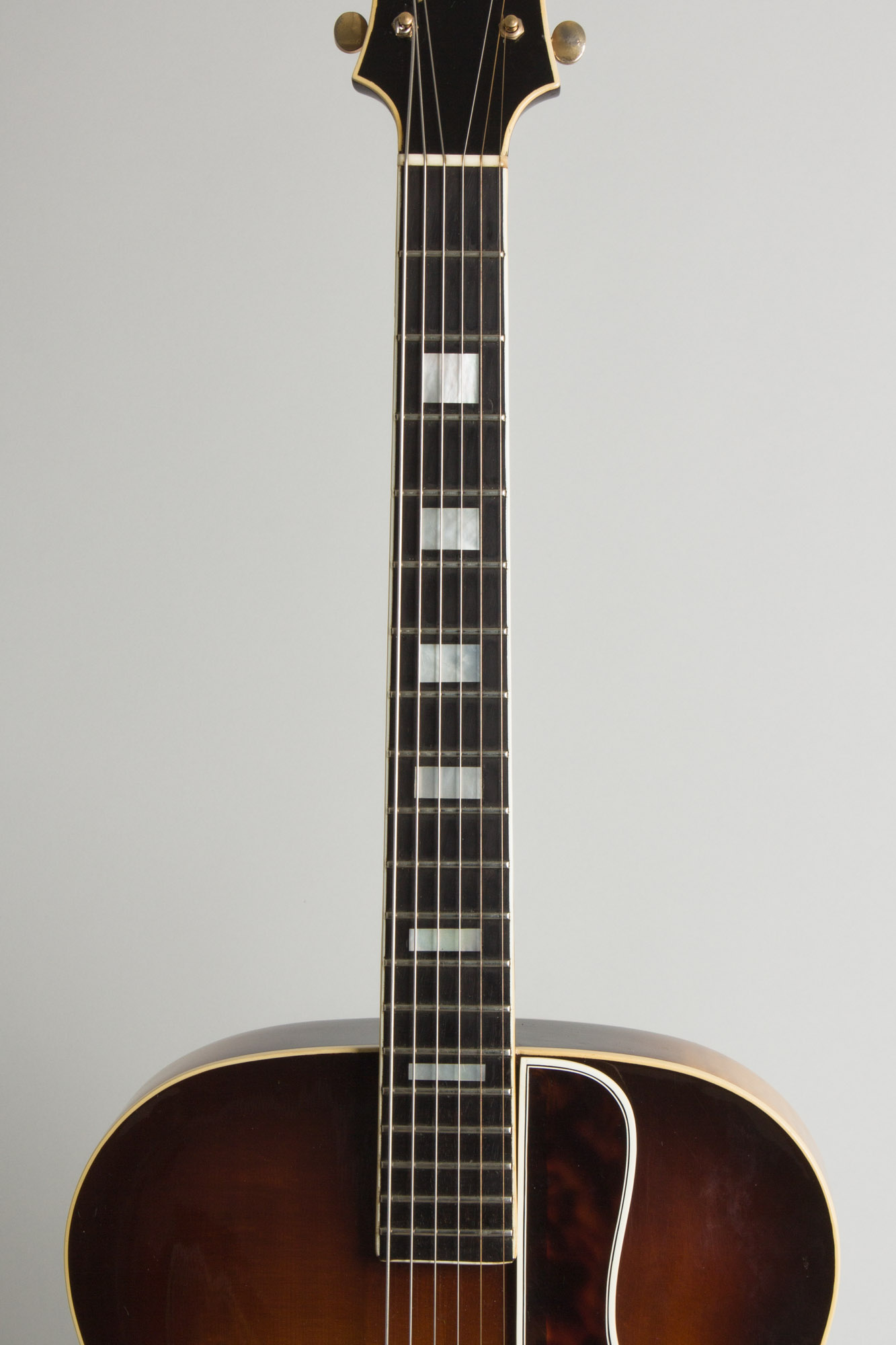
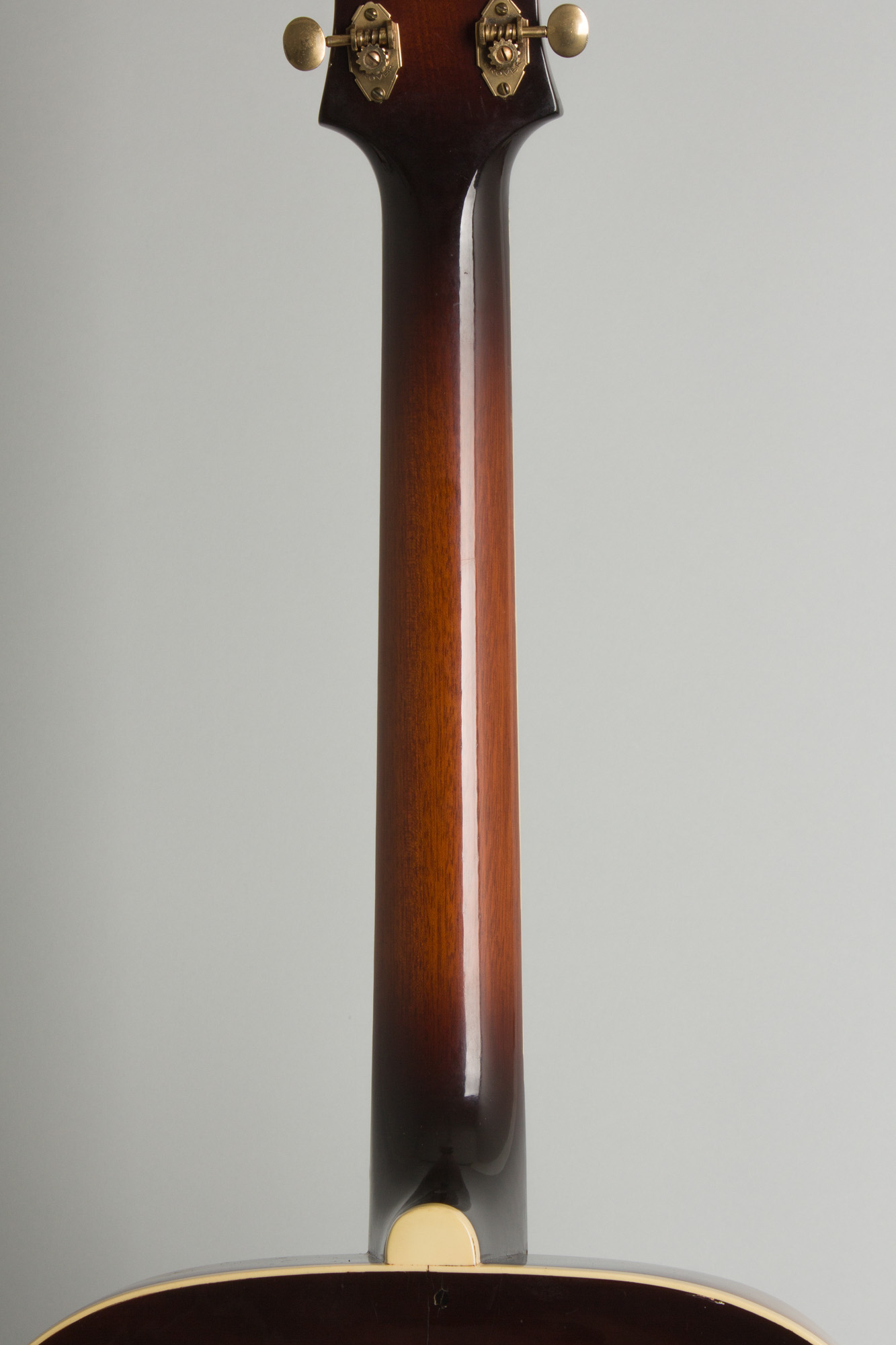
The peaked headstock has fluted sides and is single bound. The face carries a "D'Angelico, New York" script logo etched into a curved pearl block. There is a pearl banner engraved "A-1" in the center of the headstock. The tuners are a fairly short-lived style of open back Grovers with angled baseplates and metal buttons specific to this 1938 period, seen on a number of makers' instruments.
The neck is carved from a single piece of mahogany with a comfortable medium-slim "C" profile and 1 11/16" nut width. The single bound fingerboard is ebony with plain pearl block inlay. While John is often described as heavily influenced by Gibson, the guitars Epi Stathopoulo's company was turning out on 14th street not too far north of D'Angelico's Kenmare street shop also had a major impact on his designs. This Style A-1 resembles the contemporary Epiphone Triumph more closely than the competing Gibson L-7 and L-10.
The tailpiece was made by the Grover company of Long Island City; D'Angelico had not yet begun to have his own proprietary tailpieces made so this one is labeled "Grover DeLuxe" at the base. The bridge is simple carved ebony with an angled saddle, while the pickguard is still the curved shape used on earlier D'Angelicos, not the more angled deco styles he would move on to. Overall this guitar is typical of period Style A-1's, although the plating is gold which is fancier than the nickel usually specified.
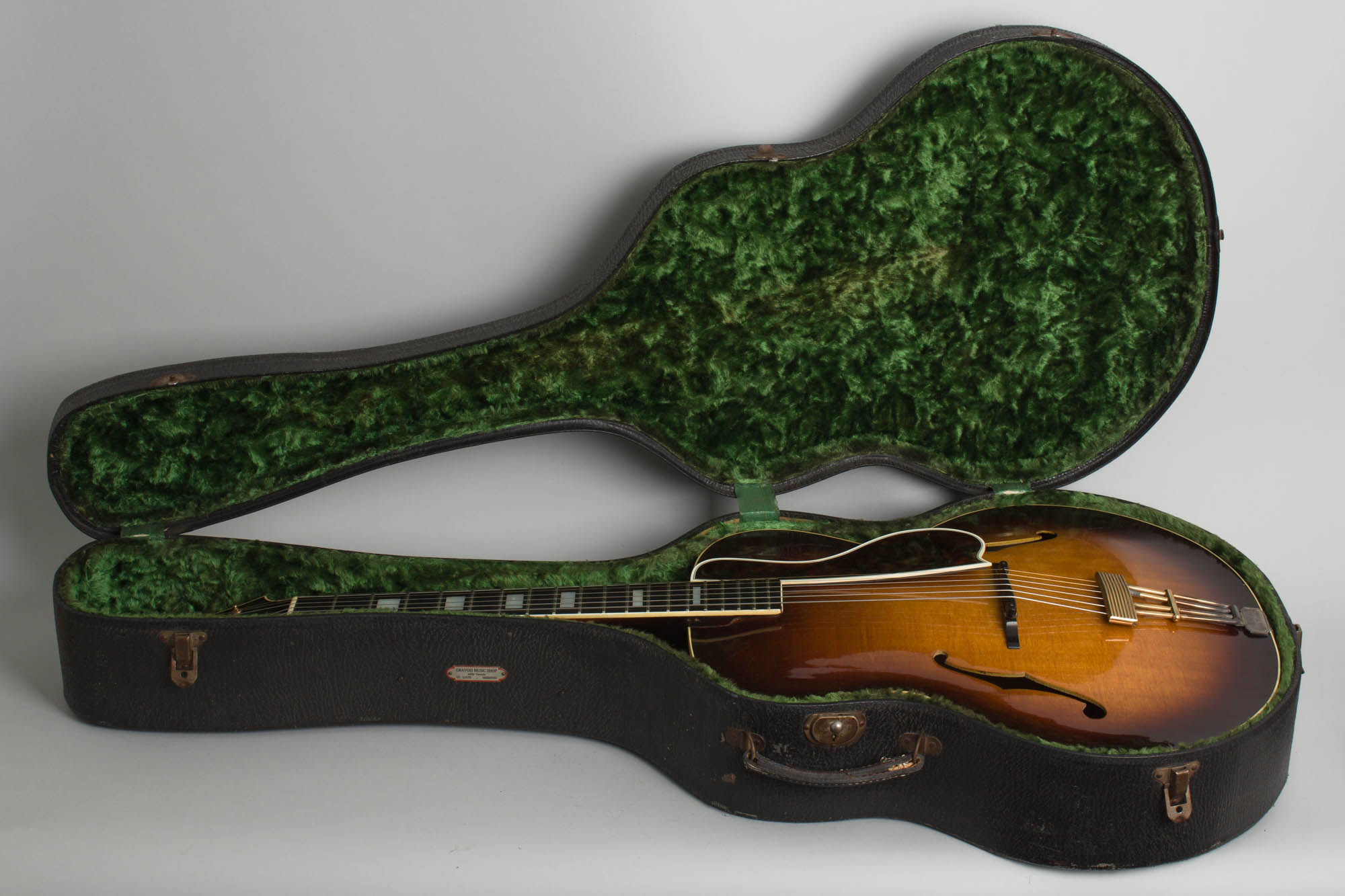
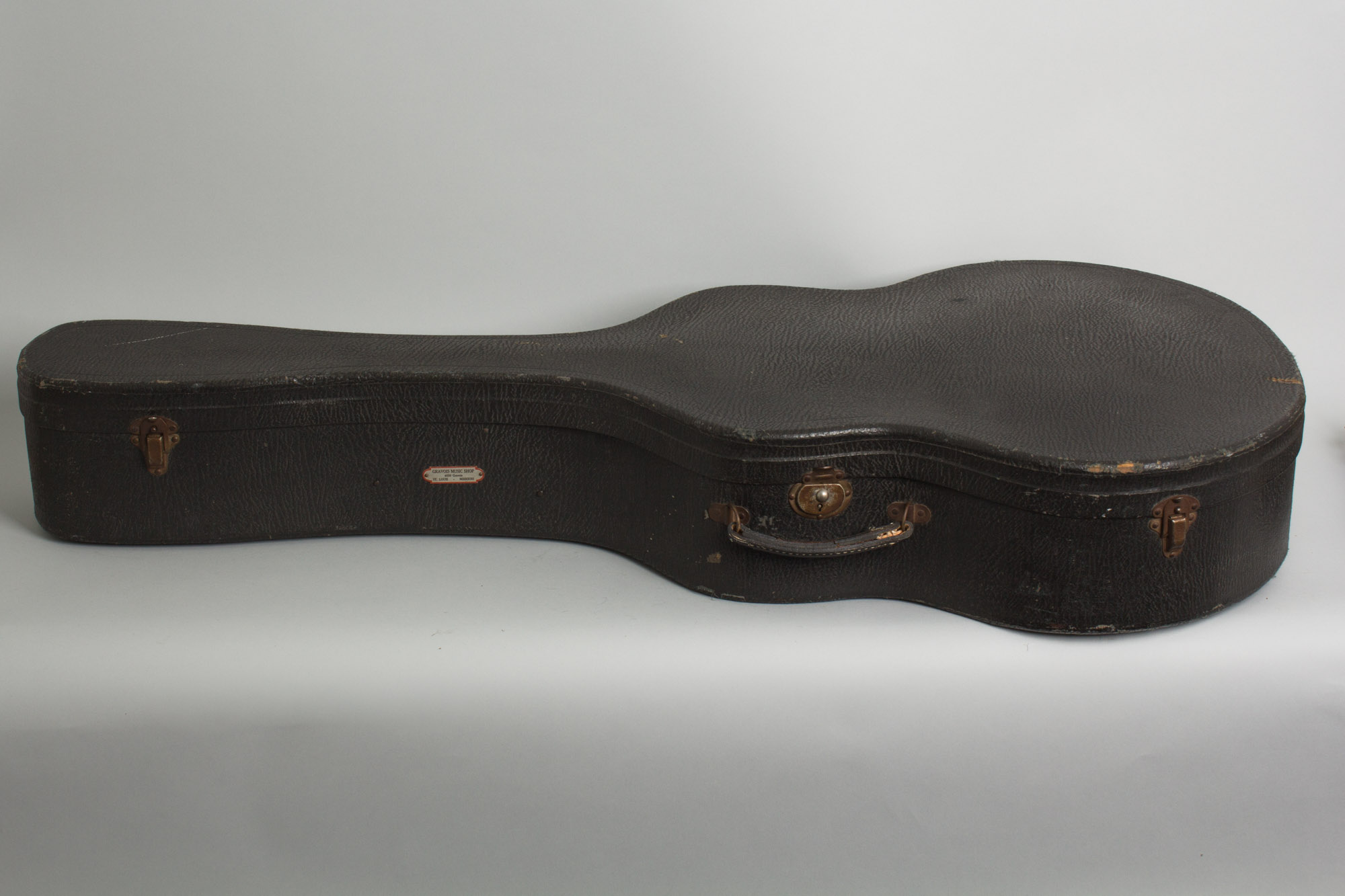
This guitar is listed in D'Angelico's ledger as completed on 10/13/38, originally sold to "Maresco", a dealer that took quite a few of John's instruments art the time. 10 guitars of various styles are listed as going to "Maresco" in 1938 alone. Oddly enough what certainly appears to be the original case for this guitar has a plaque from Gravois Music in St. Louis on the side, another dealer that bought quite a few instruments directly from John's shop. A Style A #1368 listed directly above was booked as sold to that store; one wonders if perhaps the ledger entries were mixed up on these?
Wherever this A-1 originally went it shows only light signs of use since 1938. The finish was oversprayed long ago, as was often done on older archtops to keep them looking shiny; remember most players with one of these wore a tuxedo to work! Even considering this it has survived in far more original condition than many D'Angelicos, particularly pre-WWII ones. The tone of this very responsive guitar is incisive, as Swing-era instruments needed to be, but with an overriding sweetness and balance that is the hallmark of D'Angelico. Compared to his more expensive and ornate creations, it still has a comparable tone. It remains a fantastic sounding instrument, modest looking perhaps but still a true gem built by one of the greatest guitar makers of the 20th century.
Overall length is 41 3/8 in. (105.1 cm.), 17 1/8 in. (43.5 cm.) wide at lower bout, and 3 1/8 in. (7.9 cm.) in depth, measured at side of rim. Scale length is 24 3/4 in. (629 mm.). Width of nut is 1 11/16 in. (43 mm.).
This seemingly little-played guitar remains largely original showing few signs of use and some fairly discreet repair. A clear lacquer overspray is apparent over the entire guitar, quite old and relatively thin. This is most apparent on the neck, which appears to have been carefully refretted and rebound a long time ago. There is very little wear evident either under or to the overspray, just some light checked spots and very small dings and dents.
The most notable repair is a neatly spliced grain split off the lower ball of the treble side f-hole running towards the back edge. There is also smaller grain split coming off the forward edge of the soundhole near the waist. These were repaired long ago, under the overfinish and may be the reason finish work was done in the first place. There are also old small splits on back below the neck heel and off the tailblock, both also fully sealed. The maple sides have a few small grain checks, but nothing that goes through the wood to the inside. The upper edge of the fingerboard extension has the two small "Vampire bite" screwholes indicating a DeArmond pickup was once mounted.
All hardware remains original except for an old correct-style repro pickguard. The bridge and tuners are unaltered, there is an ancient repair to the tailpiece hinge, noticeable as the plating on the lower section is mostly gone. The guitar has been refretted and the fingerboard neatly rebound decades ago, using wire similar to the original; these frets show virtually no subsequent wear. The fingerboard shows a couple of small chips but no divoting.
This is simply a very fine-playing and sounding guitar, and even though there is a layer of added finish it remains true to John D'Angelico's original intentions. Although originally a lower-priced model than an Excel or New Yorker it sounds as wonderful as they usually do, offering plenty of volume without ever getting harsh and still plays perfectly even after well over 80 years. It still rests in an original hardshell case that has some external wear but is still completely solid. Overall Excellent - Condition.
This is a lovely example of a Pre-WWII guitar from the man considered the undisputed dean of arch top builders, John D'Angelico. At the time this Style A-1 was made, D'Angelico had had his own shop for about 6-7 years and was well into developing a signature style both cosmetically and sonically. His first carved top instruments closely resembled Gibson's L-5, but around 1934-5 began to take on their own distinctive character both in appearance and sound. His top-of-the-line Excel model took elements from Gibson and Epiphone and combined them into his own recipe. This 1938 Style A-1 was a more austere creation at the bottom of his line; but still a serious professional grade guitar, simply not as fancy as the more expensive top-line models.
This guitar has a 17 1/8" wide body, just a bit larger than the "advanced' Gibson L-5 introduced in late 1935. Despite being originally priced around $125 under the Excel, the Style A-1 is built with the same care and top-grade materials throughout. The hand carved top is nicely grained spruce and the back and sides are maple, with some light flame grain. The top and back are single bound in white celluloid and finished overall in a beautiful dark blended sunburst. The top is carved relatively thin for a D'Angelico and is parallel braced, with traditionally shaped unbound F-holes.
The peaked headstock has fluted sides and is single bound. The face carries a "D'Angelico, New York" script logo etched into a curved pearl block. There is a pearl banner engraved "A-1" in the center of the headstock. The tuners are a fairly short-lived style of open back Grovers with angled baseplates and metal buttons specific to this 1938 period, seen on a number of makers' instruments.
The neck is carved from a single piece of mahogany with a comfortable medium-slim "C" profile and 1 11/16" nut width. The single bound fingerboard is ebony with plain pearl block inlay. While John is often described as heavily influenced by Gibson, the guitars Epi Stathopoulo's company was turning out on 14th street not too far north of D'Angelico's Kenmare street shop also had a major impact on his designs. This Style A-1 resembles the contemporary Epiphone Triumph more closely than the competing Gibson L-7 and L-10.
The tailpiece was made by the Grover company of Long Island City; D'Angelico had not yet begun to have his own proprietary tailpieces made so this one is labeled "Grover DeLuxe" at the base. The bridge is simple carved ebony with an angled saddle, while the pickguard is still the curved shape used on earlier D'Angelicos, not the more angled deco styles he would move on to. Overall this guitar is typical of period Style A-1's, although the plating is gold which is fancier than the nickel usually specified.
This guitar is listed in D'Angelico's ledger as completed on 10/13/38, originally sold to "Maresco", a dealer that took quite a few of John's instruments art the time. 10 guitars of various styles are listed as going to "Maresco" in 1938 alone. Oddly enough what certainly appears to be the original case for this guitar has a plaque from Gravois Music in St. Louis on the side, another dealer that bought quite a few instruments directly from John's shop. A Style A #1368 listed directly above was booked as sold to that store; one wonders if perhaps the ledger entries were mixed up on these?
Wherever this A-1 originally went it shows only light signs of use since 1938. The finish was oversprayed long ago, as was often done on older archtops to keep them looking shiny; remember most players with one of these wore a tuxedo to work! Even considering this it has survived in far more original condition than many D'Angelicos, particularly pre-WWII ones. The tone of this very responsive guitar is incisive, as Swing-era instruments needed to be, but with an overriding sweetness and balance that is the hallmark of D'Angelico. Compared to his more expensive and ornate creations, it still has a comparable tone. It remains a fantastic sounding instrument, modest looking perhaps but still a true gem built by one of the greatest guitar makers of the 20th century.
Overall length is 41 3/8 in. (105.1 cm.), 17 1/8 in. (43.5 cm.) wide at lower bout, and 3 1/8 in. (7.9 cm.) in depth, measured at side of rim. Scale length is 24 3/4 in. (629 mm.). Width of nut is 1 11/16 in. (43 mm.).
This seemingly little-played guitar remains largely original showing few signs of use and some fairly discreet repair. A clear lacquer overspray is apparent over the entire guitar, quite old and relatively thin. This is most apparent on the neck, which appears to have been carefully refretted and rebound a long time ago. There is very little wear evident either under or to the overspray, just some light checked spots and very small dings and dents.
The most notable repair is a neatly spliced grain split off the lower ball of the treble side f-hole running towards the back edge. There is also smaller grain split coming off the forward edge of the soundhole near the waist. These were repaired long ago, under the overfinish and may be the reason finish work was done in the first place. There are also old small splits on back below the neck heel and off the tailblock, both also fully sealed. The maple sides have a few small grain checks, but nothing that goes through the wood to the inside. The upper edge of the fingerboard extension has the two small "Vampire bite" screwholes indicating a DeArmond pickup was once mounted.
All hardware remains original except for an old correct-style repro pickguard. The bridge and tuners are unaltered, there is an ancient repair to the tailpiece hinge, noticeable as the plating on the lower section is mostly gone. The guitar has been refretted and the fingerboard neatly rebound decades ago, using wire similar to the original; these frets show virtually no subsequent wear. The fingerboard shows a couple of small chips but no divoting.
This is simply a very fine-playing and sounding guitar, and even though there is a layer of added finish it remains true to John D'Angelico's original intentions. Although originally a lower-priced model than an Excel or New Yorker it sounds as wonderful as they usually do, offering plenty of volume without ever getting harsh and still plays perfectly even after well over 80 years. It still rests in an original hardshell case that has some external wear but is still completely solid. Overall Excellent - Condition.