Fender Esquire Solid Body Electric Guitar (1957)

LOADING IMAGES
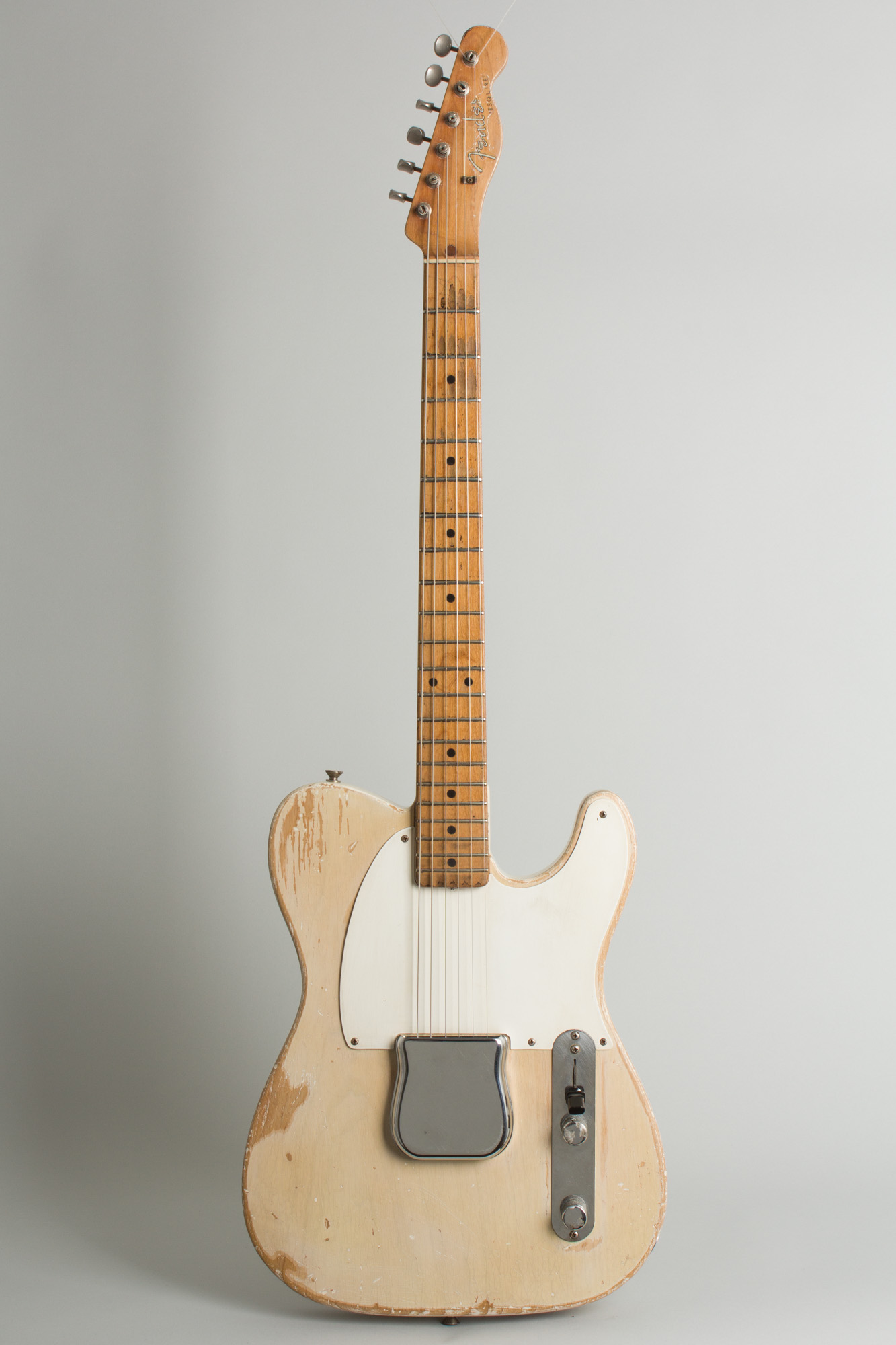
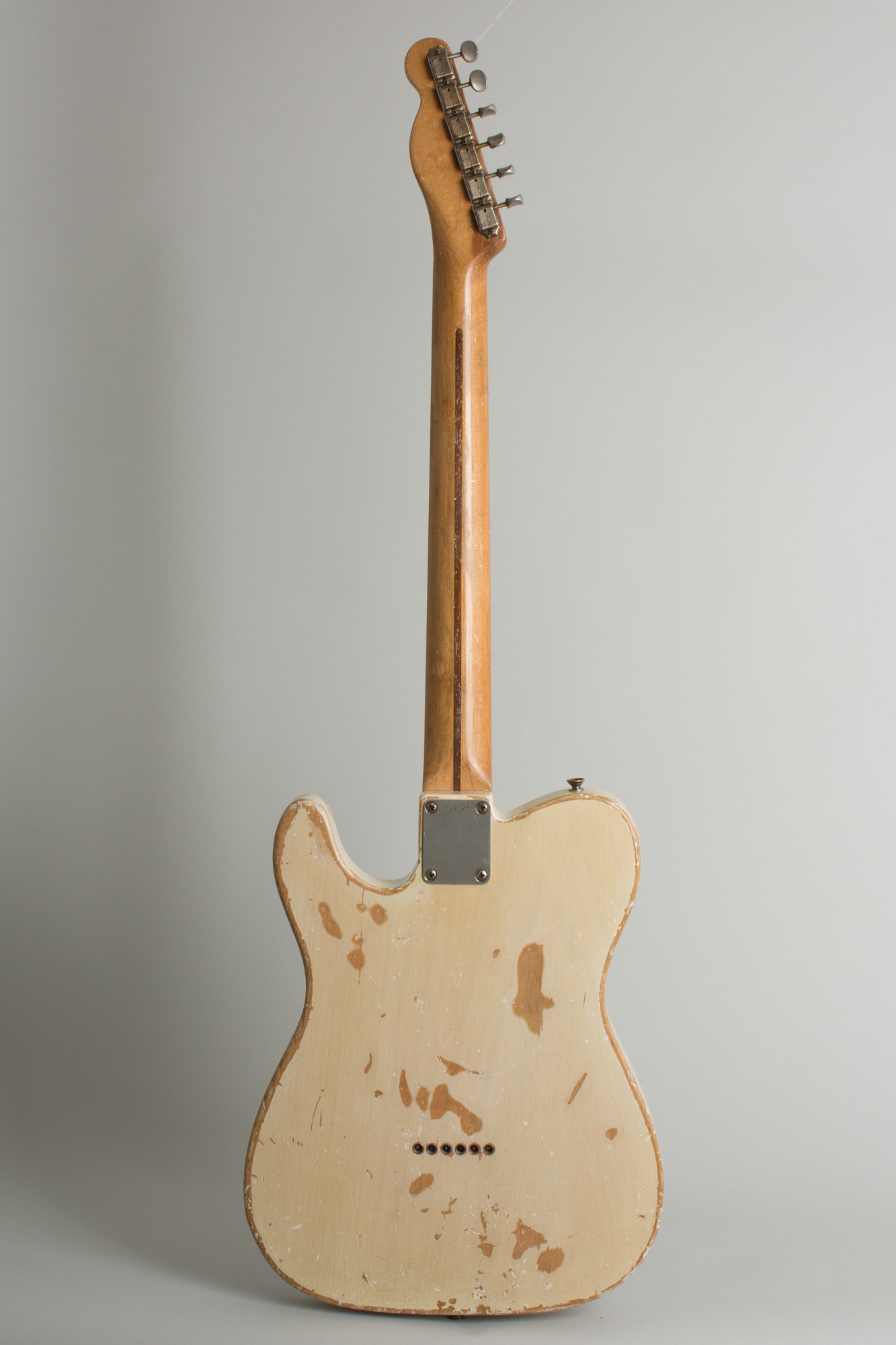
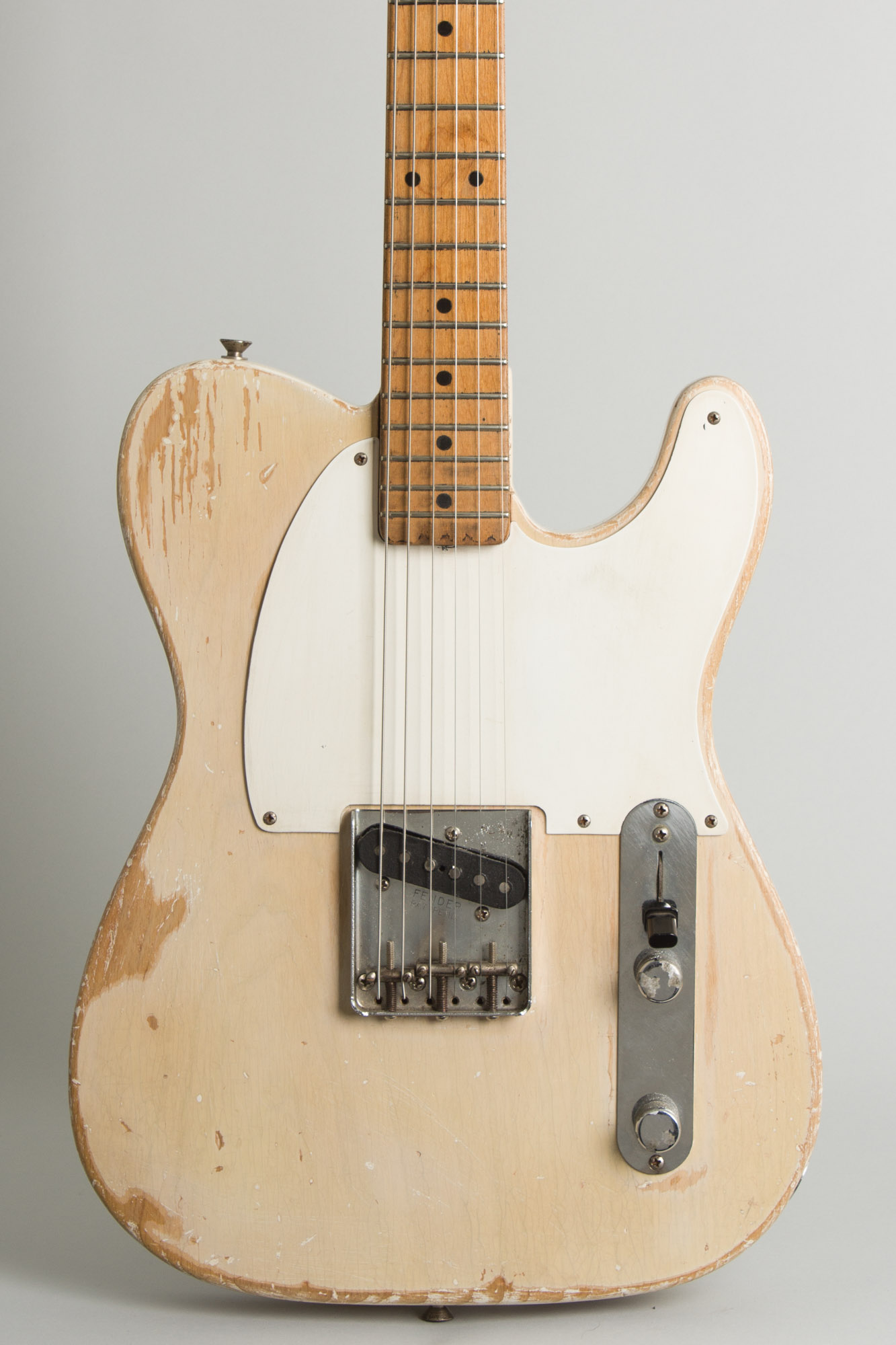
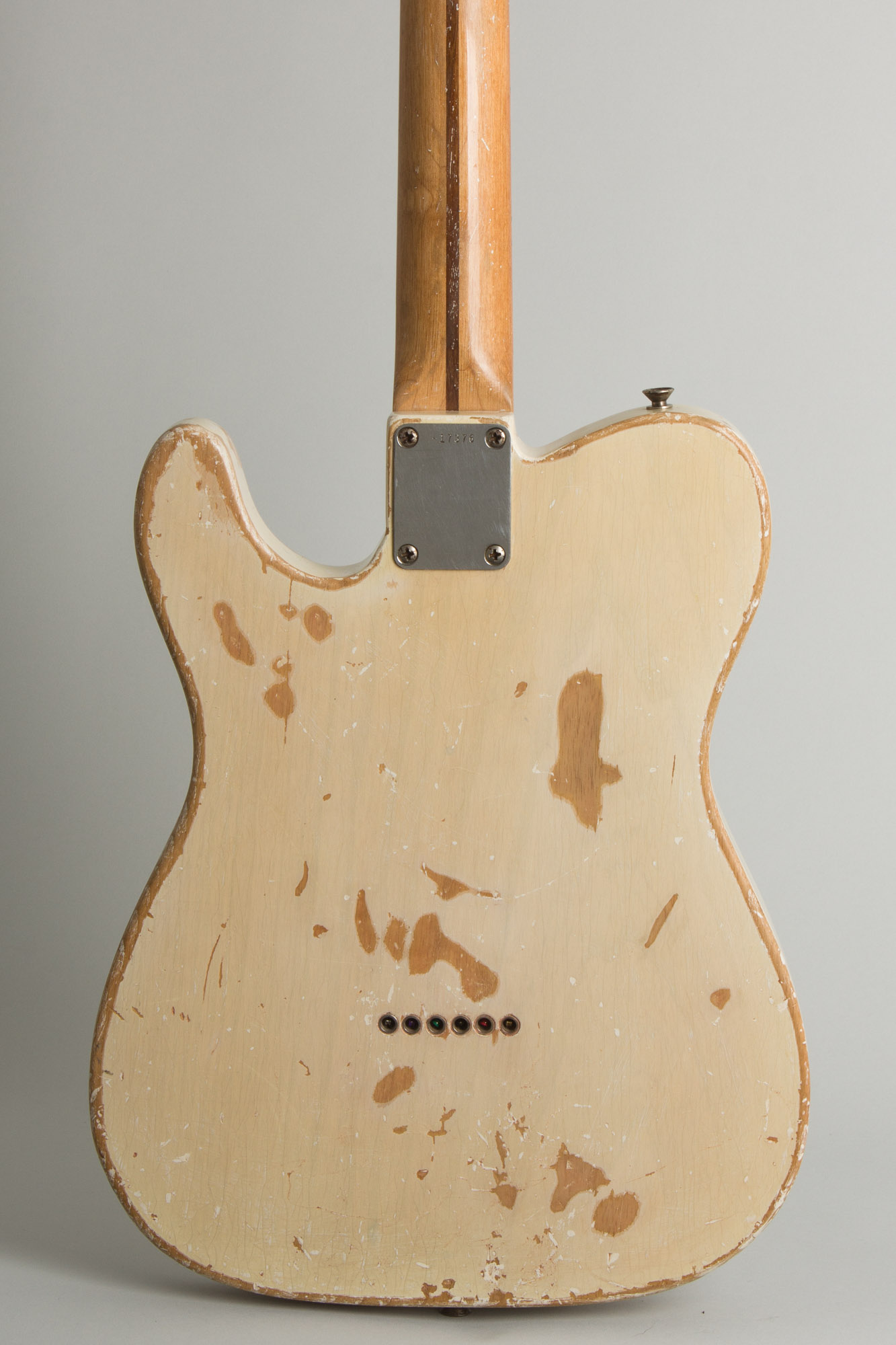
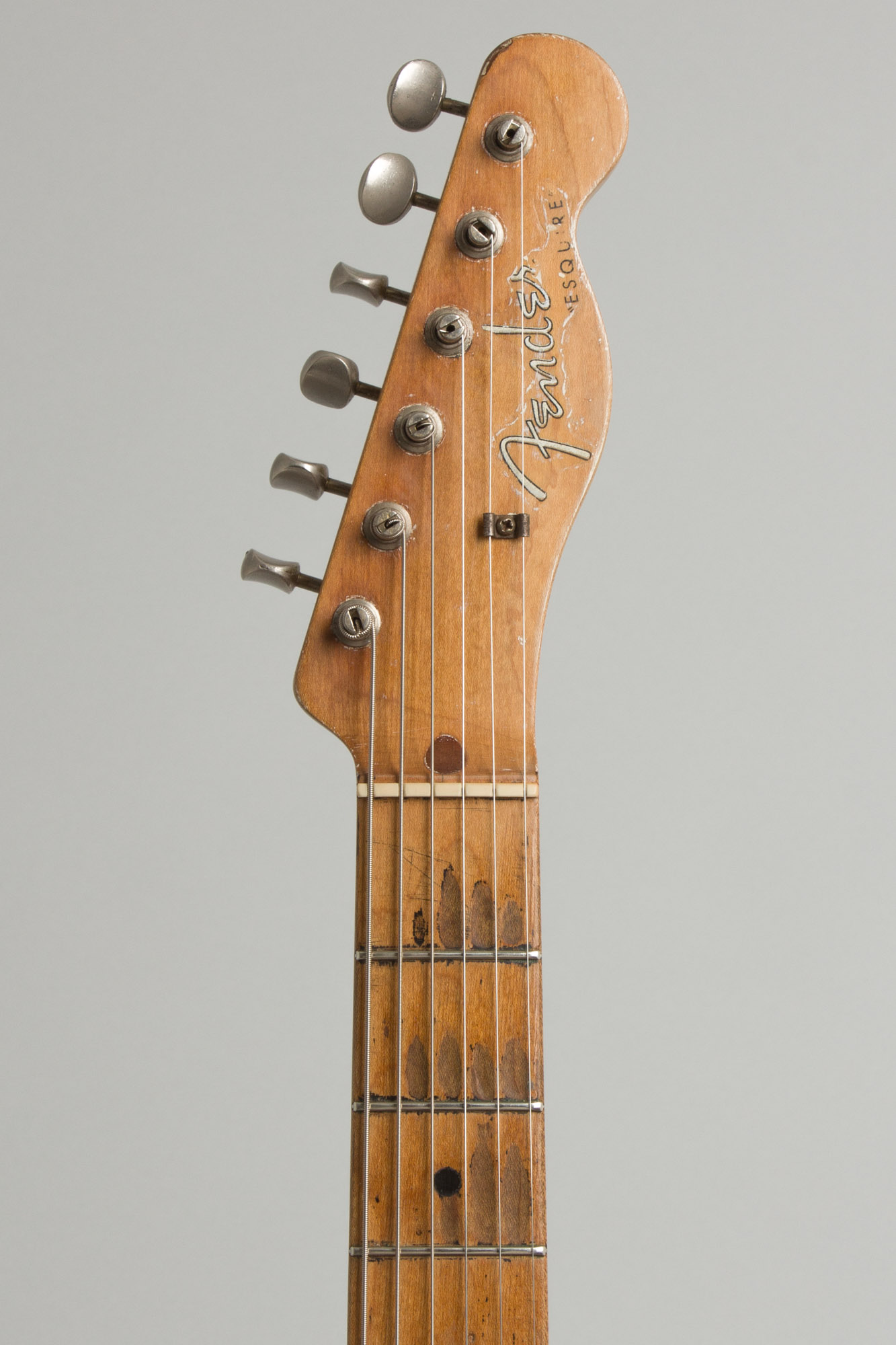
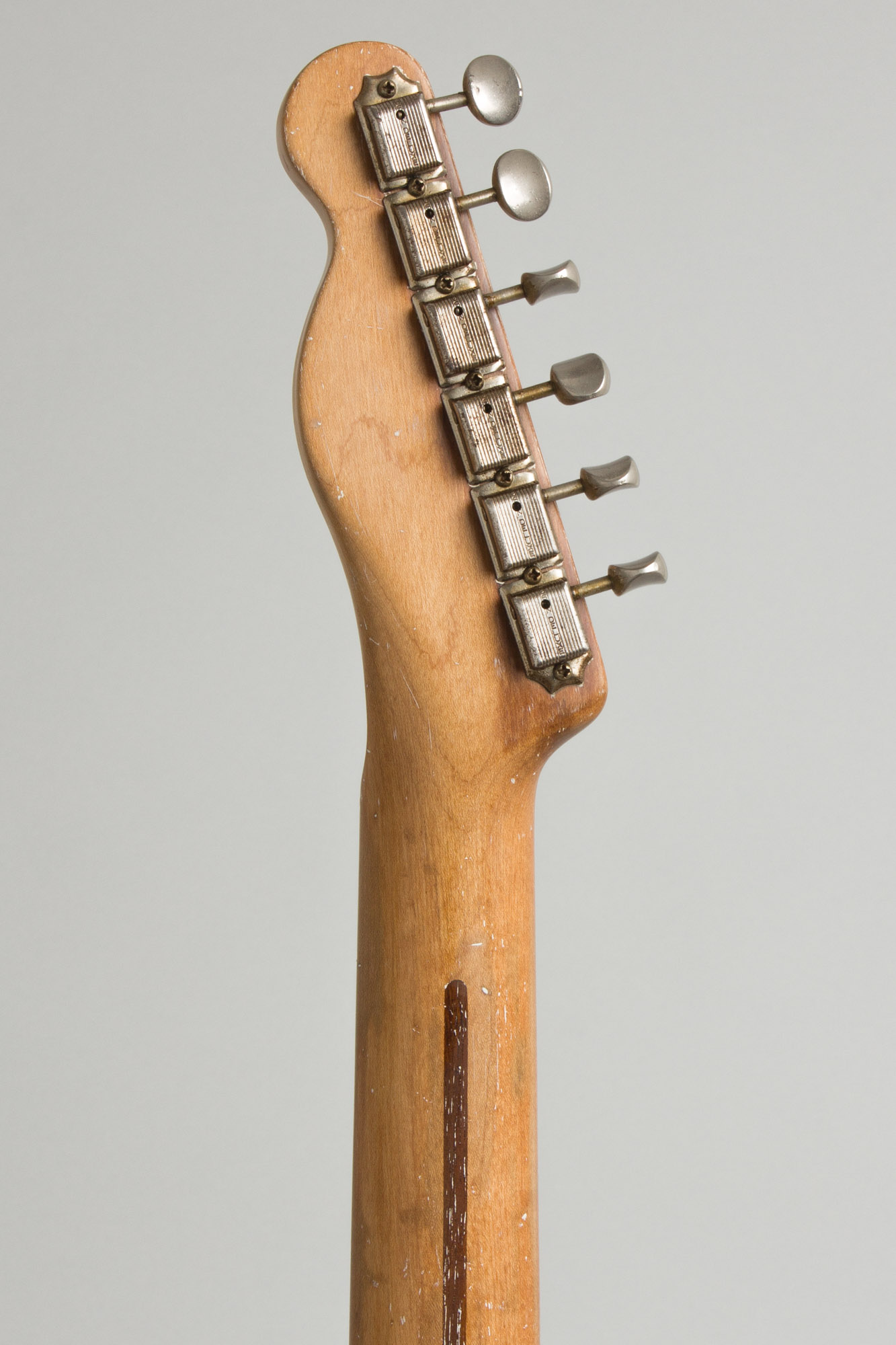
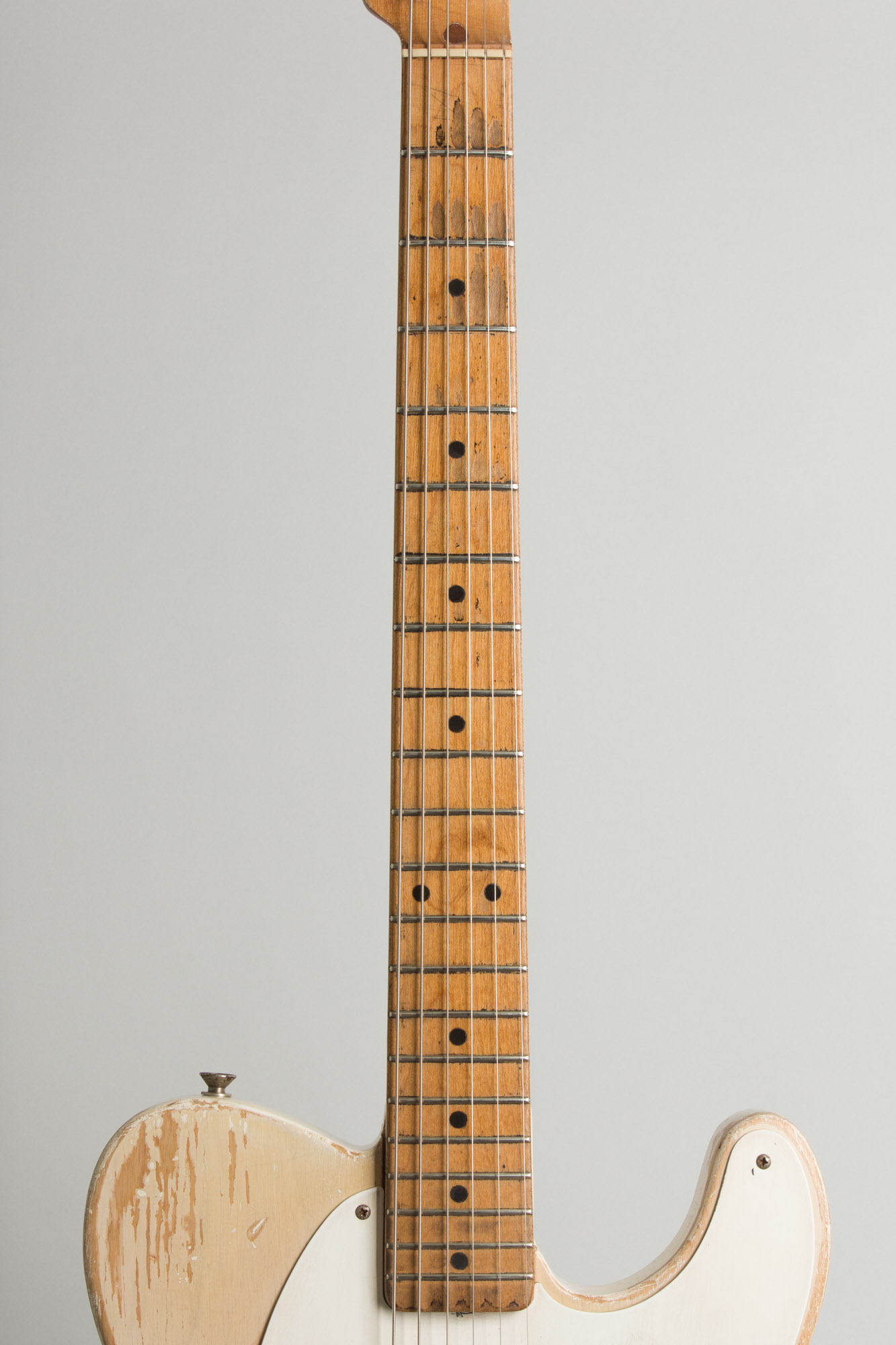
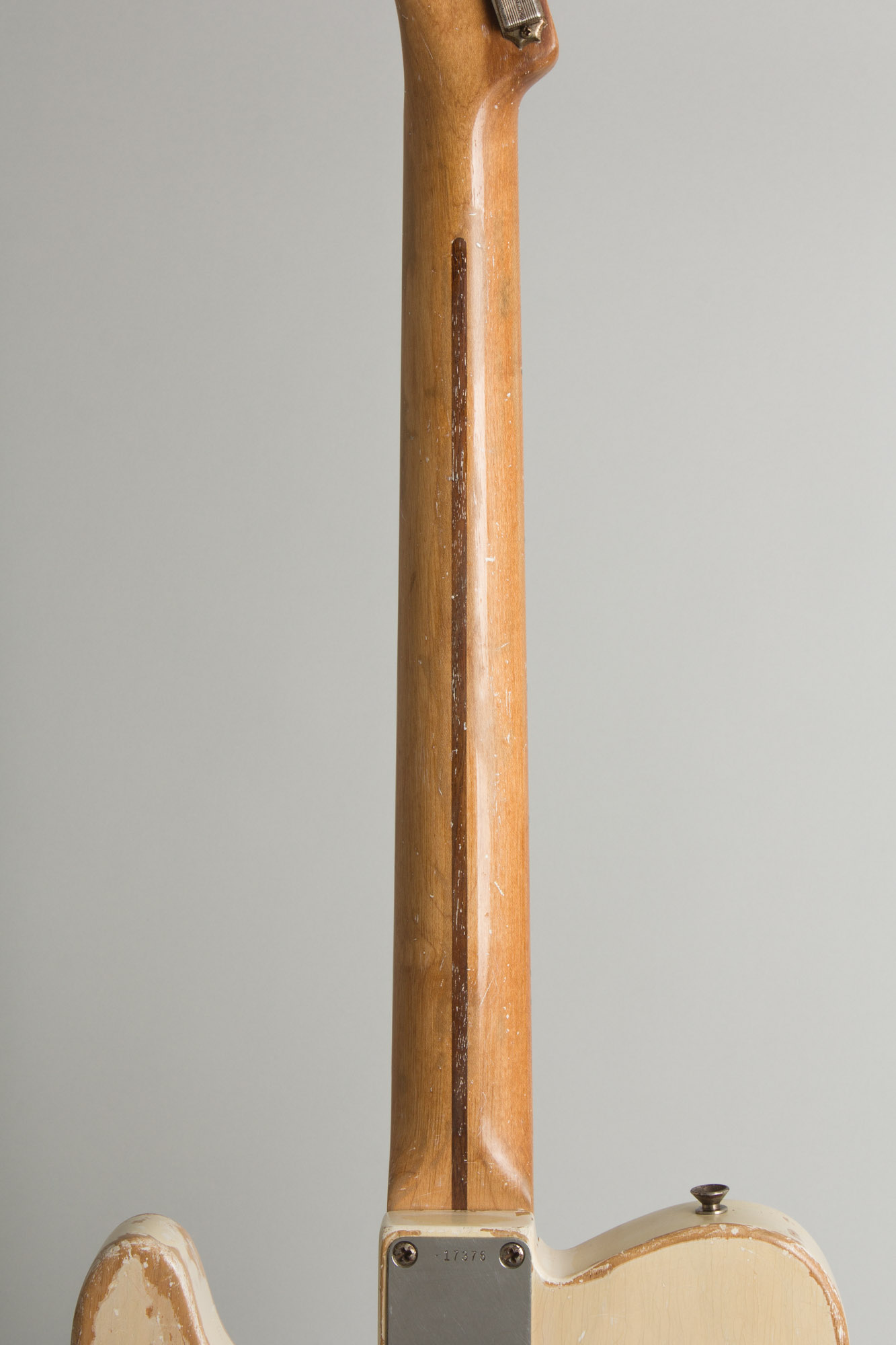
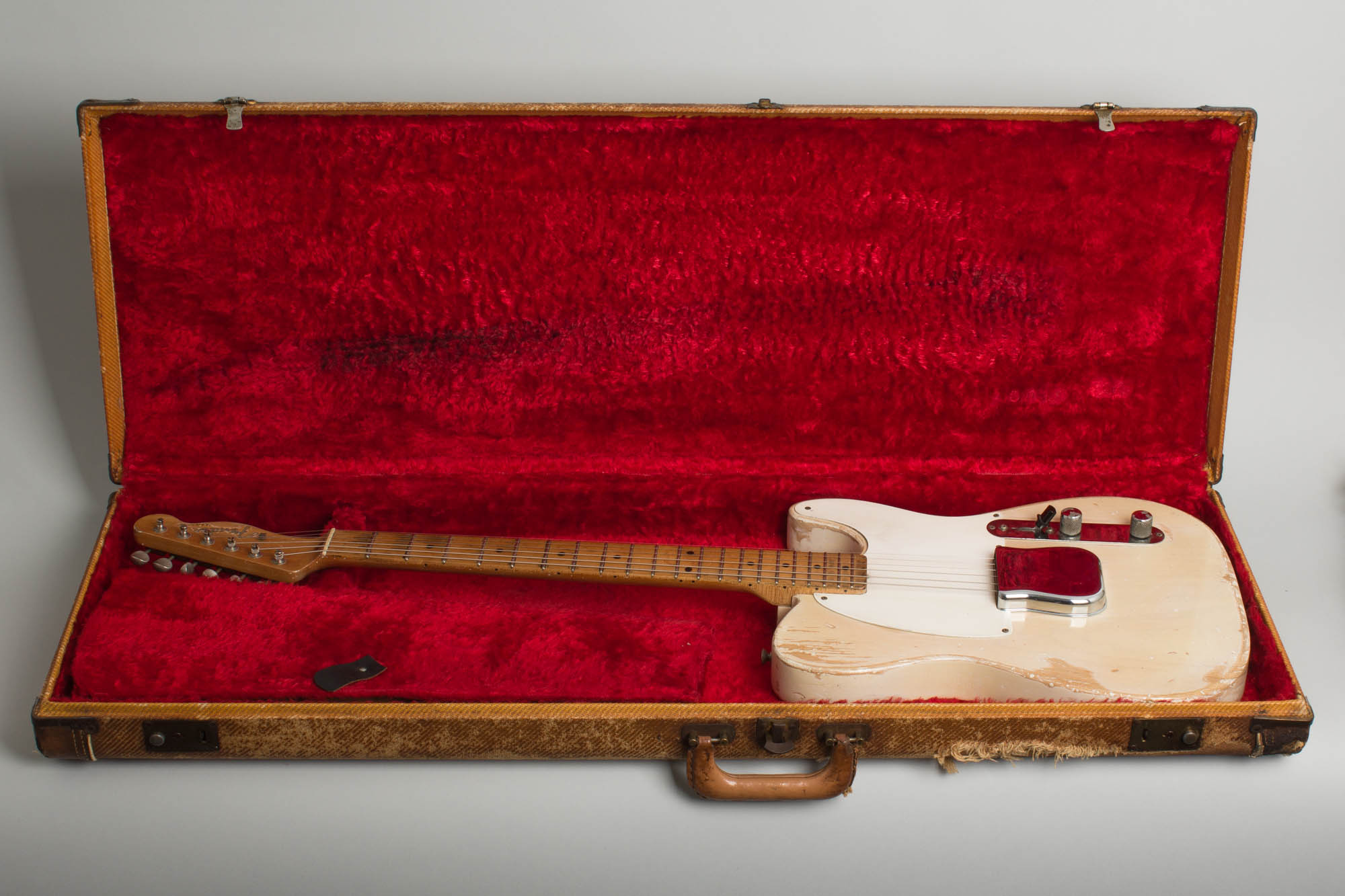
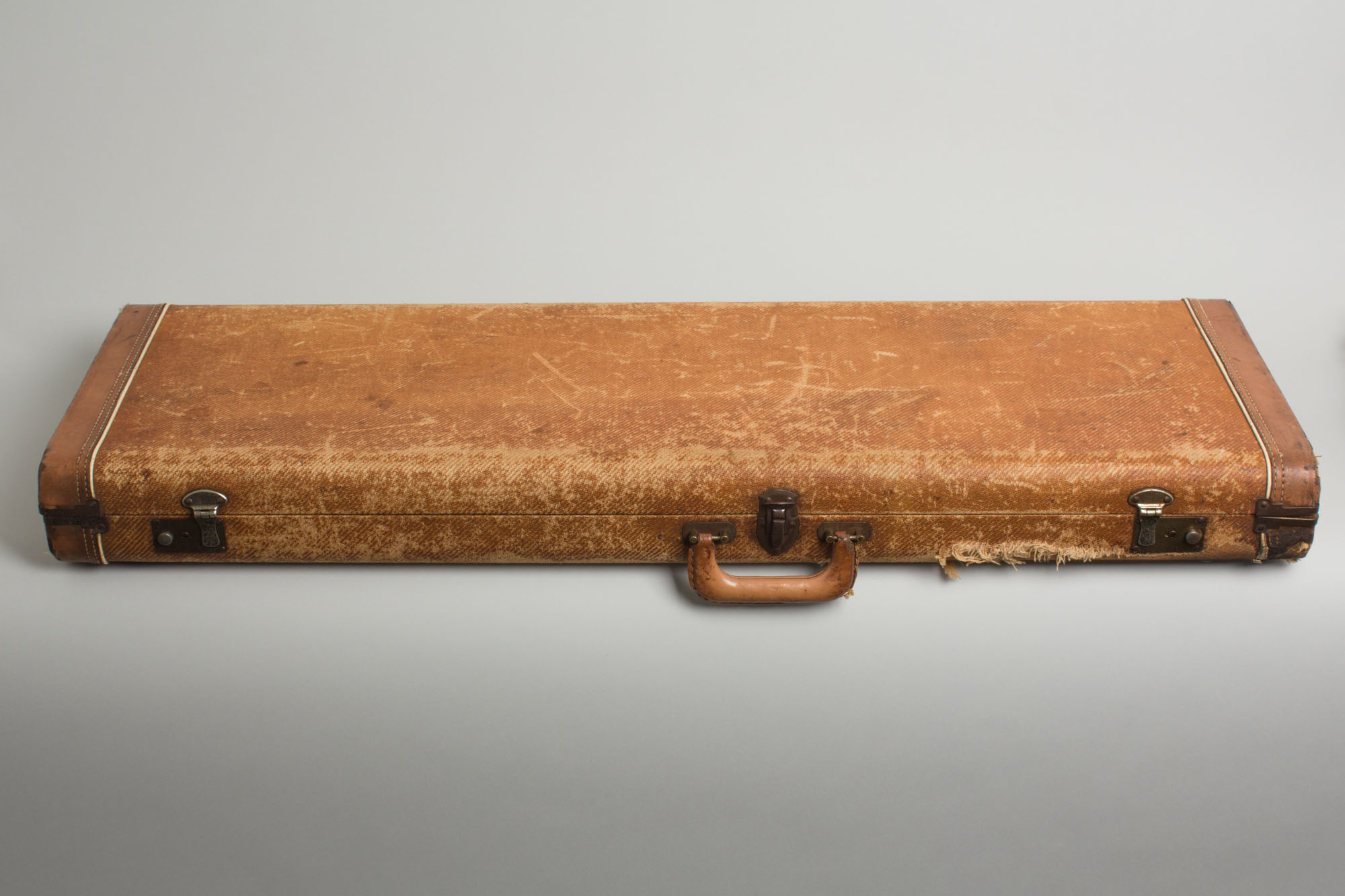
Fender Esquire Model Solid Body Electric Guitar (1957), made in Fullerton, California, serial # -17376, Blonde lacquer finish, ash body, maple neck, original tweed hard shell case.
OK folks, gather 'round 'cause this one has a story! This 1957 "whiteguard" Esquire is a superb sounding player's example of 1950's Fender greatness, the kind of guitar that makes us remember why these have been loved for generations now. It's ALSO a reminder of how these "planks" were originally just tools subject to the sometimes bizarre whims of their owners "Back in the Day". Sometime early on this *entire* guitar was painted over; NOT refinished but painted over with what looks like housepaint. The body and neck (yes the whole neck including the headstock) were painted white, while the pickguard and fingerboard (yes, the maple board) were painted black. Maybe they wanted a rosewood-board Blackguard, but at any rate whoever did this proceeded to play through the "new" finish wearing the heck out of it.
Subsequently some time later the guitar had this overfinish cleaned off, with some perhaps over-enthusiastic buffing done to the body and neck. The result is an instrument where the original finish is still intact shows a lot of wear, buffed through spots and many tiny remainders of the overfinish in small places, particularly on the fingerboard and around the decal, which somehow largely survived. The patina of the original lacquer is smoother than it would normally be due to the buffing, but surprisingly intact, and all the original hardware has also survived.
The Esquire was cataloged as a separate model but was really just a single-pickup Telecaster, allowing Fender sales to offer a slightly cheaper $149.50 alternative to the buyer who couldn't quite spring for the Tele's $189.50 price tag. This mid-1957 example shows typical features for the period including the single ply white plastic pickguard (standard by early 1955, replacing the earlier "blackguard") and the old script Fender logo above the newer "butterfly" style string tree.
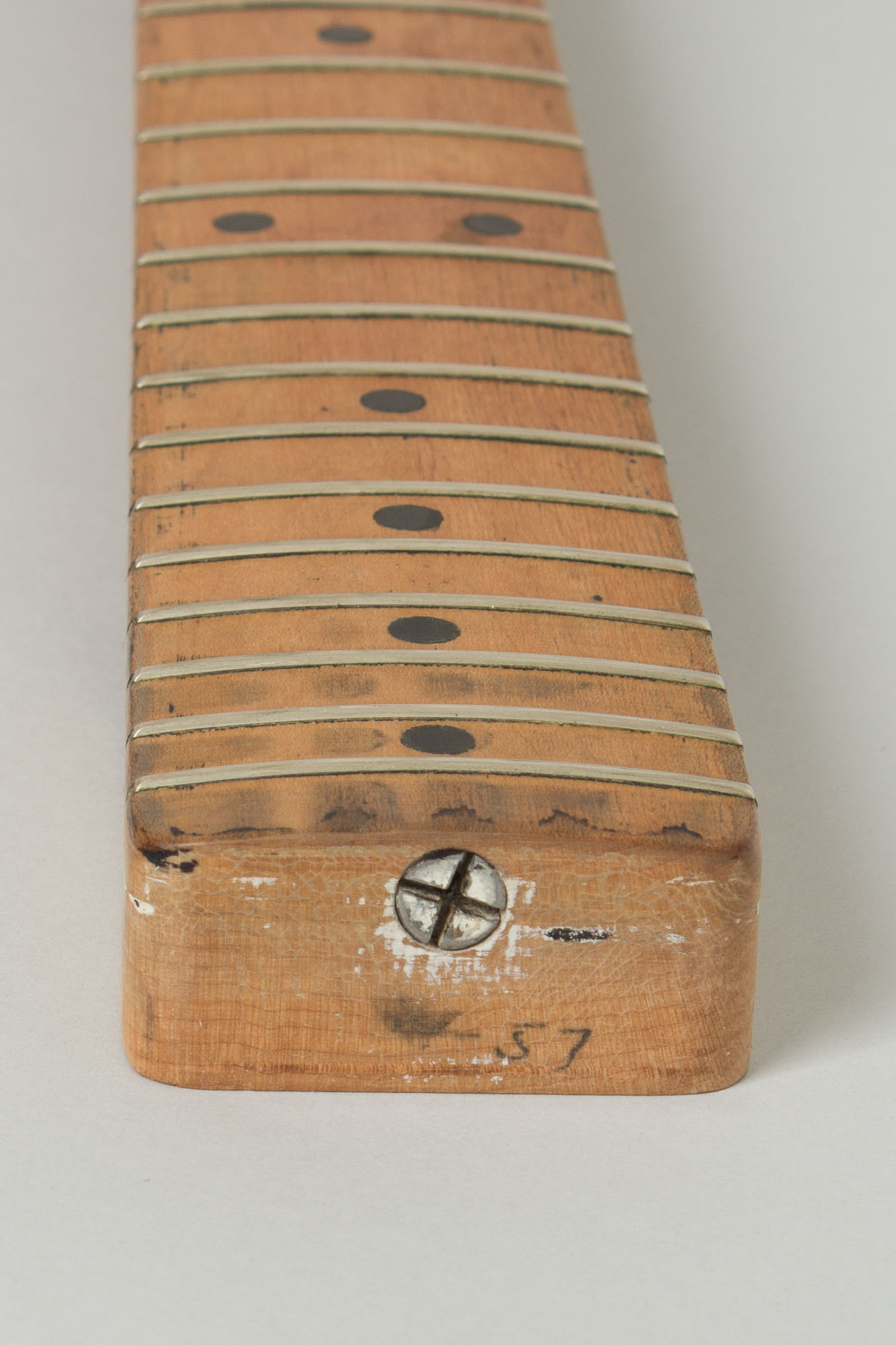
The serial number stamped on the neck plate is preceded by a "- minus sign" an oddity specific to 1957, probably the result of a stamper's error. The ash body is clearly dated 4-57 in the pickup cavity, which escaped being painted over, as did the neck pocket. The one-piece maple neck is also dated 4-57 in pencil on the heel. The neck itself has the soft "V" contour that became more prominent as 1957 went on replacing the earlier round-backed profile. The pot date codes are soldered over but all electronics appear original to the guitar.
The single staggered pole pickup at the bridge is controlled by a volume, tone and 3-way switch with a "top hat" tip. Designed to use the same Telecaster components, the three-position switch selects the #1 bass-heavy rolloff setting, #2 in the center with and straight tone control and #3" "bypass" in the rear position sending the signal straight to the jack. This last setting is the Esquire's secret bonus, offering some of the finest, snarliest tones ever to emerge from the Fullerton factory.
Mid-'50s Esquires were famously used by Luther Perkins with Johnny Cash and by Paul Burlison to tear it up with the Johnny Burnette Trio, along with many other early rock'n'roll and country players. While the most basic of 1950s Fender guitars, the Esquire has the coolest no-frills vibe and a surprisingly versatile sound when mastered. We don't know who did the early cosmetic makeover on this early "Whiteguard" but it has survived the indignity "bloodied but unbowed" and remains a superb player's instrument.
Overall length is 38 3/4 in. (98.4 cm.), 12 3/4 in. (32.4 cm.) wide at lower bout, and 1 3/4 in. (4.4 cm.) in depth, measured at side of rim. Scale length is 25 1/2 in. (648 mm.). Width of nut is 1 5/8 in. (41 mm.)., 6 lbs.
This slightly bedraggled looking '57 Esquire may appear a bit of a mutt, but it survives in excellent playing condition, and surprisingly original if somewhat cosmetically challenged! The original body finish as noted was once covered with white paint which has been removed, leaving many small traces behind, including full coverage in the unused neck pickup rout and wiring channel. The dated bridge pickup cavity and neck pocket were not covered over and remain clean. There are many notable wear spots to the body both due to older play wear and buffing, and the patina is smooth due to the latter. The back was buffed less than the face and shows more scuffing and sanding marks while the lower back edge has the most finish loss.
The neck and fingerboard are in similar condition, with the original finish intact but worn and later buffed smooth. There are many small bits of white on the back of the neck and some traces of black on the fingerboard, mostly around the frets. These are an older refret slightly larger than '57 spec. but not jumbos, crowned down with a bit of wear still visible. The bone nut is old was replaced as well. Some care was taken when the overfinish was removed to preserve the original decal, which was painted over. It is worn but largely intact with some loss and spots of paint all around the edges. It also looks like the original owner liked to oil the tuners, there is some staining on the back of the headstock from that leeching into the finish.
Amazingly through all this the guitar's hardware remains intact and original, including the electronics having never had a neck pickup fitted or any alterations. The original pickup was never rewound, although it may have had additional wax potting along the way. The rubber grommets are replaced, but the ossified original are in the case pocket. The complex multi-cap Esquire wiring is unmolested, and ALL parts including the bridge assembly, tuners, string tree, switchplate, knobs, switch, jack cup and strap buttons remain unchanged. These components all show general wear but nothing beyond the expected. The original single-layer white pickguard shows noticeable scuffing on the face from the removal of the black paint but remains intact with no broken screw holes.
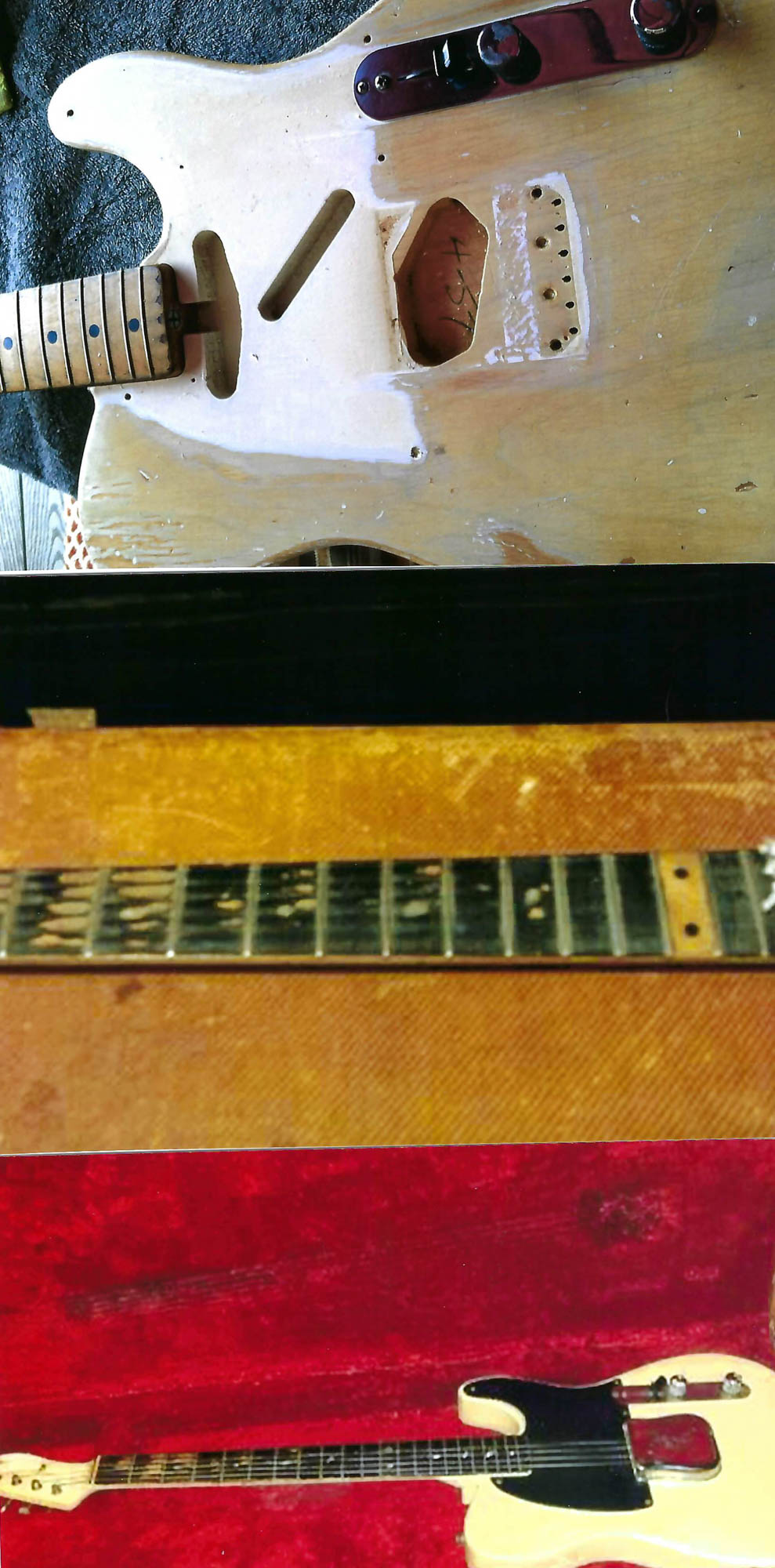
This is a venerable Fender that "took a lickin' and kept on tickin" and survived what we can only describe as cheerfully misguided cosmetic adventures. While perhaps no longer a "Collectors" piece this oozes vibe and is a fantastic gigger, one of the lightest '50s Tele-family guitars we have had coming in at exactly 6 Lbs. with the bridge cover ON! This one just wants to be played hard offering a great snarling, spanky tone ready for the next 70+ years. It resides in the original tweed Fender HSC, worn but intact with a number of extras. These include two "ashtray" bridge covers (the original with some worn chrome and a cleaner later one), the period "top line leather" strap, some period string packages including a '50s Fender string box and older photos of the guitar taken before, during and after the overfinish removal. Overall Very Good Condition.
OK folks, gather 'round 'cause this one has a story! This 1957 "whiteguard" Esquire is a superb sounding player's example of 1950's Fender greatness, the kind of guitar that makes us remember why these have been loved for generations now. It's ALSO a reminder of how these "planks" were originally just tools subject to the sometimes bizarre whims of their owners "Back in the Day". Sometime early on this *entire* guitar was painted over; NOT refinished but painted over with what looks like housepaint. The body and neck (yes the whole neck including the headstock) were painted white, while the pickguard and fingerboard (yes, the maple board) were painted black. Maybe they wanted a rosewood-board Blackguard, but at any rate whoever did this proceeded to play through the "new" finish wearing the heck out of it.
Subsequently some time later the guitar had this overfinish cleaned off, with some perhaps over-enthusiastic buffing done to the body and neck. The result is an instrument where the original finish is still intact shows a lot of wear, buffed through spots and many tiny remainders of the overfinish in small places, particularly on the fingerboard and around the decal, which somehow largely survived. The patina of the original lacquer is smoother than it would normally be due to the buffing, but surprisingly intact, and all the original hardware has also survived.
The Esquire was cataloged as a separate model but was really just a single-pickup Telecaster, allowing Fender sales to offer a slightly cheaper $149.50 alternative to the buyer who couldn't quite spring for the Tele's $189.50 price tag. This mid-1957 example shows typical features for the period including the single ply white plastic pickguard (standard by early 1955, replacing the earlier "blackguard") and the old script Fender logo above the newer "butterfly" style string tree.
The serial number stamped on the neck plate is preceded by a "- minus sign" an oddity specific to 1957, probably the result of a stamper's error. The ash body is clearly dated 4-57 in the pickup cavity, which escaped being painted over, as did the neck pocket. The one-piece maple neck is also dated 4-57 in pencil on the heel. The neck itself has the soft "V" contour that became more prominent as 1957 went on replacing the earlier round-backed profile. The pot date codes are soldered over but all electronics appear original to the guitar.
The single staggered pole pickup at the bridge is controlled by a volume, tone and 3-way switch with a "top hat" tip. Designed to use the same Telecaster components, the three-position switch selects the #1 bass-heavy rolloff setting, #2 in the center with and straight tone control and #3" "bypass" in the rear position sending the signal straight to the jack. This last setting is the Esquire's secret bonus, offering some of the finest, snarliest tones ever to emerge from the Fullerton factory.
Mid-'50s Esquires were famously used by Luther Perkins with Johnny Cash and by Paul Burlison to tear it up with the Johnny Burnette Trio, along with many other early rock'n'roll and country players. While the most basic of 1950s Fender guitars, the Esquire has the coolest no-frills vibe and a surprisingly versatile sound when mastered. We don't know who did the early cosmetic makeover on this early "Whiteguard" but it has survived the indignity "bloodied but unbowed" and remains a superb player's instrument.
Overall length is 38 3/4 in. (98.4 cm.), 12 3/4 in. (32.4 cm.) wide at lower bout, and 1 3/4 in. (4.4 cm.) in depth, measured at side of rim. Scale length is 25 1/2 in. (648 mm.). Width of nut is 1 5/8 in. (41 mm.)., 6 lbs.
This slightly bedraggled looking '57 Esquire may appear a bit of a mutt, but it survives in excellent playing condition, and surprisingly original if somewhat cosmetically challenged! The original body finish as noted was once covered with white paint which has been removed, leaving many small traces behind, including full coverage in the unused neck pickup rout and wiring channel. The dated bridge pickup cavity and neck pocket were not covered over and remain clean. There are many notable wear spots to the body both due to older play wear and buffing, and the patina is smooth due to the latter. The back was buffed less than the face and shows more scuffing and sanding marks while the lower back edge has the most finish loss.
The neck and fingerboard are in similar condition, with the original finish intact but worn and later buffed smooth. There are many small bits of white on the back of the neck and some traces of black on the fingerboard, mostly around the frets. These are an older refret slightly larger than '57 spec. but not jumbos, crowned down with a bit of wear still visible. The bone nut is old was replaced as well. Some care was taken when the overfinish was removed to preserve the original decal, which was painted over. It is worn but largely intact with some loss and spots of paint all around the edges. It also looks like the original owner liked to oil the tuners, there is some staining on the back of the headstock from that leeching into the finish.
Amazingly through all this the guitar's hardware remains intact and original, including the electronics having never had a neck pickup fitted or any alterations. The original pickup was never rewound, although it may have had additional wax potting along the way. The rubber grommets are replaced, but the ossified original are in the case pocket. The complex multi-cap Esquire wiring is unmolested, and ALL parts including the bridge assembly, tuners, string tree, switchplate, knobs, switch, jack cup and strap buttons remain unchanged. These components all show general wear but nothing beyond the expected. The original single-layer white pickguard shows noticeable scuffing on the face from the removal of the black paint but remains intact with no broken screw holes.
This is a venerable Fender that "took a lickin' and kept on tickin" and survived what we can only describe as cheerfully misguided cosmetic adventures. While perhaps no longer a "Collectors" piece this oozes vibe and is a fantastic gigger, one of the lightest '50s Tele-family guitars we have had coming in at exactly 6 Lbs. with the bridge cover ON! This one just wants to be played hard offering a great snarling, spanky tone ready for the next 70+ years. It resides in the original tweed Fender HSC, worn but intact with a number of extras. These include two "ashtray" bridge covers (the original with some worn chrome and a cleaner later one), the period "top line leather" strap, some period string packages including a '50s Fender string box and older photos of the guitar taken before, during and after the overfinish removal. Overall Very Good Condition.