Ampeg AMB-1 Electric Bass Guitar (1969)

LOADING IMAGES
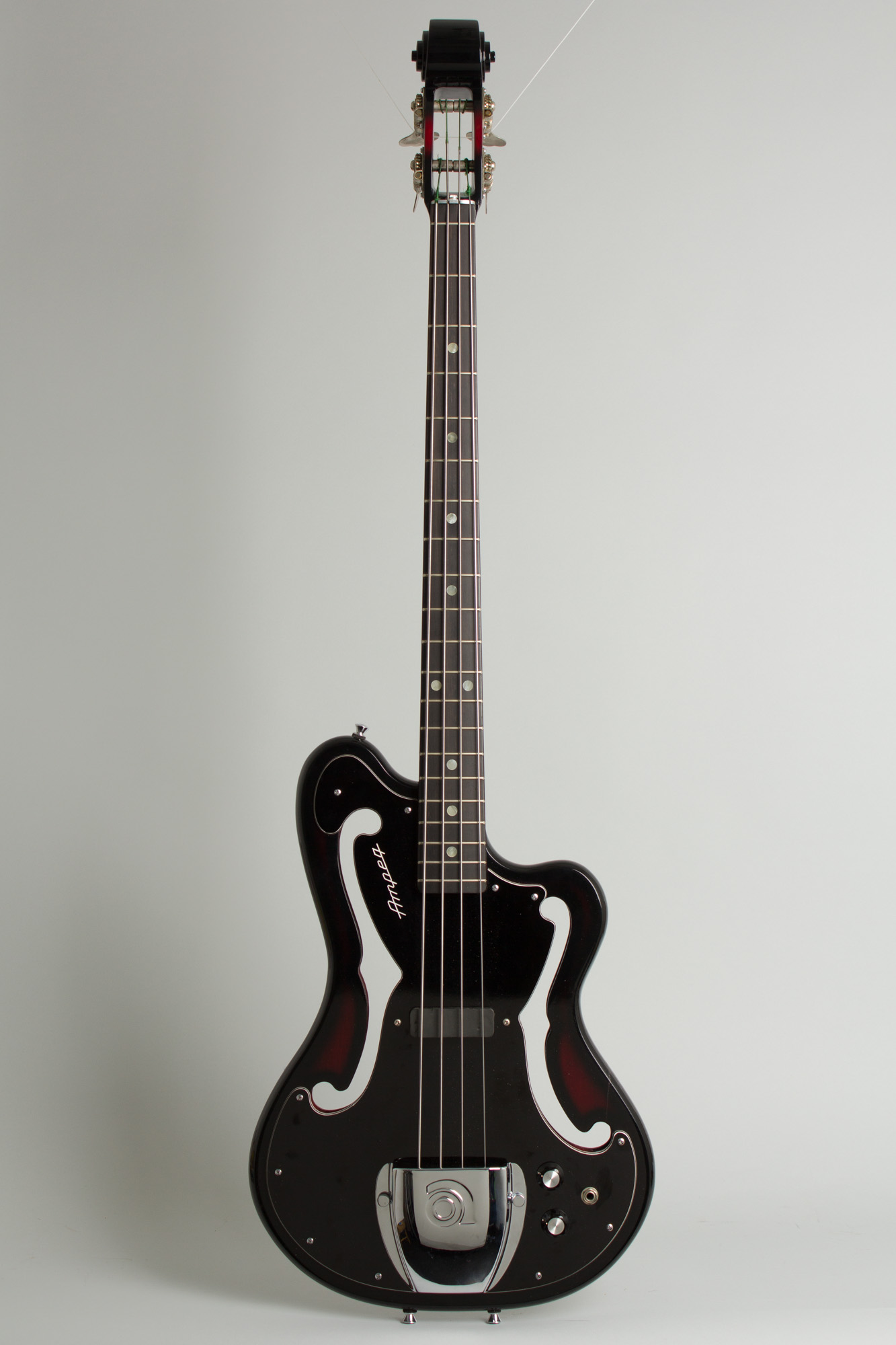
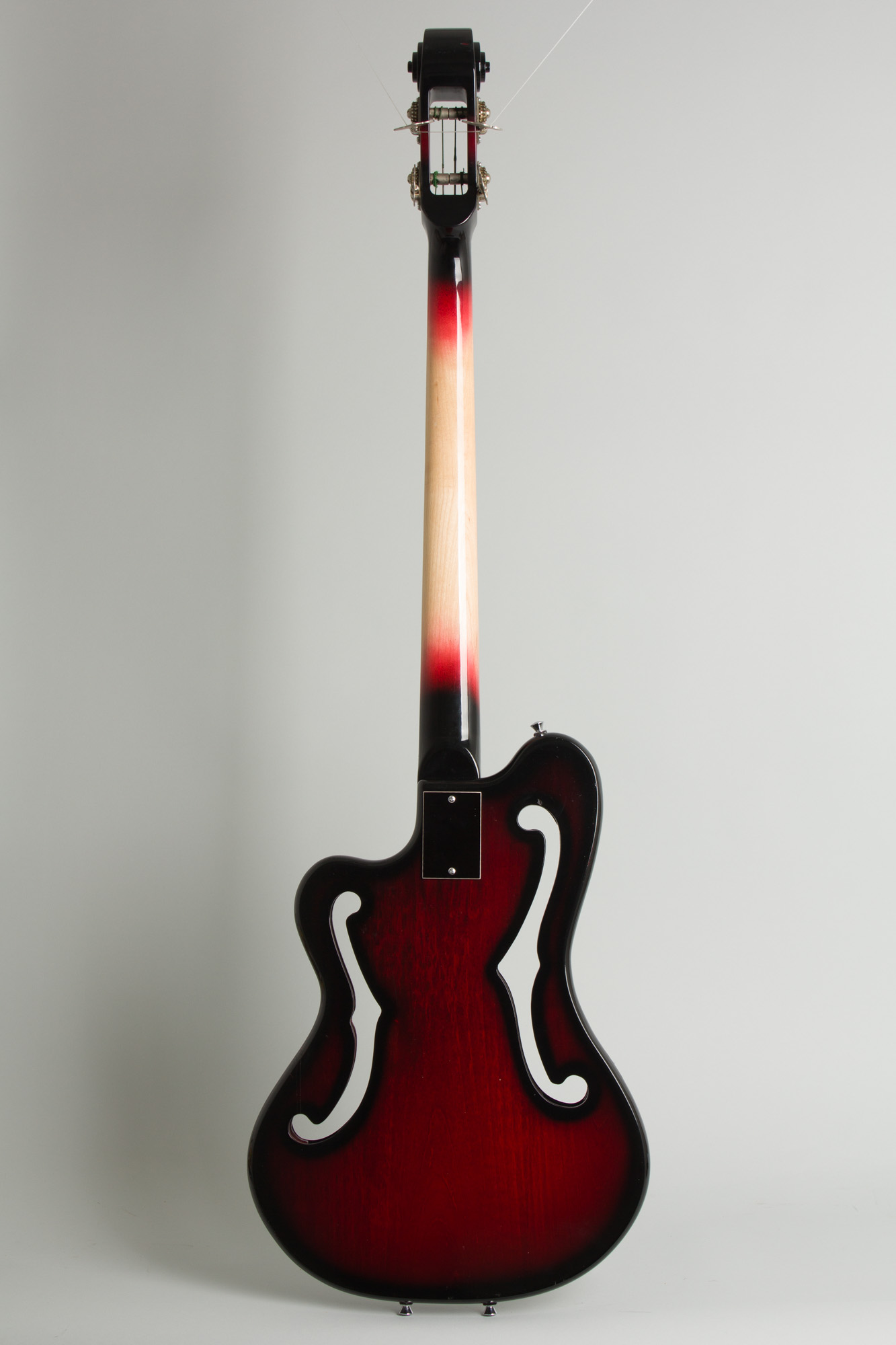
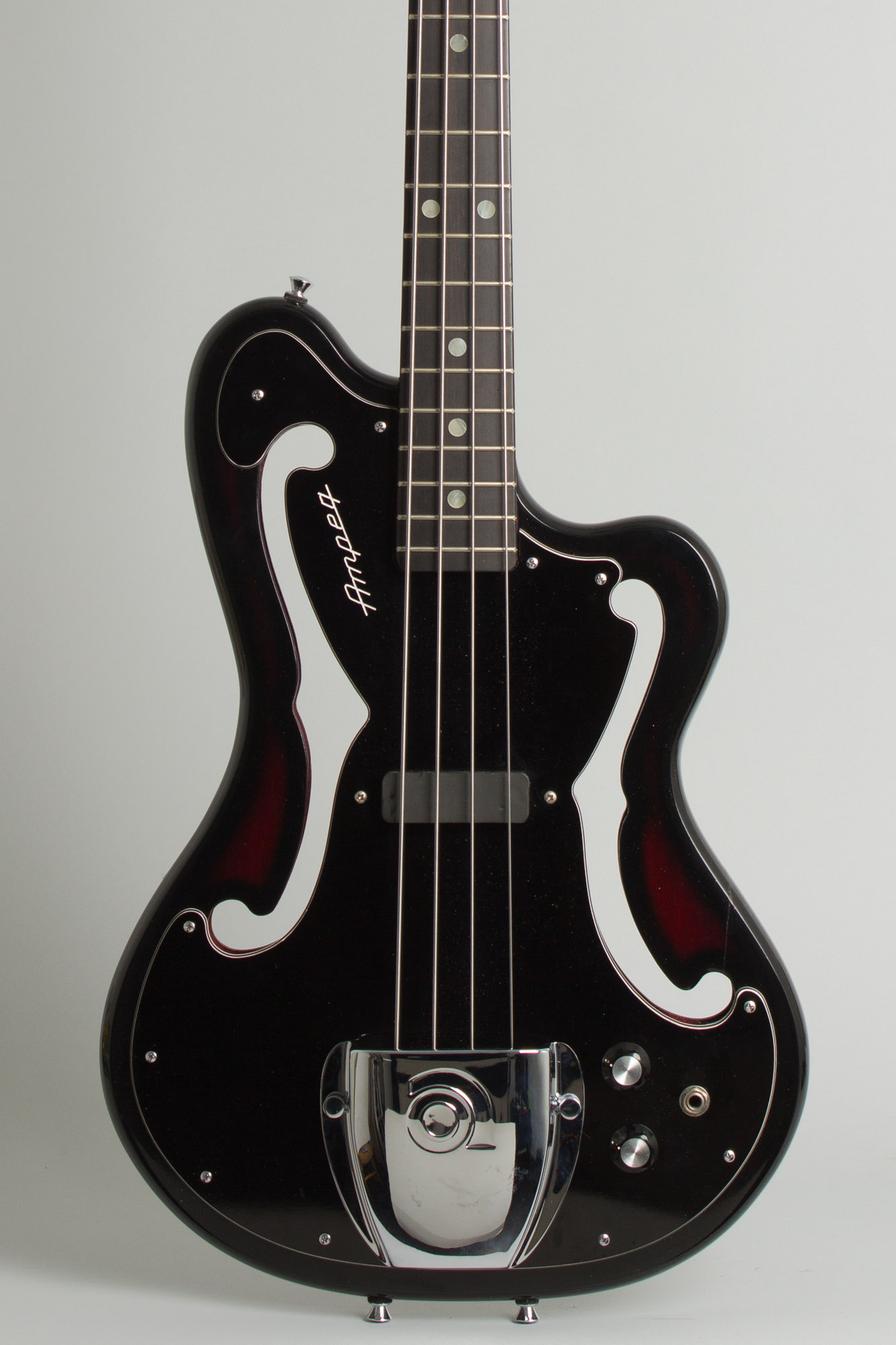
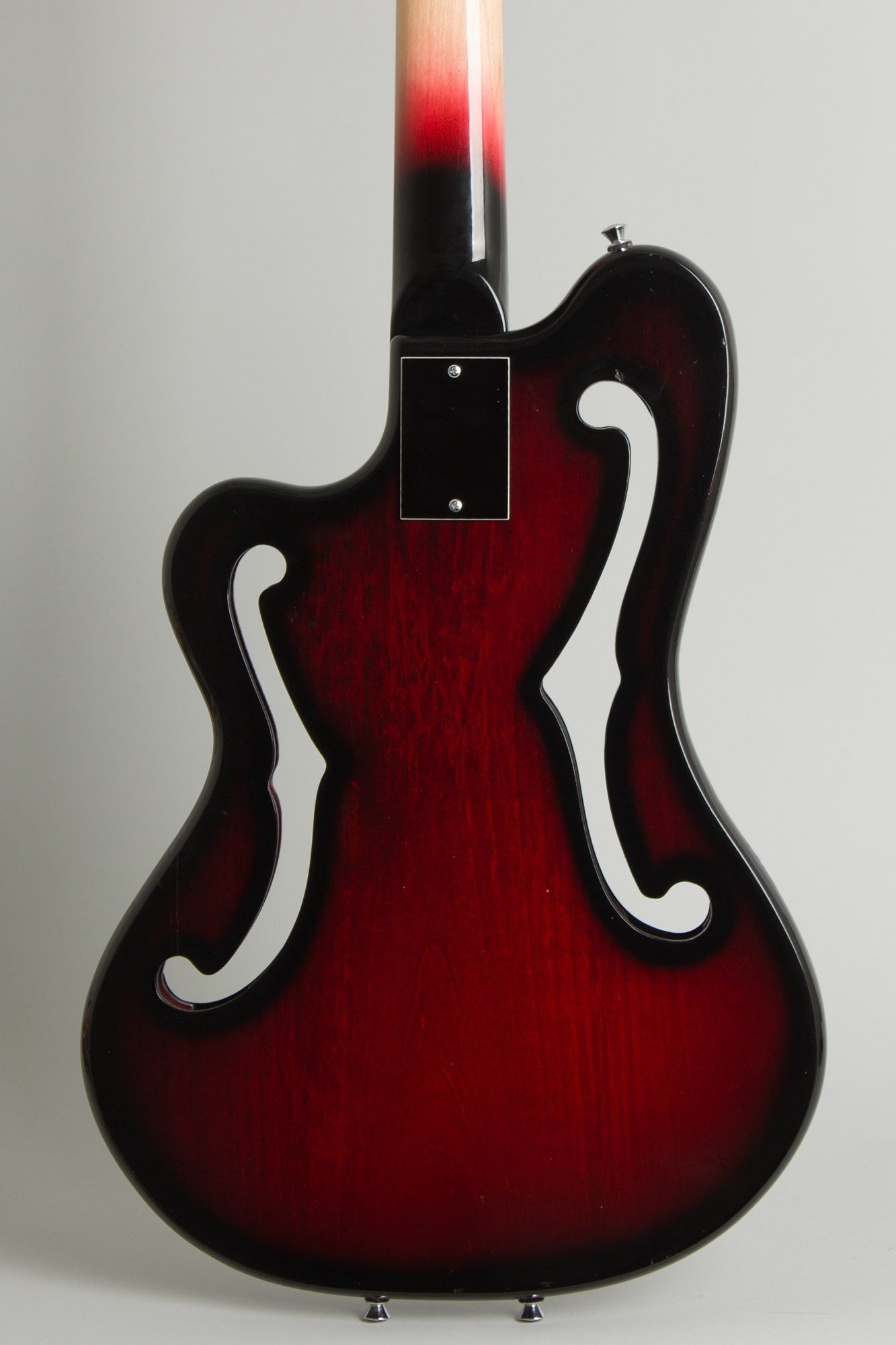
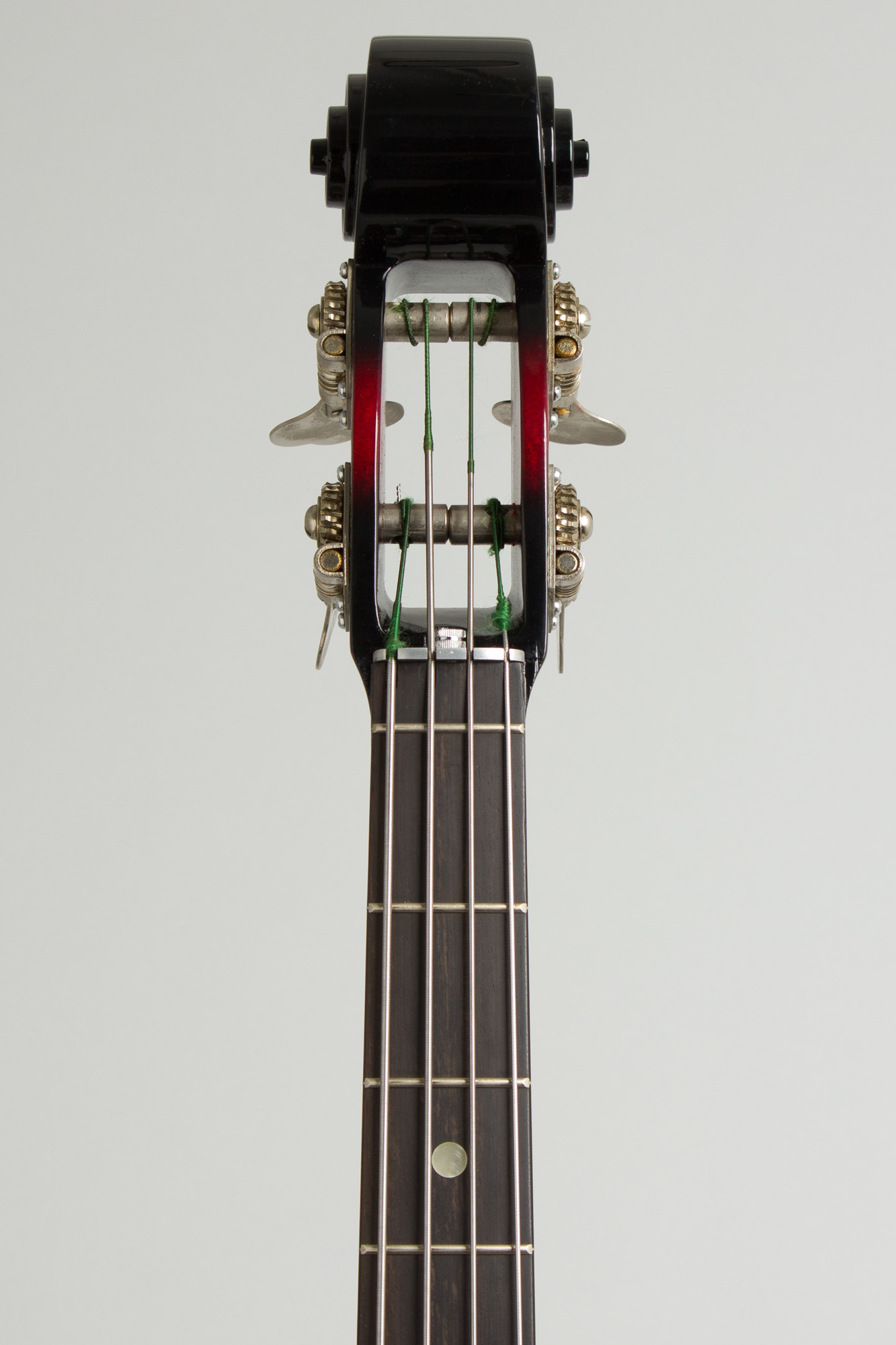
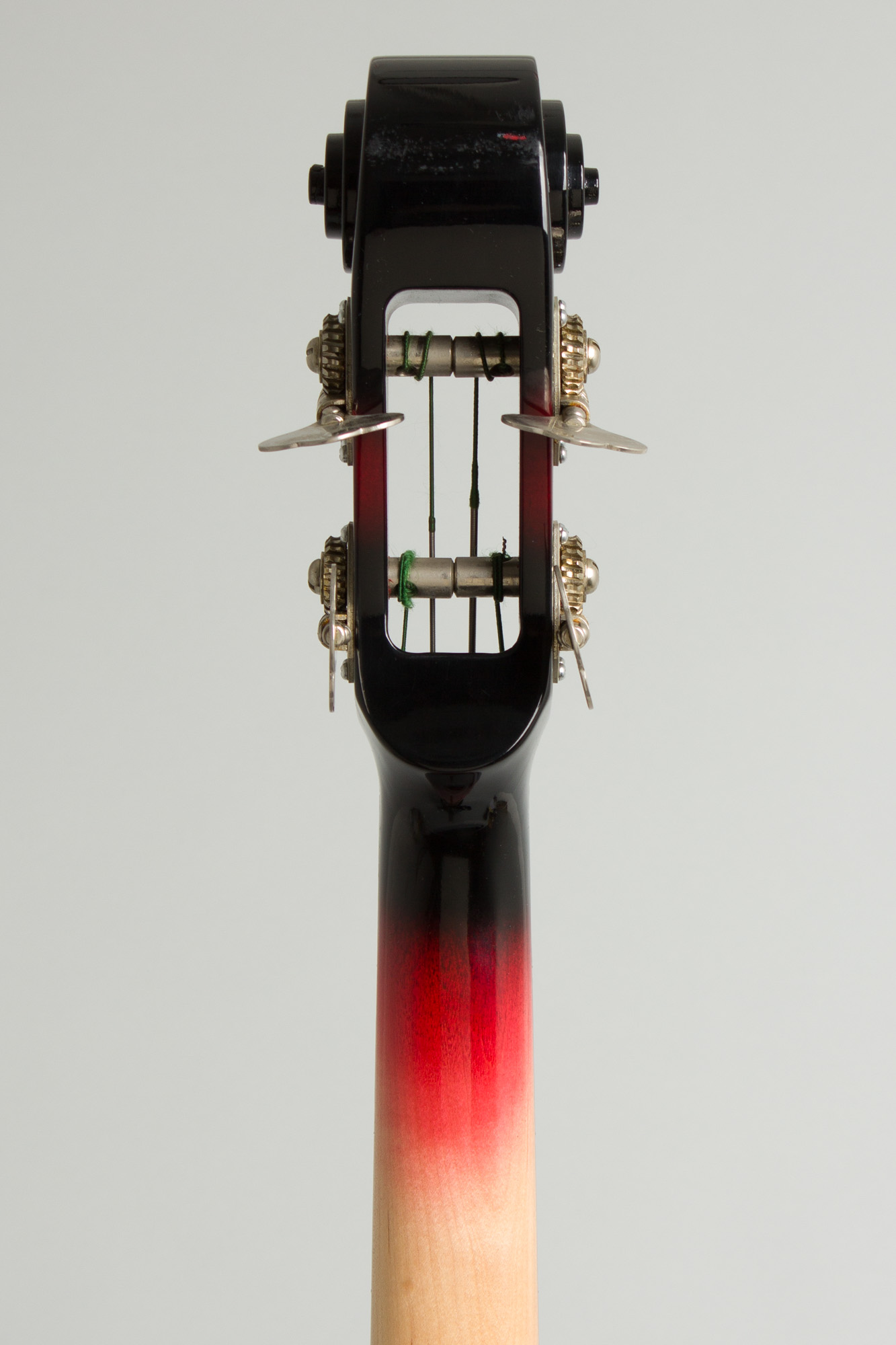
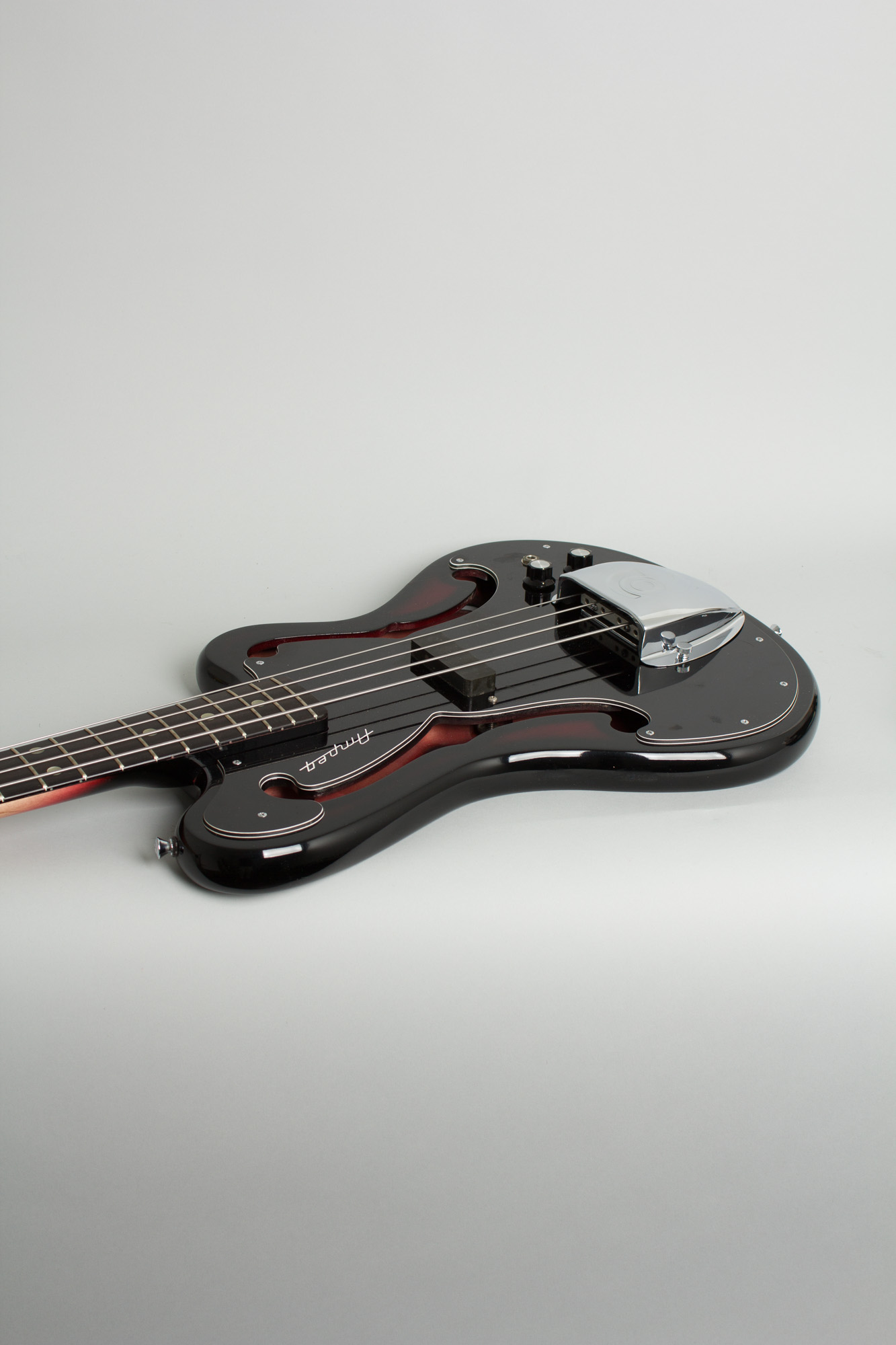
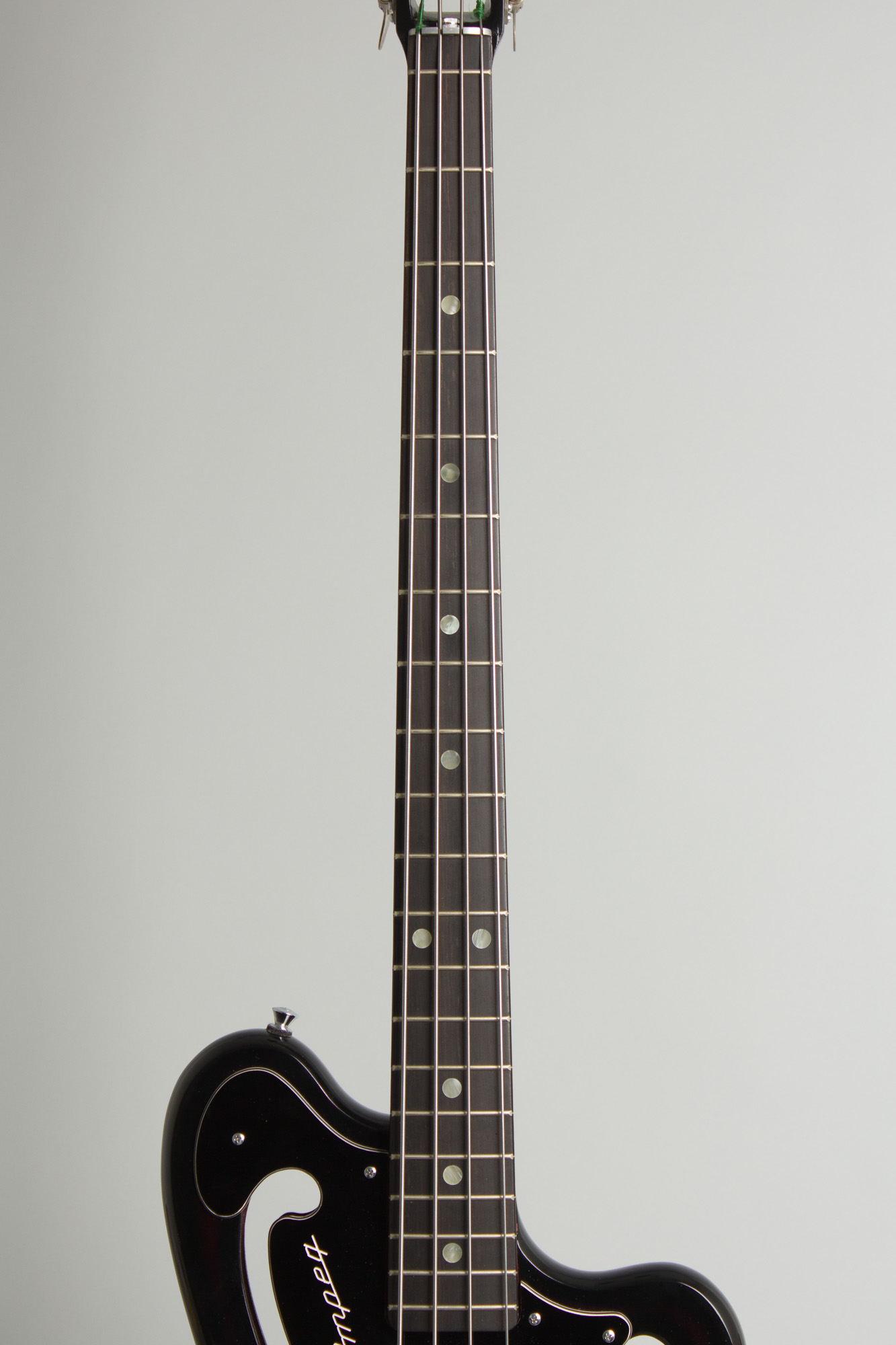
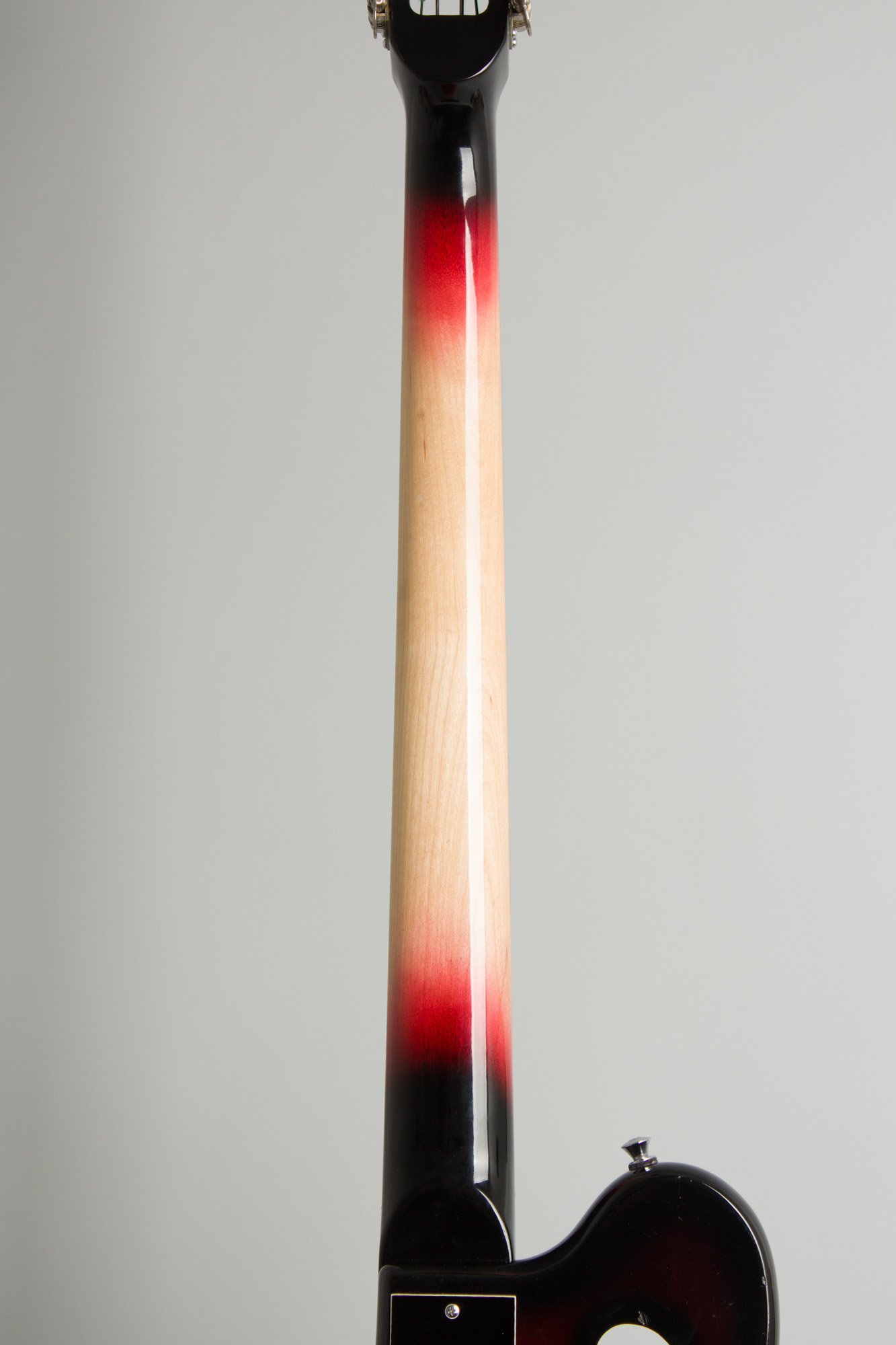
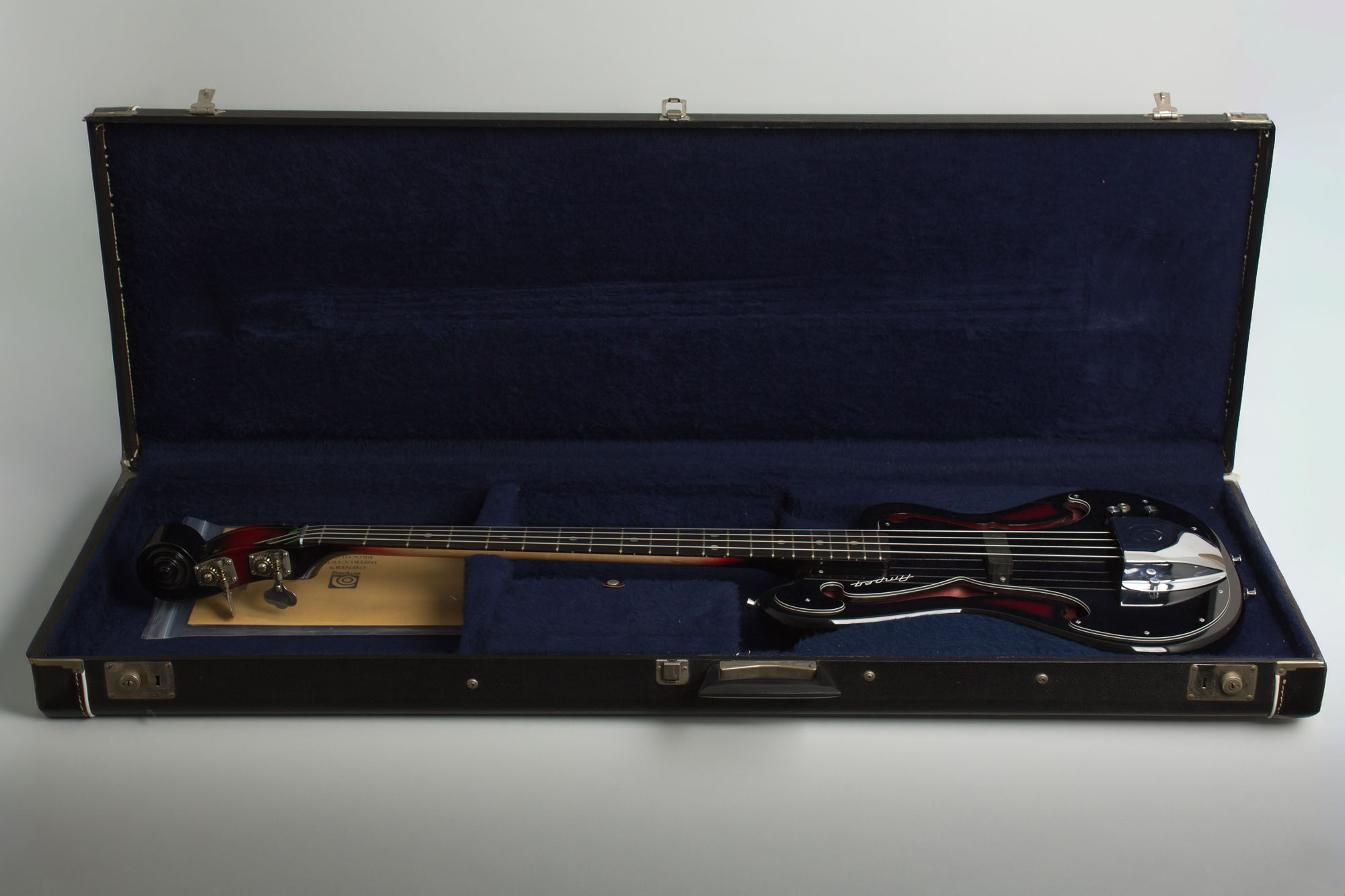
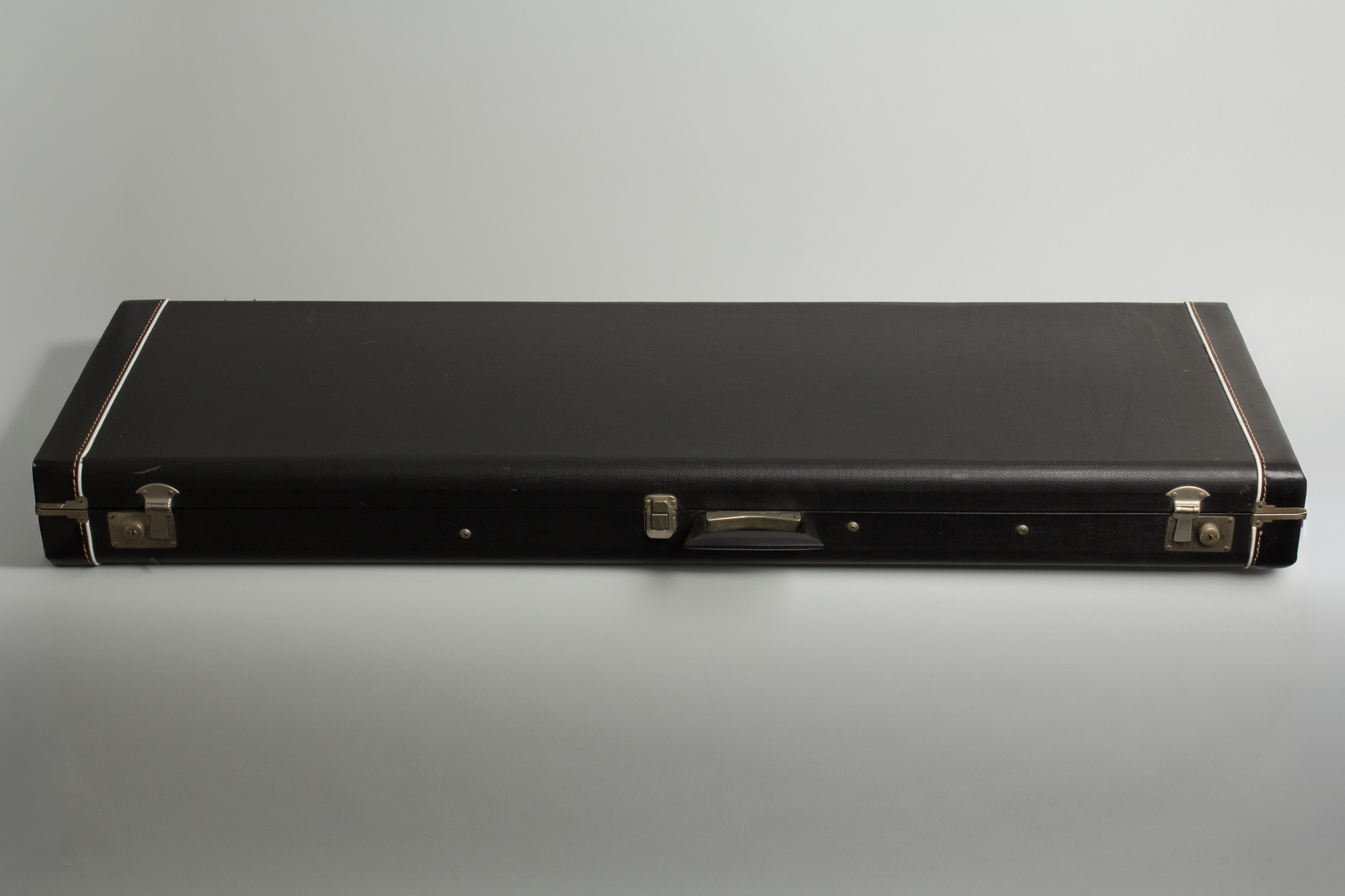
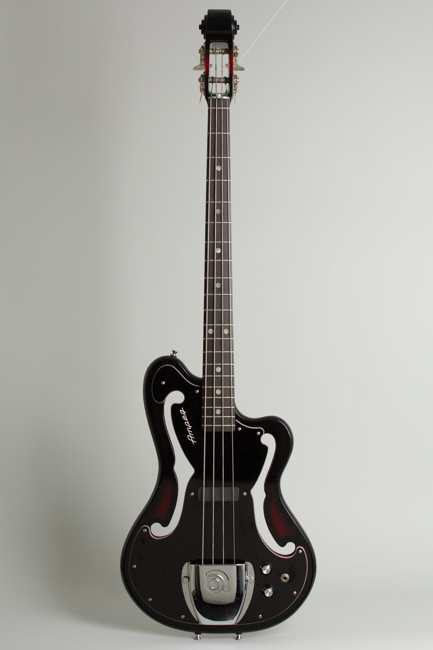
Ampeg AMB-1 Model Electric Bass Guitar (1969), made in Linden NJ, serial # 000585C, red/black sunburst finish, laminated maple body, maple neck with ebony fingerboard, original black hard shell case.
This is a really clean great-playing and sounding original example of a relatively rare instrument: the Ampeg AMB-1 (Ampeg Magnetic Bass #1), the second iteration of the 1960s Ampeg "Horizontal Bass". The specifications are typical for the 1968-9 series Ampeg models, which are rather different from the first 1966 versions. The major change is the bridge and pickup construction, both reworked to make the instrument more practical for the high-volume music of the late 1960s than the original design which was aimed at players weaned on the upright bass.
Ampeg basses of the 1960s were the product of company founder Everett Hull's distaste for the Fender-style bass guitar; he considered the upright bass to be the only legitimate low end instrument! The 1966 Ampeg was designed to utilize the same vibration-activated "Mystery Pickup" (located under the bridge) as the upright Baby Bass, allowing the use of gut strings as well as steel-core for more traditional bass sounds. It was initially offered in fretted and fretless models designated the AEB-1 and AUB-1.
In the ever-louder playing environments of the late 1960s, this design proved impractical as the pickup was comparatively inefficient and highly microphonic. After Hull sold the company to Unimusic in 1967 the basses were quickly re-designed with a more efficient magnetic pickup, located in the center of the body. This unit is an interesting and unusual design, with four separate coils set inside a block of epoxy resin. This makes it fully humbucking with a nice dark and growly tone, very effective in traditional bass settings.
The bridge/tailpiece combination was also redesigned into a single integrated unit, which did not require the overlong strings of the original model. It remains fully adjustable for height and intonation, with an additional tension bar behind the saddles that can vary the string break angle. The almost-solid body is carved from solid blocks of maple, which is another improvement from the multi-laminated bodies of the earlier models. The neck with the unique scroll-head is also maple, with a heavy ebony fingerboard. This is an extremely high quality, professional grade instrument in all aspects.
The AMUB-1 abounds with original and thoughtful design touches, from the carved-through f-holes that can be used as handles to the pull-for-off volume pot. This was a unique and original take on a pro-quality electric bass but the production run was well under two years and relatively few were made; the serial numbers on this version run up to around #600 of which this is #585. The 1968-9 AMB-1 with the magnetic pickup is sonically the greatest of the Ampeg basses, certainly the most useful to serious players and remains absolutely distinctive in both look and sound 55 years on. Some high profile users of the AMUB-1 fretless version in the '70s were The Band's Rick Danko (the AMUB is most associated with him) and Boz Burrell of Bad Company. The AMB-1 was most associated with Jah Wobble of PIL and also Gary Ryan of Joan Jett's Blackhearts. This is a superb example of this underappreciated classic, a far better instrument than its relative obscurity would suggest.
Overall length is 47 in. (119.4 cm.), 14 1/2 in. (36.8 cm.) wide at lower bout, and 1 1/4 in. (3.2 cm.) in depth, measured at side of rim. Scale length is 34 1/2 in. (876 mm.). Width of nut is 1 5/8 in. (41 mm.).
This bass shows only very minor wear overall and remains all original. Ampeg "Scroll" basses have often fallen into disrepair or been modified over the last 50+ years; it is a treat to find such a well preserved original specimen of this rare model. There is almost none of the common finish checking on the body; the original lacquer is very well-preserved. The body only very light scuffing overall with a few miniscule dings and dents here and there. The hard plastic pickguard has no damage and very little wear. There is one spot of a few small shallow dinks and dents on the back of the neck behind the 4th fret, likely from rubbing against something in the case.
The only repair is a laminate crack to in lower body off the forward part of the f-hole, running from back to front. This has been solidly sealer with some light touchup; it is visible but not overly conspicuous. This is the only damage or repair to the instrument, really the only notable flaw in an otherwise almost pristine piece.
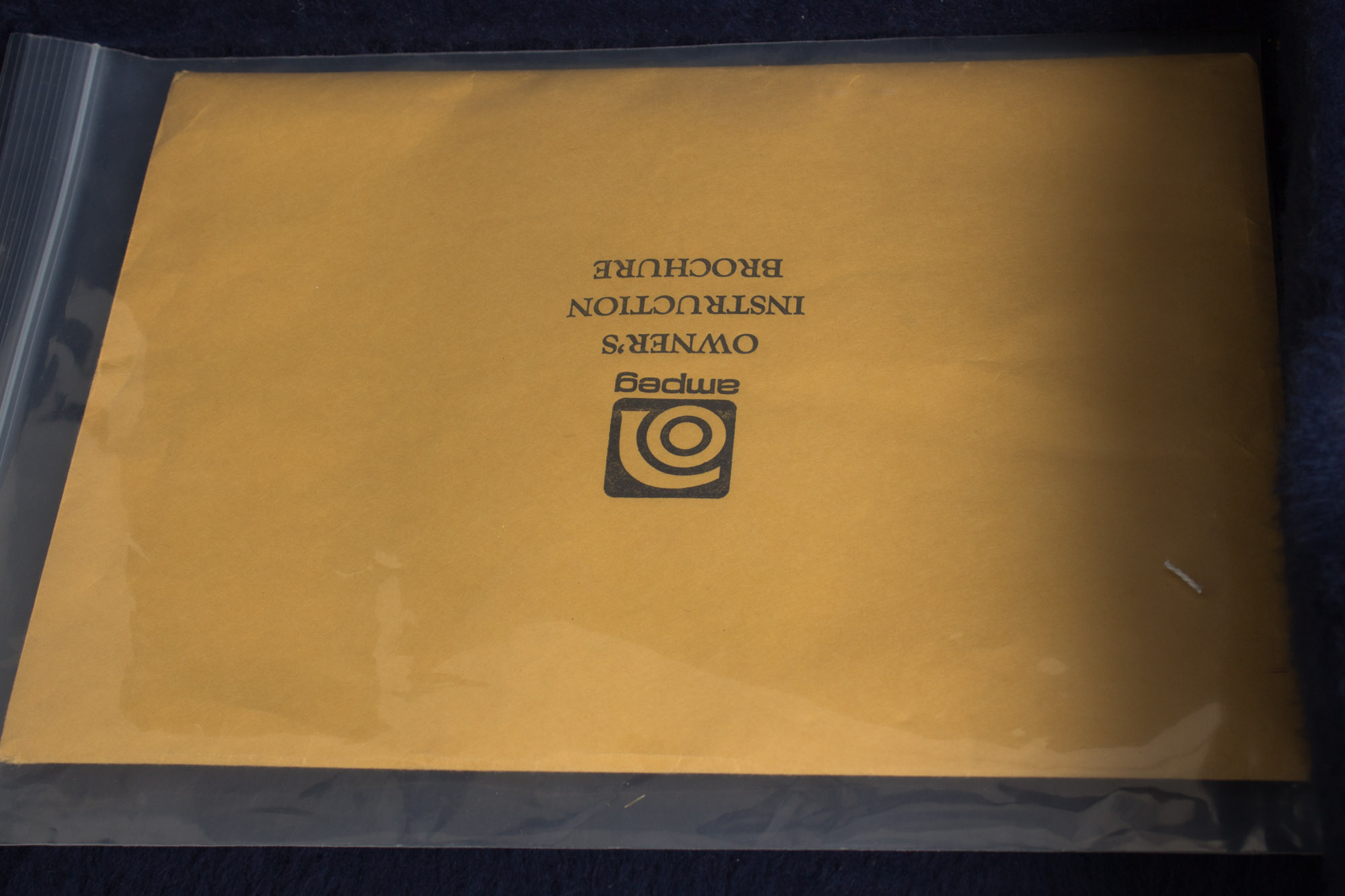
All hardware is original including the usually missing large chrome bridge cover and mounting bolts. This bass has a really nice neck and is set up with an older set of flatwound strings. It is a fine player that sounds great, easily the nicest example of this super distinctive vintage American bass we have ever seen. The large and somewhat cumbersome original HSC is included in solid shape, the original instruction booklet and a letter from Ampeg dating to 1977 is included. Overall Excellent Condition.
This is a really clean great-playing and sounding original example of a relatively rare instrument: the Ampeg AMB-1 (Ampeg Magnetic Bass #1), the second iteration of the 1960s Ampeg "Horizontal Bass". The specifications are typical for the 1968-9 series Ampeg models, which are rather different from the first 1966 versions. The major change is the bridge and pickup construction, both reworked to make the instrument more practical for the high-volume music of the late 1960s than the original design which was aimed at players weaned on the upright bass.
Ampeg basses of the 1960s were the product of company founder Everett Hull's distaste for the Fender-style bass guitar; he considered the upright bass to be the only legitimate low end instrument! The 1966 Ampeg was designed to utilize the same vibration-activated "Mystery Pickup" (located under the bridge) as the upright Baby Bass, allowing the use of gut strings as well as steel-core for more traditional bass sounds. It was initially offered in fretted and fretless models designated the AEB-1 and AUB-1.
In the ever-louder playing environments of the late 1960s, this design proved impractical as the pickup was comparatively inefficient and highly microphonic. After Hull sold the company to Unimusic in 1967 the basses were quickly re-designed with a more efficient magnetic pickup, located in the center of the body. This unit is an interesting and unusual design, with four separate coils set inside a block of epoxy resin. This makes it fully humbucking with a nice dark and growly tone, very effective in traditional bass settings.
The bridge/tailpiece combination was also redesigned into a single integrated unit, which did not require the overlong strings of the original model. It remains fully adjustable for height and intonation, with an additional tension bar behind the saddles that can vary the string break angle. The almost-solid body is carved from solid blocks of maple, which is another improvement from the multi-laminated bodies of the earlier models. The neck with the unique scroll-head is also maple, with a heavy ebony fingerboard. This is an extremely high quality, professional grade instrument in all aspects.
The AMUB-1 abounds with original and thoughtful design touches, from the carved-through f-holes that can be used as handles to the pull-for-off volume pot. This was a unique and original take on a pro-quality electric bass but the production run was well under two years and relatively few were made; the serial numbers on this version run up to around #600 of which this is #585. The 1968-9 AMB-1 with the magnetic pickup is sonically the greatest of the Ampeg basses, certainly the most useful to serious players and remains absolutely distinctive in both look and sound 55 years on. Some high profile users of the AMUB-1 fretless version in the '70s were The Band's Rick Danko (the AMUB is most associated with him) and Boz Burrell of Bad Company. The AMB-1 was most associated with Jah Wobble of PIL and also Gary Ryan of Joan Jett's Blackhearts. This is a superb example of this underappreciated classic, a far better instrument than its relative obscurity would suggest.
Overall length is 47 in. (119.4 cm.), 14 1/2 in. (36.8 cm.) wide at lower bout, and 1 1/4 in. (3.2 cm.) in depth, measured at side of rim. Scale length is 34 1/2 in. (876 mm.). Width of nut is 1 5/8 in. (41 mm.).
This bass shows only very minor wear overall and remains all original. Ampeg "Scroll" basses have often fallen into disrepair or been modified over the last 50+ years; it is a treat to find such a well preserved original specimen of this rare model. There is almost none of the common finish checking on the body; the original lacquer is very well-preserved. The body only very light scuffing overall with a few miniscule dings and dents here and there. The hard plastic pickguard has no damage and very little wear. There is one spot of a few small shallow dinks and dents on the back of the neck behind the 4th fret, likely from rubbing against something in the case.
The only repair is a laminate crack to in lower body off the forward part of the f-hole, running from back to front. This has been solidly sealer with some light touchup; it is visible but not overly conspicuous. This is the only damage or repair to the instrument, really the only notable flaw in an otherwise almost pristine piece.
All hardware is original including the usually missing large chrome bridge cover and mounting bolts. This bass has a really nice neck and is set up with an older set of flatwound strings. It is a fine player that sounds great, easily the nicest example of this super distinctive vintage American bass we have ever seen. The large and somewhat cumbersome original HSC is included in solid shape, the original instruction booklet and a letter from Ampeg dating to 1977 is included. Overall Excellent Condition.