Selmer Modele Jazz Acoustic Guitar (1942)

LOADING IMAGES
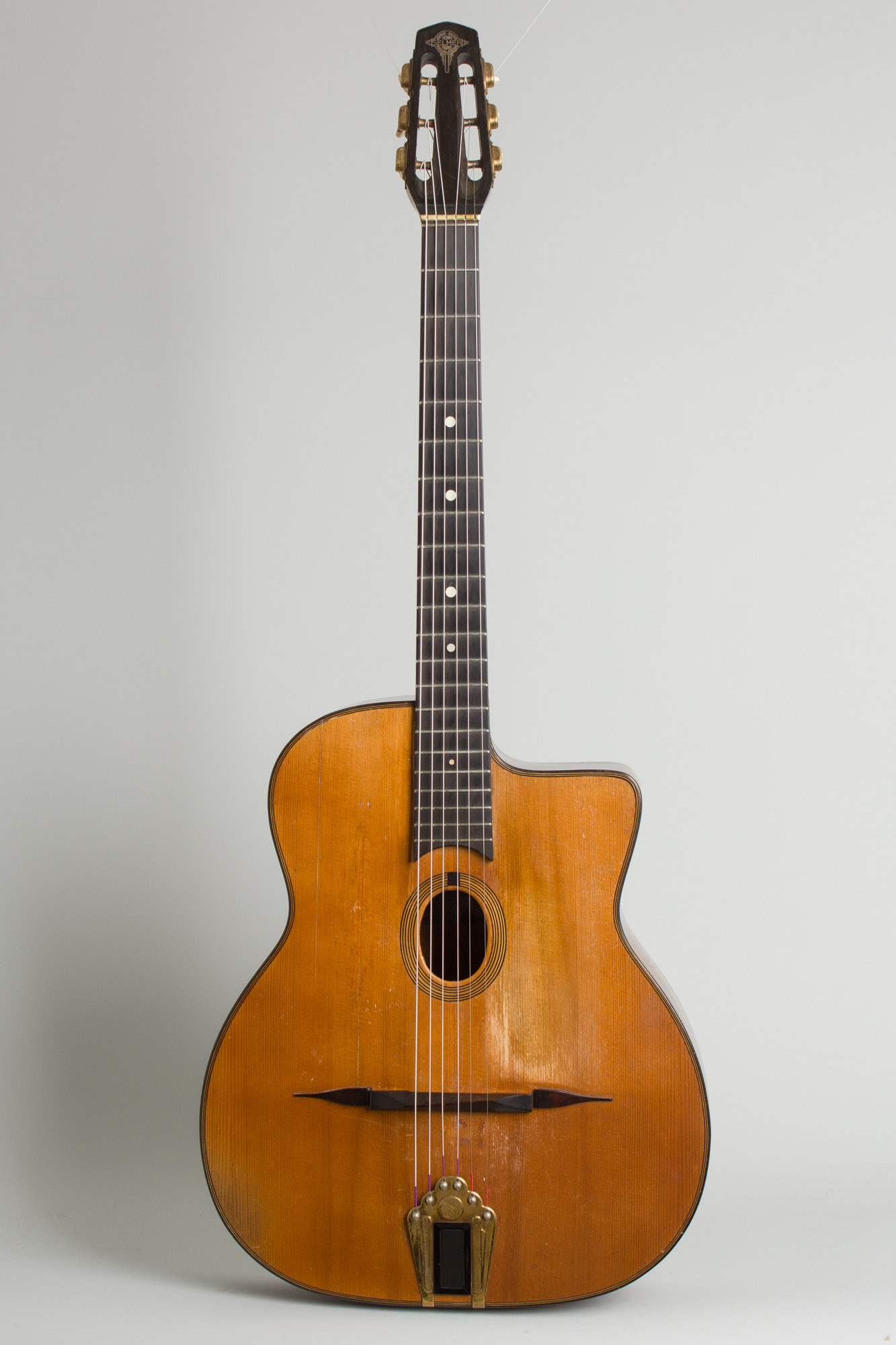
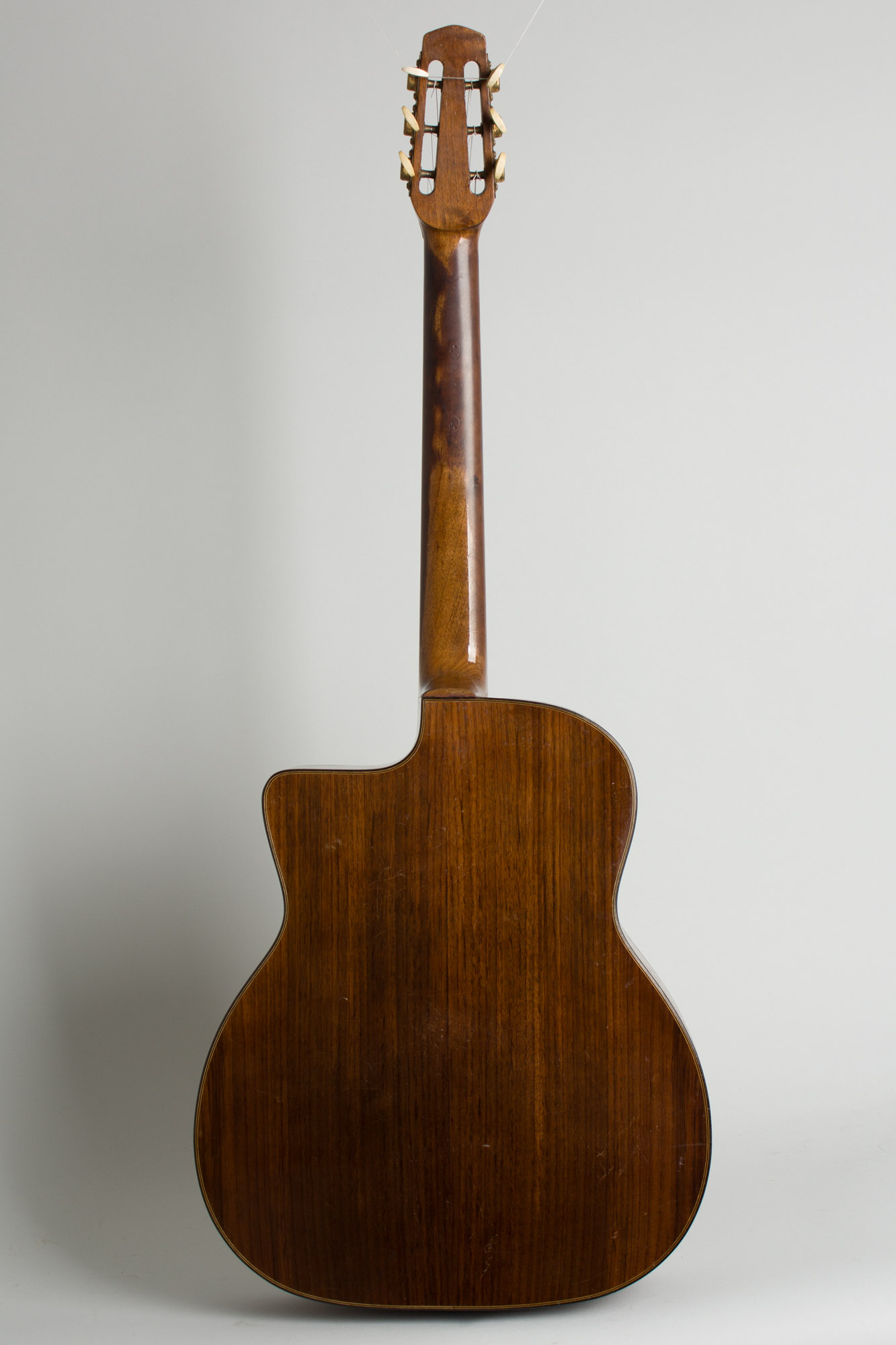
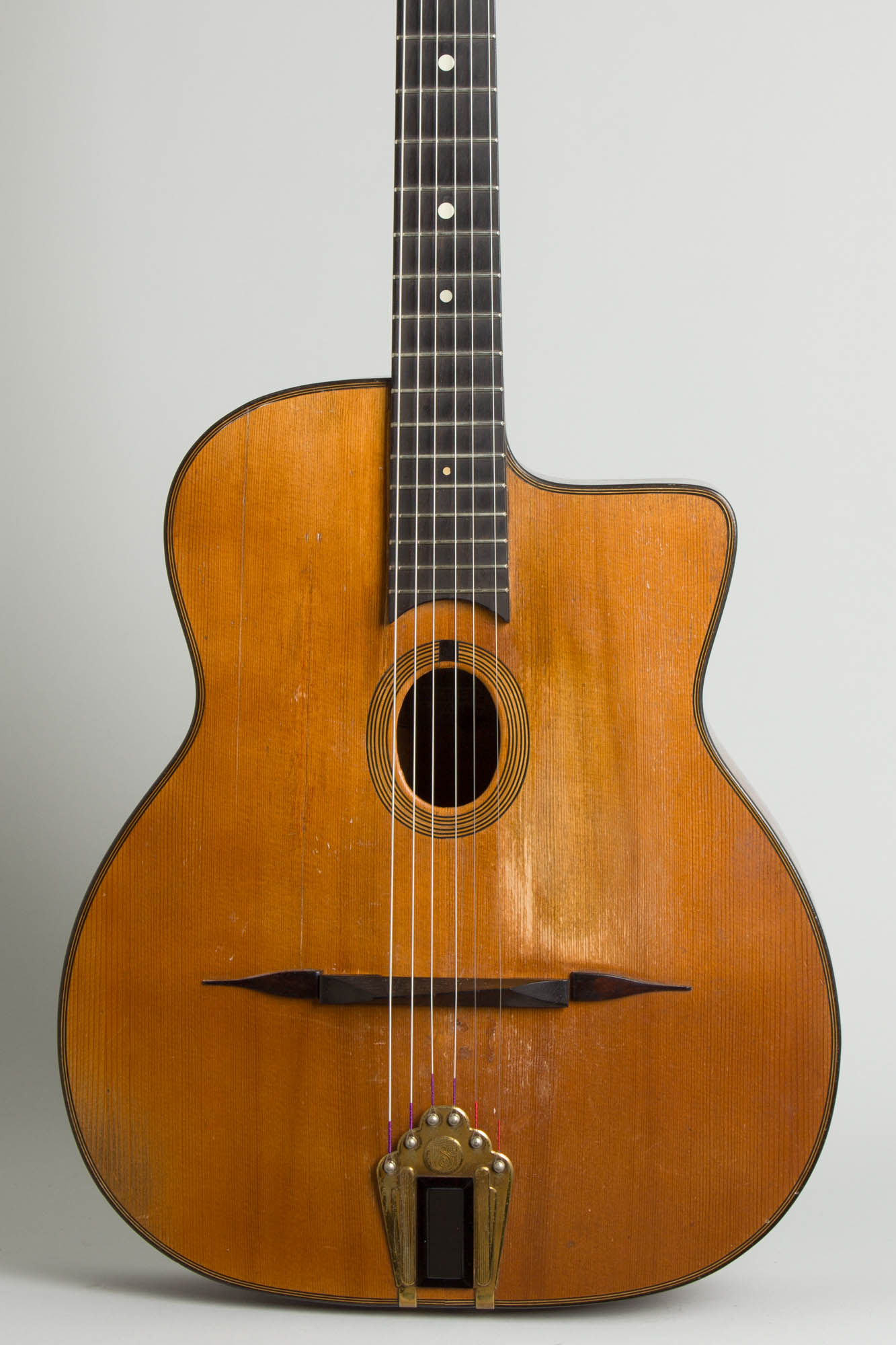
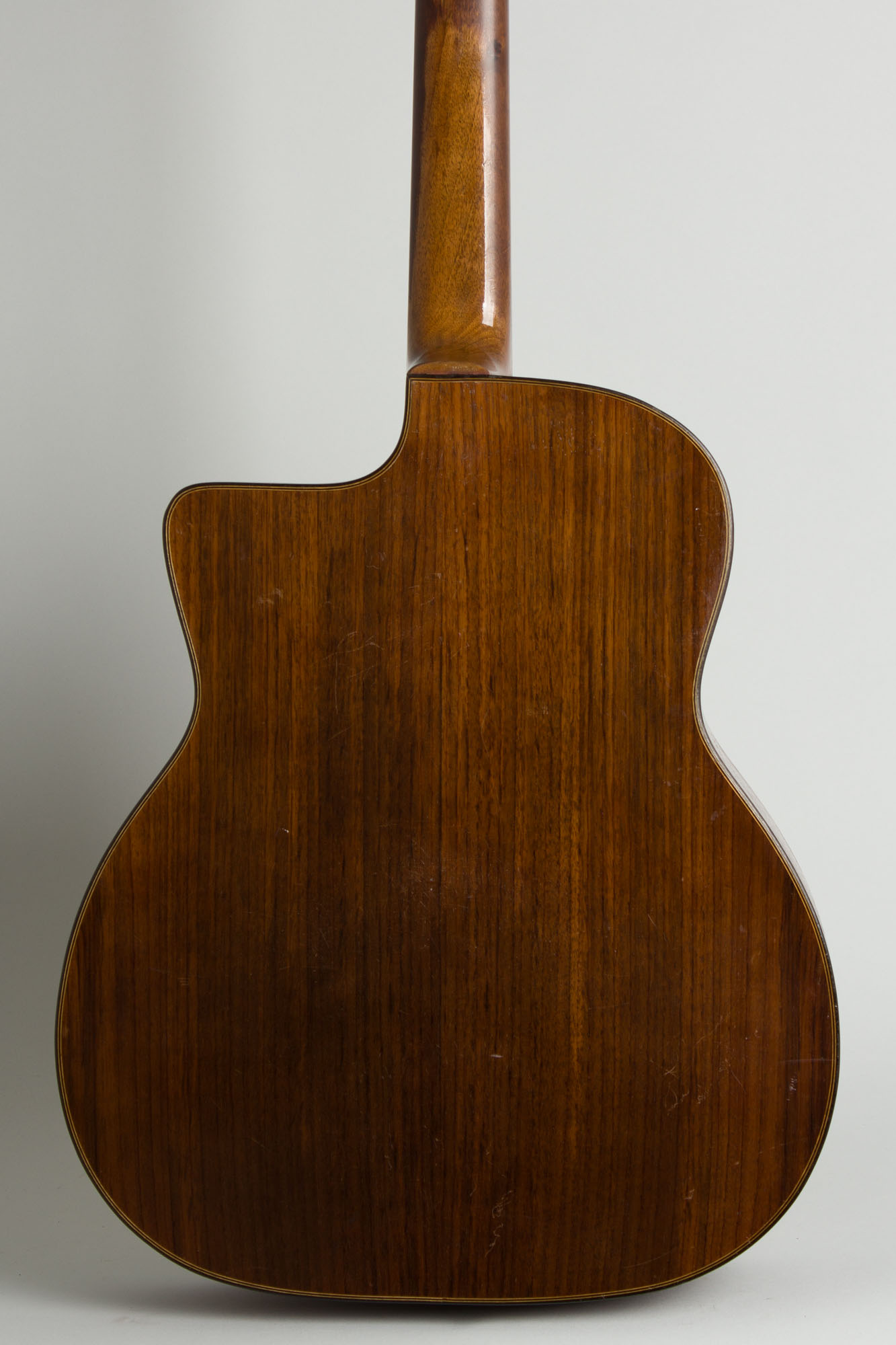
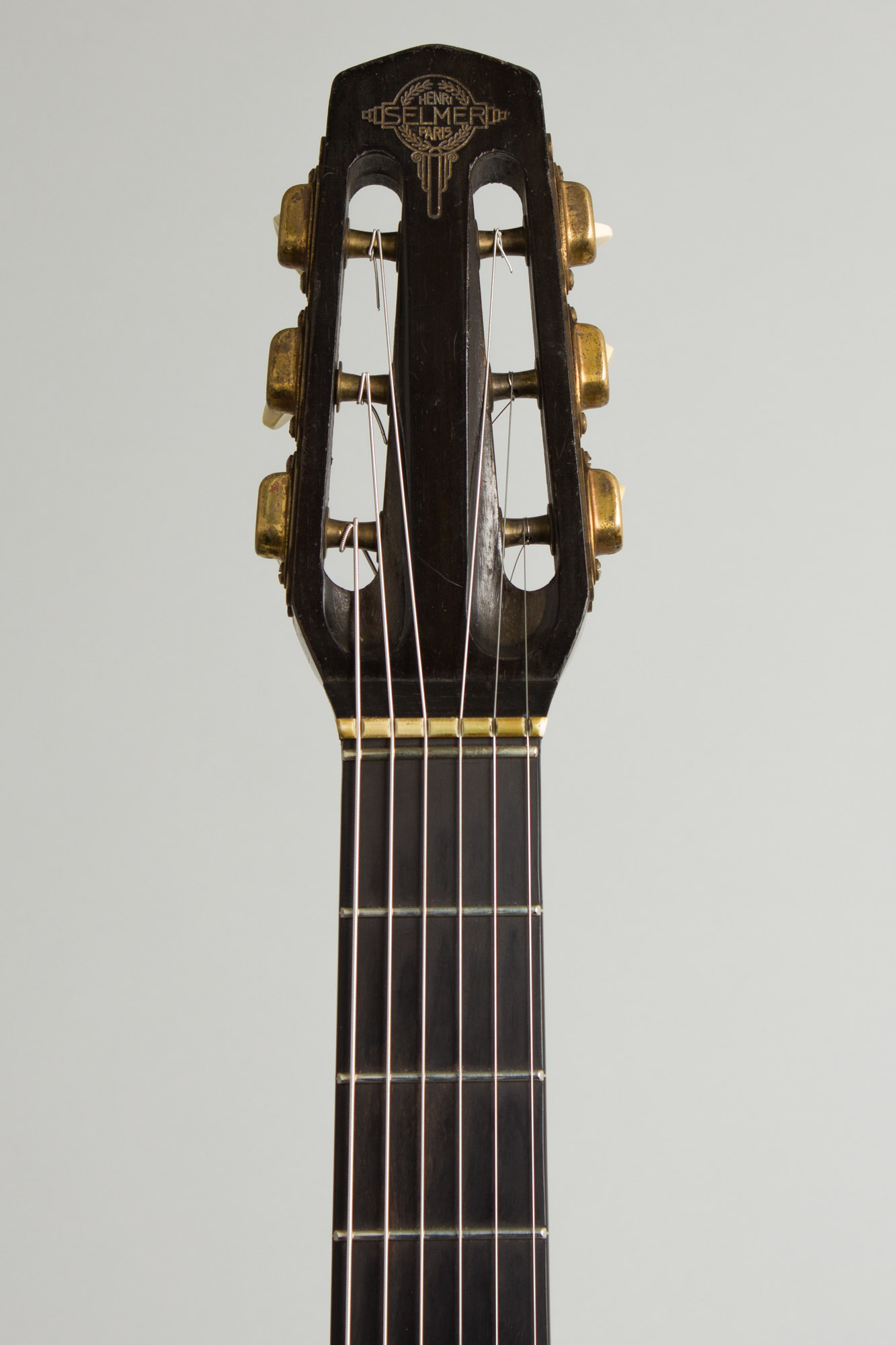
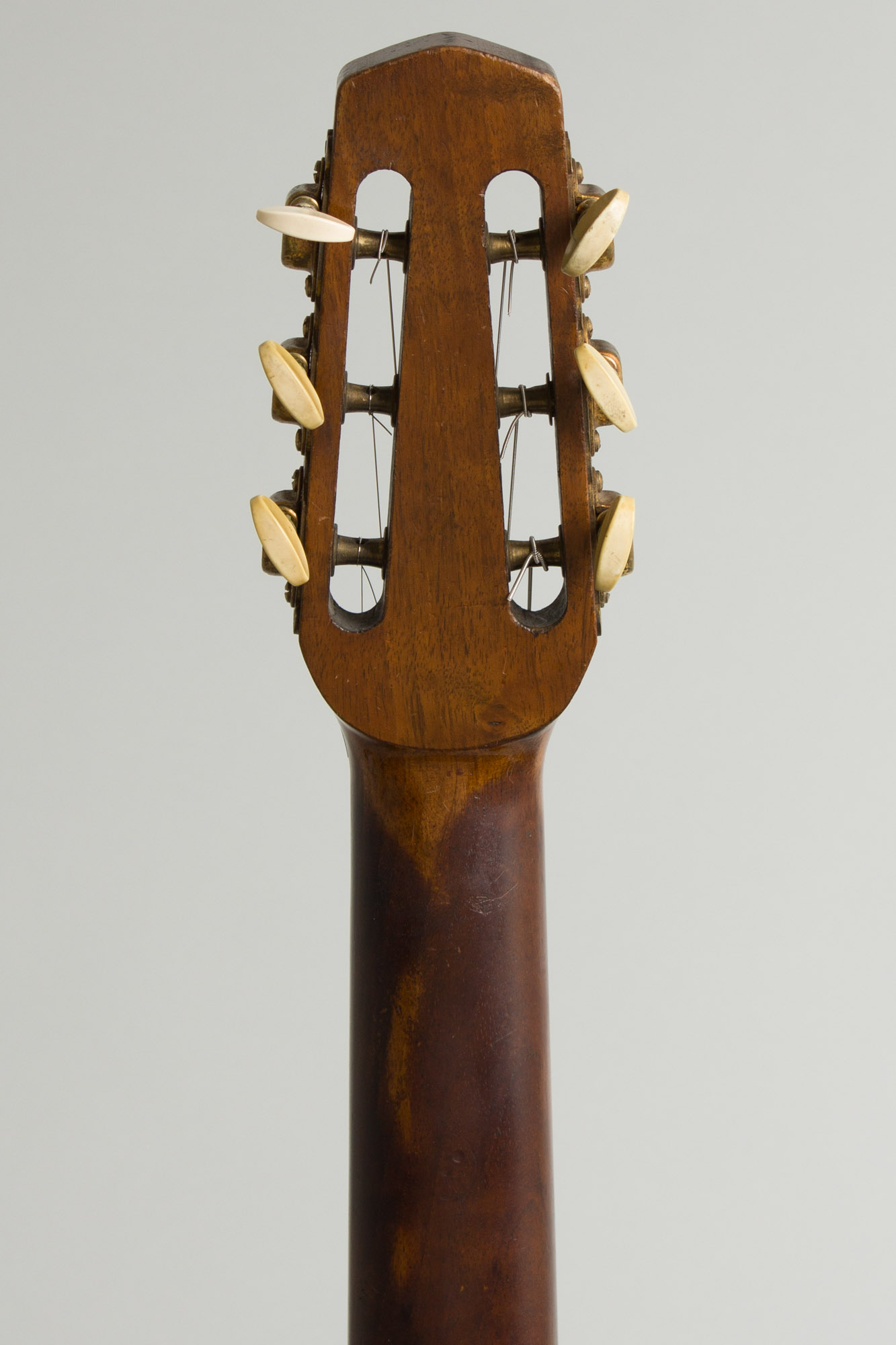
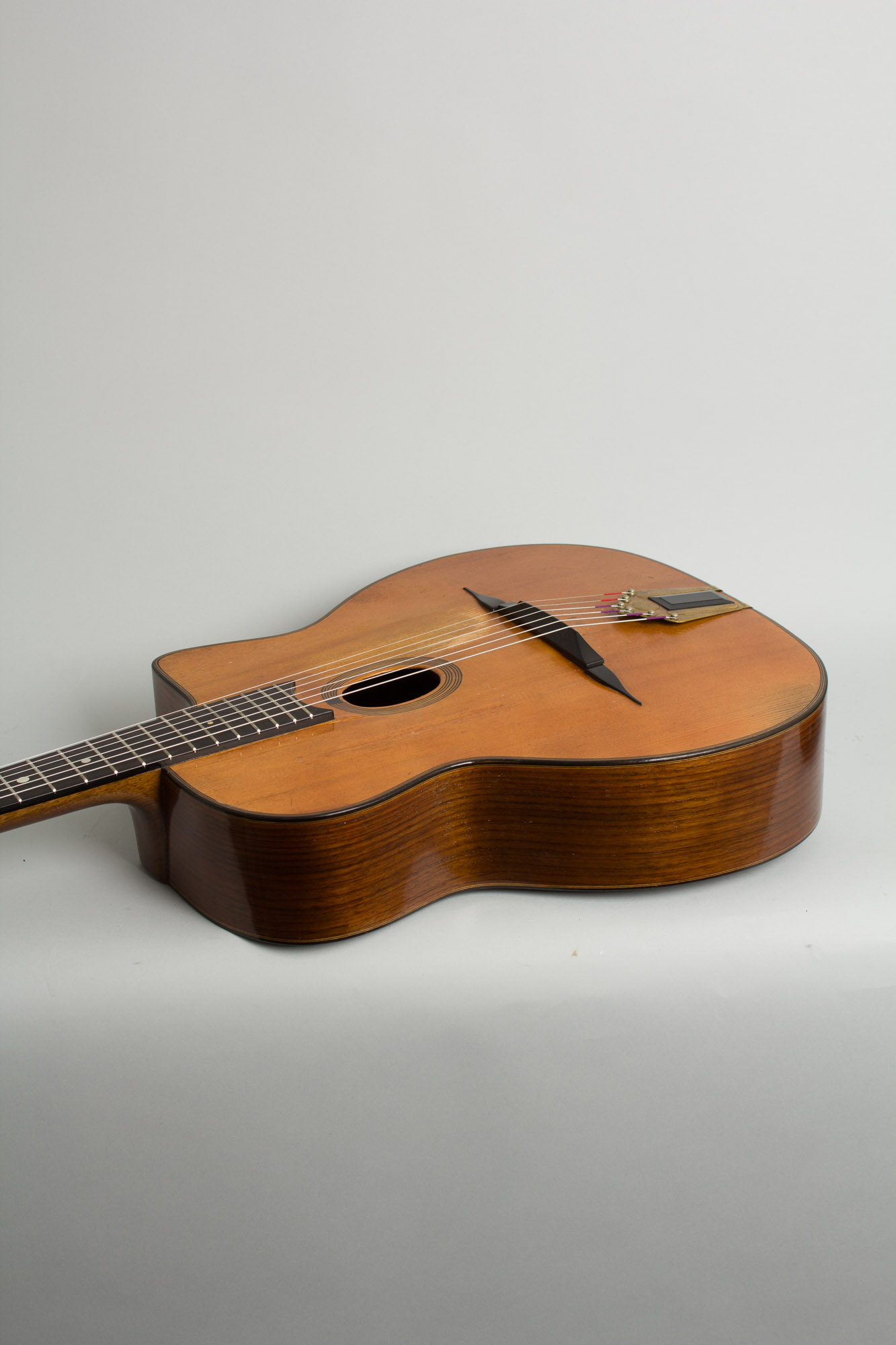
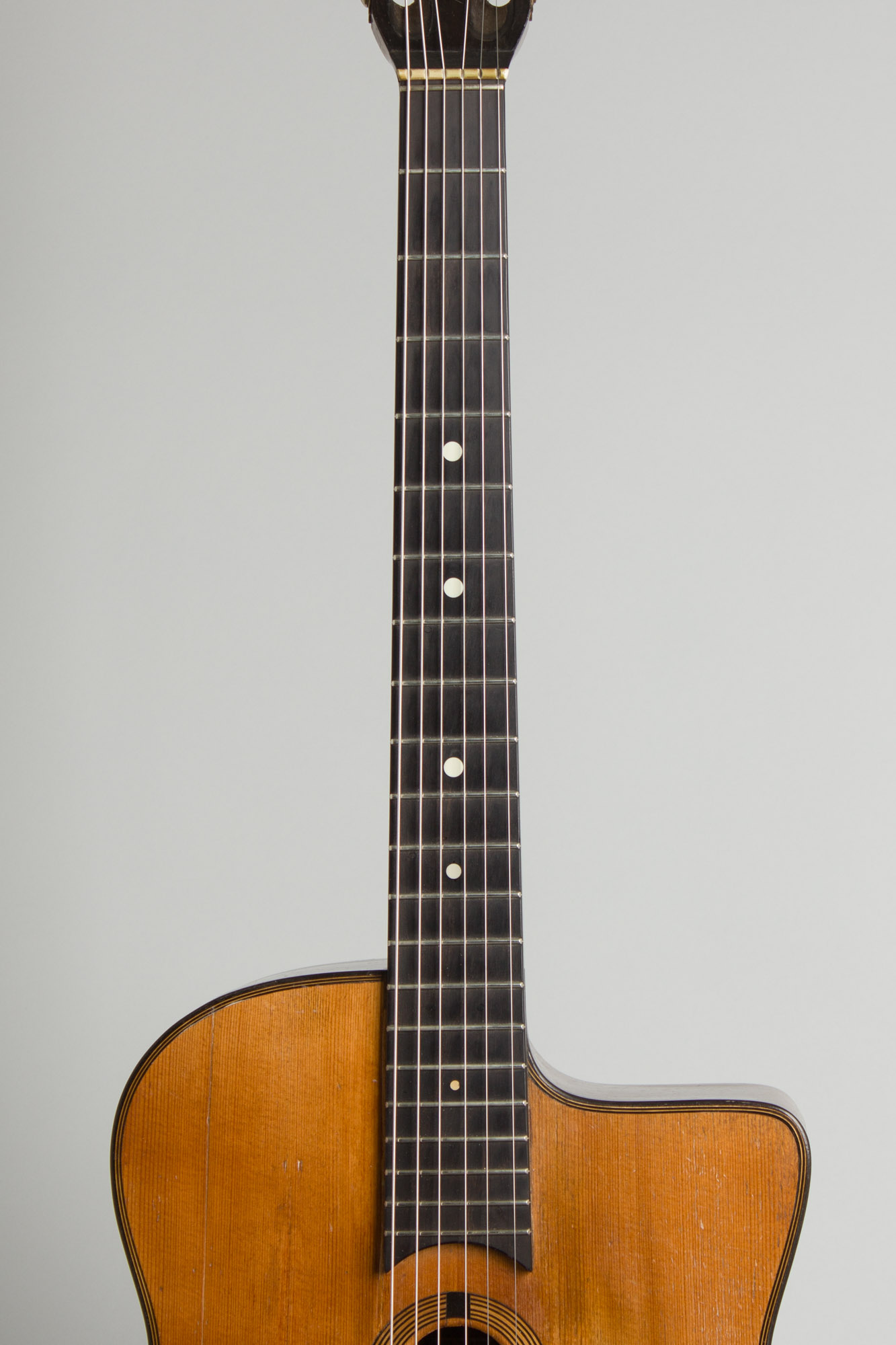
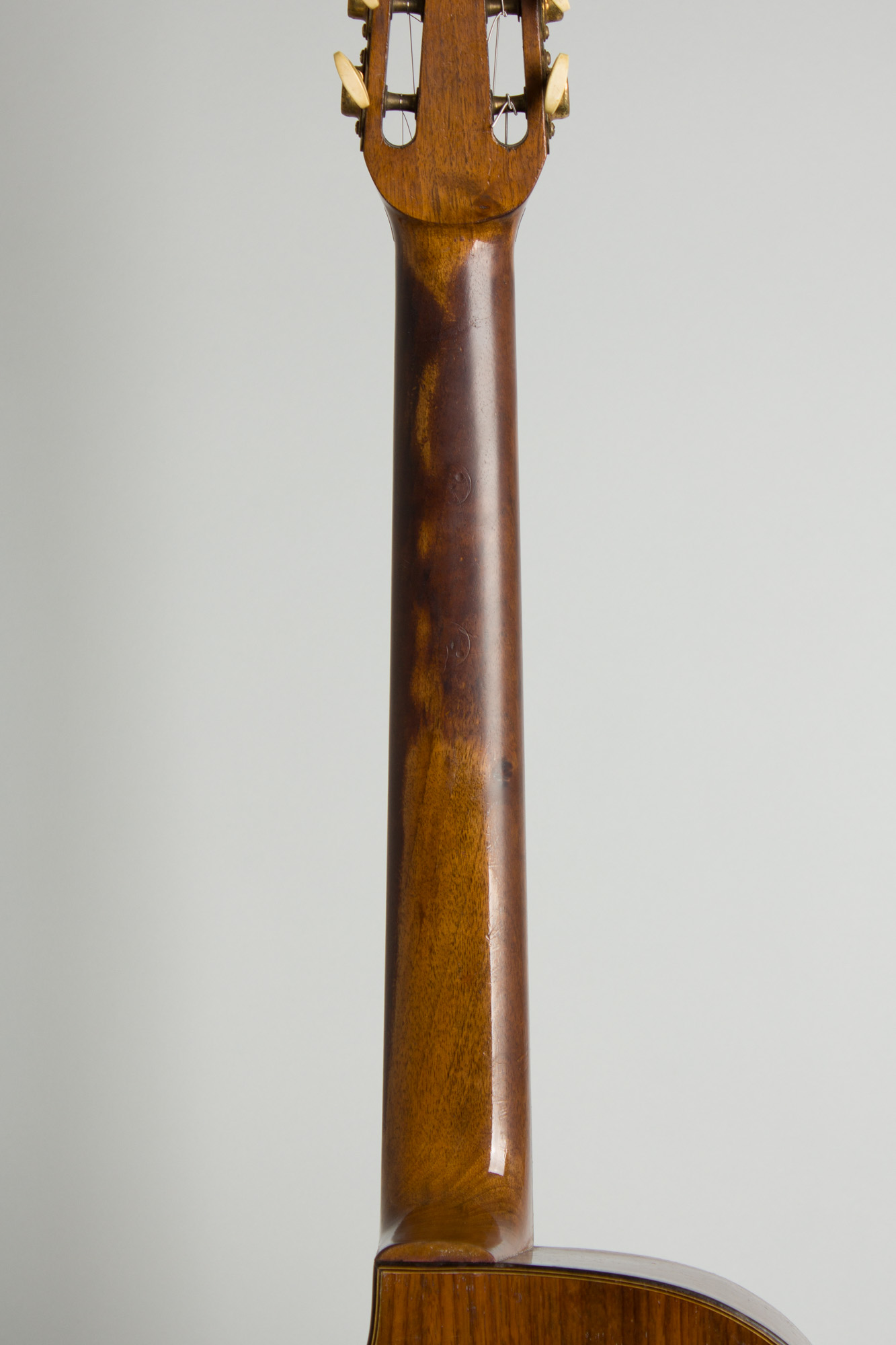
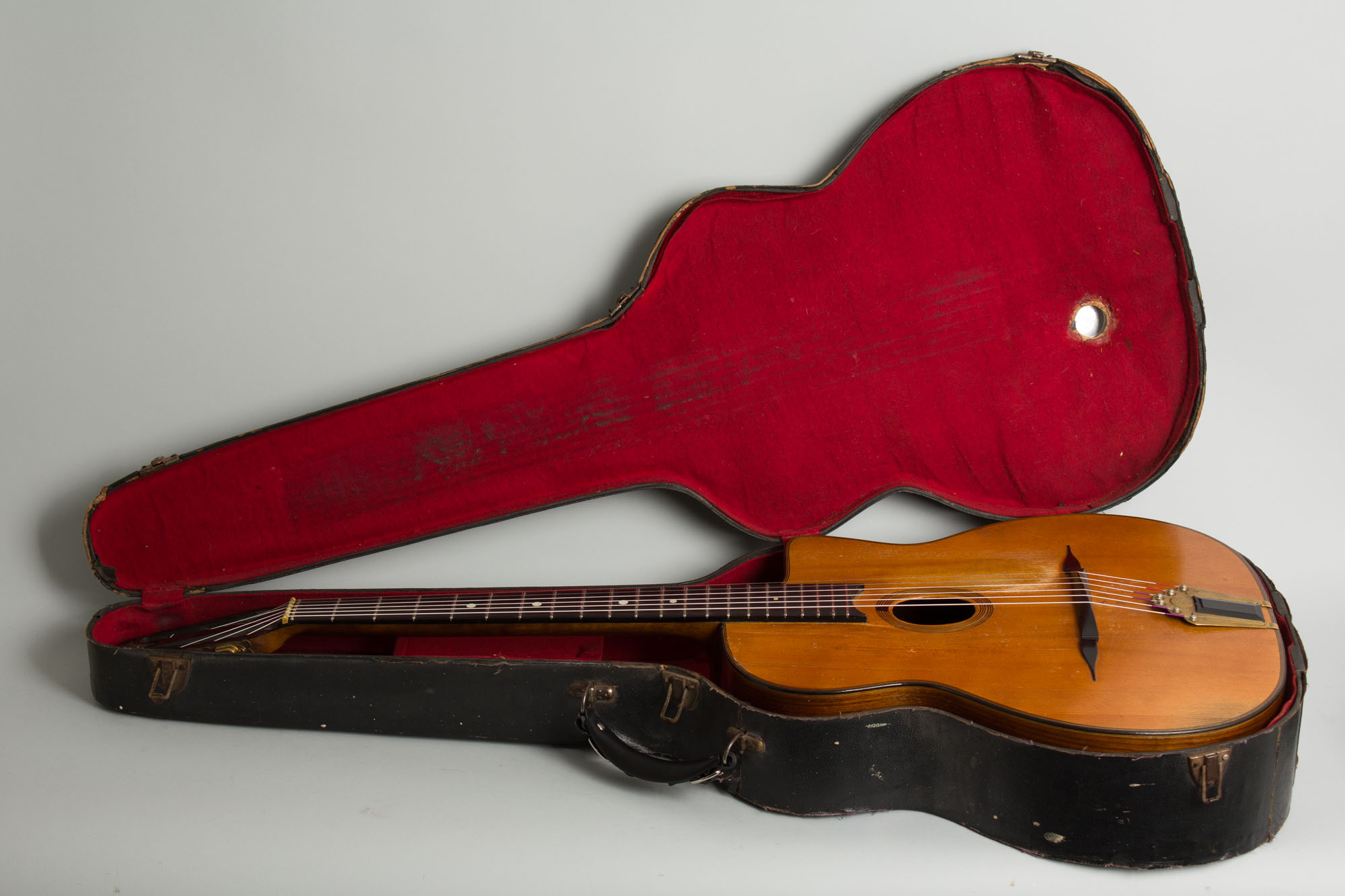
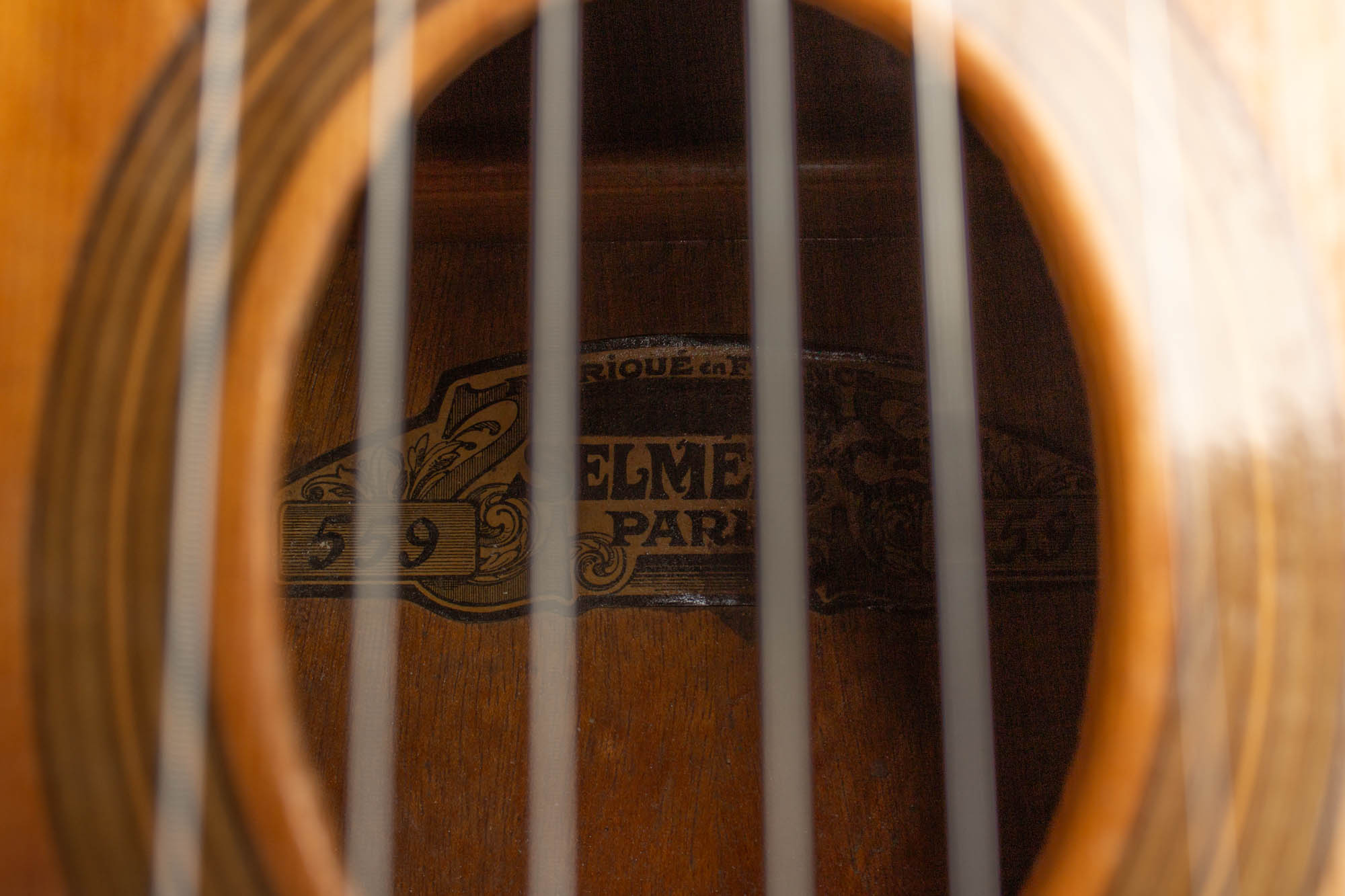
Selmer Modele Jazz Model Acoustic Guitar (1942), made in Paris, France, serial # 559, natural lacquer finish, laminated rosewood back & sides, spruce top; walnut neck with ebony fingerboard, original black hard shell case.
This is a fabulous sounding if well played (as most are) Selmer Maccaferri "Modele Jazz", one of the truly iconic guitars of the 20th Century and the most celebrated steel-string ever built in Europe. These very rare original Selmer instruments are of course indelibly associated with Django Reinhardt, and the design has been copied and expanded upon right up into the present day. Beyond this they are a unique and important piece of guitar history as well as fantastic instruments to play. Django's most famous personal Selmer was #503; this is #559 shipped around 2 years later.
Italian guitarist/luthier Mario Maccaferri was responsible for the original version of this then very futuristic design. In 1931-2 he persuaded the French Selmer company to market them and provide factory space where he could oversee their manufacture. Disagreements between himself and Selmer ended Maccaferri's involvement after about 18 months but the company continued to build the guitars. The design evolved considerably after 1933; this instrument (#559) was built in occupied France during WWII and has numerous differences from the original Mario Maccaferri design. Selmer also deleted any reference to his name on the headstock and label, where a rather inelegant black blob was applied over his pre-printed name.
The original "Modele Orchestre" (nicknamed the "Grand Bouche") was the steel-string guitar in a series of Selmer instruments introduced in 1932. They were distinguished be a host of unique features including the arched laminated rosewood body and bent (not carved) spruce top. The walnut neck has a spliced heel and headstock and ebony fretboard. The early models feature a 12th fret neck joint but access is facilitated by the unique stepped cutaway, a radical feature in 1932. Everything on the instrument including the tuners and tailpiece were custom designed, in-house Selmer creations.
This guitar is the later Selmer "Modele Jazz"; an evolved version built after the mid-1930s. Among many changes from earlier models is a longer scale, 14 fret neck with a narrower fingerboard more suited to the European "jazz" players who adopted it as their de facto standard. The most visible difference is the oval soundhole, much smaller than the original large "D" shaped version. The neck has a fairly deep "U" profile with a back that gets flatter as it nears the body. The back and sides are laminated rosewood, the top solid spruce bound and with the soundhole inlaid with wood. The unique tuners, tailpiece and 3-piece floating bridge are the standard Selmer designs.
Well under 1000 Selmer guitars of ALL types were built from 1932-52. Production thinned out during WWII (although it did not cease fully, as this instrument proves) but re-started in earnest during 1946 at around serial #590. This guitar was built in early 1942 and recorded as shipped on March 31 of that year to a buyer designated as "Bogaerts" in Arras, a town in northern France that was the site of some heavy combat in 1940.
This is the classic "Django" model; his accompanists sometimes preferred the older "Grand Bouche" models, but this "Petit Bouche" instrument is the one Django himself usually picked. Beyond his "gypsy jazz" stylings Selmer guitars were used by many diverse French performers from the 1930s on in varied styles from musette to the backing of chansonniers as well as in English dance bands associated with performers Len Fillis and Al Bowlly. Many were played hard, heavily worn and poorly cared for, so survivors are now quite rare and sought after, especially those like this one from this Django-specific period. This guitar is a somewhat worn but wonderful player, a true veteran with the expected classic sound and more.
Overall length is 38 1/2 in. (97.8 cm.), 15 3/4 in. (40 cm.) wide at lower bout, and 4 in. (10.2 cm.) in depth at side, taken at the end block. Scale length is 26 1/2 in. (673 mm.). Width of nut is 1 3/4 in. (44 mm.).
As is common for this often heavily used model this guitar shows a decent amount of play wear but remains better preserved than many, quite a few having been played virtually into the ground and/or heavily modified along the way. The thin lacquer finish remains largely original showing scrapes, dings and chips overall; the back and sides have some noticeable fine checking and numerous scratches and dings. The back of the neck is heavily worn down to the wood from play and with a couple of old capo marks largely polished smooth behind the 3rd and 5th frets.
The top has the only added finish, with some minor touch up to typical pick wear into the wood in the common spot on the lower edge of the soundhole and behind/below it, back to the bridge. This looks to have been done decades ago and is partially worn through again closer to the bridge. There is also an area worn through to the wood where the player's arm rests in the top edge. There are some old glue (?) spots behind the bridge resistant to easy removal.
The thin spruce top has three repaired grain slits to the area above the soundhole and fingerboard, one just off the top edge of the fingerboard and the others above it, the longest going back to the bridge. These are tightly sealed and fairly elaborately cleated underneath with some topical touch up and polishing work above. Apart from these cleating repairs the interior of the guitar and original bracing remain unaltered.
There is some typical minor distortion to the top forward of the soundhole but less than others we have seen; as these go this is a very solid example. All hardware appears original; the center part of the bridge has been raised a bit with ebony shims at either end; these are not glued in place and are very neatly done. To achieve proper intonation it is set back just slightly farther than the side pieces would indicate it originally was, but the guitar is euphonically happy this way. The tuners and tailpiece are original; one of the tuner buttons is a replacement, and the usual small piece of felt under the center of the tailpiece is not present.
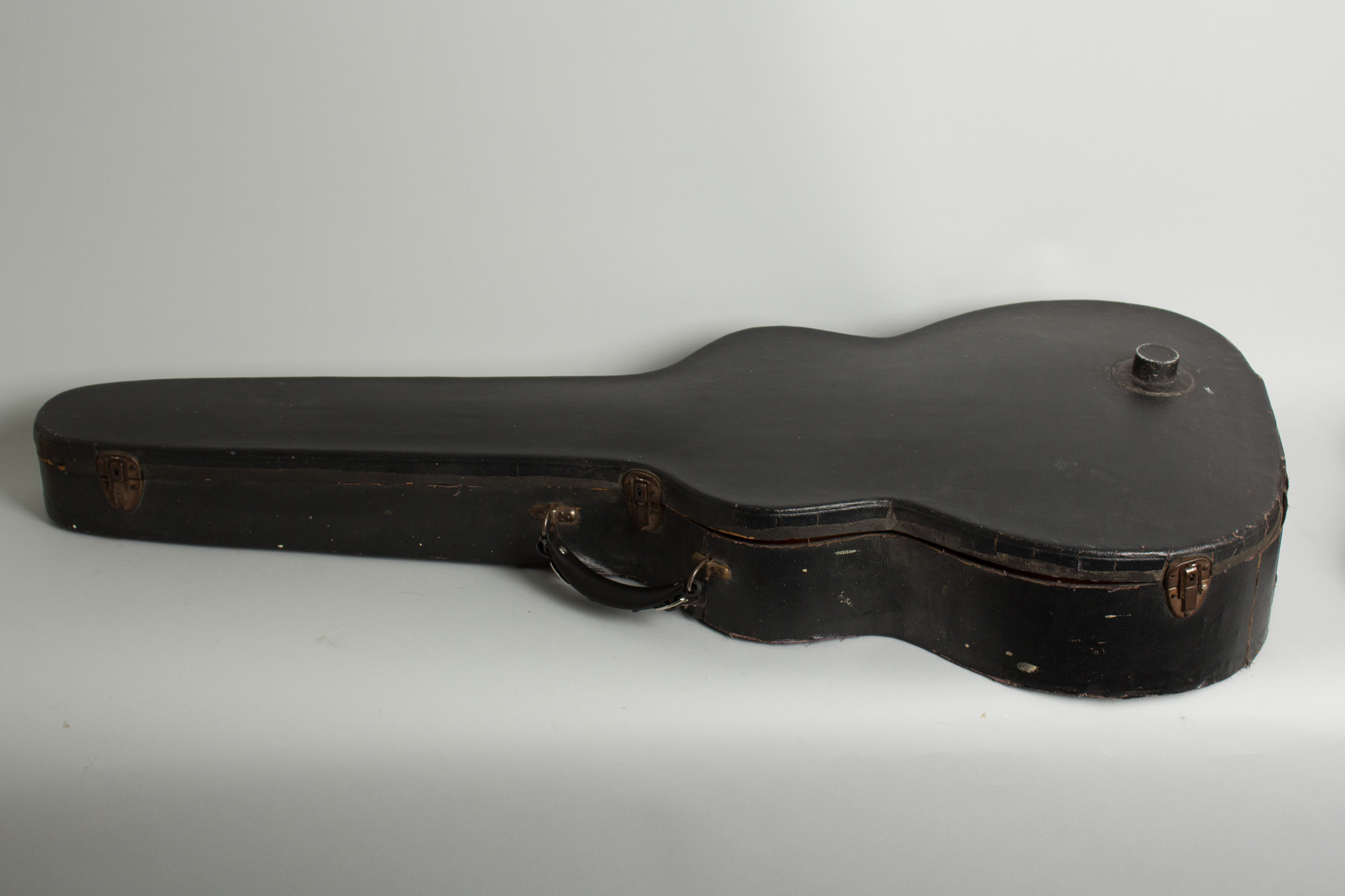
The fingerboard has been very neatly refretted with wire somewhat larger than 1940s standard and playability is excellent. This is a superb playing example of this rare and much sought after guitar with a truly heavenly sound, deeper and richer than any of the various re-creations we have heard and with exceptional volume. The original thin-walled hard shell case is included (along with a modern case) and is quite battered with one fascinating (and amusing) modification: a small raised circular cupola was added to the lid in the spot where the volume control for the later version of the Django-approved Stimer pickup would have sat. We can only assume the previous owner got tired of dismounting the pickup assembly every time the guitar was put away and modified the case accordingly!
Original Selmers were never imported to the US and have always been very hard to find here; this one remained in France until recently. The continuing interest in the music of Django Reinhart has given this exact instrument a holy grail status among players who seek to chase down this unique style for which the Selmer Modele jazz is the only correct choice, and correct era and style originals like this the ultimate goal. Overall Very Good + Condition.
This is a fabulous sounding if well played (as most are) Selmer Maccaferri "Modele Jazz", one of the truly iconic guitars of the 20th Century and the most celebrated steel-string ever built in Europe. These very rare original Selmer instruments are of course indelibly associated with Django Reinhardt, and the design has been copied and expanded upon right up into the present day. Beyond this they are a unique and important piece of guitar history as well as fantastic instruments to play. Django's most famous personal Selmer was #503; this is #559 shipped around 2 years later.
Italian guitarist/luthier Mario Maccaferri was responsible for the original version of this then very futuristic design. In 1931-2 he persuaded the French Selmer company to market them and provide factory space where he could oversee their manufacture. Disagreements between himself and Selmer ended Maccaferri's involvement after about 18 months but the company continued to build the guitars. The design evolved considerably after 1933; this instrument (#559) was built in occupied France during WWII and has numerous differences from the original Mario Maccaferri design. Selmer also deleted any reference to his name on the headstock and label, where a rather inelegant black blob was applied over his pre-printed name.
The original "Modele Orchestre" (nicknamed the "Grand Bouche") was the steel-string guitar in a series of Selmer instruments introduced in 1932. They were distinguished be a host of unique features including the arched laminated rosewood body and bent (not carved) spruce top. The walnut neck has a spliced heel and headstock and ebony fretboard. The early models feature a 12th fret neck joint but access is facilitated by the unique stepped cutaway, a radical feature in 1932. Everything on the instrument including the tuners and tailpiece were custom designed, in-house Selmer creations.
This guitar is the later Selmer "Modele Jazz"; an evolved version built after the mid-1930s. Among many changes from earlier models is a longer scale, 14 fret neck with a narrower fingerboard more suited to the European "jazz" players who adopted it as their de facto standard. The most visible difference is the oval soundhole, much smaller than the original large "D" shaped version. The neck has a fairly deep "U" profile with a back that gets flatter as it nears the body. The back and sides are laminated rosewood, the top solid spruce bound and with the soundhole inlaid with wood. The unique tuners, tailpiece and 3-piece floating bridge are the standard Selmer designs.
Well under 1000 Selmer guitars of ALL types were built from 1932-52. Production thinned out during WWII (although it did not cease fully, as this instrument proves) but re-started in earnest during 1946 at around serial #590. This guitar was built in early 1942 and recorded as shipped on March 31 of that year to a buyer designated as "Bogaerts" in Arras, a town in northern France that was the site of some heavy combat in 1940.
This is the classic "Django" model; his accompanists sometimes preferred the older "Grand Bouche" models, but this "Petit Bouche" instrument is the one Django himself usually picked. Beyond his "gypsy jazz" stylings Selmer guitars were used by many diverse French performers from the 1930s on in varied styles from musette to the backing of chansonniers as well as in English dance bands associated with performers Len Fillis and Al Bowlly. Many were played hard, heavily worn and poorly cared for, so survivors are now quite rare and sought after, especially those like this one from this Django-specific period. This guitar is a somewhat worn but wonderful player, a true veteran with the expected classic sound and more.
Overall length is 38 1/2 in. (97.8 cm.), 15 3/4 in. (40 cm.) wide at lower bout, and 4 in. (10.2 cm.) in depth at side, taken at the end block. Scale length is 26 1/2 in. (673 mm.). Width of nut is 1 3/4 in. (44 mm.).
As is common for this often heavily used model this guitar shows a decent amount of play wear but remains better preserved than many, quite a few having been played virtually into the ground and/or heavily modified along the way. The thin lacquer finish remains largely original showing scrapes, dings and chips overall; the back and sides have some noticeable fine checking and numerous scratches and dings. The back of the neck is heavily worn down to the wood from play and with a couple of old capo marks largely polished smooth behind the 3rd and 5th frets.
The top has the only added finish, with some minor touch up to typical pick wear into the wood in the common spot on the lower edge of the soundhole and behind/below it, back to the bridge. This looks to have been done decades ago and is partially worn through again closer to the bridge. There is also an area worn through to the wood where the player's arm rests in the top edge. There are some old glue (?) spots behind the bridge resistant to easy removal.
The thin spruce top has three repaired grain slits to the area above the soundhole and fingerboard, one just off the top edge of the fingerboard and the others above it, the longest going back to the bridge. These are tightly sealed and fairly elaborately cleated underneath with some topical touch up and polishing work above. Apart from these cleating repairs the interior of the guitar and original bracing remain unaltered.
There is some typical minor distortion to the top forward of the soundhole but less than others we have seen; as these go this is a very solid example. All hardware appears original; the center part of the bridge has been raised a bit with ebony shims at either end; these are not glued in place and are very neatly done. To achieve proper intonation it is set back just slightly farther than the side pieces would indicate it originally was, but the guitar is euphonically happy this way. The tuners and tailpiece are original; one of the tuner buttons is a replacement, and the usual small piece of felt under the center of the tailpiece is not present.
The fingerboard has been very neatly refretted with wire somewhat larger than 1940s standard and playability is excellent. This is a superb playing example of this rare and much sought after guitar with a truly heavenly sound, deeper and richer than any of the various re-creations we have heard and with exceptional volume. The original thin-walled hard shell case is included (along with a modern case) and is quite battered with one fascinating (and amusing) modification: a small raised circular cupola was added to the lid in the spot where the volume control for the later version of the Django-approved Stimer pickup would have sat. We can only assume the previous owner got tired of dismounting the pickup assembly every time the guitar was put away and modified the case accordingly!
Original Selmers were never imported to the US and have always been very hard to find here; this one remained in France until recently. The continuing interest in the music of Django Reinhart has given this exact instrument a holy grail status among players who seek to chase down this unique style for which the Selmer Modele jazz is the only correct choice, and correct era and style originals like this the ultimate goal. Overall Very Good + Condition.