Gibson J-185 Flat Top Acoustic Guitar (1957)

LOADING IMAGES
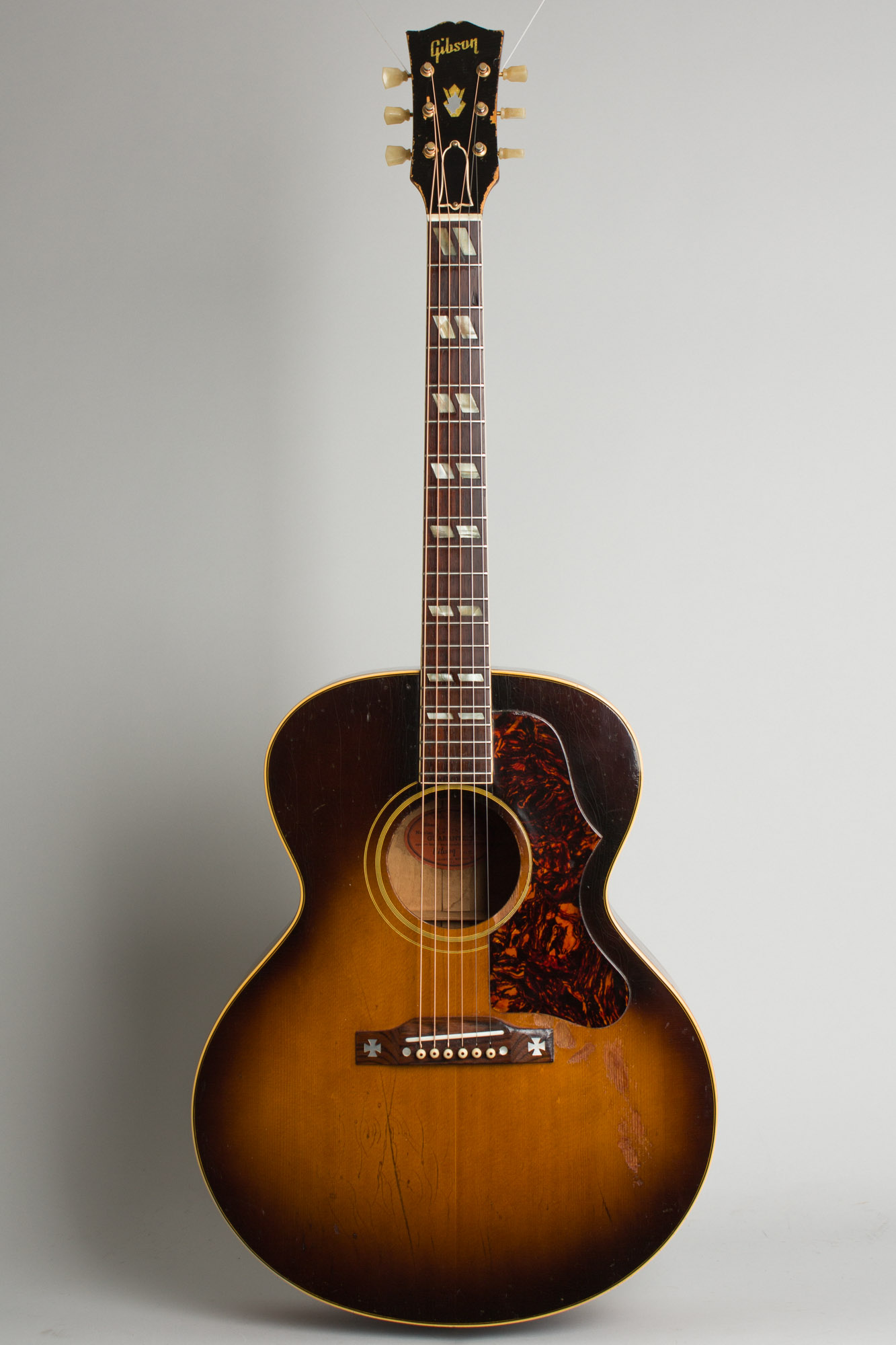
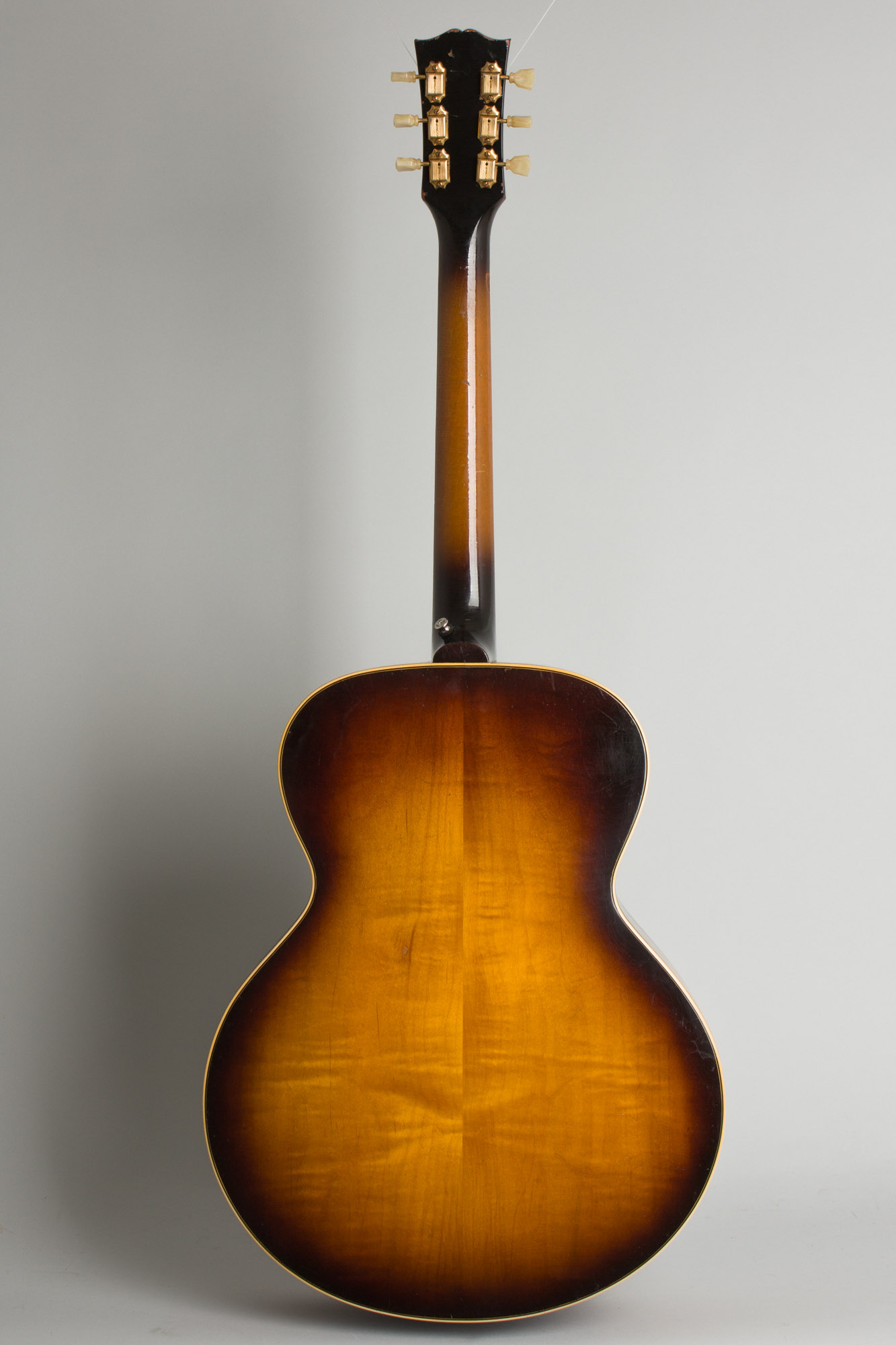
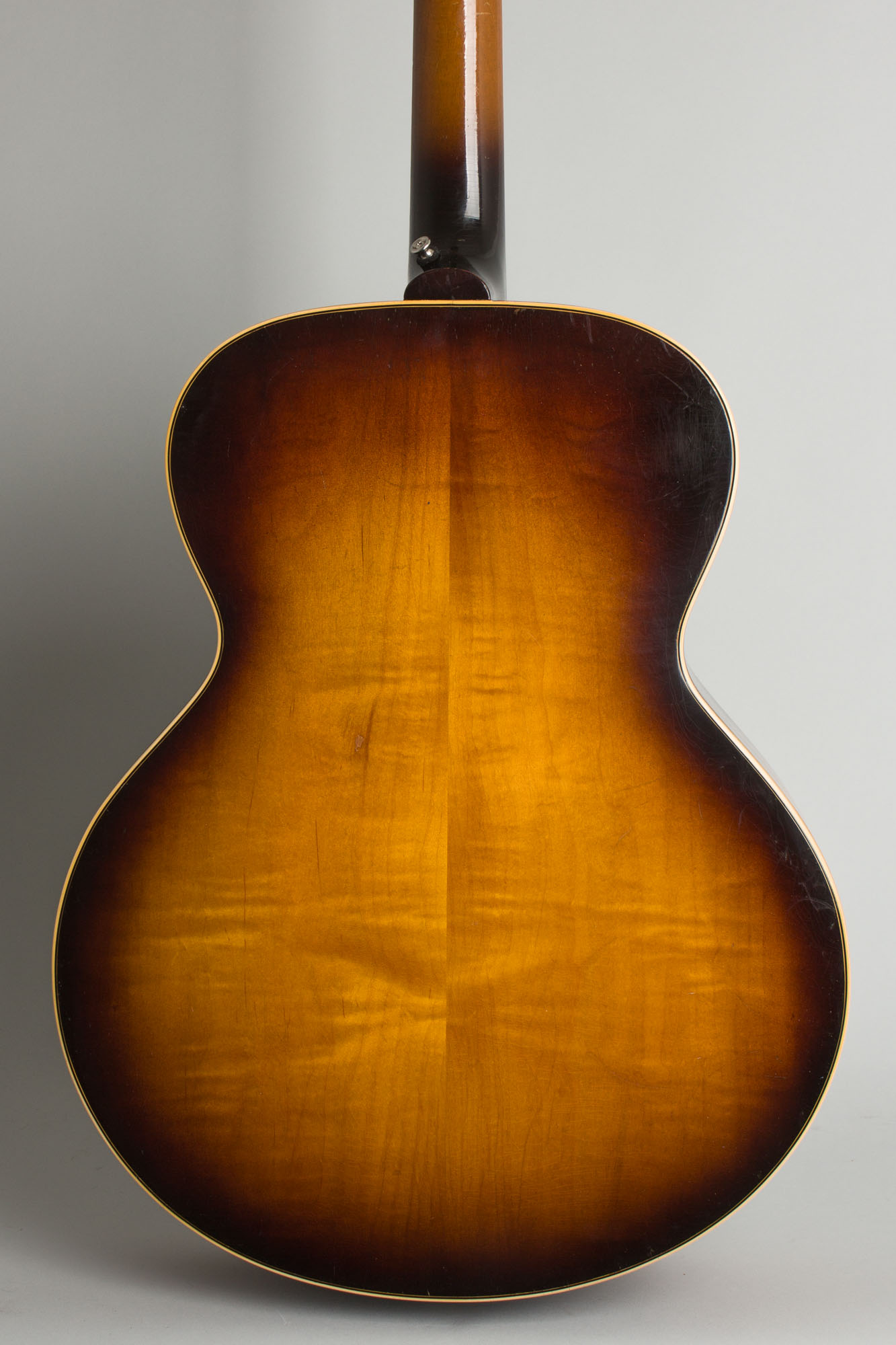
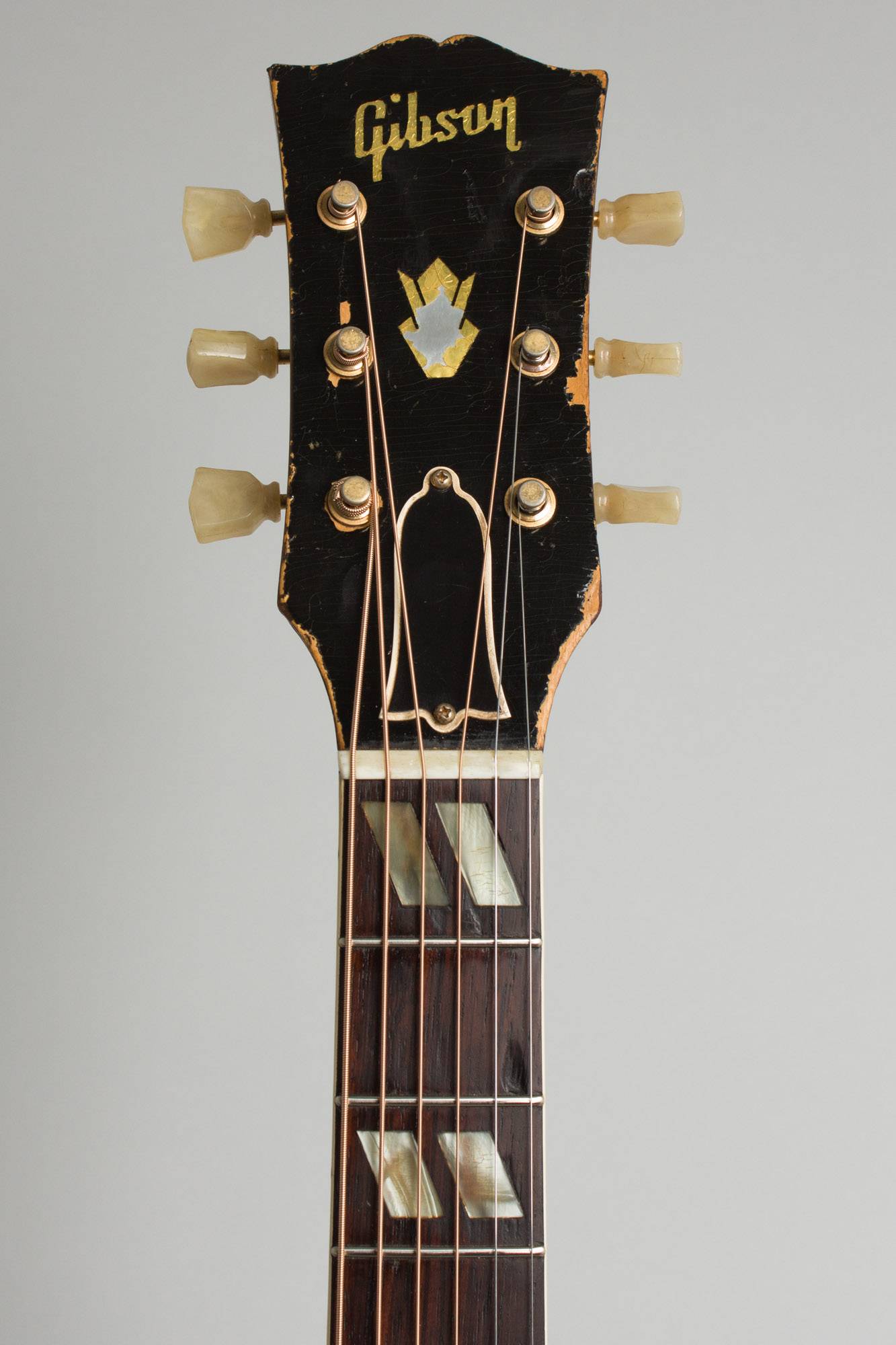
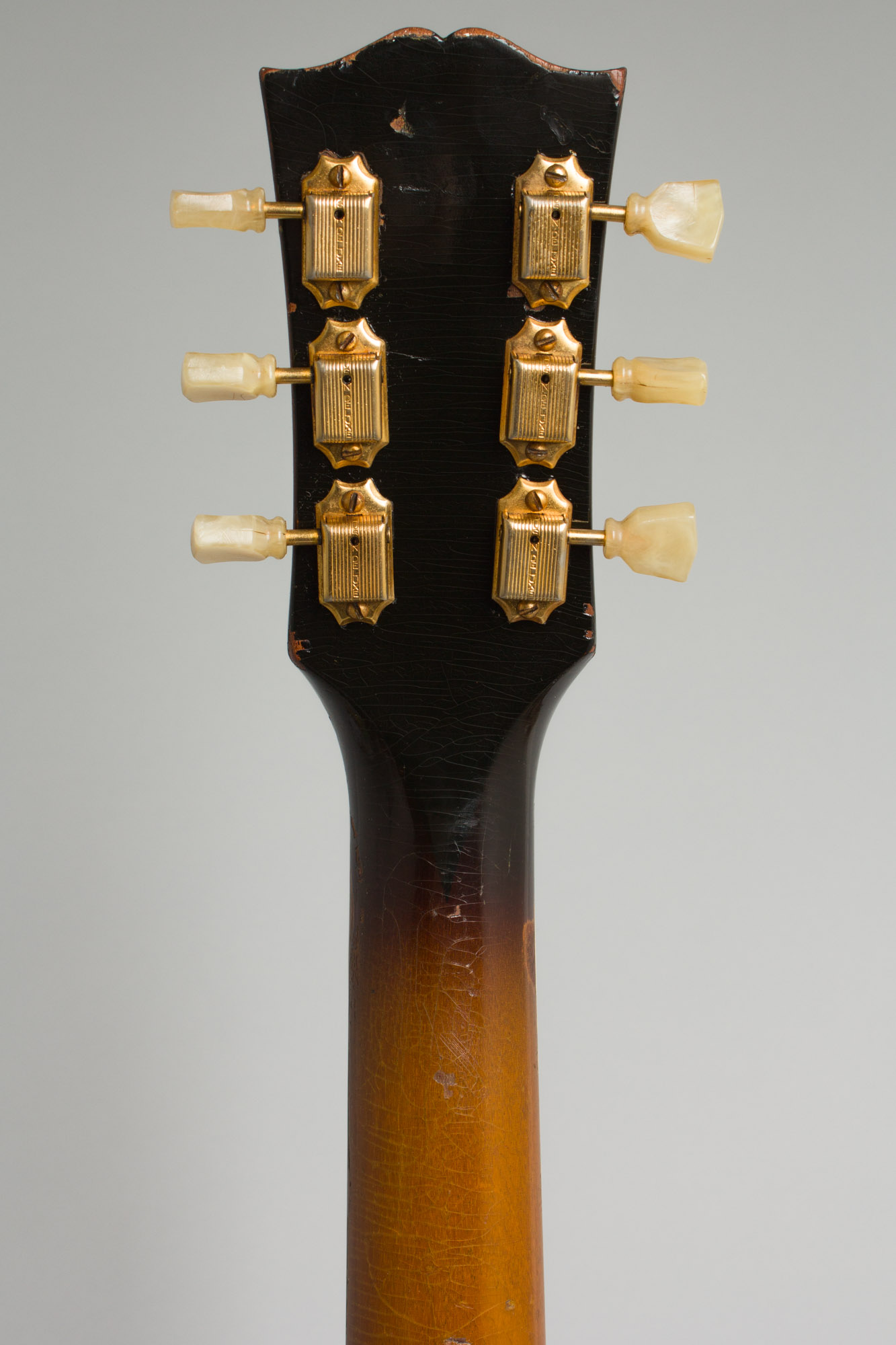
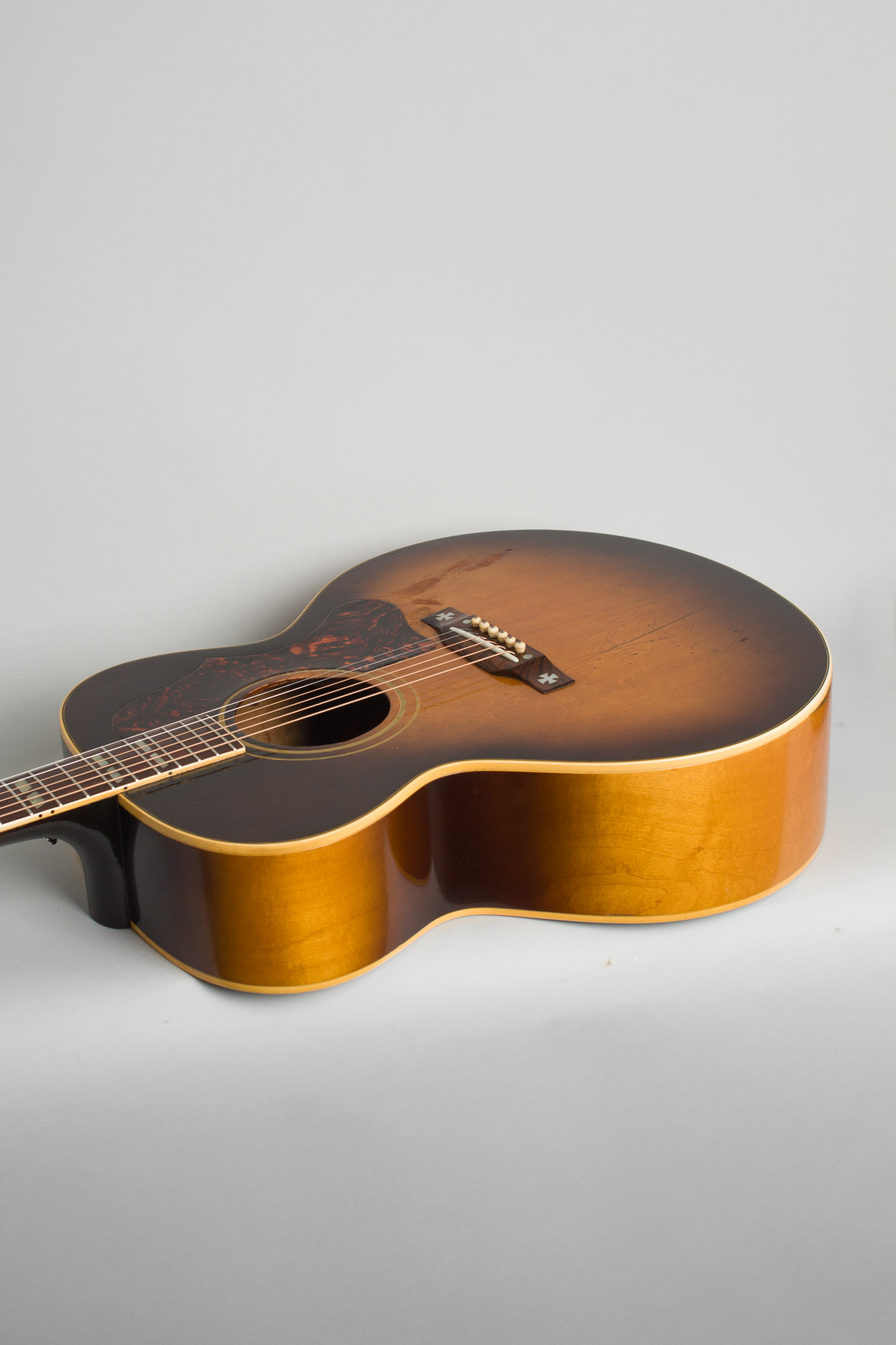
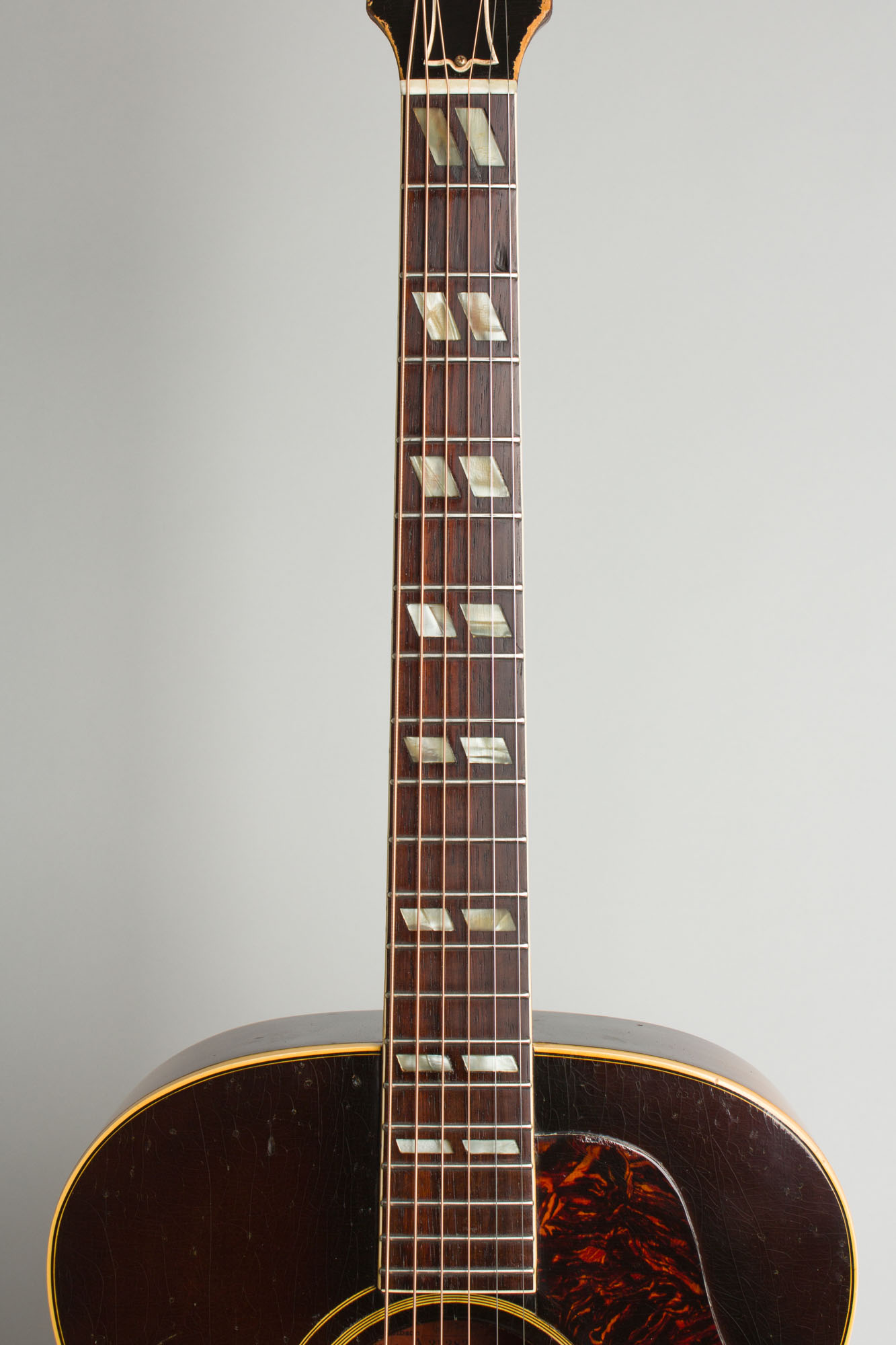
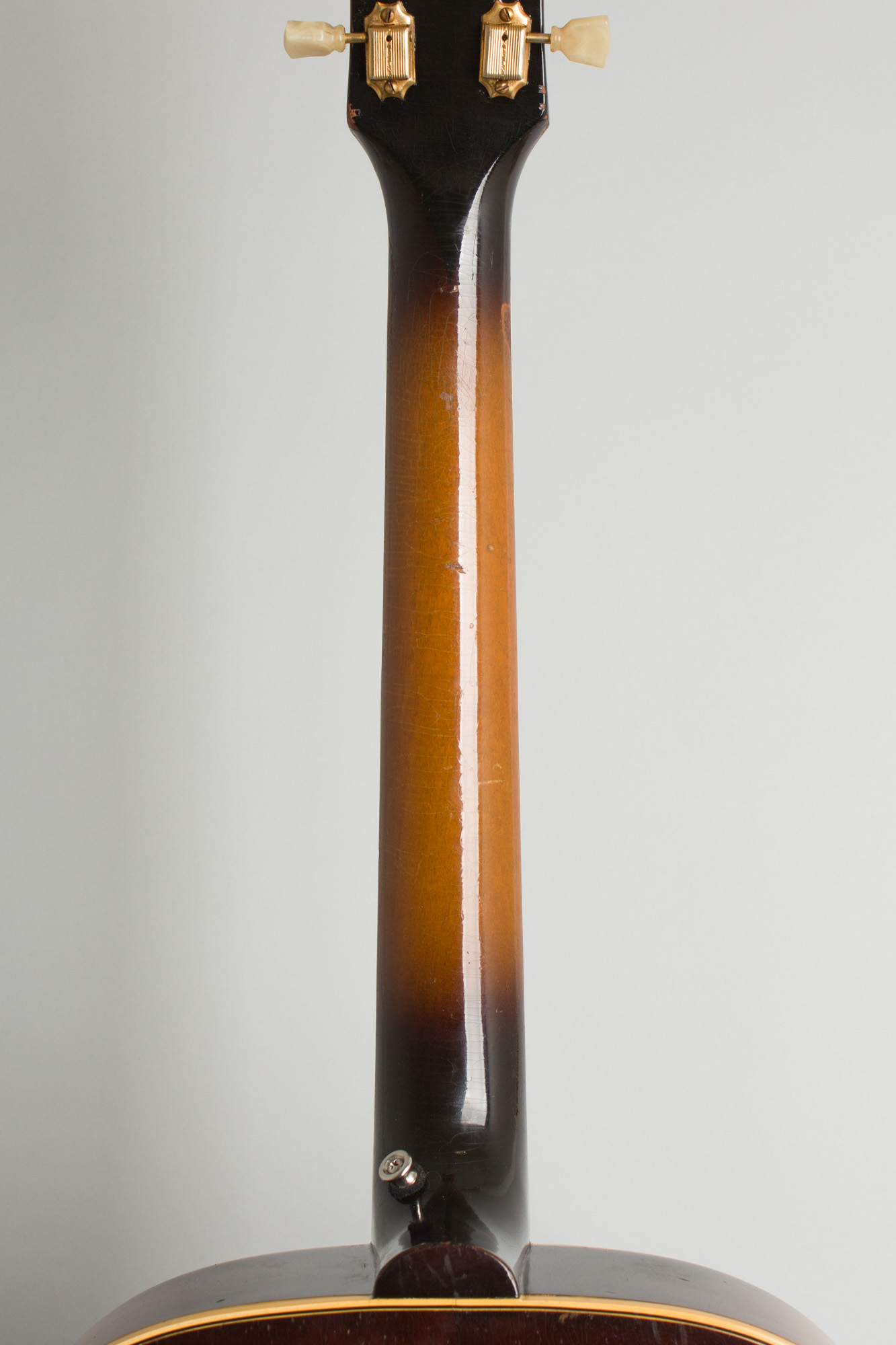
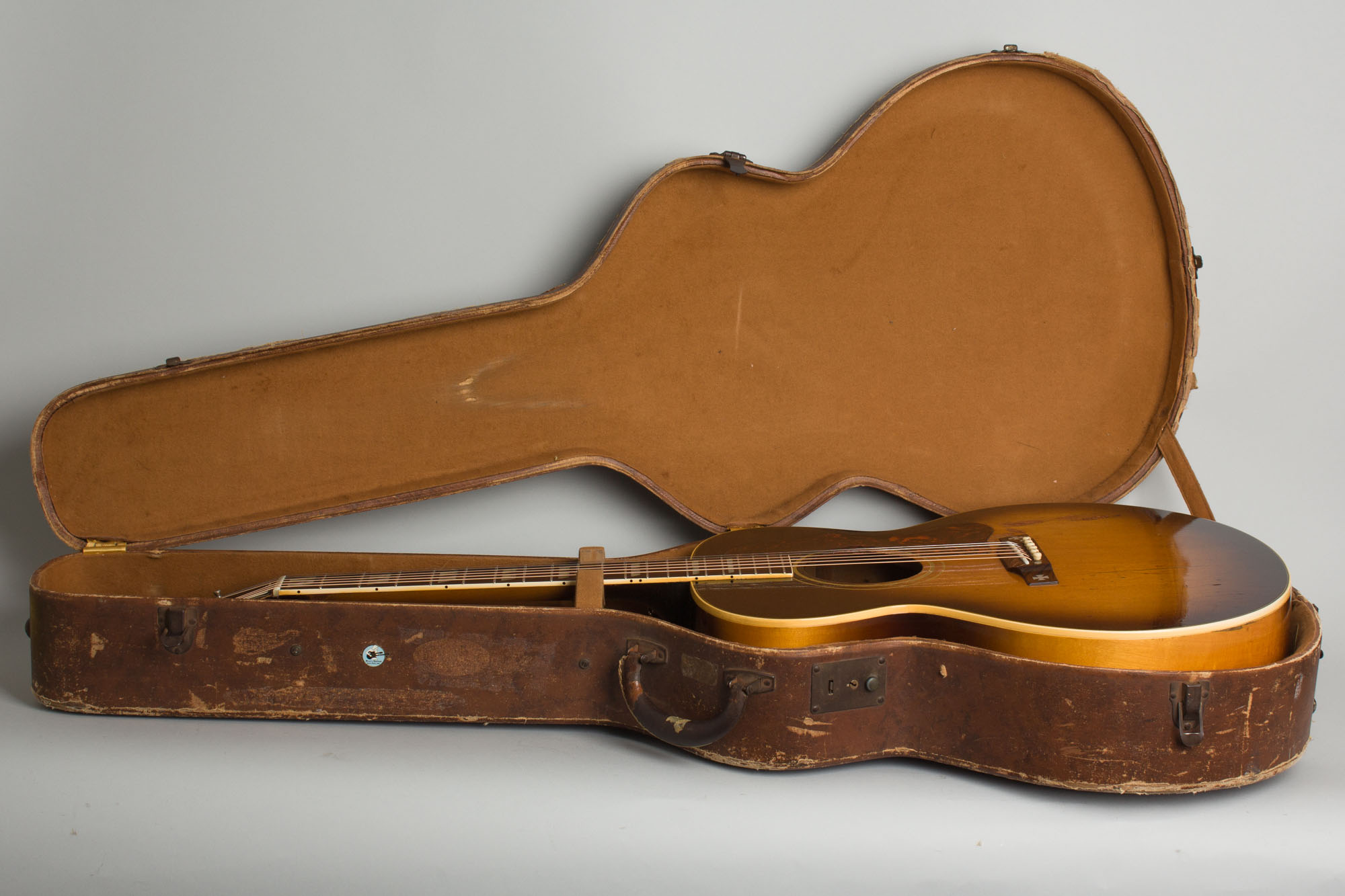
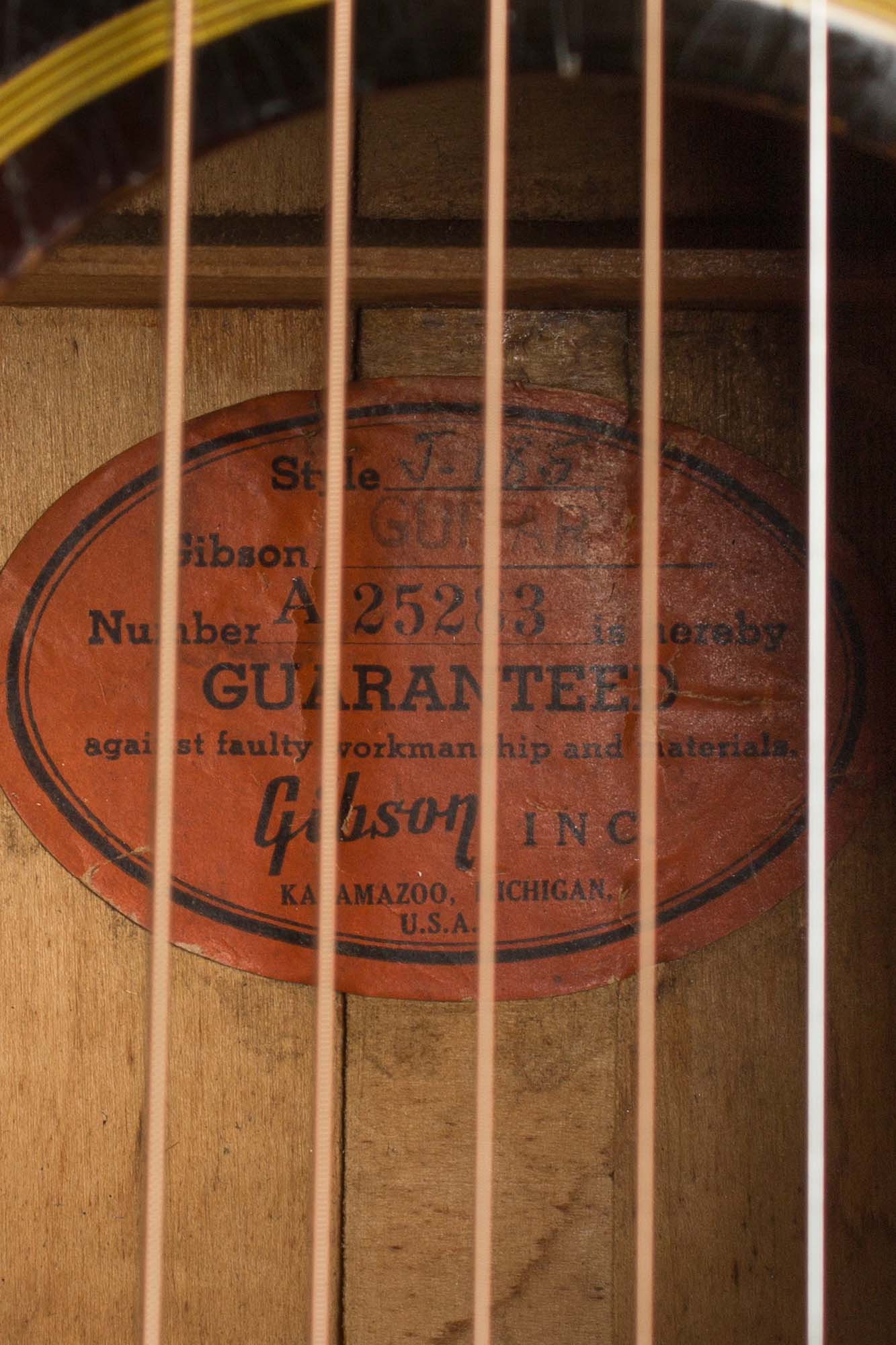
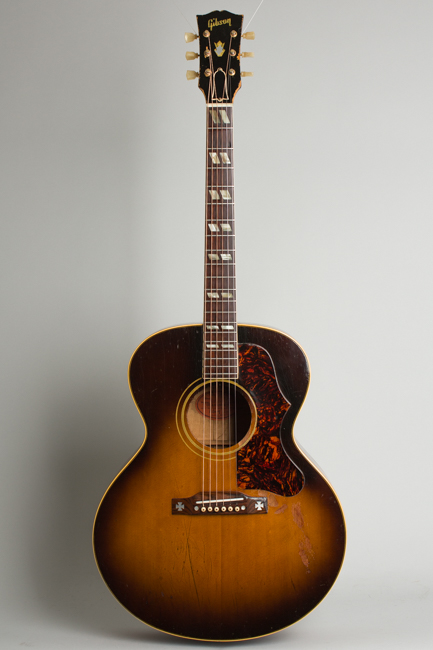
Gibson J-185 Model Flat Top Acoustic Guitar (1957), made in Kalamazoo, Michigan, serial # A-25283, sunburst lacquer finish, flame maple back and sides, spruce top; mahogany neck with rosewood fingerboard, original brown hard shell case.
This guitar shows evidence of some serious play time; take one strum and it's easy to say why! The original Gibson J-185 has gained a formidable reputation over the decades as one of the absolute finest of Kalamazoo-made flat-tops, and remains a unique design. To players of certain styles this is simply one of the best flat tops ever made. In production through most of the 1950s, this 16" narrow-waisted Jumbo model never established itself properly with players at the time and was not a big seller but has garnered a splendid reputation in retrospect.
This guitar has a serial number indicating it was shipped in March 1957, and a V-series Factory Order Number showing it was built late in the year before. It is one of only 648 total sunburst J-185's built in the entire decade of the 1950s, 71 of which left Kalamazoo in 1957, the next to last year of production. These numbers are very small for such a well-regarded guitar but this model suffered from the "Midline Blues". It seems most folks who could afford one went all out and bought a J-200, while the rest stuck with the familiar and much more affordable J-45 family. After another year of disappointing sales in 1958 the J-185 was discontinued.
The J-185 represents Gibson's second attempt to create a less expensive guitar to complement the top-of-the-line "King of the Flat-tops" SJ-200, the first being the virtually dead-on-arrival SJ-100 of 1939-41. This is basically a plainer 16" wide version of the more "yee-haw" 17" J-200. The slightly smaller body retains the same narrow-waisted shape and materials but has lighter construction resulting in a handier, much more responsive guitar. The cosmetics are a bit plainer, but still make for an impressive-looking instrument.
This J-185 has a subtly flamed maple back and straight-grained spruce top under a shaded sunburst finish. The top and back are triple-bound and the tortoise celluloid pickguard is the same shape as the J-200 but thinner, and not ornamented with engraving. The medium/slim round-profile one-piece mahogany neck is topped with a bound rosewood fingerboard sporting Gibson's classic double parallelogram inlay. The unbound headstock has a crown inlay on the face and mounts gold-plated Kluson Deluxe tuners with keystone buttons.
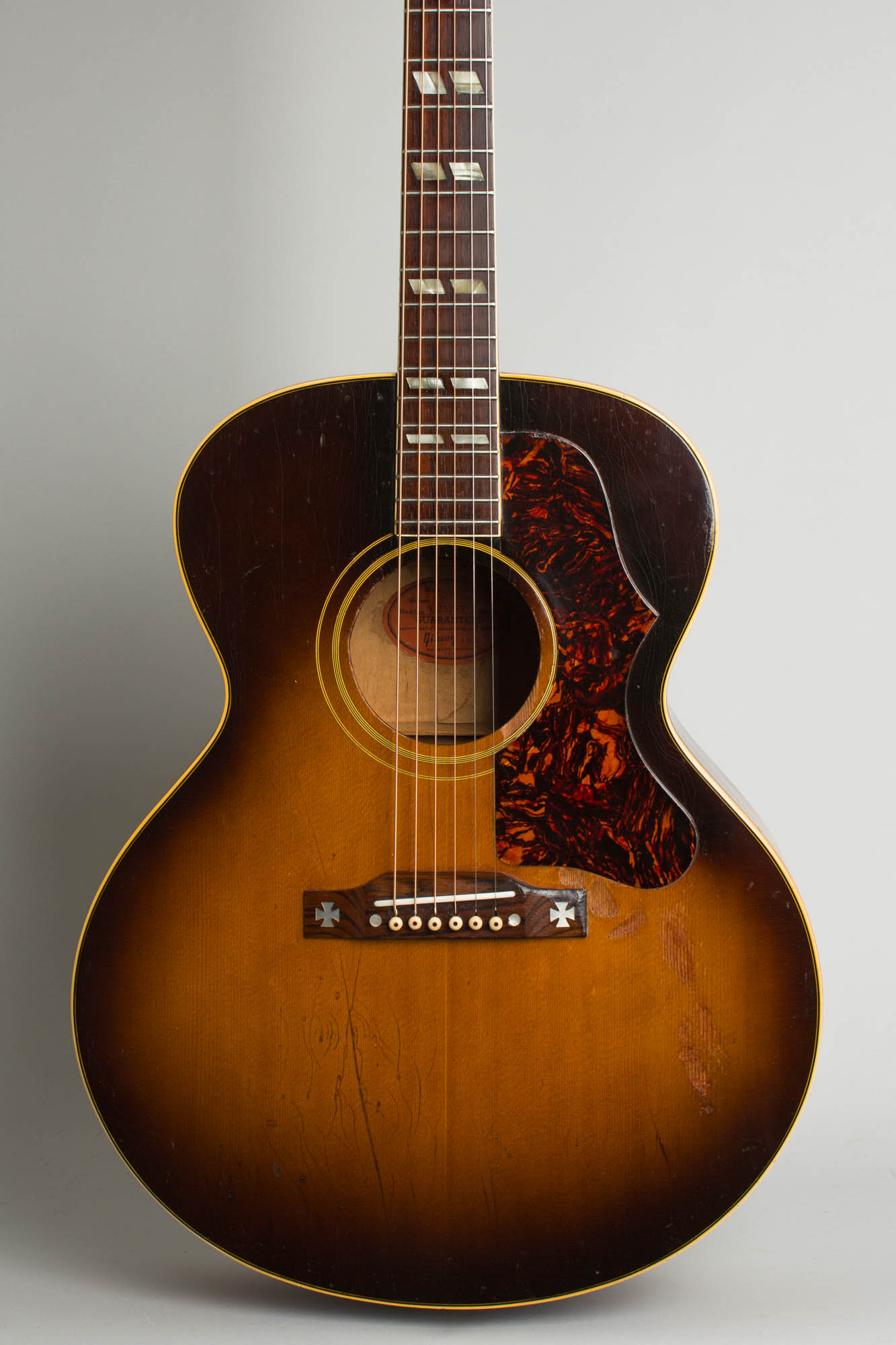
A unique feature of the J-185 is pearl Maltese crosses inlaid on the wings of the "belly-up" rosewood bridge, an attractive if eccentric cosmetic touch reserved for this model alone. Since the 1950s the J-185's sound, feel and relative rarity have made it the most sought-after post-war Gibson flat-top. A few name players are associated with the model in the 1960s, notably blues legend Skip James at the end of his career. A different blues connection made them much desired among fingerstyle players: Reverend Gary Davis favored Gibson's J-200 during the 1960s, but the lighter and more responsive J-185 is a preferred instrument among many who follow in the Reverend's style who do not play quite as hard as he did.
This well-played J-185 has had a lot of love strummed into it and is a superbly versatile guitar with an exceptionally smooth, rich, and powerfully expansive tone for a maple bodied instrument. This is not the cleanest one out there but is of those guitars that truly lives up to its considerable reputation, one of Gibson's greatest if originally seriously underappreciated flat tops.
Overall length is 41 in. (104.1 cm.), 16 1/16 in. (40.8 cm.) wide at lower bout, and 4 5/8 in. (11.7 cm.) in depth at side, taken at the end block. Scale length is 24 3/4 in. (629 mm.). Width of nut is 1 11/16 in. (43 mm.).
This is an original and fine-playing nearly 70 year old example of this much-desired instrument that has seen some serious play but remains structurally superb. The top shows some fairly heavy but oddly isolated wear while most of the rest of the guitar is comparatively clean. The original lacquer finish on the back and sides shows typical checking and some minor dings, dents and scrapes. The back of the neck shows some heavier checking and small but noticeable dings, dents and wear spots through the finish. The headstock has some checking and for some reason quite a bit of edge chipping.
The top has several areas of deeper wear through the lacquer into the wood, most heavily off the back edge of the pickguard with a fairly deep "Pinky Trench" between the back of the guard and front of the bridge, which is worn down noticeably on the forward bottom flange. A small section of the lower sound hole rim is also worn to the wood. The oddest top wear is several large spots worn to the wood in a loose line back below the bridge on the lower bass bout; it would be hard to imagine strumming going that far but something caused notable finish loss there. It looks like there is some ancient light overspray to the area of the top behind the bridge; this is not visible under blacklight but evident in a few filled dings and a couple of darker lines across the top.
Structurally the guitar is really excellent with no crack repairs evident, just a couple of small brace reglues. The pickguard edges have been reglued in a few spots. The neck has never been reset and the original bridge appears uncut but reglued long ago. The bone saddle is newer. The small maple bridge plate is original and in good shape; the bridge retaining bolts are intact. A 3-point contact pickup is attached under the bridgeplate with the output wired to an endpin mini-jack; these could be removed or replaced if desired.
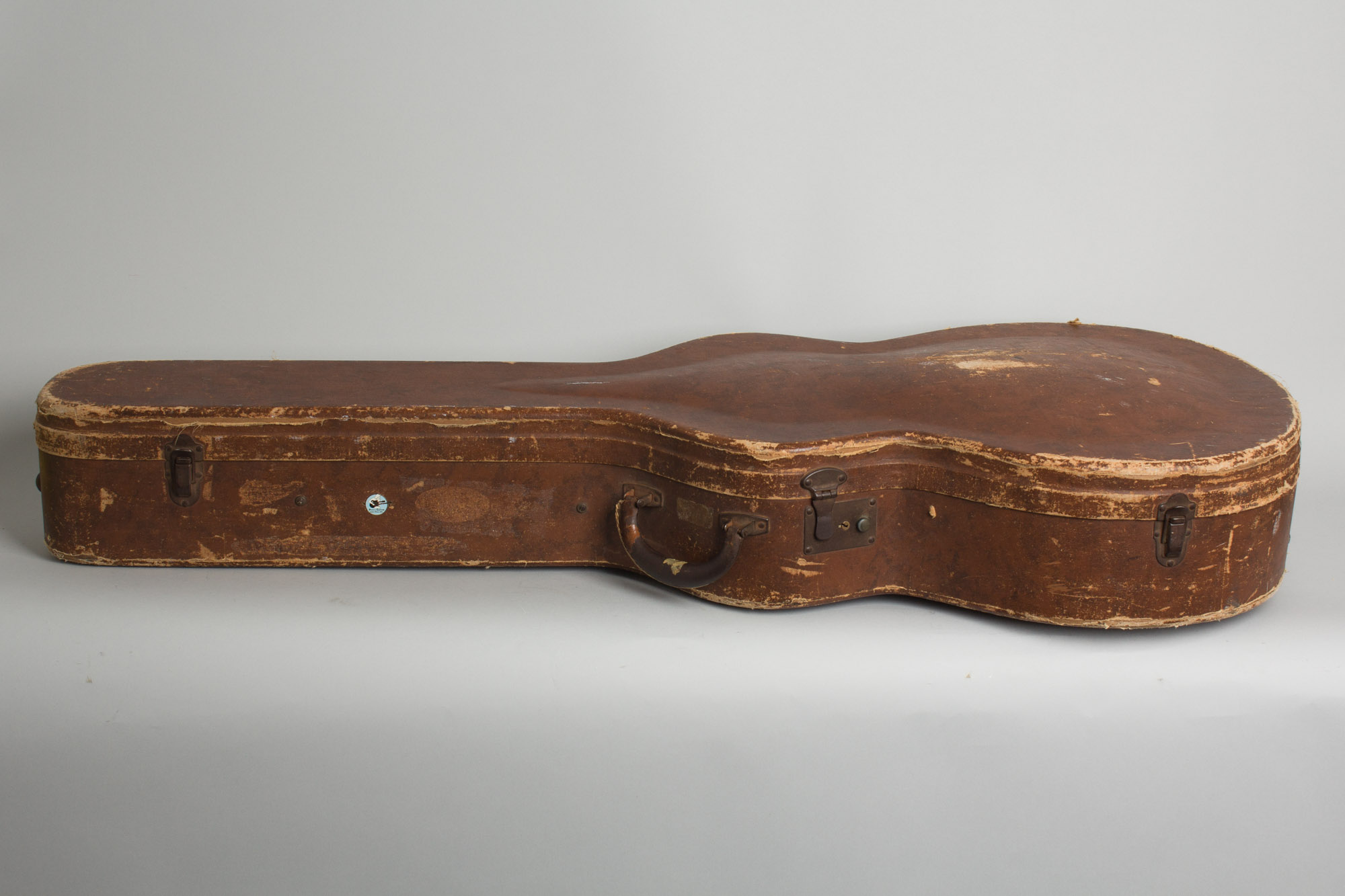
The guitar has been neatly refretted with a close match to the original fret wire showing little subsequent wear; there are a few fairly deep divots in the fingerboard in the first position under the higher strings. It nonetheless plays perfectly and sounds divine, both crisp and warm, powerful and very responsive especially for a large bodied guitar. It rests happily in the original brown Lifton HSC, worn as one might expect but still solid. This case has a small pin affixed to the side for Pete's Guitar shop, a notable dealer in the earlier days of vintage guitar culture. Overall Very Good + Condition.
This guitar shows evidence of some serious play time; take one strum and it's easy to say why! The original Gibson J-185 has gained a formidable reputation over the decades as one of the absolute finest of Kalamazoo-made flat-tops, and remains a unique design. To players of certain styles this is simply one of the best flat tops ever made. In production through most of the 1950s, this 16" narrow-waisted Jumbo model never established itself properly with players at the time and was not a big seller but has garnered a splendid reputation in retrospect.
This guitar has a serial number indicating it was shipped in March 1957, and a V-series Factory Order Number showing it was built late in the year before. It is one of only 648 total sunburst J-185's built in the entire decade of the 1950s, 71 of which left Kalamazoo in 1957, the next to last year of production. These numbers are very small for such a well-regarded guitar but this model suffered from the "Midline Blues". It seems most folks who could afford one went all out and bought a J-200, while the rest stuck with the familiar and much more affordable J-45 family. After another year of disappointing sales in 1958 the J-185 was discontinued.
The J-185 represents Gibson's second attempt to create a less expensive guitar to complement the top-of-the-line "King of the Flat-tops" SJ-200, the first being the virtually dead-on-arrival SJ-100 of 1939-41. This is basically a plainer 16" wide version of the more "yee-haw" 17" J-200. The slightly smaller body retains the same narrow-waisted shape and materials but has lighter construction resulting in a handier, much more responsive guitar. The cosmetics are a bit plainer, but still make for an impressive-looking instrument.
This J-185 has a subtly flamed maple back and straight-grained spruce top under a shaded sunburst finish. The top and back are triple-bound and the tortoise celluloid pickguard is the same shape as the J-200 but thinner, and not ornamented with engraving. The medium/slim round-profile one-piece mahogany neck is topped with a bound rosewood fingerboard sporting Gibson's classic double parallelogram inlay. The unbound headstock has a crown inlay on the face and mounts gold-plated Kluson Deluxe tuners with keystone buttons.
A unique feature of the J-185 is pearl Maltese crosses inlaid on the wings of the "belly-up" rosewood bridge, an attractive if eccentric cosmetic touch reserved for this model alone. Since the 1950s the J-185's sound, feel and relative rarity have made it the most sought-after post-war Gibson flat-top. A few name players are associated with the model in the 1960s, notably blues legend Skip James at the end of his career. A different blues connection made them much desired among fingerstyle players: Reverend Gary Davis favored Gibson's J-200 during the 1960s, but the lighter and more responsive J-185 is a preferred instrument among many who follow in the Reverend's style who do not play quite as hard as he did.
This well-played J-185 has had a lot of love strummed into it and is a superbly versatile guitar with an exceptionally smooth, rich, and powerfully expansive tone for a maple bodied instrument. This is not the cleanest one out there but is of those guitars that truly lives up to its considerable reputation, one of Gibson's greatest if originally seriously underappreciated flat tops.
Overall length is 41 in. (104.1 cm.), 16 1/16 in. (40.8 cm.) wide at lower bout, and 4 5/8 in. (11.7 cm.) in depth at side, taken at the end block. Scale length is 24 3/4 in. (629 mm.). Width of nut is 1 11/16 in. (43 mm.).
This is an original and fine-playing nearly 70 year old example of this much-desired instrument that has seen some serious play but remains structurally superb. The top shows some fairly heavy but oddly isolated wear while most of the rest of the guitar is comparatively clean. The original lacquer finish on the back and sides shows typical checking and some minor dings, dents and scrapes. The back of the neck shows some heavier checking and small but noticeable dings, dents and wear spots through the finish. The headstock has some checking and for some reason quite a bit of edge chipping.
The top has several areas of deeper wear through the lacquer into the wood, most heavily off the back edge of the pickguard with a fairly deep "Pinky Trench" between the back of the guard and front of the bridge, which is worn down noticeably on the forward bottom flange. A small section of the lower sound hole rim is also worn to the wood. The oddest top wear is several large spots worn to the wood in a loose line back below the bridge on the lower bass bout; it would be hard to imagine strumming going that far but something caused notable finish loss there. It looks like there is some ancient light overspray to the area of the top behind the bridge; this is not visible under blacklight but evident in a few filled dings and a couple of darker lines across the top.
Structurally the guitar is really excellent with no crack repairs evident, just a couple of small brace reglues. The pickguard edges have been reglued in a few spots. The neck has never been reset and the original bridge appears uncut but reglued long ago. The bone saddle is newer. The small maple bridge plate is original and in good shape; the bridge retaining bolts are intact. A 3-point contact pickup is attached under the bridgeplate with the output wired to an endpin mini-jack; these could be removed or replaced if desired.
The guitar has been neatly refretted with a close match to the original fret wire showing little subsequent wear; there are a few fairly deep divots in the fingerboard in the first position under the higher strings. It nonetheless plays perfectly and sounds divine, both crisp and warm, powerful and very responsive especially for a large bodied guitar. It rests happily in the original brown Lifton HSC, worn as one might expect but still solid. This case has a small pin affixed to the side for Pete's Guitar shop, a notable dealer in the earlier days of vintage guitar culture. Overall Very Good + Condition.