Gibson SG Special Solid Body Electric Guitar (1963)

LOADING IMAGES
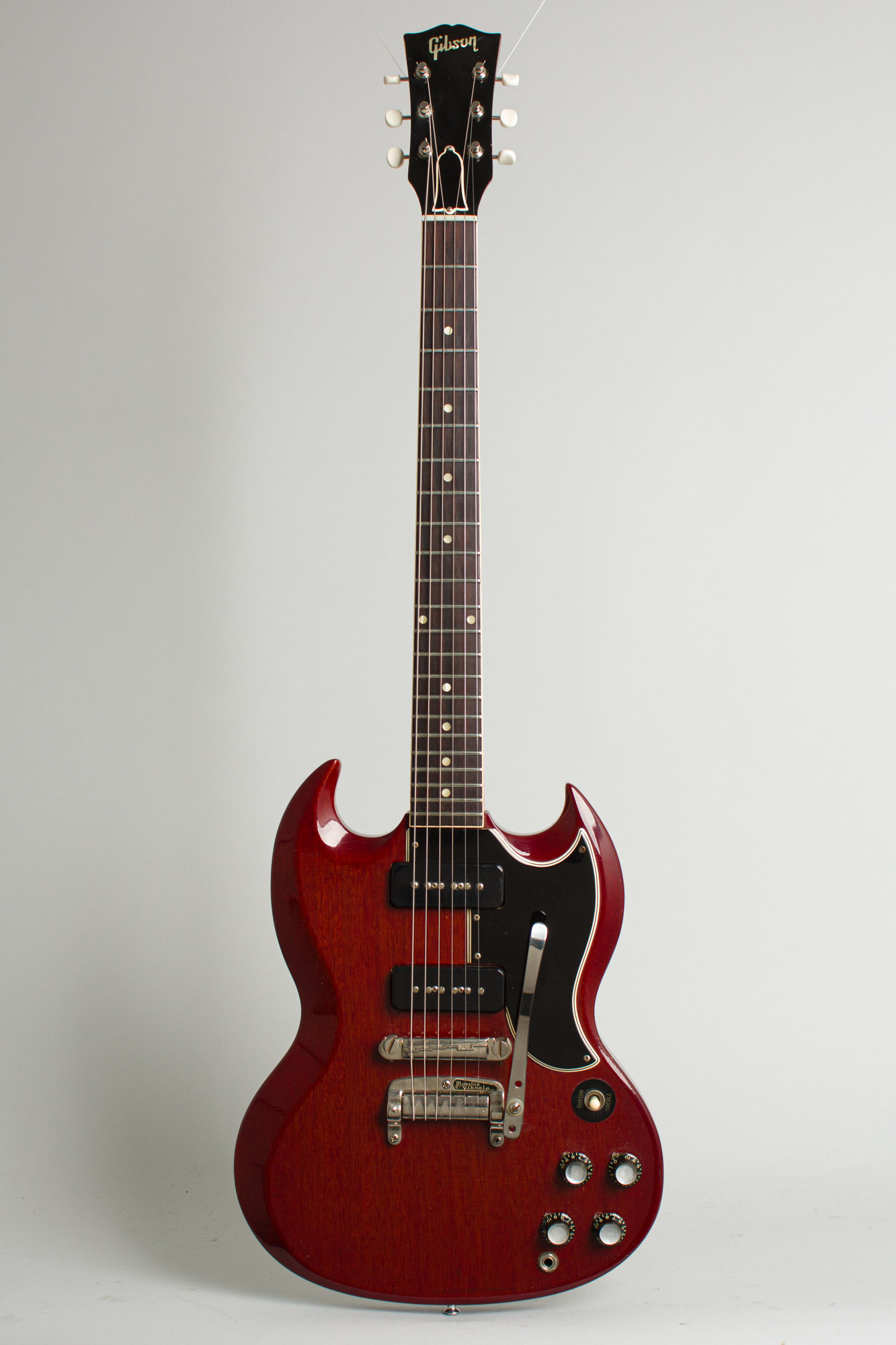
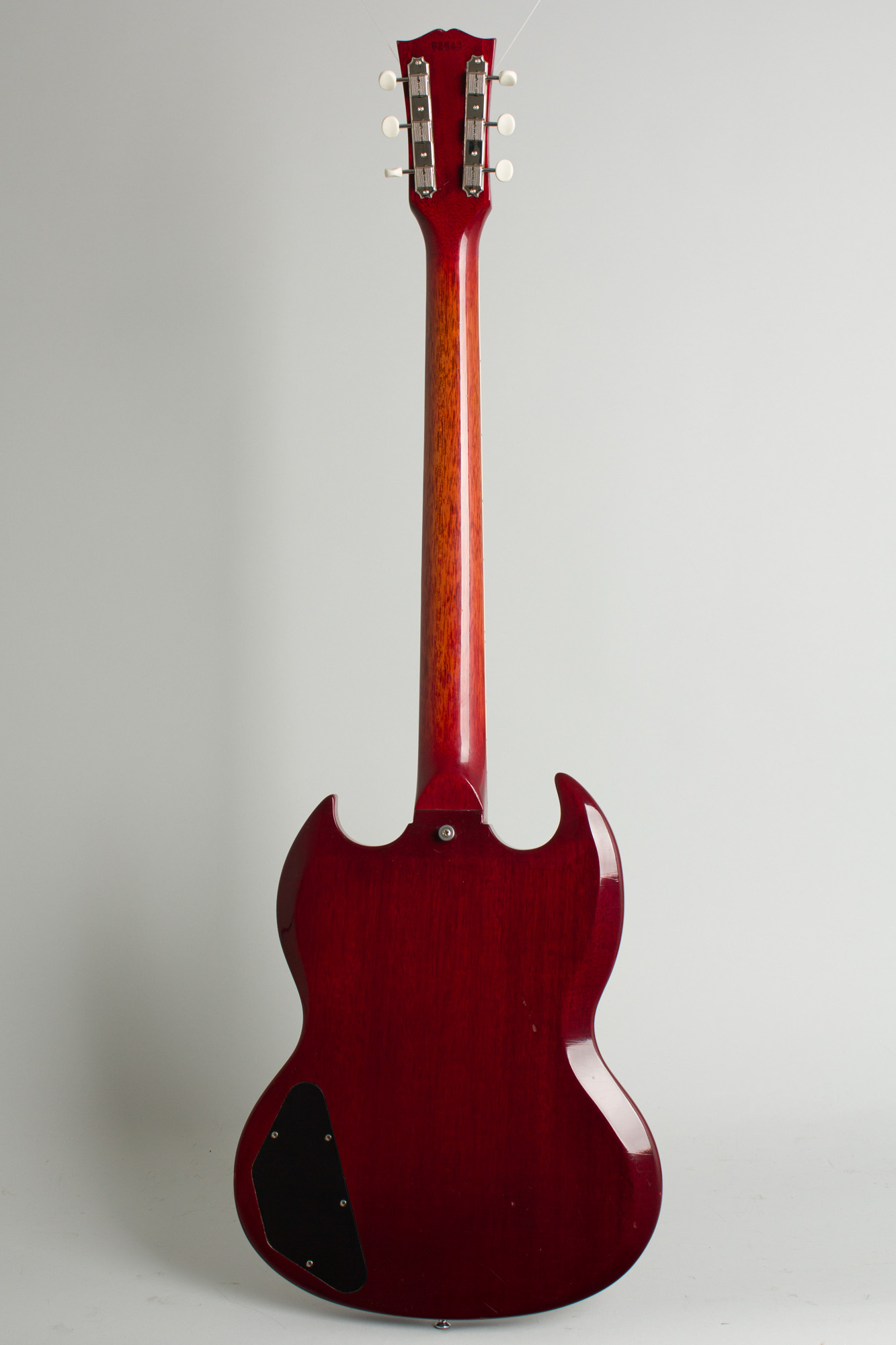
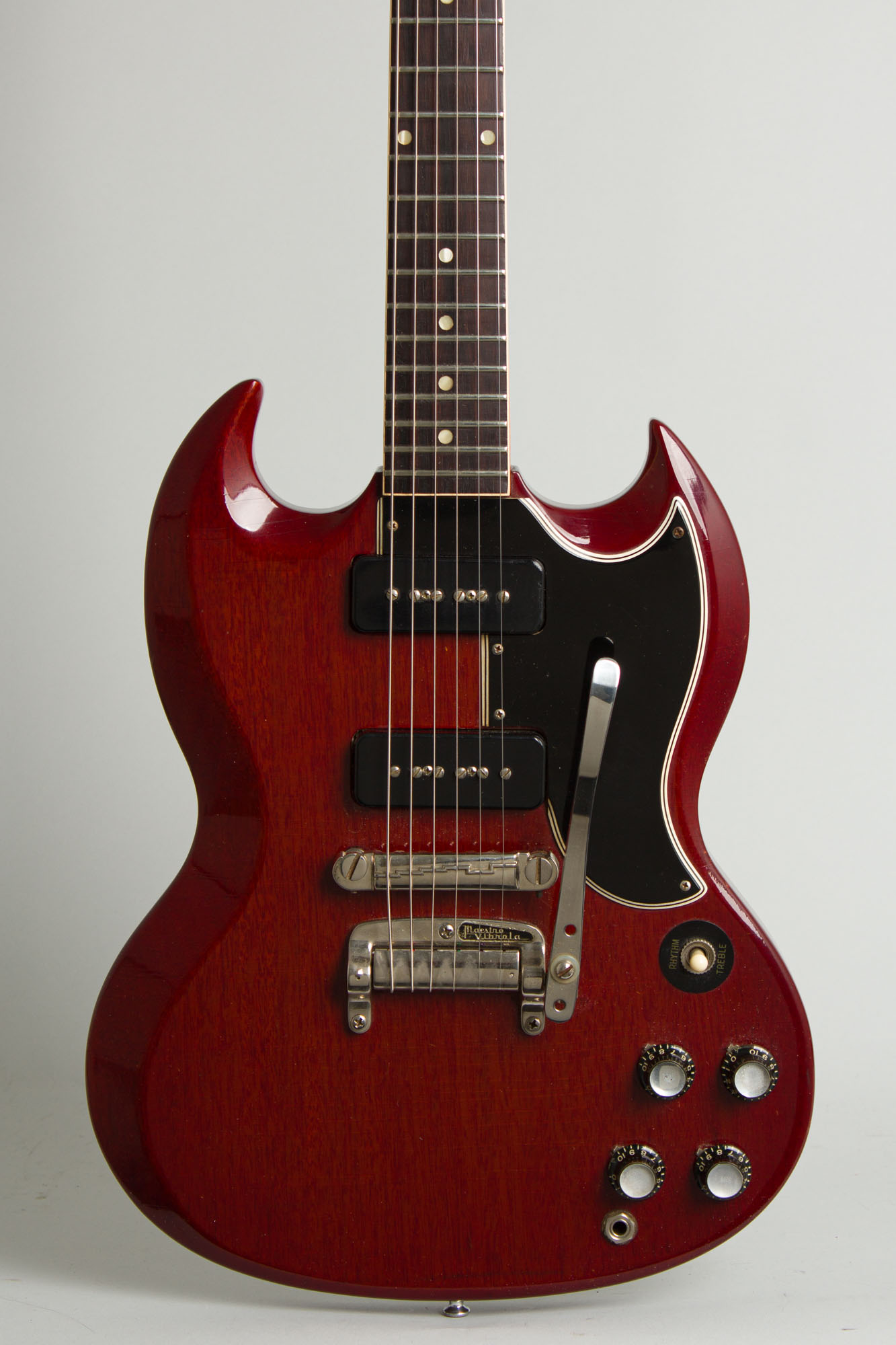
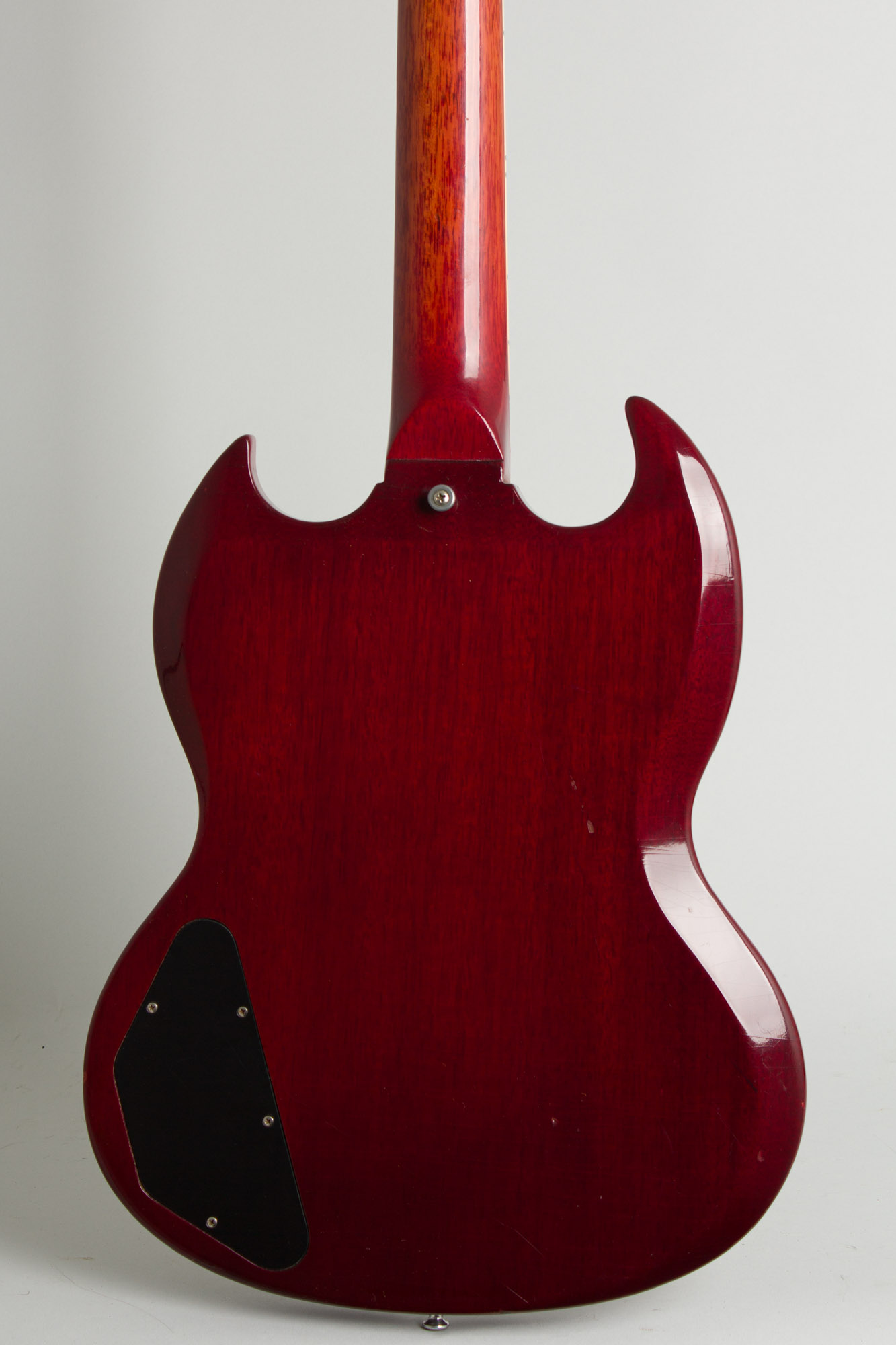
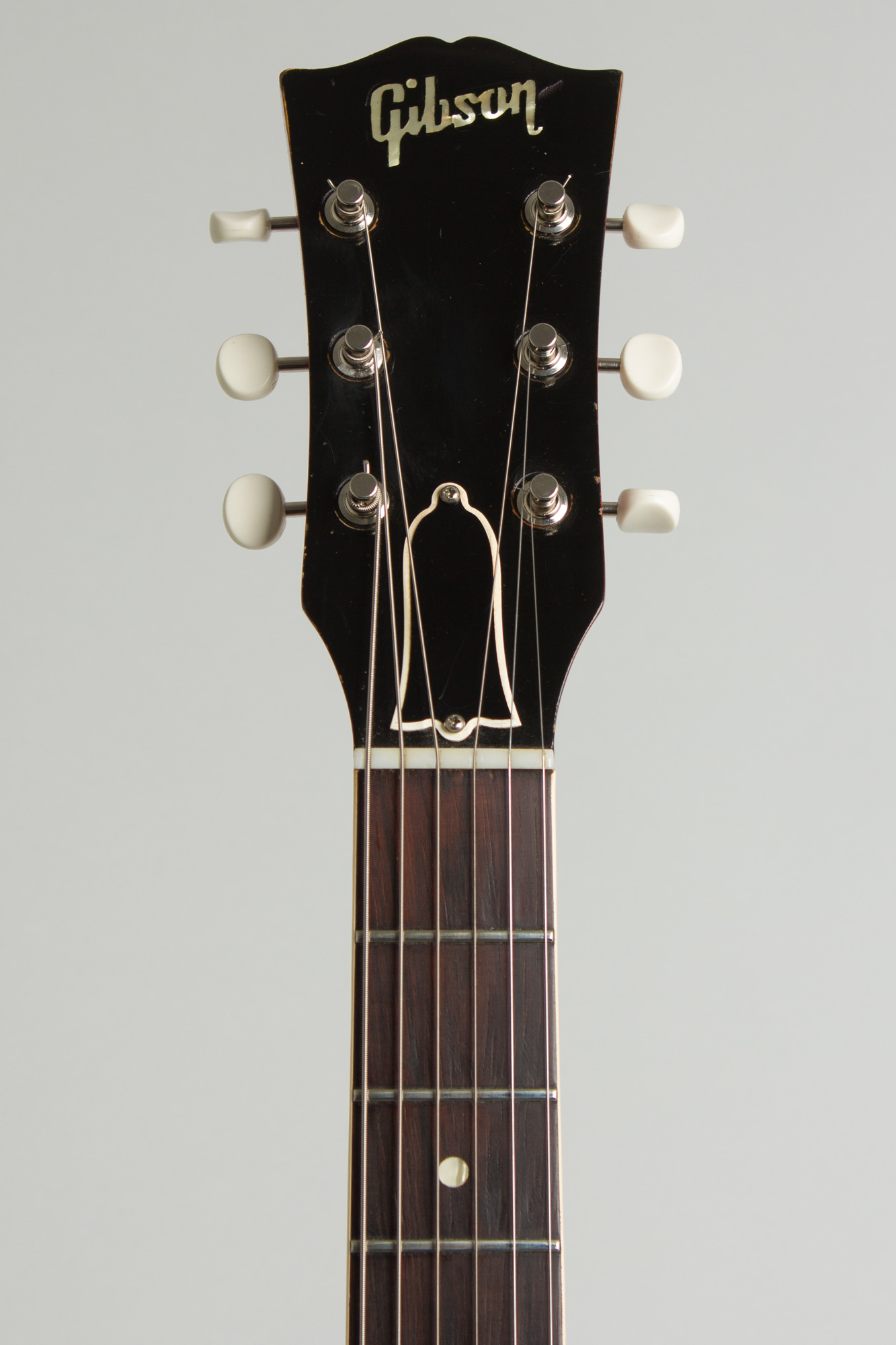
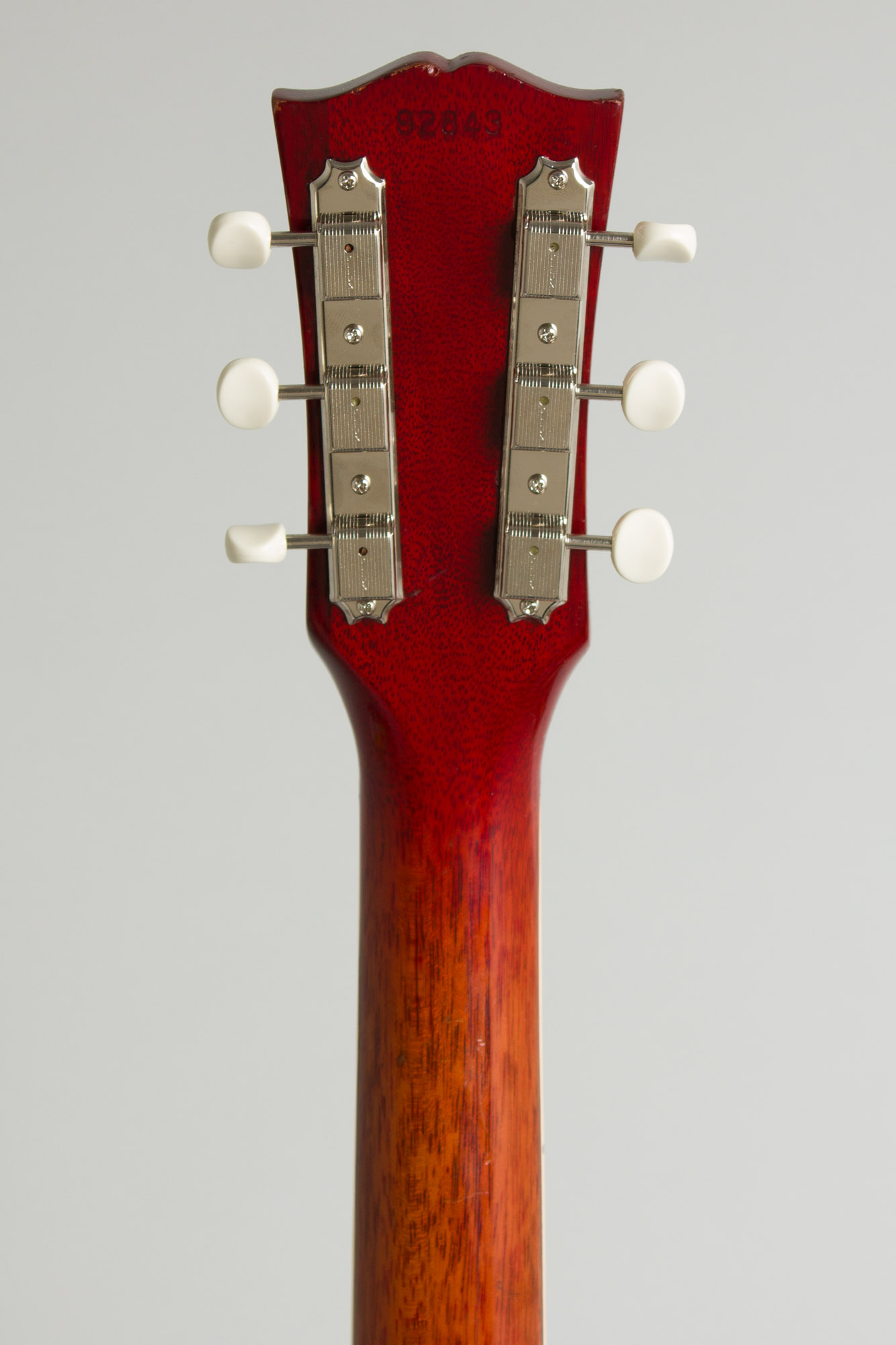
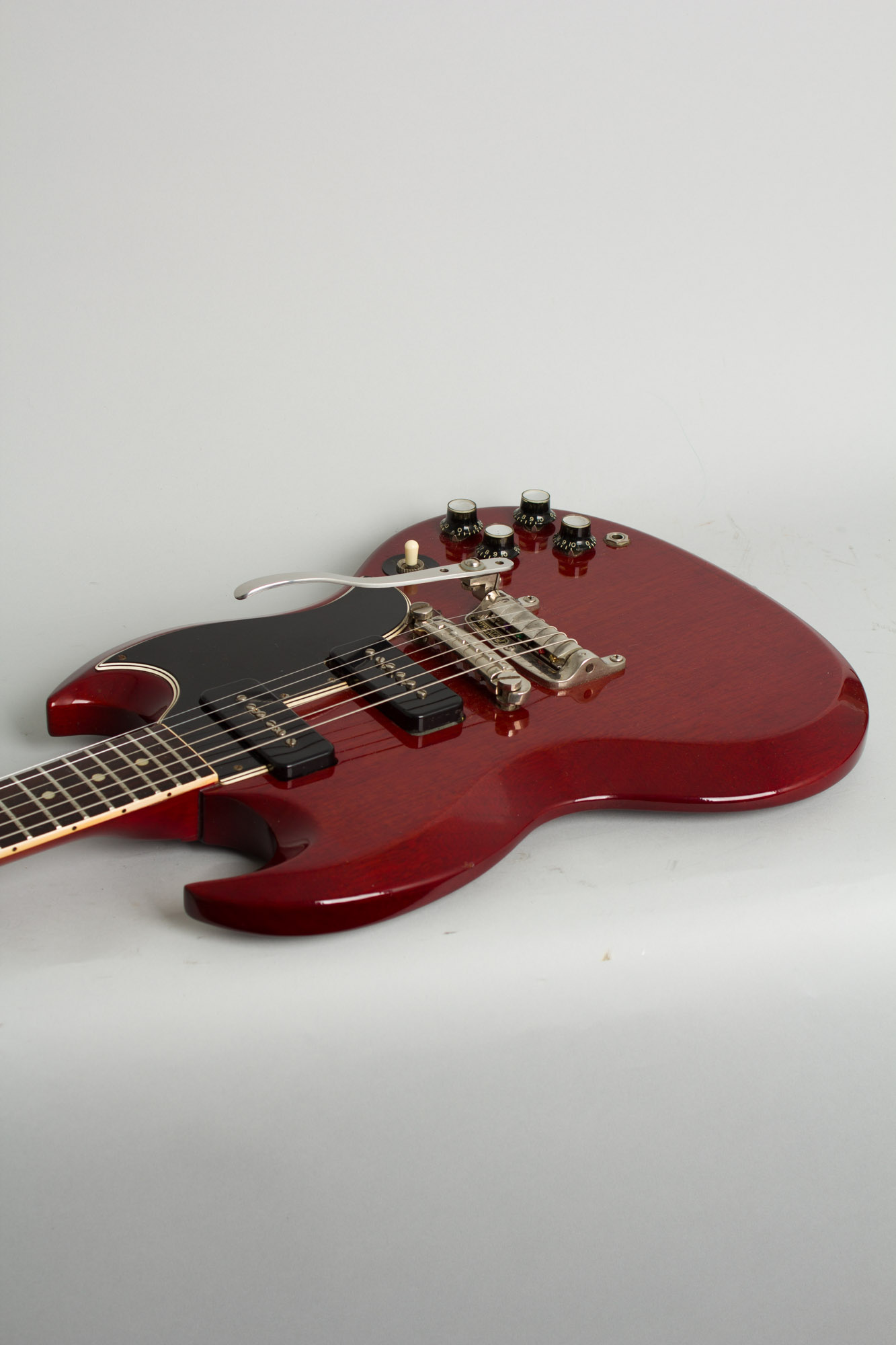
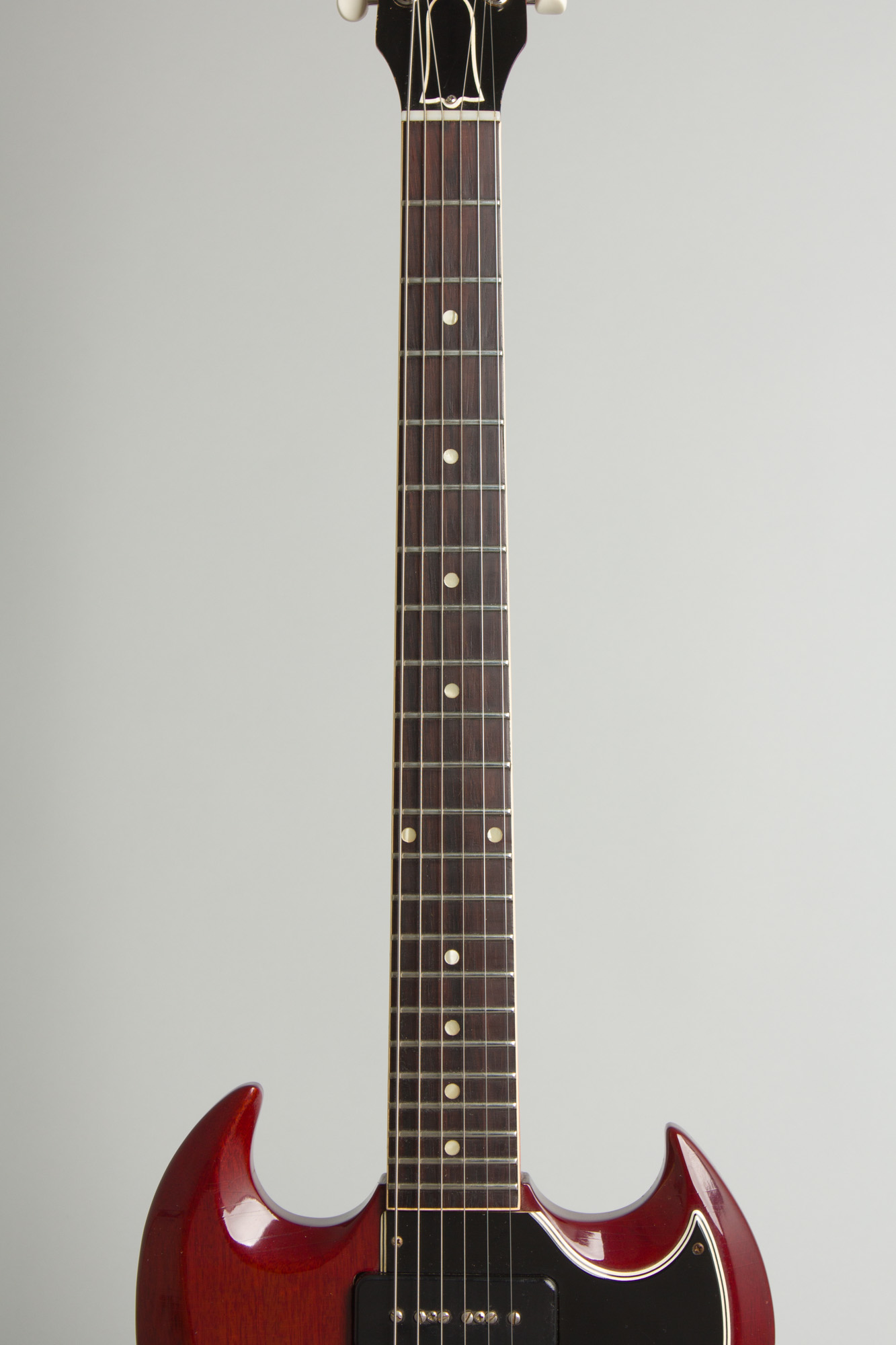
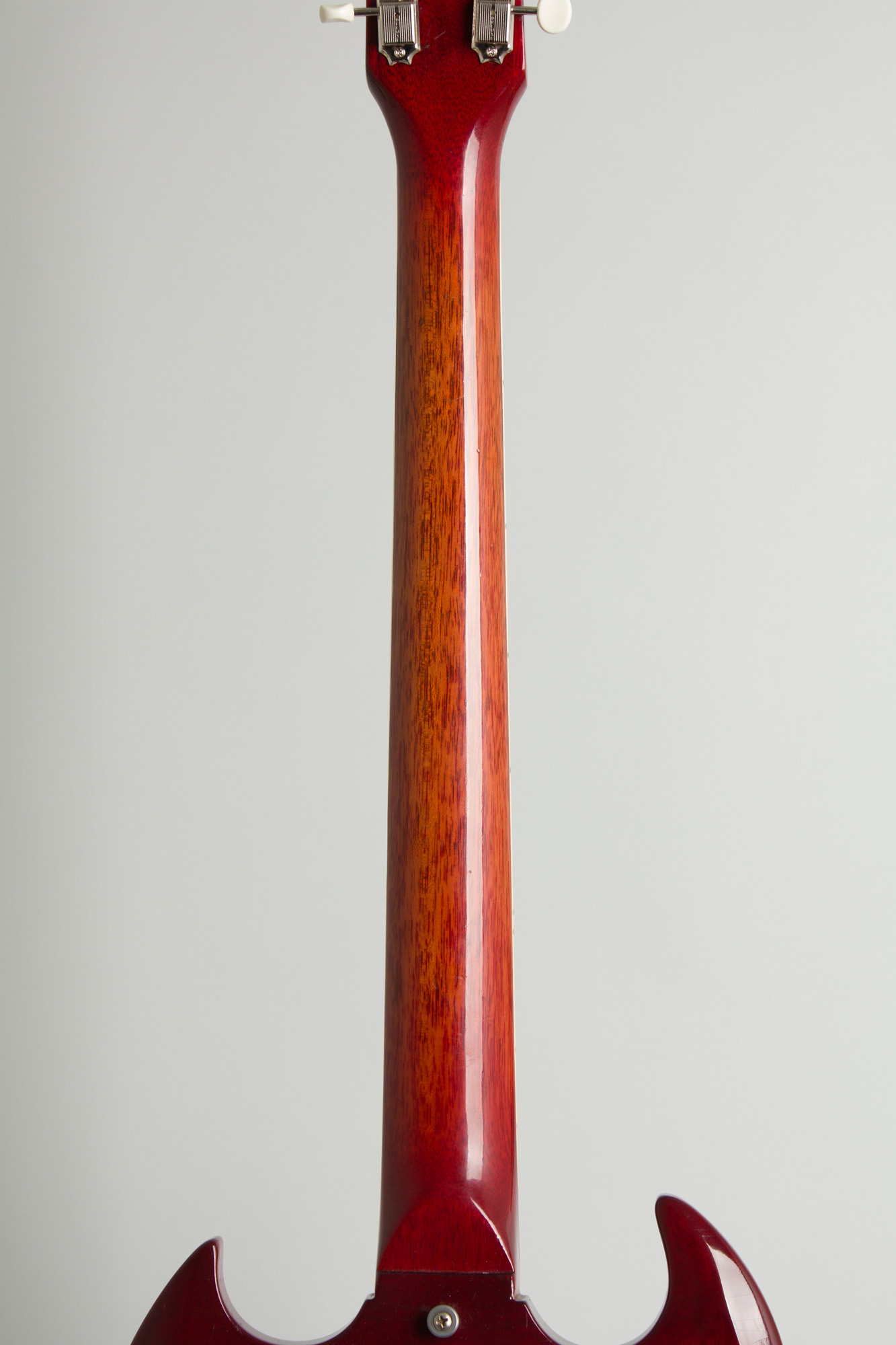
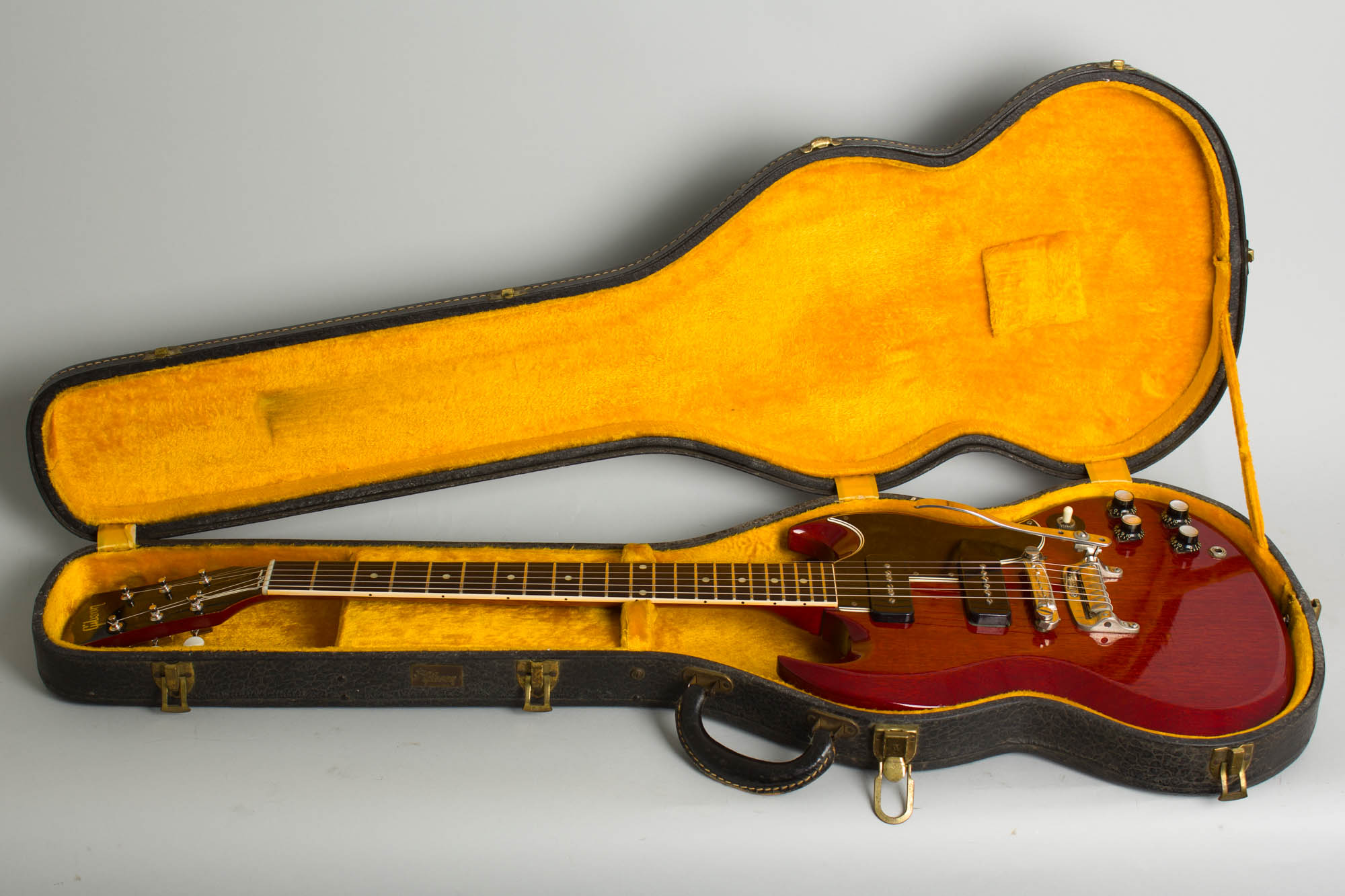
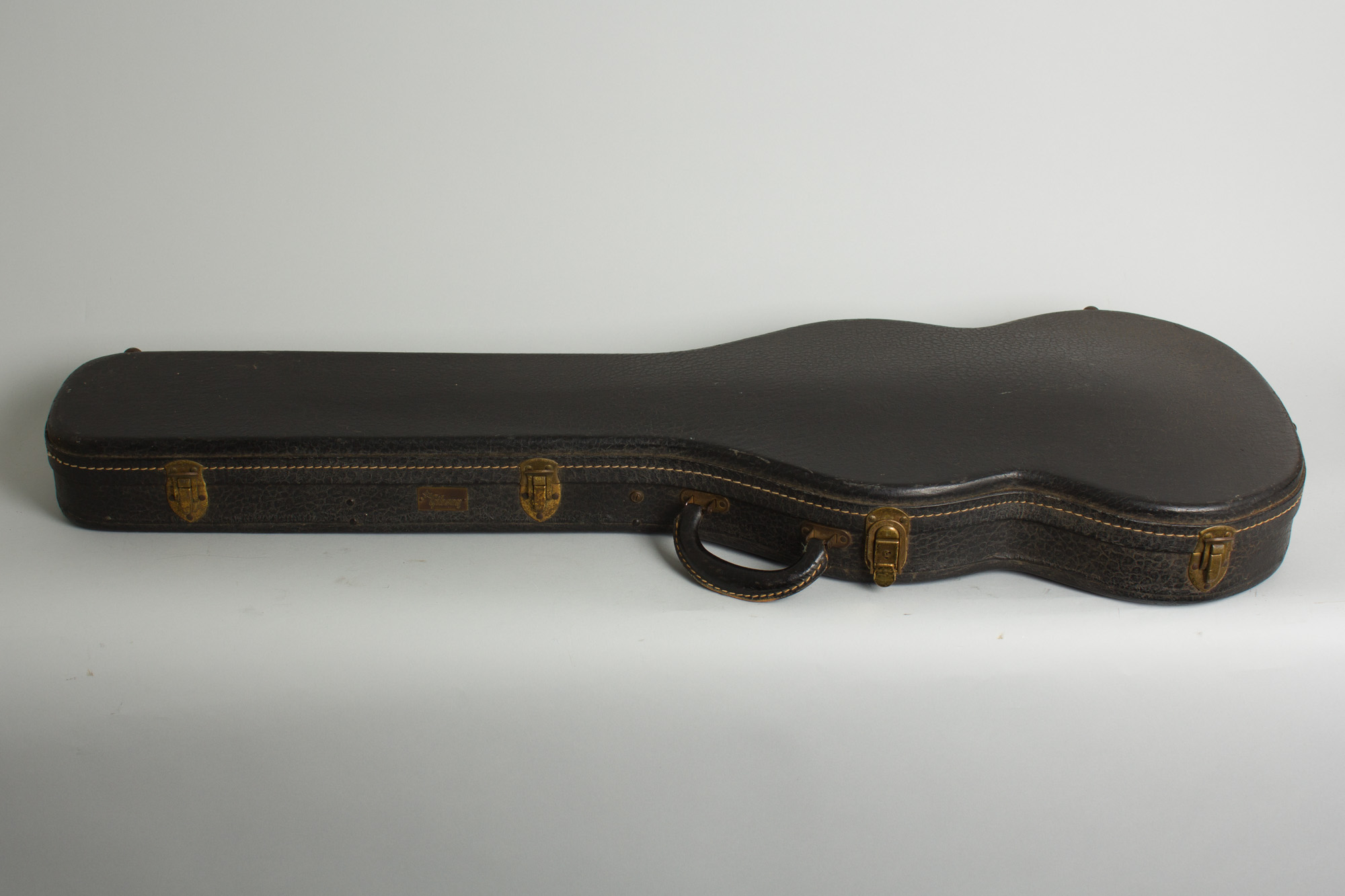
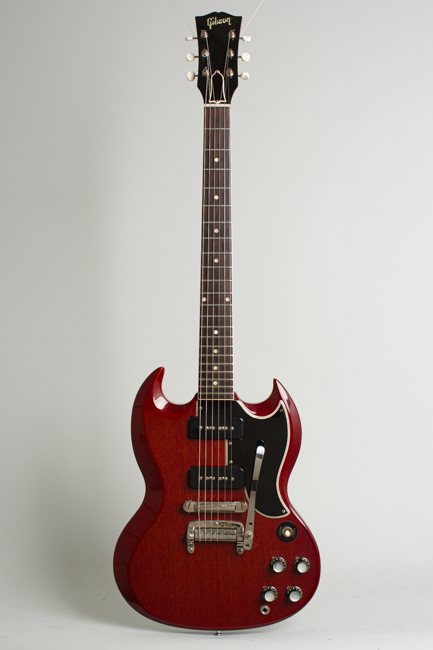
Gibson SG Special Model Solid Body Electric Guitar (1963), made in Kalamazoo, Michigan, serial # 92843, cherry lacquer finish, mahogany body and neck, rosewood fingerboard, original black hard shell case.
This lovely cherry-finished SG Special was built in early 1963, the third year for Gibson's new uber-sculpted solidbody production. It still seems amazing to this day to think the relatively staid design team at Kalamazoo came up with this dramatic, devilish shape in 1960, a radical development of the late '50s double-cutaway budget Les Pauls. It feels way ahead of its time, and the reaction from some conservative players (Les Paul himself among them) was not enthusiastic. No matter; younger Rock'n'Roll players took to them quickly enough, although it was not until the much louder later '60s that they became enshrined as an absolute classic.
For Gibson connoisseurs the early 1960s was the greatest period for the SG series; by 1966 Gibson modified the design to speed production with a large "swimming pool" route to the face of the body and pickups mounted directly to the top-spanning pickguard. This 1963 example has all the earlier features: the old-style stepped neck joint, pickups mounted directly to the body with a small pickguard and nickel plated hardware, all changed by 1965-66. If this was a Junior or a Standard, it would still be marked "Les Paul" but the Special had lost that designation some years earlier.
An item of note on this guitar is the C-profile neck is *slightly* slimmer at the nut than generally expected spec on SG's until 1965, coming in at just a hair wider than 1 5/8"'. While the prevailing theory is the older 1 11/16" nut was ubiquitous until 1965 we have had numerous other earlier Gibsons that deviate from this. The neck itself has a transitional feel between the very flat 1960-62 profile and the rounder, deeper carve common in 1964. It tapers towards the body with the profile becoming chunkier nearer the heel with a great solid feel.
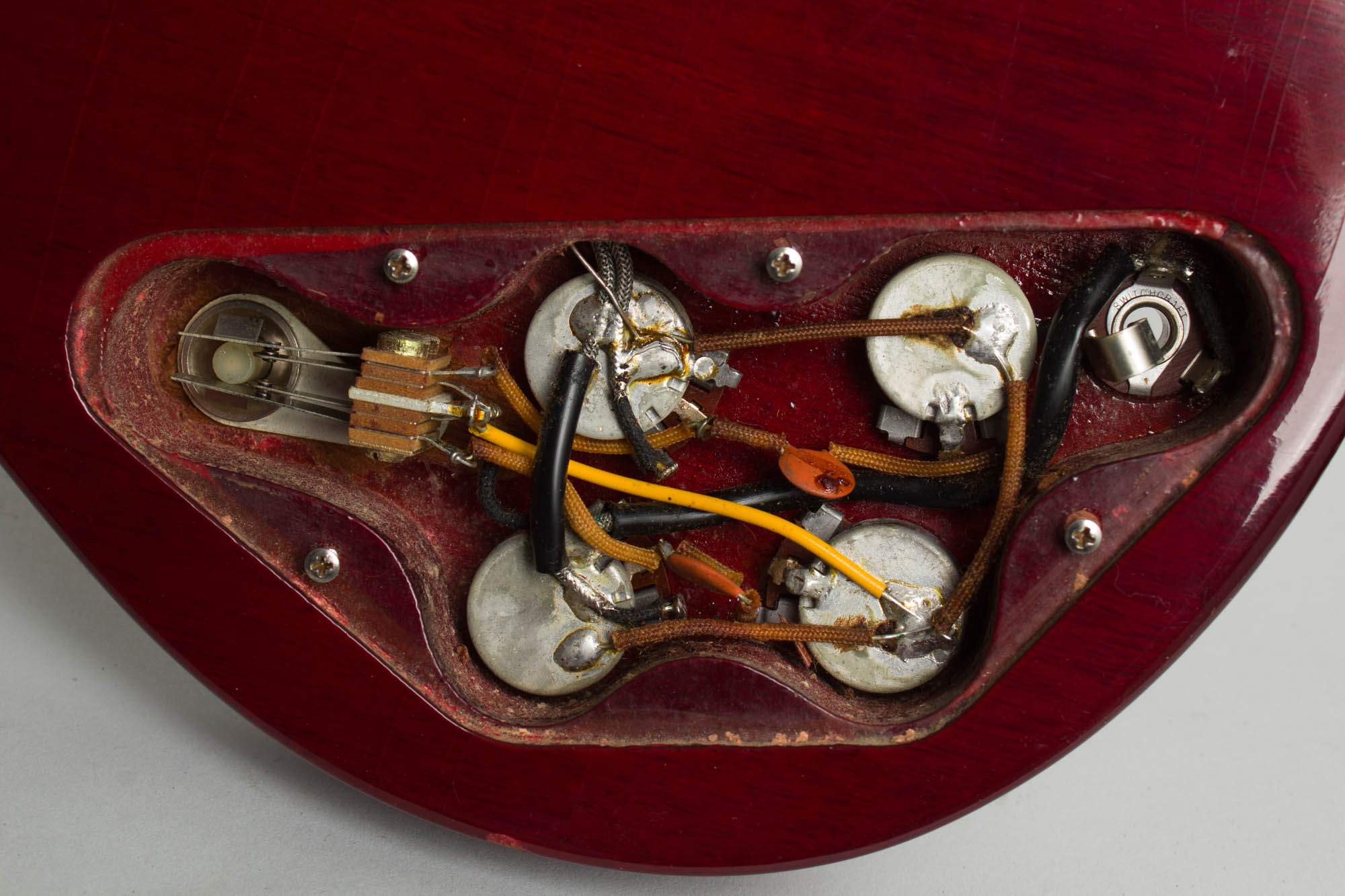
The pots are all original with a visible date code from the 8th week of 1963. This guitar mounts two plastic covered "soapbar" P-90 pickups, early 60's capped plastic knobs and an Epiphone style Maestro Vibrola with the "spoon" handle intact, an extra-cost option that only appeared on SG's right around this time. The neck angle is excellent (especially compared with some later '60s examples) and the vibrato works well, if one chooses to use it. In early 1963 this guitar listed for $210, plus $47.50 for the #0537 "Faultless" hardshell case, which many buyers did not spring for, but this one did. Most Specials left the shops in much cheaper ($15) chipboard cases. The Maestro Vibrato added another $17.50 to the bill.
The SG Special was and remains a very popular guitar, with good reason. This one quite handy, around average weight for the period at 6.75 pounds (the vibrato adds a bit of that) and handles beautifully. Only 1017 of these slim cherry beauties were shipped in 1963, and not too many will have survived this cleanly. The model has long been regarded as a classic Gibson solidbody; anyone who has seen live footage of the Who or Santana in the late '60s knows what these light and responsive SG Specials are capable of! It is simply one of the classic rock guitars of that or any era, more versatile than many think with a "special" sound unto themselves!
Overall length is 40 in. (101.6 cm.), 13 1/4 in. (33.6 cm.) wide at lower bout, and 1 1/4 in. (3.2 cm.) deep. Scale length is 24 3/4 in. (629 mm.). Width of nut is 1 5/8 in. (41 mm.)., 6.75 lbs.
This 60+ year old SG is generally clean overall, a superb player with some minor restoration. The original cherry lacquer finish is nicely preserved with typical light checking, minor scuffing, dings and dents but much less fade than many, retaining a nice deep rich red color over nearly all of the instrument. The back of the neck is lightened a bit from hand contact as is typical.
There NO cracks or breaks to the wood, but an old overspray on the back of the body around heel indicates the neck likely came loose in the pocket at one point, which is not uncommon on earlier '60s SGs. There was a small chip on the bass side lip of the pocket which is under this finish, and when viewed from the top with the pickguard removed the neck/body seam is visible on the treble side of the tenon. This is now set in completely solidly, a well done repair that is generally inconspicuous.
The tuners have been restored to modern repros of the original strip Klusons from a prior Groverization; small pressure rings are visible on the face of the headstock around the bushings but there are no errant screw holes. All other hardware remains original and clean except probably the trem arm, which is the period correct piece but chrome instead of nickel plated. The original frets have been polished out with little subsequent wear and this is a super solid SG and a really fine player, still housed in the original yellow-lined deluxe black hard shell case which also remains in very nice shape. Overall Excellent - Condition.
This lovely cherry-finished SG Special was built in early 1963, the third year for Gibson's new uber-sculpted solidbody production. It still seems amazing to this day to think the relatively staid design team at Kalamazoo came up with this dramatic, devilish shape in 1960, a radical development of the late '50s double-cutaway budget Les Pauls. It feels way ahead of its time, and the reaction from some conservative players (Les Paul himself among them) was not enthusiastic. No matter; younger Rock'n'Roll players took to them quickly enough, although it was not until the much louder later '60s that they became enshrined as an absolute classic.
For Gibson connoisseurs the early 1960s was the greatest period for the SG series; by 1966 Gibson modified the design to speed production with a large "swimming pool" route to the face of the body and pickups mounted directly to the top-spanning pickguard. This 1963 example has all the earlier features: the old-style stepped neck joint, pickups mounted directly to the body with a small pickguard and nickel plated hardware, all changed by 1965-66. If this was a Junior or a Standard, it would still be marked "Les Paul" but the Special had lost that designation some years earlier.
An item of note on this guitar is the C-profile neck is *slightly* slimmer at the nut than generally expected spec on SG's until 1965, coming in at just a hair wider than 1 5/8"'. While the prevailing theory is the older 1 11/16" nut was ubiquitous until 1965 we have had numerous other earlier Gibsons that deviate from this. The neck itself has a transitional feel between the very flat 1960-62 profile and the rounder, deeper carve common in 1964. It tapers towards the body with the profile becoming chunkier nearer the heel with a great solid feel.
The pots are all original with a visible date code from the 8th week of 1963. This guitar mounts two plastic covered "soapbar" P-90 pickups, early 60's capped plastic knobs and an Epiphone style Maestro Vibrola with the "spoon" handle intact, an extra-cost option that only appeared on SG's right around this time. The neck angle is excellent (especially compared with some later '60s examples) and the vibrato works well, if one chooses to use it. In early 1963 this guitar listed for $210, plus $47.50 for the #0537 "Faultless" hardshell case, which many buyers did not spring for, but this one did. Most Specials left the shops in much cheaper ($15) chipboard cases. The Maestro Vibrato added another $17.50 to the bill.
The SG Special was and remains a very popular guitar, with good reason. This one quite handy, around average weight for the period at 6.75 pounds (the vibrato adds a bit of that) and handles beautifully. Only 1017 of these slim cherry beauties were shipped in 1963, and not too many will have survived this cleanly. The model has long been regarded as a classic Gibson solidbody; anyone who has seen live footage of the Who or Santana in the late '60s knows what these light and responsive SG Specials are capable of! It is simply one of the classic rock guitars of that or any era, more versatile than many think with a "special" sound unto themselves!
Overall length is 40 in. (101.6 cm.), 13 1/4 in. (33.6 cm.) wide at lower bout, and 1 1/4 in. (3.2 cm.) deep. Scale length is 24 3/4 in. (629 mm.). Width of nut is 1 5/8 in. (41 mm.)., 6.75 lbs.
This 60+ year old SG is generally clean overall, a superb player with some minor restoration. The original cherry lacquer finish is nicely preserved with typical light checking, minor scuffing, dings and dents but much less fade than many, retaining a nice deep rich red color over nearly all of the instrument. The back of the neck is lightened a bit from hand contact as is typical.
There NO cracks or breaks to the wood, but an old overspray on the back of the body around heel indicates the neck likely came loose in the pocket at one point, which is not uncommon on earlier '60s SGs. There was a small chip on the bass side lip of the pocket which is under this finish, and when viewed from the top with the pickguard removed the neck/body seam is visible on the treble side of the tenon. This is now set in completely solidly, a well done repair that is generally inconspicuous.
The tuners have been restored to modern repros of the original strip Klusons from a prior Groverization; small pressure rings are visible on the face of the headstock around the bushings but there are no errant screw holes. All other hardware remains original and clean except probably the trem arm, which is the period correct piece but chrome instead of nickel plated. The original frets have been polished out with little subsequent wear and this is a super solid SG and a really fine player, still housed in the original yellow-lined deluxe black hard shell case which also remains in very nice shape. Overall Excellent - Condition.