Gibson L-7 Arch Top Acoustic Guitar (1946-7)

LOADING IMAGES
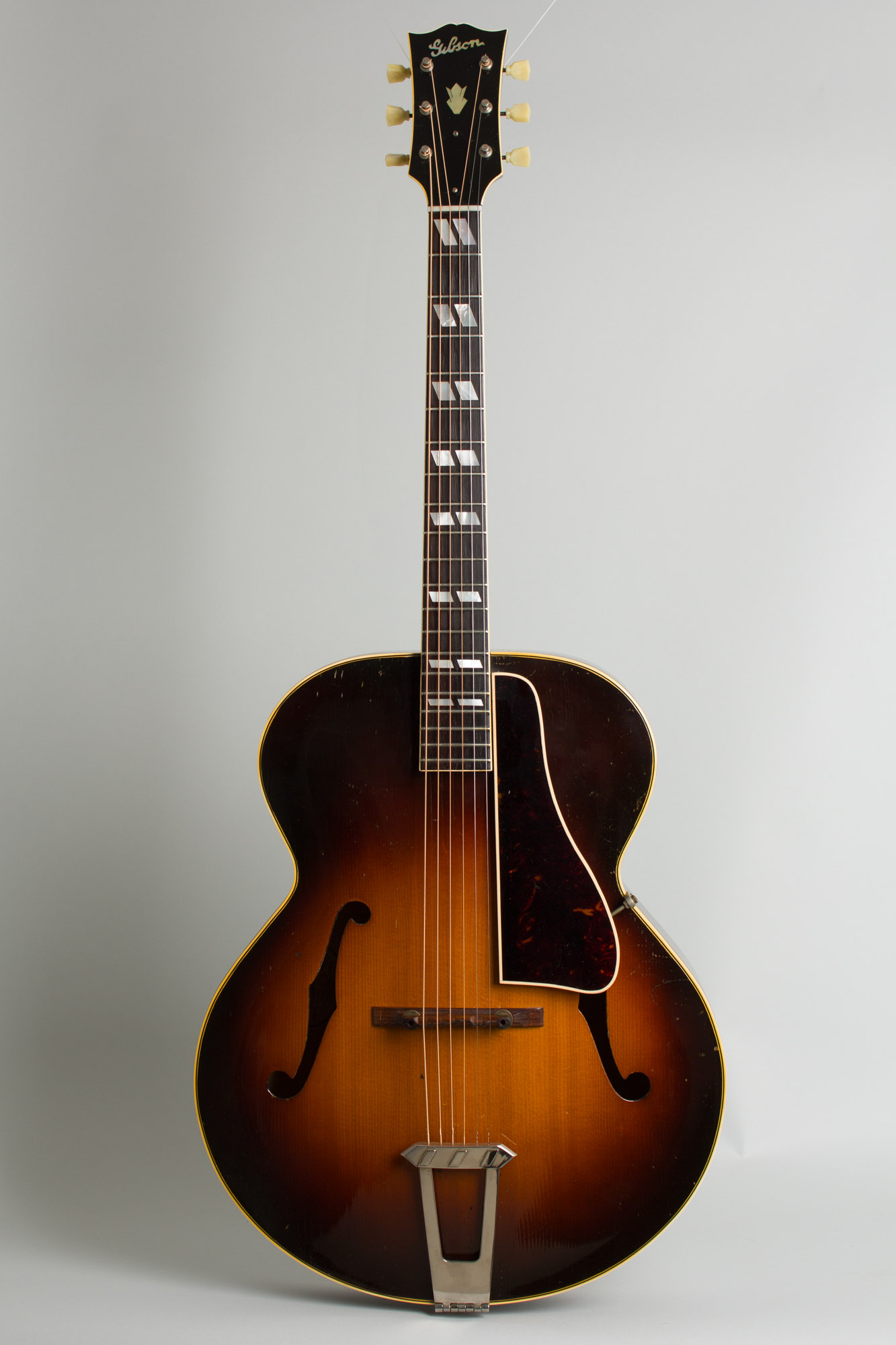
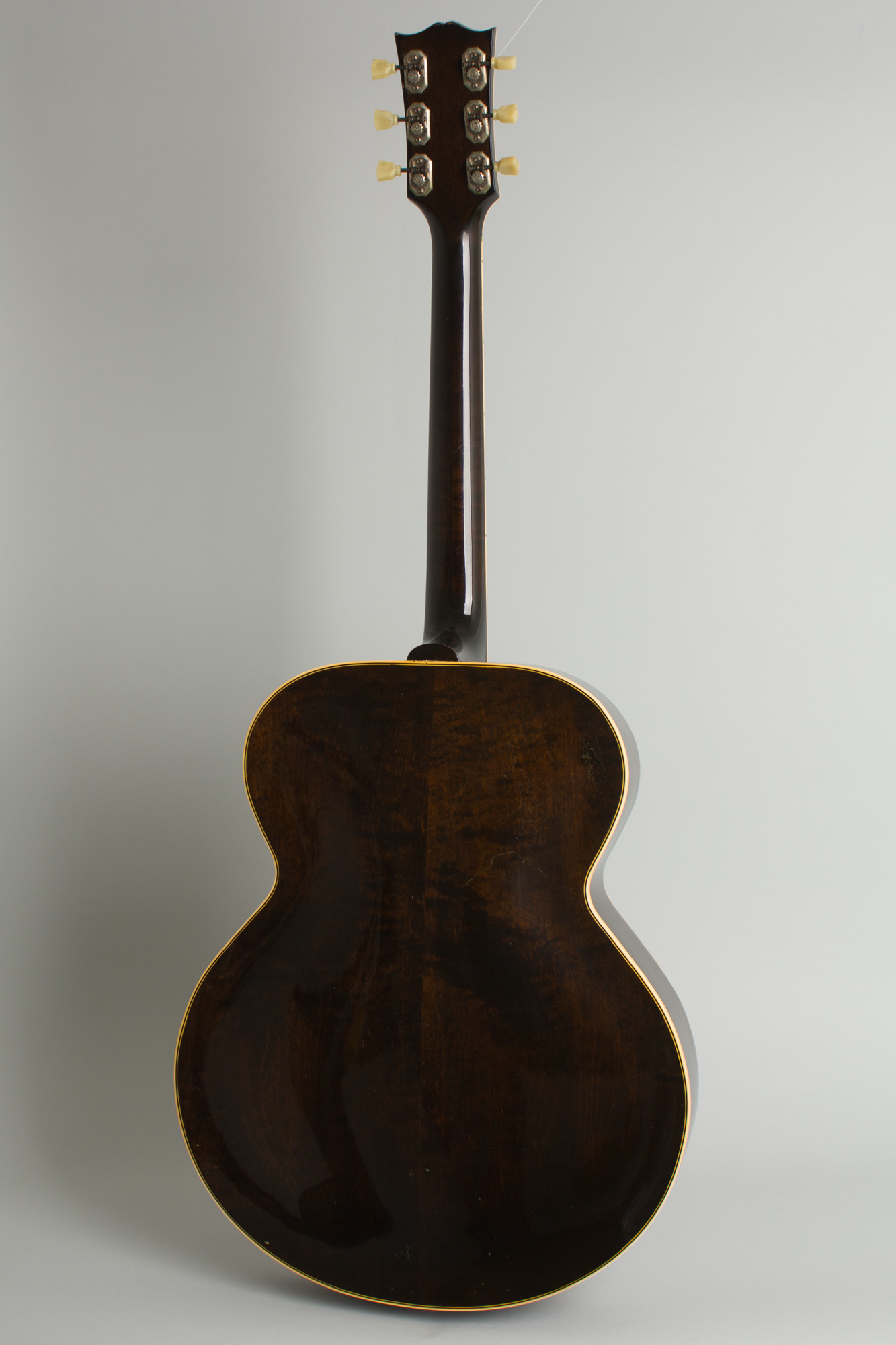
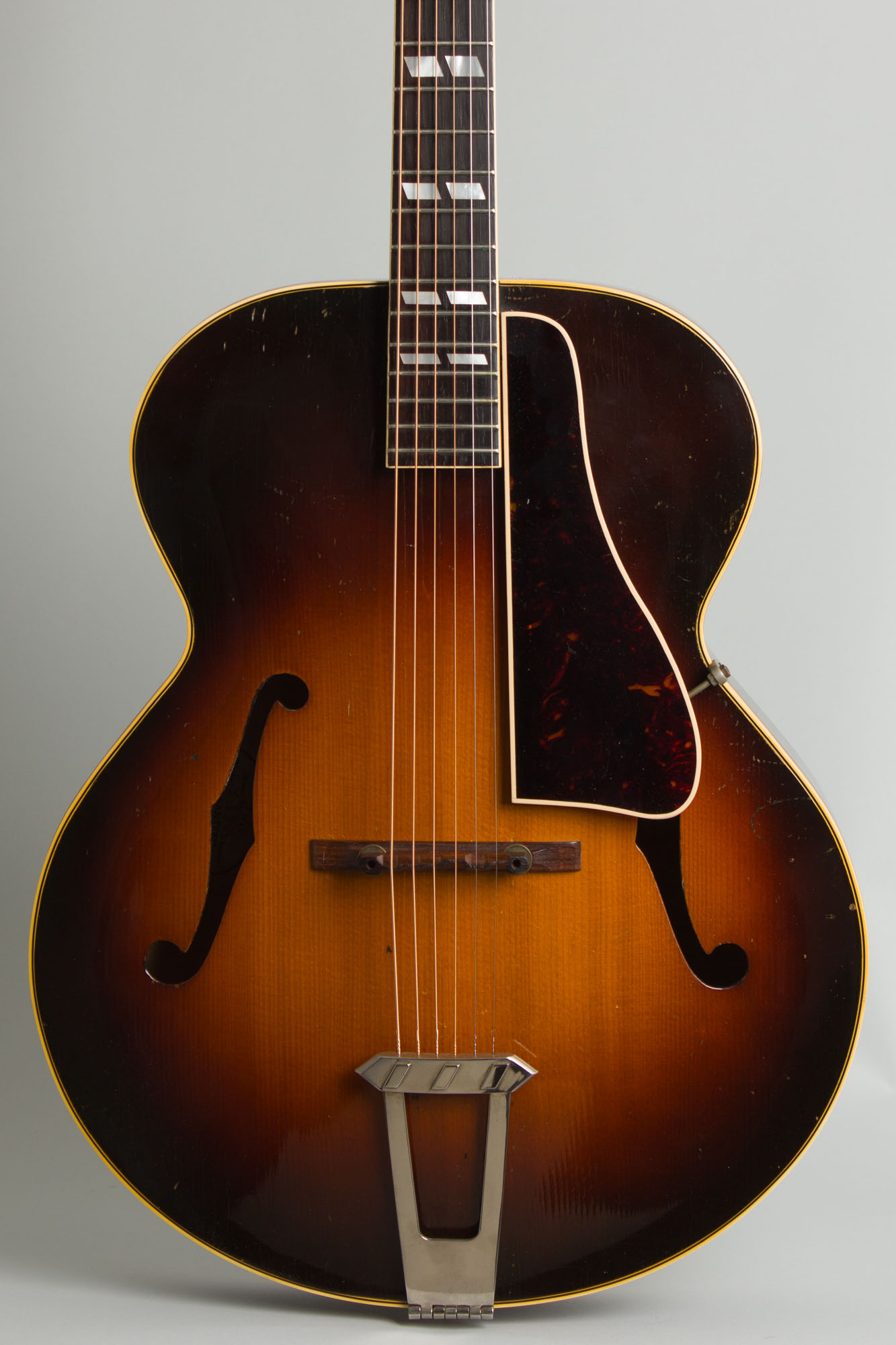
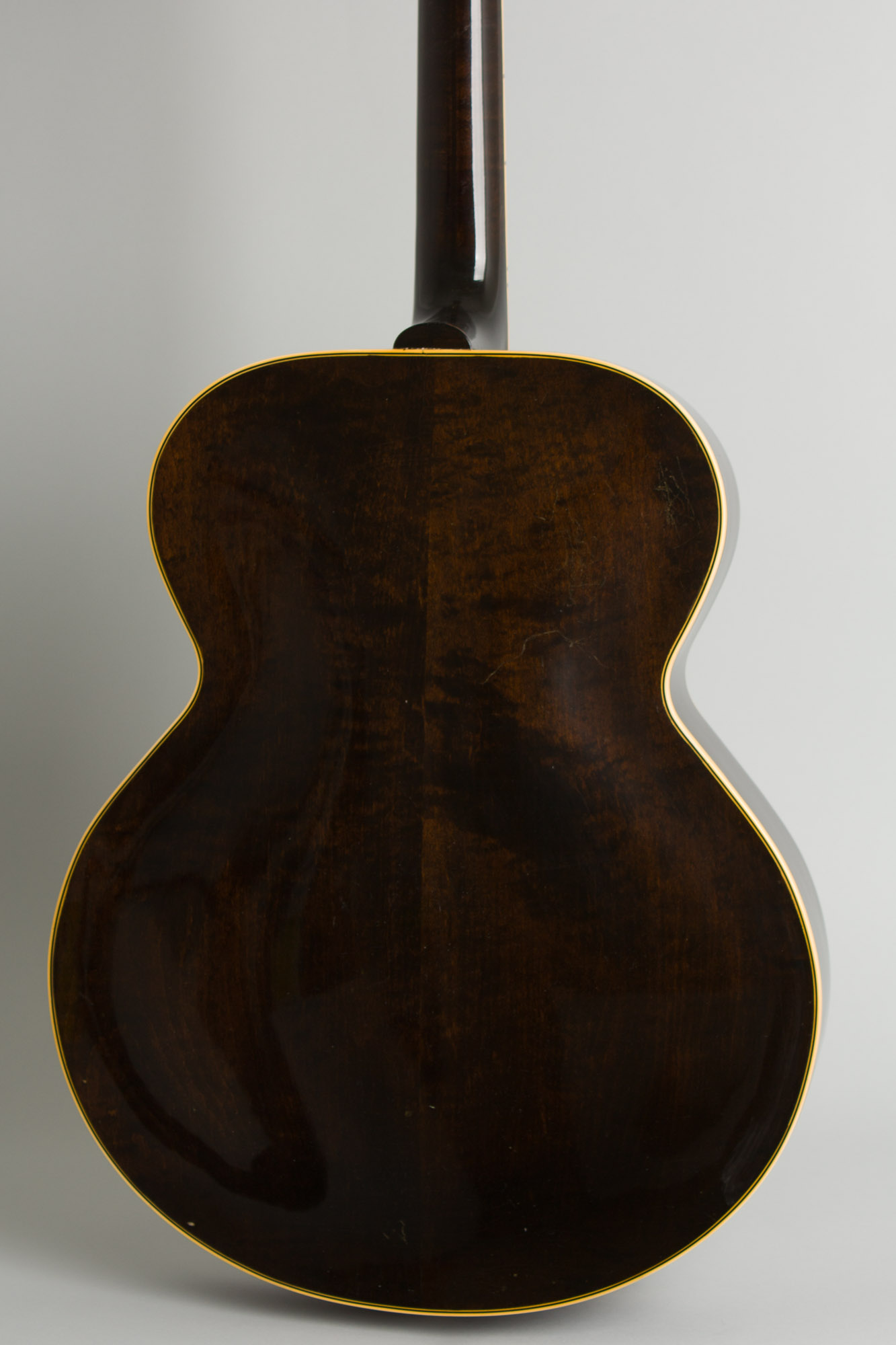
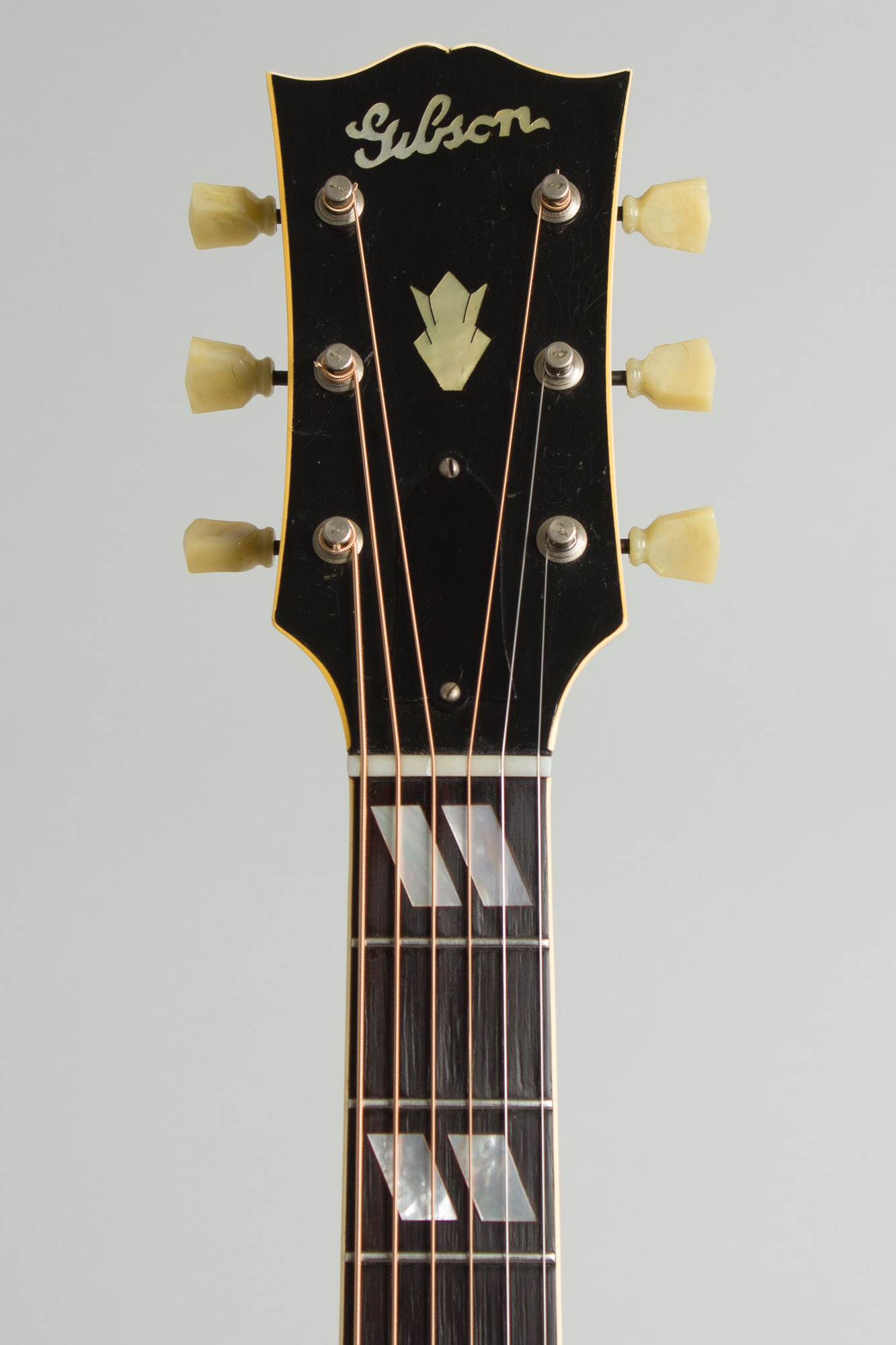
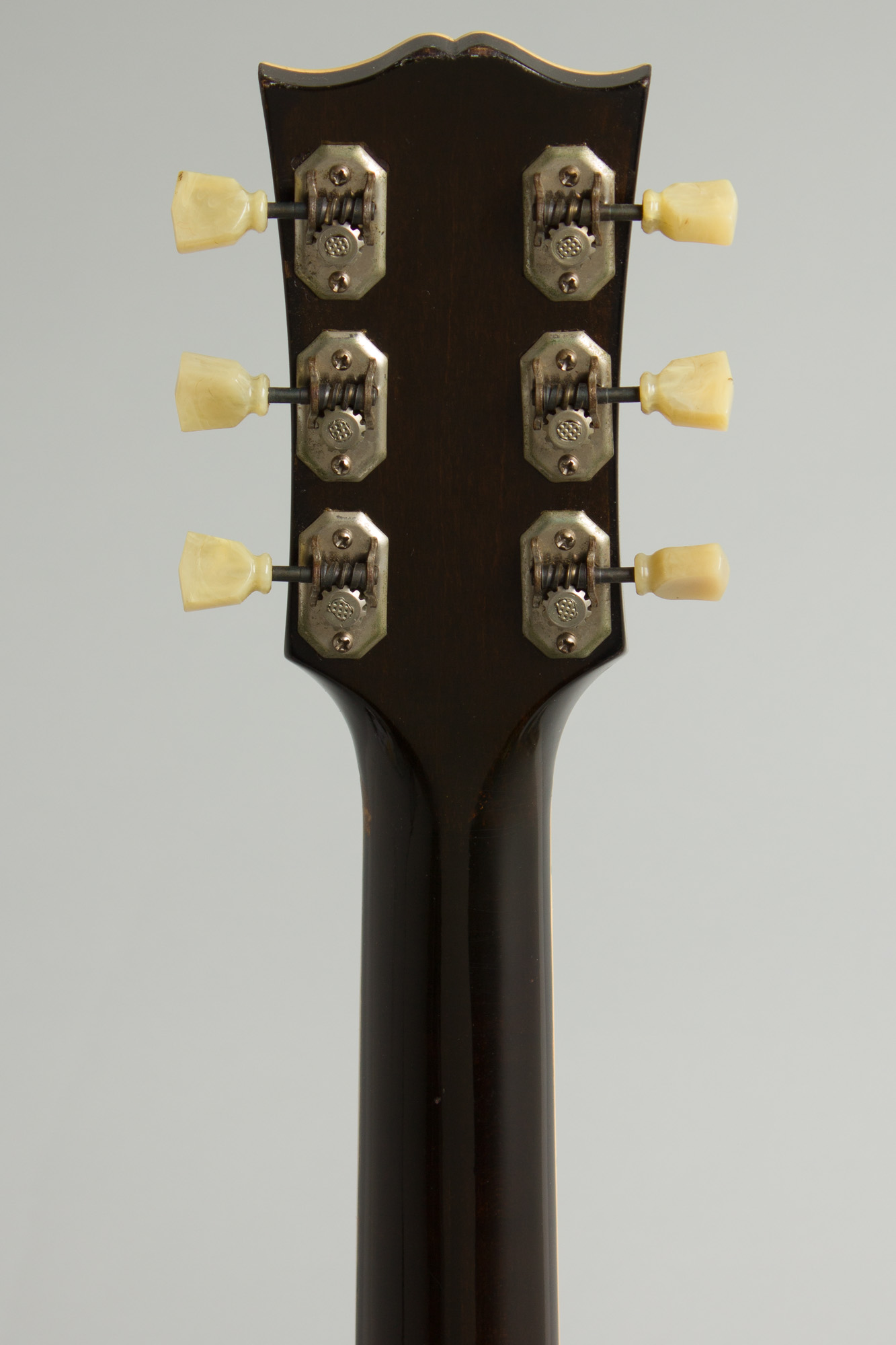
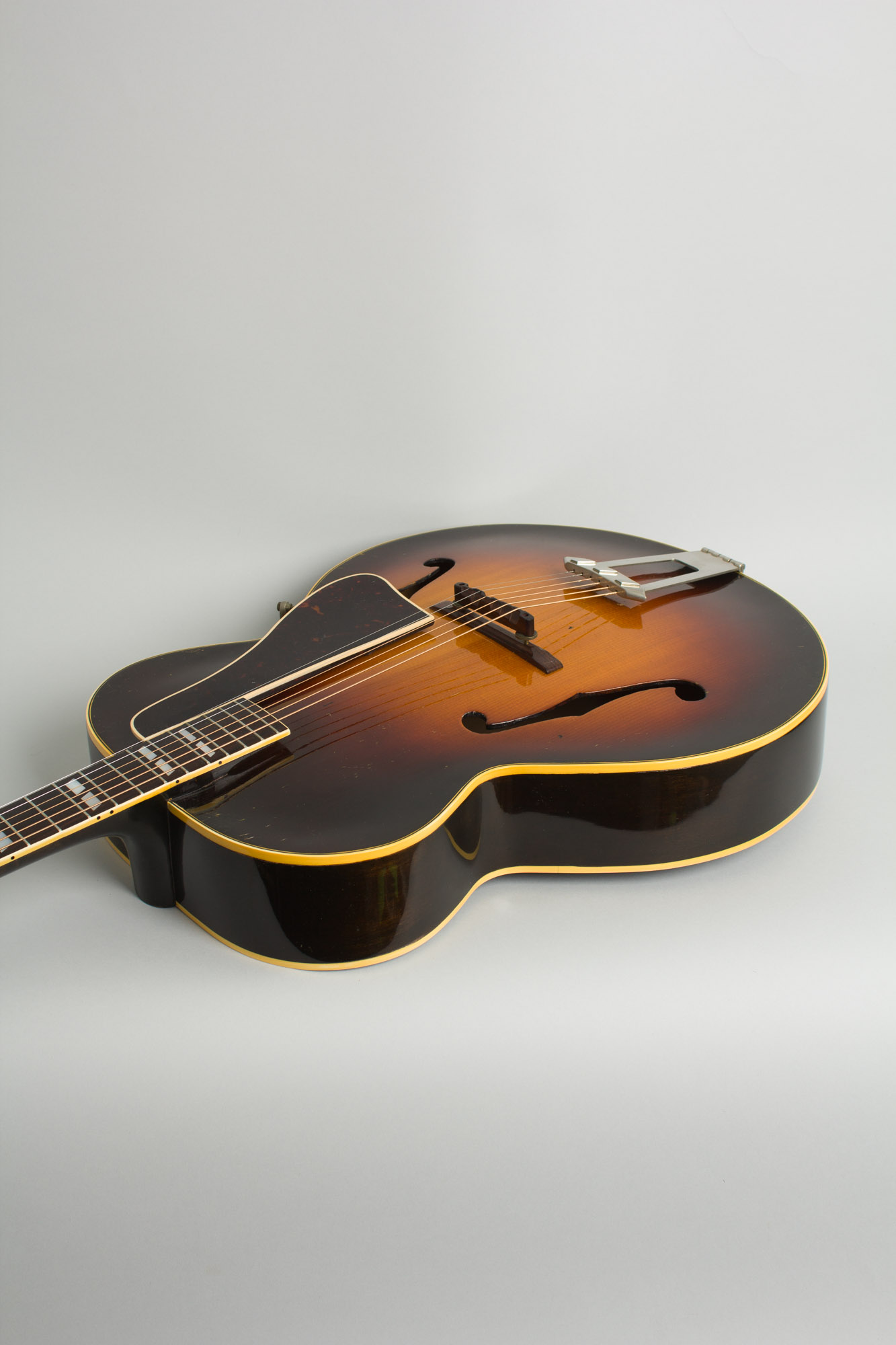
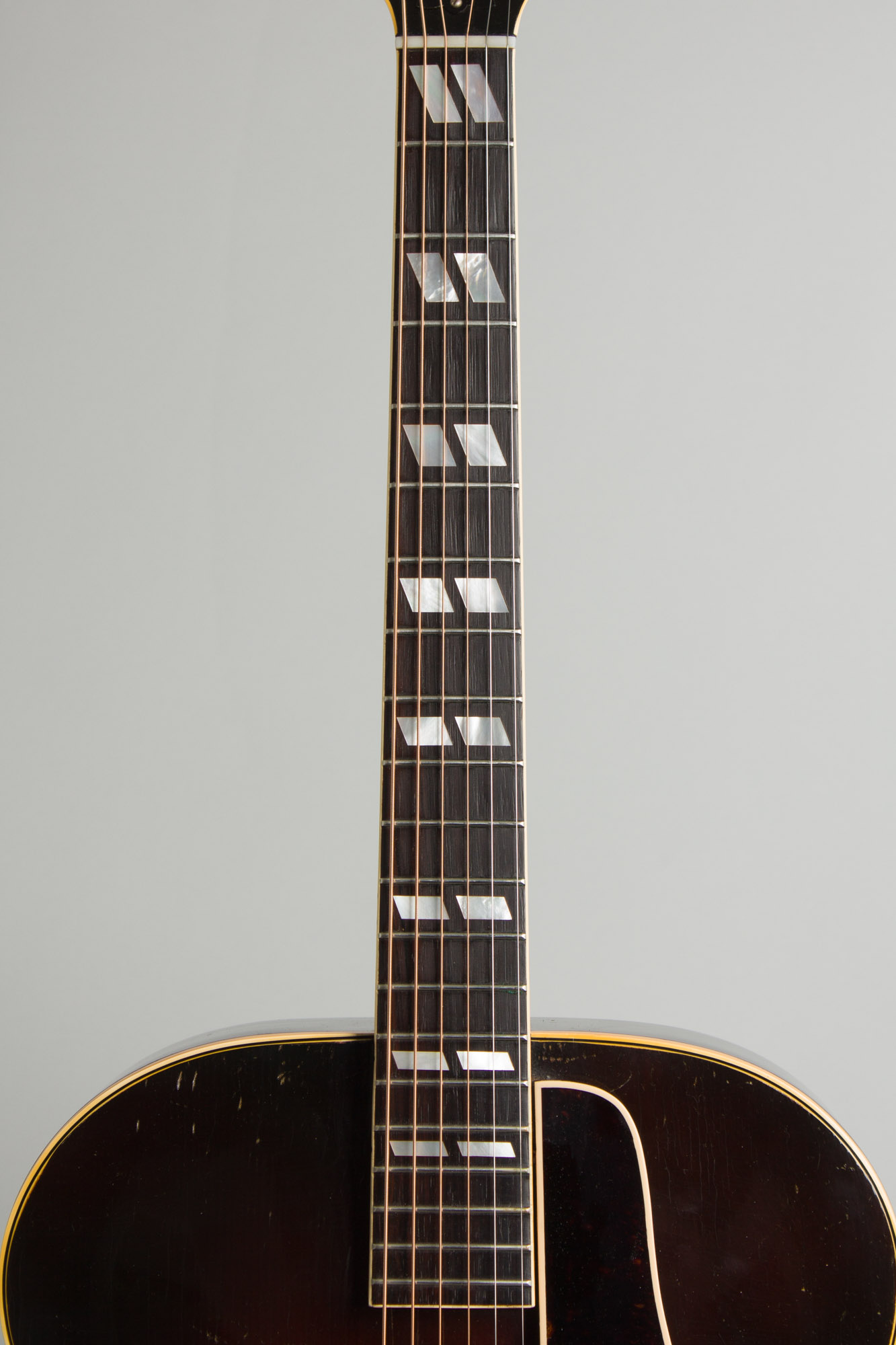
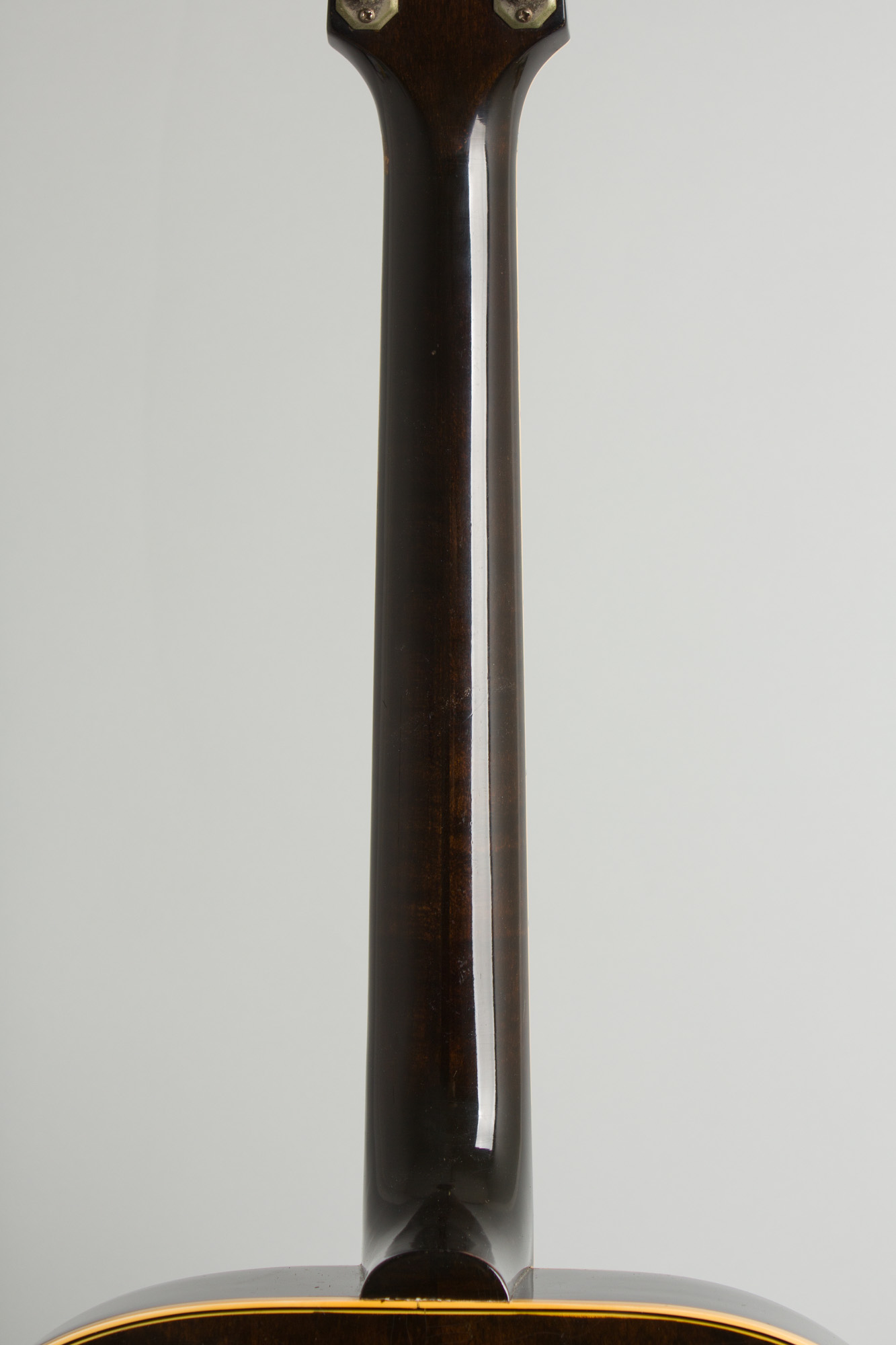
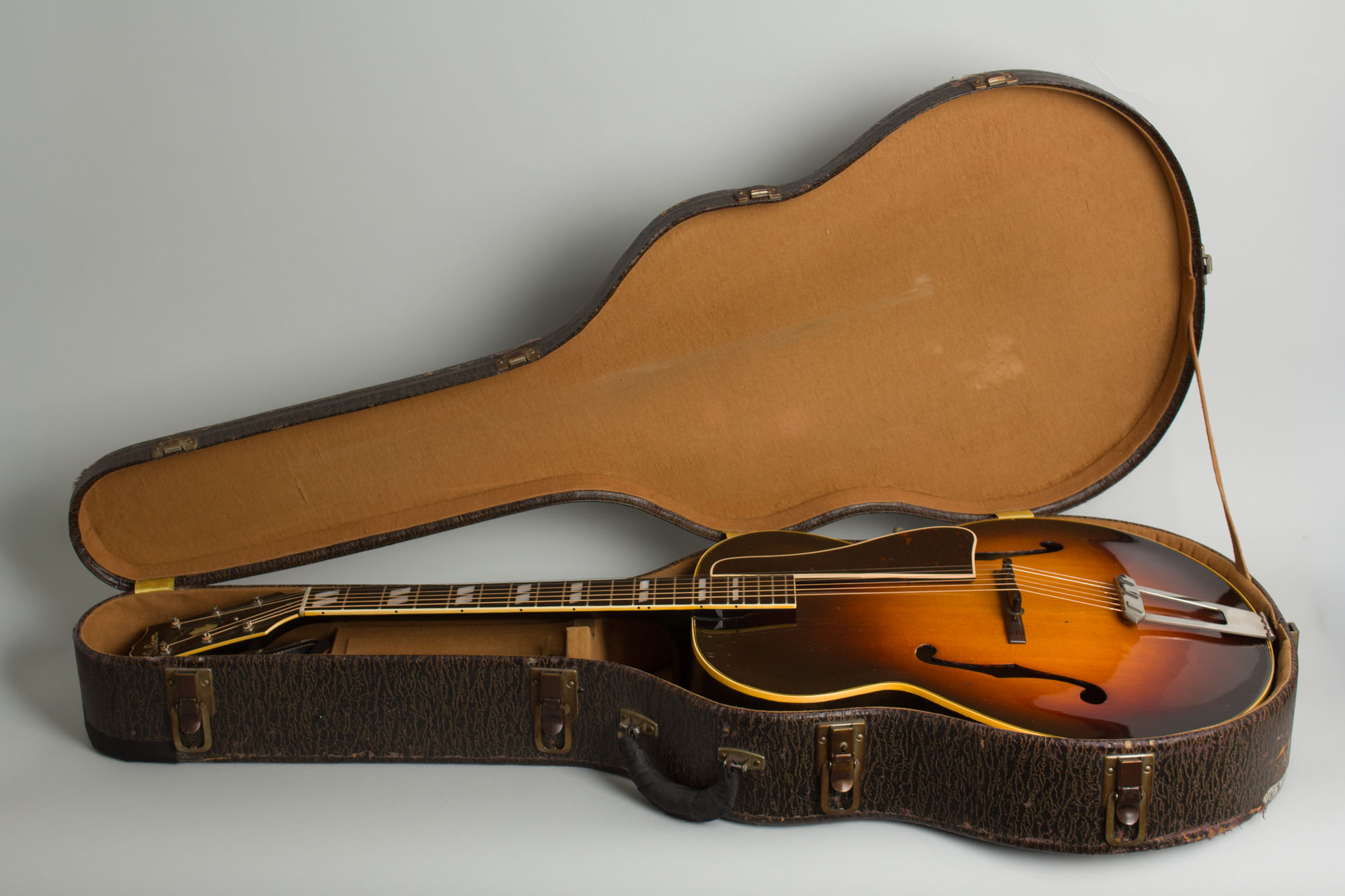
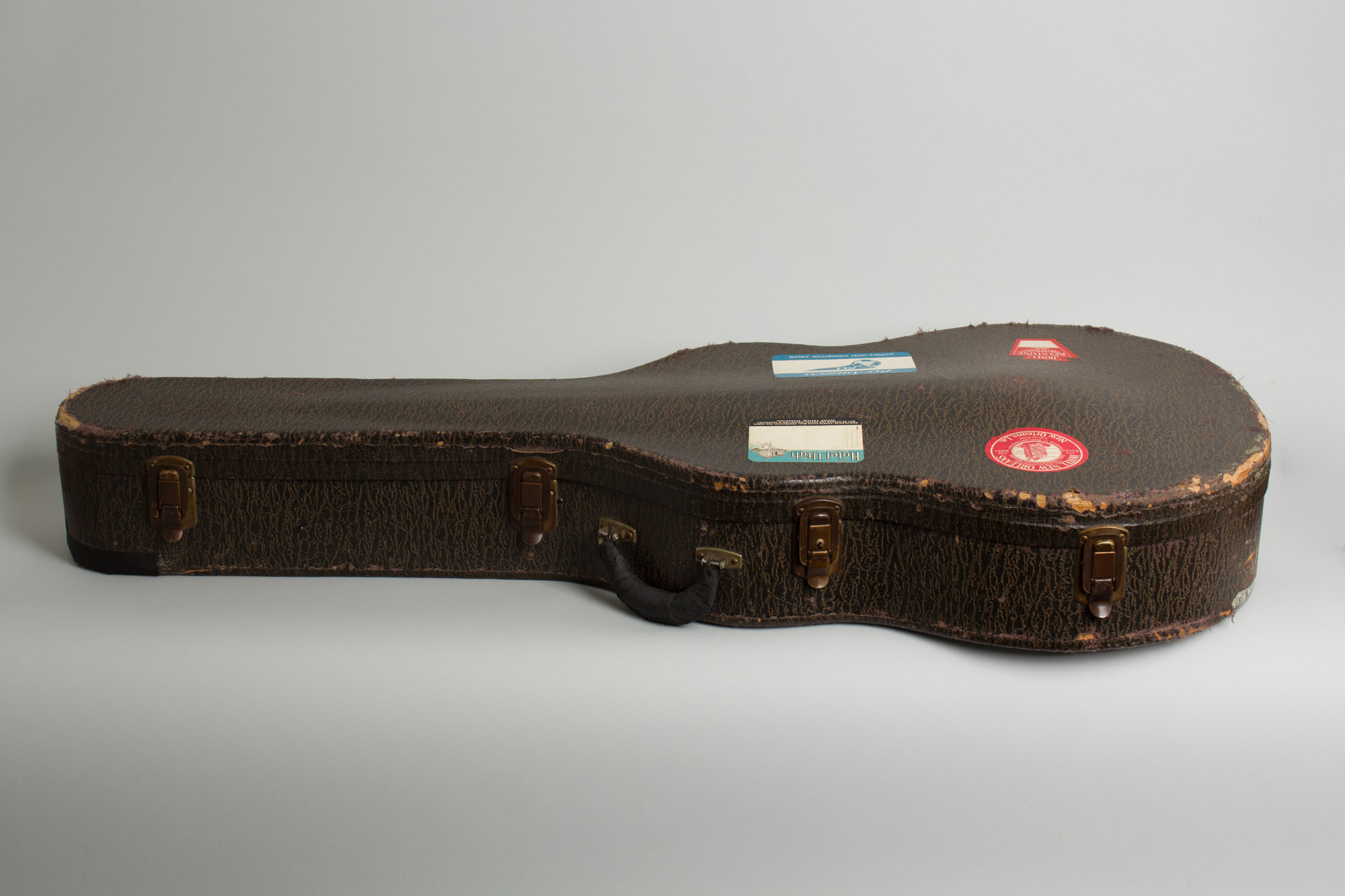
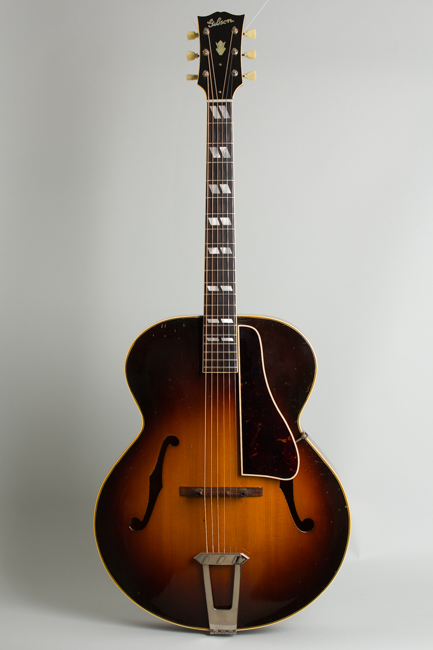
Gibson L-7 Model Arch Top Acoustic Guitar (1946-7), made in Kalamazoo, Michigan, sunburst top, dark back and sides finish, maple back and sides, spruce top; laminated maple neck with rosewood fingerboard, original brown hard shell case.
This beautiful Gibson L-7 was built as the Gibson company was returning to full time instrument production after several years of primarily war work. The L-7 was one of the instruments that helped Gibson get up and running again, along with a selection of flat-top models. This was Gibson's workhorse pro-grade 17" archtop guitar, offering professional features and sound without flash (or price tag) of the venerable L-5. The L-7 was a very popular model and proved a staple of the company's line for many years and proved a favorite not only of ambitious amateurs but also many pro players, even some who could have afforded a higher end model!
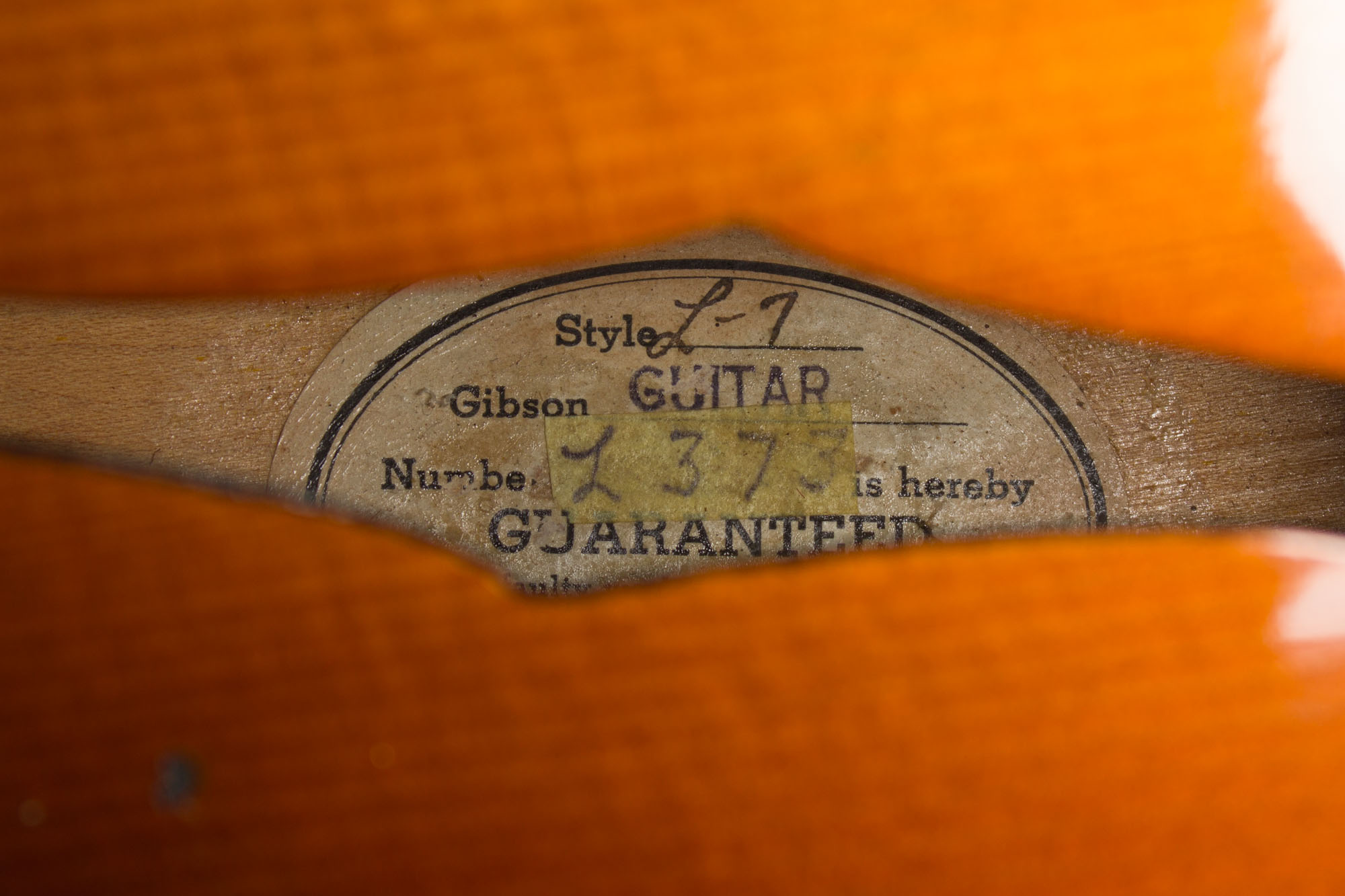
Unfortunately someone long ago obliterated the serial number and wrote another one onto the label, so exact dating is impossible but this combination of features only existed in 1946-7. Features specific to this era include the older pre-war pearl Gibson script headstock logo over the "crown" inlay and short-lived openback riveted Kluson tuners with the first "Keystone" buttons. The neck has a round and fairly chunky profile, though not so thick as some wartime guitars. The warm sunburst top and dark finished back have thick triple celluloid binding; the soundholes are unbound and the fingerboard and headstock are single-bound. The rosewood fingerboard features the double parallelogram inlay that became a post-war Gibson trademark. The tailpiece and bridge are typical period Gibson fittings; the pickguard is an exact repro of the deteriorated original.
The guitar does not seem to have seen much use since the 1940s and shows only very light wear. This purely acoustic L-7 is a wonderful player with a quite versatile tone, well capable of sounding sweet while having a substantial reserve for pushing into swing rhythm territory. This is one of the nicest from this period we have seen, a lovely instrument and very classy archtop for any era.
Overall length is 42 3/8 in. (107.6 cm.), 17 in. (43.2 cm.) wide at lower bout, and 3 3/8 in. (8.6 cm.) in depth, measured at side of rim. Scale length is 25 1/2 in. (648 mm.). Width of nut is 1 11/16 in. (43 mm.).
Despite the passage of about eight decades since it was made this remains a truly lovely original guitar. It shows only fairly minor wear; some scuffing and checking to the finish overall with small dings, scratches and chips here and there, most notable being a chip on the treble side of the neck by the nut, due to that piece being replaced. Overall the finish still shines like it did when Harry Truman sat behind the Presidential desk.
The pickguard is a recent excellent Paul Fox repro, the original is in the case showing early signs of celluloid deterioration. Aside from the unfortunate altering of the serial number and the replaced nut everything else on the guitar including all other hardware remains original. The original small-wire frets show some light wear but still play fine and the guitar sounds excellent, with a sharp neck angle helping drive the top easily. This very fine postwar L-7 is housed in a lovely original HSC with some general wear, a taped up handle and period travel sticked decoration. Overall Excellent - Condition.
This beautiful Gibson L-7 was built as the Gibson company was returning to full time instrument production after several years of primarily war work. The L-7 was one of the instruments that helped Gibson get up and running again, along with a selection of flat-top models. This was Gibson's workhorse pro-grade 17" archtop guitar, offering professional features and sound without flash (or price tag) of the venerable L-5. The L-7 was a very popular model and proved a staple of the company's line for many years and proved a favorite not only of ambitious amateurs but also many pro players, even some who could have afforded a higher end model!
Unfortunately someone long ago obliterated the serial number and wrote another one onto the label, so exact dating is impossible but this combination of features only existed in 1946-7. Features specific to this era include the older pre-war pearl Gibson script headstock logo over the "crown" inlay and short-lived openback riveted Kluson tuners with the first "Keystone" buttons. The neck has a round and fairly chunky profile, though not so thick as some wartime guitars. The warm sunburst top and dark finished back have thick triple celluloid binding; the soundholes are unbound and the fingerboard and headstock are single-bound. The rosewood fingerboard features the double parallelogram inlay that became a post-war Gibson trademark. The tailpiece and bridge are typical period Gibson fittings; the pickguard is an exact repro of the deteriorated original.
The guitar does not seem to have seen much use since the 1940s and shows only very light wear. This purely acoustic L-7 is a wonderful player with a quite versatile tone, well capable of sounding sweet while having a substantial reserve for pushing into swing rhythm territory. This is one of the nicest from this period we have seen, a lovely instrument and very classy archtop for any era.
Overall length is 42 3/8 in. (107.6 cm.), 17 in. (43.2 cm.) wide at lower bout, and 3 3/8 in. (8.6 cm.) in depth, measured at side of rim. Scale length is 25 1/2 in. (648 mm.). Width of nut is 1 11/16 in. (43 mm.).
Despite the passage of about eight decades since it was made this remains a truly lovely original guitar. It shows only fairly minor wear; some scuffing and checking to the finish overall with small dings, scratches and chips here and there, most notable being a chip on the treble side of the neck by the nut, due to that piece being replaced. Overall the finish still shines like it did when Harry Truman sat behind the Presidential desk.
The pickguard is a recent excellent Paul Fox repro, the original is in the case showing early signs of celluloid deterioration. Aside from the unfortunate altering of the serial number and the replaced nut everything else on the guitar including all other hardware remains original. The original small-wire frets show some light wear but still play fine and the guitar sounds excellent, with a sharp neck angle helping drive the top easily. This very fine postwar L-7 is housed in a lovely original HSC with some general wear, a taped up handle and period travel sticked decoration. Overall Excellent - Condition.