Gibson L-5 Arch Top Acoustic Guitar (1933)

LOADING IMAGES
This item has been sold.
Item # 4437
Prices subject to change without notice.
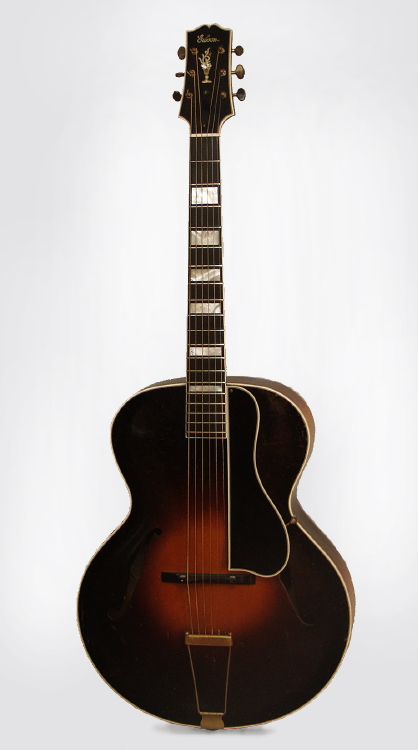
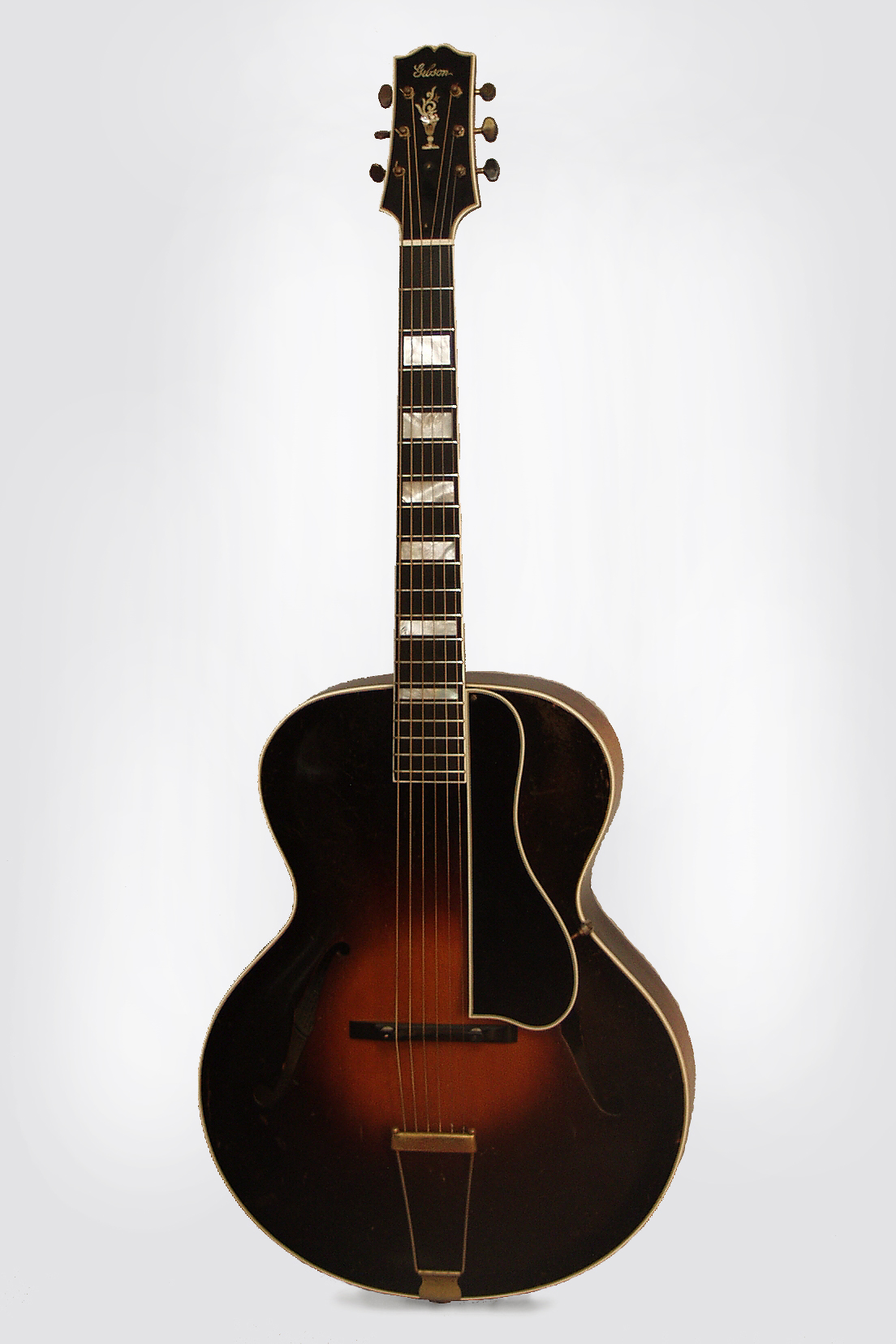
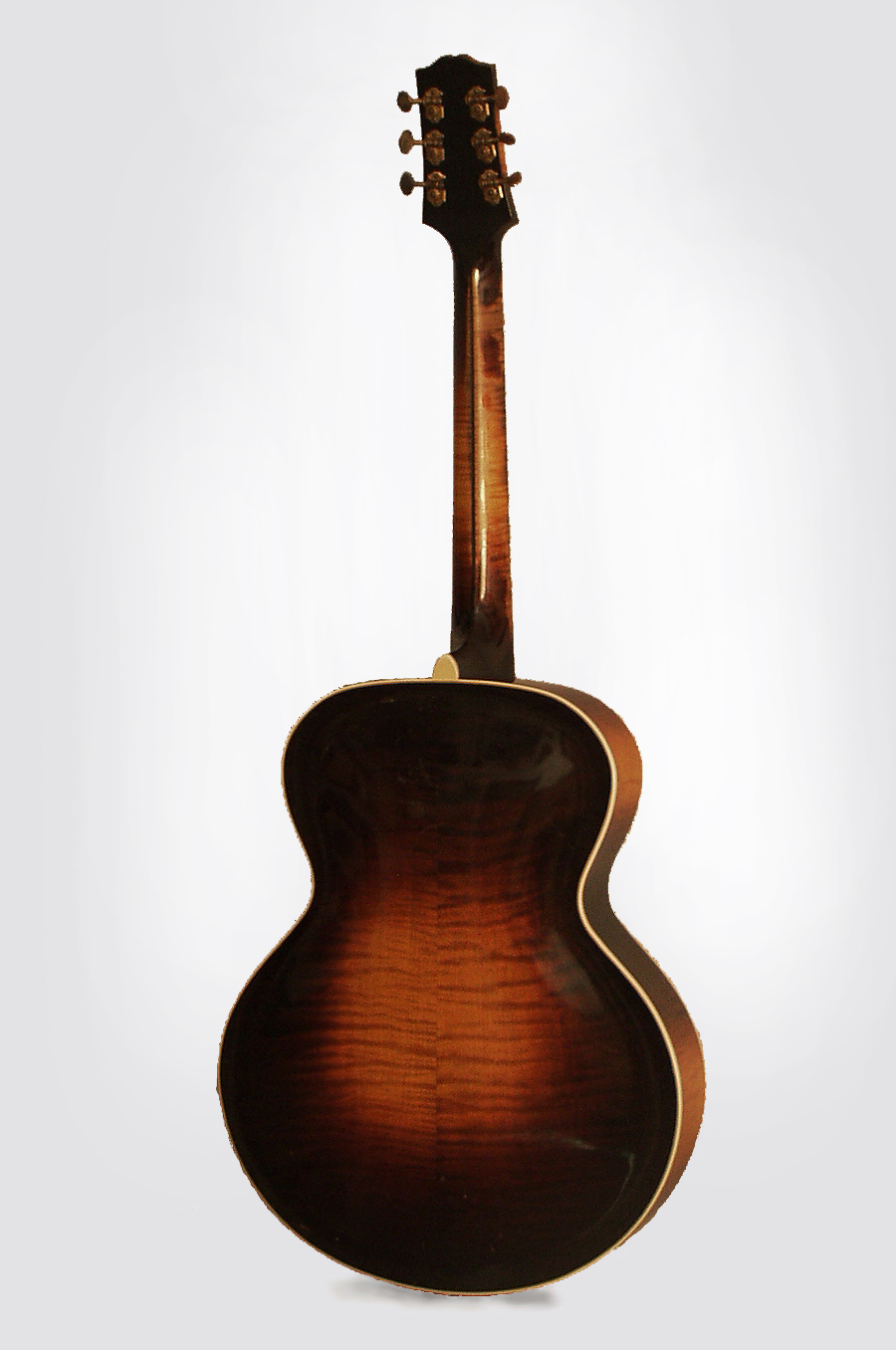
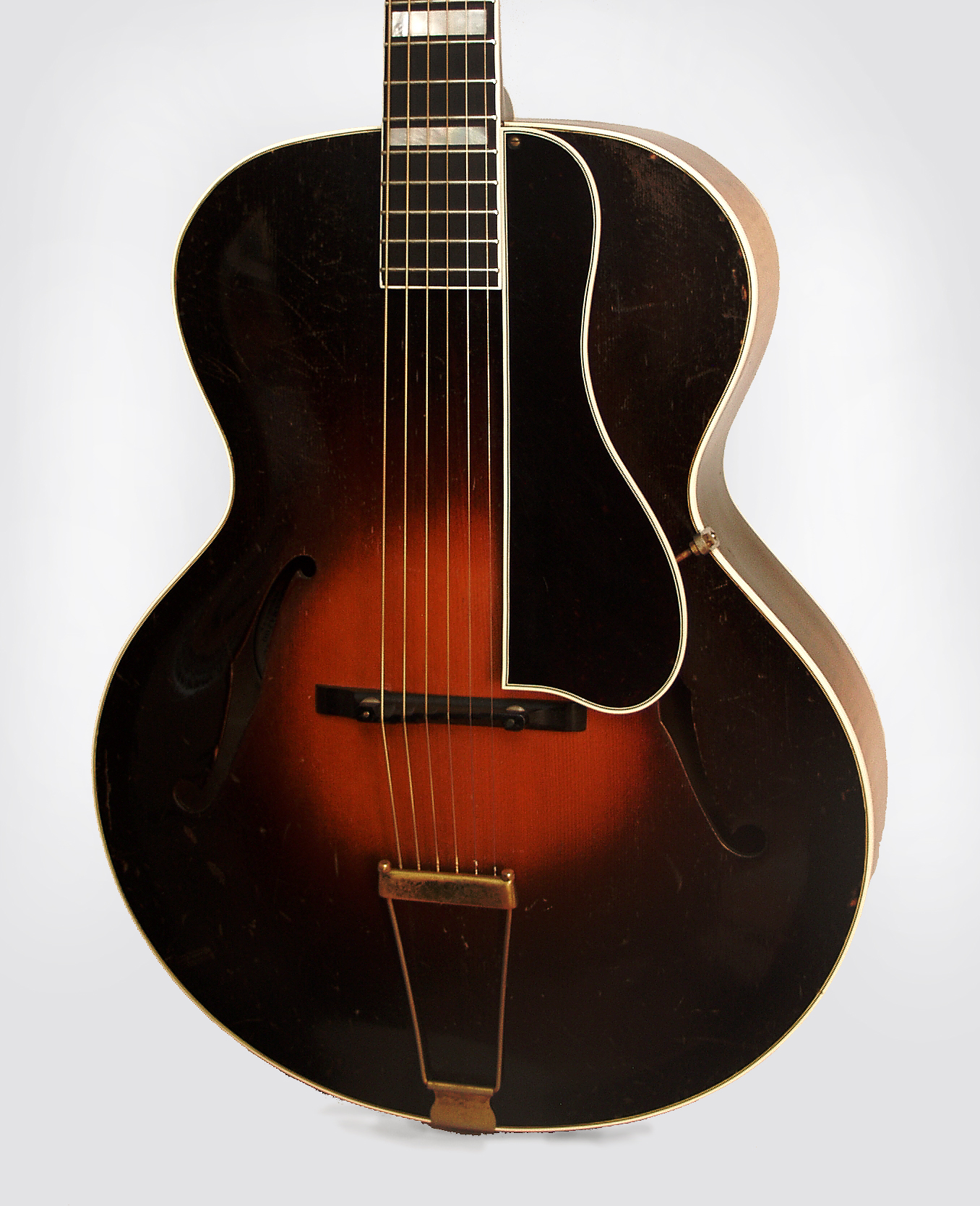
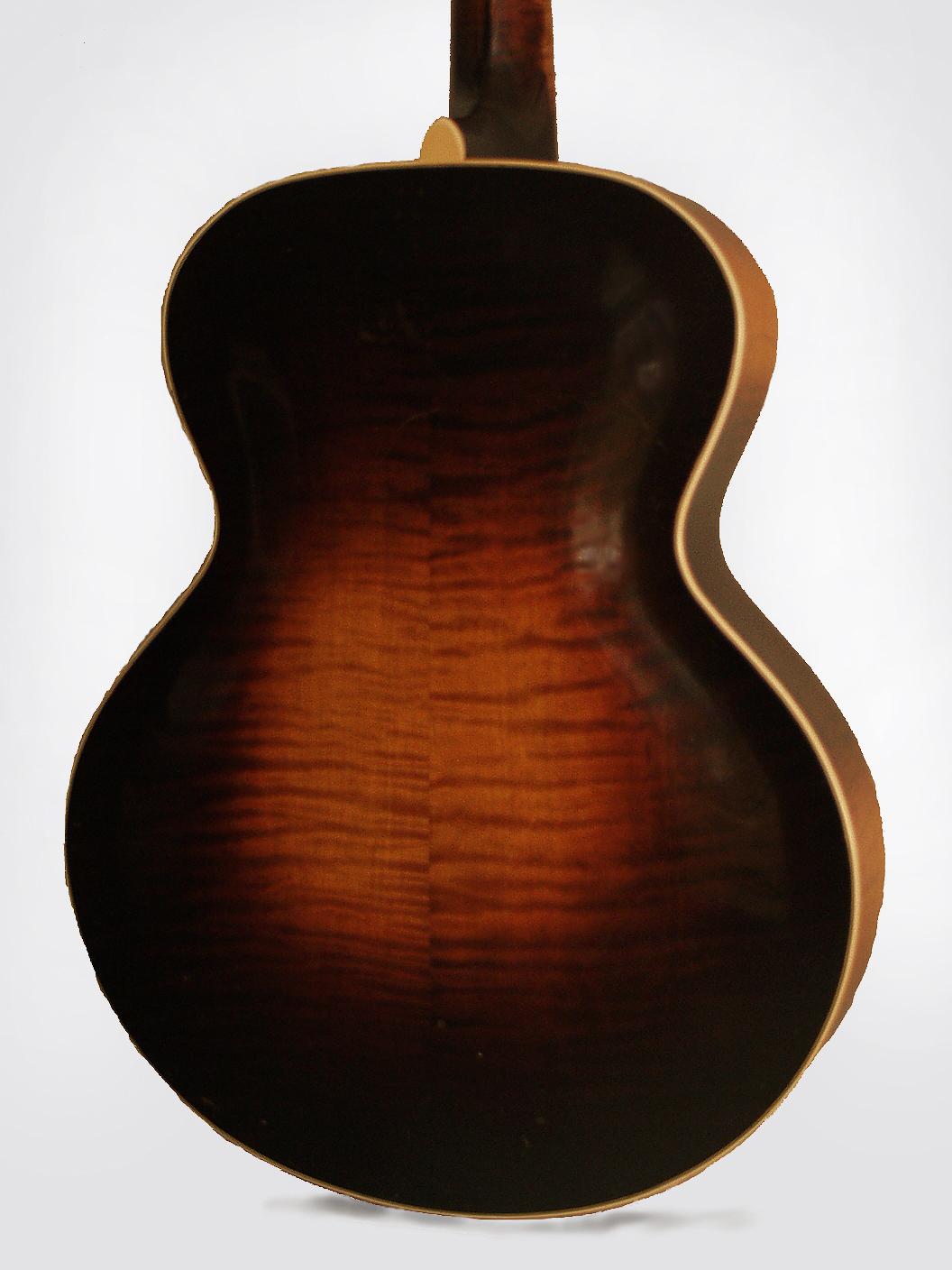
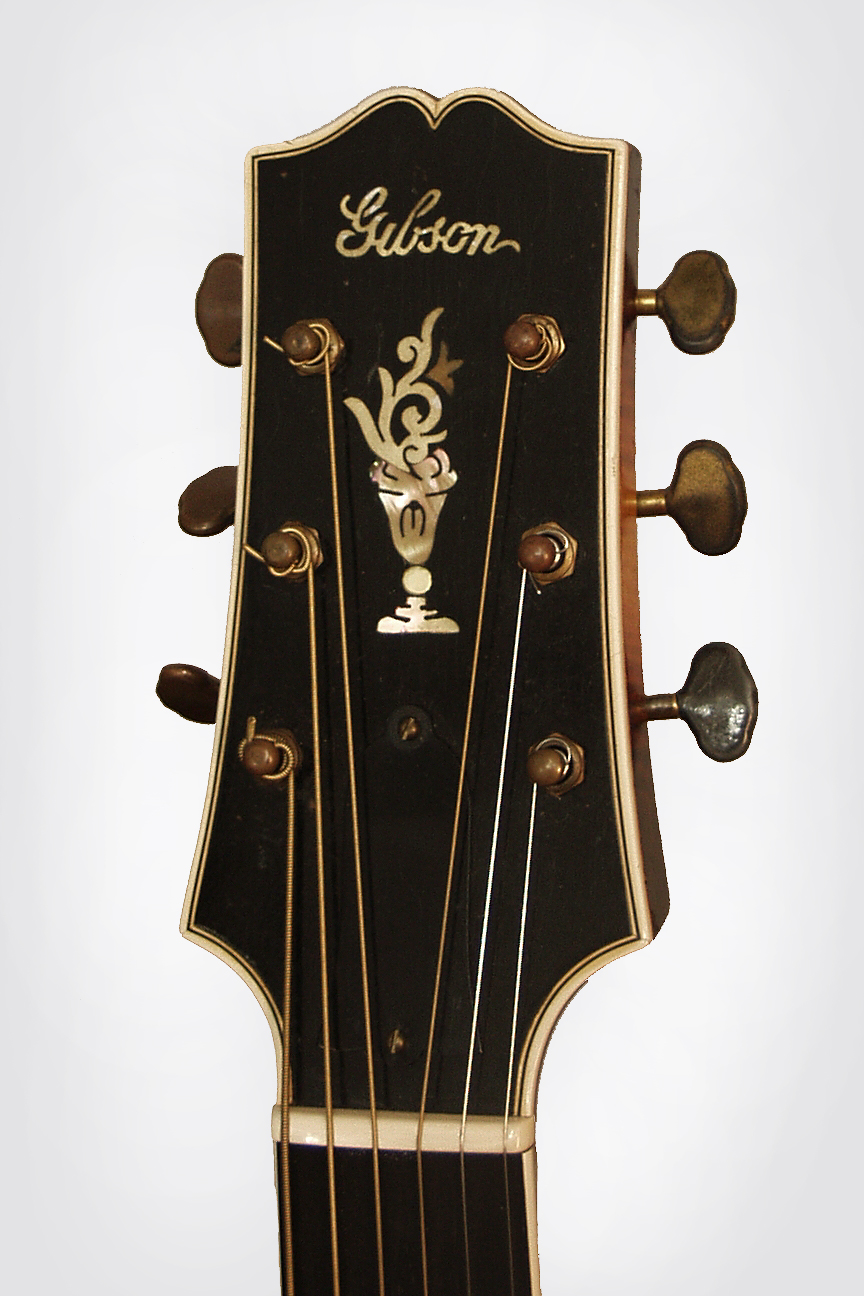
Gibson L-5 Model Arch Top Acoustic Guitar (1933), made in Kalamazoo, Michigan, Cremona Brown Sunburst finish, spruce top, maple back, sides and neck, ebony fingerboard, original black hard shell case.
This 1933 L-5 is a lovely example of the pre-eminent orchestra guitar of its era as well as an extremely fine-playing and sounding instrument. Debuting in 1923-4, the L-5 was the first modern f-hole archtop guitar; at the time, this one was built nearly ten years later was still the top of Gibson's line and generally considered the finest carved top guitar made.
Orchestra and jazz band banjoists had by this time almost universally converted to guitar; the $275.00 L-5 along with Epiphone's competing Deluxe were the choice of all top guitar players of the time. Eddie Lang, the era's most influential guitarist, went from a Gibson L-4 to a dot-neck (probably 1927) L-5 then an early block neck L-5 in 1929 setting the trend for all to follow. In 1933 L-5 ruled the roost for professional orchestra guitars, and gave Gibson a dominance that the company never lost.
That said, these early L-5s are still fairly rare guitars. Retailing at $275.00 (plus case!), the L-5 was extremely expensive (a top-of-the-line Martin pearl-trimmed Style 45 retailed around $100.00 less). Only top professional users could afford the indulgence of such an instrument. Most 16" 1930s L-5s were used extensively for many years, some owners preferring them to any later guitars. These earlier L-5s are still often seen in the hands of recording specialists well into the 1960s. As working guitars they have often been modified, refitted, or refinished...to find an early L-5 in such original condition is a treat!
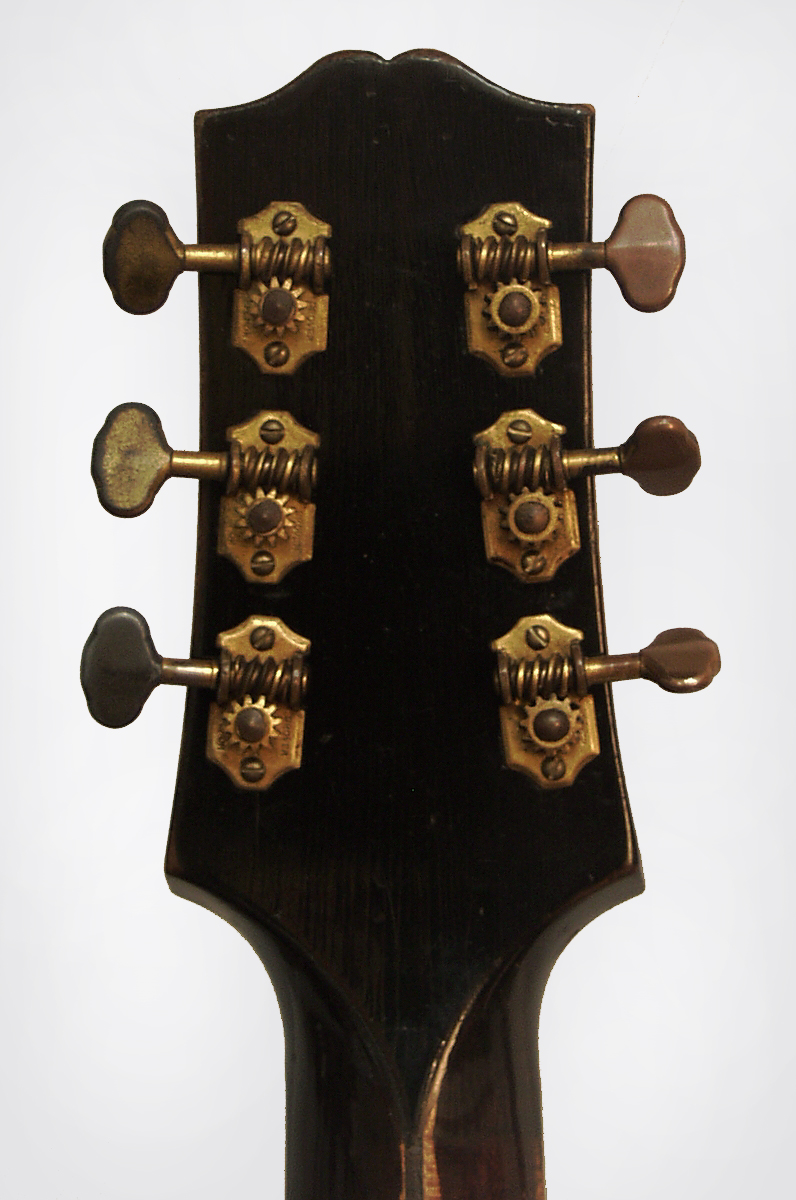
This guitar has typical features for the early 1930s L-5s. The 3-piece laminated curly maple neck has a prominent "V" spine but a shallower profile than some examples. The tuners are the early style gold-plated Grover Sta-Tites, with riveted posts. The inlaid blocks in the ebony fingerboard are real pearl, not the ambered pearloid often seen. The neck has side-line binding but no point at the fingerboard's end. The gold-plated tailpiece is the "newer" style, the strings feeding under the bar, and the triple-bound pickguard is screwed to the top. The pearl inlaid flowerpot in the headstock and straight across "Gibson" logo are the hallmarks of the 1930s L-5.
This particular guitar has a spectacular sound typical of the best early L-5s; it is simultaneously warm and incisive with plenty of volume and depth. These guitars are also among the most responsive of archtops, and this one even sounds good fingerstyle!
Overall length is 41 1/4 in. (104.8 cm.), 16 in. (40.6 cm.) wide at lower bout, and 3 1/4 in. (8.2 cm.) in depth at side, taken at the end block. Scale length is 24 3/4 in. (629 mm.). A beautifully original guitar, with some overall play wear but no major damage or repairs. It has had a expert refret and replaced nut but no other changes or modifications. Excellent Condition.
This 1933 L-5 is a lovely example of the pre-eminent orchestra guitar of its era as well as an extremely fine-playing and sounding instrument. Debuting in 1923-4, the L-5 was the first modern f-hole archtop guitar; at the time, this one was built nearly ten years later was still the top of Gibson's line and generally considered the finest carved top guitar made.
Orchestra and jazz band banjoists had by this time almost universally converted to guitar; the $275.00 L-5 along with Epiphone's competing Deluxe were the choice of all top guitar players of the time. Eddie Lang, the era's most influential guitarist, went from a Gibson L-4 to a dot-neck (probably 1927) L-5 then an early block neck L-5 in 1929 setting the trend for all to follow. In 1933 L-5 ruled the roost for professional orchestra guitars, and gave Gibson a dominance that the company never lost.
That said, these early L-5s are still fairly rare guitars. Retailing at $275.00 (plus case!), the L-5 was extremely expensive (a top-of-the-line Martin pearl-trimmed Style 45 retailed around $100.00 less). Only top professional users could afford the indulgence of such an instrument. Most 16" 1930s L-5s were used extensively for many years, some owners preferring them to any later guitars. These earlier L-5s are still often seen in the hands of recording specialists well into the 1960s. As working guitars they have often been modified, refitted, or refinished...to find an early L-5 in such original condition is a treat!
This guitar has typical features for the early 1930s L-5s. The 3-piece laminated curly maple neck has a prominent "V" spine but a shallower profile than some examples. The tuners are the early style gold-plated Grover Sta-Tites, with riveted posts. The inlaid blocks in the ebony fingerboard are real pearl, not the ambered pearloid often seen. The neck has side-line binding but no point at the fingerboard's end. The gold-plated tailpiece is the "newer" style, the strings feeding under the bar, and the triple-bound pickguard is screwed to the top. The pearl inlaid flowerpot in the headstock and straight across "Gibson" logo are the hallmarks of the 1930s L-5.
This particular guitar has a spectacular sound typical of the best early L-5s; it is simultaneously warm and incisive with plenty of volume and depth. These guitars are also among the most responsive of archtops, and this one even sounds good fingerstyle!
Overall length is 41 1/4 in. (104.8 cm.), 16 in. (40.6 cm.) wide at lower bout, and 3 1/4 in. (8.2 cm.) in depth at side, taken at the end block. Scale length is 24 3/4 in. (629 mm.). A beautifully original guitar, with some overall play wear but no major damage or repairs. It has had a expert refret and replaced nut but no other changes or modifications. Excellent Condition.