Gibson L-5 PN Arch Top Acoustic Guitar (1939)

LOADING IMAGES
This item has been sold.
Item # 6878
Prices subject to change without notice.
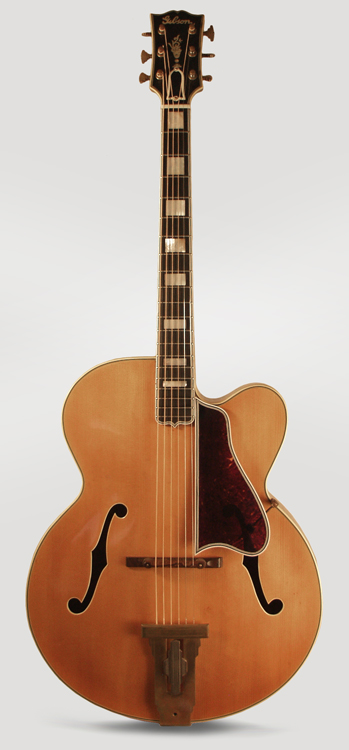
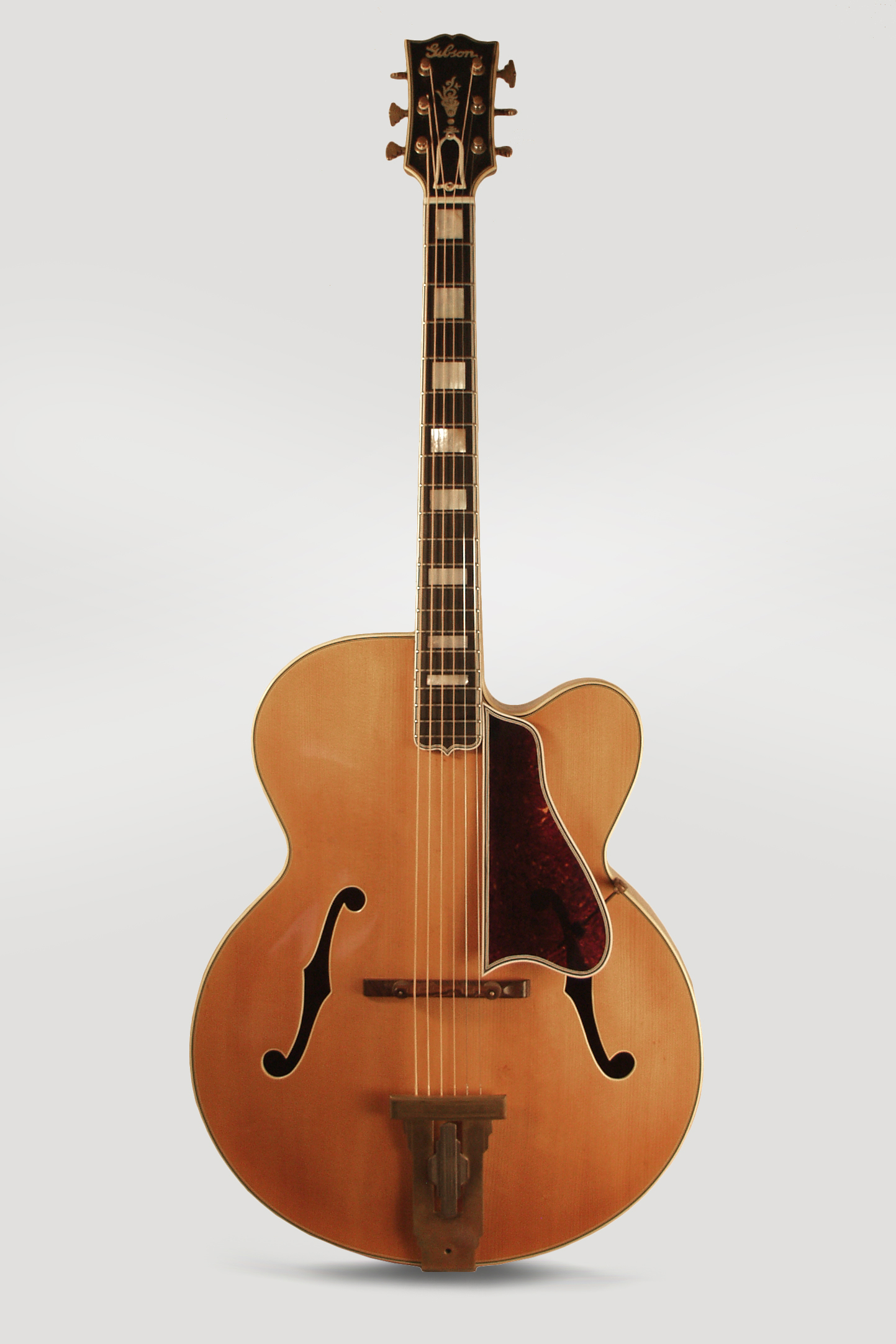
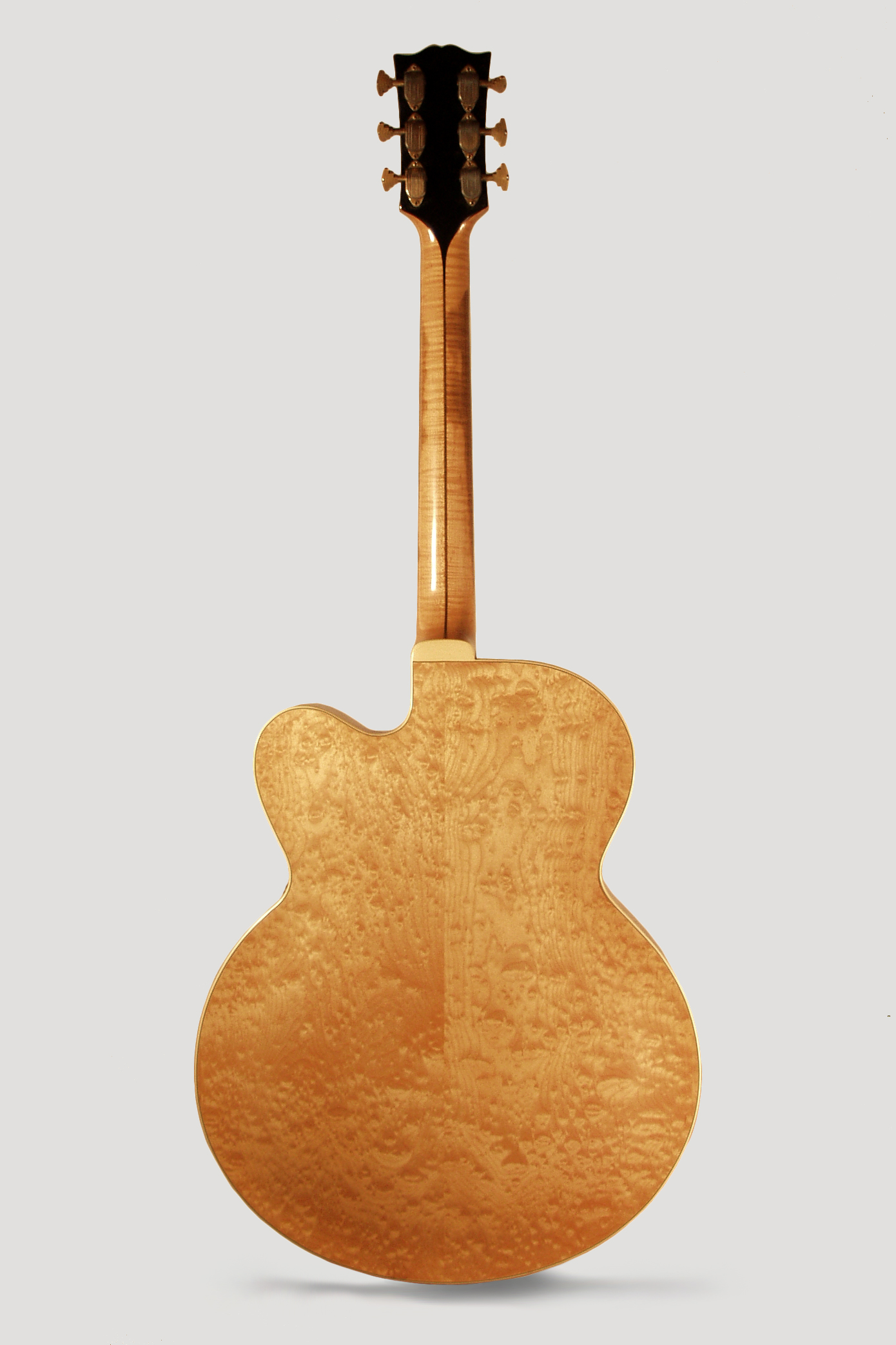
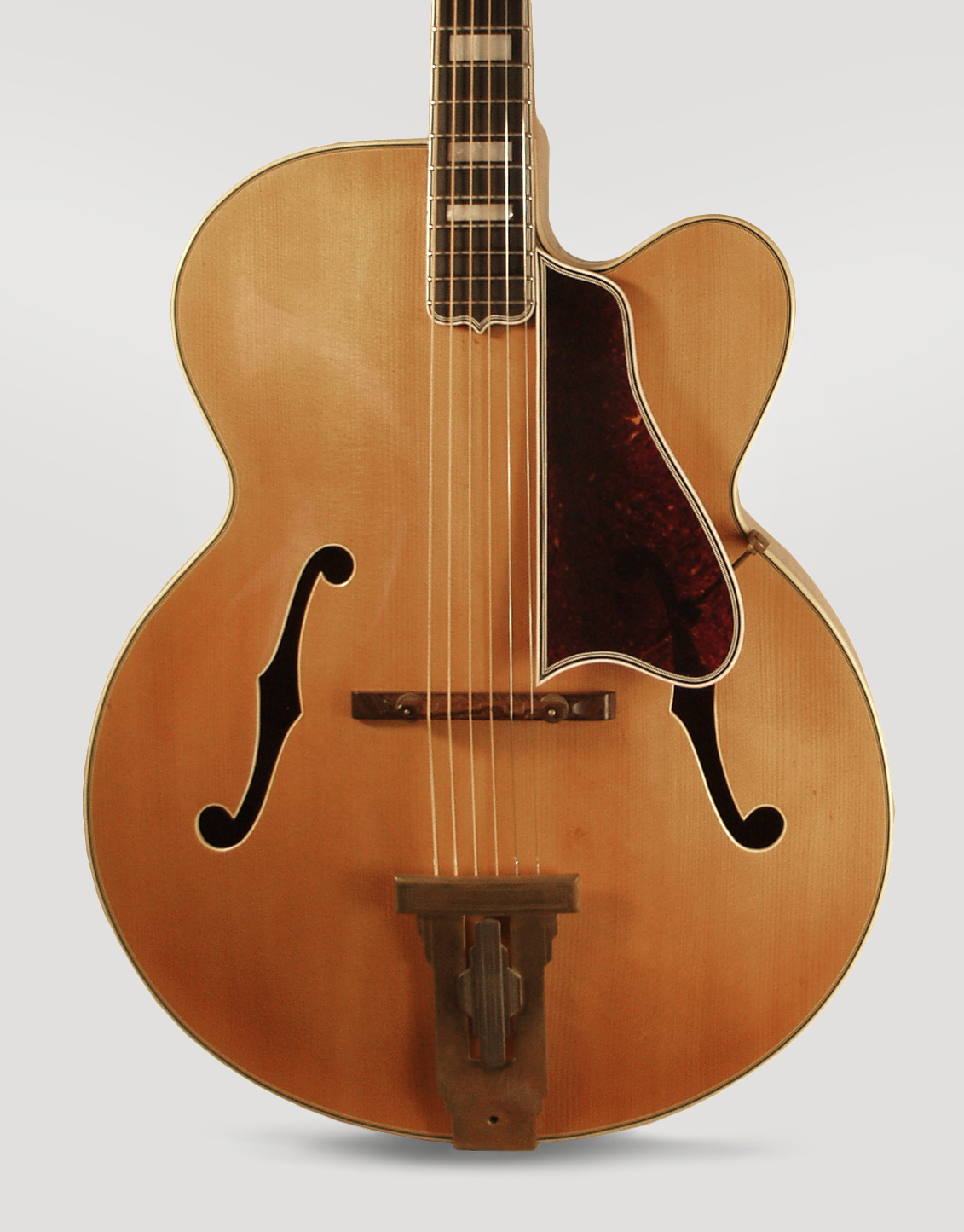
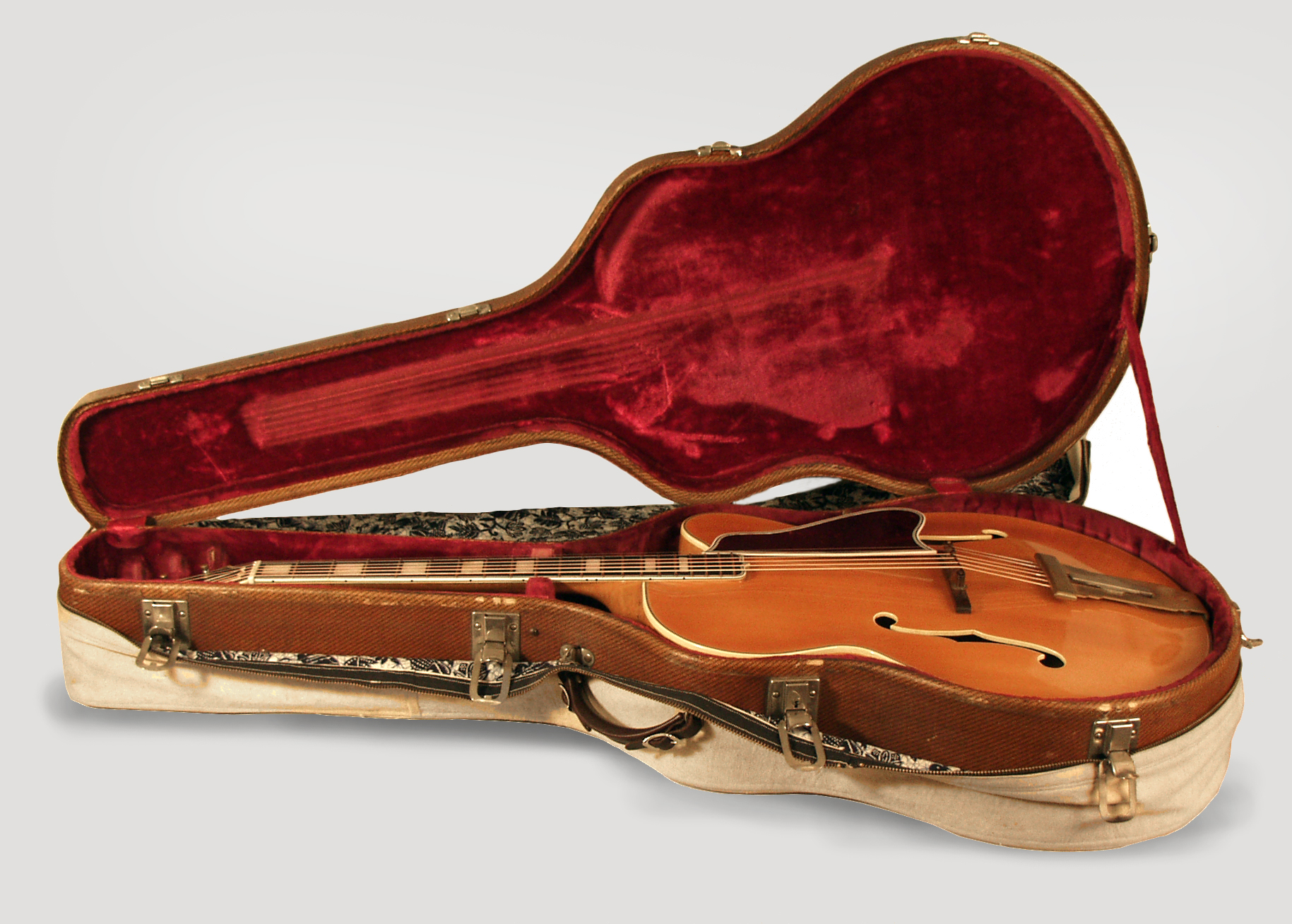
Gibson L-5 PN Model Arch Top Acoustic Guitar (1939), made in Kalamazoo, Michigan, natural lacquer finish, burl maple back, flame maple sides with spruce top; laminated maple neck with ebony fingerboard, original tweed hard shell case.
This guitar is both a fantastic playing and sounding instrument and an important piece of Gibson history-one of the earliest cutaway L-5's ever made. This body design with the rounded "Venetian" cutaway on the treble bout became a Gibson staple, and has been copied by virtually every other guitar maker since. The single-cutaway design has become recognized as a milestone in guitar evolution, elegantly allowing the player much more fingerboard access and its origins began right here. Gibson had experimented with cutaway instruments before 1910 with the elaborately-scrolled Style O Artist Model, but the 1939 "Premiere" series represent the true birth of the modern cutaway guitar.
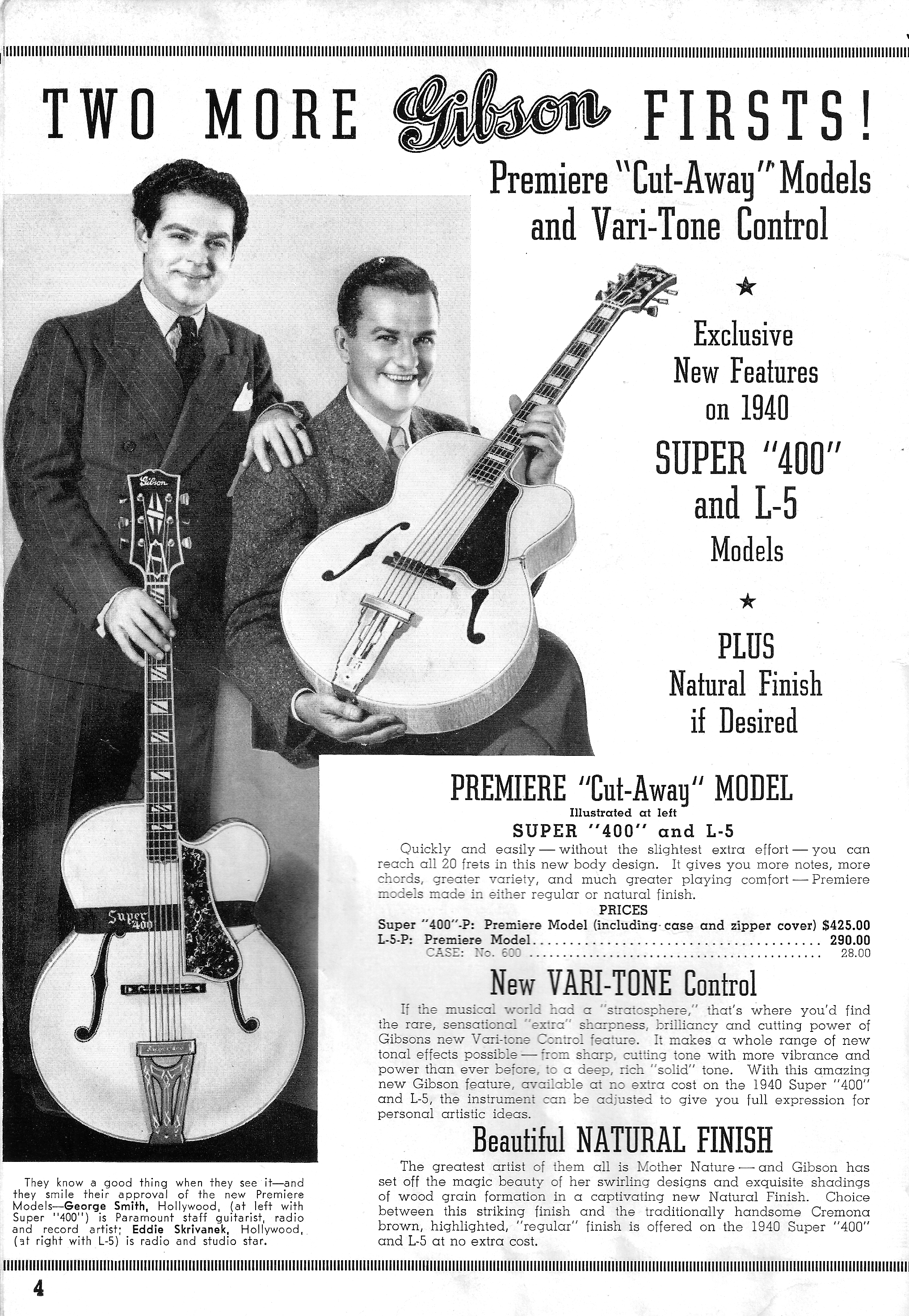
The company's newly-developed "Premiere" L-5 and Super 400 were officially announced in the 1940 Catalog AA but some examples had already been produced in late 1939. That Catalog includes several L-5PN's already shown in artist endorsement pictures in the hands of Allan Reuss, Al Avola and Hy White. The L-5 model itself had been in production since 1923, and the "Advanced" 17" wide version was introduced starting in 1935. While after 1934 the guitar had been officially superseded by the Super 400 as the absolute top-of-the-line, the L-5 was still highly popular with professional users, many of whom found the 17" guitar to be better handling-and even better sounding-instrument compared to the very large 18" Super 400. The options of the cutaway and natural finish were both brand new in late 1939 when this guitar was made-only 15 were shipped that year and 27 registered shipped in 1940. A grand total of 53 natural-finish, cutaway L-5's were shipped up through 1943 when the last one left Kalamazoo. After the war, the model was re-instated but the "Premier" designation was soon dropped in favor of the more prosaic "cutaway" designation. The pre-war, cutaway L-5's like this one represent some of the finest purely acoustic archtops the company ever built, a pinnacle of both design and craftsmanship and the most prestigious of professional orchestra guitars. By October 1940 the L-5PN listed for $300, without case.
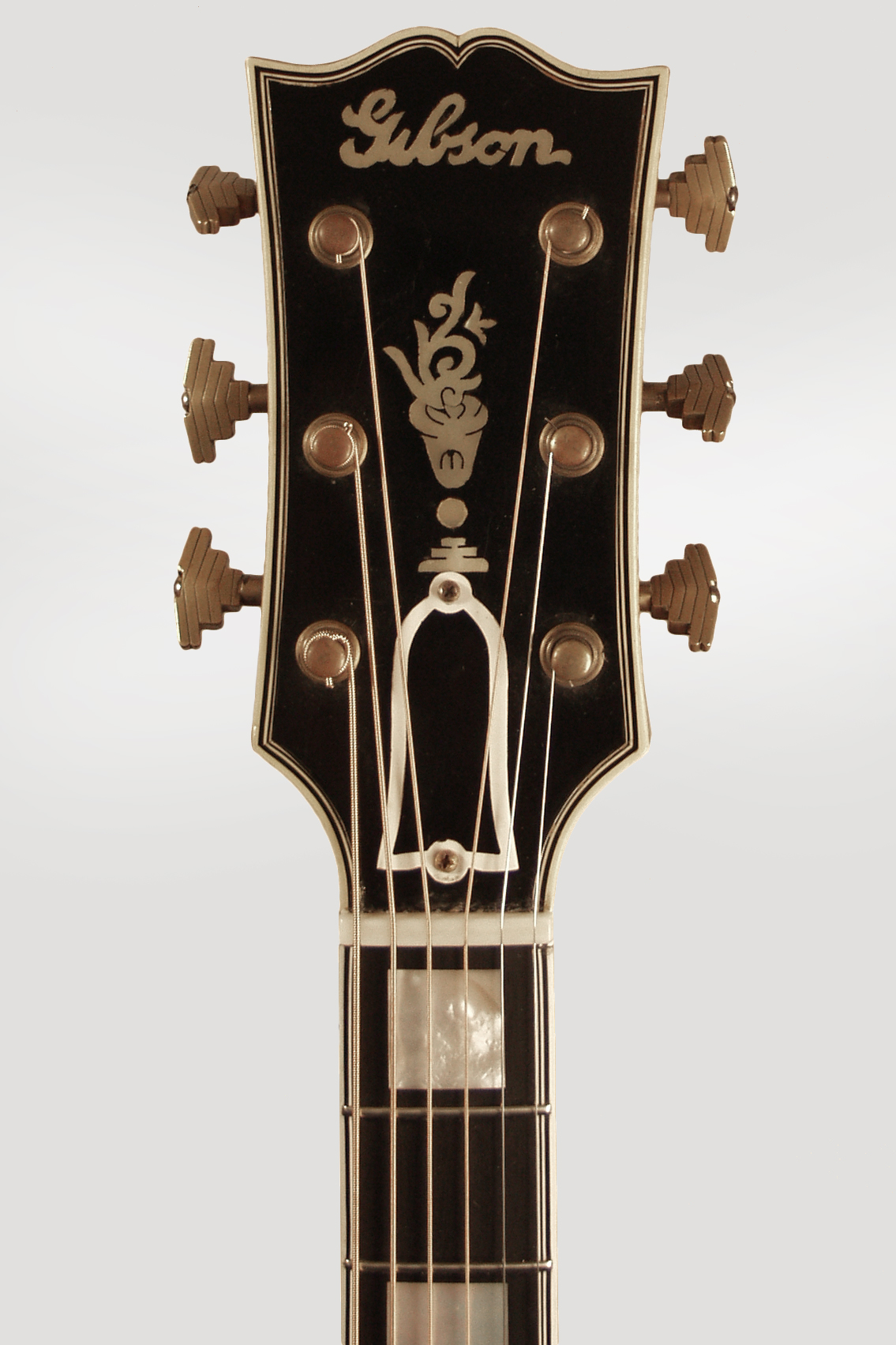
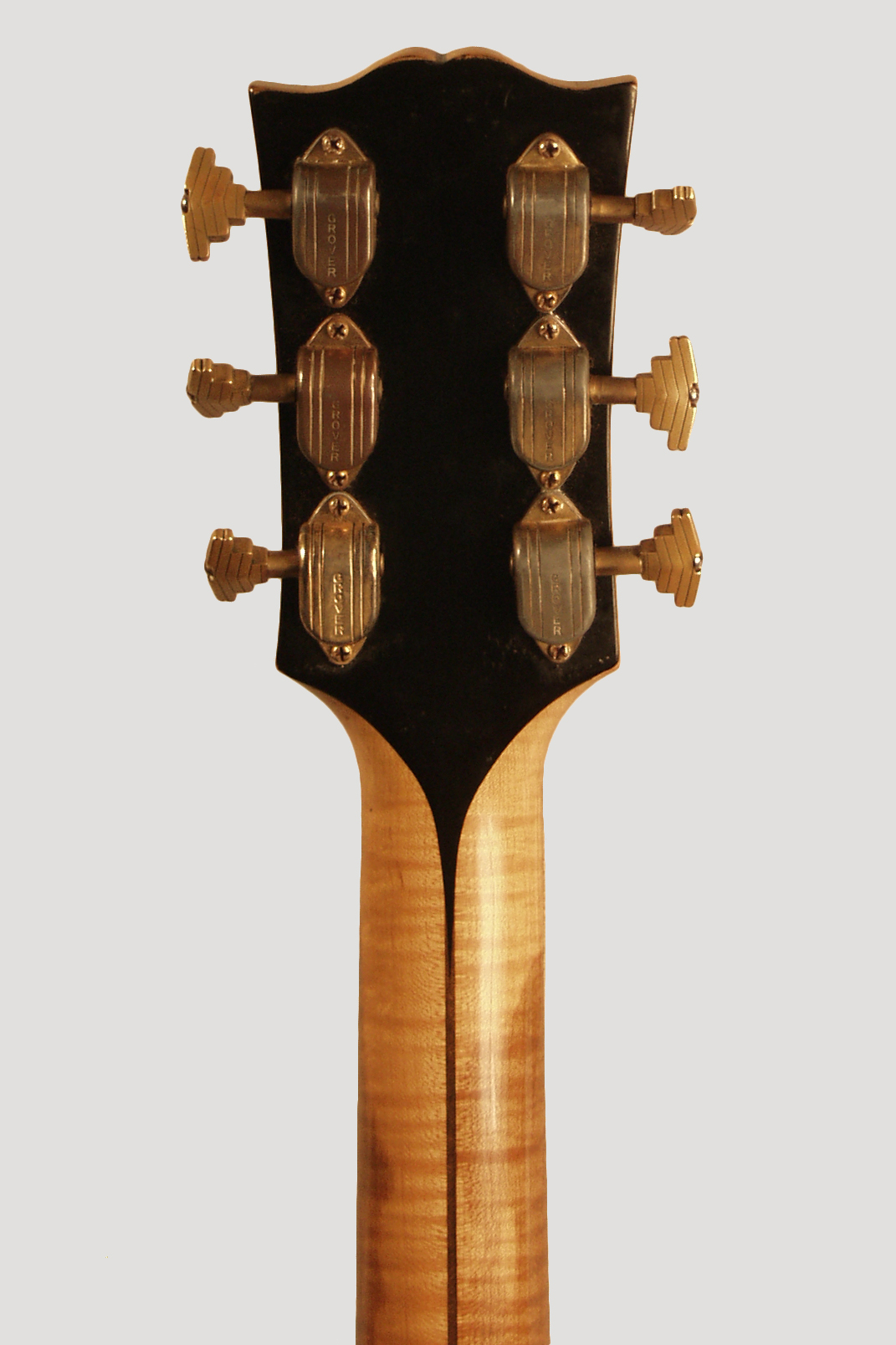
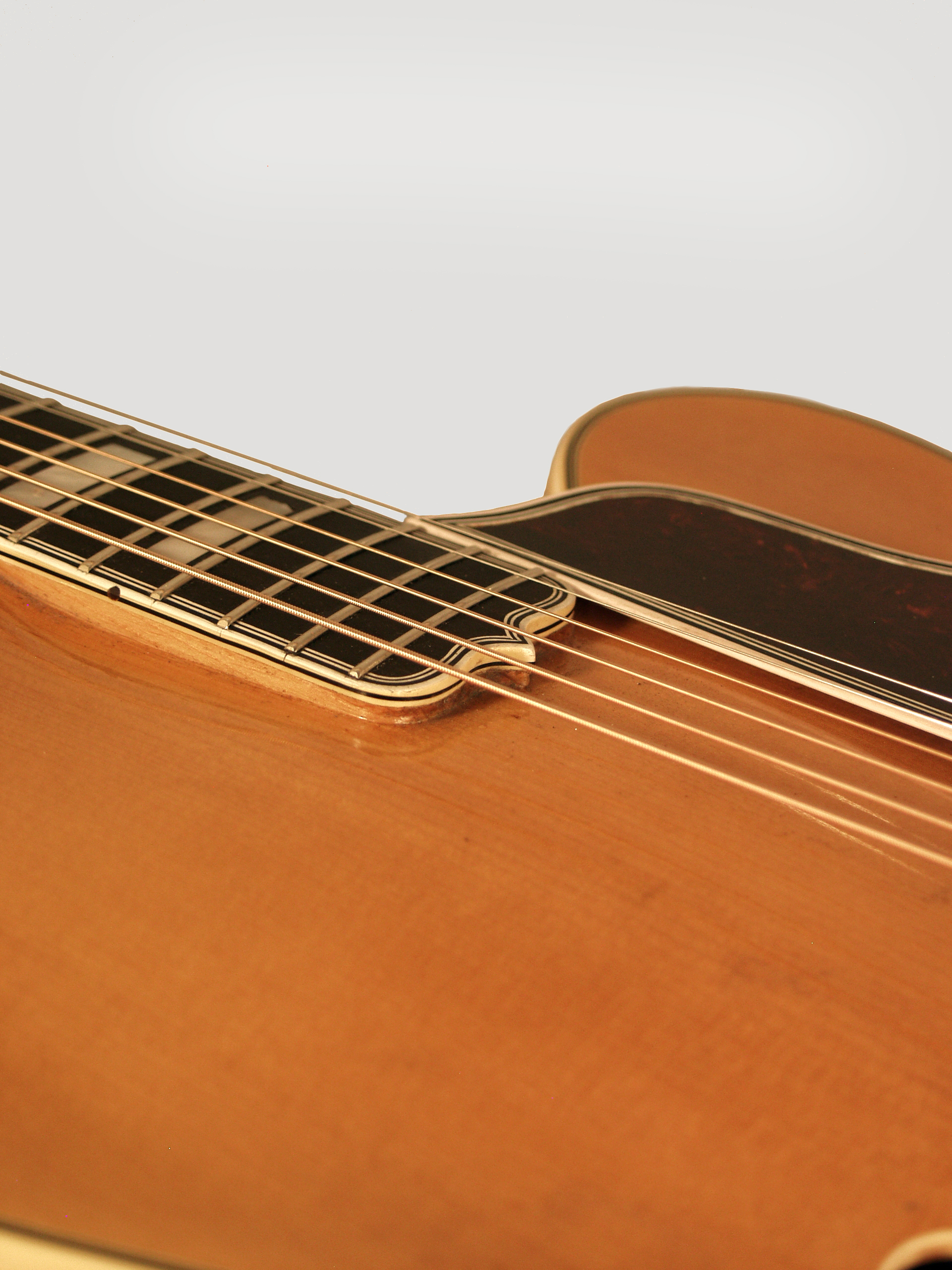
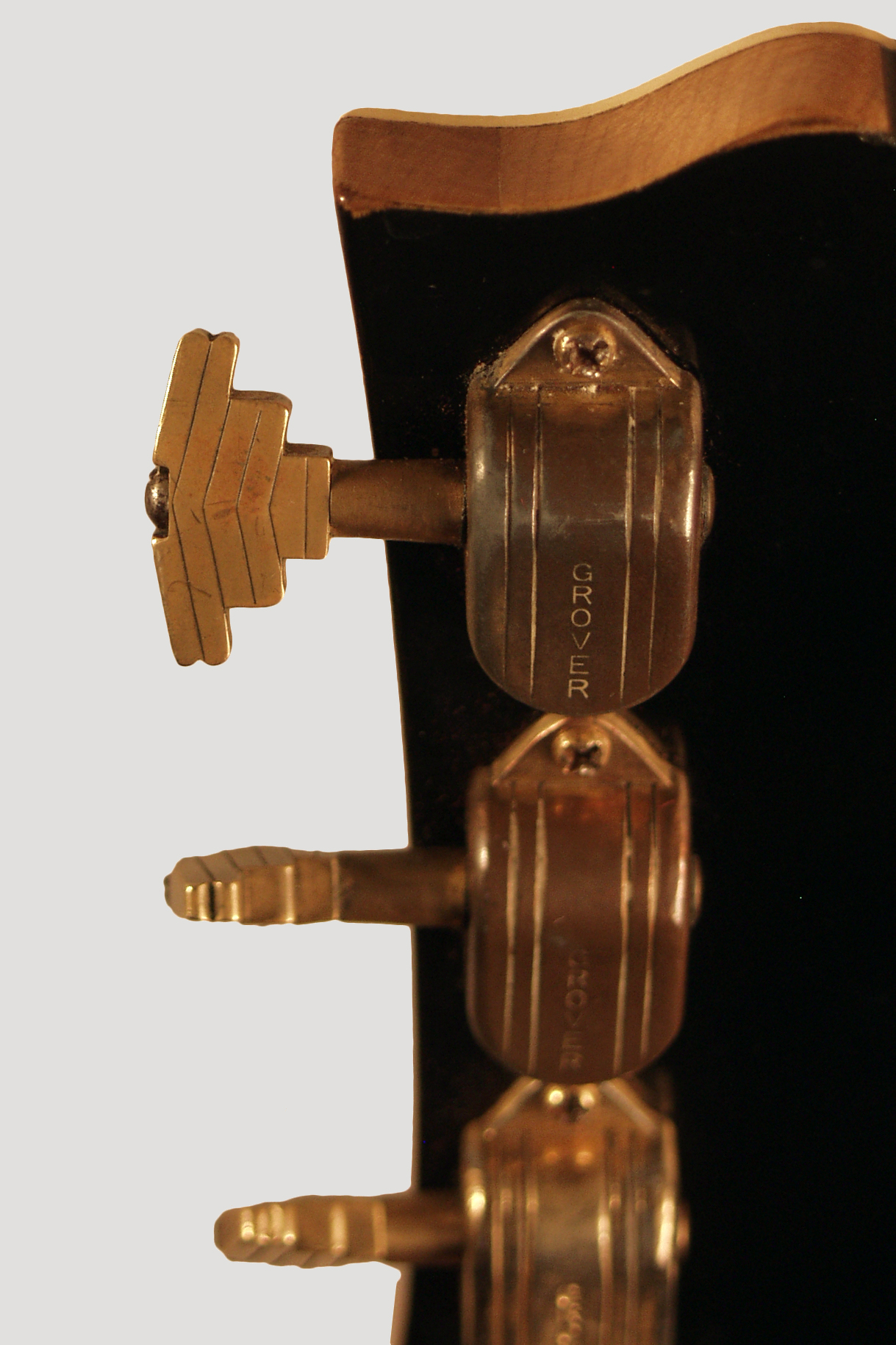
This guitar itself has a host of interesting features. The serial number EA-5577 is from the special "Artist" series used only on some high-end instruments in 1939-40; it dates to late 1939. The 3-digit Factory order number under the treble F-hole is not clearly stamped but also includes the "E" suffix used only that year. An unusual construction element on these very first cutaway guitars like this is the fitting of the neck and fingerboard. Unlike most high-end Gibson archtops, the board is not elevated and floating off the top, but solidly set closer to the surface more like a flat top. This may have been because Gibson's engineers were unsure of how well the heelblock would be supported with the rim so altered, or some alternate rationale may be lost to time. Whatever the reason, by 1941 Gibson's cutaway acoustics reverted to the standard cantilevered fingerboard design found on their full-body cousins. This guitar also features original Grover imperial tuners; while announced as a new feature for 1938 they had already been supplanted by Kluson Sealfast machines by the time the guitars were ready to display in catalog AA, printed late that year. These tuners are extremely rare as original equipment on a period L-5, and again pinpoint the status of this as one of the very first built.
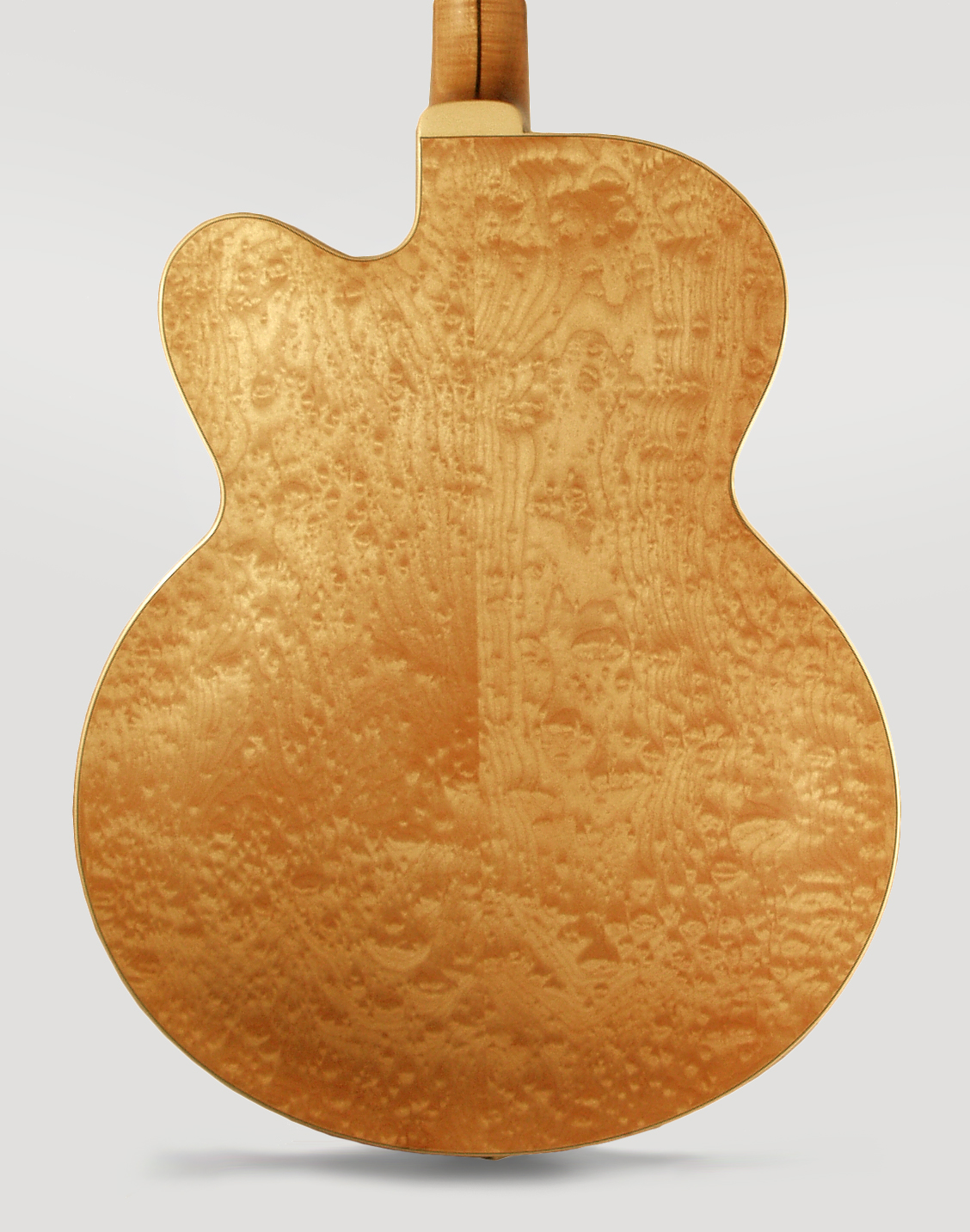
All workmanship on this guitar is to an extremely high standard, as are the woods selected. The back is an outrageously grained piece of burl maple that seems to glow in the light, and the rims also show some flame figure. The cutaway itself is very interesting as well, looking hand-shaped, with a slight effect of opening outwards towards the face of the guitar. The top in the cutaway arch actually bends down a bit to meet the binding, in a beautifully executed piece of carving. The binding there is a bit uneven in this spot, likely indicating an unfamiliar situation for the craftsperson fitting it. The neck is a beautiful C shaped profile with a fairly elaborate flame figure to the wood as well, and the fingerboard is a very fine piece of ebony, with the elaborate 5-ply binding neatly executed. This guitar was likely treated as a showpiece when built; at the time the top-line "Orchestra Guitars" like this were far more important to the company than electrics. Every big band guitarist was a prospective customer, and Gibson was treating their top competitor Epiphone with a one-two punch by simultaneously introducing the cutaway and gleaming natural blonde finish. While other makers would build similar guitars-mostly not until after the war- with the "Premiere" models Gibson firmly announced themselves once again as the absolute trend-setters of the professional archtop field.
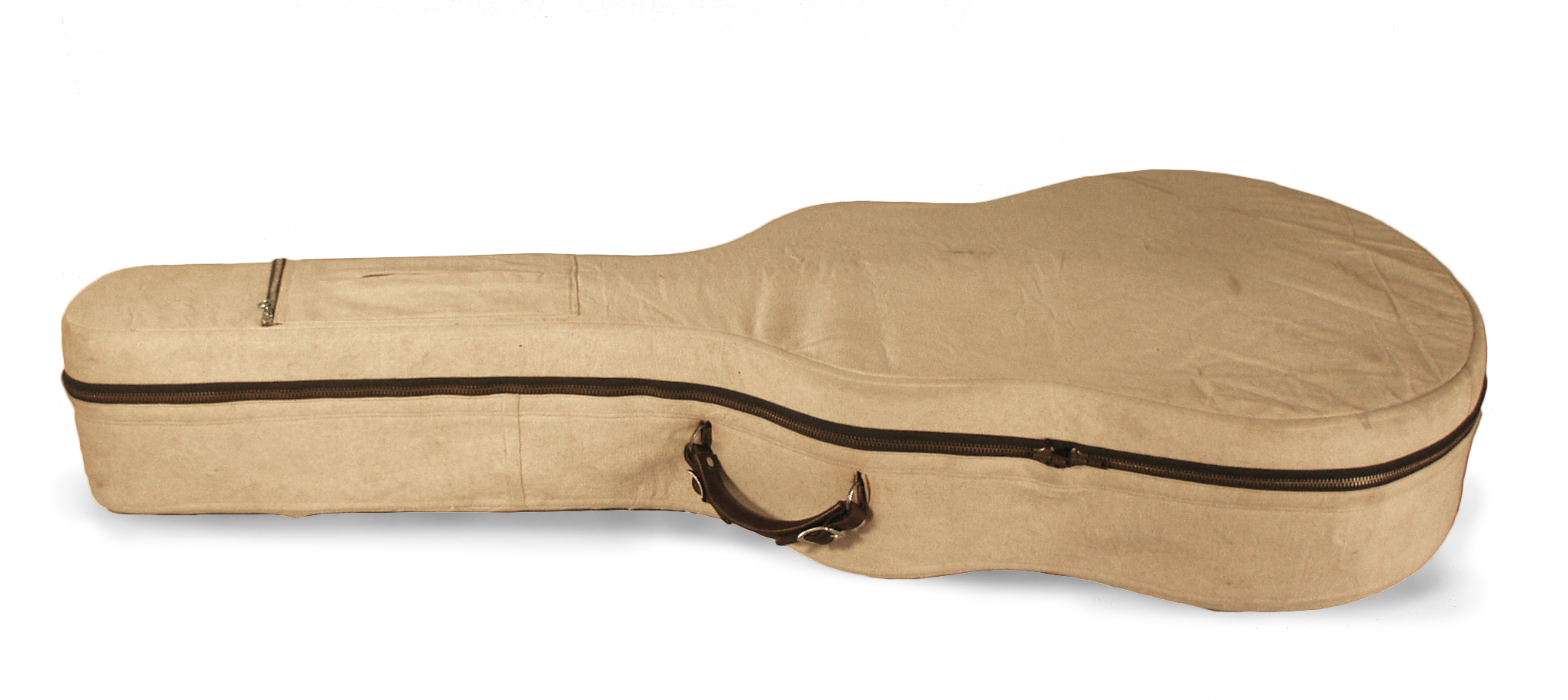
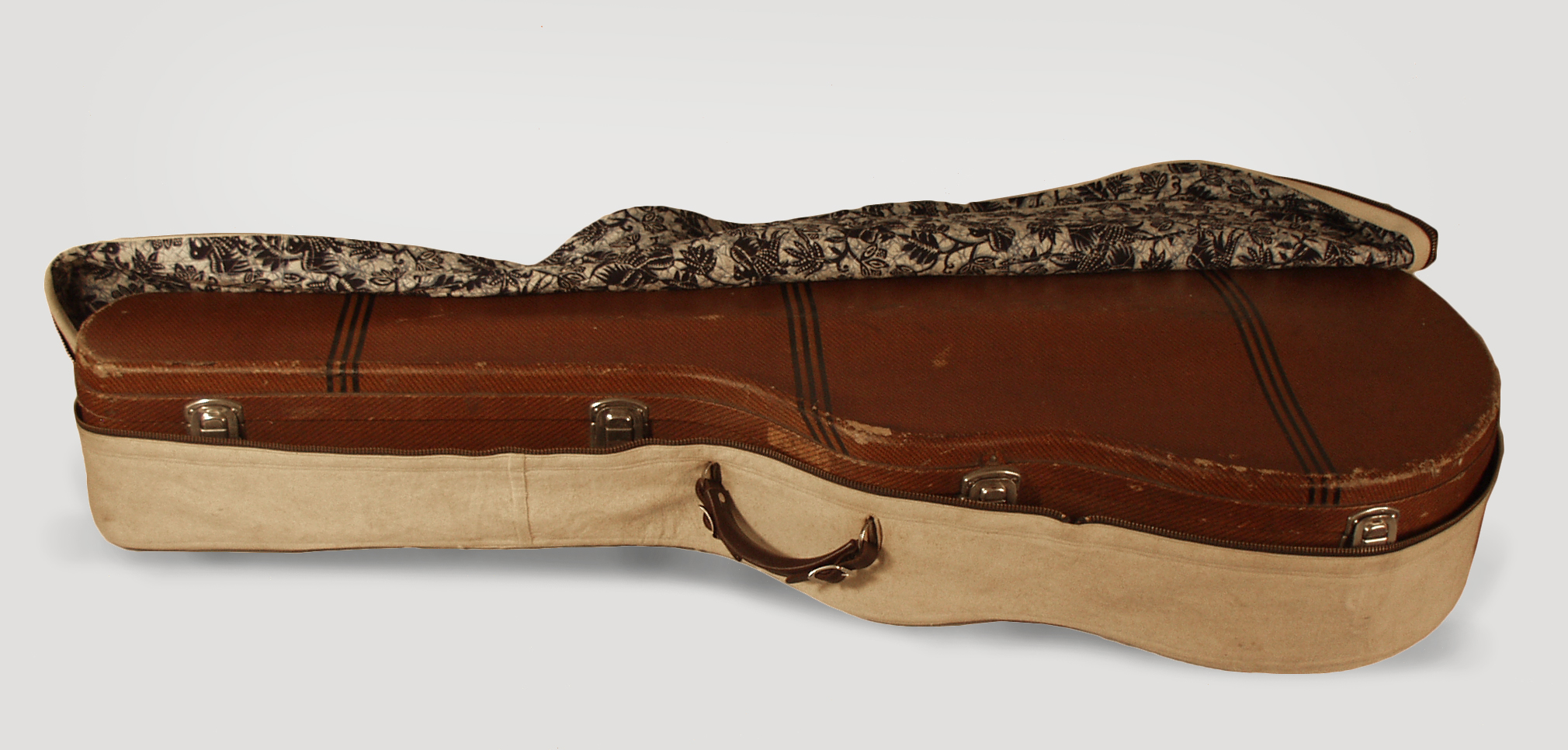
Overall length is 42 1/4 in. (107.3 cm.), 17 in. (43.2 cm.) wide at lower bout, and 3 3/8 in. (8.6 cm.) in depth, measured at side of rim. Scale length is 25 1/2 in. (648 mm.). Width of nut is 1 11/16 in. (43 mm.). This lovely guitar is extremely well preserved, while obviously played it has also has been very well cared for. The only noticeable alteration is a clear overspray to the back of the neck over some old wear that was down to the wood; there does not appear to be any other finish work performed. The frets and nut are new in the correct style; the pickguard is an older repro still with the original bracket. The bridge, tailpiece and tuners are original with a beautiful patina. Considering its age and rarity, this guitar must rank among the most spectacularly impressive and beautifully aged Gibson instruments we have ever offered. The original tweed "Aeroplane Cloth' case is also in fine condition with some scuffing, and has been provided with a beautifully crafted case cover, expertly sewn and lined-quite the nicest we have ever seen! The sound of this guitar is exquisite, and it moves easily from a very sensitive modern touch to a full throated punch for the traditional rhythm role. This guitar is an absolute treat to any lover of fine archtops, a joy to play and hear and a serious slice of the Gibson legend at its best.
Excellent - Condition.
This guitar is both a fantastic playing and sounding instrument and an important piece of Gibson history-one of the earliest cutaway L-5's ever made. This body design with the rounded "Venetian" cutaway on the treble bout became a Gibson staple, and has been copied by virtually every other guitar maker since. The single-cutaway design has become recognized as a milestone in guitar evolution, elegantly allowing the player much more fingerboard access and its origins began right here. Gibson had experimented with cutaway instruments before 1910 with the elaborately-scrolled Style O Artist Model, but the 1939 "Premiere" series represent the true birth of the modern cutaway guitar.
The company's newly-developed "Premiere" L-5 and Super 400 were officially announced in the 1940 Catalog AA but some examples had already been produced in late 1939. That Catalog includes several L-5PN's already shown in artist endorsement pictures in the hands of Allan Reuss, Al Avola and Hy White. The L-5 model itself had been in production since 1923, and the "Advanced" 17" wide version was introduced starting in 1935. While after 1934 the guitar had been officially superseded by the Super 400 as the absolute top-of-the-line, the L-5 was still highly popular with professional users, many of whom found the 17" guitar to be better handling-and even better sounding-instrument compared to the very large 18" Super 400. The options of the cutaway and natural finish were both brand new in late 1939 when this guitar was made-only 15 were shipped that year and 27 registered shipped in 1940. A grand total of 53 natural-finish, cutaway L-5's were shipped up through 1943 when the last one left Kalamazoo. After the war, the model was re-instated but the "Premier" designation was soon dropped in favor of the more prosaic "cutaway" designation. The pre-war, cutaway L-5's like this one represent some of the finest purely acoustic archtops the company ever built, a pinnacle of both design and craftsmanship and the most prestigious of professional orchestra guitars. By October 1940 the L-5PN listed for $300, without case.
This guitar itself has a host of interesting features. The serial number EA-5577 is from the special "Artist" series used only on some high-end instruments in 1939-40; it dates to late 1939. The 3-digit Factory order number under the treble F-hole is not clearly stamped but also includes the "E" suffix used only that year. An unusual construction element on these very first cutaway guitars like this is the fitting of the neck and fingerboard. Unlike most high-end Gibson archtops, the board is not elevated and floating off the top, but solidly set closer to the surface more like a flat top. This may have been because Gibson's engineers were unsure of how well the heelblock would be supported with the rim so altered, or some alternate rationale may be lost to time. Whatever the reason, by 1941 Gibson's cutaway acoustics reverted to the standard cantilevered fingerboard design found on their full-body cousins. This guitar also features original Grover imperial tuners; while announced as a new feature for 1938 they had already been supplanted by Kluson Sealfast machines by the time the guitars were ready to display in catalog AA, printed late that year. These tuners are extremely rare as original equipment on a period L-5, and again pinpoint the status of this as one of the very first built.
All workmanship on this guitar is to an extremely high standard, as are the woods selected. The back is an outrageously grained piece of burl maple that seems to glow in the light, and the rims also show some flame figure. The cutaway itself is very interesting as well, looking hand-shaped, with a slight effect of opening outwards towards the face of the guitar. The top in the cutaway arch actually bends down a bit to meet the binding, in a beautifully executed piece of carving. The binding there is a bit uneven in this spot, likely indicating an unfamiliar situation for the craftsperson fitting it. The neck is a beautiful C shaped profile with a fairly elaborate flame figure to the wood as well, and the fingerboard is a very fine piece of ebony, with the elaborate 5-ply binding neatly executed. This guitar was likely treated as a showpiece when built; at the time the top-line "Orchestra Guitars" like this were far more important to the company than electrics. Every big band guitarist was a prospective customer, and Gibson was treating their top competitor Epiphone with a one-two punch by simultaneously introducing the cutaway and gleaming natural blonde finish. While other makers would build similar guitars-mostly not until after the war- with the "Premiere" models Gibson firmly announced themselves once again as the absolute trend-setters of the professional archtop field.
Overall length is 42 1/4 in. (107.3 cm.), 17 in. (43.2 cm.) wide at lower bout, and 3 3/8 in. (8.6 cm.) in depth, measured at side of rim. Scale length is 25 1/2 in. (648 mm.). Width of nut is 1 11/16 in. (43 mm.). This lovely guitar is extremely well preserved, while obviously played it has also has been very well cared for. The only noticeable alteration is a clear overspray to the back of the neck over some old wear that was down to the wood; there does not appear to be any other finish work performed. The frets and nut are new in the correct style; the pickguard is an older repro still with the original bracket. The bridge, tailpiece and tuners are original with a beautiful patina. Considering its age and rarity, this guitar must rank among the most spectacularly impressive and beautifully aged Gibson instruments we have ever offered. The original tweed "Aeroplane Cloth' case is also in fine condition with some scuffing, and has been provided with a beautifully crafted case cover, expertly sewn and lined-quite the nicest we have ever seen! The sound of this guitar is exquisite, and it moves easily from a very sensitive modern touch to a full throated punch for the traditional rhythm role. This guitar is an absolute treat to any lover of fine archtops, a joy to play and hear and a serious slice of the Gibson legend at its best.
Excellent - Condition.